
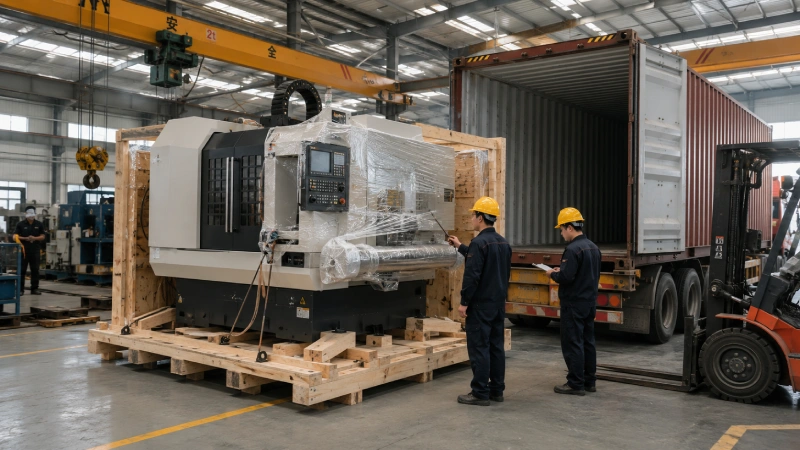
Shipping industrial equipment is not the same as moving ordinary cartons or palletized goods. A workable plan must account for transport dimensions, package weights, lifting points, center of gravity, internal components, packing, and final unloading conditions. Importers who need a broader overview of routes, freight modes, costs, and U.S. import planning should first review Shipping from China to USA, then use this guide to prepare the machinery-specific information required for an executable quotation.
A machine may appear to fit inside a container but still be unsuitable for the proposed equipment. It may not pass through the container doors, its weight may be concentrated on a small base, or the factory may lack suitable loading equipment. The safest approach is to build a shipment engineering dossier before booking freight.
Build a Machinery Shipment Data File
A commercial invoice and supplier brochure rarely contain enough information for machinery freight planning. Prepare a separate record for every machine, crate, skid, control cabinet, and accessory package.
| Information | What to provide |
|---|---|
| Machine identity | Name, function, manufacturer, model, and serial number |
| Condition | New, used, refurbished, or prototype |
| Package data | Length, width, height, and gross weight for each unit |
| Handling data | Center of gravity, fork pockets, and approved lifting points |
| Packing | Skid, crate, plywood case, steel frame, or another method |
| Internal contents | Batteries, engines, oils, refrigerants, gases, or chemicals |
| Shipment details | Supplier address, Incoterm, cargo-ready date, and U.S. destination |
| Site conditions | Dock, forklift, crane, access, and appointment restrictions |
Always use packed dimensions. Suppliers sometimes provide only the machine’s operating size, excluding its base, crate, and protective clearance. The forwarder also needs package-level weights rather than one combined figure.
Photographs should show the complete machine, nameplate, base, fork pockets, lifting points, and any components that could affect transport. For a production line, create a packing map connecting every crate number with the corresponding module.
Accessories should be listed separately. Typical examples include electrical cabinets, tooling, molds, conveyors, pumps, motors, cables, and spare parts. A detailed list reduces the risk of undocumented items, incomplete classification, or missing components at destination.
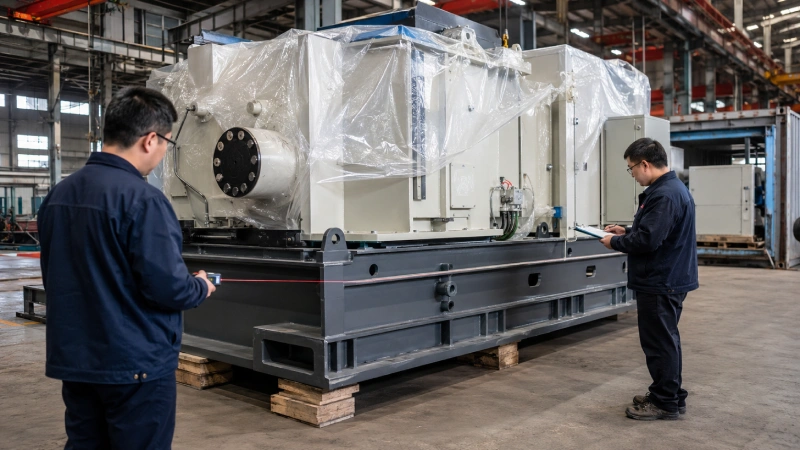
Decide Whether to Ship the Machine Assembled or Disassembled
Partial disassembly can reduce volume by removing hoppers, conveyors, control panels, guards, legs, or external motors. However, a smaller shipment is not automatically a cheaper or safer project.
Compare the potential freight saving with:
- Additional packing and crate costs
- Reassembly labor
- Calibration or alignment requirements
- Warranty restrictions
- Missing-part or cable-damage risk
- Technician availability in the USA
- Effects on the installation schedule
Precision equipment should not be dismantled simply to fit a smaller container without the manufacturer’s written instructions. Approved components should be numbered, photographed, and matched to an inventory. Connection points, cables, pneumatic lines, and fasteners should be clearly recorded.
Removing a detachable hopper may allow standard container loading. Removing a calibrated spindle assembly, by contrast, may create more technical risk than the freight saving justifies.
Match the Packed Machine to Suitable Equipment
Container selection must consider more than internal length, width, and height. Critical checks include the door opening, loading clearance, floor loading, weight distribution, and space for blocking and bracing.
| Machinery condition | Equipment to assess |
|---|---|
| Fits through the doors and remains within limits | Standard or high-cube container |
| Excess height but suitable for top loading | Open-top container |
| Over-width, over-height, or difficult to enclose | Flat rack or specialist solution |
| Smaller, fully crated unit | LCL, subject to handling acceptance |
| Several machines or a production line | FCL or project-based loading plan |
For a broader equipment overview, see Container Shipping from China to USA. Exact dimensions and limits must be confirmed for the carrier and container assigned to the booking.
Calculate volume using:
CBM = packed length × packed width × packed height
For heavy machinery, CBM is only a starting point. A compact press can be harder to load than a larger lightweight unit because several tons may rest on a narrow base. Contact area, point loading, runner positions, inland axle limits, and securing access may require specialist review.
A preliminary floor-load calculation can compare package weight with the base contact area, but it is not engineering approval. The carrier, equipment provider, loading contractor, or another qualified specialist may need to verify concentrated loads and the final support arrangement.
Use Export Packing Designed for Machinery
Packing should protect the equipment against lifting impact, vibration, condensation, corrosion, and repeated handling. Depending on cargo value and sensitivity, the machine may need a heavy-duty skid, open crate, fully enclosed case, or steel frame.
A suitable packing plan may include:
- Anchoring the machine to its base
- Protecting control panels, sensors, and exposed connections
- Applying corrosion protection to machined surfaces
- Using vapor barriers, desiccants, or VCI materials where appropriate
- Securing accessories separately
- Marking lifting points, center of gravity, and transport orientation
When solid-wood crates, skids, blocking, or bracing are used, confirm compliance before pickup. The USDA APHIS wood-packaging requirements state that regulated wood packaging entering or transiting the United States must meet applicable treatment and marking requirements under ISPM 15.
Ask the supplier for photographs of the ISPM 15 mark, the completed case, and the machine’s internal anchoring before collection. Manufactured wood products such as qualifying plywood may be treated differently from regulated solid-wood packaging, so the actual materials should be confirmed rather than assumed.
Plan Lifting, Loading and Securing
The factory must identify the center of gravity, approved lifting points, fork pockets, sling positions, and areas that must not carry load. Do not assume that the geometric center of the machine is its center of gravity.
The loading plan should show:
- Package position and orientation
- Forklift or crane requirements
- Base contact and support points
- Blocking, bracing, and lashing locations
- Anti-slip materials
- Clearance from container walls and doors
- Loading sequence for multiple packages
The IMO/ILO/UNECE Code of Practice for Packing of Cargo Transport Units provides authoritative guidance on packing and securing cargo in containers and other intermodal transport units. It is particularly relevant when machinery has concentrated weight, a high center of gravity, or limited securing points. Shipment-specific securing should still be reviewed by competent personnel.
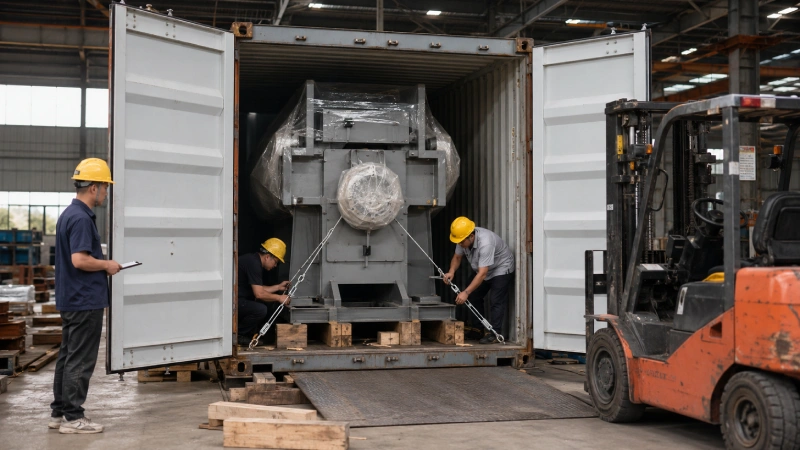
Photograph the empty container, packed machine, anchoring, final position, securing points, container number, and seal. These records may become important if damage or cargo movement is later reported.
Screen Engines, Batteries and Fluids Early
Machinery containing an engine, battery, fuel, hydraulic oil, refrigerant, compressed gas, fire extinguisher, or another regulated material needs additional review. These components should be disclosed before carrier space is requested.
Internal-Combustion Engines
For diesel- or gasoline-powered equipment, collect the engine manufacturer, model, serial number, fuel type, emissions label, condition, and installation status.
The U.S. Environmental Protection Agency’s engine-import resources explain that nonroad engines and equipment can be subject to federal emissions requirements. Eligibility must be assessed from the actual engine information and applicable certification or exemption basis, not from a supplier’s general statement that the machinery is “EPA compliant.”
Batteries and Other Regulated Contents
For battery-powered equipment, provide the battery chemistry, watt-hour rating, number and weight of batteries, installation status, condition, and available test documentation.
U.S. hazardous-material regulations specifically address internal-combustion and battery-powered vehicles, machinery, and equipment in 49 CFR 173.220. The applicable requirements depend on the actual configuration, contents, transport mode, and condition of the equipment.
Also declare residual fuel, engine oil, hydraulic oil, refrigerants, gas accumulators, aerosols, maintenance chemicals, and any other potentially regulated substances. Do not drain, purge, or modify systems without first confirming the technical and regulatory implications.
Prepare U.S. Customs and Product Information
The customs file normally includes the commercial invoice, packing list, bill of lading, model details, country of origin, and clear technical literature. Nameplate photographs and an accurate explanation of the machine’s function can help the customs broker assess classification.
For a broader overview, review Documents Required to Import from China to USA. The machinery shipment file should add package-level technical data, model and serial information, engine or battery records, packing details, and any product-agency documents relevant to the equipment.
Classification cannot be determined from the word “machine” alone. Function, principal use, imported configuration, included components, and whether the equipment arrives assembled or in modules may affect the HTS code. The importer or customs broker should check the current Harmonized Tariff Schedule maintained by the U.S. International Trade Commission and review whether additional duties or trade remedies apply.
Country-of-origin marking should also be checked before export. Product-agency screening may be necessary for certain engine-powered, food-processing, medical, radio-frequency, radiation-emitting, or energy-regulated machinery.
Confirm U.S. Delivery and Unloading Conditions
Port-to-door planning is incomplete until the receiving site can unload the cargo. Confirm:
- Delivery ZIP code and facility type
- Dock availability and dock height
- Forklift capacity and fork length
- Crane or rigging requirements
- Yard size and truck-turning space
- Gate, road, and overhead-clearance restrictions
- Appointment and working-hour limits
- Route from the unloading point to the installation area
Separate truck delivery from crane unloading, indoor rigging, machine positioning, assembly, electrical connection, and commissioning. These are different scopes and should not be assumed to be included in the freight quotation.
A four-ton crate delivered to a factory without a dock or suitable forklift may require a crane appointment, specialized trailer, or local rigger. Discovering this after arrival can create storage, waiting, redelivery, and equipment-rental charges.
Where a buyer is considering a duty-paid service, DDP Shipping from China to USA provides useful Incoterm and landed-cost context. DDP does not remove the need to confirm product eligibility, importer responsibilities, unloading, or installation arrangements.
Understand Machinery-Specific Cost Drivers
A reliable quotation should state its assumptions and exclusions. Machinery-related charges may include:
- Factory loading equipment
- Export packing or repacking
- Loading supervision
- Special container equipment
- Blocking and bracing
- Heavy or non-stackable LCL handling
- Cargo insurance
- Customs review for regulated components
- Destination crane, forklift, or rigging coordination
- Specialist trucking and site waiting time
Do not compare offers only by the ocean-freight line. One quotation may exclude origin loading, destination handling, or unloading that another includes. The importer should also confirm whether the quoted dimensions and weights are supplier estimates or verified packed measurements.
Submit a Quote-Ready Machinery Package
Before requesting a final proposal, send:
- Supplier address, contact, and Incoterm
- Machine name, function, model, and condition
- Dimensions and gross weight for every package
- Photos, nameplates, and technical drawings
- Center of gravity and lifting details
- Packing and wood-packaging information
- Engine, battery, oil, fuel, and refrigerant declarations
- Cargo value and insurance request
- U.S. ZIP code and delivery-site conditions
- Cargo-ready date and required delivery schedule
Winsail can use this information to assess transport equipment, identify missing documents, coordinate origin handling, and define the intended delivery scope. Oversized, unusually heavy, or regulated machinery remains subject to technical review, carrier acceptance, and confirmed service availability.
FAQ
Can machinery be shipped with oil or fuel inside?
Possibly, but the substance, quantity, machine configuration, and transport mode must be reviewed. Declare all fuel, oil, refrigerants, gases, and other residues before booking.
Is a flat rack always required for oversized machinery?
No. Packed dimensions, container door clearance, loading method, weight distribution, securing requirements, and carrier acceptance determine whether an open top, flat rack, or another solution is appropriate.
Can a diesel-powered machine be imported into the USA?
Transport feasibility and EPA import eligibility are separate questions. The engine model, emissions label, certification, or exemption basis may require review before shipment.
Can lithium batteries remain installed in industrial machinery?
It depends on the battery chemistry, capacity, installation, condition, transport mode, test documentation, and carrier rules. The battery details should be reviewed before booking.
Do machinery crates from China need an ISPM 15 mark?
Regulated solid-wood packaging generally needs compliant treatment and marking. Manufactured wood materials may be treated differently, so the actual crate, skid, blocking, and bracing materials should be confirmed.
Who unloads the machinery at the U.S. destination?
The quotation should state whether the scope ends at truck arrival, ground delivery, or unloading. Crane work, rigging, positioning, installation, and commissioning are separate unless specifically arranged.
What information is most important for a machinery freight quote?
Packed dimensions and individual package weights are essential, but lifting details, center of gravity, internal contents, factory loading capability, and U.S. unloading conditions are also required.
Plan the Shipment Before It Leaves the Factory
Successful machinery shipping begins with technical preparation, not the lowest headline freight rate. Accurate package data, compliant packing, a workable loading plan, early regulatory screening, and a realistic site-access review allow the forwarder to build a solution that can actually be executed.
To request a machinery shipping assessment, submit the machine specifications, package dimensions, weights, supplier location, photographs, and U.S. delivery details. The more complete the technical file, the more reliable the equipment, route, handling, and cost evaluation will be.
