

Tanzania Bureau of Standards (TBS) PVoC requirements apply to specified regulated products imported into Mainland Tanzania, not every shipment. Covered goods generally need conformity assessment and a Certificate of Conformity (CoC) from an authorized provider before shipment. Importers must also arrange TBS verification of the certificate. Check the product’s Tanzanian HS classification, applicable standards, inspection route and potential exemptions before shipping. Zanzibar has a separate ZBS compliance framework.
Data Note — October 2026: This guide references the TBS 2025 PVoC guidelines, the March 2025 regulated HS code schedule and the August 2026 procedure listed by TBS. Requirements, authorized providers and product coverage should be reconfirmed against the latest official documents before shipment.
When shipping from China to Tanzania, determining whether your goods require PVoC certification should be part of your purchasing and shipment planning—not something addressed after the container reaches port.
A missing or invalid CoC can lead to destination inspection, penalties and cargo-release delays. The practical solution is to establish the product’s regulatory status, prepare conformity evidence and coordinate any required inspection before departure.
What Is TBS PVoC, and When Is a CoC Required?
Pre-shipment Verification of Conformity (PVoC) is a conformity assessment programme administered by the Tanzania Bureau of Standards under the Standards Act, 2009.
Its purpose is to verify that specified imported products meet applicable Tanzanian standards or accepted equivalent requirements before shipment from the exporting country.
Understanding PVoC, CoC and CoR
Three terms are important:
- PVoC (Pre-shipment Verification of Conformity): The programme under which regulated products are assessed through documentation review, inspection, testing or other applicable conformity procedures.
- CoC (Certificate of Conformity): A certificate issued by a TBS-authorized service provider when the applicable conformity requirements are satisfied.
- CoR (Certificate of Roadworthiness): A certificate associated with the separate roadworthiness verification arrangements for certain imported used motor vehicles.
A CoC confirms conformity within its stated scope. It does not replace customs declarations, import permits, applicable product registrations or tax obligations.
Which Imports Fall Under Mainland Tanzania’s PVoC Programme?
Not all imported goods automatically require a CoC. TBS publishes regulated HS code schedules identifying products covered by the PVoC programme.
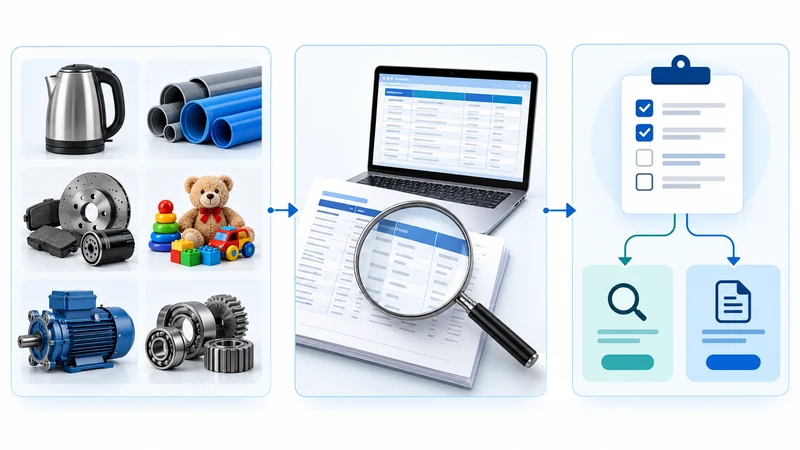
Common product families requiring careful screening include electrical equipment, household goods, toys, building materials, automotive products and selected industrial products.
However, a broad description such as “machinery” or “electronics” is insufficient to establish the requirement. The actual HS classification and product characteristics must be checked.
Importers should also distinguish PVoC from Tanzania’s Destination Inspection (DI) programme. Certain goods may be subject to destination inspection even when they do not follow the standard pre-shipment certification route.
How to Check Whether Your Product Requires TBS PVoC
The most reliable starting point is the official regulated HS code schedule, rather than a supplier’s assumption or a general product-category list.
Step 1: Identify the Exact Product
Collect the product name, material composition, intended use, model, technical specifications and condition (new or used).
For example, plastic pipes, pipe fittings and flexible hoses may fall under different tariff classifications despite being sold by the same manufacturer.
Step 2: Confirm the Tanzanian HS Classification
The Chinese export HS code can provide a reference, but it should not be treated as the final Tanzanian import classification.
Ask the Tanzanian importer or its qualified customs-clearing professional to confirm the classification using the applicable East African Community tariff nomenclature.
Step 3: Compare the Code with the TBS List
Check the official TBS PVoC programme page and download the latest regulated HS schedule.
Match both the code and its description against the actual goods.
For example, the March 2025 TBS schedule includes HS 3917.22.00, covering rigid tubes, pipes and hoses of polymers of propylene. This provides a specific screening reference for relevant polypropylene pipe products—not a blanket conclusion about every plastic item.
Step 4: Resolve Uncertain or Mixed-Product Shipments
For mixed shipments, review each product line separately. A container containing several different goods cannot automatically be classified under one product’s PVoC status.
Where classification or certification requirements remain unclear, obtain clarification from TBS or an appropriately authorized PVoC provider before inspection or loading.
Product Category and PVoC Screening Matrix
| Product Category | What Must Be Checked? | Who Provides the Information? | Complete By |
|---|---|---|---|
| Electrical appliances and electronics | HS code, ratings, model and applicable safety standards | Manufacturer / Exporter | Before inspection |
| Plastic pipes and building materials | Material, dimensions, product type and regulated HS entry | Manufacturer / Importer | Before order confirmation |
| Toys and childcare products | Product function, age category and safety requirements | Manufacturer / Exporter | Before production release |
| Automotive components | Exact component type, HS code and applicable standards | Exporter / Importer | Before shipment |
| Food and household products | Product classification, applicable standards and additional regulatory requirements | Importer / Manufacturer | Before purchasing |
| Machinery and industrial materials | Intended use, classification and exemption eligibility | Importer / Exporter | Before shipment planning |
| Used motor vehicles | Vehicle-specific roadworthiness and CoR requirements | Importer / Exporter | Before vehicle purchase or booking |
| Zanzibar-bound goods | Separate ZBS PVoC requirements | Importer | Before shipping |
The matrix identifies products requiring regulatory screening. It does not mean every item in these categories automatically requires a CoC.
For business buyers, a written product-specific assessment is more useful than a general statement that an entire product family is either regulated or exempt.
Check PVoC Requirements for My Product
Share your product description, technical specifications, proposed HS code, supplier location in China and Tanzanian destination with Winsail Logistics for an initial shipment-compliance coordination review. Where regulatory confirmation is required, the appropriate authority or authorized provider must make that determination.
What Documents Are Needed for a Tanzania CoC Application?
The document package depends on the product, certification route and authorized service provider.
Preparing technical evidence before requesting inspection can prevent avoidable delays.
Core Application and Commercial Documents
A typical PVoC application may require:
- Request for Certification (RFC), identifying the applicant and intended consignment.
- Proforma or commercial invoice showing the goods, quantities, values, exporter and importer.
- Product descriptions, model numbers and relevant technical specifications.
- Packing details and manufacturing information.
- Available conformity certificates and laboratory test reports.
The provider may request additional evidence according to the applicable standard or product risk.
Product Specifications and Conformity Evidence
Manufacturers should prepare product datasheets, test reports, labeling information and other technical records relevant to the goods being supplied.
Existing CE certificates, ISO certificates or third-party laboratory reports may support the assessment where accepted. However, they do not automatically replace the Tanzania CoC required under the PVoC programme.
The provider must assess whether the evidence covers the correct product model, applicable standard, test scope and required validity period.
CoC Application Evidence and Responsibility Matrix
| Document or Evidence | Usually Prepared By | Important Verification | Required Stage |
|---|---|---|---|
| Request for Certification | Applicant / Exporter | Correct shipment and applicant details | Application |
| Commercial invoice | Exporter | Model, quantity, value and buyer details | Application |
| Product datasheet | Manufacturer | Technical specifications and intended use | Document review |
| Laboratory test reports | Manufacturer / Laboratory | Relevant standard, model and report acceptance | Technical assessment |
| Product labeling and photographs | Manufacturer | Markings match the actual goods | Before inspection |
| Batch or lot records | Manufacturer | Production identity and shipment quantities | Where applicable |
| Registration or licensing evidence | Responsible certificate holder | Approved products and current validity | Route B/C or product-specific review |
| Final CoC and shipment documents | Exporter / Importer | Certificate details match the actual consignment | Before departure / import verification |
Not every document in this table is mandatory for every product. The current checklist issued by the selected authorized provider takes precedence.
For importers working with several Chinese factories, appoint one party to consolidate documentation. Conflicting product descriptions across invoices, test reports and labels can lead to additional clarification or inspection work.
Which PVoC Inspection Provider and Certification Route Should You Use?
PVoC inspections and certificates must be handled through organizations authorized for the relevant programme, export location and product scope.
Finding a TBS-Authorized Provider for China-Origin Goods
TBS publishes lists of contracted service providers, their contact offices and geographical service zones.
Its published provider resources include organizations such as SGS, Intertek, TÜV Rheinland and CCIC, together with other provider information. Authorization must be checked against the current contracted zones rather than assumed from a company’s international presence.
SGS also announced a new TBS PVoC contract for the China Zone, effective May 1, 2026, covering Mainland China, Hong Kong, Taiwan, Mongolia and Macau.
Before choosing a provider, confirm its current TBS authorization, product coverage, inspection arrangements and application requirements in your Chinese supplier’s location.
Route A, Route B and Route C Compared
TBS uses three main certification routes for general regulated goods.
| Route | Typical Applicant | Certification Arrangement | Important Consideration |
|---|---|---|---|
| Route A | Occasional exporters or unregistered products | Shipment-level document review, inspection and applicable testing | Generally suitable for first-time or irregular shipments |
| Route B | Frequent exporters with eligible, consistent products | Product registration, inspection and monitoring, including applicable random testing | Registration is not an unconditional inspection waiver |
| Route C | Eligible manufacturers with established quality systems | Product licensing, quality-system assessment and surveillance | Continued compliance and shipment certification remain important |
Route A is normally the starting point for exporters without an eligible registration or licensing arrangement.
Routes B and C may offer a more streamlined process for qualifying businesses, but the provider must confirm eligibility based on the applicable standards, product type, shipment frequency and compliance history.
Pro Tip — Registration Does Not Eliminate All Inspection
High-risk products may still require testing, physical inspection, witnessed loading or container sealing under the applicable PVoC conditions. Do not release goods solely because the manufacturer already holds a product registration or licence.
What Does PVoC Certification Cost?
Certification charges depend on the assessment route, declared FOB value and applicable provider terms.
The TBS 2025 guidance publishes route-based fee structures. However, a complete cost estimate must also consider possible laboratory testing, sampling, registration, licensing, re-inspection and related services.
Request a written quotation identifying what is included and excluded. Do not assume that a basic certification fee covers every conformity-assessment activity.
How to Obtain a CoC Before Shipping from China
For regulated goods, certification should be coordinated with production completion and vessel or flight booking.
The following workflow connects the formal PVoC requirements with normal Chinese export operations.
Step 1: Confirm Product Scope and Certification Route
Provide the importer and authorized provider with the product details, intended destination and available classification information.
Confirm that the shipment requires PVoC and identify the appropriate certification route before committing to a shipping schedule.
Step 2: Submit the Request for Certification
The responsible applicant submits the RFC and supporting commercial and technical documents.
The provider reviews the information and identifies the applicable inspection, testing and conformity-evidence requirements.
Step 3: Arrange Inspection and Testing
The exporter coordinates the readiness date, inspection location and access to the goods.
The assessment may involve document review, physical inspection, sampling and laboratory testing. The provider determines which activities are necessary.
The actual shipment should remain identifiable and consistent with the submitted product documents.
Step 4: Resolve Any Non-Conformities
If the assessment identifies a problem, the provider may issue a Non-Conformity Report (NCR) or request corrective action.
Typical issues may include:
- Product markings inconsistent with technical documents.
- Missing or insufficient conformity evidence.
- Product specifications that do not match the applicable standard.
- Goods that differ from the approved samples or declared shipment details.
The manufacturer may need to correct the problem and undergo further assessment. A failed inspection does not authorize shipment under a valid CoC.
Step 5: Obtain and Check the CoC
Once the required assessment is successfully completed, the authorized provider may issue the Certificate of Conformity.
Before departure, verify the importer and exporter information, product description, quantities, certificate reference and other applicable shipment details.
The TBS 2025 guideline describes a three-month CoC validity period from issuance. Confirm the exact validity conditions on the issued certificate and current programme instructions, particularly if departure is delayed.
Step 6: Arrange Import-Side TBS Verification
CoC issuance is not the final regulatory handover.
The Tanzanian importer or authorized representative must arrange the applicable certificate verification with TBS.
The Tanzania Trade Portal describes the submission of the CoC and relevant import documentation through the TBS verification process. The resulting verification supports subsequent customs clearance.
For the wider declaration and release process, see our guide to customs clearance in Tanzania.
Tanzania PVoC Certification Process at a Glance
Product and HS Check → Authorized Provider → RFC and Documents → Inspection / Testing → Corrective Action if Needed → CoC Issuance → TBS Verification → Customs Clearance
Complete the pre-shipment assessment before releasing regulated goods for departure. Inspection availability, testing complexity and corrective work can affect the schedule, so there is no reliable universal certification turnaround for every product.

PVoC Exemptions, High-Risk Products and Special Cases
Not every shipment follows the same procedure. Certain goods may qualify for exemptions, while others require additional or separate regulatory assessment.
When Can an Importer Apply for a PVoC Exemption?
TBS publishes exemptions and eligibility criteria for specific circumstances.
Depending on the applicable conditions, these may include qualifying personal effects, certain industrial or project-related goods, eligible donations, temporarily imported goods and products covered by relevant TBS certification arrangements.
An exemption must be supported by the required evidence and applicable approval process.
One particularly important example concerns goods valued below USD 5,000.
Under the TBS 2025 exemption criteria, the applicant must submit an exemption request and proof from the Tanzania Revenue Authority that the total invoice value meets the stated threshold. The exemption is granted on a consignment basis.
Therefore, a shipment valued below USD 5,000 is not automatically exempt simply because of its invoice value.
Even where an exemption from pre-shipment verification is granted, destination inspection may still be applicable.
Pro Tip — Obtain Exemption Confirmation Before Loading
If you believe your machinery, project supplies or low-value shipment qualifies for exemption, prepare the supporting evidence and obtain the appropriate determination before shipment. Do not use an informal supplier statement as proof of exemption.
Why High-Risk Goods May Require Additional Inspection
Risk classification can affect how a product is assessed under PVoC.
A registered or licensed product may still be selected for additional checks, while certain product types may require specific testing or loading controls.
Importers should confirm the exact conditions for their goods rather than assuming that an existing test certificate, previous successful shipment or Route B/C status eliminates the need for further inspection.
Used Vehicles and Zanzibar-Bound Shipments
Used motor vehicles: The general-goods CoC procedure should not be automatically applied to used-vehicle roadworthiness verification. Vehicle imports may require separate CoR arrangements and country-specific inspection conditions.
See shipping cars from China to Tanzania for the vehicle-specific considerations.
Zanzibar: Imports destined for Zanzibar require a separate check under the Zanzibar Bureau of Standards (ZBS).
ZBS operates its own PVoC framework, inspection procedures, service-provider arrangements and exemption conditions. A Mainland TBS determination should not automatically be treated as sufficient for Zanzibar.
Review the ZBS PVoC programme and confirm the applicable requirements based on the final destination and import route.
What Happens if Regulated Goods Arrive Without a Valid CoC?
Shipping regulated goods without the required CoC can create financial and operational problems after arrival.
Destination Inspection, Penalties and Potential Rejection
TBS states that products subject to PVoC arriving without the required certificate can be referred for destination inspection and penalties.
Its published 2025 penalty notice specifies a penalty of 15% of the total invoice value of the affected PVoC-regulated products, as assessed by TRA, together with applicable destination-inspection requirements. The current notice and assessment basis should be confirmed before relying on this rate for a specific shipment.
Additional expenses may arise from inspection, laboratory testing, storage, demurrage, handling or other clearance-related activities, depending on the circumstances.
If products fail the relevant standards, authorities may require re-export or destruction at the importer’s expense, as applicable.
A destination inspection is not a guaranteed substitute for obtaining the required CoC before shipment.
What Should Importers Do if the CoC Is Missing?
If the goods have not departed China, stop and confirm whether the required assessment can still be completed before shipment.
If cargo is already in transit or has arrived:
- Confirm the product’s actual PVoC status.
- Contact the importer and its qualified local customs-clearing professional.
- Seek the applicable instructions from TBS.
- Establish possible inspection, testing and penalty requirements.
- Avoid assuming that a retrospective certificate will resolve the issue.
The costs of regulatory non-compliance should be assessed separately from freight. A low shipping rate does not offset the risk of an avoidable certification failure.
Final PVoC Checklist Before Booking Your Shipment
Importers and exporters can use this checklist to confirm that important certification decisions have been completed before cargo departure.
Before Inspection and Loading
- Confirm the product description, technical specifications and Tanzanian HS classification.
- Check the latest TBS regulated HS schedule and applicable standards.
- Confirm whether PVoC, an approved exemption or a separate regulatory route applies.
- Verify the selected provider’s current authorization and certification route.
- Prepare the application documents, technical evidence and goods for any required inspection.
Before Cargo Departure and Clearance
- Resolve inspection or testing non-conformities and obtain the applicable CoC.
- Check certificate details, validity and consistency with shipment documents.
- Confirm the importer or local clearing agent’s responsibility for TBS verification.
- Confirm whether additional permits or product-specific approvals are required.
- Coordinate the shipping schedule with certification readiness.
A confirmed CoC requirement should also be reflected in commercial and logistics arrangements. Door-to-door transportation does not automatically mean DDP, and a genuine DDP agreement must address the seller’s lawful import-clearance and duty/tax responsibilities.
For related arrangements, see DDP shipping from China to Tanzania.
Check Your Product’s PVoC Readiness Before Shipping
Before arranging a shipment from China, send Winsail Logistics your product description, available technical specifications, proposed HS code, Chinese pickup location and destination in Tanzania.
Check PVoC Requirements for My Product
Winsail Logistics can assist with shipment planning and documentation coordination within its confirmed service scope. Regulatory eligibility, testing, certification and approvals remain the responsibility of TBS, its authorized providers and other applicable authorities. Import clearance must be handled through the legally appropriate parties.
Regulatory References
- Tanzania Bureau of Standards — Pre-shipment Verification of Conformity (PVoC)
- Tanzania Trade Portal — Certificate of Conformity Verification
- Zanzibar Bureau of Standards — PVoC Programme
Compliance Notice: This guide provides general shipping and regulatory information, not an official eligibility decision or certification service. Product coverage, inspection arrangements, exemptions, fees and enforcement requirements may change. Confirm current requirements with TBS, ZBS where applicable, authorized inspection providers and qualified local import professionals before shipment.
FAQ
Can I use my Chinese supplier’s HS code to determine whether TBS PVoC applies?
A Chinese export HS code is useful as an initial reference, but it should not be the sole basis for determining Tanzanian PVoC requirements. Confirm the Tanzanian tariff classification and compare the product description with the current TBS regulated HS schedule. Seek clarification before shipment when classification is uncertain.
Does a CE certificate or existing test report replace a Tanzania CoC?
Not automatically. CE certificates and laboratory reports may support conformity assessment if the authorized provider accepts them, but they do not automatically replace a shipment-specific CoC required under the applicable TBS PVoC route.
What if my shipment contains both regulated and non-regulated products?
Assess each product line using the correct classification and specifications. The authorized provider should confirm the certification scope and consignment treatment. One product’s PVoC status does not determine the entire container’s requirements.
Is a shipment worth less than USD 5,000 automatically exempt from PVoC?
No. The TBS 2025 exemption criteria include a provision for goods valued below USD 5,000, but an application and qualifying TRA value evidence are required. Any approval is consignment-specific, and destination inspection may still apply.
Can Route B or Route C exporters skip physical inspection?
Not necessarily. Registration or licensing does not automatically eliminate monitoring, random inspection, testing or controls for high-risk products. The authorized provider determines the assessment activities applicable to the shipment.
Can I obtain a CoC after my goods have already been shipped to Tanzania?
The normal PVoC process requires conformity assessment and the CoC before shipment. Goods sent without a required certificate may face destination inspection, penalties and other measures. Do not assume retrospective certification or guaranteed clearance; contact TBS and a qualified local clearing professional.
Is a Mainland Tanzania TBS CoC valid for imports into Zanzibar?
Do not assume so. Zanzibar Bureau of Standards operates a separate PVoC framework. Confirm the applicable authority, certification procedure and any recognition requirements based on the actual import destination before arranging inspection.
