
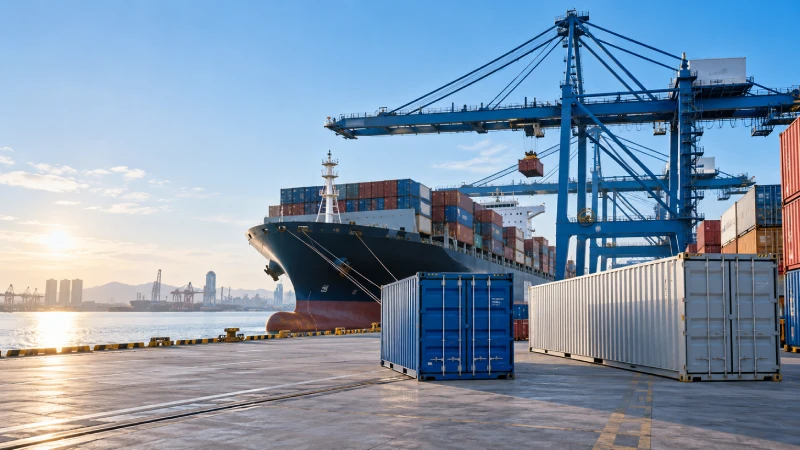
A container shipping quote from China to Nigeria needs five labels before the number becomes meaningful:
origin port + Nigerian destination port + container type + rate validity + inclusions
A “USD 3,000 container rate” tells you very little if you do not know whether it is for a 20GP or 40HQ, whether the destination is Apapa or Onne, whether carrier surcharges are included, or whether Nigerian destination charges are still payable.
For budgeting in October 2026, public market references place standard FCL ocean freight to Lagos broadly around USD 2,970–3,630 for a 20GP and USD 3,150–3,850 for a 40GP, although actual port-pair quotations can fall outside these bands depending on the carrier, origin, sailing and included surcharges.
The important question is therefore not simply:
How much does a container from China to Nigeria cost?
It is:
What will my 20GP, 40GP or 40HQ cost from the correct Chinese loading port to the correct Nigerian gateway, and what costs remain after ocean freight?
This guide focuses specifically on that FCL decision. Importers who are still comparing modes, ports and overall shipment structures should first review Shipping from China to Nigeria. For a broader comparison across sea, air and other cost components, see Shipping Cost from China to Nigeria.
Rate update: October 3, 2026
Rate scope: General dry cargo planning references unless otherwise stated. Final carrier rate, equipment availability, routing, free time and surcharge validity must be reconfirmed before booking.
Current 20ft, 40ft and 40HQ Rates from China to Nigeria
For a first budget, importers can use the following port-to-port market references for containers moving from major Chinese export areas to Lagos.
| Origin Port | Nigerian Port | 20GP | 40GP | 40HQ | Rate Reference | Scope |
|---|---|---|---|---|---|---|
| Shenzhen / Yantian / Shekou | Lagos | USD 2,800–3,200 | USD 3,200–3,800 | Usually similar to 40GP; confirm live rate | Sep–Oct 2026 planning reference | Ocean freight benchmark |
| Guangzhou / Nansha | Lagos | USD 2,850–3,250 | USD 3,250–3,900 | Usually similar to 40GP; confirm live rate | Sep–Oct 2026 planning reference | Ocean freight benchmark |
| Shanghai | Lagos | USD 2,900–3,400 | USD 3,300–4,000 | Confirm by sailing | Sep–Oct 2026 planning reference | Ocean freight benchmark |
| Ningbo | Lagos | USD 2,950–3,450 | USD 3,350–4,100 | Confirm by sailing | Sep–Oct 2026 planning reference | Ocean freight benchmark |
| Qingdao | Lagos | USD 3,000–3,550 | USD 3,400–4,200 | Confirm by sailing | Sep–Oct 2026 planning reference | Ocean freight benchmark |
| Tianjin / Xingang | Lagos | Live check required | Live check required | Live check required | Booking-date rate | North China routings vary materially |
Public September–October 2026 references show meaningful differences between Chinese loading ports and individual sailings. That is exactly why a dated, port-specific quotation is more useful than a generic “China to Nigeria” price.
A live FCL quotation should identify:
- exact port of loading;
- exact port of discharge;
- 20GP, 40GP or 40HQ;
- carrier and routing;
- cargo type;
- rate validity;
- estimated sailing date;
- included carrier surcharges;
- origin charges;
- destination charges excluded from the rate;
- free-time conditions where available.
For importers primarily comparing price rather than equipment, Cheapest Shipping from China to Nigeria explains why the lowest ocean rate does not always produce the lowest total logistics cost.
Check Current Container Rate
For a usable FCL comparison, provide the supplier city, cargo description, package count, total gross weight, total CBM and preferred Nigerian delivery location. The best route can then be compared on total cost rather than headline ocean freight alone.
20GP vs 40GP vs 40HQ — Which Container Fits Your Cargo?
Choosing between a 20ft and 40ft container should not be based on freight price alone.
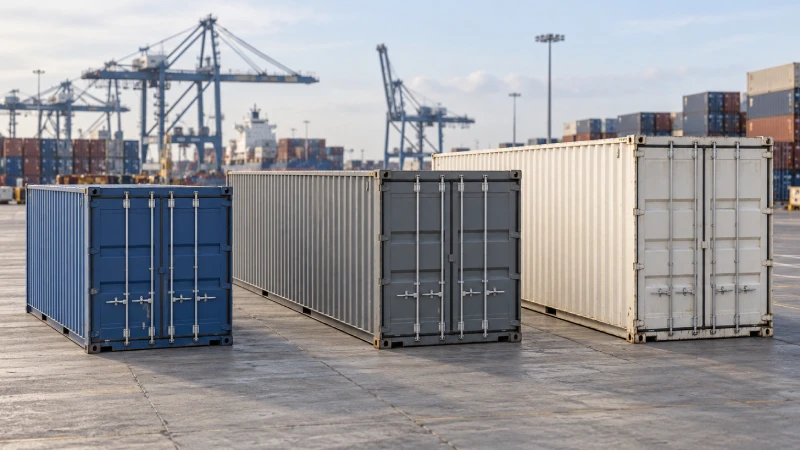
Typical nominal internal capacities are approximately 33 CBM for a 20GP, 67–68 CBM for a 40GP and 76 CBM for a 40HQ. Exact dimensions and payload ratings vary by container manufacturer and individual equipment, so the actual container supplied by the carrier remains the final reference.
| Equipment | Nominal Volume | Practical Cargo Considerations | Best Cargo Profile |
|---|---|---|---|
| 20GP | About 33 CBM | Less volume but strong payload potential; actual usable CBM falls below nominal capacity | Dense machinery, metal goods, hardware, tiles, compact industrial cargo |
| 40GP | About 67–68 CBM | Roughly twice the nominal volume of a 20GP but not twice the payload | Medium-density cargo requiring more floor and cubic capacity |
| 40HQ | About 76 CBM | Extra internal and door height; useful where cargo cubes out before reaching weight limits | Furniture, household goods, packaging, textiles, light machinery and bulky products |
Theoretical capacity is not the same as usable loaded volume. Pallets, irregular cartons, machinery footprints, loading clearance, bracing and cargo that cannot be safely stacked all reduce the number of CBM that can actually be loaded.
A shipment with 30 CBM on paper may not necessarily fit efficiently into a 20GP if the cartons are oversized, the cargo is palletized or the loading pattern leaves unusable gaps.
For heavy cargo, weight can become the constraint long before volume. A dense shipment of machinery, metal products, construction materials or industrial components may reach the practical weight limit while substantial cubic capacity remains unused.
Pro Tip: For dense cargo, confirm gross cargo weight, actual equipment payload and inland road restrictions before optimizing around container volume.
Compare 20ft vs 40ft
If carton dimensions, pallet dimensions or a packing list are available, container selection can be evaluated from both loading feasibility and total logistics cost, rather than CBM alone.
Why a Larger Container Can Have a Lower Cost per CBM
A 40GP is close to twice the nominal capacity of a 20GP, but the ocean freight is often not twice the price.
That is why light or bulky shipments can achieve a much lower freight cost per loaded CBM in a 40GP or 40HQ.
Use this formula:
Effective container freight per CBM = container freight ÷ actual loaded CBM
The key word is actual.
Do not calculate using the full nominal container capacity automatically. A real shipment may load substantially less because of carton dimensions, pallets, non-stackable goods, machinery footprints or loading restrictions.
For example, the commercial decision should compare the rate against the CBM you can realistically load—not against a theoretical specification from a container chart.
This also explains why simply asking whether a 40ft container is “more expensive” than a 20ft container can be misleading.
In total dollars, usually yes.
In cost per loaded CBM, not necessarily.
For bulky cargo that can efficiently fill a 40HQ, the larger container may provide better economics even when its ocean freight is higher.
Importers with smaller shipments should compare this against Shipping Cost per CBM from China to Nigeria before deciding whether to move from LCL to FCL.
China Origin Port Differences
Selecting the loading port should begin with the suppliers—not with a freight-rate table.
Moving cargo hundreds of kilometres across China to save a small amount on ocean freight can increase trucking cost, loading complexity and lead time enough to erase the apparent saving.
| China Origin | Typical Sourcing Area | Commercial Consideration |
|---|---|---|
| Shenzhen / Yantian / Shekou | Shenzhen, Dongguan, eastern Pearl River Delta | Strong South China export network and frequent West Africa options |
| Guangzhou / Nansha | Guangzhou, Foshan and western Pearl River Delta | Often efficient for factories around Guangzhou and Foshan |
| Ningbo | Zhejiang and nearby manufacturing clusters | Major option for Yiwu, Ningbo, Shaoxing and Zhejiang suppliers |
| Shanghai | Shanghai, Jiangsu and eastern China | Broad sailing choice and convenient for Yangtze River Delta factories |
| Qingdao / Tianjin | Shandong, Hebei and North China | Useful for northern suppliers; routing and rate should be checked against eastern and southern alternatives |
Shenzhen, Yantian and Shekou
For factories around Shenzhen and Dongguan, South China ports often provide the most logical combination of trucking distance and ocean connectivity.
If several suppliers are located around the Pearl River Delta, it may be more economical to consolidate them at one loading warehouse before arranging the container stuffing plan.
Guangzhou and Nansha
Nansha is particularly relevant for suppliers around Guangzhou and Foshan. Cargo collected from western Pearl River Delta factories can often avoid unnecessary cross-city trucking by using Nansha rather than moving everything to Shenzhen.
Ningbo
Ningbo is a natural gateway for many Zhejiang suppliers, including cargo originating around Ningbo, Yiwu, Shaoxing and surrounding manufacturing clusters.
The ocean rate should still be compared with Shanghai when routing, equipment or sailing frequency differs materially.
Shanghai
Shanghai offers broad carrier coverage and is normally more practical than trucking Shanghai or Jiangsu cargo to South China simply to chase a lower headline ocean rate.
For multi-supplier orders in eastern China, the container loading point should be selected before comparing port rates.
Qingdao and Tianjin
North China can price differently from Shanghai or South China because carrier rotations, transshipment arrangements, sailing frequency and equipment conditions differ.
For Qingdao and Tianjin shipments, compare the complete route from the supplier rather than assuming a South China benchmark applies.
Which Nigerian Port Should the Container Arrive At?
Nigeria is not a one-port destination. The Nigerian Ports Authority recognizes Lagos Port Complex at Apapa, Tin Can Island Port, Lekki Deep Sea Port and Onne Port as separate port facilities.
The correct gateway depends on the carrier service as well as where the cargo ultimately needs to go.
| Nigerian Gateway | Best Routing Question | Commercial Consideration |
|---|---|---|
| Apapa | Is the consignee or delivery point in Lagos or western Nigeria? | Major established container gateway |
| Tin Can | Is a carrier offering a commercially better Lagos routing here? | Separate Lagos terminal complex; availability depends on service |
| Lekki | Is the carrier offering Lekki service for the intended loading date? | Newer deep-sea gateway with expanding services |
| Onne | Is the cargo ultimately going to eastern or central Nigeria? | Important container gateway for East Nigeria |
Apapa
Lagos Port Complex at Apapa is one of Nigeria’s principal container gateways and remains highly relevant for cargo serving Lagos and western Nigeria.
The correct comparison is not simply “Apapa versus another port.” It should include carrier routing, destination local charges, expected clearance arrangement and inland delivery.
Tin Can
Tin Can Island is a separate Lagos port complex with container-terminal operations.
A carrier may quote Tin Can differently from Apapa even though both serve the Lagos market. Destination handling and inland delivery therefore need to be checked by the actual terminal named on the booking.
Lekki
Lekki has become increasingly relevant for China–Nigeria FCL traffic as carrier networks expand their Nigerian coverage.
That does not mean Lekki will always be cheaper than Apapa. Ocean freight, destination costs, trucking distance and the consignee’s clearance setup should be compared together.
Onne
Onne is especially important for cargo serving eastern Nigeria.
An Onne ocean rate that looks higher than Lagos may still produce a better total result for cargo whose final destination is in eastern or central Nigeria because the inland leg can be substantially different.
Always confirm the specific carrier call and routing for the intended sailing date. Services and port rotations can change.
For broader sea-freight planning, see Sea Freight from China to Nigeria.
What Is Included in the Container Freight Rate?
Never compare two FCL quotations using only the largest number on the page.
One forwarder may quote ocean freight only. Another may include selected carrier surcharges. A third may include China-side handling but exclude almost everything at destination.
| Charge | Typical Basis | Where Charged | Included in Ocean Freight? |
|---|---|---|---|
| Base ocean freight | Per container | International | Usually the core rate |
| Carrier surcharges | Per TEU / container | International | Sometimes included, sometimes separate |
| China pickup / trucking | Per container / trip | Origin | Usually separate |
| Origin THC | Per container | China | Confirm |
| Export documentation | Per B/L | China | Confirm |
| Customs declaration | Per shipment | China | Confirm |
| Nigerian carrier local charges | Per container / B/L | Destination | Usually separate |
| Terminal handling | Per container | Nigeria | Usually separate |
| Customs broker / clearance | Per shipment | Nigeria | Separate |
| Duties and taxes | Customs assessment | Nigeria | Separate |
| Inland trucking | Per container / trip | Nigeria | Separate |
| Storage / demurrage / detention | Time based | Nigeria | Only incurred when applicable |
Your total logistics budget is therefore better represented as:
FCL total = China pickup + origin charges + ocean freight/surcharges + destination local charges + clearance + taxes + delivery + time-based charges
The Incoterm also matters. An EXW shipment requires more China-side coordination than a supplier delivering the container under FOB terms.
For full-container shipments, FCL Shipping from China explains the wider booking, loading and operational process. Winsail’s broader Ocean Freight from China service page covers both FCL and LCL options.
Current Carrier Surcharges and Why Rates Move
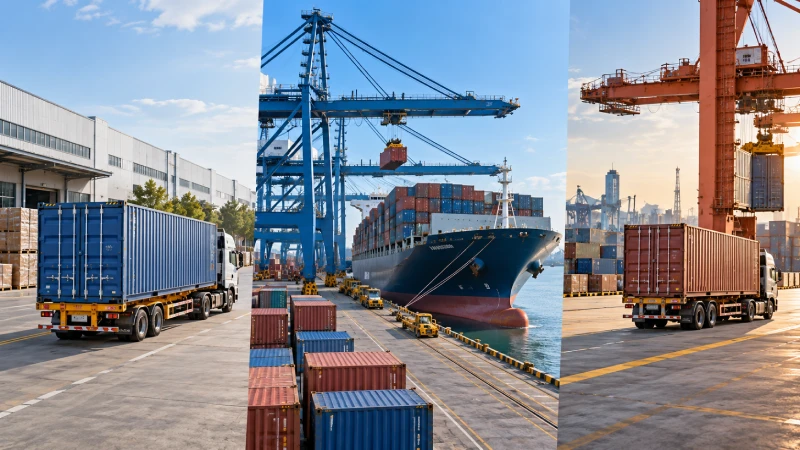
Container rates change because the carrier’s base freight is only one component of the commercial price.
Fuel adjustments, peak-season surcharges, space conditions, equipment availability, service changes and port congestion can all reprice a shipment between planning and booking.
A current October 2026 example is CMA CGM’s announced USD 200 per TEU Peak Season Surcharge on applicable short-term contracts from Central and South China to Nigeria and other West Africa Central Range destinations, effective from October 15, 2026 loading date.
For affected quotations, that means a 20ft container can have a nominal USD 200 surcharge exposure and a 40ft-equivalent shipment a nominal USD 400 exposure when the PSS is separately applied. Whether it appears as a separate line item or is incorporated into the ocean-freight amount must be checked on the carrier or forwarder quotation.
This is why an October 10 rate should not automatically be reused for cargo loading after October 15.
A usable quotation should always show a valid-until date, intended loading window or sailing condition.
Carrier notices and surcharge rules can change quickly. Final applicability must therefore be reconfirmed at booking rather than treated as a permanent tariff.
Nigeria Destination Charges for FCL Containers
Ocean freight is not the final amount payable before a container reaches your warehouse.
After arrival in Nigeria, the potential cost chain can include:
carrier local charges → terminal charges → customs and clearance → container release → trucking → empty-container return
Depending on the shipment, additional exposure can include:
- carrier documentation and administrative charges;
- terminal handling;
- customs broker fees;
- customs duties and taxes;
- scanning or examination;
- storage;
- demurrage;
- detention;
- trucking;
- empty-container return;
- special handling.
These destination costs are container-specific and can differ by carrier, terminal, equipment size, cargo type and how quickly the container is cleared and returned.
For that reason, a USD 3,200 ocean-freight rate and a USD 3,400 ocean-freight rate cannot be compared accurately until the destination side is normalized.
Free Time Matters
Container free time determines how long the equipment can remain within the applicable carrier or terminal rules before time-based charges begin.
The terminology can vary by carrier and contract, but the commercial risk is the same: clearance, terminal release, trucking or empty return delays can convert a competitive freight rate into an expensive shipment.
Pro Tip: Obtain the container’s free-time terms before booking—not after the vessel arrives.
A complete destination-cost analysis should be kept separate from the ocean-rate comparison so that carrier local charges, terminal charges, demurrage, detention and inland delivery can be checked independently.
When Does FCL Make More Sense than LCL?
There is no universal CBM number at which every Nigeria shipment should switch from LCL to FCL.
The correct comparison is:
Total LCL cost vs total FCL cost for the same cargo and destination
For LCL, compare:
LCL ocean freight + origin CFS + documentation + destination CFS/deconsolidation + handling + clearance + delivery
For FCL, compare:
container freight + origin charges + destination container charges + clearance + trucking + potential container time charges
As shipment volume rises, LCL charges usually continue increasing with CBM, while much of the FCL ocean charge is fixed per container.
FCL can therefore become attractive before the cargo physically fills an entire 20GP.
Other reasons to choose FCL include:
- fewer consolidation and deconsolidation handling points;
- more control over container loading;
- easier handling of large machinery or palletized cargo;
- less interaction with unrelated shippers’ cargo;
- simpler planning for high-volume commercial imports.
However, booking a nearly empty container purely to avoid LCL is not automatically economical.
Compare the complete destination-side quotations first. If the shipment is still relatively small, use Shipping Cost per CBM from China to Nigeria to compare LCL economics. If schedule matters as much as cost, review How Long Does It Take to Ship from China to Nigeria? before selecting the final mode.
Send Container Cargo Details
To compare 20GP, 40GP and 40HQ shipping from China to Nigeria, prepare:
- China supplier location;
- cargo description;
- package count;
- carton or pallet dimensions;
- total CBM;
- gross weight;
- cargo-ready date;
- Nigerian port or final delivery city.
Winsail Logistics handles shipments originating from China and can compare the loading port, Nigerian gateway, container equipment and routing before the booking is confirmed.
The objective is not simply to find the lowest displayed ocean rate. It is to identify the container and route with the most workable total cost, loading plan and destination exposure for your shipment.
FAQ
How much is a 20ft container from China to Nigeria?
For October 2026 budgeting, public Lagos market references are broadly around USD 2,970–3,630 for a 20GP, although live rates can fall outside that range depending on the Chinese origin port, carrier, Nigerian gateway, cargo and loading date.
How much is a 40ft container from China to Nigeria?
A public October 2026 Lagos reference places 40GP ocean freight around USD 3,150–3,850, but individual port-pair and carrier quotations can be materially different. Confirm whether the quotation is for 40GP or 40HQ and which surcharges are included.
Is 40HQ more expensive than 40GP?
Not always by much. Some quotations price 40GP and 40HQ similarly, while others apply an equipment premium. Availability can also change the difference, so both equipment types should be checked for the same sailing.
Which container is better for heavy cargo?
A 20GP often works well for dense cargo because weight can become the limiting factor before volume. Actual container payload, cargo weight distribution and inland transport restrictions still need to be confirmed before loading.
Does a container freight rate include Nigerian port charges?
Usually not all of them. Ocean freight may include selected carrier surcharges, but Nigerian carrier local fees, terminal costs, customs clearance, duties, trucking and time-based charges should be confirmed separately.
Is shipping to Apapa priced differently from Onne or Lekki?
Yes. Carrier routing, port calls, destination terminals, transshipment arrangements and equipment conditions can change the price. Inland delivery can also make a higher ocean rate more economical overall.
When does FCL become more economical than LCL?
There is no universal CBM threshold. Compare the complete LCL quotation, including origin and destination CFS charges, against the complete FCL quotation for the same cargo and final destination.
How long is an FCL rate valid?
It varies by carrier and market conditions. Spot and short-term rates may only be valid for a limited booking or loading window, so always check the validity date, intended ETD and any surcharge effective dates before booking.
