

FCL shipping from China to Tanzania gives importers exclusive use of a shipping container, typically a 20GP, 40GP, or 40HC. If you are still comparing transportation options, start with our shipping from China to Tanzania guide.
For an FCL shipment, successful delivery requires more than booking ocean freight. You must select suitable equipment, coordinate loading and documentation, arrange customs and carrier release at Dar es Salaam, schedule inland delivery, and return the empty container within the applicable free-time conditions.
Operational Data Note — Reviewed October 2026
Container equipment references and operational procedures in this guide were reviewed against published international shipping guidance and Tanzanian authority information. The Tanzania Ports Authority’s January 2026 tariff provides a reference for port storage, but this is separate from shipping-line demurrage and detention arrangements. Actual free time, equipment availability, port handling requirements, inland delivery and carrier release conditions must be confirmed for each booking. This guide focuses on mainland Tanzania imports through Dar es Salaam.
1. Choosing the Right FCL Container: 20GP, 40GP or 40HC
Choosing an FCL container involves more than calculating cargo volume. The correct equipment must accommodate the physical dimensions, gross weight, packaging configuration and loading method of your products.
A container may have sufficient internal space but still be unsuitable because of its permitted payload, floor-loading restrictions, door dimensions or inland transportation limits.
When to Use a 20GP, 40GP or 40HC Container
| Container Type | Best-Fit Cargo | Main Consideration |
|---|---|---|
| 20GP (20ft General Purpose) | Dense machinery, metal products, compact industrial goods and heavy packaged cargo | Payload, concentrated floor loads and weight distribution |
| 40GP (40ft General Purpose) | Palletized products, commercial goods, furniture and larger-volume shipments | Loading configuration, usable space and gross weight |
| 40HC (40ft High Cube) | Taller equipment, lightweight packaged goods, furniture and volumetric cargo | Extra internal height, package clearance and road transport restrictions |
A 20GP is often a practical starting point for relatively dense cargo. A 40GP offers more internal loading space, while a 40HC provides additional height for suitable products.
However, a 40ft container does not automatically permit twice the cargo weight of a 20ft container.
For machinery, industrial equipment or other heavy goods, check the actual container’s maximum gross mass, tare weight, permitted payload and load distribution. Oversized or temperature-sensitive cargo may require specialized equipment rather than a standard dry container.
Check Cargo Weight and Loading Requirements Before Booking
Before choosing equipment, prepare a packing list showing:
- Total number of cartons, pallets or individual packages.
- Dimensions and gross weight of each package or equipment unit.
- Total cargo weight and calculated cargo volume.
- Largest package dimensions and loading orientation.
- Whether forklifts, cranes or specialized loading equipment are necessary.
Also verify container door clearance, floor strength, local road weight restrictions and the planned inland route.
For detailed equipment dimensions and freight-cost comparisons, read our 20ft and 40ft container shipping cost guide for Tanzania.
The final container selection should be based on an achievable loading plan, not nominal capacity alone.
2. Preparing and Loading an FCL Container in China
Container stuffing is one of the most important stages of FCL shipping. Loading errors can lead to cargo movement, damaged packaging, weight discrepancies and additional handling when the shipment reaches Tanzania.
Importers should confirm the loading arrangement before the shipping container is dispatched to the supplier.
Factory Stuffing vs Warehouse Stuffing
There are two common loading arrangements.
Factory stuffing: An empty container is delivered to the supplier’s factory, where the supplier or appointed loading contractor loads and secures the cargo. The sealed container is then transported to the export terminal.
This can be suitable when most or all cargo comes from one manufacturing location with appropriate loading facilities.
Warehouse stuffing: Cargo is first transported to a designated loading warehouse. Goods are checked, organized and loaded into the shipping container before terminal delivery.
This approach can be useful for importers purchasing products from multiple Chinese suppliers.
For either arrangement, confirm who pays for container positioning, loading labor, lifting equipment, export trucking and any additional inspection services.
The responsible parties depend on the sales contract, agreed Incoterms and transportation quotation.
Inspect the Container Before Loading
The loading team should inspect the empty equipment before stuffing begins.
Check that:
- The container identification number matches the release documentation.
- Doors and locking mechanisms operate correctly.
- The floor is structurally suitable for the cargo.
- Walls and roof show no obvious holes or water ingress.
- The interior is clean, dry and free from problematic odors.
- No visible structural damage could affect safe transportation.
Do not load a visibly unsuitable container simply to meet a vessel cut-off. Arrange an equipment replacement or obtain appropriate technical clearance before proceeding.
Distribute and Secure the Cargo Properly
Heavy items should be positioned according to an appropriate load-distribution and securing plan. Fragile packages require suitable protection, while machinery may need blocking, bracing, lashing or other engineered securing arrangements.
Particular attention is necessary when cargo creates concentrated loads on the container floor.
The shipper must also arrange an accurate Verified Gross Mass (VGM).
Under SOLAS requirements, VGM can be established by weighing the packed container or by an approved method that combines the masses of the cargo, packaging and securing materials with the container’s tare mass.
A packed container without the required VGM cannot be loaded onto a SOLAS-regulated vessel. The official IMO container safety guidance explains this requirement.
Confirm the VGM submission deadline with the booking carrier or forwarder.
Record the Container and Seal Numbers
After loading, the container should be sealed using the seal required by the carrier and applicable procedures.
Record the container number, seal number, package count and loading completion time. Keep photographs of the cargo arrangement, closed container doors and readable seal identification.
The seal number should match the final shipping instructions and transport documentation.
Pro Tip — Document the Seal Before Dispatch
Take clear photographs of the container number, sealed doors and seal identification before the truck leaves the loading location. Keep these records with the loading report and packing list. They can help investigate subsequent discrepancies, inspections or cargo claims.

3. FCL Booking, Shipping Instructions and Bill of Lading Checks
After selecting equipment and arranging loading, the next priority is accurate shipping documentation.
A shipment may reach Dar es Salaam successfully but still face release delays if its bill of lading, customs manifest and commercial documents contain inconsistent information.
Confirm the Booking and Export Deadlines
The booking confirmation should identify the carrier, equipment type, port of loading, port of discharge, vessel or service details and relevant cut-offs.
Common Chinese departure ports include Shanghai, Ningbo, Shenzhen and Guangzhou/Nansha.
Before dispatching the container, verify the terminal receiving deadline, Shipping Instructions cut-off, VGM cut-off and any export customs requirements.
A direct service and a transshipment service may have different operating schedules. Actual availability and routing must be checked against the booked sailing.
For an overview of route options, see sea freight from China to Tanzania. For shipment scheduling, consult our China to Tanzania shipping transit time guide.
Verify the Bill of Lading Before Final Issuance
The bill of lading is a key transportation document. Depending on the arrangement, a carrier-issued Master Bill of Lading and a forwarder-issued House Bill of Lading may both be involved.
Before approving the final documents, check the following information.
| B/L Information | What to Verify |
|---|---|
| Shipper | Correct legal name and details |
| Consignee | Correct receiving/importing party and release arrangement |
| Notify Party | Appropriate contact for arrival notifications |
| Ports | Correct loading and discharge ports |
| Cargo Description | Consistent with the commercial documents |
| Packages and Weight | Correct quantities and gross weight |
| Container Number | Matches the loaded equipment |
| Seal Number | Matches the physical seal and loading record |
| Freight Terms | Correct freight-payment designation |
Pay particular attention to the consignee details and seal number.
An incorrect consignee may create cargo-release difficulties. A seal discrepancy can require investigation or formal amendment, particularly once the import manifest has been submitted.
Original Bill of Lading, Sea Waybill or Electronic Release
An original negotiable bill of lading, a sea waybill and a surrender or electronic-release arrangement do not work in exactly the same way.
The correct option depends on the transport contract, financing arrangements, carrier acceptance and destination release requirements.
Confirm the document-release method before the vessel arrives.
Your Tanzanian clearing agent should also establish which carrier documents, authorization letters, equipment guarantees or payment confirmations are required to obtain the delivery order.
Plan My Full Container Shipment
Preparing an FCL shipment? Share your supplier location, cargo packing list, preferred container size and Tanzanian delivery address with Winsail Logistics to discuss equipment selection, loading arrangements and shipment planning.
4. Customs Clearance and Container Pickup at Dar es Salaam
Arrival at Dar es Salaam Port does not automatically mean the container is available for collection.
Importers must coordinate customs clearance, shipping-line release, port documentation, payment and truck collection before the container can leave the terminal.
Appoint a Licensed Clearing and Forwarding Agent
The Tanzania Revenue Authority (TRA) requires importers to appoint a licensed Clearing and Forwarding Agent (CFA) for customs clearance.
Import documentation is lodged through the Tanzania Customs Integrated System (TANCIS).
TRA advises importers and their agents to submit documents at least seven days before vessel arrival, where practicable. This supports pre-arrival processing but does not guarantee immediate customs release.
Typical supporting documents include:
- Final commercial invoice and packing list.
- Bill of lading or applicable transport document.
- Importer’s authorization to the clearing agent.
- Applicable product permits, certificates or exemptions.
- Other documentation required for the declared goods.
See the official TRA import procedures.
For products subject to Tanzania Bureau of Standards (TBS) Pre-shipment Verification of Conformity, the appropriate Certificate of Conformity must be arranged according to the applicable requirements.
Product-specific restrictions, permits and certification requirements should be checked using the correct HS code before shipping. The procedures for mainland Tanzania and Zanzibar should not be treated as interchangeable.
Obtain Customs and Shipping-Line Release
Once the necessary documents are available, the appointed CFA coordinates the import-clearance process and applicable payments.
A typical Dar es Salaam FCL release workflow involves the following stages:
- Document preparation: The CFA checks the commercial documents, bill of lading and any required certificates or permits.
- Customs processing: The declaration is processed through TANCIS, with assessment, payment and inspection where applicable.
- Shipping-line release: The agent meets the carrier’s document, payment and authorization requirements to obtain the appropriate release documentation.
- Port documentation and charges: The required bill of lading, delivery order (DO) and release order (RO) information is submitted through the relevant port process. TPA’s electronic payment portal, TePP, supports port-charge billing.
- Truck announcement: The authorized truck and driver are registered for cargo collection and the relevant entry authorization is obtained.
- Terminal collection and gate-out: The container is collected following the required yard and gate checks.
The shipping-line delivery order, customs release and terminal gate authorization are separate controls. Completing one does not automatically satisfy the others.
Actual procedures can vary with the shipping line, terminal and type of shipment.
Prepare for Customs Examination and Pickup
If a container is selected for examination, the importer and clearing agent should coordinate access, inspection and any required documentation.
Where an authorized inspection involves opening the container, record the condition of the original seal and any replacement seal.
Before dispatching the collection truck, confirm that customs release, carrier release and relevant terminal permissions are in place.
The trucker should also verify the container number and visible equipment condition at collection.
Do not schedule a warehouse receiving appointment solely on the vessel’s estimated arrival date. Use confirmed release and trucking information.
5. Container Free Time, Demurrage, Detention and Port Storage
Free time is one of the most frequently misunderstood aspects of FCL shipping.
Importers may assume they have a fixed number of days to collect and unload their container. In reality, port storage allowances and shipping-line equipment terms can be separate, and their calculation rules may differ.
Understand the Three Different Charges
| Charge | What It Generally Covers | What the Importer Must Check |
|---|---|---|
| Port Storage | Cargo/container remaining in the terminal beyond applicable storage allowances | Terminal tariff, start date and storage calculation |
| Demurrage | Carrier-owned container remaining at the terminal beyond applicable free time | Carrier tariff, booking terms and calculation method |
| Detention | Carrier-owned container retained outside the terminal beyond the applicable allowance | Empty-return deadline, depot and daily charges |
Some shipping lines apply combined or merged demurrage-and-detention conditions rather than separate free-time periods.
Shipper-owned containers may also be treated differently from carrier-owned equipment.
What Free Time Applies at Dar es Salaam?
The Tanzania Ports Authority’s January 2026 sea-port tariff, under its domestic FCL import storage provisions, lists the first five days after cargo discharge and posting in the TRA system as free of the specified port storage charge.
Charges under that tariff then increase according to the applicable storage period and container size.
This is a published port-storage provision, not a universal five-day allowance for shipping-line equipment. Actual terminal application and subsequent tariff revisions must be checked against the shipment.
The official TPA January 2026 tariff book provides the underlying reference.
Shipping-line free time is a different matter.
For example, Maersk’s published Tanzania import information includes a dry-container free-time table with a June 2021 effective date. Its website also directs Spot customers to the terms applicable to their bookings.
That historical published allowance should not be interpreted as a confirmed free-time offer for a new shipment.
Never assume the same conditions apply to another carrier, special quotation or contracted service.
Confirm the Last-Free Dates Before Container Collection
Before the vessel arrives, ask the carrier or destination agent to confirm:
- The applicable terminal storage conditions.
- Whether carrier demurrage and detention are separate or combined.
- The relevant start events and last-free dates.
- Whether calendar days, weekends and holidays are included.
- The designated empty-container return depot.
- The applicable equipment-return and extension arrangements.
A practical shipment tracker can help.
| Operational Milestone | Date to Record |
|---|---|
| Vessel discharge | Confirmed actual date |
| Port storage last-free date | Confirmed from applicable terminal terms |
| Carrier equipment last-free date(s) | Confirmed from booking-specific carrier terms |
| Planned container gate-out | Scheduled collection date |
| Warehouse unloading | Confirmed receiving appointment |
| Empty-container return | Planned and actual return dates |
Pro Tip — Confirm Free-Time Terms in Writing
Request the carrier’s booking-specific free-time conditions and last-free dates before arranging terminal pickup. Allow sufficient time for customs clearance, inland trucking, unloading and empty return. If a delay occurs, seek an extension promptly rather than assuming the charge clock will stop.
Inspection, customs delays and public holidays do not automatically suspend storage or equipment charges. Any waiver or exception must be supported by the applicable tariff or a written agreement.
For broader freight and destination expense planning, see shipping costs from China to Tanzania.
6. Port-to-Door Delivery, Warehouse Unloading and Empty-Container Return
For many importers, the final destination is not the port. The container must travel to a warehouse, factory, distribution center or inland receiving location.
Planning this movement in advance is essential because the shipping line’s equipment-return deadline may continue to apply after the container leaves the terminal.
Arrange Inland Delivery from Dar es Salaam
Container delivery may be arranged to destinations within Dar es Salaam or inland locations such as Dodoma, Arusha and Mwanza, subject to confirmed transportation arrangements.
Before accepting a port-to-door quotation, verify the delivery address, road access, cargo weight, available truck configuration and receiving schedule.
Long inland movements can affect how much time remains for unloading and returning the equipment.
The quotation should clearly explain whether it includes:
- Loaded-container trucking from the terminal.
- Delivery to the agreed warehouse or receiving site.
- Truck waiting time and any associated conditions.
- Unloading labor or equipment, if specifically contracted.
- Return trucking for the empty container.
- Additional handling or permit requirements, where applicable.
Do not assume that trucking to a named city includes every step required to complete delivery.
Prepare the Warehouse Before the Truck Arrives
An FCL delivery requires a suitable receiving area.
Confirm that the site has sufficient access and turning space for the truck, safe ground conditions, available unloading personnel and any required forklift or crane.
For heavy machinery, inspect unloading requirements before the container is loaded in China. A receiving site may need lifting equipment capable of handling the cargo’s actual weight and dimensions.
When the container arrives, verify its identification and seal record before opening.
Document visible damage, missing packages or discrepancies during unloading and notify the appropriate parties promptly.
Retain delivery and receiving records for reconciliation or potential claims.
Complete Empty-Container Return
When a carrier-owned container has been unloaded, it normally needs to be returned to the designated depot under the carrier’s instructions.
Check that:
- The container has been emptied.
- Any visible equipment damage has been recorded.
- The correct return depot and appointment requirements are confirmed.
- The empty container is returned within the applicable deadline.
- A return receipt or Equipment Interchange Receipt (EIR), where issued, is obtained and retained.
The return receipt provides important evidence of when and where equipment was handed back.
Cargo delivery and equipment return are separate operational milestones. The shipment may have reached the buyer’s warehouse even though carrier detention exposure remains open.
Does Door-to-Door Delivery Mean DDP?
No. Door-to-door describes the transportation arrangement, not necessarily who is legally responsible for import clearance and taxes.
Under DAP (Delivered at Place), the seller arranges delivery to the named destination, while the buyer generally handles import clearance and associated duties and taxes.
Under DDP (Delivered Duty Paid), the seller assumes import-clearance and import-duty obligations under the agreed rule. A genuine DDP arrangement must also be legally workable in Tanzania.
Under both rules, final unloading is generally the buyer’s responsibility unless separately agreed.
For a detailed comparison, see DDP shipping from China to Tanzania.
The agreed Incoterms rule, named place and separate logistics contracts should clearly allocate delivery, unloading and empty-return responsibilities.
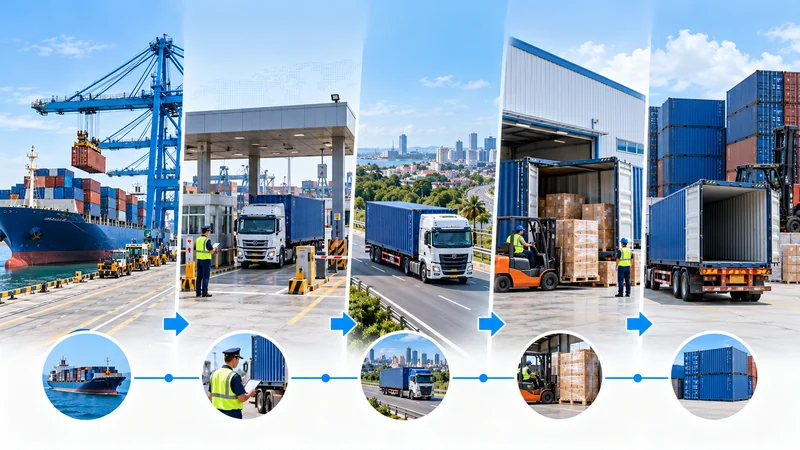
7. FCL Shipping Checklist and Container Handover Responsibilities
A reliable FCL shipment depends on completing the right actions at each handover. The importer should know which party is responsible, what evidence is required and when the next party can proceed.
China to Tanzania FCL Shipment Checklist
| Stage | Required Action | Evidence to Keep |
|---|---|---|
| Container Booking | Confirm equipment, routing and agreed services | Booking confirmation |
| Factory Loading | Inspect equipment, secure cargo and record seal | Loading report and photographs |
| Export Dispatch | Complete required export, VGM and terminal procedures | Submission and gate-in records |
| Shipping Documents | Verify B/L, consignee and container information | Approved transport documents |
| Import Preparation | Appoint CFA and submit supporting documents | Declaration records |
| Port Release | Complete customs, carrier and port requirements | Release documents and gate-out record |
| Inland Delivery | Deliver and unload cargo at the agreed location | Delivery confirmation |
| Empty Return | Return carrier equipment and close outstanding matters | EIR or depot receipt |
Who Is Responsible at Each Container Handover?
The following matrix shows typical operational responsibilities. Actual contractual obligations depend on the agreed Incoterms, transport contracts and service providers.
| Handover | Typical Responsible Party | Critical Evidence |
|---|---|---|
| Empty container pickup | Origin trucker or nominated logistics provider | Equipment release/interchange record |
| Container stuffing | Supplier or appointed loading contractor | Loading report and seal photographs |
| Export booking and documents | Booking party, exporter or forwarder | Booking confirmation and B/L |
| Tanzania customs clearance | Importer’s licensed CFA | Customs release documentation |
| Shipping-line and terminal release | CFA with relevant shipping agent and terminal | DO/RO and applicable gate authorization |
| Inland container delivery | Nominated local transport provider | Delivery receipt |
| Empty-container return | Party responsible for return haulage | EIR or accepted return receipt |
The importer should also retain a clear record of the party responsible for resolving discrepancies.
For example, an incorrect seal number may require input from the origin loading team, shipper, carrier and destination agent. A delayed empty return may involve the trucker, warehouse and party responsible for equipment charges.
Recording responsibilities before shipment is much easier than resolving them after an unexpected charge or release delay.
Plan My Full Container Shipment
Winsail Logistics can discuss your China–Tanzania FCL transportation requirements and help you identify the arrangements that need to be confirmed before shipment.
Provide your cargo description, dimensions, gross weight, supplier pickup address, cargo-ready date and final delivery destination. If you are combining goods from several suppliers or require specialized loading, include those details so the proposed arrangement can be assessed.
FAQ
Can I book an FCL container without filling the entire container?
Yes. FCL means exclusive use of the booked container, not a requirement to fill every cubic meter. Importers may choose FCL for cargo separation, loading control or other operational reasons. However, compare the full FCL and LCL costs, including origin handling, destination charges, unloading and delivery, rather than relying on a fixed volume threshold.
Can products from multiple Chinese suppliers be shipped in one FCL container?
Yes, subject to suitable cargo compatibility, export arrangements and documentation. Products can be brought to an agreed consolidation warehouse or loading location before container stuffing. Confirm which party acts as exporter, how the goods will be declared, whether the cargo can safely travel together and which documents are required for the combined shipment.
What happens if a container seal is broken during customs inspection?
Authorized customs or other regulatory inspections may require a container to be opened. The clearing agent should obtain the relevant examination record and document the replacement seal when one is applied. Communicate the new seal information to parties responsible for subsequent container movement and keep the inspection records to explain discrepancies.
Do I need an original bill of lading to collect my container in Tanzania?
Not in every case. Cargo may move under an original negotiable bill of lading, sea waybill or another accepted release arrangement, depending on the carrier and transport contract. The consignee and clearing agent must satisfy the shipping line’s documentation requirements. Confirm the release method before arrival, especially if trade financing is involved.
Does a customs inspection stop demurrage or port-storage charges?
Not automatically. Whether storage or carrier equipment charges continue depends on the applicable tariff, booking conditions and any agreed exception. Record inspection dates, monitor the relevant free-time deadlines and request any available extension or waiver through the appropriate process.
Can an FCL container be delivered from Dar es Salaam to Arusha or Dodoma?
Port-to-door container transport to inland Tanzania may be arranged, subject to cargo, road route, trucking availability, delivery location and agreed service scope. Confirm warehouse access, unloading equipment, return-depot requirements and inland transportation terms before booking.
Who pays if my warehouse cannot unload the container on arrival?
Responsibility depends on the sales contract and inland transportation agreement. If the receiving site is not ready, truck waiting, rescheduling or equipment-related charges may arise. Confirm unloading responsibility, included waiting time, extra waiting charges and empty-return arrangements before delivery.
