
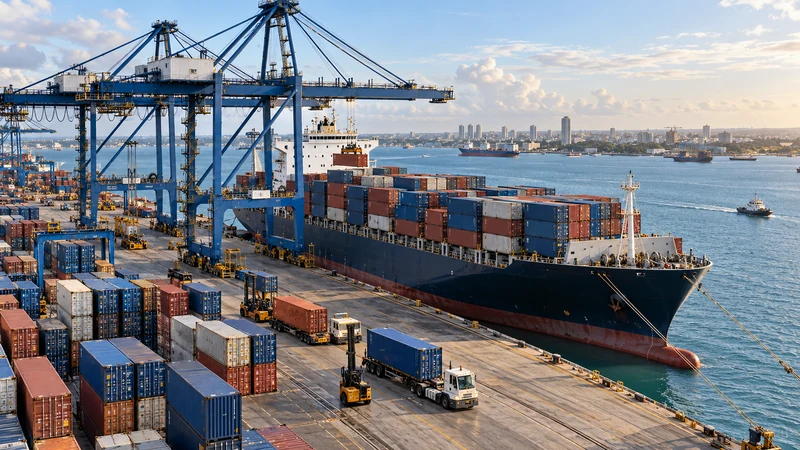
Shipping a 20ft or 40ft container from China to Tanzania has no single fixed price. The cost depends on the Chinese loading port, container size, carrier, sailing date, and included services. A 20GP often suits compact or heavy cargo, while 40GP and 40HC containers provide more space for bulky goods. Compare the complete freight quotation, actual loading capacity, destination charges, and cost per unit before booking.
Freight Rate Data Note — Reviewed October 2026
Container dimensions in this guide are based on published Maersk equipment specifications. Tanzania port-charge examples reference the Tanzania Ports Authority’s January 2026 tariff. These are equipment and tariff references, not live ocean-freight quotations. Current 20GP, 40GP, and 40HC rates require shipment-specific confirmation from a carrier or freight forwarder.
For importers purchasing machinery, furniture, construction materials, consumer goods, or other commercial products, choosing the right container can make a substantial difference to shipping economics.
A lower freight rate does not necessarily mean a cheaper shipment. You also need to consider how many units the container can safely accommodate, whether origin and destination handling is included, how the container will reach your warehouse, and when the empty equipment must be returned.
This guide focuses specifically on full container load (FCL) shipping costs and container selection. For a broader overview of available transport methods, see our shipping from China to Tanzania guide. For a general introduction to the process, refer to sea freight from China to Tanzania.
1. 20GP vs 40GP vs 40HC: Dimensions, Payload and Cargo Fit
The first decision is not necessarily which container has the lowest ocean freight rate. It is which container can safely carry your order without unnecessary unused space or avoidable handling costs.
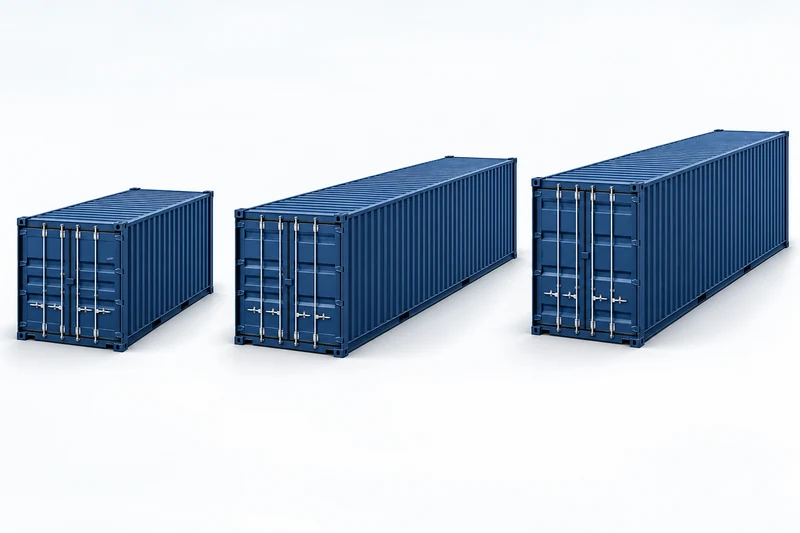
Three common dry-container options are 20GP, 40GP, and 40HC.
Standard Container Dimensions and Capacity
The table below uses Maersk’s published dry-container specifications as a reference.
| Specification | 20GP (20ft) | 40GP (40ft) | 40HC (40ft High Cube) |
|---|---|---|---|
| Internal length | 5.898 m | 12.032 m | 12.032 m |
| Internal width | 2.352 m | 2.352 m | 2.352 m |
| Internal height | 2.393 m | 2.393 m | 2.698 m |
| Door width | 2.340 m | 2.340 m | 2.340 m |
| Door height | 2.280 m | 2.280 m | 2.585 m |
| Nominal capacity | 33.2 CBM | 67.7 CBM | 76.4 CBM |
| Reference maximum payload | 28,300 kg | 28,870 kg | 28,690 kg |
| Reference maximum gross weight | 30,480 kg | 32,500 kg | 32,500 kg |
Source: Maersk Dry Container Equipment Specifications. Figures represent reference equipment specifications. Actual dimensions, tare weight, allowable payload, and transportation restrictions must be checked for the container and route booked.
A 40GP offers approximately twice the nominal volume of a 20GP, but it does not provide twice the permitted cargo weight. Similarly, the main advantage of a 40HC over a 40GP is additional internal height rather than a significantly greater weight allowance.
This distinction matters when importing heavy products. A shipment may reach its allowable weight before filling the available cubic space.
Which Container Is Best for Your Cargo?
| Cargo characteristics | Container to evaluate first | Main consideration |
|---|---|---|
| Compact, dense goods | 20GP | Payload and weight distribution |
| Heavy machinery or metal products | 20GP, subject to load checks | Individual-piece weight, floor loading, lifting access |
| Large quantities of standard cartons | 40GP | Usable space and stacking efficiency |
| Furniture and bulky household products | 40GP or 40HC | Carton dimensions and load arrangement |
| Taller packaged products | 40HC | Door clearance and internal height |
| Mixed goods from several suppliers | 40GP or 40HC | Cargo compatibility and consolidation costs |
| Large, unusually shaped machinery | Equipment assessment required | Dimensions, door access, securing, and special equipment needs |
These are starting points, not automatic container assignments.
For example, a shipment of dense metal components may be more suitable for a 20GP even when the container is nowhere near full by volume. Conversely, lightweight furniture cartons may require a 40GP or 40HC because available space, rather than payload, becomes the limiting factor.
For machinery, the dimensions of the largest individual package may be more important than total CBM. Equipment that fits within a container’s internal dimensions may still be impossible to move through its door.
Why Nominal Container Capacity Is Not Actual Loading Capacity
A container’s published CBM is a geometric reference. It does not tell you exactly how much commercial cargo will fit.
The usable loading space depends on:
- Carton dimensions and permitted orientations.
- Pallet size, height, and overhang.
- Packaging strength and stacking restrictions.
- Spaces required for securing and bracing.
- Cargo shape and gaps between packages.
- Door-opening clearance.
- Total gross cargo weight and its distribution.
A useful preliminary calculation is:
Total Cargo CBM = Carton Length × Carton Width × Carton Height × Number of Cartons
Use meters for each dimension.
You should also calculate:
Total Cargo Gross Weight = Gross Weight per Carton × Number of Cartons
For mixed cargo, calculate the volume and gross weight of each package group separately, then combine the results.
These calculations indicate whether an equipment option is worth evaluating. They do not replace an actual loading plan.
Under the International Maritime Organization’s verified gross mass (VGM) requirements, the verified gross mass of a packed container must be provided before loading onto a vessel. The structural rating of the container is also not an automatic authorization to carry the same weight on every road or truck.
The final selection should therefore satisfy both the cargo-loading requirements and the restrictions of the actual transport route.
2. How Much Does 20ft or 40ft Container Shipping Cost from China to Tanzania?
A reliable container freight price must be linked to a specific shipment and validity period.
There is no permanent USD rate for a 20GP, 40GP, or 40HC moving from China to Dar es Salaam. Ocean freight changes with vessel capacity, equipment availability, carrier pricing, routing, departure dates, and applicable surcharges.
Two quotations for the same container size may also cover different services.
One may include only ocean transportation between designated terminals. Another may include some China-origin charges, documentation, or other services.
Comparing the headline prices without checking their scope can therefore be misleading.
China to Dar es Salaam Container Freight Rate Comparison
Dar es Salaam is a major gateway for imports entering mainland Tanzania. Shanghai, Ningbo, Nansha, Yantian, and Shekou are among the Chinese loading-port options importers may consider.
The following table identifies the route comparisons to request. It is not a live rate sheet.
| China loading port | 20GP ocean freight | 40GP ocean freight | 40HC ocean freight |
|---|---|---|---|
| Shanghai → Dar es Salaam | Current quote required | Current quote required | Current quote required |
| Ningbo → Dar es Salaam | Current quote required | Current quote required | Current quote required |
| Guangzhou / Nansha → Dar es Salaam | Current quote required | Current quote required | Current quote required |
| Shenzhen / Yantian or Shekou → Dar es Salaam | Current quote required | Current quote required | Current quote required |
Rate status: Current, comparable carrier-specific prices have not been independently verified for these routes. A numerical freight range should only be used when its quotation date, validity, carrier or rate source, equipment type, and included charges can be established.
For a meaningful comparison, request rates using the same cargo details and shipping period. Each quote should identify the exact origin terminal, destination, equipment type, currency, validity date, and included surcharges.
What Determines the Ocean Freight Rate?
1. Container type and equipment availability
A 40GP or 40HC is priced separately from a 20GP. Its rate is affected by commercial demand and availability, not simply by its physical dimensions.
A 40HC is not necessarily more expensive than a 40GP on every sailing. Actual pricing depends on the carrier and booking conditions.
2. Chinese loading port
Shanghai, Ningbo, Nansha, Yantian, and Shekou may have different carrier options, equipment availability, terminal costs, and inland pickup requirements.
3. Sailing date and vessel capacity
A quotation for one departure period may not remain valid for a later shipment. Rates can also change when space is limited or equipment must be repositioned.
4. Routing and transshipment
A service may involve a direct port call or one or more transshipment connections. The routing affects schedules, available capacity, and potentially the commercial rate.
Do not assume that a cheaper service will have the same arrival schedule or connection risk.
5. Freight surcharges and rate conditions
Some quotations incorporate applicable carrier surcharges, while others display certain charges separately.
Ask which surcharges are included and whether additional amounts may apply before the booking is confirmed.
Does a 40ft Container Cost Twice as Much as a 20ft?
Not necessarily.
Although a 40GP has roughly twice the nominal cubic capacity of a 20GP, freight pricing does not follow a universal two-to-one relationship.
A carrier may price a 40GP or 40HC relatively competitively because of equipment positioning, available capacity, or commercial conditions. Under different circumstances, the larger container’s freight premium may be substantial.
For this reason, compare actual quotations rather than assuming a fixed price multiplier.
The better question is:
How much will each container cost for the quantity of saleable cargo it can actually carry?
We explain that calculation later in this guide.
What Does an Ocean Freight Quote Include?
Before comparing prices, establish whether the offer covers:
- Ocean freight between the named ports.
- Origin terminal handling charges.
- Carrier surcharges.
- Export documentation.
- Destination terminal handling charges.
- Shipping-line documentation and delivery-order charges.
- Container trucking and empty return.
- Customs clearance services or other destination arrangements.
Unless explicitly included, do not assume these charges are covered by a quoted ocean freight rate.
3. Why Container Shipping Quotes Differ by China Loading Port
Selecting a departure port involves more than comparing the ocean freight itself.
For many importers, the cost of moving an empty container to the loading site and transporting the loaded container back to the export terminal is an important part of the origin-side budget.
Shanghai vs Ningbo: Which Is More Economical?
Shanghai and Ningbo are both major container gateways serving manufacturers in eastern China.
The more economical choice depends on where the products are manufactured and how the carrier handles the shipment.
For example, consider an importer purchasing equipment from a factory in Zhejiang Province.
Even if a Shanghai ocean freight quotation appears cheaper, the total cost could be higher after factory pickup, container positioning, loading, and delivery to the export terminal.
A Ningbo departure may reduce some inland movements for an appropriately located factory, but that advantage is not guaranteed.
Compare:
- Factory-to-port trucking quotations.
- Empty-container pickup and return arrangements in China.
- Available equipment and carrier services.
- Terminal and documentation charges.
- Sailing schedule and cargo-ready date.
- Additional costs associated with missed cutoffs or changed bookings.
The final decision should reflect the total origin-side and ocean transportation cost, not a port-name preference.
Nansha vs Shenzhen: Choosing a South China Loading Port
Importers sourcing furniture, lighting products, electronics, consumer goods, or industrial components from southern China may compare Guangzhou and Shenzhen port options.
However, the exact terminal matters.
Guangzhou shipments may depart through Nansha, while Shenzhen has major terminals such as Yantian and Shekou.
A freight quote labeled simply “Shenzhen to Tanzania” may not provide enough information to compare trucking and terminal costs accurately.
A factory in Foshan, Dongguan, Zhongshan, or another manufacturing city may face different trucking costs depending on the selected port and terminal.
Equipment pickup depots, road conditions, customs arrangements, and available sailing schedules also matter.
Before accepting an origin-port recommendation, ask the forwarder to identify the terminal, planned equipment pickup location, and included inland transport.
Compare the Entire Origin-Side Cost
Use the following calculation when comparing two loading ports:
Origin-to-Destination Freight Budget = China Inland Transport + Applicable Origin Handling + Ocean Freight + Applicable Freight Surcharges
For a factory-to-port comparison, keep the destination-side service scope identical.
Otherwise, the comparison may favor one quotation simply because it excludes a charge that appears in the other.
For a more detailed explanation of routing and delivery planning, see China to Tanzania shipping transit times.
4. What Additional Charges Apply to FCL Shipping?
The ocean freight rate is only one component of a full-container shipment.
The remaining charges depend on the commercial terms, operational arrangements, actual terminal, and services included in the quotation.
China-Origin Charges
Depending on the agreed service scope, China-origin expenses can include:
Empty-container pickup and factory trucking
When cargo is loaded outside the port, an empty container may need to be collected from an assigned depot and transported to the factory or warehouse.
The movement of the loaded container to the export terminal must also be arranged.
Container stuffing and loading
Loading labor, forklifts, cranes, special handling equipment, and cargo-securing materials may generate additional charges.
These requirements should be discussed before the truck arrives.
Origin terminal handling charges (OTHC)
These relate to applicable terminal-side container-handling services. The actual billing arrangement depends on the carrier, terminal, and freight contract.
Export documentation and customs services
Export declaration, documentation, seals, and other administrative services may be charged separately or included in the origin quotation.
VGM-related services
Where a weighing or verification service is required, clarify the cost and the party responsible for arranging it.
Not every shipment will incur each listed item as a separate invoice.
Ocean Freight Surcharges and Carrier Fees
Carrier quotations may involve fuel-related, peak-season, equipment-related, contingency, or other published surcharges.
The relevant charges can depend on the booking terms and effective date.
A practical example is Maersk’s Destination Documentation Fee (DDF) for Tanzania.
In an announcement dated June 18, 2026, Maersk published a revised DDF of USD 38 per document, applicable under the notice’s Price Calculation Date conditions from July 15, 2026.
This is a specific Maersk charge, not a universal documentation fee that every shipping line applies.
Source: Maersk — Tanzania Destination Documentation Fee Update, June 2026.
For any shipment, the carrier’s current tariff and booking conditions take precedence over a general reference.
Dar es Salaam Destination Handling Charges
Once the vessel arrives, importers may encounter charges from several different parties.
These can include the shipping line or its agent, the terminal operator, the port authority, a clearing and forwarding agent, and inland transport providers.
It is important to distinguish who provides the service and who issues the charge.
For example, the Tanzania Ports Authority’s Sea Ports Tariff Book, January 2026, contains the following domestic FCL shore-handling rates under Clause 14.2.1.
| TPA domestic FCL shore handling | Published tariff |
|---|---|
| Up to 20ft | USD 90 per container |
| Over 20ft | USD 135 per container |
Source: TPA Sea Ports Tariff Book — January 2026, Clause 14.2.1.
These are published charges for a defined tariff category. They are not a complete Dar es Salaam THC quotation and should not automatically be added to an invoice that already includes the relevant handling service.
The actual payable amount depends on the facility handling the container, applicable contracts, tariff provisions, and invoice structure.
The same principle applies to charges for customs-examination movements, additional lifts, stripping, or other services. They may become relevant under particular circumstances, but should not automatically be included as fixed costs for every container.
FCL Shipping Cost Breakdown
| Cost component | Typical charging basis | What the importer should check |
|---|---|---|
| China factory pickup and trucking | Per movement or container | Pickup address, weight, and transport scope |
| Container stuffing | Per operation or container | Loading labor and equipment |
| Origin THC | Per container | Included or excluded |
| Export documentation | Per shipment or document | Actual service and fee |
| Ocean freight | Per container | Carrier, routing, validity |
| Applicable freight surcharges | Carrier-specific basis | Included amount and conditions |
| Destination handling | Per container or service | Terminal, charge issuer, overlaps |
| Shipping-line documentation / release | Per document or shipment | Carrier tariff and local requirements |
| Import customs clearance service | Agreed service basis | Licensed agent and scope |
| Port storage | Per container and applicable day | Facility tariff and free period |
| Demurrage / detention | Carrier-specific daily basis | Free time and return conditions |
| Inland container trucking | Per movement or container | Delivery address and road restrictions |
| Warehouse unloading | Per operation | Labor and lifting equipment |
| Empty-container return | Included in haulage or separately billed | Designated depot and deadline |
This breakdown is more useful than a single headline freight price because it reveals where two competing quotations differ.
How Incoterms Affect Who Pays
The buyer and seller’s agreed Incoterms rule influences cost allocation and responsibilities, but it does not eliminate the need for a detailed freight quotation.
Under FOB, the seller has obligations associated with delivering the goods on board the vessel at the named loading port, while the buyer generally arranges and pays for the main carriage.
Under CIF, the seller pays for the agreed freight and required insurance to the named destination port, but the buyer ordinarily remains responsible for import clearance and applicable import duties. Whether specific destination unloading or handling charges fall within the contracted carriage must be examined separately.
For containerized cargo delivered to a carrier or terminal before vessel loading, FCA may be more suitable than FOB in some contractual arrangements.
Under DAP, the seller arranges carriage to the named destination, while import clearance and duties generally remain with the buyer.
Door-to-door delivery is not automatically DDP. DDP assigns import-clearance and duty/tax responsibilities to the seller, which must be legally and operationally feasible in Tanzania.
The applicable rule, named place, sales contract, and carrier quotation should be reviewed together.
For broader cost comparisons beyond FCL container selection, see our guide to the cheapest shipping options from China to Tanzania.
5. Container Loading, Dar es Salaam Release and Empty Return
FCL budgeting should cover the full operational movement of the container.
If the quotation ends at Dar es Salaam port, the importer may still need to arrange cargo clearance, truck collection, final delivery, unloading, and empty-container return.
These steps can affect the total expense even when the ocean freight rate is competitive.
Loading the Container in China
A common factory-stuffed FCL shipment involves the following stages.
Step 1 — Confirm the equipment and pickup location
The booking arrangements identify the container type and applicable empty-container pickup location.
Before stuffing, the empty container should be checked for obvious damage, contamination, moisture, or other conditions that could make it unsuitable for the cargo.
Step 2 — Prepare the loading plan
The supplier or loading party confirms package dimensions, weights, loading sequence, lifting requirements, stacking limits, and securing arrangements.
Heavy items need particular attention to concentrated floor loads and safe distribution.
Step 3 — Load, secure, and seal the container
The cargo is loaded according to the approved arrangement. Appropriate securing materials help limit movement during handling and sea transportation.
The container seal details should be recorded accurately.
Step 4 — Complete VGM and shipping instructions
The responsible shipper must ensure the packed container’s verified gross mass is submitted in accordance with the applicable requirements.
Shipping instructions, cargo information, and documentation must also meet the carrier’s deadlines.
Step 5 — Deliver the loaded container to the export terminal
The transport provider arranges delivery to the assigned terminal within the applicable gate-in and documentation cutoffs.
Missing a cutoff may require changes to the booking and could generate additional costs.
The final process depends on whether the shipment is factory-stuffed, loaded at an approved warehouse, or handled through another agreed arrangement.
How Container Release Works at Dar es Salaam
For a mainland Tanzania import, the consignee must arrange the necessary customs and cargo release procedures.
The Tanzania Ports Authority import process describes the use of a registered Clearing and Forwarding Agent (CFA), shipment documentation, customs release, port payments, and truck announcement.
The practical process generally includes:
- Appoint a qualified clearing and forwarding agent. The importer provides authorization and the necessary commercial and shipping documentation.
- Complete customs declaration and applicable requirements. The agent handles the relevant declaration, duties, taxes, permits, and release steps.
- Arrange shipping-line delivery documentation. The carrier or shipping agent applies its release requirements and charges.
- Settle applicable port and terminal charges. Required documents are processed through the relevant port or terminal systems.
- Arrange truck and driver access. Where required, the truck and driver are announced and the appropriate gate-entry authorization is obtained.
- Collect and deliver the container. Collection depends on completion of the applicable release, payment, security, and terminal requirements.
- Unload and return the empty container. The container must be returned in accordance with the carrier’s instructions and conditions.
Import clearance is not guaranteed merely because the freight has been prepaid.
The Tanzania Trade Portal also provides product-specific import procedures that can be checked before the shipment departs China. Certain products may require additional approvals, inspections, or conformity documentation.
For Zanzibar-bound cargo, confirm the actual arrival route and applicable procedures rather than assuming that mainland Dar es Salaam arrangements automatically apply.
Port Storage vs Demurrage vs Detention
These three charges are often confused, but they represent different commercial arrangements.
| Charge | What it generally relates to | Key question |
|---|---|---|
| Port / terminal storage | Container remaining in a chargeable storage facility | When does the facility’s free storage period expire? |
| Demurrage | Carrier equipment remaining within the relevant facility beyond permitted free time | What does the carrier’s booking-specific rule provide? |
| Detention | Carrier equipment remaining outside the relevant facility beyond the allowed period | When and where must the empty container be returned? |
Importers should not assume that one free-time allowance covers all three.
What Does the TPA 2026 Storage Tariff Say?
The TPA’s January 2026 tariff provides the following storage schedule for its specified domestic FCL import-container category.
| Applicable storage period | Up to 20ft | Over 20ft |
|---|---|---|
| First 5 days | Free | Free |
| Days 6–15 | USD 20/day | USD 40/day |
| Thereafter until delivery | USD 40/day | USD 80/day |
The tariff defines the initial period by reference to discharge and posting in the TRA system.
Source: TPA Sea Ports Tariff Book — January 2026, Clause 20.1.2.
Important: This is a published TPA tariff for the specified category. It must not be treated as a universal storage policy covering every Dar es Salaam terminal or every carrier’s equipment.
The actual facility, applicable tariff, billing arrangements, and dates must be confirmed.
How Does Carrier Free Time Differ?
Shipping lines publish their own demurrage and detention policies.
For example, Maersk’s Tanzania import information includes separate carrier-equipment free-time and tariff provisions, alongside booking-related conditions and historical effective dates.
Those carrier conditions are distinct from the TPA storage schedule.
A customer should obtain the free-time terms applicable to the actual booking instead of relying solely on a general webpage or another importer’s experience.
Why the Empty-Container Return Location Matters
After unloading, the empty container normally needs to be returned to the location designated under the carrier’s instructions.
That location may differ from the port terminal where the full container was collected.
For example, Hapag-Lloyd’s Tanzania operational guidance directs customers to the arrival notice or delivery order for the designated empty-return depot.
The delivery truck, unloading location, return depot, equipment restrictions, and return deadline should therefore be considered together.
Pro Tip — Confirm Empty Return Before Truck Booking
Ask for the designated return depot and applicable return deadline before finalizing inland transport. An inconvenient depot or delayed unloading can create extra truck movements and carrier-equipment charges that outweigh an apparent saving on ocean freight.
6. How to Calculate Shipping Cost per Unit for a Full Container
For B2B importers, the most useful comparison is often not the total container freight rate.
It is the logistics cost associated with each saleable product delivered.
A larger container may cost more to ship but carry enough additional merchandise to reduce the freight allocation per unit.
However, this only works when the additional cargo genuinely fits, meets the applicable weight restrictions, and matches the buyer’s commercial requirements.
Step 1: Calculate the Comparable Logistics Cost
Start by setting the same service scope for all container options.
For example, a comparison could cover factory pickup in China through delivery of the loaded container to a named warehouse in Tanzania, including applicable handling and empty return.
Use:
Comparable FCL Logistics Cost = Ocean Freight + Applicable Origin Charges + Applicable Destination Charges + Inland Logistics Charges
Include the same types of costs for each equipment option.
If a particular cost is already paid under the supplier’s commercial agreement, do not add it again.
Customs duties and import taxes can be analyzed separately if the purpose of the exercise is to compare transportation economics rather than total product landed cost.
Step 2: Confirm the Actual Number of Saleable Units
Use the supplier’s packing details and verified loading plan to establish the quantity each container can carry.
Do not use the container’s nominal CBM as if it were the actual shipping quantity.
For each option, check:
- Units per carton.
- Gross weight and dimensions per carton.
- Number of cartons that can physically be loaded.
- Pallet requirements and stacking restrictions.
- Total permissible cargo weight.
- Any cargo that must be excluded because of space or loading constraints.
Where a shipment contains multiple products, the allocation may need to reflect actual units, occupied volume, weight, or another commercially appropriate method.
Step 3: Calculate Shipping Cost per Saleable Unit
Use the formula:
Shipping Cost per Saleable Unit = Comparable FCL Logistics Cost ÷ Number of Saleable Units Delivered
The denominator should reflect the quantity actually included in the shipment and expected to be saleable, supported by available shipment information.
This helps buyers compare container types on a consistent commercial basis.
Step 4: Compare 20GP, 40GP, and 40HC
The following worksheet can be used for each quotation.
| Comparison item | 20GP | 40GP | 40HC |
|---|---|---|---|
| Ocean freight | Quoted amount | Quoted amount | Quoted amount |
| Origin charges | Quoted amount | Quoted amount | Quoted amount |
| Destination charges | Quoted amount | Quoted amount | Quoted amount |
| Inland logistics | Quoted amount | Quoted amount | Quoted amount |
| Total comparable cost | Calculate | Calculate | Calculate |
| Verified saleable units | Actual load plan | Actual load plan | Actual load plan |
| Cost per saleable unit | Calculate | Calculate | Calculate |
| Loading/weight restrictions satisfied? | Confirm | Confirm | Confirm |
Illustrative comparison — not actual freight prices or guaranteed loading ratios
Suppose a confirmed 40GP shipment costs 1.5 times as much as a 20GP shipment under the same service scope, while carrying 1.9 times as many saleable units.
Its relative shipping cost per unit would be:
1.5 ÷ 1.9 = 0.789
That means the 40GP’s logistics cost per unit would be approximately 21% lower in this hypothetical comparison.
The result follows from the relationship between total cost and actual units carried—not from an assumed market freight rate.
For a real shipment, replace both ratios with actual quotations and approved cargo quantities.
When Is a 40HC Worth Choosing Over a 40GP?
A 40HC provides additional height and nominal cubic capacity, but that extra space is only valuable if it can be used effectively.
For example, taller cartons may allow a more efficient loading arrangement in a high-cube container. A shipment with low stacking limits, fixed pallet heights, or irregularly shaped products may not make full use of the additional space.
Before selecting a 40HC, ask:
- Does the cargo require the extra internal or door height?
- Can the additional space actually hold more saleable units?
- Will the cargo remain within equipment and transport weight limits?
- Is the high-cube equipment available for the required departure?
- Does the reduction in cost per unit justify any freight or inland transport difference?
The cheapest equipment is not necessarily the one with the lowest quoted rate or the largest internal volume.
It is the option that satisfies the shipment requirements at the most suitable overall commercial cost.
What If You Are Buying from Several Chinese Suppliers?
Several suppliers’ products may be combined in one container when cargo compatibility, documentation, loading arrangements, and service scope allow it.
However, multi-supplier FCL planning adds variables such as:
- Supplier pickup locations.
- Collection and delivery timing.
- Warehouse or consolidation charges.
- Product and package compatibility.
- Additional loading labor.
- Accurate carton identification and documentation.
- Responsibility for the final loading plan.
A larger consolidated container may reduce duplicated ocean freight costs, but additional inland collections and handling can offset some of the savings.
Compare the full logistics expense against the alternative of separate shipments.
Pro Tip — Calculate Against Verified Cargo Quantity
Before accepting a larger container, request a packing list with carton-level dimensions, gross weights, and quantities. Confirm how the cargo will be arranged inside the equipment. A lower theoretical cost per CBM is not useful if the planned quantity cannot actually be loaded.
7. How to Compare and Request a 20GP, 40GP or 40HC Quote
A useful FCL quotation should allow you to compare the actual payable cost, not just the ocean freight line.
Providing complete information at the beginning reduces the likelihood of unsuitable equipment recommendations, missing origin charges, or unexpected destination arrangements.
Information to Prepare Before Requesting a Quote
For your China-to-Tanzania shipment, prepare the following details.
Cargo information
- Product name and brief description.
- Number of cartons, pallets, or individual pieces.
- Carton or pallet dimensions.
- Total cargo volume in CBM.
- Total gross cargo weight.
- Dimensions and weight of the largest package.
- Any special lifting, loading, or securing requirements.
- Relevant cargo restrictions or regulatory characteristics.
China pickup and export information
- Supplier or factory address.
- Number of supplier locations.
- Preferred loading port, if any.
- Expected cargo-ready date.
- Whether the supplier can load the container.
- Applicable Incoterms rule and named place.
Tanzania destination information
- Destination port, normally Dar es Salaam if that is the actual routing.
- Final delivery address, if inland transport is needed.
- Importer or consignee information.
- Whether a clearing and forwarding agent has been appointed.
- Unloading equipment and available receiving hours.
- Whether you need port-to-port or a broader delivery quotation.
What to Check Before Accepting the Quotation
Ask the freight forwarder to confirm the following items in writing.
| Question | Why it matters |
|---|---|
| Which container and exact loading port are quoted? | Prevents equipment or routing misunderstandings |
| Is the offer ocean-freight-only? | Identifies missing services |
| Are origin THC and export charges included? | Clarifies China-side cost |
| What destination charges are included or excluded? | Supports a realistic arrival budget |
| Which carrier and sailing are proposed? | Confirms routing and availability |
| How long is the rate valid? | Prevents reliance on an expired offer |
| What free time applies to this booking? | Supports clearance and delivery planning |
| Where must the empty container be returned? | Determines inland trucking arrangements |
| Are there weight or equipment restrictions? | Helps prevent booking and loading problems |
| Who arranges Tanzania customs clearance? | Establishes legal and operational responsibilities |
If a quotation is based on FOB, CIF, DAP, or another rule, make sure the named place and included services are clear.
An offer described as “all-inclusive” should still identify its geographical scope and material exclusions.
Request a 20GP, 40GP or 40HC Comparison
For an accurate comparison, send the same cargo details and shipping period for all three equipment options.
Ask for an itemized quotation covering the required origin and destination services, together with available routing, equipment restrictions, quotation validity, and destination free-time conditions.
You can review Winsail’s ocean freight forwarding services for a broader overview of available shipping arrangements.
Final Considerations: Choose the Container That Fits Your Cargo and Budget
The right FCL equipment choice depends on more than the difference between a 20ft and 40ft ocean freight rate.
A 20GP may suit dense cargo that reaches a weight constraint before filling the available space. A 40GP can provide better shipping economics for larger volumes of suitable products. A 40HC may offer additional value when cargo dimensions and loading arrangements make effective use of its extra height.
Whatever the equipment choice, importers should evaluate the same four fundamentals:
- Actual loading feasibility: Confirm dimensions, cargo weight, door access, and securing.
- Comparable freight quotation: Check the carrier, routing, rate validity, and included services.
- Destination cost exposure: Understand handling, clearance coordination, inland trucking, and empty return.
- Cost per saleable unit: Compare the actual logistics expense against the cargo quantity that can be shipped.
When those factors are assessed together, container selection becomes a purchasing decision supported by actual shipment information rather than an assumption based on nominal CBM.
Freight Pricing and Service Notice: Equipment specifications, port tariffs, and carrier fees cited in this article are reference information, not binding shipment quotations. Rates, equipment availability, charge applicability, customs requirements, and operational arrangements must be confirmed for the relevant cargo and booking. Import duties, taxes, regulatory approvals, and destination clearance responsibilities are not automatically included in an FCL ocean freight rate. Door-to-door transportation does not by itself establish DDP service or seller-side importer-of-record responsibility.
Official Reference Sources
- Maersk — Dry Container Equipment Specifications
- Tanzania Ports Authority — Sea Ports Tariff Book, January 2026
- Tanzania Ports Authority — Import Process
- Maersk — Tanzania Import Information
- Hapag-Lloyd — Tanzania Operational FAQ
- Tanzania Trade Portal — Official Import Procedures
- International Maritime Organization — Verified Gross Mass
- ICC — Incoterms 2020 DAP and DDP Guidance
Can I load a 20GP container to its maximum published payload?
Not automatically. The published maximum payload is an equipment reference, not a guarantee that the same weight can move on every vessel and inland route. The actual container's rating, cargo distribution, carrier acceptance, verified gross mass, truck configuration, and applicable road weight restrictions must all be considered. Heavy cargo should receive an equipment and loading assessment before booking.
Does CIF Dar es Salaam include destination THC and unloading?
Not necessarily. Under CIF, the seller arranges and pays for the contracted freight and required insurance to the named destination port, but the treatment of specific unloading costs depends on the carriage contract and applicable arrangements. Import customs clearance and duties normally remain the buyer's responsibility. Confirm whether destination THC, release charges, and container unloading are included in the commercial and freight documents.
When do port storage, demurrage, and detention charges start at Dar es Salaam?
The applicable dates depend on the charge and the party issuing it. Port or terminal storage follows the relevant facility's tariff and clock. Carrier demurrage and detention follow the booking-specific equipment terms. A free period published by the TPA does not automatically extend a shipping line's equipment free time. Request the applicable deadlines before vessel arrival.
Can I return an empty container to the depot closest to my warehouse?
Only if the carrier authorizes that return location. The designated depot is generally communicated through the relevant arrival or release instructions. Returning the container elsewhere without approval may result in rejection or additional transport charges. Confirm the depot, permitted return window, equipment requirements, and operating arrangements before planning your truck movement.
Can machinery and consumer goods from different suppliers share one 40ft container?
Potentially, provided the cargo is compatible and all loading, documentation, safety, and regulatory requirements are satisfied. Heavy machinery may need separate securing arrangements and careful weight distribution. The supplier locations, consolidation costs, carton identification, and loading plan must also be reviewed. Combining suppliers is not automatically cheaper than arranging separate shipments.
Is a 40HC available on every sailing from China to Tanzania?
No. High-cube availability depends on the carrier, origin terminal or depot, sailing, equipment positioning, and cargo acceptance conditions. A 40HC quotation should not be treated as a confirmed booking until the equipment and space are accepted. For tall cargo, also verify door clearance, inland height restrictions, and loading requirements.
Are container rates and customs procedures the same for Zanzibar and mainland Tanzania?
No. A quotation to Dar es Salaam should not automatically be treated as a quotation to Zanzibar. The actual destination port, onward movement, terminal arrangements, and applicable import procedures must be established separately. Zanzibar may have distinct standards and regulatory requirements for relevant products. Confirm these requirements with the appropriate authorities and qualified local service providers before booking.
