
Introduction
Importing goods from China to Nigeria has become a core strategy for many businesses looking to reduce costs, access a wider product range, and scale faster in competitive markets. From electronics and fashion to industrial equipment and consumer goods, China remains the primary sourcing destination for Nigerian importers due to its manufacturing capacity and price advantage.
However, the process is not as simple as placing an order and waiting for delivery. Importers must navigate supplier selection, payment terms, shipping arrangements, and regulatory compliance in Nigeria. Without a clear understanding of the full workflow, businesses often face delays, unexpected costs, or clearance issues at the port.
This guide is designed to simplify the entire import process from China to Nigeria. It provides a structured overview of each stage—from sourcing to final delivery—while helping you understand the key decisions involved. Throughout the guide, you’ll also find links to more detailed resources on shipping, documentation, and cost planning, so you can build a reliable and scalable import strategy.
Overview of Importing from China to Nigeria
Importing from China to Nigeria is a multi-stage process that involves coordination between suppliers, logistics providers, and regulatory authorities. While the process may seem complex at first, it becomes much more manageable when broken down into clear steps and responsibilities. Understanding this overall structure is essential before diving into the detailed execution.
What Does Importing from China Involve?
At a high level, importing goods follows a predictable workflow:
- Supplier sourcing and product confirmation
- Order negotiation and payment arrangement
- Cargo transportation from China to Nigeria
- Customs clearance and regulatory compliance
- Final delivery to your warehouse or business location
Each stage involves different stakeholders, including manufacturers, freight forwarders, customs agents, and government agencies. Delays or errors in any one step can affect the entire supply chain, which is why having a clear overview is critical for planning.
Who Should Import from China?
Importing is not limited to large corporations. A wide range of businesses in Nigeria benefit from sourcing products directly from China, including:
- Small and medium-sized enterprises (SMEs) looking to improve margins
- Wholesale distributors supplying local markets
- Retailers and e-commerce sellers expanding product variety
- Contractors and industrial buyers sourcing machinery or components
Whether you are importing in small batches or full container loads, the process can be adapted to suit your business scale.
Why Import from China Instead of Other Markets?
China continues to dominate global exports for several key reasons:
- Cost efficiency: Competitive manufacturing costs allow higher profit margins
- Product variety: Access to a vast range of products across industries
- Customization capability: Flexible production for private labeling and custom specifications
For Nigerian businesses aiming to stay competitive, importing from China offers both economic and strategic advantages.
Now that you understand the overall structure, the next step is to look at how the import process works in practice—step by step.
Step-by-Step Import Process from China to Nigeria
Understanding the import process step by step helps reduce risks, control costs, and avoid unnecessary delays. While each shipment may vary depending on product type and shipping method, the overall workflow remains consistent for most importers.
Step 1: Find Reliable Suppliers
The first step is sourcing a trustworthy supplier in China. Most Nigerian importers use platforms such as Alibaba or Made-in-China to identify potential manufacturers or trading companies.
Key considerations include:
- Verifying whether the supplier is a factory or trading company
- Checking certifications and export experience
- Requesting product samples before placing bulk orders
- Communicating clearly about specifications and quality standards
Choosing the right supplier at this stage directly impacts product quality, delivery timelines, and long-term business reliability.
Step 2: Negotiate Terms & Payment
Once a supplier is selected, the next step is to finalize commercial terms and payment structure.
Important elements include:
- Incoterms: EXW, FOB, CIF, or DDP determine responsibility for shipping and risk
- Payment methods:
- Telegraphic Transfer (T/T) – most common
- Letter of Credit (LC) – used for large or high-value orders
- Trade assurance – for added protection on certain platforms
Clear agreement on pricing, production timelines, and responsibilities helps prevent disputes later in the process.
Step 3: Arrange Shipping
After production is completed, shipping must be arranged from China to Nigeria. This involves selecting both the transportation method and a logistics partner.
At this stage, importers typically work with a freight forwarder to coordinate cargo movement, documentation, and logistics planning.
For a detailed breakdown of shipping methods, routes, and logistics strategies, see: Shipping from China to Nigeria
Step 4: Customs Clearance in Nigeria
When the goods arrive in Nigeria, they must go through customs clearance before they can be released.
This process includes:
- Submission of import documentation
- Assessment of duties and taxes
- Compliance checks based on product category
Certain goods may require additional certifications or regulatory approvals, depending on Nigerian import regulations.
For a complete explanation of procedures and requirements, refer to: Customs Clearance in Nigeria
Step 5: Final Delivery
Once customs clearance is completed, the goods can be delivered to the final destination.
Depending on your shipping arrangement, this may involve:
- Pickup from the port by your local agent
- Delivery arranged by your freight forwarder
- Door-to-door logistics service for simplified handling
Efficient coordination at this stage ensures that goods reach your warehouse or business location without additional delays or storage costs.
By following these five steps, importers can build a structured and repeatable process for sourcing and shipping goods from China to Nigeria.
Shipping Options Explained
Choosing the right shipping method is a key decision when importing from China to Nigeria. The best option depends on your cargo volume, urgency, and handling requirements. Rather than focusing on price or transit time, it’s more important to understand how each mode fits different business scenarios.
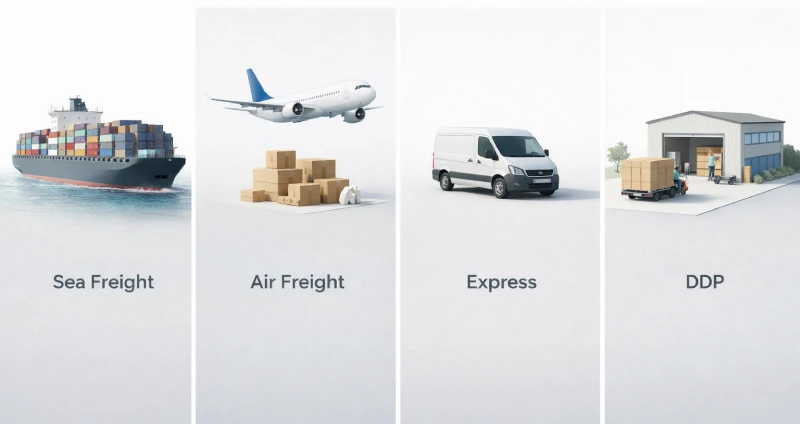
Sea Freight (FCL & LCL)
Sea freight is the most widely used method for transporting goods from China to Nigeria, especially for bulk shipments.
- FCL (Full Container Load): Suitable when you have enough cargo to fill an entire container
- LCL (Less than Container Load): Ideal for smaller shipments that share container space
Sea freight offers strong scalability and is commonly used by importers handling large volumes or regular shipments.
Air Freight
Air freight is used when speed and reliability are critical.
- Suitable for high-value or time-sensitive goods
- Common for electronics, spare parts, or urgent replenishment
Although it requires more careful planning due to handling requirements, it provides faster cargo movement compared to ocean transport.
Express Shipping (Courier)
Express shipping is typically handled by international courier companies such as DHL, FedEx, or UPS.
- Best for small parcels and sample shipments
- Minimal logistics coordination required
- Door-to-door delivery included
This option is often used for testing products before bulk orders or for lightweight commercial shipments.
DDP Shipping (Door-to-Door Solution)
DDP (Delivered Duty Paid) shipping is an all-inclusive logistics solution where the freight forwarder manages the entire process—from pickup in China to delivery in Nigeria.
- Covers shipping, customs clearance, and delivery
- Simplifies the process for importers with limited experience
- Reduces coordination between multiple parties
By understanding these shipping options, importers can select the most suitable method based on their business model and operational priorities—without overcomplicating the logistics process.
Required Documents & Compliance
Proper documentation and regulatory compliance are essential when importing goods from China to Nigeria. Missing or incorrect paperwork can lead to shipment delays, penalties, or even cargo seizure. Understanding the required documents and regulatory framework helps ensure a smooth clearance process.
Key Import Documents
Most shipments require a standard set of documents to support customs declaration and cargo release:
- Commercial Invoice — details of goods, value, and transaction terms
- Packing List — breakdown of shipment contents, weight, and packaging
- Bill of Lading (B/L) or Air Waybill (AWB) — transport document issued by the carrier
- Form M — mandatory import form processed through authorized Nigerian banks
- SONCAP Certificate — required for regulated products to confirm compliance with Nigerian standards
For a complete checklist and document preparation guidelines, refer to: Documents Required for Importing to Nigeria
Regulatory Requirements
Nigeria has specific regulatory bodies and compliance systems that importers must follow depending on the type of goods:
- SONCAP (Standards Organisation of Nigeria Conformity Assessment Programme): Applies to many consumer and industrial products
- NAFDAC: Required for food, pharmaceuticals, cosmetics, and certain chemicals
- HS Code Classification: Determines applicable duties and regulatory controls
Accurate classification and proper certification are critical to avoid clearance issues.
Why Compliance Matters
Failing to meet compliance requirements can result in:
- Customs delays and extended port storage
- Additional inspection or re-documentation costs
- Fines or shipment rejection
Ensuring all documents are prepared correctly before shipment departure significantly reduces risk.
By organizing documentation early and understanding regulatory requirements, importers can streamline the clearance process and maintain consistent supply chain operations.
Cost Overview & Budget Planning
Understanding the cost structure of importing from China to Nigeria is essential for maintaining healthy profit margins. Rather than focusing on exact figures, successful importers break down costs into clear categories and plan ahead to avoid unexpected expenses.
Main Cost Components
When importing goods, the total cost typically includes several key elements:
- Product Cost: The price paid to the supplier, including manufacturing and packaging
- Shipping Cost: Transportation charges based on cargo volume, weight, and shipping method
- Import Duties & Taxes: Government charges determined by product classification
- Handling & Clearance Fees: Costs related to port handling, documentation, and customs processing
Each component contributes to the final landed cost, which directly impacts your pricing strategy in the Nigerian market.
Hidden Costs to Consider
Many first-time importers underestimate additional charges that may arise during the process. These can include:
- Port storage fees if clearance is delayed
- Demurrage charges for late container return
- Inspection or compliance-related fees
- Currency fluctuations affecting final payments
Planning for these variables helps prevent margin erosion and cash flow issues.
How to Estimate Total Import Cost
A practical approach is to calculate your landed cost before placing an order. This means combining product cost, logistics expenses, and all import-related charges into a single estimate.
Instead of relying on rough assumptions, it’s better to use structured cost breakdowns and scenario planning.
For detailed cost calculations and real pricing factors, refer to: Shipping Cost from China to Nigeria
To better understand how volume impacts pricing, see: Cost per CBM Guide
By structuring your budget around these cost components, you can make more informed sourcing decisions and avoid unexpected financial risks when importing goods from China to Nigeria.
Common Mistakes to Avoid
Importing goods from China to Nigeria can be highly profitable, but small mistakes in planning or execution often lead to delays, unexpected costs, or operational risks. Understanding the most common pitfalls helps importers build a more stable and predictable supply chain.
Choosing the Wrong Shipping Method
One of the most frequent mistakes is selecting a shipping method that doesn’t match the shipment size or urgency.
- Using air freight for large, non-urgent cargo significantly increases costs
- Choosing sea freight for time-sensitive goods can disrupt inventory planning
Selecting the right mode based on cargo characteristics is essential for balancing efficiency and cost.
Ignoring Import Regulations
Failure to comply with Nigerian import regulations can result in serious delays or penalties.
- Missing required certifications such as SONCAP or NAFDAC
- Incorrect HS code classification
- Incomplete or inconsistent documentation
Even minor compliance issues can prevent cargo from being released on time.
Underestimating Total Costs
Many importers focus only on product price and overlook additional expenses.
- Not accounting for duties, taxes, and clearance fees
- Ignoring potential port charges or storage fees
- Failing to calculate full landed cost before ordering
This often leads to reduced profit margins or unexpected financial pressure.
Working with Unverified Suppliers
Choosing suppliers without proper verification can result in:
- Poor product quality
- Delayed production timelines
- Risk of fraud or non-delivery
Basic due diligence—such as sample testing and supplier background checks—can significantly reduce these risks.
Poor Communication with Logistics Partners
Lack of clear communication with freight forwarders or agents can cause:
- Documentation errors
- Missed deadlines
- Misaligned expectations on delivery or responsibilities
Consistent coordination and clear instructions are key to keeping shipments on track.
Avoiding these common mistakes allows importers to operate more efficiently and build a reliable import process from China to Nigeria over time.
Is DDP Shipping Better for Importers?
DDP (Delivered Duty Paid) shipping is often considered one of the simplest ways to import goods from China to Nigeria, especially for businesses that want to minimize operational complexity. Under DDP terms, the logistics provider handles the entire process—from pickup in China to customs clearance and final delivery in Nigeria.
What Is DDP Shipping?
DDP is an all-inclusive shipping arrangement where:
- The freight forwarder manages transportation, customs clearance, and delivery
- Duties and taxes are handled upfront
- The importer receives goods at their final destination with minimal involvement
This model reduces the need to coordinate with multiple parties across different stages of the supply chain.
When DDP Is the Best Choice
DDP shipping is particularly suitable for:
- First-time importers who are unfamiliar with procedures
- Small to medium-sized shipments where simplicity is more important than cost optimization
- Businesses that prefer predictable, all-in-one pricing
It allows importers to focus on sales and operations rather than logistics management.
When DDP May Not Be Ideal
In some cases, DDP may not be the most efficient option:
- Large-volume importers who want to optimize costs at each stage
- Businesses with in-house logistics experience or local clearance agents
- Situations where greater control over shipping and customs is required
For a deeper comparison and guidance on when to use this method, see: DDP Shipping from China to Nigeria
Choosing whether to use DDP depends on your experience level, shipment size, and need for control versus convenience.
FAQ
What is the easiest way to import goods from China to Nigeria?
The simplest method for most importers is using a door-to-door shipping solution such as DDP. This approach allows a logistics provider to handle transportation, customs clearance, and delivery, reducing the need for multiple service providers and minimizing operational complexity.
Do I need a license to import into Nigeria?
In many cases, you do not need a general import license, but you must comply with specific regulatory requirements depending on the product type. Certain goods require approvals or certifications from authorities such as SON or NAFDAC, and you must also process Form M through an authorized bank before shipment.
How long does it take to import from China to Nigeria?
The total timeline depends on the shipping method, cargo type, and clearance process. Since transit time varies significantly between sea, air, and express shipping, it’s best to refer to a dedicated guide that explains timelines in detail.
What is the cheapest way to import from China?
For most bulk shipments, sea freight is generally the most cost-efficient option. However, the best choice depends on your shipment size, urgency, and overall logistics strategy rather than just the base shipping rate.
Can I import without a freight forwarder?
Technically, it is possible to manage the process independently, but it is not recommended for most importers. Freight forwarders help coordinate shipping, documentation, and customs procedures, significantly reducing the risk of delays or errors.
