
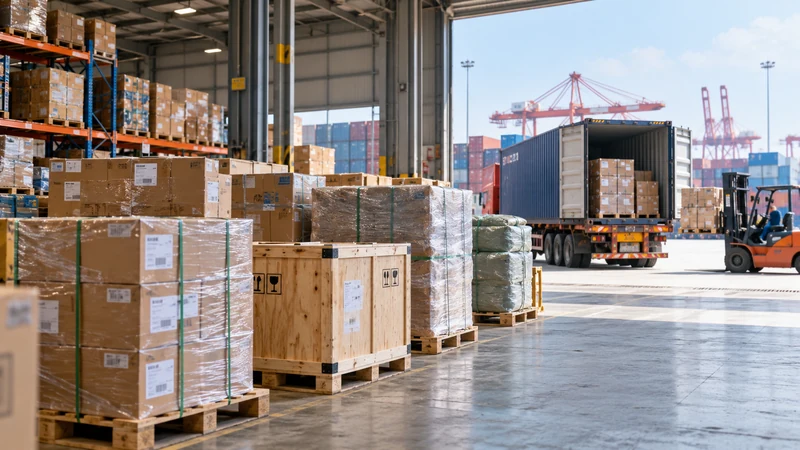
The first logistics decision happens before you pay your Chinese supplier.
If the product cannot enter Nigeria as planned, requires certification that should have been arranged before shipment, contains batteries or other regulated components, or is packed in a way that makes freight unnecessarily expensive, changing freight forwarders after production will not solve the underlying problem.
For a commercial importer, the safest sequence is:
- Define exactly what you are buying.
- Check whether it can legally and practically be imported into Nigeria.
- Verify the Chinese supplier.
- Agree the product specification and purchase terms.
- Prepare compliance and shipping documents before production ends.
- Select the right freight method and forwarder.
- Prepare the Nigerian import and customs process before arrival.
- Release and deliver the cargo, then reconcile the real landed cost.
This guide explains that complete workflow—from the purchase decision in China to final delivery in Nigeria.
Important: Nigerian import requirements vary by product, HS classification, intended use and the agencies responsible for that product. Always verify current requirements before shipment. This guide is operational information, not legal, tax or customs advice.
China-to-Nigeria Import Process at a Glance
A successful import is not simply:
buy product → book shipping → collect cargo
A commercial shipment normally involves several connected decisions:
Product definition → import screening → supplier verification → purchase terms → documentation → freight planning → Nigeria customs preparation → release → delivery
| Stage | Main Question |
|---|---|
| 1. Product | What exactly are you importing? |
| 2. Compliance | Is it allowed, restricted or regulated? |
| 3. Supplier | Can the supplier manufacture and document it correctly? |
| 4. Purchase | Who is responsible for packing, China delivery and export arrangements? |
| 5. Documents | What must be ready before shipment? |
| 6. Freight | Express, air, LCL, FCL or specialist handling? |
| 7. Nigeria clearance | Is the importer and customs process ready? |
| 8. Delivery | Who receives, unloads and closes the shipment? |
The order matters. Importers create unnecessary risk when they start at Stage 6—freight pricing—before resolving Stages 1 to 5.
Step 1 — Define the Product Before Looking at Freight
Before asking, “How much is shipping from China to Nigeria?”, create a clear identity for the cargo.
At minimum, collect:
- exact commercial product name;
- model or specification;
- material or composition;
- intended use;
- quantity;
- expected packing method;
- number of cartons, crates, pallets or pieces;
- expected gross weight and dimensions;
- battery, liquid, chemical or magnetic content where relevant;
- HS code, if already reviewed.
A description such as “electronics,” “machine,” “cosmetics,” “spare parts” or “auto accessories” is not enough for serious import planning.
Two products that look similar commercially can have different HS classifications, duty treatment, regulatory requirements or transport restrictions.
Why Product Specification Affects Everything
The exact product may influence:
- HS classification;
- whether importation is prohibited or controlled;
- SONCAP requirements;
- NAFDAC requirements;
- dangerous-goods classification;
- customs value and duty treatment;
- acceptance by airlines or shipping lines;
- packing requirements;
- insurance conditions;
- destination clearance procedures.
Nigeria Customs provides tariff and import-prohibition information through its CET resources. The import-control lookup lists prohibited tariff lines by HS code, so product screening should be based on the actual commodity rather than a supplier’s general description. See the Nigeria Customs CET import prohibition resource.
Product Identity Sheet
For every SKU, maintain a simple record:
| Field | Example of Information Needed |
|---|---|
| Product name | Precise commercial description |
| Model | Supplier model/SKU |
| Material | Main composition |
| Use | Retail, industrial, manufacturing, etc. |
| HS code | Reviewed classification |
| Regulator | NCS / SON / NAFDAC / other if applicable |
| Battery/DG | Yes / No / To confirm |
| Packing | Carton, crate, pallet, drum, etc. |
| Gross weight | Final or estimated |
| Dimensions | Final or estimated |
This becomes the foundation for sourcing, compliance, freight quotations and customs documents.
Step 2 — Check Whether the Product Can Be Imported into Nigeria
Use the Nigeria restricted and prohibited goods guide before ordering.
Do this before paying a substantial deposit, not after the supplier tells you production is complete.
The screening process should answer five questions.
1. Is the product prohibited?
Check the current Nigeria Customs tariff and import-control resources.
Never assume that because a product is commonly sold in Nigeria it can automatically be imported in your exact form.
2. Is it restricted or subject to another permit?
Some commodities require additional approvals, licences or agency involvement.
3. Is it regulated by SON?
The Standards Organisation of Nigeria Conformity Assessment Programme, or SONCAP, applies to SON-regulated imported products.
SON describes SONCAP as an offshore, pre-shipment conformity-assessment programme. For regulated goods, the process can involve a Product Certificate and a SONCAP Certificate, with conformity work performed before import clearance. SON states that the Product Certificate is used in the Form M process and the SONCAP Certificate is used for PAAR/customs clearance of applicable regulated goods. See the official SONCAP FAQ.
That is why discovering a SONCAP issue only after cargo has reached Nigeria can create a serious problem.
4. Is it regulated by NAFDAC?
NAFDAC regulates categories including food, drugs, cosmetics, medical devices, chemicals and other specified products.
Its official resources contain separate registration and import-clearance guidance for different categories, meaning the required route depends on the product rather than on a generic “NAFDAC certificate” rule. See NAFDAC regulatory resources.
5. Does the cargo have a transport restriction?
Examples include:
- lithium batteries;
- chemicals;
- flammable liquids;
- aerosols;
- compressed gases;
- magnetized material;
- certain powders.
A product may be legally importable but still require dangerous-goods documentation, special packing or carrier approval.
A Simple Import Decision Gate
Allowed and unregulated
→ Continue normal import planning.
Allowed but regulated
→ Confirm the regulator and complete the required process before shipment.
Restricted or controlled
→ Obtain professional confirmation and applicable authorization before ordering or shipping.
Prohibited
→ Stop the transaction.
Do not rely solely on a Chinese supplier’s statement that they have “shipped the same product to Africa before.” Nigerian compliance is determined by Nigerian rules applicable to your shipment.

Step 3 — Choose and Verify the Chinese Supplier
Once the product itself passes the initial import screening, evaluate the supplier.
Your objective is not merely to decide whether a factory exists. You need to determine whether it can supply the correct product, packaging and documentation for an export shipment to Nigeria.
Check:
- legal company identity;
- manufacturer versus trading-company status;
- exact product specification;
- production capacity where relevant;
- samples;
- production lead time;
- quality requirements;
- warranty and spare-parts arrangements;
- export packing;
- carton or crate specifications;
- export experience;
- willingness to provide required product and compliance documents.
For technically sensitive products, make sure the company named on documents is consistent with the commercial arrangement.
Buying from Alibaba
For marketplace-specific logistics, see shipping Alibaba and 1688 orders to Nigeria.
Alibaba.com can be useful for international B2B sourcing, but platform status should not replace your own product and supplier checks.
Alibaba states that Trade Assurance protection is based on the online order and eligible payment arrangements made through Alibaba.com. The agreed product quality and shipment terms recorded in the order are therefore important. See Alibaba Buyer Central.
Trade Assurance does not mean:
- every supplier has independently passed all checks you require;
- every product complies with Nigerian regulations;
- the HS code is correct;
- SONCAP or NAFDAC requirements have been satisfied;
- Nigerian customs clearance is guaranteed.
The purchase contract still needs an accurate specification.
Buying from 1688
1688 can provide access to a very large Chinese supplier base, but it operates in a different context.
Alibaba Group describes 1688.com as China’s leading domestic wholesale marketplace. See Alibaba Group’s 1688 overview.
That distinction matters for Nigerian importers.
A 1688 supplier may be perfectly capable of manufacturing your product while having limited experience with:
- international commercial documents;
- English documentation;
- export packing;
- overseas compliance requests;
- international freight handover.
If you source through 1688, determine who will handle communication, China domestic delivery, export documentation and consolidation before placing multiple orders.
Step 4 — Agree the Purchase and Logistics Terms
Your purchase order or supply agreement should answer more than “how many pieces and how much per piece?”
Confirm:
- product specification;
- model;
- material;
- quantity;
- quality standard;
- inspection criteria;
- packaging;
- production lead time;
- payment milestones;
- China delivery point;
- agreed Incoterm;
- export-document responsibility;
- product-certificate responsibility;
- compliance-document responsibility.
This prevents the common situation where the buyer, supplier and forwarder each assume somebody else is handling an important step.
EXW
Under an EXW-style purchase arrangement, the buyer may need to organize collection from the supplier and more of the origin logistics.
It can provide control, but the operational details of China export handling must be clear.
FCA
FCA may provide a cleaner handover point where the seller completes agreed delivery to the carrier or designated location according to the negotiated arrangement.
FOB
FOB is widely used for sea freight, but do not treat “FOB China” as a complete logistics specification.
Confirm the actual port, shipment type and included origin charges.
DAP
DAP can shift much of the transport responsibility toward the seller while leaving import clearance and applicable import charges with the buyer under the agreed terms.
DDP
DDP places extensive responsibility on the seller in Incoterms terminology, but a quotation labelled “DDP” should still be audited carefully.
For Nigeria, establish:
- who is the importer;
- who performs customs formalities;
- whose documentation is used;
- whether duty and taxes are actually included;
- which permits are excluded;
- whether destination storage or inspection costs are included;
- the exact final delivery address.
A service name is not a substitute for a written scope.
Step 5 — Build a Real Landed-Cost Budget
The factory price is only the first layer of your import cost.
A useful budget is:
Product cost
+ China pickup/domestic transport
+ origin handling
+ international freight
+ Nigeria destination charges
+ applicable duty and taxes
+ clearance costs
+ final delivery
+ risk and time-related costs
Nigeria Customs states that customs valuation follows the ECOWAS CET/WTO valuation framework, with transaction value generally considered first where its conditions are satisfied. Costs such as transport, handling and insurance to the Nigerian place of importation can be relevant to customs value where applicable. See the Nigeria Customs valuation guidance.
This is why landed cost should not be calculated by simply adding a freight quote to the supplier’s invoice.
Audit Every Quote by Scope
Use a table like this:
| Cost Item | Responsible Party | Estimated | Confirmed | Excluded |
|---|---|---|---|---|
| Factory goods | Buyer | ✓ | ||
| China pickup | Buyer/Supplier | ✓ | ||
| Origin handling | Forwarder | ✓ | ||
| International freight | Forwarder | ✓ | ||
| Nigeria destination | To confirm | ✓ | ||
| Duty/tax | Importer | ✓ | ||
| Clearance | To confirm | ✓ | ||
| Final delivery | To confirm | ✓ |
This also prevents unfair freight comparisons.
A low quote may simply exclude costs another forwarder included.
Step 6 — Prepare Nigerian Import Documentation Before Shipping
Build the Nigeria import document set and complete the Form M / PAAR steps on time.
Documentation should be treated as a pre-shipment workstream, not an arrival-day task.
Depending on the cargo and import structure, documents can include:
- commercial invoice;
- packing list;
- transport document;
- product certificates;
- SONCAP documentation where applicable;
- NAFDAC approvals or permits where applicable;
- Form M and PAAR within the applicable commercial import process;
- other permits required by the product or agency.
TIN and Current Customs Digital Process
Nigeria Customs’ trader guidance identifies a valid Tax Identification Number as an important registration element for electronic trade procedures including Form M, PAAR and customs declarations.
Nigeria Customs identifies UCMS/B’Odogwu as its current customs-management environment replacing NICIS II, with core trade processes handled electronically.
The exact responsibilities should be confirmed with the Nigerian importer, authorised dealer bank where relevant, customs representative and applicable regulator before shipment.
Do not copy an old import checklist without checking whether it still reflects the current electronic process.
Form M and PAAR
For applicable Nigerian commercial import transactions, Form M and the Pre-Arrival Assessment Report remain important parts of the import workflow.
The Central Bank of Nigeria has continued to issue Form M-related instructions as customs systems have changed. Importers should use the current process in effect for their shipment rather than relying on temporary or expired dispensations.
For SONCAP-regulated products, SON explicitly connects the Product Certificate with Form M and the SONCAP Certificate with PAAR processing. See the official SONCAP FAQ.
Ready-to-Ship Compliance Gate
Before allowing the cargo to depart China, ask:
- Is the final product description confirmed?
- Has the HS classification been reviewed?
- Is the Nigerian importer structure ready?
- Are required product approvals identified?
- Is SONCAP applicable?
- Is NAFDAC applicable?
- Are invoice and packing-list details consistent?
- Are dangerous-goods documents required?
- Is final packing data available?
- Has the freight booking been confirmed?
If a regulatory requirement is unresolved, do not use the sailing date as a reason to ignore it.
Step 7 — Choose the Shipping Method
Compare express, air, LCL and FCL options against cargo size and urgency.
Do not choose a transport mode based only on a universal “kg rule” or “CBM rule.”
The right answer depends on:
- urgency;
- packed dimensions;
- chargeable weight;
- cargo value;
- product type;
- shipment frequency;
- supplier locations;
- dangerous-goods status;
- final destination;
- total landed cost.
Express
Best considered for samples, documents and small urgent consignments where courier acceptance and product restrictions allow it.
Air Freight
Suitable for time-sensitive commercial cargo where speed justifies the higher transport cost.
Air freight should be assessed using final dimensions because volumetric weight can materially affect the chargeable weight.
LCL Sea Freight
Less-than-container-load shipping allows an importer to share container space.
It can suit commercial cargo that is too large for practical air freight but does not require an entire container.
The comparison should include destination handling—not just the ocean-freight line.
FCL Sea Freight
Full-container-load shipping provides dedicated container capacity.
It is commonly evaluated for larger or repeated commercial shipments, but container utilization, cargo weight, loading method and final delivery must all be checked.
Special, Project or Dangerous Goods
Oversized machinery, batteries, chemicals and other specialist cargo may require:
- carrier approval;
- dangerous-goods declarations;
- special equipment;
- reinforced packing;
- lifting plans;
- route planning.
For a broader mode comparison, see Best Shipping Methods from China to Nigeria.
Mode Selection Table
| Cargo Profile | First Mode to Quote | Alternative | Main Check |
|---|---|---|---|
| Small urgent samples | Express | Air | Courier acceptance |
| Time-sensitive commercial cargo | Air | Express/Sea | Chargeable weight |
| Moderate non-urgent cargo | LCL | Air/FCL | Destination charges |
| Larger regular shipment | FCL | LCL | Container utilization |
| Oversized cargo | Project/FCL equipment | Breakbulk | Dimensions and lifting |
| Battery/DG cargo | Specialist air/sea | Case-specific | DG classification |
Use this table as a starting point, not an automatic booking rule.
Step 8 — Choose the Freight Forwarder Before the Cargo Is Ready
A freight forwarder should be involved before the factory randomly sends finished cargo to a port or warehouse.
Provide the forwarder with:
- supplier address;
- pickup location;
- product description;
- quantity;
- number of packages;
- gross weight;
- package dimensions;
- battery/DG information;
- purchase term;
- target destination in Nigeria;
- required delivery scope;
- expected cargo-ready date.
This allows the forwarder to identify problems while they are still inexpensive to correct.
For example, changing the packing before factory dispatch is much easier than repacking cargo after it reaches a terminal.
When comparing providers, do not ask only:
“How much per CBM?”
Instead compare:
- service scope;
- route;
- origin charges;
- destination charges;
- customs responsibility;
- cargo restrictions;
- expected schedule;
- validity period;
- excluded costs.
See How to Choose a Freight Forwarder from China to Nigeria for a more detailed evaluation framework.
Pro Tip: Ask the forwarder to review the supplier’s final packing data and shipping term before you pay the supplier’s final balance.
Step 9 — China Pickup, Consolidation and Export
When cargo is ready, the China-side workflow can look like:
Supplier
→ pickup or domestic delivery
→ China warehouse
→ receiving and counting
→ measurement
→ agreed repacking/palletization if required
→ export handling
→ port or airport
If you buy from several Chinese factories, a consolidation warehouse can create one coordinated shipment rather than allowing each supplier to make an independent international booking.
That does not mean every product should automatically be consolidated.
Check compatibility first, especially where the shipment contains:
- regulated products;
- dangerous goods;
- fragile cargo;
- food or chemical products;
- very heavy cargo;
- cargo requiring different temperature or handling conditions.
A good consolidation process should preserve SKU-level visibility so the Nigerian import documentation remains accurate.
See China to Nigeria Cargo Consolidation: Combine Multiple Suppliers for the detailed workflow.

Step 10 — Nigeria Customs and Cargo Release
The destination process should begin before the ship or aircraft arrives.
At a high level, it can involve:
- pre-arrival documentation;
- customs declaration;
- customs assessment;
- applicable examination or regulatory action;
- Customs release;
- carrier or terminal release;
- final delivery.
The exact sequence can vary according to shipment type, customs channel, regulator and port or terminal.
Do not plan your business around a guaranteed customs-clearance time.
Documentation discrepancies, classification questions, valuation review, regulatory inspection, port conditions and payment timing can all affect release.
Nigeria Customs currently operates B’Odogwu as its digital trade platform, with traders, licensed customs agents and government partners interacting through its electronic service environment. See the Nigeria Customs Service.
For a detailed explanation of destination formalities, use the dedicated Customs Clearance in Nigeria guide rather than trying to manage clearance from a generic freight checklist.
Step 11 — Final Delivery and Shipment Closeout
Customs release is not the end of the import project.
Before arrival, confirm:
- final Nigerian delivery address;
- truck access;
- road/access restrictions where relevant;
- unloading equipment;
- unloading labour;
- receiving hours;
- contact person;
- proof-of-delivery procedure.
For container shipments, also clarify responsibility for empty-container return and the applicable free-time conditions.
After delivery, record:
- delivered quantity;
- visible damage;
- shortages;
- delivery date;
- additional destination charges;
- actual duty/tax;
- trucking cost;
- unexpected handling or storage.
Then compare the actual landed cost with the pre-order estimate.
That information improves the next purchasing decision.
First Import vs Repeat Import — What Should Change?
A first shipment should normally involve more verification.
First Import
Focus on:
- product compliance;
- supplier identity;
- sample or quality plan;
- exact shipping terms;
- conservative documentation;
- Nigeria-side importer readiness;
- clearly defined quote scope.
Where commercially practical, a smaller initial order can also reduce exposure while the supply chain is being tested.
Repeat Import
Once a product has a stable supply chain, build repeatable data.
Maintain:
- standardized SKU descriptions;
- confirmed HS classifications;
- regulator status;
- recurring packaging specifications;
- supplier pickup details;
- shipment calendar;
- consolidation plan;
- standard quotation format.
Pro Tip: Keep a SKU master containing the product description, model, reviewed HS code, regulator status and packing data for repeat shipments.
The goal is to turn the second and third imports into controlled processes rather than recreating the first shipment every time.
Import Readiness Matrix
| Question | If Yes | If No |
|---|---|---|
| Exact product defined? | Continue compliance screening | Obtain full specification |
| HS reviewed? | Check regulator and tax treatment | Review classification first |
| Regulatory pathway known? | Prepare required documents | Do not ship |
| Final packing available? | Request final freight quote | Use estimate only |
| Nigeria importer ready? | Prepare clearance | Resolve importer structure |
| Final delivery point known? | Calculate delivered cost | Destination budget incomplete |
Three Importer Checklists
Before Paying the Supplier
- Define the exact product.
- Review import eligibility.
- Review HS classification.
- Identify applicable regulators.
- Verify supplier identity.
- Approve specification.
- Arrange sample/QC where appropriate.
- Define packaging.
- Agree purchase and shipping terms.
- Confirm compliance responsibilities.
Before Shipping from China
- Final commercial invoice.
- Final packing list.
- Reviewed HS classification.
- Required certificates or permits.
- Final package count.
- Final gross weight.
- Final dimensions.
- Battery/DG status.
- Freight booking.
- Nigeria importer readiness.
- Applicable Form M/PAAR workflow prepared.
- Destination clearance plan.
Before Arrival in Nigeria
- Customs documentation prepared.
- Applicable PAAR/pre-arrival process checked.
- B/L or transport-document release status confirmed.
- Applicable statutory-charge funds planned.
- Customs representative coordinated.
- Regulator requirements confirmed.
- Delivery truck planned.
- Receiving location prepared.
Example: Importing Three Product Lines from Two Chinese Factories
Consider a Nigerian distributor buying three product lines from two factories.
The wrong workflow is:
place both orders → wait for production → ask for the cheapest shipping
A better workflow is:
1. Screen Each Product Separately
Do not assume all three SKUs have the same regulatory requirements simply because they belong to the same commercial order.
2. Confirm Both Suppliers’ China Terms
Supplier A may quote EXW while Supplier B includes domestic delivery.
That changes the China pickup plan.
3. Check Whether the Cargo Can Be Consolidated
Review product compatibility, packaging and regulatory status before combining them.
4. Build One Accurate SKU and Document List
The forwarder should not have to guess which carton belongs to which product.
5. Compare Suitable Freight Modes
Once final packing information is available, compare LCL versus FCL—or air versus sea where urgency justifies it.
6. Prepare Nigeria-Side Documentation Before Departure
Do not let consolidation efficiency in China create documentation problems in Nigeria.
The objective is not merely to combine cargo. It is to create one controlled import project.
Common Mistakes When Importing from China to Nigeria
Paying the Supplier Before Import Screening
A cheap product is not cheap if it cannot be legally or economically imported.
Copying the Supplier’s HS Code Without Review
The supplier’s export code or product description should not automatically be treated as the final Nigerian classification.
Confusing Chinese Certificates with Nigerian Approval
A CE report, factory test report or Chinese domestic certificate does not automatically replace SONCAP, NAFDAC or another Nigerian requirement.
Agreeing CIF Without Checking Destination Costs
CIF does not mean every destination expense in Nigeria is included.
Ask for the exact boundary of the supplier’s responsibility.
Choosing Freight Before Final Packing
A freight comparison based on estimated cartons can change substantially after production.
Shipping Before Regulatory Preparation
For regulated cargo, certificates and permits can be part of a pre-shipment or pre-arrival process.
Do not assume everything can be fixed after arrival.
Using “Door-to-Door” Without Defining Responsibility
Door-to-door describes a delivery scope, but you still need to know:
- who acts as importer;
- who manages customs;
- who pays duties and taxes;
- who provides permits;
- what happens if Customs examines the cargo;
- which destination costs are excluded.
Comparing Freight Quotes With Different Scopes
A USD 1,000 quote and a USD 1,300 quote cannot be compared until you know what each includes.
Can a Freight Forwarder Manage the Whole Shipment?
A China-based freight forwarder can coordinate substantial parts of the logistics chain, including services such as:
- China supplier pickup;
- warehouse receiving;
- cargo consolidation;
- export handling;
- air or sea freight;
- destination coordination;
- final delivery where arranged.
Winsail Logistics handles shipments originating from China and can coordinate international freight and related logistics according to the cargo and destination.
However, logistics coordination should not be confused with product compliance.
The Nigerian importer remains responsible for ensuring the import structure and required regulatory approvals are legally appropriate. Product sourcing, supplier audits, laboratory testing or quality inspections should not be assumed to be included unless they are separately and explicitly agreed.
Final Import Planning Framework
Before placing a commercial order in China, you should be able to answer these questions:
Product
What exactly am I buying?
Compliance
Can it enter Nigeria, and which agency regulates it?
Supplier
Can this company manufacture and document the product correctly?
Purchase Terms
Where does the supplier’s responsibility end?
Documents
What must exist before cargo departs?
Freight
Which transport mode fits the actual packed cargo?
Customs
Is the Nigeria-side importer and clearance process ready?
Delivery
Who receives, unloads and closes the shipment?
If one answer is missing, resolve it before moving to the next stage.
That is the difference between simply buying products in China and managing a reliable China-to-Nigeria import supply chain.
For broader route, freight-method and destination planning, see end-to-end Nigeria import guide.
FAQ
What is the first step when importing goods from China to Nigeria?
Define the exact product before choosing a supplier or freight method. You need a usable commercial description, specification, material, intended use and expected packing so you can review HS classification, import eligibility, regulator requirements and shipping restrictions.
Do I need a registered Nigerian business to import commercial goods?
Commercial import planning should include a properly established Nigeria-side importer with the Tax ID/TIN and registrations required for the relevant electronic trade and customs processes. Additional registration requirements can apply depending on the product and regulator.
Should I check the HS code before ordering?
Yes. The HS classification can affect import controls, regulator requirements, duty treatment and customs documentation. For a first shipment or unfamiliar product, review the classification before committing to the order rather than copying a code from the supplier's invoice.
Is Alibaba safer than 1688 for first-time Nigerian importers?
Alibaba.com is designed for international B2B trade and provides tools such as Trade Assurance for qualifying online orders and payments. 1688 is primarily a Chinese domestic wholesale marketplace. Platform choice alone does not establish supplier quality or Nigerian import compliance.
When should I contact a freight forwarder?
Ideally before the supplier finishes production, and preferably before you finalize the purchase term. A forwarder can use the supplier location, estimated packing, cargo type and destination to identify likely freight options and logistics problems early.
Can my Chinese supplier arrange all the shipping?
Possibly, depending on the agreed Incoterm and service scope. Before accepting supplier-arranged shipping, confirm destination costs, Nigerian customs responsibility, applicable taxes, documentation, final delivery and excluded charges.
Do all products imported into Nigeria need SONCAP?
No. SONCAP applies to products within the programme's regulated scope, while exemptions and other regulatory pathways can apply to certain categories. Confirm applicability using the product and HS classification rather than assuming every shipment needs the same certificate.
How do I estimate landed cost before placing an order?
Build the estimate in layers: product cost, China logistics, origin charges, international freight, Nigeria destination charges, duty and tax, clearance, inland delivery and a risk allowance. Update the estimate after final packed dimensions and weight are available.
