

FCL shipping from China to the UK is often the right choice when an importer has enough cargo to justify a dedicated container, but volume alone should not decide whether to book a 20GP, 40GP or 40HC.
A good FCL plan has to consider the total cargo volume, gross weight, package dimensions, supplier locations, loading method in China, UK arrival port, final delivery postcode and unloading conditions. For heavier shipments, container payload also needs to be separated from the weight that can legally and practically move by truck in the UK.
For a broader comparison of sea freight, air freight, DDP and other transport options, see Shipping from China to the UK. This article focuses specifically on planning and operating a full container load.
Quick Answer: How Should You Plan an FCL Shipment from China to the UK?
FCL does not mean the container must be physically filled to 100% of its nominal cubic capacity. It becomes commercially attractive when the all-in cost and operational benefits of a dedicated container are better than shipping the same cargo as LCL.
A 20GP is often considered for compact or relatively dense cargo, while a 40GP provides more standard-height volume and a 40HC provides additional internal height and cube. However, equipment selection must consider both CBM and gross weight. The maximum payload shown in a container specification is not automatically the amount that can be transported to your UK delivery address.
For transit planning, current carrier networks show direct China-UK services on selected port pairs. CMA CGM’s current FAL1 service, for example, lists approximately 42 days from Ningbo to Southampton, 41 days from Shanghai and 37 days from Yantian. These are carrier schedule references rather than guaranteed door-to-door transit times. See the current CMA CGM FAL1 service schedule.
| Shipment situation | First option to evaluate |
|---|---|
| Smaller commercial shipment | Compare LCL first |
| Cargo approaching FCL economics | Compare total LCL and FCL landed logistics costs |
| Dense or heavy cargo | Review 20GP and inland weight feasibility |
| Larger general cargo volume | Review 40GP |
| Lightweight, bulky or taller cargo | Review 40HC |
| Fragile or handling-sensitive cargo | FCL may be worthwhile before the container is full |
| Several suppliers in China | Consider warehouse consolidation before container stuffing |
When Does FCL Actually Make Sense from China to the UK?
A common rule on freight websites says that importers should change from LCL to FCL at around 13, 15 or 18 CBM. That can be useful as an initial signal, but it should not be treated as a universal break-even point.
Do Not Choose FCL Using CBM Alone
LCL and FCL have different cost structures.
With LCL, the importer may be paying for supplier pickup, consolidation, origin CFS handling, freight based on chargeable volume or weight, UK deconsolidation, destination handling and final delivery.
With FCL, the cost structure changes to a dedicated container and may include empty-container positioning, stuffing, origin haulage, export handling, ocean freight, UK terminal charges, customs coordination, container haulage to the consignee and empty-container return.
As a result, one 14 CBM shipment might still be cheaper as LCL while another shipment of the same volume could justify FCL because of its origin, UK delivery location, cargo density or destination handling charges.
The correct question is not “How many CBM do I have?” but “What is the current all-in cost and operational difference between LCL and FCL for this shipment?”
For a wider view of current cost components, see Shipping Cost from China to UK.
FCL Can Improve Cargo Control Even Before the Container Is Full
Cost is not the only consideration.
A dedicated FCL container can reduce the amount of consolidation and deconsolidation handling compared with LCL. It can also make it easier to control:
- package counts
- cargo positioning
- pallet arrangement
- dunnage and securing
- loading sequence
- loading photographs
- seal records
This can be particularly useful for fragile commercial goods, machinery, higher-value cargo or shipments where the importer wants tighter loading control.
However, FCL should not be described as a container that is “never opened until it reaches the buyer.” Customs, port or security authorities may inspect a container when required.
When LCL May Still Be Better
FCL is not automatically the better service simply because an importer can afford a container.
LCL may still make more sense for:
- smaller or irregular purchase orders
- trial shipments
- low-volume replenishment
- importers without facilities to unload a full container
- destinations where container haulage is expensive
- cargo that would leave most of a container unused
Importers should compare both modes before committing where the shipment is close to the economic crossover point.
20GP vs 40GP vs 40HC: Which Container Fits Your Cargo?
The three dry-container sizes most commonly considered for standard commercial FCL cargo are 20GP, 40GP and 40HC.
Use the 20ft and 40ft container cost guide to compare the rate structure and total cost differences between common container sizes.
Carrier equipment specifications provide useful reference capacities, but they should not be interpreted as guaranteed usable cargo capacity.
Maersk currently lists reference figures of approximately 33.2 m³ and 28,300 kg maximum payload for a 20-foot standard container, 67.7 m³ and 28,870 kg for a 40-foot standard, and 76.4 m³ and 28,690 kg for a 40-foot high cube. Maersk also states that specific weight limits may vary by country. See Maersk’s container cargo weight guidance.
| Factor | 20GP | 40GP | 40HC |
|---|---|---|---|
| Reference internal volume | ~33.2 m³ | ~67.7 m³ | ~76.4 m³ |
| Relative height | Standard | Standard | Higher |
| Typical decision driver | Cargo density | General volume | Cube / height |
| Reference maximum payload* | ~28,300 kg | ~28,870 kg | ~28,690 kg |
| Best interpreted as | Equipment reference | Equipment reference | Equipment reference |
*Actual container tare, maximum gross mass, payload, carrier restrictions, cargo distribution and inland transport limits must be checked for the specific shipment and equipment.
20GP: Often Useful for Compact or Dense Cargo
A 20GP provides much less internal volume than a 40-foot container, but its reference payload is not proportionally lower.
That is why it is frequently evaluated for relatively dense goods such as:
- metal parts
- compact machinery
- industrial components
- tiles or other dense building materials
- certain palletised products
But “heavy cargo goes in a 20GP” should never become “a 20GP can always be loaded with 28 tonnes of cargo.”
The practical loading limit must consider the actual container plate, carrier restrictions, weight distribution and the road-haulage arrangement at destination.
40GP: More Volume for Standard-Height Cargo
A 40GP has roughly twice the nominal internal cube of a 20GP and is useful for general commercial cargo where volume is the limiting factor rather than weight.
It may suit:
- cartons
- palletised goods
- consumer products
- industrial products with moderate density
- larger single-supplier purchase orders
A 40GP does not, however, allow double the cargo weight of a 20GP. Container volume grows much faster than maximum payload.
40HC: More Height and Cube, Not Automatically More Weight
A 40HC has the same basic length class as a 40GP but offers additional internal height.
It is particularly useful where cargo is cube-limited rather than weight-limited, for example:
- lightweight bulky goods
- tall palletised cargo
- furniture
- packaging materials
- textiles
- certain retail products
The important point is that a high cube provides additional volume, not automatically additional cargo payload. Current carrier reference figures actually show a similar maximum payload for 40GP and 40HC equipment.
Nominal CBM Is Not the Same as Practical Loading CBM
A container with a nominal internal capacity of 76 m³ cannot necessarily accept 76 m³ of commercial cargo.
Practical utilisation can be reduced by:
- pallet dimensions
- carton geometry
- cargo that cannot be stacked
- dunnage and securing materials
- internal air gaps
- load distribution
- package orientation
- the dimensions of the container door opening
- protruding or irregular cargo
For a close-fitting load, provide package dimensions rather than relying only on the total CBM shown on a packing list.
Not sure whether your shipment should use a 20GP, 40GP or 40HC? Provide the total CBM, gross weight, package dimensions and cargo description so the container choice can be reviewed before booking.
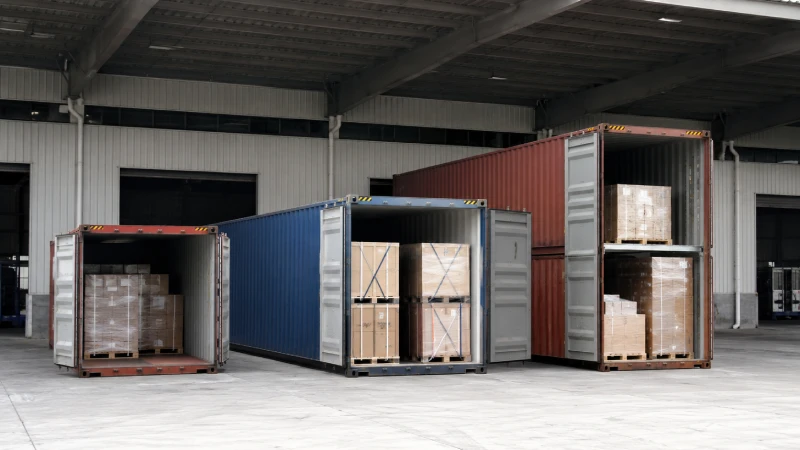
Container Weight Planning: Three Different Limits Matter
Weight is one of the most frequently misunderstood parts of FCL shipping.
An importer needs to distinguish between the container equipment limit, SOLAS VGM requirement and UK road transport limit.
1. The Container’s Own Weight Limit
Every container has its own tare and maximum gross mass.
In simplified form:
Cargo weight + container tare weight must remain within the permitted gross mass of the actual container.
Carrier specification sheets are useful during planning, but the final equipment identification and container CSC plate matter.
2. SOLAS Verified Gross Mass
Under SOLAS requirements, the shipper is responsible for providing the Verified Gross Mass, or VGM, of a packed container before it can be loaded aboard the vessel.
The International Maritime Organization recognises two basic methods:
- weighing the packed container; or
- calculating the total weight of all packages, cargo, pallets, dunnage and securing materials and adding the container tare, using an approved method.
The VGM must be supplied early enough for terminal and vessel stowage planning. See the IMO guidance on verification of gross mass.
For importers, this makes accurate cargo weights important before the container even reaches the ship.
3. UK Truck and Axle Weight Limits
The third limit applies after the container arrives in Britain.
UK road rules regulate gross vehicle weight, axle weights, train weight and plated vehicle limits. GOV.UK guidance shows a general maximum of 44 tonnes for qualifying six-axle articulated combinations. That figure refers to the entire vehicle combination, not 44 tonnes of cargo. See GOV.UK HGV maximum weight guidance.
The tractor, trailer and container tare all consume part of the permitted road weight.
This creates an important operational rule:
A container may technically accept the cargo at origin while the loaded container is not suitable for a standard UK road-haulage movement at that weight.
For heavy FCL shipments, UK inland feasibility should therefore be checked before loading in China.
Pro Tip: Never request a container recommendation using CBM alone. Always provide total gross kilograms as well.
Factory Loading or China Warehouse Consolidation?
Where the container is stuffed can affect cost, control and vessel-cutoff risk.
Factory Stuffing for One Capable Supplier
Factory loading may be efficient when:
- most cargo comes from one supplier
- the factory has suitable container-truck access
- cargo will be ready at the same time
- forklifts or loading equipment are available
- the supplier understands export container loading
- the shipment does not require significant repacking or consolidation
A typical process is:
Empty container release → empty collection → factory loading → cargo securing → sealing → VGM → full container returned to terminal before cutoff
The supplier should be ready before the empty container arrives. Delays during stuffing can create truck waiting charges or increase the risk of missing the vessel cutoff.
Warehouse Consolidation for Multiple Suppliers
A consolidation warehouse is often more practical when the buyer purchases from several factories.
Cargo can be collected from different suppliers and brought to one location before container stuffing.
This is useful where:
- supplier ready dates differ
- products need to be counted
- outer packaging needs checking
- palletisation or repacking is required
- loading sequence needs coordination
- a supplier cannot safely receive and load a container truck
Depending on the agreed service scope, Winsail can coordinate supplier collection, warehouse consolidation and container stuffing in China. See China Warehouse & Fulfillment Services for the broader warehouse service scope.
What Should Be Recorded During Loading?
For better shipment control, useful loading records may include:
- container number
- seal number
- container condition
- package count
- loading photographs
- pallet/carton arrangement
- visible cargo condition
- securing method where relevant
- final sealed-container photograph
These records support operational control but should not be confused with formal product inspection or certification unless those services have specifically been arranged.
| Situation | Factory loading | Consolidation warehouse |
|---|---|---|
| One main supplier | Usually efficient | May be unnecessary |
| Several suppliers | Harder to coordinate | Strong option |
| Factory has good loading facilities | Suitable | Optional |
| Repacking/palletising required | Less convenient | More practical |
| Supplier cannot receive container truck | Poor fit | Better |
| Central loading records required | Possible | Easier to coordinate |
China Port to UK Port Route Matrix
The cheapest ocean freight rate is not always the cheapest total FCL route.
For an eastern UK container gateway, the China-to-Felixstowe route guide adds port-specific customs, delivery and free-time considerations.
China origin port selection should begin with supplier geography. UK gateway selection should then consider the current vessel service and the cost and practicality of moving the container from the port to the final postcode.
DP World’s current Greater China-Europe network lists Chinese gateways including Qingdao, Shanghai, Ningbo, Xingang, Yantian, Shekou, Xiamen and Nansha, with UK gateways including Felixstowe, London Gateway and Southampton. Its broad Greater China-Europe planning reference is approximately 40-45 days, but individual carrier rotations vary. See the DP World Asia-Europe corridor.
| China sourcing region | China ports to evaluate | UK gateways to evaluate | Planning approach |
|---|---|---|---|
| Shanghai / Jiangsu / Zhejiang | Shanghai, Ningbo | Felixstowe, Southampton, London Gateway | Compare sailing schedule + inland UK haulage |
| Shenzhen / Dongguan | Yantian, Shekou | Southampton, Felixstowe, London Gateway | Review direct rotation and final postcode |
| Guangzhou / Foshan / wider PRD | Nansha, Yantian, Shekou | Southampton, Felixstowe, London Gateway | Compare origin trucking and vessel options |
| Shandong | Qingdao | Felixstowe and other current UK services | Verify direct/transshipment schedule |
| Tianjin / North China | Xingang/Tianjin | Felixstowe and other viable gateways | Compare total transit and inland delivery |
| Fujian | Xiamen | Felixstowe, Southampton or alternative current service | Check carrier rotation at booking |
Shanghai and Ningbo to the UK
Shanghai and Ningbo are natural gateways for suppliers in the Yangtze River Delta.
Current CMA CGM FAL1 scheduling illustrates why transit times should be linked to a specific service rather than quoted as one universal China-UK number. Its current route sequence puts Ningbo at day 0, Shanghai at day 1 and Southampton at day 42, giving planning references of roughly 42 days from Ningbo and 41 days from Shanghai to Southampton.
Yantian, Shekou and Nansha to the UK
South China exporters commonly evaluate Yantian, Shekou and Nansha depending on the supplier location and vessel service.
On the same current FAL1 example, Yantian is shown at day 5 and Southampton at day 42, or approximately 37 days port to port.
That does not mean every South China-UK booking will take 37 days. Carrier choice, skipped calls, routing, transshipment and schedule changes can alter the result.
Qingdao and Xingang/Tianjin
For suppliers in Shandong, Tianjin, Hebei and surrounding areas, using a northern Chinese gateway can avoid unnecessary domestic trucking to Shanghai or Ningbo.
The correct comparison should include:
China inland cost + ocean freight + transit time + UK port cost + UK inland haulage
rather than ocean freight alone.
Felixstowe, Southampton or London Gateway?
These are all important container gateways, but no single port is automatically the best choice for every UK importer.
Consider:
- current direct vessel service
- final delivery postcode
- container haulage cost
- rail option where applicable
- terminal availability
- delivery appointment
- equipment availability
- free-time conditions
- empty-container return location
London Gateway, for example, combines deep-sea terminal operations with road, rail and port-centric logistics facilities. See DP World London Gateway.
Pro Tip: Compare routes to the final UK postcode, not simply to the cheapest port.
For the broader sea-freight service scope, see Ocean Freight from China.
What Happens After the Container Reaches the UK?
FCL planning should continue beyond vessel arrival.
The practical flow is generally:
Vessel arrival → discharge → customs and carrier release → haulier collection → UK delivery → unloading → empty-container return
Prepare Customs Before Discharge
For imports into England, Scotland or Wales, a business generally needs a GB EORI number. Northern Ireland movements can require an EORI beginning with XI depending on the movement. See the GOV.UK import process.
The commodity code is also important because it helps determine:
- Customs Duty
- import measures
- whether licences or restrictions apply
Do not wait until the container is discharged to start establishing the commodity code and import documentation.
Customs Release Is Not the Same as Immediate Port Collection
Even after customs requirements are satisfied, the container still needs to be operationally available.
Collection can depend on:
- carrier release
- terminal status
- customs status
- documentation
- payment status
- haulier booking
- terminal collection slot
The UK haulier should therefore be coordinated before the container becomes urgent.
UK Container Haulage: Can Your Delivery Site Receive an FCL?
A major difference between LCL delivery and FCL delivery is that an entire shipping container generally arrives on container-haulage equipment.
Before booking door delivery, confirm whether the receiving site can physically and operationally handle it.
Warehouse with a Loading Bay
This is usually the simplest commercial delivery environment.
Check:
- HGV access
- suitable loading bay or unloading area
- forklift availability
- receiving staff
- booking hours
- turning room
- expected unloading time
If the cargo is palletised and the warehouse team is ready, a live unload can often be planned efficiently.
Construction or Project Site
Project sites require more preparation.
Confirm:
- road width
- gate dimensions
- HGV access restrictions
- turning space
- ground condition
- working-hour limits
- site security or induction
- crane, telehandler or forklift availability
- weight and dimensions of individual pieces
Heavy machinery may require a separate lifting plan or specialist equipment rather than a standard container-delivery assumption.
Residential or Highly Restricted Sites
A normal FCL container is usually not the first delivery option for a residential address or a site with severe access restrictions.
Possible problems include:
- narrow roads
- parked vehicles
- HGV restrictions
- low clearances
- insufficient turning space
- no forklift
- nowhere to safely unload
- excessive unloading time
Where direct container access is unsuitable, a better solution may be to unload the container at a warehouse and transfer the cargo to a smaller delivery vehicle.
Does the Container Get Put on the Ground?
Not automatically.
With a normal skeletal-trailer delivery, the container generally remains on the trailer while it is unloaded.
If the customer requires the container to be placed at ground level, specialist arrangements such as a sideloader or crane-based solution may be required. Availability depends on the container, location, access and haulier.
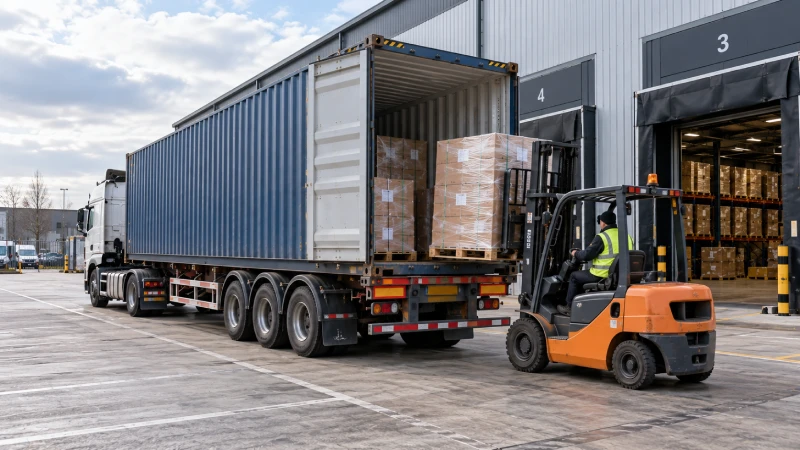
Live Unload vs Drop-and-Return
The unloading method should be agreed before UK delivery is booked.
Live Unload
With a live unload:
- the truck arrives with the loaded container;
- the container remains on the trailer;
- the consignee unloads it;
- the driver leaves with the empty container.
This works well where:
- a forklift is ready
- cargo is palletised
- warehouse staff are waiting
- the unloading time is predictable
If unloading takes longer than the haulier’s agreed allowance, waiting-time charges may apply.
Because waiting allowances vary, do not assume one universal “free two hours” or similar rule.
Drop-and-Return
Under an appropriate drop arrangement, the delivery equipment may allow the container to remain for a longer unloading period and the empty unit is collected later.
This may help with:
- manually unloaded cartons
- slower warehouse operations
- complex cargo handling
But it can create:
- additional haulage movements
- equipment costs
- site-security requirements
- additional detention exposure
Not every haulier or location can support this arrangement.
| Delivery situation | Live unload | Drop/return or specialist arrangement |
|---|---|---|
| Warehouse + forklift | Usually suitable | Often unnecessary |
| Palletised goods | Strong option | Optional |
| Large volume of loose cartons | Waiting risk | Worth evaluating |
| Machinery | Depends on offloading plan | Specialist review may be required |
| Restricted access site | Site review required | Site review required |
| Container must be placed on ground | Normal live unload unsuitable | Specialist equipment required |
Free Time, Demurrage, Detention and Storage
One of the most expensive FCL mistakes is waiting until the container arrives before checking free time.
The safer approach is to treat container arrival as the start of multiple operational clocks.
Terminal Storage and Container Detention Are Not Always the Same Clock
Carrier terminology and charging structures vary.
Maersk’s UK import terms effective August 1, 2026 provide a useful current example. Under those standard terms:
- Combined Detention starts on and includes the day the container is discharged and runs until the empty container is gated back into the agreed terminal, port or depot.
- Terminal Storage starts on and includes the discharge day and ends when the full container gates out of the terminal.
Maersk also states that booking-specific SPOT conditions may differ from the standard tariff. See the current Maersk UK import tariff and free-time guidance.
That means there are two important operational targets:
Get the full container out of the terminal
and
Get the empty container back to the nominated return location
Do Not Assume Every UK Container Gets the Same Free Time
Under Maersk’s current standard UK dry-container tariff, the listed combined detention free period is seven calendar days, while terminal storage at several named UK terminals has a separate five-day free period.
Those figures are useful examples of how charging can work, but they are not universal UK rules. Another carrier, contract, tariff or booking may have different conditions.
Always check the actual booking.
How to Reduce Demurrage and Detention Risk
Before vessel arrival:
- prepare customs documents
- confirm the commodity code
- arrange duty and VAT handling
- confirm the customs representative
- book container haulage
- reserve the warehouse delivery slot
- prepare unloading equipment
- record the last free days
- check the empty-return depot
After delivery, monitor the empty return until the equipment has actually been gated in.
Pro Tip: Empty-container return is part of the import plan, not an afterthought after unloading.
What Should an FCL Quote from China to the UK Include?
Two FCL quotations can show very different totals because they include different scopes.
A useful comparison should separate the main cost stages.
China Origin
Possible charges include:
- supplier pickup or empty-container positioning
- container trucking
- warehouse consolidation
- stuffing
- export customs declaration
- origin documentation
- terminal/origin handling
- VGM-related service where applicable
Ocean Freight
The ocean section may include:
- base FCL freight
- carrier surcharges
- equipment-related charges
- seasonal or market adjustments
Ocean freight changes frequently, so a rate should always be associated with:
origin port + destination port + container type + validity + included charges
UK Destination
Potential destination costs include:
- terminal or destination handling
- customs-entry coordination
- container haulage
- waiting time
- special delivery equipment
- empty-container return
Costs That Are Not Simply “Ocean Freight”
Importers should separately consider:
- Customs Duty
- Import VAT
- licences
- compliance costs
- inspections or customs exams
- storage
- demurrage
- detention
- specialist delivery costs
For this reason, an advertised “China to UK 40ft container price” should not be assumed to represent the final cost of moving the goods to a UK warehouse.
For current planning ranges, see Shipping Cost from China to UK or request a shipment-specific comparison using the origin, container size and UK postcode.
UK Customs, VAT and Product Checks That Can Delay an FCL
FCL does not change the legal requirements that apply to imported products.
The importer should review customs and product requirements before cargo is loaded.
EORI and Commodity Code
Businesses importing commercial goods into Great Britain generally need a GB EORI.
The commodity code used on the import declaration helps determine the applicable Customs Duty rate and whether import restrictions, licences or other measures apply. Use the UK Trade Tariff for commodity-specific measures.
Do not apply one generic duty percentage to all imports from China.
Import VAT and Postponed VAT Accounting
Import VAT treatment depends on the goods and import circumstances.
HMRC states that UK VAT-registered businesses may be able to use Postponed VAT Accounting (PVA) to account for import VAT through their VAT Return instead of paying that VAT upfront at import. See the HMRC guidance on Postponed VAT Accounting.
The importer or its appointed customs representative should confirm the correct declaration instructions before clearance.
UKCA and CE Requirements Are Product-Specific
Do not assume every product imported into Britain needs UKCA marking.
Current GOV.UK guidance states that conformity marking is required only where the relevant product regulations require it, and Great Britain continues to recognise CE marking for many product regimes under the current framework. Certain sectors follow different rules. See GOV.UK guidance on placing UKCA or CE marked products on the market in Great Britain.
Product compliance should therefore be checked by commodity and intended market before shipping.
Dangerous Goods
If an FCL contains dangerous goods, additional maritime requirements may apply to:
- classification
- packaging
- marks and labels
- declaration
- segregation
- carrier acceptance
These requirements should be reviewed before booking rather than after the container is stuffed.
Does FCL Shipping Mean DDP?
No.
FCL describes how the cargo uses the container. DDP describes the commercial delivery responsibility under the agreed transaction structure.
An FCL shipment might be arranged port-to-port, port-to-door or under an Incoterm such as EXW, FOB, CIF or another agreed structure.
DDP can only be considered when the shipment structure is workable, including:
- who acts as importer
- EORI arrangement
- customs representation
- VAT treatment
- Customs Duty
- commodity
- import restrictions
- final delivery arrangement
Winsail can review and coordinate door delivery or customs-clearance arrangements where applicable and within the agreed service scope, but Winsail should not automatically be assumed to act as the UK importer of record or to pay UK import taxes on behalf of every shipment.
For eligible cargo, a DDP or duty-inclusive delivery structure can be reviewed after the importer, customs, VAT and destination requirements are known.
FCL Pre-Booking Checklist: Information to Prepare
A useful FCL quotation should begin with enough information to make an operational decision, not simply “one 40ft from China to UK.”
Cargo Information
- product description
- total number of packages
- total CBM
- total gross weight
- package dimensions
- pallet dimensions if applicable
- heaviest individual piece
- stackable or non-stackable
- dangerous-goods status
- special handling requirements
China Origin
- supplier city
- exact pickup address
- number of suppliers
- cargo-ready date
- factory container access
- factory forklift/loading capability
- factory stuffing or warehouse consolidation preference
UK Destination
- final delivery postcode
- warehouse, project site or other site type
- HGV access
- loading bay
- forklift, telehandler or crane availability
- turning area
- delivery hours
- expected unloading time
- live unload or alternative unloading requirement
Import Information
- Great Britain or Northern Ireland
- EORI status
- commodity code if available
- customs representative
- VAT/PVA instruction where relevant
- product compliance or licence requirements
- dangerous-goods documents where applicable
Providing these details early makes it easier to review the container size, route, UK delivery and potential operational risks before the booking is confirmed.
FAQ
When is FCL cheaper than LCL from China to the UK?
There is no universal volume at which FCL automatically becomes cheaper. Many importers begin comparing FCL once cargo enters the mid-teen CBM range, but the real break-even point depends on current LCL charges, FCL freight, origin costs, UK destination charges, final postcode and cargo characteristics. Compare both services on an all-in basis.
How much does a 20ft container cost from China to the UK?
The price changes by origin port, UK port, carrier, season, equipment availability and service scope. A useful quotation should state whether the price is port-to-port or includes China pickup, destination charges, customs coordination and UK container haulage. Current rates should be checked at the time of booking rather than relying on an evergreen annual price table.
How much weight can a 20ft or 40ft container carry?
Carrier equipment references can show payloads around 28 tonnes for standard dry equipment, but this is not a universal usable shipment weight. The actual container plate, cargo distribution, carrier rules and destination road limits all matter. UK road-haulage feasibility should be checked separately for heavy containers.
What is the difference between a 40GP and 40HC?
A 40HC provides greater internal height and volume than a 40GP. It is useful for cargo that is limited by cube or height, but it does not automatically provide a higher maximum cargo payload.
How long does an FCL container take from China to the UK?
As a planning reference, current direct carrier schedules on selected major port pairs can fall in the high-30s to low-40s days port to port. For example, the current CMA CGM FAL1 schedule shows approximately 42 days Ningbo-Southampton, 41 days Shanghai-Southampton and 37 days Yantian-Southampton. Actual bookings can differ because schedules, rotations, skipped calls and congestion change. Door-to-door lead time is longer because it also includes origin operations, export handling, vessel cutoffs, customs clearance and UK delivery.
What happens to my container after it arrives at a UK port?
The container is discharged, completes the required customs and carrier-release process, is collected by the nominated haulier, delivered to the receiving site, unloaded and then returned empty to the designated depot or terminal. Each of those steps needs to be planned around the bookingu0026#x27;s free-time conditions.
Can a 40ft container be delivered directly to my warehouse or construction site?
Potentially, yes. The delivery must first be checked for HGV access, turning space, unloading equipment, delivery restrictions and expected unloading time. A warehouse with a loading bay and forklift is generally easier than a restricted construction or residential site. If the container must be placed on the ground, specialist equipment normally needs to be arranged separately.
Plan Your FCL Shipment from China to the UK
The most reliable FCL plan starts with the cargo and final delivery conditions rather than choosing a container from a price table.
Before booking, establish:
CBM + gross weight + package dimensions + supplier location + container loading method + UK postcode + unloading method.
Winsail Logistics can coordinate FCL shipping from China and review the container size, origin routing, supplier consolidation and UK delivery requirements depending on the cargo and agreed service scope.
For a shipment review, provide the cargo details, supplier city or pickup address, preferred container size if known, and final UK delivery postcode.
Continue with related UK shipping guides
Use these focused guides for the next part of your China-to-UK shipping plan.
