
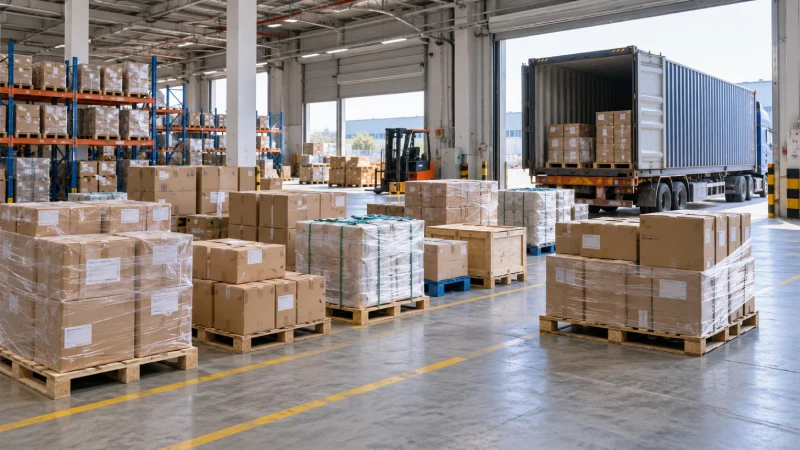
Buying from several factories in China can give German importers better product selection, pricing and sourcing flexibility. It can also create a logistics problem: every supplier finishes production at a different time, uses different packaging, operates from a different city and prepares its own shipping documents.
Shipping every order separately is possible, but it can mean repeated pickup charges, minimum freight charges, origin handling, destination handling and separate deliveries in Germany.
Cargo consolidation provides another option.
Instead of exporting each supplier order independently, goods from several Chinese suppliers can be delivered or collected into an agreed consolidation warehouse in China. Each shipment is identified and recorded, early cargo is held until an agreed cutoff, and the completed orders are then combined into a larger outbound shipment to Germany.
The final shipment may move by LCL, FCL, air freight or rail depending on its actual volume, weight, cargo type and delivery deadline.
However, consolidation is not automatically cheaper. China domestic transportation, warehouse handling, storage and supplier delays can reduce or eliminate the savings.
The right question is therefore not simply whether you can combine your suppliers. It is whether consolidating them will reduce your total logistics cost without creating unacceptable inventory or delivery risk.
For the wider route, transport methods and Germany delivery process, see Shipping from China to Germany.
Quick Answer: How Does Multi-Supplier Consolidation from China to Germany Work?
If you buy from several factories, Alibaba sellers or trading companies in China, their goods can usually be coordinated through one China-side consolidation plan.
The typical process is:
- Collect shipment information from every supplier.
- Choose a suitable consolidation location in China.
- Give each supplier delivery or pickup instructions.
- Receive and identify each supplier’s cargo.
- Record carton or pallet quantities, dimensions and weight as required.
- Hold early cargo until the remaining suppliers are ready.
- Resolve any packing or document discrepancies.
- Confirm the final consolidated volume and weight.
- Compare LCL, FCL, air or rail options.
- Prepare the combined shipment and export it to Germany.
The important point is that physical consolidation and commercial documentation are two different things.
Several supplier orders may travel together, but that does not automatically mean separate supplier transactions can be replaced with one artificial commercial invoice.
| Question | Practical Answer |
|---|---|
| Can several Chinese suppliers be combined? | Usually yes, if cargo and documents are compatible |
| Where is the cargo combined? | At an agreed China consolidation warehouse |
| Must all suppliers be nearby? | No, but long China inland transfers may reduce the savings |
| Can the final shipment move as LCL? | Yes |
| Can consolidation turn several LCL orders into FCL? | Yes, if the combined volume makes FCL more economical |
| Can air cargo be consolidated? | Yes |
| Can rail cargo be consolidated? | Yes, where the route and cargo are suitable |
| Can one late supplier delay everything? | Yes |
| Are supplier invoices automatically merged? | No |
| Is storage unlimited? | No; storage conditions and charges should be confirmed |
| Are inspection, repacking or labeling automatic? | No; these should be agreed as part of the warehouse scope |
What Is China-to-Germany Cargo Consolidation?
Cargo consolidation means bringing several smaller shipments together before the main international movement.
For a German importer, this commonly happens when one purchasing cycle involves several Chinese suppliers.
For example:
- Supplier A manufactures electronic accessories in Shenzhen.
- Supplier B produces cartons in Dongguan.
- Supplier C makes metal components in Foshan.
- Supplier D supplies display materials from Guangzhou.
Without consolidation, the importer could arrange four international shipments.
With consolidation, the flow can instead become:
Supplier A + Supplier B + Supplier C + Supplier D → China consolidation warehouse → one coordinated shipment → Germany
This does not necessarily mean every carton is physically repacked into one package.
The main objective is to bring the cargo under one logistics plan so that the importer can make a better freight decision based on the final combined shipment.
Consolidation Warehouse vs Ordinary Storage
A consolidation warehouse is not just a place where goods sit.
For multi-supplier shipments, its practical role can include:
- receiving cargo from different suppliers;
- identifying each shipment by supplier, PO or shipping reference;
- recording carton or pallet information;
- holding goods until the agreed shipment cutoff;
- measuring final cargo where required;
- preparing the cargo for the selected international transport method;
- coordinating release for LCL, FCL, air or rail.
Additional services such as inspection, palletizing, repacking or labeling may also be available, but they should be defined in advance rather than assumed to be included in every warehouse receipt.
For the broader China-side handling scope, see China warehouse services.
Supplier Consolidation vs LCL Consolidation
These two concepts are related but not identical.
Supplier consolidation means combining several orders belonging to the same importer.
LCL consolidation means loading cargo belonging to different shippers into one shared container.
A German importer might therefore first consolidate four factory orders into one 7 CBM shipment.
That 7 CBM shipment can then enter an LCL facility and share a container with cargo belonging to other importers.
The flow could look like this:
4 suppliers → one 7 CBM importer shipment → LCL consolidation → shared container → Germany
For more detail about shared-container shipping, see LCL Shipping from China to Germany and LCL consolidation services.
When Does Consolidating Multiple Suppliers Make Sense?
Multi-supplier consolidation works best when the suppliers’ production schedules, locations and cargo characteristics are reasonably compatible.
| Situation | Consolidate? | Why |
|---|---|---|
| Four suppliers each shipping 1–2 CBM | Often yes | Separate small shipments can create repeated minimum charges |
| All suppliers ready within a few days | Usually yes | Waiting time is limited |
| Suppliers are concentrated in one manufacturing region | Strong candidate | China inland transport is easier to control |
| Combined cargo is becoming large | Compare carefully | Consolidation may make FCL economical |
| One product is urgently needed | Possibly split | Waiting may cost more than separate freight |
| Suppliers are spread across distant provinces | Case-by-case | China domestic trucking may reduce the saving |
| General cargo and dangerous goods are mixed | Requires review | Carrier and warehouse restrictions may differ |
| One supplier has temperature-sensitive cargo | Often separate | Handling conditions may be incompatible |
| Suppliers finish several weeks apart | Consider batches | Storage and inventory delays may outweigh savings |
A consolidation plan should therefore begin with both cost and timing, not simply warehouse availability.
Information to Collect Before the First Supplier Ships
Good consolidation starts before any cartons arrive at the warehouse.
Create one master supplier list containing the following information for every order:
- supplier name;
- supplier contact person;
- factory or pickup address;
- purchase-order number;
- product description;
- quantity;
- carton or pallet count;
- carton dimensions;
- estimated gross weight;
- estimated CBM;
- planned cargo-ready date;
- Incoterm;
- cargo value;
- battery, liquid, chemical, magnetic or dangerous-goods status;
- required delivery date in Germany.
You should also provide the final German delivery postcode so the freight plan can be evaluated from origin through final delivery rather than only port-to-port.
Why Supplier Location Matters
Consider two sourcing situations.
Scenario A
- Shenzhen
- Dongguan
- Guangzhou
- Foshan
These suppliers are all in South China’s Pearl River Delta. One regional consolidation strategy may be practical.
Scenario B
- Shenzhen
- Yiwu
- Ningbo
- Qingdao
These suppliers are spread across different regions. Combining everything at one warehouse may require significant domestic transportation.
International freight may become cheaper after consolidation while the China inland cost becomes higher.
Pro Tip: Compare the total China origin cost, not just the final ocean or air freight rate.
How Multi-Supplier Consolidation from China to Germany Works
Step 1: Create a Supplier Consolidation Plan
Before the first pickup, determine:
- which suppliers will participate;
- where each supplier is located;
- estimated cargo-ready dates;
- estimated volume and weight;
- proposed consolidation location;
- target Germany delivery date;
- provisional transport method;
- target departure;
- supplier cutoff date.
The provisional freight mode does not have to be final.
If the suppliers estimate 8 CBM but the actual shipment becomes 14 CBM, the best transport decision may change.
This is why the final mode should normally be reviewed after actual packed cargo information is available.
Step 2: Coordinate Each Supplier
Every supplier should receive clear delivery instructions.
These may include:
- consolidation warehouse address;
- warehouse contact;
- delivery appointment instructions where required;
- importer reference;
- supplier reference;
- purchase-order number;
- shipping mark;
- expected delivery date;
- packaging requirements.
Avoid sending multiple suppliers to the same warehouse using only the German buyer’s company name.
If five suppliers all mark their cartons simply as the buyer’s company name, the receiving team may have difficulty identifying which cartons correspond to which order.
A better reference structure could be:
ABC-GMBH / SUPPLIER-03 / PO-2408
Each supplier shipment should remain traceable through the consolidation process.
Step 3: Suppliers Deliver Cargo or China Pickup Is Arranged
There are two common origin models.
Supplier-Delivered Cargo
The supplier arranges domestic delivery to the nominated consolidation point.
This can be practical when the supplier already has local transport capability and the sales term makes delivery responsibility clear.
Forwarder-Arranged Pickup
Pickup can instead be coordinated from the factory or supplier warehouse.
The exact pickup scope, location and charge should be confirmed for the shipment.
Incoterms matter here. An EXW order may require more origin coordination than a shipment where the supplier already includes delivery to a nominated China location.
Step 4: Receive and Match Each Supplier Shipment
When cargo arrives, it should be matched against the expected shipment.
The warehouse receiving process may involve checking:
- supplier name;
- shipment reference;
- PO number;
- carton or pallet count;
- shipping marks;
- external cargo condition;
- recorded dimensions and weight where required.
This should not automatically be described as a full product quality inspection.
A normal warehouse receipt and a formal QC inspection are different services.
For example, confirming that 18 cartons arrived from Supplier B does not necessarily mean someone opened every carton and verified product color, function, specification and manufacturing quality.
If detailed product inspection is required, define the inspection scope before the goods arrive.
Step 5: Hold Early Cargo Until Other Suppliers Are Ready
Suppliers rarely finish on the same day.
Suppose:
- Supplier A arrives on September 2.
- Supplier B arrives on September 4.
- Supplier C arrives on September 7.
- Supplier D expects to finish on September 9.
The first three shipments may wait temporarily until Supplier D arrives.
Before using consolidation storage, confirm:
- whether a free-storage period applies;
- what happens after that period;
- how storage is charged;
- whether oversized cargo has different rules;
- whether dangerous goods can be stored;
- whether long-term storage is available;
- when the final consolidation cutoff applies.
Do not assume warehouse storage is unlimited simply because the cargo is waiting for another supplier.
Step 6: Resolve Missing or Mismatched Cargo Information
Supplier estimates are useful for initial planning, but they are not always the final packed figures.
A supplier might originally advise:
- 20 cartons;
- 2.0 CBM;
- 280 kg.
The final cargo may arrive as:
- 24 cartons;
- 2.65 CBM;
- 335 kg.
That difference can affect:
- LCL cost;
- air-freight chargeable weight;
- rail freight pricing;
- warehouse space;
- pallet requirements;
- FCL feasibility.
This is why consolidation can improve freight planning: decisions can be based on the actual combined shipment rather than four separate preliminary estimates.
Step 7: Coordinate Cartons, Pallets and Other Packing Units
Different suppliers often use different packing standards.
One supplier may deliver loose export cartons. Another may use pallets. A machinery supplier may deliver wooden cases. A fourth supplier may use irregular oversized packages.
The objective is not necessarily to make every package identical. It is to make sure the final shipment can be handled safely and efficiently.
Where required, services such as palletizing, repacking and labeling may be available. However, these should be treated as separately agreed warehouse requirements rather than automatically included with every consolidation shipment.
Repacking must also be considered carefully when products carry:
- regulatory labels;
- handling marks;
- product identification;
- traceability information;
- dangerous-goods labels;
- compliance information.
Changing outer packaging without checking these requirements can create a different problem later.
Step 8: Apply the Consolidation Cutoff
One of the most important parts of multi-supplier consolidation is knowing when to stop waiting.
Consider this situation:
- Supplier A ready: March 3
- Supplier B ready: March 5
- Supplier C ready: March 7
- Supplier D originally promised March 8
- Supplier D now says March 20
You have three main options.
Option A: Wait Until March 20
This keeps all cargo together but may create:
- additional storage;
- missed vessel or rail departures;
- delayed German inventory;
- possible stockouts.
Option B: Ship Suppliers A, B and C
Supplier D moves separately later.
This increases logistics cost but protects the delivery schedule of the ready cargo.
Option C: Ship A, B and C Now and Add D to the Next Consolidation Cycle
This can work particularly well for importers with recurring purchases from China.
The decision should consider:
- warehouse storage cost;
- next departure;
- German inventory level;
- cost of stockout;
- value of the delayed products;
- cost of separate freight;
- whether another China shipment is planned soon.
Pro Tip: Set the supplier cutoff date before the first shipment enters the warehouse. Do not invent the rule only after one supplier becomes late.
Step 9: Confirm Final Volume and Choose the Freight Mode
Once the planned supplier shipments have arrived, confirm the final:
- carton count;
- pallet count;
- dimensions;
- gross weight;
- CBM;
- chargeable weight where relevant;
- cargo restrictions.
Then compare the practical shipping options.
The best solution might be:
- LCL sea freight;
- FCL sea freight;
- rail freight;
- air freight;
- or a split strategy using more than one mode.
Step 10: Prepare the Combined Outbound Shipment
Once the mode is selected, the shipment moves into the export stage.
This can involve:
- final freight booking;
- warehouse release;
- China export documentation;
- commercial documents;
- transport documents;
- loading or consolidation;
- international transport;
- German customs-clearance preparation;
- final delivery arrangements.
At this point, all supplier records should still be traceable even though the cargo is travelling under one coordinated logistics plan.
LCL or FCL After Consolidation?
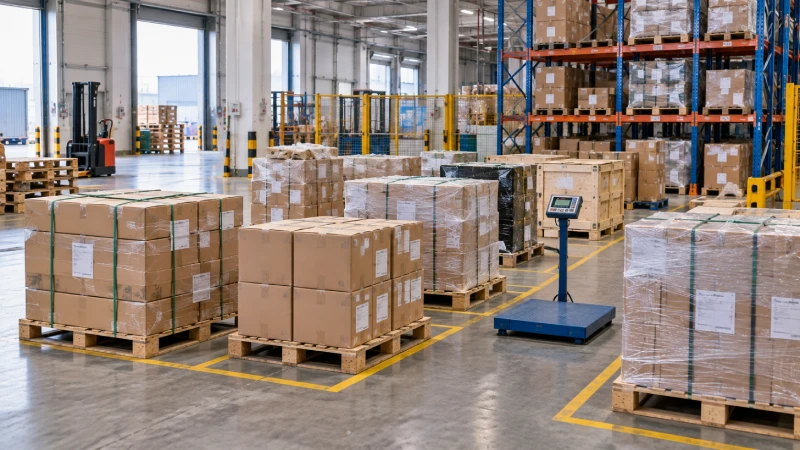
One of the biggest advantages of multi-supplier consolidation is that the final freight decision can be made using combined cargo data.
When LCL Makes Sense
Suppose four suppliers produce:
- Supplier A: 1.5 CBM
- Supplier B: 2.0 CBM
- Supplier C: 2.5 CBM
- Supplier D: 1.0 CBM
Total:
7.0 CBM
This remains a typical situation where LCL deserves serious consideration.
Instead of shipping four separate small loads, the buyer can create one 7 CBM consolidated shipment.
LCL costs may include:
- freight charged by weight or measure;
- China origin handling;
- CFS handling;
- destination deconsolidation;
- German destination charges;
- customs clearance;
- final delivery.
Consolidation can reduce duplication, but the total door-to-door cost should still be compared.
When FCL Becomes More Attractive
There is no universal rule such as “at exactly 15 CBM, always use FCL.”
The correct decision depends on:
- final CBM;
- gross weight;
- cargo density;
- number of pallets;
- container utilization;
- LCL origin and destination charges;
- current FCL rates;
- German port charges;
- cargo sensitivity;
- delivery requirements.
As consolidated cargo grows, the accumulated LCL costs may eventually make a dedicated container more attractive.
The container itself also matters because dense cargo may reach weight limits before filling the available space, while bulky lightweight cargo may use the available cubic capacity first.
For a deeper comparison, see 20ft & 40ft Container Shipping Cost from China to Germany and FCL Shipping from China to Germany.
Pro Tip: Re-price LCL against FCL after final warehouse measurements. Do not make the final decision only from supplier estimates.
Can Multiple Supplier Orders Be Consolidated by Air Freight?
Yes.
Multi-supplier consolidation is not limited to ocean freight.
Air consolidation can work well for:
- higher-value cargo;
- urgent production components;
- product-launch stock;
- spare parts;
- moderate-volume commercial shipments;
- inventory needed to prevent stockouts.
The process is similar:
Multiple suppliers → China consolidation point → combined air shipment → Germany
However, air freight is usually priced according to chargeable weight, not simply actual scale weight.
A shipment with low actual weight but large cartons can produce a much higher volumetric weight.
Combining several bulky supplier shipments therefore does not automatically guarantee lower air freight.
For air-pricing logic, see Air Freight Cost from China to Germany per KG.
Split Urgent and Non-Urgent Cargo
An importer should not force every product into the same shipping mode merely because the goods were purchased in the same cycle.
For example:
- urgent electronic components → air freight;
- ordinary packaging and accessories → LCL sea freight.
This can be more economical than either sending everything by air or making the urgent items wait for the sea shipment.
Can Multiple Suppliers Be Consolidated for Rail Freight to Germany?
Rail can also be relevant for multi-supplier shipments, especially when the buyer wants a service positioned between sea and air.
Rail may be worth comparing when:
- sea freight is too slow for the inventory plan;
- air freight is too expensive;
- shipment volume is moderate;
- cargo is suitable for rail;
- origin routing is practical;
- Germany or Central Europe is the main destination.
Duisburg is an important inland logistics point for China-Europe rail flows, but the best solution depends on the actual China origin, service schedule and German delivery location.
Rail should not simply be treated as “faster LCL.”
The calculation can include:
- China first-mile transport;
- origin terminal;
- rail consolidation;
- terminal schedules;
- route availability;
- cargo restrictions;
- destination handling;
- German final delivery.
For a dedicated mode comparison, see Rail Freight from China to Germany.
How Cargo Consolidation Can Reduce Shipping Costs
The potential saving usually comes from reducing repeated logistics activities.
1. Fewer Minimum Charges
Four independent small shipments may each trigger minimum charges for:
- pickup;
- documentation;
- origin handling;
- international freight;
- destination handling;
- customs-related services;
- final delivery.
Combining the cargo may reduce some of that duplication.
2. Better Freight Utilization
Suppose your suppliers ship:
- 2 CBM
- 3 CBM
- 1 CBM
- 4 CBM
Separately, you have four small shipments.
Together, you have:
10 CBM
That combined volume may produce better freight economics.
3. Consolidation Can Change the Freight Mode
Sometimes the largest saving is not:
four LCL shipments → one LCL shipment
It is:
several small LCL shipments → one economically attractive FCL shipment
That is why consolidation decisions should be reviewed after the complete cargo profile becomes clear.
4. Fewer Deliveries in Germany
If all goods are going to the same importer warehouse, consolidation may also reduce the number of separate final-mile deliveries.
Instead of receiving multiple shipments on different days, the importer may receive one coordinated delivery.
Costs That Consolidation Can Add
Consolidation is not free.
Potential additional costs include:
- China domestic pickup;
- intercity trucking;
- warehouse receiving;
- storage;
- consolidation handling;
- pallet handling;
- repacking where requested;
- special cargo handling;
- extra documentation work;
- waiting for delayed suppliers.
The correct comparison is therefore:
Total cost with consolidation
versus
Total cost of shipping suppliers separately
For more detail about the overall cost structure, see Shipping Cost from China to Germany.
Simple Multi-Supplier Cost-Saving Example
Consider a German importer purchasing from four factories in South China.
| Supplier | Volume | Location |
|---|---|---|
| Supplier A | 2.0 CBM | Shenzhen |
| Supplier B | 1.5 CBM | Dongguan |
| Supplier C | 2.5 CBM | Foshan |
| Supplier D | 3.0 CBM | Guangzhou |
| Total | 9.0 CBM | Pearl River Delta |
Option 1: Ship Each Supplier Separately
The importer may face repeated:
- local transport;
- origin handling;
- minimum freight charges;
- destination handling;
- German delivery arrangements.
Option 2: Consolidate the Four Suppliers
All four shipments move into one regional consolidation plan.
Once the cargo is complete, the importer has approximately:
9 CBM
The forwarder can then compare:
- consolidated LCL;
- FCL if the cargo grows further;
- air only where time-sensitive;
- other multimodal options if justified.
There is no responsible way to say consolidation will save a fixed percentage without seeing the actual charges.
The best approach is to price both scenarios on the same scope and compare the total door-to-door logistics cost.
Customs and Commercial Invoices When Combining Several Suppliers
This is one of the areas where importers should be especially careful.
One Physical Shipment Does Not Erase the Underlying Transactions
Suppose a German company purchases:
- EUR 12,000 of machinery parts from Supplier A;
- EUR 6,000 of accessories from Supplier B;
- EUR 4,000 of packaging from Supplier C.
Putting these goods into one consolidated shipment does not mean the underlying transactions have disappeared.
The records should still allow the shipment to be traced by:
- supplier or seller;
- purchase order;
- product;
- quantity;
- commercial value;
- tariff classification;
- country of origin where relevant.
For EU customs purposes, tariff classification, customs value and origin remain important even when several suppliers’ cargo travels together.
Do Not Create an Artificial Invoice Just Because Cargo Is Combined
A freight consolidation decision should not be confused with a commercial-document decision.
Do not assume that several supplier invoices should simply be rewritten into one artificial invoice because all cartons are travelling together.
The correct document structure depends on the actual:
- buyer;
- seller;
- exporter arrangement;
- transaction;
- products;
- customs procedure.
Where there are several sellers or complex trading arrangements, confirm the commercial-invoice and declaration structure with the customs broker before departure.
Use a Consolidated Packing Reference
A master packing list or consolidation record can be extremely useful operationally.
For example:
| Supplier | PO | Cartons | Gross Weight | CBM |
|---|---|---|---|---|
| Supplier A | PO-101 | 18 | 320 kg | 2.0 |
| Supplier B | PO-102 | 10 | 180 kg | 1.5 |
| Supplier C | PO-103 | 22 | 460 kg | 2.5 |
This helps the forwarder and importer understand how the physical cargo fits together.
However, an operational master packing list does not automatically replace the commercial documents required for customs.
Import VAT and Customs Value
For EU imports, import VAT calculations are based on customs value and can also include applicable duties and certain incidental costs.
Because multi-supplier shipments can contain several product categories and values, good record matching is important.
For the wider import process, see Germany Customs Clearance for Imports from China and Germany Import Duty & VAT from China.
Storage During Multi-Supplier Consolidation
Temporary storage is often unavoidable.
The first supplier may be ready several days before the last supplier.
The practical question is not whether storage exists, but how it affects the consolidation plan.
Before shipping suppliers into the warehouse, ask:
- Is any free-storage period included?
- When do storage charges begin?
- Is storage charged by CBM, pallet, day or shipment?
- Are oversized goods treated differently?
- Can batteries or dangerous goods be accepted?
- Is long-term storage available if a supplier becomes seriously delayed?
- Can early goods be released separately?
- What is the consolidation cutoff?
The answers should be confirmed for the actual warehouse and cargo rather than assumed from a general service description.
Inspection, Repacking, Palletizing and Labeling: Confirm the Scope First
Inspection, repacking, palletizing and labeling can be useful during a multi-supplier consolidation project, but they should not be confused with basic warehouse receipt or assumed to be automatically included.
Receiving Is Not the Same as Product Inspection
A receiving check might confirm:
- number of cartons;
- supplier reference;
- external condition;
- visible damage;
- shipping marks.
A product inspection could instead involve:
- opening cartons;
- sampling units;
- checking product appearance;
- checking dimensions;
- checking function;
- matching specifications.
The inspection scope should therefore be agreed before the warehouse begins work.
Repacking and Palletizing
These may be useful when:
- supplier cartons are damaged;
- loose cartons should be palletized;
- export handling requires stronger packing;
- the German receiving warehouse has specific requirements.
But the correct packing method depends on the product.
Labeling
Warehouse labeling might include:
- shipping marks;
- pallet labels;
- PO references;
- routing labels;
- barcode labels where agreed.
Product regulatory or compliance labeling should not be changed casually.
Pro Tip: If you need inspection, palletizing, repacking or labeling, describe exactly what should be done when requesting the consolidation plan. Do not wait until the freight is already booked.
Main Risks When Consolidating Multiple Chinese Suppliers
| Risk | Why It Happens | Possible Impact | Recommended Control |
|---|---|---|---|
| One supplier is late | Production delay | Whole shipment misses departure | Set a cutoff and split-shipment rule |
| Unmarked cartons | Suppliers use inconsistent references | Cargo cannot be matched easily | Give every supplier a unique shipping mark |
| Dimensions are inaccurate | Supplier estimates before final packing | Freight price changes | Reconfirm packed dimensions |
| Suppliers are far apart | Factories are in different regions | High China trucking cost | Choose warehouse based on supplier geography |
| Documents do not match cargo | Quantity or product discrepancy | Customs questions or delay | Reconcile records before departure |
| Restricted cargo mixed with general cargo | Batteries, chemicals or DG not declared early | Carrier or warehouse rejection | Identify special cargo before pickup |
| Storage becomes longer than planned | One supplier is delayed | Additional cost | Agree cutoff and storage rules |
| LCL becomes inefficient | Combined volume grows | FCL may become cheaper | Re-price after final measurements |
| Urgent goods wait unnecessarily | Everything tied to one batch | German stockout | Split urgent inventory |
| Different packaging standards | Several factories pack differently | Handling inefficiency | Review packing before final loading |
| Values cannot be traced | Documents combined incorrectly | Customs-clearance problems | Keep supplier transactions identifiable |
| One cargo issue affects the group | One supplier’s documents or goods have a problem | Entire shipment may wait | Review each supplier before final dispatch |
The One-Supplier Delay Problem: Should Everything Wait?
This is probably the most important operational decision in multi-supplier consolidation.
Imagine four suppliers.
Three are ready.
The fourth supplier suddenly reports a two-week delay.
Do not automatically wait.
Also do not automatically split the cargo.
Instead compare the cost of waiting with the cost of shipping separately.
Ask:
- How many days will the supplier actually be late?
- Will the delay cause you to miss a vessel, train or flight?
- What storage charges will the ready cargo create?
- When is the inventory required in Germany?
- Could a stockout affect sales or production?
- How much does a separate shipment cost?
- Can the late supplier join the next China order?
- Is the ready cargo already large enough to ship economically?
Example
Suppose three ready suppliers produce 11 CBM.
The late supplier adds only another 1 CBM.
If the 11 CBM is already economical to ship and Germany urgently needs the stock, waiting two weeks just to add another 1 CBM may make little sense.
On the other hand, if the ready cargo is only 2 CBM and the delayed supplier represents another 8 CBM, waiting a few days might significantly improve the freight economics.
The correct rule is:
Compare the cost of waiting with the cost of splitting.
Pro Tip: Every consolidation plan should have both a target departure date and a final supplier cutoff date.
When You Should Not Consolidate All Suppliers
Consolidation is useful, but not every purchase order belongs in the same shipment.
Consider shipping separately when:
- one product is urgently required;
- one supplier is significantly delayed;
- dangerous goods are incompatible with other cargo;
- temperature-controlled goods require special handling;
- suppliers are located extremely far apart;
- products are going to different German destinations;
- orders use different import arrangements;
- one supplier already has enough cargo for an efficient FCL;
- one shipment requires specialist equipment;
- storage and inland transport exceed the expected freight saving.
The goal is not to maximize the number of suppliers inside one shipment.
The goal is to build the most efficient supply-chain plan.
How to Choose a Consolidation Location in China
The cheapest warehouse rate is not automatically the cheapest consolidation solution.
Warehouse selection should consider the geography of the suppliers and the intended export route.
South China Suppliers
Examples:
- Shenzhen
- Dongguan
- Guangzhou
- Foshan
A South China consolidation point may minimize domestic transportation.
East China Suppliers
Examples:
- Shanghai
- Suzhou
- Ningbo
- Hangzhou
- Yiwu
An East China location may be more practical.
North China Suppliers
Examples:
- Qingdao
- Tianjin
- nearby industrial areas
A northern origin strategy may avoid unnecessary cross-China trucking.
If suppliers are split across several regions, compare:
- one central consolidation point;
- regional consolidation first;
- separate export batches.
There is no single China warehouse that is automatically best for every German importer.
What German Importers Should Send for a Consolidation Plan
To evaluate a multi-supplier shipment properly, provide as much of the following information as possible.
Supplier Information
For each supplier:
- company or factory name;
- pickup city;
- full pickup address;
- contact details;
- Incoterm;
- cargo-ready date.
Cargo Information
Provide:
- commodity;
- HS code if known;
- carton or pallet quantity;
- carton dimensions;
- gross weight;
- CBM;
- cargo value;
- batteries, liquids, powders, magnets or chemicals;
- dangerous-goods status if applicable.
Germany Delivery Information
Provide:
- German postcode;
- commercial warehouse or other delivery type;
- unloading restrictions where relevant;
- required delivery date;
- importer information where required.
Warehouse Requirements
Specify whether you need:
- receiving only;
- measurement;
- photos;
- product inspection;
- storage;
- palletizing;
- repacking;
- labeling;
- other agreed handling.
Providing this information before the first supplier moves cargo makes it much easier to identify problems early.
Pro Tips for German Importers Buying from Multiple Chinese Suppliers
1. Choose the consolidation location around your suppliers, not just the warehouse price.
Cheap storage can become expensive if every supplier requires long-distance China trucking.
2. Give every supplier a unique PO or shipping reference.
This is one of the simplest ways to reduce receiving errors.
3. Do not select the final freight mode only from estimated CBM.
Use final packed data whenever possible.
4. Establish the supplier cutoff in advance.
A consolidation plan without a cutoff can become an indefinite waiting plan.
5. Keep supplier commercial records traceable.
Physical consolidation does not eliminate the underlying purchase transactions.
6. Split genuinely urgent goods.
Do not allow one urgent component to force an entire bulk order onto air freight.
7. Compare total door-to-door cost.
A lower ocean-freight figure can be misleading when origin, destination and delivery charges differ.
8. Declare batteries, liquids, chemicals and DG cargo early.
Do not wait until cargo reaches the warehouse to disclose special handling requirements.
9. Confirm additional warehouse work before arrival.
Inspection, repacking, labeling or palletization should have a defined scope.
10. Re-check LCL versus FCL when the last supplier arrives.
The most economical mode can change as the combined volume grows.
Planning a Multi-Supplier Shipment from China to Germany?
If you are buying from several factories, Alibaba sellers or trading companies in China, send Winsail Logistics:
- supplier locations;
- cargo-ready dates;
- commodity details;
- carton or pallet quantities;
- dimensions;
- estimated weight and CBM;
- special cargo information;
- German delivery postcode;
- required delivery date.
We can review the China-side consolidation plan and compare whether the completed shipment is better suited to LCL, FCL, air freight, rail freight or a split-shipment strategy.
The objective is not simply to put every supplier’s cartons into one warehouse.
It is to coordinate supplier timing, origin transport, warehouse handling, documents and the final freight mode so that your China-to-Germany supply chain remains economical and predictable.
CTA: Plan My Consolidated Shipment
FAQ
Can I combine goods from several Alibaba suppliers and ship them together to Germany?
Yes. Orders from several Alibaba sellers, manufacturers or trading companies can usually be delivered or collected into a China consolidation warehouse and coordinated as one outbound shipment, provided the cargo, timing and documents are compatible.
How does a China consolidation warehouse work?
Suppliers send cargo to an agreed warehouse or pickup is arranged. The warehouse identifies each supplier shipment, records the cargo according to the agreed handling scope and holds early goods until the planned consolidation cutoff.
Is cargo consolidation cheaper than shipping every supplier separately?
It can be, especially when several small shipments would otherwise incur repeated minimum freight, handling and delivery charges. China inland transport, warehouse handling and storage should still be included in the comparison.
Can several supplier orders be shipped as one LCL shipment?
Yes. Several supplier orders belonging to one German importer can first be consolidated into one importer shipment, which can then move as LCL within a shared container.
When should I switch from LCL to FCL?
There is no universal CBM threshold. Compare the actual LCL and FCL costs using final CBM, weight, pallet count, origin charges, destination charges and German inland delivery.
Can one late Chinese supplier delay the whole consolidation?
Yes. If all suppliers must leave together, one production delay can hold the complete shipment. Set a supplier cutoff date in advance and decide whether late cargo should wait, ship separately or join the next consolidation cycle.
Can several suppliers use one commercial invoice for German customs?
Not automatically. Physical freight consolidation does not itself merge separate commercial transactions. The document structure should reflect the actual buyer, seller and transaction arrangements and should be confirmed with the customs broker where necessary.
Can multi-supplier cargo be consolidated for air or rail freight?
Yes. Air can suit smaller or urgent commercial cargo, while rail can be considered for suitable China-Germany shipments where the importer wants an option between sea and air.
Can Winsail inspect, repack, palletize or label goods before consolidation?
These services may be available depending on the warehouse, cargo and agreed quotation. They should be requested and confirmed before suppliers dispatch the goods rather than assumed to be included in basic consolidation.
