
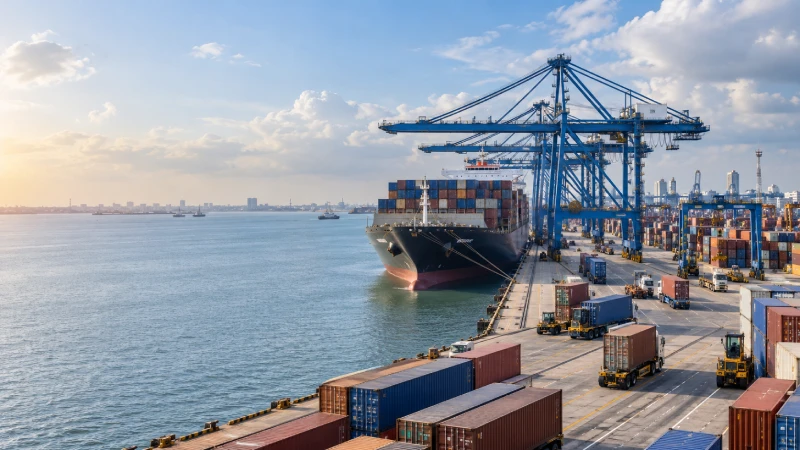
There is no universally “best” Lagos port.
For an importer shipping from China, the right choice between Apapa, Tin Can Island and Lekki is the gateway that gives the best combination of:
- an actually bookable carrier service from your China origin;
- a terminal suited to your cargo;
- workable Nigerian Customs and regulatory arrangements;
- sufficient free time and predictable local handling;
- practical inland evacuation; and
- the lowest total delivered cost to your final warehouse or project site.
That last point matters. A lower ocean freight rate does not automatically mean a cheaper shipment. A container that costs USD 100 less to land at one port may become significantly more expensive after terminal charges, delays, truck positioning, empty-container return and inland delivery are added.
For most shipments, the decision should therefore be made before the booking is confirmed, not after the vessel is already sailing.
Port and carrier data last verified: 4 October 2026. Schedules, terminal tariffs, free time and operational conditions can change and should be reconfirmed for the actual sailing.
Apapa vs Tin Can vs Lekki — Quick Decision Table
| Gateway | Best For | Typical Final Area | Cargo Strength | Inland Delivery Consideration | Main Planning Risk |
|---|---|---|---|---|---|
| Apapa | Established container and general-cargo networks | Lagos, mainland and wider inland destinations | FCL containers, reefer, general cargo, breakbulk/OOG where accepted | Road plus established rail and barge alternatives from APM Terminals | Port access, free time and terminal planning |
| Tin Can Island | Terminal-specific container, RoRo and multipurpose services | Western Lagos, Amuwo-Odofin, Ota/Agbara corridors and other inland destinations | Containers, vehicles, rolling cargo, general and project cargo | Primarily road, with some terminal/barge arrangements | The exact terminal matters as much as the port name |
| Lekki | Services specifically calling the eastern Lagos deep-water gateway | Lekki, Ibeju-Lekki, Lagos Free Zone and suitable eastern/inland routes | Containers, reefer and OOG/breakbulk where pre-approved | Can reduce inland mileage for eastern Lagos but increase it for western destinations | Carrier-call availability and final-mile geography |
The Nigerian Ports Authority describes Lagos Port Complex at Apapa as an intermodal port connected by road, water and rail. Its Tin Can directory shows several terminals with different cargo roles, while Lekki was developed as a modern deep-sea facility east of Lagos. Nigerian Ports Authority
The practical conclusion is simple:
Do not select the port first and look for a shipping service afterward. Select the ocean service, terminal and inland plan together.
Apapa — When It Belongs on the Shortlist
Apapa remains one of the first gateways to evaluate for containerized imports because it combines a mature carrier network with several landside evacuation options.
The NPA currently identifies five private-terminal operations within Lagos Port Complex, including APM Terminals for containers, ENL for breakbulk/general cargo/container activities, and separate bulk facilities. NPA also specifically highlights Apapa’s road, rail and water connections and its ability to accommodate oversized cargo. Nigerian Ports Authority
For standard FCL traffic, APM Terminals Apapa is particularly important. Its current terminal information lists shipping lines including Maersk, CMA CGM, COSCO, PIL, Hapag-Lloyd, ZIM and ONE. APM Terminals Apapa
Apapa Strengths
| Strength | Why It Matters |
|---|---|
| Broad carrier presence | Gives the forwarder more routing and equipment possibilities |
| Major container terminal | Suitable for regular FCL import flows |
| Standard-gauge rail | Containers can move toward Moniya/Ibadan after clearance |
| Narrow-gauge options | Useful for selected destinations including Ota, Agege and Ebute Metta |
| Barge connectivity | Can reduce dependence on the final congested road kilometres |
| Reefer capability | APMT lists reefer handling and 900 reefer plugs |
| OOG capability | APMT provides breakbulk/OOG handling services, subject to operational acceptance |
APM Terminals states that its standard-gauge operation links Apapa with Moniya in Ibadan and that narrow-gauge services can serve locations including Ota, Agege and Ebute Metta. Its barge product also transfers containers to bonded inland facilities around Lagos. APM Terminals Rail Services
This does not mean Apapa is automatically cheapest for an Ogun or northern Nigerian delivery. Rail departure timing, cargo clearance, the receiving point, last-mile trucking and the carrier’s through-bill arrangement still need to work commercially.
Main Apapa Constraint
Do not look only at the berth or terminal. The shipment still has to leave the port.
Road access to both Apapa and Tin Can is managed through the Ètò electronic truck call-up system, under which port-bound trucks are scheduled and staged before entry. Nigerian Ports Authority
NPA is also carrying out a wider port reconstruction and modernization program covering Apapa and Tin Can, so terminal and access conditions should be checked close to the shipment date instead of relying on an old congestion assumption. Nigerian Ports Authority
Tin Can Island — When It Belongs on the Shortlist
The most important fact about Tin Can is this:
Tin Can Island is not one homogeneous terminal.
According to NPA’s published directory, the port complex includes Tin Can Island Container Terminal (TICT), Port & Cargo Handling Services, Five Star Logistics, PTML and Josepdam, with different cargo functions. Nigerian Ports Authority
That means a quotation saying simply “POD: Tin Can” is not detailed enough for serious comparison.
You should know:
which terminal the vessel will use, which shipping line operates the service, what cargo that terminal routinely handles, how the container will be released and where the empty equipment must be returned.
Tin Can Terminal-Selection Examples
| Terminal / Operator | Typical Relevance | What to Verify |
|---|---|---|
| TICT | Containerized imports | Carrier, vessel service, reefer/OOG/DG acceptance, barge arrangements |
| Port & Cargo | Containers and general cargo | Shipping line, terminal handling and delivery arrangement |
| Five Star Logistics | Container/general cargo activities | Actual vessel/terminal nomination and cargo acceptance |
| PTML | RoRo, vehicles, containers, project and general cargo | Grimaldi/service routing, cargo dimensions, release and delivery setup |
| Josepdam | Bulk-oriented operations | Cargo suitability and vessel nomination |
TICT currently advertises shore handling, barge, reefer, weighing and oversized/dangerous-cargo services. TICT
PTML is especially relevant when the cargo is vehicles, construction equipment, rolling machinery, containers or project cargo. Its current information describes it as a multipurpose RoRo terminal handling vehicles, containers, general cargo and project cargo. PTML Nigeria
For China cargo, this distinction is commercially significant. Grimaldi’s current Far East–West Africa network uses Ningbo and Taicang–Shanghai departures toward Durban and onward to Lagos, with PTML acting as its Nigerian hub. The service handles containers, rolling cargo and project cargo. Grimaldi
So for a shipment of buses, trucks, construction machinery or another rollable/project unit, Tin Can/PTML may deserve much more attention than a simple container-rate comparison would suggest.
Lekki — When It Belongs on the Shortlist
Lekki should be evaluated differently.
It is a deep-water port in Ibeju-Lekki, east of the traditional Apapa/Tin Can port cluster. Its container operation is handled by Lekki Freeport Terminal. Nigerian Ports Authority
Lekki Freeport Terminal currently lists CMA CGM, Maersk, COSCO, ZIM and ONE among shipping lines using the terminal. Lekki Freeport Terminal
More importantly for China shippers, there is a verified direct Asia service.
CMA CGM’s 2026 WAX1 rotation calls:
Qingdao → Ningbo → Nansha → Shekou → Singapore → Colombo → Abidjan → Lekki → Kribi
The carrier’s current service page describes the loop as weekly, and its published transit-time guide shows approximately 38–45 days from the four direct China loading ports to Lekki, depending on origin. CMA CGM WAX1
That does not make Lekki universally better. It makes Lekki a particularly serious candidate when:
- your China origin fits the WAX1 network;
- the rate and equipment are competitive;
- the cargo is accepted by LFT; and
- the final Nigerian destination makes sense from eastern Lagos.
Lekki Freeport Terminal also states that it can handle breakbulk and out-of-gauge cargo, provided cargo description, dimensions, weight, lifting information, photographs and stowage information are supplied in advance. Lekki Freeport Terminal
That advance-approval requirement is important. “Lekki handles OOG” should never be interpreted as “any OOG can be booked without engineering review.”
First Check: Does Your Carrier Actually Call the Port?
This question should come before arguments about which Lagos port is less congested.
Start with eight booking checks:
- Is there a valid rate from the actual China port?
- Is the Nigerian gateway direct or reached by relay/transshipment?
- How frequent is the service?
- Is the required equipment available?
- What is the realistic transit time?
- Which terminal will receive the cargo?
- What destination free time applies?
- Where will the empty container be returned?
A useful example is CMA CGM’s current structure. WAX1 provides direct calls from Qingdao, Ningbo, Nansha and Shekou to Lekki, while WAX3 currently runs from Singapore/Tanjung Pelepas through Lomé to Apapa and Onne. China cargo using the Apapa product therefore depends on the relevant Asia-to-hub connection rather than the same direct WAX1 call offered to Lekki. CMA CGM Service Update
Published schedules can also change voyage by voyage. CMA CGM’s WAX3 schedule, for example, shows that individual Apapa calls can occasionally be omitted, reinforcing why a service name alone is not enough—you need the actual voyage. CMA CGM WAX3
Pro Tip: Never nominate a Nigerian port before checking the actual carrier service from the chosen China origin.
Selected China–Lagos Route Examples
| China Port / Origin | Verified Service Example | Apapa | Tin Can | Lekki | Direct / Relay | Last Verified |
|---|---|---|---|---|---|---|
| Qingdao | CMA CGM WAX1/WAX network | Available through WAX network/connection | Check live carrier service | Direct WAX1 | Direct to Lekki | 4 Oct 2026 |
| Ningbo | CMA CGM WAX1 | Available through WAX network/connection | Separate carrier/service check | Direct WAX1 | Direct to Lekki | 4 Oct 2026 |
| Nansha | CMA CGM WAX1 | Available through WAX network/connection | Separate carrier/service check | Direct WAX1 | Direct to Lekki | 4 Oct 2026 |
| Shekou | CMA CGM WAX1 | Available through WAX network/connection | Separate carrier/service check | Direct WAX1 | Direct to Lekki | 4 Oct 2026 |
| Ningbo / Taicang-Shanghai | Grimaldi Far East–West Africa | — | PTML/Lagos via Durban | — | Hub routing via Durban | 4 Oct 2026 |
CMA CGM’s combined WAX product information publishes commercial transit times from several Chinese origins to both Lekki and Apapa, while Grimaldi confirms its current China–Durban–Lagos structure for container, rolling and project cargo. These timings remain non-contractual and must be checked against the actual booking. CMA CGM WAX Services
Can You Simply Ask the Carrier to Change the Nigerian Port?
Usually, no.
The port of discharge is tied to the carrier’s service network, vessel rotation, terminal agreement, bill of lading and local delivery arrangement.
Changing from Apapa to Lekki or Tin Can may require:
- a different sailing;
- different equipment availability;
- a new booking or freight level;
- updated Form M/shipping documentation where required;
- different terminal and destination charges;
- a different clearance team or Customs command;
- new inland haulage planning.
That is why port selection should normally be finalized before the shipping instructions and Nigerian import documentation are locked down.
Second Check: Where Is the Cargo Going After Clearance?
Port comparison becomes much clearer once the final delivery address is known.
A buyer whose warehouse is in Ibeju-Lekki should not evaluate the three ports the same way as a factory in Ota.
Gateway × Final-Destination Planning Matrix
| Final Delivery Area | Apapa | Tin Can | Lekki | Planning Logic |
|---|---|---|---|---|
| Central/western Lagos | Strong candidate | Strong candidate | Compare carefully | Inland mileage often favors the western port cluster |
| Ikeja / mainland | Strong candidate | Strong candidate | Possible | Compare truck route, terminal release and empty return |
| Lekki / Ibeju-Lekki | Possible | Possible | Strong candidate | Lekki can materially reduce eastward repositioning |
| Lagos Free Zone area | Possible | Possible | Strong candidate | Geography strongly supports checking Lekki first |
| Agbara / western Ogun | Strong candidate | Strong candidate | Usually requires more inland analysis | Western gateways often deserve priority comparison |
| Ota | Strong candidate, including possible rail strategy | Strong candidate | Compare total route | Apapa also has narrow-gauge capability toward Ota |
| Sagamu / Remo | Compare | Compare | Compare | No automatic winner—road routing and service price both matter |
| Northern Nigeria | Strong candidate if rail/inland plan works | Possible | Possible | Ocean service must be compared with inland evacuation strategy |
These are planning tendencies, not fixed rules. Truck availability, road conditions, cargo restrictions, terminal release time and empty-return location can overturn the apparent geographic advantage.
For example, a factory in western Ogun might appear naturally suited to Tin Can or Apapa, but a significantly better sailing to Lekki could still win after all costs are calculated. The reverse is also true.
Third Check: What Kind of Cargo Are You Shipping?
Cargo type can eliminate a port or terminal before price comparison even begins.
| Cargo | Apapa | Tin Can | Lekki | Main Check |
|---|---|---|---|---|
| Standard 20GP / 40HQ | Strong | Strong | Strong where carrier calls | Rate, sailing, terminal and inland cost |
| Reefer | Available | Terminal-specific | Available | Plug capacity, monitoring and fast clearance |
| Vehicles / rolling cargo | Possible depending service | Especially relevant at PTML | Carrier-specific | RoRo/Con-Ro service |
| OOG / heavy cargo | Available subject to approval | Strong terminal-specific options | LFT accepts subject to advance planning | Dimensions, lifting plan and road route |
| Project cargo | Terminal/service-specific | PTML and other multipurpose options worth checking | Possible subject to acceptance | Engineering and discharge method |
| Dangerous goods | Carrier and terminal approval required | Carrier and terminal approval required | Carrier and terminal approval required | IMDG class and local acceptance |
For heavy equipment and project cargo, the decision must extend beyond the vessel.
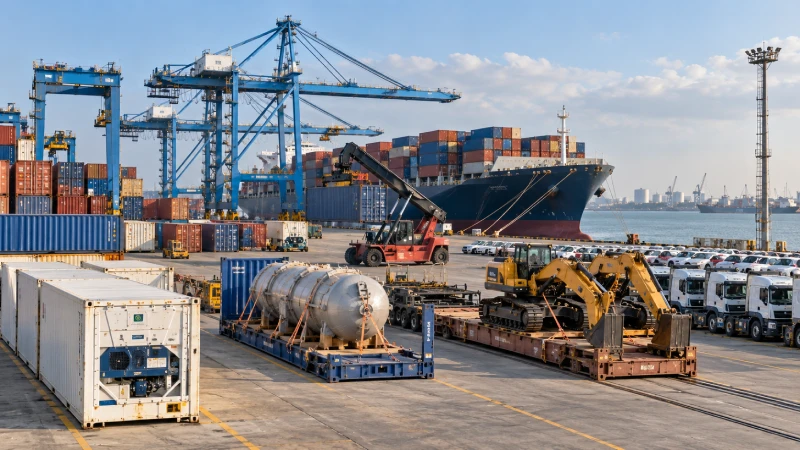
A transformer, excavator or oversized industrial machine may be perfectly acceptable to the ocean carrier yet impossible to deliver economically if the discharge method, truck configuration, road clearances or factory unloading plan are not resolved in advance.
The same principle applies to dangerous goods: carrier acceptance does not automatically equal terminal acceptance, and neither replaces Nigerian regulatory compliance.
Fourth Check: Inland Evacuation Options
This is one area where the gateways are not equivalent.
Apapa
APM Terminals currently provides:
- standard-gauge rail toward Moniya/Ibadan;
- narrow-gauge rail options for selected Lagos/Ogun destinations;
- road delivery; and
- barge connections to inland/bonded facilities.
APMT says its standard-gauge service operates on a structured schedule, while its narrow-gauge option can support cargo for Ota and selected Lagos destinations. APM Terminals Rail Services
APM Terminals also operates an established barge network and announced in September 2026 that additional Finger Jetty capacity was planned for round-the-clock barge operations during Q4 2026. APM Terminals
Tin Can
Tin Can inland planning is terminal-specific.
TICT advertises barge services in addition to normal landside handling, while PTML currently states that an inland barge connection to Mile 2 is active. TICT
Do not assume a multimodal option offered at one Tin Can terminal automatically applies to cargo discharged at another.
Lekki
For Lekki, the key calculation is usually the road leg from Ibeju-Lekki to the consignee.
For eastern Lagos and the Lekki/Lagos Free Zone industrial corridor, that geography can be highly attractive.
For Ota, Agbara or other western destinations, the road leg can become much more significant. That does not disqualify Lekki, but it means the ocean rate must be compared with the complete truck and empty-return plan.
Fifth Check: Customs and Terminal Setup
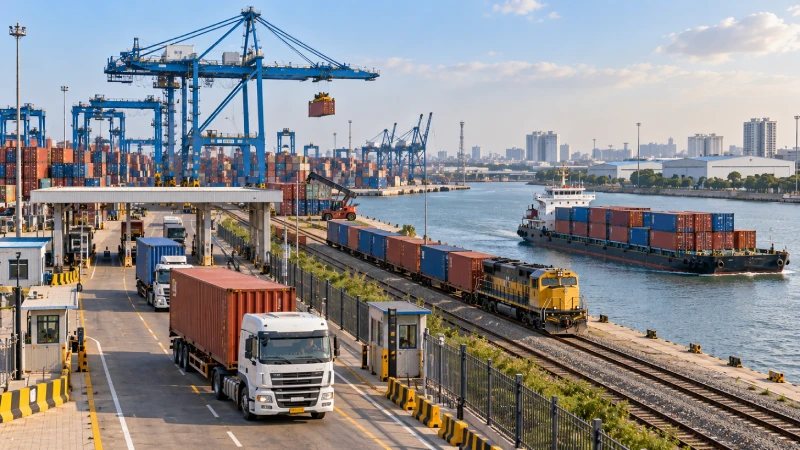
Choosing a different Lagos port does not remove Nigeria’s national import requirements.
The Nigeria Customs Service currently lists separate operational commands including Apapa, Tin-Can Island, Lekki Free Trade Zone and PTML. Nigeria Customs Service
The national framework still involves items such as:
- correct HS classification;
- Form M;
- PAAR;
- electronic customs declaration;
- applicable duties and taxes; and
- product-specific regulatory documents.
Nigeria Customs’ current guidance states that Form M, PAAR and declaration processes are handled electronically through the Unified Customs Management System, B’Odogwu. Nigeria Customs Service
So:
Changing POD does not remove Form M, PAAR, classification or product-regulatory requirements.
What changes is the operational location where the cargo is processed, examined, released and collected.
| Issue | Apapa | Tin Can | Lekki |
|---|---|---|---|
| National Customs framework | Same national framework | Same national framework | Same national framework |
| Customs operational command | Apapa | Tin Can / terminal-specific arrangements such as PTML | Lekki FTZ |
| Product regulators | Still applicable | Still applicable | Still applicable |
| Terminal workflow | APMT/other LPC operator-specific | Highly terminal-specific | LFT-specific |
| Clearance agent preparation | Required | Required | Required |
A port should therefore not be chosen because someone claims Customs is “easy” there.
A better question is:
Does your Nigerian clearance team understand that command, terminal, cargo type and regulatory file—and will the documents be ready before the vessel arrives?
Compare Total Delivered Cost, Not the Ocean Rate
The correct comparison is:
Ocean freight
+ carrier destination charges
+ terminal charges
+ Customs/clearance cost
+ storage/demurrage risk
+ inland haulage
+ empty-container return
+ operational time risk
Terminal charges are not identical.
APM Terminals publishes its own Apapa tariff and terms, with a 2026 schedule currently listed on its website. PTML separately publishes its own terminal and shipping-related tariffs. APM Terminals Tariffs and Terms
That is why three quotations should never be compared only on this line:
Ocean Freight: USD X
Instead, request comparable cost sheets built around the same cargo, same container size and same final delivery address.
Example
Assume:
Option A – Apapa
Ocean freight: USD 4,000
Inland and local cost: USD 1,600
Expected total: USD 5,600
Option B – Lekki
Ocean freight: USD 3,900
Inland and local cost: USD 2,000
Expected total: USD 5,900
Lekki appears USD 100 cheaper on the vessel.
But the shipment is actually USD 300 more expensive before any additional delay risk is considered.
The opposite could happen for an Ibeju-Lekki consignee.
Pro Tip: Ask for a delivered-cost comparison to the same final warehouse, not three unrelated port-to-port rates.
Gateway Decision Table
| Gateway | Carrier Availability | Terminal Type | Cargo Strength | Inland Options | Clearance Setup | Key Risk |
|---|---|---|---|---|---|---|
| Apapa | Broad established carrier network | Container plus general/bulk terminals | FCL, reefer, general cargo, OOG | Road, rail, barge | Apapa command / terminal workflow | Access, storage/free-time and empty-return planning |
| Tin Can | Strong but highly service/terminal-specific | Container, RoRo and multipurpose terminals | FCL, vehicles, rolling/project cargo | Road plus selected barge/off-dock arrangements | Tin Can and terminal-specific commands/processes | Treating “Tin Can” as one terminal |
| Lekki | Growing carrier network; verified direct China WAX1 | Modern deep-water container terminal | FCL, reefer, OOG/breakbulk subject to approval | Primarily road-based final delivery | Lekki FTZ command | Inland economics when consignee is west of Lagos |
Port Selection Checklist Before Booking
Before confirming a China-to-Nigeria FCL booking, verify all ten items:
- China origin port — Shenzhen/Shekou, Nansha, Ningbo, Shanghai, Qingdao or another origin.
- Actual carrier and service — not just a freight-forwarder rate sheet.
- Port and exact terminal — especially at Tin Can.
- Container/equipment — 20GP, 40HQ, reefer, flat rack, open top or special equipment.
- Cargo acceptance — particularly DG, OOG, vehicles and project cargo.
- Final Nigerian delivery address — not just “Lagos” or “Ogun.”
- Customs and regulatory file — Form M, PAAR, HS code and product certificates where applicable.
- Free time and local charges — confirm current carrier and terminal terms.
- Truck/rail/barge delivery plan — including unloading appointments where necessary.
- Empty-container return point — this can materially affect trucking cost.
Compare Nigeria Port Options
If your shipment originates in China, send the China loading port, cargo description, container type, cargo weight/dimensions and exact Nigerian delivery location.
The useful comparison is not simply:
Apapa vs Tin Can vs Lekki.
It is:
China origin + carrier service + Nigerian terminal + clearance plan + final delivery + empty return.
That combination determines which gateway actually makes commercial sense.
Final Recommendation
For most China-to-Nigeria shipments, use this order of decision-making:
First: identify which carriers can actually move the cargo from your China origin.
Second: compare the exact Nigerian port and terminal.
Third: confirm cargo acceptance and Customs readiness.
Fourth: calculate inland movement to the final warehouse or project site.
Fifth: compare the full delivered cost, including empty return and time risk.
Apapa may win because of its carrier depth and multimodal connections.
Tin Can may win because the right terminal or RoRo/project service fits the cargo better.
Lekki may win because the direct ocean service and eastern Lagos delivery geography create the strongest total route.
The best port is therefore not the one with the best reputation or the cheapest ocean rate.
It is the one that produces the lowest-risk, most workable and most economical end-to-end route for this specific shipment.
Send Cargo & Final Delivery Location
For a port comparison, provide:
China origin port + product + container/equipment + weight/dimensions + Nigerian final address.
Those details are enough to determine whether Apapa, Tin Can or Lekki should be priced first for the shipment.
FAQ
Is Apapa better than Tin Can?
Not universally. Apapa has a major established container operation, broad carrier coverage and strong multimodal options through rail and barge. Tin Can has several different terminals and can be particularly attractive for certain container services, vehicles, rolling cargo and project shipments. Compare the actual carrier, terminal and final delivery cost rather than the port name.
Is Lekki better than Apapa for China imports?
Lekki can be better when the shipment fits a direct service such as CMA CGM WAX1 and the cargo is destined for Lekki, Ibeju-Lekki, Lagos Free Zone or another location where eastern Lagos geography is advantageous. Apapa may make more sense when the carrier routing, rail/barge evacuation or western/northern inland route produces a better delivered result.
Which Lagos port has direct China services?
As of 4 October 2026, CMA CGM's WAX1 directly connects Qingdao, Ningbo, Nansha and Shekou with Lekki. Tin Can/PTML also participates in Grimaldi's Far East–West Africa network through Durban, while Apapa is served through carrier networks including CMA CGM's WAX3 via regional hubs. Always verify the actual voyage because rotations and individual port calls can change.
Can I choose the Nigerian port when booking?
You can request a preferred port, but only if a suitable carrier service is available. The carrier's rotation, equipment availability, terminal arrangements and commercial terms ultimately determine whether that port can be booked for the required sailing.
Which port is better for OOG cargo?
There is no single answer. Apapa, Tin Can terminals and Lekki all have options for oversized or project cargo, subject to carrier and terminal approval. The decision should be based on vessel acceptance, terminal lifting capability, cargo dimensions, discharge method and the inland road route.
Which port is more suitable for an Ogun factory delivery?
For locations such as Ota or Agbara, Apapa and Tin Can normally deserve early comparison because of their western Lagos geography. Apapa also offers a narrow-gauge rail option that APM Terminals identifies for Ota cargo. For Sagamu or eastern Ogun, compare all relevant services and calculate delivery to the exact factory address.
Are Customs procedures different at Apapa, Tin Can and Lekki?
The national Customs framework remains the same, including classification, Form M, PAAR and applicable regulatory requirements. However, the operational command, terminal systems, examination workflow and local handling arrangements differ.
Should I choose a port based only on ocean freight cost?
No. Compare the total delivered cost, including carrier destination charges, terminal handling, clearance, storage risk, inland haulage, empty-container return and operational time risk.
