
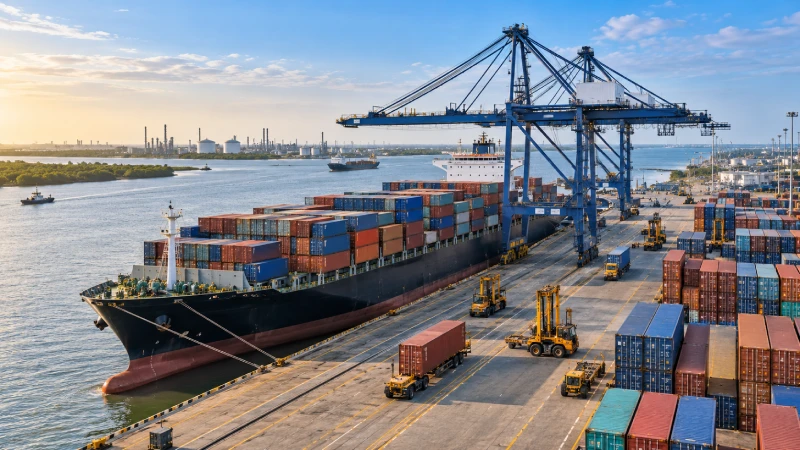
For cargo ultimately going to Port Harcourt, Onne, Eleme or another destination in Rivers State, routing every shipment through Lagos is not automatically the best choice.
Onne Port has established container, general cargo and industrial logistics operations, and its role is particularly important for machinery, project materials and energy-sector supply chains. Current carrier networks also provide verified Asia-to-Onne connectivity. MSC’s 2026 Asia–Africa network includes Ningbo and Nansha before an Onne call on its IROKO service. CMA CGM’s current WAX3 loop also calls Onne, although that loop starts from Singapore and Tanjung Pelepas, meaning cargo from many Chinese origins may first connect into the service rather than remain on one vessel from China.
That distinction matters.
The right question is not simply, “Can I ship from China to Onne?” It is:
Which routing gives this particular shipment the best combination of ocean freight, transit time, terminal handling, customs arrangement and final delivery cost in Rivers State?
For some shipments, Onne can significantly reduce the inland leg after arrival in Nigeria. For others, the larger range of sailings through Lagos may still produce a better total delivered cost.
For a broader overview of available modes, see Shipping from China to Nigeria. For ocean-specific planning, see Sea Freight from China to Nigeria.
China to Onne / Port Harcourt Routes at a Glance
There are several practical ways to move China-origin cargo to Port Harcourt and Rivers State.
| Route | Best Fit | Main Advantage | Main Constraint | What to Verify |
|---|---|---|---|---|
| China → Onne → Rivers State delivery | Containers, machinery and industrial cargo with suitable carrier service | Shorter local delivery leg for Rivers State | Fewer routing options than Lagos | Carrier, terminal, equipment and local charges |
| China → Lagos → truck to Rivers State | Cargo where Lagos sailing economics are stronger | Wider choice of carriers and sailings | Long inland movement across Nigeria | Total delivered-to-site cost |
| Air freight → Port Harcourt or another Nigerian gateway | Urgent, compact or high-value cargo | Faster movement | Airline capacity and routing can be limited | Live air booking and airport handling |
| Specialist project-cargo routing | Heavy, oversized or operationally complex cargo | Equipment and discharge plan can be designed around the cargo | Requires detailed engineering and local coordination | Vessel type, lifting, permits, trucking and site access |
For standard container cargo, the comparison often comes down to Onne versus Lagos.
For heavy machinery, oilfield equipment or oversized project materials, port capability, discharge arrangements and final-site access can become more important than the ocean rate itself.
Onne Port and Port Harcourt Port Are Not the Same Gateway
This is one of the most important distinctions for importers planning shipping from China to Port Harcourt.
Onne Port Complex and Rivers Port Complex in Port Harcourt are separate Nigerian port complexes.
The Nigerian Ports Authority lists them separately, and each port complex has its own terminal structure and operating environment.
Onne Port Complex
Onne is located in Rivers State and combines container activity with general cargo, bulk cargo, industrial logistics and significant oil-and-gas-related operations.
The Nigerian Ports Authority lists multiple private terminal operators at Onne, including West Africa Container Terminal and operators serving the Federal Ocean Terminal and Federal Lighter Terminal. See the Nigerian Ports Authority Onne terminal operator information.
WACT operates a dedicated container terminal within the Onne Port Complex and supports containerized cargo serving eastern and inland Nigerian markets. See APM Terminals WACT Onne.
Rivers Port Complex / Port Harcourt
Rivers Port Complex is a separate facility associated directly with Port Harcourt.
The Nigerian Ports Authority lists Ports & Terminal Operators Ltd. and BUA Port and Terminals Ltd. among its terminal operators. See the Nigerian Ports Authority Rivers Port terminal operator information.
A carrier may offer a booking to Onne, Port Harcourt, both gateways or neither from a particular origin and sailing date.
Therefore, the destination used in a commercial discussion should never be assumed to mean that either port is automatically available.
The actual port of discharge must be confirmed against the live carrier booking.
What Onne Port Handles
Onne should not be viewed only as an oil-and-gas port.
The Nigerian Ports Authority describes Onne as a multipurpose cargo port handling activities that include:
- containerized cargo;
- general cargo;
- dry and wet bulk cargo;
- oil-well equipment;
- industrial and oil-and-gas logistics; and
- other logistics services.
See the Nigerian Ports Authority Onne Port overview.
This makes Onne relevant to a broader range of China-origin imports.
| Cargo Type | Onne Relevance | Main Planning Issue |
|---|---|---|
| Standard FCL containers | Strong where carrier service and terminal economics work | Equipment availability and destination charges |
| Industrial machinery | Often suitable | Weight, dimensions and unloading |
| Oilfield equipment | Important gateway | Project and free-zone structure |
| Pumps and valves | Suitable for containerized or project movement | Packing and piece weights |
| Steel/project materials | Case dependent | Breakbulk/OOG planning |
| Dry or wet bulk | Port capability exists | Vessel and terminal arrangement |
| Dangerous goods | Possible subject to acceptance | IMDG classification, documentation and terminal approval |
| Spare parts | Container or air freight | Urgency and shipment size |
For normal container imports, WACT’s dedicated container infrastructure is particularly relevant. Actual carrier availability, equipment type and destination charges still need to be confirmed for each shipment.
For full-container planning from China, also see FCL Shipping from China and Ocean Freight.
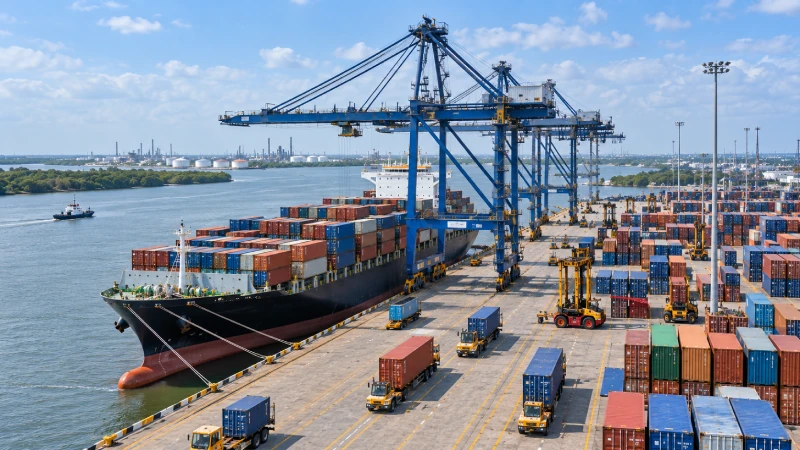
Why Onne Matters for Energy and Project Cargo
Onne has a particularly strong logistics role in Nigeria’s energy and industrial economy.
The Oil & Gas Free Zone Authority identifies the Onne Oil and Gas Free Zone as a major logistics and service base supporting onshore and offshore oil-and-gas projects. Its facilities include the Federal Ocean Terminal and Federal Lighter Terminal. See the OGFZA Onne Free Zone information.
That makes Onne especially relevant when importing cargo such as:
- drilling and servicing equipment;
- pumps and compressors;
- valves and pipe-system components;
- generators;
- industrial machinery;
- fabrication equipment;
- electrical and mechanical project materials;
- replacement equipment;
- heavy spare parts; and
- offshore or onshore project supplies.
But not every shipment to Port Harcourt is an oil-and-gas shipment.
Consumer products, construction materials, commercial equipment and ordinary industrial cargo can also move through Rivers State gateways where the carrier routing and local economics make sense.
The important task is to evaluate the cargo itself and the final delivery point, rather than selecting Onne simply because the consignee is located in Port Harcourt.
For oversized, overweight or engineering-intensive shipments, see Project Logistics.
Current China / Asia Carrier Service to Onne
One of the biggest changes for China-to-Onne planning is that current carrier networks provide visible Asia connectivity.
MSC IROKO
MSC’s IROKO service was introduced as an Asia–West Africa service and has subsequently been updated.
MSC’s current Asia–Africa network shows a rotation including Ningbo and Nansha before the service reaches West Africa and calls Onne. See the MSC Asia–Africa network information.
MSC therefore provides a verified example where Chinese ports and Onne appear on the same published service rotation.
That does not mean every Chinese factory can be advertised as having a direct sailing to Onne.
Cargo originating in Shanghai, Qingdao, Xiamen or other Chinese origins may require feedering, transshipment or a different carrier solution depending on the booking.
Even where the published service is direct, the exact sailing schedule should still be checked before confirming a shipment.
CMA CGM WAX3
CMA CGM’s West Africa network update lists the WAX3 rotation as:
Singapore → Tanjung Pelepas → Lomé → Apapa → Onne → Cotonou.
See the CMA CGM WAX3 service update.
For a shipper in China, the important distinction is that WAX3 itself does not begin with Chinese ports in this published rotation.
China-origin cargo may connect to Singapore or Tanjung Pelepas through CMA CGM’s wider network and then join WAX3 for the West Africa leg.
| Service Pattern | What It Means for a China Shipper |
|---|---|
| Chinese origin appears on the same published rotation as Onne | A direct-vessel service may be available on the relevant sailing |
| China origin connects through Singapore/Tanjung Pelepas | Cargo uses a transshipment or relay connection |
| Carrier accepts an Onne booking but does not publish the origin on the Onne loop | Confirm connection port, total transit and number of vessel legs |
| No suitable Onne booking | Compare Lagos or another workable gateway |
Pro Tip: Ask whether “direct to Onne” means one vessel from the Chinese loading port or simply a carrier booking whose final port of discharge is Onne. They are not always the same thing.
Should Port Harcourt Cargo Use Onne or a Lagos Port?
For a consignee in Port Harcourt, it may appear logical that Onne should always be used.
In practice, port selection should be based on total delivered cost and operational risk.
Lagos generally offers a wider range of international liner connections. This can sometimes produce better ocean-freight pricing, faster departure availability or better equipment availability.
But a Lagos routing creates a substantial inland leg before the cargo reaches Rivers State.
An Onne routing can remove much of that long-distance inland transport, but the ocean freight or sailing choice may be less competitive for a particular shipment.
Compare These Variables
Before deciding, compare:
- China port of loading;
- available carrier;
- direct or transshipment routing;
- ocean freight;
- sailing frequency;
- estimated transit;
- container equipment availability;
- cargo type;
- terminal handling requirements;
- destination charges;
- customs-clearance arrangements;
- demurrage and detention conditions;
- container free time;
- final delivery address;
- inland haulage cost;
- empty-container return requirements; and
- special handling at the receiving site.
A low ocean rate into Lagos can become expensive after adding trucking to Rivers State.
Likewise, a convenient Onne destination does not automatically make the shipment cheaper if the ocean service requires an inefficient connection or carries significantly higher local charges.
Gateway Decision Matrix
| Gateway | Best For | Cargo Strength | Inland Consideration | Main Planning Risk |
|---|---|---|---|---|
| Onne | Rivers State container and industrial cargo with suitable service | Containers, industrial and project cargo | Shorter local leg for Port Harcourt/Onne/Eleme | Carrier choice and local cost |
| Rivers Port | Cargo suited to available terminal/carrier arrangement | Multipurpose cargo | Close relationship with Port Harcourt market | Live liner availability must be verified |
| Lagos | Shipments benefiting from broader carrier competition | Broad cargo range | Long truck movement to Rivers State | Inland cost and coordination |
Pro Tip: Compare delivered-to-site cost, not ocean freight alone.
Onne vs Rivers Port Complex
When an importer says “Port Harcourt Port,” the booking team still needs to identify the actual intended gateway.
NPA lists Onne Port Complex separately from Rivers Port Complex and identifies different terminal operators for each.
The decision should consider:
- whether the carrier actually accepts the booking;
- which terminal the vessel will use;
- whether the cargo is containerized, breakbulk or project cargo;
- lifting and discharge requirements;
- customs setup;
- local agent capability; and
- final delivery location.
Do not assume that a China liner call into Rivers Port exists simply because a carrier operates elsewhere in Nigeria.
For each shipment, verify the booking port and route before presenting it as a China-to-Port Harcourt service.
FCL, Breakbulk and OOG Planning
Standard container cargo can often be planned using conventional FCL equipment.
Machinery and project cargo require more work before a port is selected.
For every large or heavy piece, provide:
- exact length × width × height;
- gross weight of each individual piece;
- number of pieces;
- packing method;
- lifting points;
- centre of gravity where relevant;
- technical drawing or cargo photos;
- whether the equipment can be dismantled;
- whether weather protection is required; and
- final site unloading requirements.
From those details, the forwarding team can evaluate the correct equipment.
Standard FCL
Best where the machinery or components fit safely inside a normal 20ft, 40ft or 40HC container.
Open Top
Useful where the cargo requires loading through the top or exceeds normal container-door limitations but remains suitable for containerized handling.
Flat Rack
Relevant for oversized or heavy machinery that cannot fit inside standard container dimensions.
Breakbulk
Can be considered when individual pieces are too large or operationally unsuitable for container equipment.
Specialist Project Shipment
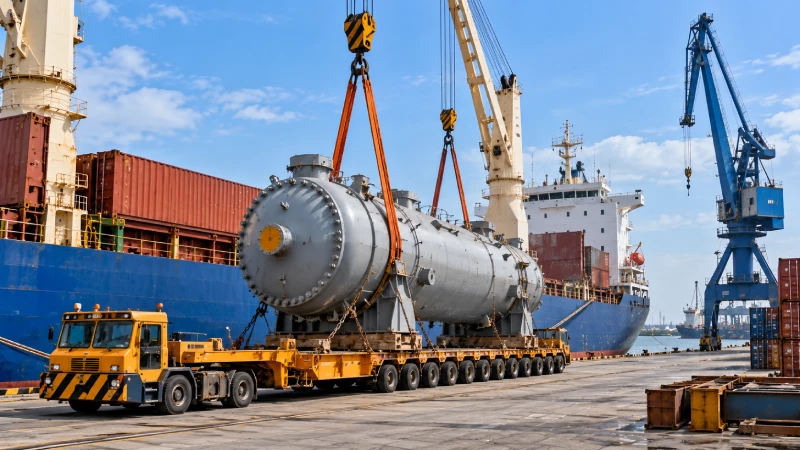
Heavy-lift, oversized or multi-piece industrial projects may require coordinated vessel, terminal, crane, trucking and site-delivery planning.
The Nigerian Ports Authority’s published information confirms that Onne supports containerized cargo and oil-well equipment and has substantial cargo-handling infrastructure. Equipment availability and heavy-lift acceptance must still be confirmed for the actual vessel and terminal.
Pro Tip: Never select a port for machinery based only on the total shipment weight. The weight and dimensions of the heaviest individual piece may determine whether a standard container, flat rack, open top, breakbulk or heavy-lift solution is required.
Customs and Free-Zone Structure Need to Be Identified Before Shipping
The presence of the Onne Oil and Gas Free Zone creates an important planning distinction.
It does not mean every shipment discharged at Onne automatically receives duty-free treatment.
Before shipping, determine whether the cargo is intended for:
- Nigeria’s domestic customs territory;
- an approved enterprise or operation within the Oil and Gas Free Zone; or
- another project site after customs processing.
These are different scenarios.
OGFZA regulates the Oil and Gas Free Zone structure at Onne, while the Nigeria Customs Service maintains customs operations associated with the port.
For normal imports entering the Nigerian domestic market, the consignee and customs representative should confirm the correct import documentation, tariff classification, valuation and product-specific regulatory requirements before shipment.
Depending on the product, other Nigerian regulatory requirements may also apply.
Examples can include SON-related conformity requirements, NAFDAC requirements or other sector-specific controls.
Do not assume that the same document set applies to:
- industrial machinery;
- chemicals;
- food products;
- medical-related goods;
- electrical products; or
- oilfield equipment.
For project equipment intended for temporary use, do not ship based on an assumption that temporary-import treatment will be available. The structure should be reviewed with the Nigerian customs specialist before departure.
Practical Clearance Sequence
Identify destination status → classify cargo → check product regulators → confirm consignee/import setup → confirm port and terminal → prepare shipment documents → arrange customs clearance → release cargo → coordinate final delivery.
For a wider Nigeria import workflow, see How to Import Goods from China to Nigeria.
Onne / Port Harcourt Final Delivery
Port discharge is not the end of a China-to-Port Harcourt shipment.
The delivery plan may involve movement to:
- Port Harcourt city;
- Onne;
- Eleme;
- an industrial facility;
- a warehouse;
- an oil-and-gas service base;
- a construction site; or
- another Rivers State project location.
For a standard container, planning should include the truck type, delivery appointment, unloading method and empty-container return.
For heavy or oversized equipment, additional work may be required.
OOG and Project Delivery Checks
Confirm:
- loaded dimensions;
- total and axle-related weight considerations;
- suitable trailer type;
- road access;
- bridge or height restrictions where relevant;
- turning radius at the destination;
- site gate dimensions;
- legally required permits or escorts;
- crane or forklift requirement;
- lifting capacity at site;
- ground condition;
- unloading sequence; and
- return movement for container equipment.
A fixed “Onne to Port Harcourt delivery time” should not be promised before the shipment is planned.
Road conditions, terminal release, truck availability, cargo dimensions, delivery windows and site access can all change the actual delivery schedule.
For container shipments, also check free time and empty-container return arrangements before the box leaves the terminal. A cheap trucking offer can become expensive if unloading is delayed and equipment-related charges accumulate.
For shipments requiring coordinated delivery after clearance, see Door-to-Door Shipping from China.
Cargo-Specific Shipping Considerations
Oilfield Equipment
Confirm individual piece weights, lifting points, packing and whether the cargo is moving into domestic customs territory or an eligible free-zone operation.
Industrial Machinery
Evaluate whether standard FCL works before moving to flat rack or breakbulk. Machines should be secured for ocean movement, with sensitive components protected against moisture, impact and corrosion.
Steel and Project Cargo
Provide a complete packing list showing piece-by-piece dimensions and weights. Long or heavy pieces may require special lifting and inland road planning.
Chemicals and Dangerous Goods
Provide the SDS and correct dangerous-goods classification at the beginning of the quotation process.
Carrier acceptance, container type, terminal requirements and Nigerian import regulations can differ significantly by commodity.
Standard Containers
For ordinary FCL shipments, compare Onne against Lagos using the entire logistics chain:
China pickup + origin charges + ocean freight + destination charges + clearance + inland delivery + empty return.
Spare Parts
Production-critical or shutdown-related spare parts may not justify waiting for ocean freight.
In those cases, air freight should also be evaluated.
When Air Freight Makes More Sense
Air freight can be a practical alternative for:
- emergency machinery spares;
- compact industrial components;
- high-value replacement parts;
- shutdown and maintenance equipment;
- samples;
- urgent project components; and
- time-critical commercial cargo.
Port Harcourt International Airport is located at Omagwa in Rivers State and is recognized by FAAN as an international airport serving Port Harcourt. See the FAAN Port Harcourt International Airport information.
However, the existence of an international airport should not be interpreted as a guarantee of regular direct cargo capacity from China.
For China-origin freight, check the live airline routing.
Depending on the shipment, a workable solution could involve:
- air routing that ultimately reaches Port Harcourt;
- an international Nigerian gateway followed by domestic onward movement; or
- another multimodal arrangement.
The correct option depends on cargo size, urgency, airline acceptance and current capacity.
For a 20 kg maintenance component capable of stopping a production line, air freight may make economic sense even at a much higher freight rate.
For several tonnes of ordinary machinery, ocean freight is normally the more realistic starting point.
For more air-cargo planning, see Air Freight from China to Nigeria.
How Winsail Plans China-to-Onne and Port Harcourt Shipments
A practical routing decision begins with the cargo rather than with a predetermined port.
Winsail handles shipments originating from China and can evaluate the available route according to the shipment profile.
For an accurate routing review, provide:
- China pickup city;
- product name;
- HS code if available;
- number of packages;
- dimensions;
- gross weight;
- total CBM;
- cargo value;
- dangerous-goods status;
- container requirement if known;
- consignee location;
- final delivery address in Rivers State; and
- required delivery date.
For machinery and project cargo, also provide photographs or technical drawings and the weight of each major piece.
The routing can then be compared across:
China → Onne
versus
China → Lagos → Rivers State
and, where relevant, a specialist Port Harcourt/Rivers Port or air-freight alternative.
The objective is not simply to find the lowest ocean rate.
It is to identify the route that gives the best combination of carrier availability, cargo suitability, clearance structure, operational reliability and delivered-to-site cost.
Check Onne Routing
If your cargo is destined for Port Harcourt, Onne, Eleme or another Rivers State location, confirm Onne carrier availability before assuming that Lagos is the only practical gateway.
For standard containers, the comparison should include both ocean and inland costs.
For industrial cargo, terminal and handling requirements should also be reviewed.
Review Project Cargo Details
For machinery, heavy equipment or oversized cargo, send the piece-by-piece dimensions and weights before selecting the container type or Nigerian gateway.
A routing decision made before the cargo geometry is known can create unnecessary equipment changes, port handling problems or expensive inland adjustments later.
FAQ
Is Onne the same as Port Harcourt Port?
No. Onne Port Complex and Rivers Port Complex in Port Harcourt are separate port facilities. The exact port of discharge should be confirmed on the carrier booking.
Is there a direct China service to Onne?
There is verified direct-vessel connectivity from some Chinese ports. MSC has published Ningbo and Nansha on an IROKO rotation that also calls Onne. Other Chinese origins may require a connection or transshipment.
Does Onne handle normal container cargo?
Yes. Onne handles containerized cargo, and WACT operates a dedicated container terminal within the port complex. Carrier availability and equipment still need to be checked for each shipment.
Is Onne only for oil-and-gas cargo?
No. Onne has a major oil-and-gas logistics role, but it also handles containerized cargo, general cargo, bulk cargo and other industrial shipments.
Should Port Harcourt cargo ship through Onne or Lagos?
It depends on the shipment. Compare carrier availability, ocean freight, destination charges, customs arrangements and inland delivery cost before selecting the gateway.
Can heavy machinery be shipped through Onne?
Potentially, yes. Heavy or oversized machinery should be evaluated using piece dimensions, weight, lifting points, equipment type, vessel acceptance and final-site delivery requirements.
How is cargo delivered from Onne to Port Harcourt?
After customs and terminal release, cargo can move by suitable road equipment to a warehouse, factory, project site or other destination in Rivers State. The truck and unloading plan depend on the cargo type.
Can air freight be used for urgent Port Harcourt shipments?
Yes, depending on current airline routing and cargo acceptance. Port Harcourt International Airport is an option, but direct China cargo capacity should be verified for the actual shipment rather than assumed.
