
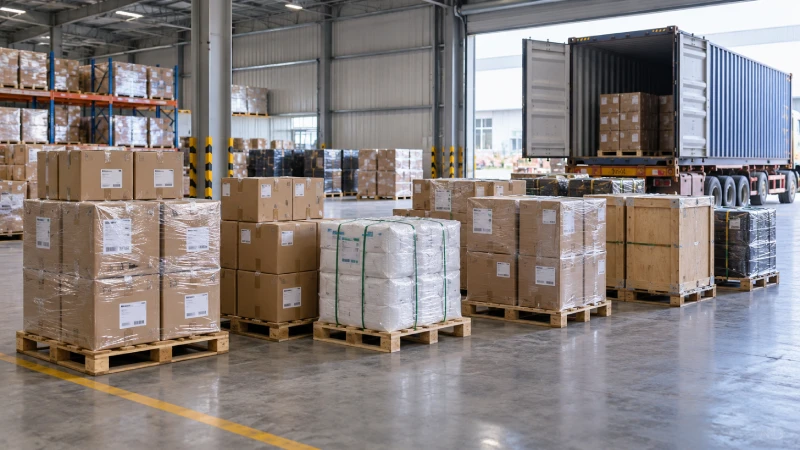
Buying from several factories in China can create an awkward shipping problem. Supplier A may be ready in Shenzhen, Supplier B may finish four days later in Foshan, while Supplier C has another batch waiting in Dongguan. If every supplier ships independently to the UK, you may end up paying repeated origin, international freight, customs handling and final-delivery charges.
China to UK cargo consolidation offers another option.
Instead of arranging a separate international shipment from every supplier, compatible cargo can be collected or delivered to a designated warehouse in China. Each supplier’s goods are received under its own reference, checked within an agreed scope, measured and held until the planned consolidation is ready. The combined shipment can then move to the UK by LCL, FCL or air freight.
The potential benefits are straightforward: fewer international shipments, improved use of freight capacity, more coordinated UK receiving and, in some cases, lower overall logistics cost.
However, consolidation is not automatically the best choice. Waiting for a late factory, moving goods long distances within China, storing cargo, mixing dangerous and non-dangerous products, or trying to coordinate incomplete documentation can make a poorly planned consolidation more expensive and slower than shipping separately.
This guide explains how multi-supplier freight consolidation from China to the UK works and, more importantly, how to decide whether it makes sense for your shipment.
For broader China–UK route planning, including shipping methods, transit times, ports, customs and delivery options, see Shipping from China to the UK.
Quick Answer: Can You Combine Multiple Chinese Suppliers Into One UK Shipment?
Yes. Goods purchased from two or more Chinese suppliers can often be routed to one consolidation warehouse in China, received separately, checked and measured, and then combined into one UK-bound shipment.
A typical process looks like this:
Supplier coordination → Pickup or supplier delivery → China warehouse → Receiving and checking → Consolidation → Repacking or palletising where agreed → Final measurement → Export preparation → International shipment
The final shipment may move as LCL, FCL or air freight depending on the combined volume, weight, urgency and cargo characteristics.
The important point is that physical consolidation does not eliminate product-specific customs and compliance requirements. Different products in the same shipment may still need different commodity codes, duty treatment, licences, conformity documentation or dangerous-goods procedures. The UK Trade Tariff uses commodity codes to determine matters such as applicable Customs Duty, VAT and other import measures.
| Situation | Likely Direction |
|---|---|
| 2–5 suppliers with similar ready dates and compatible general cargo | Strong consolidation candidate |
| Several relatively small supplier orders | Compare consolidated LCL |
| Combined cargo supports dedicated-container economics | Compare FCL |
| Small, urgent or higher-value cargo | Compare consolidated air freight |
| One supplier is significantly late | Consider a shipment cutoff or split shipment |
| Batteries, chemicals or dangerous goods are involved | Compatibility review before consolidation |
| Suppliers are spread across distant Chinese regions | Compare domestic collection cost before deciding |
The goal should not be to consolidate at all costs. The goal is to find the most efficient overall shipping plan.
Should You Consolidate Multiple Chinese Suppliers Before Shipping to the UK?
Cargo consolidation works best when it solves a specific operational problem.
For many UK importers, that problem is fragmented purchasing. A distributor may buy packaging from one factory, components from another and finished products from a third. Each order alone may be too small for efficient international shipping, but together they may form a much more practical freight movement.
When consolidation usually makes sense
Combining supplier shipments is worth considering when:
- you purchase from two or more factories
- individual supplier shipments are relatively small
- supplier cargo-ready dates are reasonably close
- the goods can be transported and stored together safely
- the cargo is destined for the same UK importing programme
- you want fewer UK deliveries to receive and reconcile
- final combined volume could improve LCL or FCL efficiency
- some packaging can be improved or consolidated before export
- you want better visibility over all supplier cargo before international departure
A warehouse can also act as an origin control point. Rather than discovering missing cartons or damaged packaging after the goods arrive in the UK, obvious receiving discrepancies may be identified while the cargo is still in China.
When separate shipments may be better
Consolidation is not automatically preferable.
Separate departures may make more sense when:
- one supplier’s goods are urgently required
- supplier production dates differ by several weeks
- suppliers are located far apart and Chinese domestic transport becomes expensive
- one shipment requires specialist handling
- dangerous goods are incompatible with the other cargo
- goods have different temperature-control requirements
- a supplier already has sufficient cargo for an efficient direct shipment
- shipments belong to different importers or commercial structures
- waiting would cause an important sailing, flight or stock replenishment deadline to be missed
A useful rule is:
Do not measure consolidation success by how much cargo you can put together. Measure it by the total cost, timing, risk and receiving outcome of the complete supply chain.
How China to UK Cargo Consolidation Works Step by Step
Good consolidation begins before the first carton reaches the warehouse.
The forwarder, buyer and suppliers need a clear origin plan so every incoming shipment can be identified and matched against the intended outbound movement.
Step 1: Build a supplier shipment list
Before arranging collection, create a master supplier list.
For each supplier, record:
- supplier name
- pickup city and address
- supplier contact
- purchase order or shipment reference
- product description
- number of cartons or pallets
- estimated gross weight
- carton dimensions
- estimated CBM
- cargo-ready date
- agreed Incoterm with the supplier
- battery, liquid, chemical or dangerous-goods status
- special handling requirements
- planned UK delivery postcode
This information does more than support a freight quote. It helps determine where the consolidation should take place and whether consolidation is economical at all.
Three suppliers located around Shenzhen, Dongguan and Foshan create a very different origin plan from suppliers located in Shenzhen, Ningbo and Qingdao.
The cheapest international freight option can become unattractive if goods first need expensive long-distance domestic transfers within China.
Step 2: Coordinate supplier delivery or pickup
There are generally two origin arrangements.
The supplier may deliver the cargo to the nominated consolidation warehouse, or domestic collection may be coordinated as part of the agreed freight scope.
Before cargo moves, each supplier should receive:
- warehouse address
- delivery contact
- required shipping marks
- PO or supplier reference
- delivery instructions
- any booking or receiving requirements
Do not allow several suppliers to send unmarked cartons to a warehouse simply under the buyer’s company name.
When dozens of similar brown cartons arrive, traceability matters.
Pro Tip: Assign a unique receiving reference to every supplier before cargo is dispatched.
Step 3: Receive every supplier separately
Although the final cargo will be combined, the inbound shipments should remain identifiable during warehouse receiving.
A useful receiving record may include:
- supplier
- PO/reference
- warehouse arrival date
- number of cartons or pallets
- visible outer-packaging condition
- gross weight
- dimensions where included in the service scope
- photographs where agreed
- discrepancy notes
This supplier-level record creates the link between the original purchases and the final consolidated shipment.
It is particularly useful when Supplier B says it delivered 36 cartons but only 35 are physically received.
Step 4: Understand what a warehouse “check” actually covers
One of the biggest misunderstandings in cargo consolidation is the word inspection.
A normal warehouse receiving check is not automatically the same as a product-quality inspection.
A basic receiving scope may include:
- carton count
- visible packaging damage
- shipping marks
- basic measurements
- gross weight
- photographs
A more detailed product inspection may involve:
- opening cartons
- counting individual SKUs
- checking specifications
- checking colours or models
- functional testing
- sampling
- verifying production quality
- laboratory testing
- reviewing regulatory certification
Those activities require a separately agreed scope.
Importers should therefore ask:
“What exactly will be checked when each supplier’s cargo arrives?”
Do not assume that warehouse receipt means the products themselves have been inspected, tested or certified.
Step 5: Resolve discrepancies before cargo is mixed
The best time to resolve a supplier issue is before consolidation.
Typical discrepancies include:
- missing cartons
- unexpected carton quantities
- damaged outer packaging
- incorrect shipping marks
- dimensions much larger than originally declared
- an undeclared lithium battery inside the product
- liquids or chemicals not mentioned during quoting
- incomplete commercial documents
If these issues are discovered after goods have already been repacked, palletised or loaded, supplier-specific correction becomes more difficult.
A good consolidation workflow therefore has a simple gate:
Received → Verified against agreed receiving scope → Discrepancies resolved → Released for consolidation
Step 6: Repack or palletise where appropriate
Some multi-supplier shipments arrive in packaging designed primarily for domestic Chinese distribution rather than international transport.
Where agreed, cargo preparation may include:
- reinforcing weak cartons
- replacing damaged outer cartons
- combining appropriate smaller cartons
- adding protective packing
- building export pallets
- improving load stability
- reducing unnecessary outer packaging
Repacking can sometimes reduce wasted space, particularly for air freight where volumetric dimensions matter.
However, repacking should never casually remove required:
- hazard labels
- product identification
- regulatory labels
- handling marks
- origin markings
- traceability information
If solid-wood pallets, crates or dunnage are used for goods imported into Great Britain, the wood packaging must meet the applicable ISPM 15 requirements. GOV.UK guidance on wood packaging material states that solid wood packaging imported into Great Britain from other countries must comply with the international standard.
Pro Tip: If palletisation is required, confirm the pallet material and ISPM 15 status before the warehouse builds the final export units.
Step 7: Measure the final consolidated shipment
Do not make the final freight-mode decision solely from supplier estimates.
After all planned cargo arrives and any agreed repacking is completed, establish the final:
- carton count
- pallet count
- gross weight
- dimensions
- CBM
- air-freight chargeable weight where relevant
- cargo classification and handling requirements
Supplier quotations often contain estimated dimensions produced before the final packaging is complete.
The actual warehouse measurement is a better basis for comparing LCL, FCL and air freight.
Step 8: Apply a consolidation cutoff
This is one of the most important parts of multi-supplier shipping.
Suppose four suppliers are expected to finish within seven days. Three arrive on time, but the fourth says production has been delayed another 12 days.
Should the other cargo wait?
There is no universal answer.
Compare:
- warehouse storage cost
- next vessel or flight cutoff
- UK stock requirement
- cost of missing the planned departure
- incremental cost of shipping the late supplier separately
- whether the ready cargo is already economical to ship
- whether the late cargo can join the next consolidation cycle
A consolidation plan should therefore have a predefined decision date rather than an open-ended instruction to “wait until everything arrives”.
Pro Tip: Set the consolidation cutoff before the first supplier delivers.
Step 9: Prepare the outbound shipment
Once the agreed suppliers have arrived, discrepancies are resolved and the shipment is released, the forwarder can coordinate the export movement according to the actual cargo and agreed service scope.
This may include coordinating:
- export booking
- origin handling
- cargo handover
- shipping documentation
- customs-related information
- carrier requirements
- international transport
- UK customs-clearance coordination where applicable
- final delivery where included
Do not assume that physically consolidating several suppliers automatically means all suppliers can be replaced by one commercial invoice, one exporter or one customs declaration.
The correct export-document structure depends on the underlying trading parties, exporter arrangements, cargo and customs requirements and should be confirmed for the actual shipment.
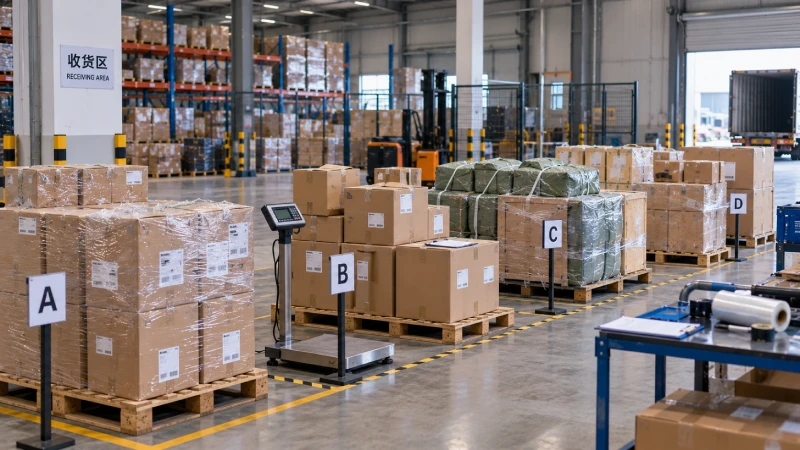
What Should a Consolidation Warehouse Record?
For importers purchasing from several factories, warehouse records are valuable because they create one operational view of several separate purchase orders.
Winsail’s warehousing support can support receiving, checking, storage and shipment preparation for multi-supplier cargo.
Minimum supplier receiving record
A practical record should normally identify:
| Field | Why It Matters |
|---|---|
| Supplier | Identifies cargo ownership/source |
| PO/reference | Connects cartons to the purchase order |
| Arrival date | Shows which suppliers are ready |
| Carton/pallet count | Identifies shortages |
| Weight/dimensions | Supports freight planning |
| Visible condition | Highlights packaging issues |
| Product description | Helps avoid warehouse mix-ups |
| Photos where agreed | Provides receiving visibility |
| Discrepancy status | Shows whether cargo can be released |
Final outbound record
Before departure, the importer should also be able to understand:
- which suppliers are included
- final cartons or pallets
- final gross weight
- final CBM
- repacking or palletisation performed
- special-handling cargo
- document status
- outbound booking reference
Receiving Is Not the Same as Product Inspection
This distinction deserves repeating.
A warehouse confirming “24 cartons received in good outer condition” does not mean:
- every product was counted
- every SKU was correct
- every item worked
- every label complied with UK law
- the goods were certified as safe
Those are separate controls.
Consolidated LCL vs FCL vs Air Freight to the UK
Once the final cargo is known, the buyer can compare the transport modes based on the combined shipment, rather than treating every supplier independently.
Where the final shipment remains groupage cargo, use the China-to-UK LCL shipping guide for W/M charging, destination costs and transit planning.
Consolidated LCL
LCL is commonly considered when several suppliers each have relatively small volumes and the combined cargo still does not justify a dedicated container.
For example, four suppliers may each produce between 1 and 3 CBM. Moving every factory independently may create repeated minimum charges, while combining the orders first can produce a more manageable outbound LCL shipment.
The advantages may include:
- fewer separate international shipments
- one coordinated origin consolidation
- simplified UK receiving
- better use of minimum freight charges
However, account for:
- China collection
- warehouse receiving
- consolidation handling
- storage if suppliers are late
- origin CFS handling
- UK deconsolidation/CFS charges
- final UK delivery
LCL also involves more cargo handling than a dedicated FCL movement.
For broader LCL and route-cost planning, see Shipping Cost from China to the UK.
Consolidated FCL
If the combined cargo becomes large enough, a dedicated container may become more attractive.
Multiple suppliers can feed cargo into the consolidation plan before final container loading. Depending on the operation, the container may be stuffed at an appropriate warehouse or loading facility once the planned cargo has arrived.
FCL may offer advantages when:
- combined volume is substantial
- cargo needs more dedicated control
- repeated LCL destination charges become inefficient
- reduced handling is desirable
- products load efficiently together
- container utilisation is strong
Do not rely on a universal rule such as:
“FCL becomes cheaper at exactly 15 CBM.”
The practical crossover depends on:
- current LCL rates
- current container rates
- origin charges
- UK destination charges
- cargo density
- container utilisation
- shipment season
- final delivery location
- handling requirements
A 12 CBM shipment of dense machinery may produce a different decision from 12 CBM of lightweight retail products.
Use the final warehouse measurement and compare both options.
For container-specific planning, see 20ft & 40ft Container Shipping Cost from China to the UK.
Consolidated Air Freight
Air consolidation can work well when several suppliers have smaller, time-sensitive or higher-value goods.
The same basic origin principle applies:
- collect or receive supplier cargo
- identify and check it
- complete agreed repacking
- establish final dimensions
- calculate chargeable weight
- confirm cargo acceptance
- book the international air movement
Repacking may be particularly valuable for air freight because bulky packaging can increase chargeable weight.
But cargo compatibility becomes critical.
Batteries, chemicals and other dangerous goods cannot simply be added to an ordinary air consolidation because they happen to belong to the same importer.
GOV.UK dangerous goods guidance confirms that dangerous goods are subject to different requirements depending on transport mode. Air transport follows international dangerous-goods requirements associated with IATA rules, while sea transport is governed by the IMDG framework and related requirements.
Pro Tip: Ask every supplier about batteries, liquids, powders, chemicals and other potential dangerous goods before collection—not after the goods reach the warehouse.
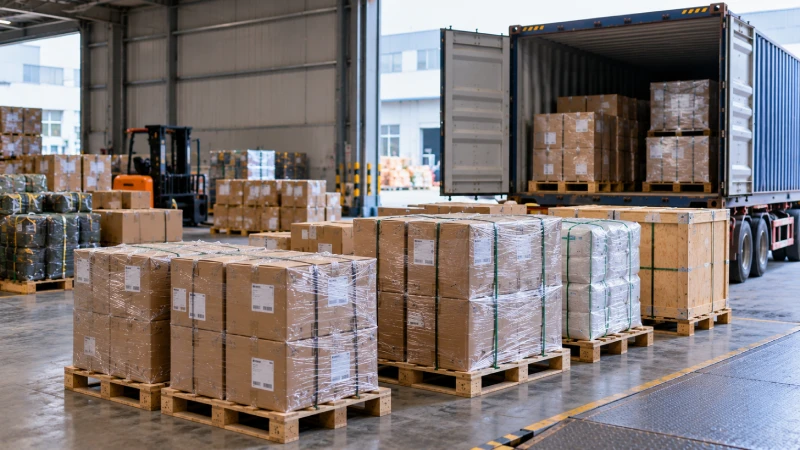
Sometimes the Best Consolidation Plan Is Sea + Air
Multi-supplier consolidation does not need to be all-or-nothing.
Consider an importer with:
- 200 kg of urgently required replacement components
- 8 CBM of normal replenishment inventory
Waiting another week so everything can move by sea may create a production or stock problem in the UK.
A better plan could be:
- urgent components → air freight
- remaining stock → consolidated LCL
Similarly, if three factories are ready but a fourth is substantially delayed, the first three may depart while the late supplier joins the next consolidation.
The objective is not to achieve a 100% consolidation rate.
The objective is to balance:
freight cost + inventory timing + warehouse cost + operational risk.
Does Consolidating Suppliers Always Reduce Shipping Costs?
No.
Consolidation can reduce duplicated costs, but it introduces costs of its own.
A realistic comparison should look at the complete logistics chain.
| Cost Area | Possible Charges |
|---|---|
| China inland | Supplier pickup or domestic delivery |
| Warehouse | Receiving and handling |
| Waiting | Storage |
| Cargo preparation | Repacking, reinforcement or palletisation |
| Export origin | Documentation and handling |
| International freight | LCL, FCL or air |
| UK destination | Terminal/CFS/local charges |
| Customs | Brokerage or representation costs |
| Government liabilities | Customs Duty and import VAT where applicable |
| Final delivery | Delivery to UK postcode |
Fewer international shipments
If three suppliers would otherwise generate three independent freight bookings, one consolidated movement may reduce repeated minimum charges.
Better freight utilisation
Combining small shipments may produce:
- more economical LCL volume
- better pallet utilisation
- better container utilisation
- improved air-freight density after repacking
Simpler receiving in the UK
Instead of receiving three unrelated international shipments, the importer may receive one coordinated consignment or delivery plan.
This can help:
- warehouses
- distributors
- Amazon/3PL replenishment teams
- manufacturers managing inbound components
But warehouse waiting can offset savings
If Supplier A arrives on Day 1 and Supplier D does not arrive until Day 20, storage and inventory delay can change the calculation.
This is why the correct question is not:
“Is consolidation cheaper?”
It is:
“Is this specific consolidation cheaper and operationally better than the realistic alternatives?”
What Can Be Combined—and What Still Needs Separate Review?
One of the most important concepts for UK importers is that logistics consolidation is not regulatory consolidation.
| Item | Can Be Operationally Combined? | Still Needs Product-Specific Review? |
|---|---|---|
| Warehouse receiving | Yes | — |
| International booking | Often | — |
| Pallet/container plan | Often | — |
| Commodity code | No | Yes |
| Customs Duty rate | No | Yes |
| Import VAT treatment | Not automatically | Yes |
| Import licence | No | Yes |
| Product conformity | No | Yes |
| Dangerous-goods classification | No | Yes |
If a shipment contains:
- electrical equipment
- metal components
- packaging materials
- battery-powered devices
they may physically travel in the same overall shipment when permitted, but each type of product still needs to be described and classified correctly.
The UK Trade Tariff requires importers to use the appropriate commodity code and allows businesses to check duty, VAT and other applicable measures for the specific goods.
UK Customs and Import Requirements for Consolidated Cargo
Consolidating suppliers in China does not change the fundamental responsibilities associated with importing commercial goods into the UK.
EORI requirements
For movements into or out of Great Britain—England, Scotland and Wales—the relevant UK government guidance states that businesses generally need an EORI number beginning with GB.
Northern Ireland has a different framework and an XI EORI may also be required depending on the movement and circumstances. See GOV.UK guidance on which EORI number you need.
For that reason, “UK delivery” should not be treated as a single customs scenario until the actual destination is confirmed.
Always provide the final destination when planning the shipment:
- England
- Scotland
- Wales
- Northern Ireland
Commodity codes remain product specific
Multiple suppliers do not become one commodity simply because their goods are loaded together.
The commodity code affects matters including:
- Customs Duty
- import VAT treatment
- import restrictions
- licence requirements
- other tariff measures
The importer should therefore maintain a clear product list rather than providing customs with a vague description such as “mixed goods” or “consolidated products.” The GOV.UK import process guidance explains the role of commodity codes and import requirements.
Import VAT and PVA
UK VAT-registered businesses may be able to use postponed VAT accounting (PVA) to account for import VAT on their VAT Return rather than paying it upfront at import, subject to the applicable conditions.
PVA should not simply be assumed by the supplier or freight forwarder. The UK importer needs to understand and correctly manage its own VAT arrangements. See GOV.UK guidance on postponed VAT accounting.
Product compliance must be reviewed by product type
Consolidating products does not make the freight forwarder the product compliance authority.
For manufactured goods, the required conformity route depends on the actual product and market.
Current UK guidance confirms that Great Britain operates UKCA/CE-related product regimes on a sector-specific basis, including continued recognition of CE requirements in applicable areas. It is therefore inaccurate to say that all products sold in Great Britain simply “must use UKCA” or that CE is universally no longer accepted. See GOV.UK guidance on UKCA and CE regimes by sector.
Northern Ireland must also be considered separately. Relevant EU manufactured-product rules continue to apply there under the Windsor Framework, with CE or CE+UKNI arrangements depending on the circumstances. See GOV.UK guidance on CE and CE+UKNI marking in Northern Ireland.
Restricted and regulated goods need pre-shipment review
Some categories cannot simply be added to a general consolidation without further checks.
Examples may include:
- food
- animal products
- plants
- chemicals
- certain medical products
- weapons or controlled items
- some dangerous goods
- products subject to licensing
GOV.UK guidance on prohibited and restricted Great Britain imports lists controlled categories and directs importers to the relevant authorities.
If regulated cargo is involved, confirm requirements before supplier pickup—not after all cargo has been combined.
Example: Combining Three Suppliers Before Shipping to the UK
Illustrative scenario only — this is not a Winsail Logistics customer case and is not a freight quotation.
For the purchasing-side handover, the Alibaba order shipping guide shows what to collect from Alibaba suppliers before freight booking.
A UK distributor purchases products from three factories:
| Supplier | City | Cargo | Ready Date | Volume | Weight |
|---|---|---|---|---|---|
| Supplier A | Shenzhen | Non-battery retail equipment | Day 1 | 3.2 CBM | 460 kg |
| Supplier B | Foshan | Metal display components | Day 4 | 4.5 CBM | 1,100 kg |
| Supplier C | Dongguan | Printed retail packaging | Day 8 | 2.1 CBM | 310 kg |
| Combined | — | — | — | 9.8 CBM | 1,870 kg |
Supplier A reaches the nominated warehouse first.
The warehouse records the receiving reference, carton count and visible packaging condition.
Supplier B arrives three days later and is received separately.
Supplier C is planned for Day 8.
Once all three have arrived:
- carton counts are reconciled
- agreed packaging checks are completed
- any required repacking is carried out
- final dimensions and gross weights are measured
- the combined CBM is confirmed
- cargo compatibility is reviewed
- LCL and other suitable transport options can be compared
- UK import information is confirmed
- the shipment is released for export
What happens if Supplier C becomes 10 days late?
The importer should not automatically instruct the warehouse to wait.
Instead, compare:
Option A — Wait
Potential advantages:
- all three suppliers move together
- fewer outbound shipments
- simpler UK receiving
Potential disadvantages:
- storage
- later UK arrival
- possible missed sailing
- inventory impact
Option B — Ship Suppliers A and B
Potential advantages:
- ready stock leaves earlier
- less warehouse waiting
- Supplier C can join the next shipment
Potential disadvantage:
- additional freight/handling for the later shipment
This is the type of decision a good consolidation plan should support.
There is no need to invent a percentage saving. The correct option depends on the actual freight rates, storage, departure schedule and UK inventory requirement at the time of shipment.
A Practical Multi-Supplier Consolidation Checklist
Before asking a forwarder to plan the shipment, collect the following information for every supplier.
Supplier information
- supplier name
- city
- pickup address
- contact person
- PO/reference
- cargo-ready date
Cargo information
- product description
- cartons/pallets
- gross weight
- carton dimensions
- estimated CBM
- fragile or oversized status
Cargo compliance information
Confirm whether the goods contain:
- lithium batteries
- other batteries
- liquids
- powders
- chemicals
- magnets
- aerosols
- dangerous goods
- temperature-sensitive products
Documentation
Ask whether the supplier has prepared the applicable:
- commercial invoice
- packing list
- product information
- SDS/MSDS where relevant
- dangerous-goods documentation where relevant
- product conformity documentation
- licences or certificates where required
Warehouse requirements
Specify whether you need:
- receiving only
- photos
- carton count
- measurement
- repacking
- carton reinforcement
- palletisation
- labelling
- other agreed checks
UK delivery information
Provide:
- UK destination postcode
- delivery type
- warehouse restrictions
- pallet/forklift requirements where relevant
- GB or Northern Ireland destination
- importer and customs information where required
The more complete this information is before pickup, the easier it is to identify problems before they affect the international shipment.
When to Stop Waiting for a Late Supplier
Before beginning consolidation, agree on a simple cutoff rule.
If a supplier is delayed, ask:
- How many days late will the cargo be?
- Will waiting cause the shipment to miss its planned vessel or flight?
- What storage cost will be created?
- Is the ready inventory urgently required in the UK?
- Can the current cargo already ship economically?
- Can the late supplier join the next consolidation?
- How much would a split shipment add to total logistics cost?
This turns supplier delays into a manageable logistics decision rather than an uncontrolled warehouse wait.
China to UK Cargo Consolidation: Key Takeaway
Combining multiple suppliers in China can be an effective way to organise UK-bound freight, particularly when several smaller factory orders are ready within a similar time window.
For one scope from supplier collection through final delivery, Winsail’s door-to-door shipping service can be reviewed after the consolidation plan is fixed.
A well-planned consolidation can provide:
- fewer international shipments
- better freight utilisation
- more controlled warehouse receiving
- coordinated packaging
- simpler inbound scheduling in the UK
- potentially lower total logistics cost
But consolidation adds another layer of planning.
The importer still needs to manage:
- supplier-ready dates
- China domestic transport
- receiving references
- discrepancies
- final measurements
- warehouse storage
- dangerous-goods compatibility
- product-specific documents
- commodity codes
- UK customs requirements
- product compliance
- final delivery
Most importantly, do not confuse putting cargo together with making the regulatory requirements the same.
Three suppliers may share one outbound freight plan while still involving ten products, several commodity codes and different compliance requirements.
The best consolidation strategy is therefore not simply:
“Wait until everything is in one warehouse.”
It is:
Coordinate compatible supplier cargo, define a cutoff, measure the final shipment, compare LCL/FCL/air or split-shipment options, and confirm UK import requirements before departure.
Send Your Supplier List for a Consolidation Review
If you are buying from two or more suppliers in China, send the cargo information from each supplier:
- supplier city or pickup address
- product description
- carton quantity
- dimensions or estimated CBM
- gross weight
- cargo-ready date
- battery or dangerous-goods status
- required repacking or palletisation
- final UK delivery postcode
Winsail Logistics can review whether the orders may be coordinated through one China consolidation plan and whether LCL, FCL, air freight or a split shipment is the more practical direction, subject to cargo review and the agreed service scope.
FAQs
Can I combine goods from different suppliers in China into one shipment to the UK?
Yes, in many cases. Several suppliers can deliver to, or be collected into, a designated China warehouse where the goods are received separately and later consolidated for one international shipping plan. Cargo compatibility, supplier timing, documentation and UK import requirements should be reviewed before consolidation.
Is it cheaper to consolidate shipments from several Chinese suppliers?
It can be, but not automatically. Consolidation may reduce repeated international minimum charges and improve freight utilisation, but it can also add Chinese domestic transport, warehouse handling, storage and repacking costs. Compare total logistics cost rather than international freight alone.
Do all my Chinese suppliers need to finish production at the same time?
No. Suppliers can have different ready dates, but the consolidation plan should include a defined waiting period or cutoff. If one supplier becomes significantly delayed, it may be better to ship the ready cargo and place the late supplier in a later shipment.
Can products with different commodity codes be shipped together?
Different products and commodity codes can often be included in the same physical shipment when operationally and legally compatible. However, each product still needs the correct customs classification and any applicable duty, VAT, licence or product requirements. Physical consolidation does not convert several products into one customs classification.
Can batteries or dangerous goods be consolidated with general cargo?
Potentially in some circumstances, but never assume this is allowed. Dangerous-goods classification, packaging, documentation, transport mode and carrier acceptance must be reviewed first. Different rules apply to dangerous goods transported by air and sea.
Should multiple supplier shipments move by LCL, FCL or air freight?
It depends on the final combined volume and weight, urgency, cargo characteristics, current freight market, UK destination and total logistics cost. Final warehouse measurements usually provide a better basis for comparison than the original supplier estimates.
What information should I send for a China to UK consolidation review?
For every supplier, provide the pickup city, product description, cartons, dimensions, weight, estimated CBM, cargo-ready date and any battery or dangerous-goods information. Also provide the final UK postcode and any required warehouse services such as repacking or palletisation.
Continue with related UK shipping guides
Use these focused guides for the next part of your China-to-UK shipping plan.
