

If you are importing commercial goods from China into the UK, confirming the correct EORI number should be one of your pre-shipment checks—not something left until the cargo reaches the border.
For most shipments entering England, Scotland or Wales, the importer will need a GB EORI for UK customs activities. Northern Ireland follows a different framework, where an XI EORI, EU EORI or another HMRC-specified arrangement may apply depending on where the business is established and how the customs declaration is made. HMRC warns that using the wrong EORI can cause customs delays and additional costs, including storage while the correct number is obtained.
This guide explains what UK importers buying from China need to check before booking. For broader freight planning—including shipping methods, transit times, ports and estimated costs—see our Shipping from China to the UK guide.
Quick Answer: Do You Need an EORI to Import from China?
For a normal commercial shipment from China into England, Scotland or Wales, start by confirming that the importer has a valid GB EORI number.
For goods imported into Northern Ireland, do not automatically apply the Great Britain rules. An XI EORI is commonly relevant to customs activities in Northern Ireland, but businesses that already hold an EU EORI may follow a different route. HMRC also has specific Customs Declaration Service rules that can affect how some EORI numbers are used in Northern Ireland.
A GB EORI is normally issued immediately unless HMRC needs additional checks, which can extend processing to up to five working days. An XI EORI requires a GB EORI application first and can take up to five days.
Have your EORI and cargo details ready before booking.
Do I Need an EORI Number to Import from China to the UK?
For commercial imports, the short answer is normally yes, but the type of EORI depends on the destination and the customs structure.
GOV.UK EORI guidance states that businesses need a GB EORI for customs activities involving goods moving into or out of England, Wales or Scotland. HMRC’s current Customs Declaration Service guidance also requires an appropriate recognised EORI for normal commercial imports unless a specific exemption applies.
This makes EORI particularly relevant to UK wholesalers, manufacturers, e-commerce businesses, distributors and other companies purchasing commercial goods from Chinese suppliers.
Private imports are different. HMRC says an EORI is not required where goods are both not controlled goods and for personal use only.
This article focuses on commercial B2B imports from China.
What Is an EORI Number?
EORI stands for Economic Operators Registration and Identification.
HMRC defines an EORI as a unique identifier given to economic operators involved in activities covered by customs legislation. In practical terms, it identifies a business or other eligible party within the customs system.
It is not a freight booking number, shipping reference, commodity code or VAT registration number.
| EORI type | Typical format | Main relevance |
|---|---|---|
| GB EORI | GB123456789000 | Customs activities in England, Scotland and Wales |
| XI EORI | XI123456789000 | Customs activities involving Northern Ireland |
| EU EORI | Country-specific prefix | EU customs territory and certain Northern Ireland situations |
A GB EORI has the prefix GB followed by 12 digits. An XI EORI uses the same numeric portion as the related GB EORI but begins with XI.
Where Is the EORI Used?
Your EORI may be required for customs declarations, Customs Declaration Service records, customs representation and certain customs decisions or authorisations.
HMRC’s current CDS guidance requires the recognised identification of the commercial importer to be entered in the relevant importer data field. That is why your customs broker or freight forwarder may request an EORI together with the importer’s registered business details before preparing a declaration.
Having an EORI, however, does not by itself establish who should legally act as the importer or whether a particular customs representation structure is workable.
GB EORI vs XI EORI: Which One Applies to Your China Shipment?
One of the most common mistakes is using “UK EORI” as if Great Britain and Northern Ireland follow exactly the same rules.
They do not.
Importing from China into England, Scotland or Wales
England, Scotland and Wales form Great Britain for this purpose.
If your commercial goods are being imported from China into Great Britain, the main UK customs identifier is a GB EORI. GOV.UK states that businesses moving goods to or from Great Britain generally need an EORI beginning with GB.
For a typical UK company importing products from a Chinese supplier to Felixstowe, Southampton, London Gateway, Heathrow or another GB entry point, checking the company’s GB EORI should therefore be part of the pre-shipment process.
Importing from China into Northern Ireland
Northern Ireland requires more care.
HMRC says an XI EORI will usually be needed for activities including making a customs declaration in Northern Ireland and certain other Northern Ireland customs activities.
However, an XI number is not universally required. A business that already holds an EU EORI may follow a different route depending on where it is established and how the declaration is made.
HMRC’s Northern Ireland EORI and CDS guidance contains additional technical rules that can affect which identifier is accepted in a specific declaration. Because these rules can change, the importer and customs representative should confirm the current HMRC position before shipment.
This is why a shipment from China to Belfast should not simply be treated as though “UK destination = GB EORI.”
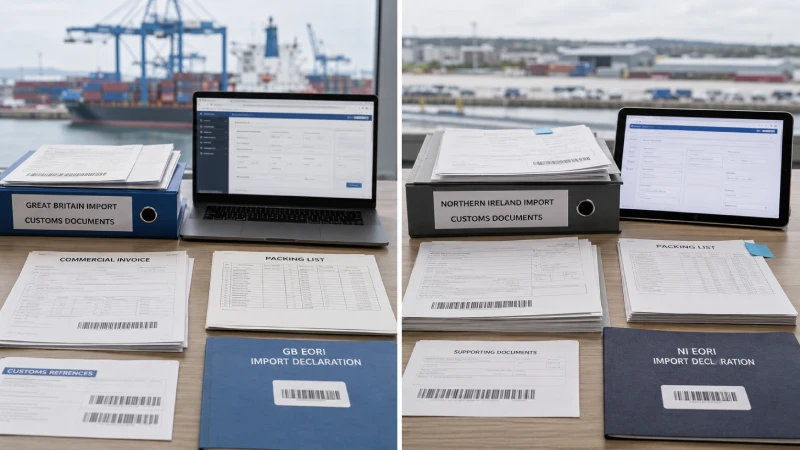
GB vs XI EORI at a Glance
| Question | Great Britain: England, Scotland, Wales | Northern Ireland |
|---|---|---|
| Main EORI framework | GB EORI | Usually XI or qualifying EU EORI |
| China is treated as | Country outside the UK | Non-EU country |
| Typical commercial import check | Confirm valid GB EORI | Confirm XI/EU EORI and declaration structure |
| GB EORI required first for XI? | Not applicable | Yes, HMRC requires a GB EORI application before XI |
| Does establishment matter? | Yes | Yes, particularly NI/EU establishment |
| Can GB automatically replace XI? | Not applicable | No; specific HMRC rules and exceptions apply |
| Recommended action | Validate GB EORI before customs preparation | Confirm importer, establishment and EORI route before shipping |
Practical point: If the final destination or customs entry is in Northern Ireland, identify that at the planning stage instead of telling the logistics provider only that the cargo is going to “the UK.”
What If the Importer Is an Overseas or Non-UK Business?
This issue is particularly important for Chinese exporters, overseas sellers and international businesses selling on DDP or other delivered terms.
Where a seller proposes to control the UK import, Winsail’s DDP shipping service from China should be reviewed against the actual importer and tax structure.
A company outside the UK should not assume that simply obtaining a GB EORI automatically solves the importer-of-record question.
HMRC generally links EORI registration and customs activity to where an economic operator is established. Non-established businesses may have more limited options than a UK-established importer and may need an appropriate customs representative depending on the activity.
An overseas seller should therefore separately establish:
| Question | Why it matters |
|---|---|
| Who will be named as importer? | Determines the customs party and responsibilities |
| Is that party established where required? | Can affect eligibility and representation |
| Which EORI applies? | Identifies the party within the customs process |
| Who is making the declaration? | Direct and indirect representation have different implications |
| How will import VAT and duty be handled? | EORI alone does not determine tax treatment |
| Is the shipment being offered as DDP? | DDP is only workable when the importer, VAT, customs and delivery structure supports it |
For this reason, a Chinese supplier offering “DDP UK” should not assume that an EORI number alone makes the arrangement compliant or operationally workable.
Winsail Logistics can coordinate freight and customs-clearance arrangements depending on the agreed shipment scope, but EORI eligibility, importer status, VAT treatment and customs representation should be confirmed for the specific transaction. Winsail does not issue EORI numbers.
When Should You Obtain an EORI Number?
Obtain and validate it before the import operation begins.
HMRC’s EORI guidance states that economic operators should be registered before they start activities covered by customs legislation, including import or export operations.
From a freight-planning perspective, that means the EORI should ideally be checked before cargo departs China rather than after a vessel or flight arrives in the UK.
How Long Does a GB EORI Application Take?
HMRC currently states that a GB EORI is issued immediately unless additional checks are required. Where HMRC needs to carry out checks, the process can take up to five working days.
For an XI EORI, the business must first have applied for a GB EORI. HMRC currently says the XI number should be issued within five days.
Do not build a shipping schedule around the assumption that an EORI application will always be instantaneous.
What Information Is Needed to Apply?
The exact information depends on the applicant.
HMRC may request details such as:
- registered business name and address;
- business start date;
- SIC code;
- UTR;
- VAT registration information where applicable;
- National Insurance number for relevant individual applicants.
For businesses not based in the UK, some UK-specific identifiers are not required. Use the official GOV.UK EORI application service rather than relying on a commercial website to register.
Is an EORI the Same as a VAT Number?
No.
For the separate Customs Duty, Import VAT and customs-value calculations, continue with the UK Import Duty and VAT guide.
An EORI is a customs identification number. A VAT registration number identifies a business for VAT purposes.
You do not need to be UK VAT registered simply to obtain an EORI. However, where a business is VAT registered in the UK, the first nine digits of its EORI will normally correspond to its VAT registration number.
For example, a VAT-registered company’s GB EORI may follow this structure:
GB + VAT number + 000
The two registrations remain different even where the digits are linked.
For more detail on import VAT and Customs Duty, see our UK Import Duty from China: Customs Duty & VAT Guide.
What About Postponed VAT Accounting?
Postponed VAT Accounting, or PVA, allows eligible UK VAT-registered businesses to account for import VAT through their VAT Return instead of paying it upfront at import.
HMRC confirms that monthly postponed import VAT statements are generated from import declarations made under the importer’s EORI number. Those statements include both the VAT registration number and EORI.
So if an importer intends to use PVA, its VAT and EORI information should be communicated accurately to the party preparing the customs declaration.
EORI registration itself does not automatically mean that the importer qualifies for or is using PVA.
What Happens If the EORI or Importer Information Is Missing?
A shipment may be physically ready to move while still not being ready for UK import clearance.
The UK customs clearance guide explains how importer details are used in the declaration and why missing data can delay release.
HMRC warns that not having the correct EORI can cause customs delays and increased costs, including situations where goods need to be stored until an appropriate EORI is obtained.
The operational problem can become more complicated where the missing item is not simply the number, but the entire importer setup.
For example, if the shipment has already departed China and the customs party later discovers that the proposed importer cannot be used under the intended structure, the parties may need to clarify importer details, representation, VAT treatment or declaration instructions before the entry can be completed correctly.
That does not mean every EORI problem automatically causes demurrage or a fixed number of days of delay. Storage, terminal, carrier and other costs depend on the shipment, entry point and time required to resolve the issue.
The practical lesson is simple:
Do not wait until customs clearance begins to decide who the importer is.
EORI Checklist Before Booking a Shipment from China
Before arranging a commercial shipment from China to the UK, check:
- Is the import destination Great Britain or Northern Ireland?
- Which legal business will be named as the importer?
- Does that business hold the appropriate GB, XI or EU EORI for the proposed customs structure?
- Has the EORI been checked for validity?
- Do the legal business name and address match the importer information being supplied for customs?
- If PVA will be used, have the correct VAT and EORI details been provided to the customs party?
- Are the commercial invoice, packing list, cargo description, commodity-code information and final delivery address ready for the next stage?
HMRC provides an online service for validating GB-prefixed EORI numbers. The service confirms whether the number is valid and may also display the registered business name and address where the holder has agreed to make that information public. XI and other non-GB EORI numbers use a separate validation route.
Pro Tip: Do not simply ask your buyer, “Do you have an EORI?” Ask for the actual number and confirm whether the shipment is entering Great Britain or Northern Ireland.
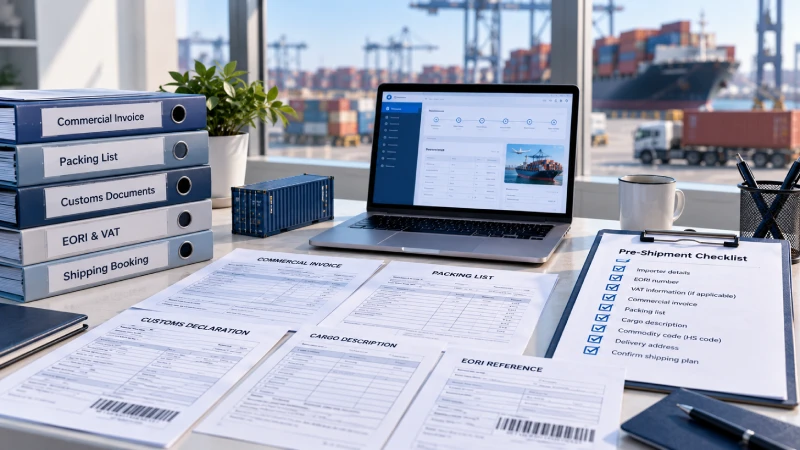
Have Your EORI and Cargo Details Ready Before Booking
An EORI is a small piece of information that can have a significant effect on customs preparation.
Winsail’s customs and cargo-insurance support can review the shipment data needed for declaration and cargo-release coordination.
For most China-to-England, Scotland or Wales commercial shipments, begin by confirming the importer’s GB EORI. For Northern Ireland, identify the destination and importer early and confirm whether XI, EU EORI or another current HMRC arrangement applies.
If the importer is an overseas business or the shipment is being planned under DDP terms, go one step further: confirm who will legally import the goods, what customs representation will be used, and how import VAT and duty will be handled. An EORI number alone does not answer those questions.
Winsail Logistics can coordinate China-to-UK freight arrangements and customs-clearance communication where applicable and subject to shipment review. Importer status, EORI eligibility, tax treatment and product compliance remain dependent on the actual transaction and applicable UK requirements.
Have your EORI and cargo details ready before booking.
For shipping methods, estimated transit times, freight-cost planning, ports and broader route guidance, continue to our Shipping from China to the UK guide.
Regulatory references reviewed against HMRC/GOV.UK guidance in September 2026. UK customs and Northern Ireland arrangements can change, so current HMRC guidance should be checked before relying on a specific EORI or representation structure.
FAQs
Do I need an EORI number to import goods from China to the UK?
For normal commercial imports into England, Scotland or Wales, the importer generally needs a GB EORI. For Northern Ireland, XI, EU EORI and specific HMRC rules may apply depending on the business and declaration structure.
What is the difference between a GB EORI and an XI EORI?
A GB EORI is mainly used for customs activities in England, Scotland and Wales. An XI EORI is used for relevant customs activities involving Northern Ireland.
Do I need an XI EORI to import from China into Northern Ireland?
An XI EORI is commonly relevant, but it is not universal. Existing EU EORI status, establishment and the declaration route can affect which identifier applies, so the current HMRC position should be confirmed before shipping.
Can a company outside the UK get a GB EORI?
A non-UK business may obtain a GB EORI for certain permitted customs activities, but holding an EORI does not automatically mean it can act as importer for every commercial import arrangement.
How long does it take to get a UK EORI number?
HMRC currently says a GB EORI is normally issued immediately unless additional checks are required, which can take up to five working days. An XI EORI can take up to five days and requires a GB EORI application first.
Is an EORI number the same as a UK VAT number?
No. EORI is a customs identifier, while a VAT number relates to VAT registration. A UK VAT-registered business will normally have an EORI whose first nine digits correspond to its VAT number.
Can my freight forwarder use its EORI instead of mine?
Do not assume so. A customs representative may use its own EORI in its role as declarant or representative, but the correct importer still needs to be identified and the applicable representation rules must be followed.
Continue with related UK shipping guides
Use these focused guides for the next part of your China-to-UK shipping plan.
