
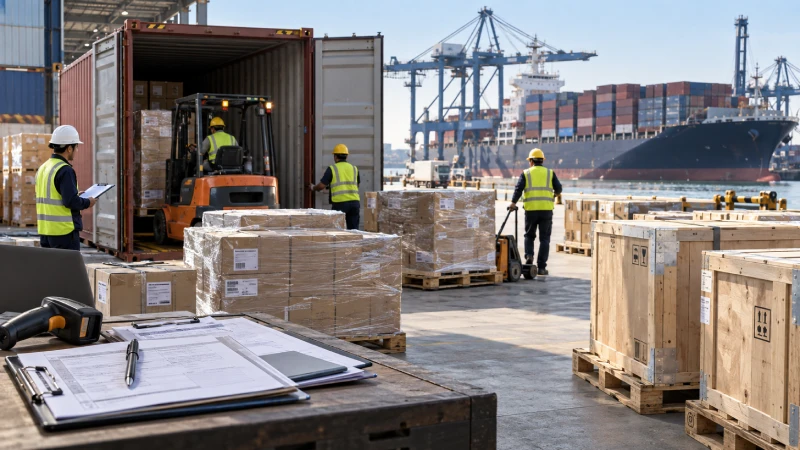
Importing from China to Kenya is not simply a matter of finding a supplier, paying for the goods, and choosing sea or air freight.
For a commercial shipment, decisions made before production and before the cargo leaves China can affect customs clearance, conformity requirements, taxes, documentation, shipping cost, and how quickly the goods can be released in Kenya.
A better approach is to work in sequence:
Define the product → verify the supplier → check HS classification and import requirements → agree the Incoterm → complete conformity requirements → arrange pickup → consolidate if needed → choose freight → prepare shipping documents → ship → clear Customs → deliver inland.
This guide explains that importer journey step by step for goods shipped from China to Kenya.
Data Note: Kenya import procedures and regulatory requirements can change and may vary according to the product, HS classification, intended use, shipment mode, and importer. Regulatory information in this guide was checked against official Kenyan sources in September 2026. Product-specific requirements should still be confirmed before shipment.
Quick Answer: How Do You Import Goods from China to Kenya?
A practical China-to-Kenya import process normally follows these 12 steps:
- Define exactly what you are importing.
- Verify the Chinese supplier before making a major payment.
- Check the likely HS code and Kenyan import requirements.
- Agree on the Incoterm and responsibility split.
- Complete PVoC and Certificate of Conformity requirements where applicable.
- Arrange supplier pickup and pre-shipment checks in China.
- Consolidate cargo if you are buying from multiple suppliers.
- Choose sea freight, air freight, or express based on the shipment.
- Prepare the Certificate of Origin, export documents, ACD where applicable, and transport documents.
- Ship the cargo and prepare for arrival before it reaches Kenya.
- Complete customs clearance through the appropriate Kenyan clearance process.
- Arrange delivery from Mombasa, Nairobi ICD, the airport, or another release point to the final destination.
The most important rule is simple:
Do not finalize the purchase first and investigate Kenyan import requirements later.
The product and compliance check should happen before you commit substantial money to the supplier.
Step 1: Define Exactly What You Are Importing
Before asking a freight forwarder for a shipping price, first define the product accurately.
Descriptions such as:
- electronics
- machine
- spare parts
- furniture
- chemicals
- accessories
are often too broad for proper import planning.
The exact product may determine its HS classification, Kenyan regulator, conformity route, permit requirements, duty treatment, dangerous-goods status, and freight options.
Build a Product Specification Before Requesting Quotes
At a minimum, collect:
- exact product name
- intended use
- material or composition
- brand and model, where applicable
- technical specifications
- electrical ratings, where relevant
- quantity
- number of cartons, crates, pallets, or pieces
- unit and total gross weight
- package dimensions
- total CBM if available
- product value
- battery content
- liquids, powders, magnets, or chemicals
- whether the goods are new or used
For machinery, equipment, electrical products, chemicals, medical products, food-related goods, telecommunications equipment, batteries, and other regulated categories, additional technical documents may also be necessary.
A freight forwarder can estimate transport more accurately when the physical cargo information is complete, but the same product information is also necessary for regulatory screening.
Product Information Checklist
| Information | Why It Matters |
|---|---|
| Exact product description | Helps identify the likely HS classification and regulator |
| Material / composition | May affect classification and conformity requirements |
| Intended use | Similar-looking products can have different regulatory treatment |
| Model / specifications | Important for technical and conformity checks |
| Quantity | Affects purchasing, clearance, and freight planning |
| Weight and dimensions | Required for freight calculations |
| Packaging | Affects handling, loading, and cargo protection |
| Battery / liquid / chemical content | May trigger dangerous-goods restrictions |
| New or used condition | Some used products can face additional requirements |
| Final destination in Kenya | Helps plan Mombasa, Nairobi, or inland delivery |
Do this before comparing shipping quotations. A very cheap freight rate does not help if the product later encounters a compliance problem.
Step 2: Verify the Chinese Supplier Before Paying
A freight forwarder can move cargo, but logistics cannot fix a poor purchasing decision.
Before paying a significant deposit or production balance, confirm that you are dealing with the correct supplier and that the supplier can manufacture or provide the goods you actually intend to import.
Useful checks can include:
- registered company identity
- company name matching quotation and payment information
- manufacturer versus trading-company status
- bank beneficiary details
- factory or business location
- product specifications
- sample approval
- packaging requirements
- production lead time
- export experience
- ability to provide required test or technical documentation
- willingness to cooperate with conformity inspection where required
For higher-value orders, an independent factory audit or pre-shipment inspection may also be appropriate.
Supplier Verification Is Not the Same as Product Inspection
These are two separate controls.
Supplier verification asks:
Is this a legitimate company capable of supplying the product?
Product inspection asks:
Are the finished goods actually the quantity, specification, quality, labeling, and packaging that I ordered?
Passing one does not guarantee the other.
A genuine factory can still produce an incorrect shipment. Likewise, photographs of apparently acceptable goods do not prove that the company receiving your payment is the supplier you intended to pay.
What to Confirm Before Paying a Deposit
Before a major payment, try to have written confirmation of:
- product model
- technical specifications
- materials
- quantity
- unit price
- packaging
- production time
- labeling requirements
- inspection arrangement
- Incoterm
- named delivery point under the Incoterm
- payment terms
For Kenyan imports, also check whether the supplier must provide samples, test reports, declarations, technical files, or access for PVoC inspection.
Do not wait until the goods are finished to ask whether the supplier can provide the documents required for Kenya.
Step 3: Check the HS Code and Kenya Import Requirements
This is one of the most important stages in the entire import process.
An HS code is not only a number used by Customs. Classification can affect:
- import duty
- VAT and other tax treatment
- whether the product is restricted
- whether a permit is required
- which Kenyan authority regulates the goods
- whether conformity assessment applies
- what supporting documents are required
For this reason, investigate the likely classification before finalizing the commercial order.
Why the HS Code Comes Before the Freight Quote
Imagine that two suppliers both offer what they describe as an “electronic device.”
One may be a simple consumer appliance.
The other may contain wireless communication functions, lithium batteries, or another feature that introduces additional technical or transport requirements.
The cartons may be similar in size, but the compliance and shipping process can be very different.
Start by providing a detailed description and technical information to the parties assisting with classification and compliance. For higher-risk or ambiguous products, obtain appropriate professional confirmation rather than selecting a code only because your supplier used it previously.
KRA’s import guidance states that taxes depend on the imported goods and their applicable classification, and its clearance documentation list includes permits or licences for restricted goods and a Certificate of Conformity for regulated products.
Check Whether Another Kenyan Regulator Controls the Product
KEBS is important, but it is not the only authority that may affect an import.
Depending on the product, another Kenyan regulator or Partner Government Agency may be relevant.
Examples can include authorities dealing with:
- plant and agricultural products
- pharmaceuticals and medical products
- communications equipment
- pesticides
- animals and animal products
- food or health controls
Do not assume that a Chinese supplier knows every Kenyan product rule.
Their responsibility is primarily to manufacture or sell the goods. The Kenyan importer should ensure that the import requirements have been checked against the appropriate Kenyan authority.
Warning: “We have shipped this product to Africa before” is not evidence that it complies with Kenyan requirements.
Before moving to the next step, you should be able to answer:
- What is the product?
- What is the likely HS classification?
- Is it restricted or controlled?
- Does another regulator apply?
- Does it require a permit?
- Does PVoC or another conformity procedure apply?
- Are there product-specific labeling or technical requirements?
If these questions are unclear, resolve them before mass production.
Step 4: Agree the Incoterm and Responsibility Split
The Incoterm affects where the supplier’s responsibility ends and where yours begins.
This has a direct impact on freight quotations.
An EXW price cannot be compared directly with a FOB, CIF, DAP, or DDP price because each includes a different scope of work.
Practical Responsibility Comparison
| Item | EXW | FOB | CIF | DAP | DDP* |
|---|---|---|---|---|---|
| Factory pickup in China | Buyer | Usually seller | Seller | Seller | Seller |
| China export handling | Buyer | Seller | Seller | Seller | Seller |
| Main international freight | Buyer | Buyer | Seller | Seller | Seller |
| Freight insurance | Buyer | Buyer | Seller arranges minimum Incoterm-required cover | Depends on arrangement | Depends on arrangement |
| Kenya import clearance | Buyer | Buyer | Buyer | Buyer | Seller |
| Import duties and taxes | Buyer | Buyer | Buyer | Buyer | Seller |
| Delivery to named destination | Buyer arranges | Buyer arranges | Usually ends at named port | Seller | Seller |
*DDP should only be accepted when the destination-side import and tax arrangement is genuinely workable for the specific shipment.
EXW
Under EXW, the supplier makes the goods available at the agreed location.
For an overseas buyer, this normally means your logistics arrangement must cover more of the China side, potentially including:
- supplier pickup
- export coordination
- warehouse handling
- export customs formalities
- international transport
EXW can work well when you want your forwarder to control several suppliers, but the China export arrangement should be confirmed before accepting the term.
FOB
FOB is common for containerized sea freight.
The supplier normally handles the cargo through the agreed Chinese port and export process, while the buyer controls the main international freight from that point.
It can offer a clearer responsibility split for experienced importers.
CIF
Under CIF, the supplier arranges the main carriage and required insurance to the named destination port.
However:
CIF does not mean all costs in Kenya have been paid.
The importer can still face:
- destination handling
- customs clearance
- duties and taxes
- storage where applicable
- inland delivery
- other local charges
Kenyan importers should also pay attention to local cargo-insurance rules. KRA currently states that imports procured by Kenyan-based importers must be insured with companies licensed to conduct business in Kenya.
This should be reviewed when structuring the insurance element of the transaction.
DAP
DAP can simplify international transport because the seller arranges delivery to an agreed destination.
However, import clearance and import taxes normally remain with the buyer under the Incoterm.
DDP
DDP shifts the broadest responsibility to the seller, including import clearance and applicable import duties under the Incoterm.
That does not mean every China-to-Kenya shipment can automatically be handled under a simple “all-inclusive DDP” arrangement.
Before agreeing to DDP, confirm:
- who acts in the required Kenya import structure
- how customs clearance will be performed
- who is responsible for declarations
- how duties and taxes will be handled
- whether the cargo is suitable for the proposed arrangement
For regulated products, dangerous goods, machinery, high-value shipments, or other special cargo, feasibility should be checked before payment.
Pro Tip: Compare Incoterms based on the total responsibility split—not only the supplier’s headline price.
Step 5: Complete PVoC and CoC Requirements Where Applicable
Kenya operates a Pre-Export Verification of Conformity programme for goods within the applicable scope.
The important words are pre-export.
If conformity assessment applies to your goods, it should be handled before the shipment leaves China—not discovered after the container reaches Mombasa.
KEBS states that importers should ensure their suppliers understand the applicable Kenyan quality requirements and that goods subject to the PVoC programme obtain the required Certificate of Conformity from an appointed PVoC agent. KEBS’s current programme information includes China within its PVoC zone arrangements.
When to Start the PVoC Process
A safer workflow is:
Check applicable standard → confirm supplier capability → produce goods → arrange required testing/inspection → obtain CoC → ship
Do not use:
Produce goods → load container → ask whether a CoC was needed
Depending on the certification route and product, the conformity process can involve:
- document review
- product testing
- inspection
- verification of markings or labeling
- conformity assessment against applicable standards
The exact route depends on the product and current KEBS rules.
The current KEBS PVoC manual provides detailed programme scope and certification arrangements, so product applicability should be checked against the current programme rather than an old supplier checklist.
A Common Importer Mistake
An importer orders 2,000 units, approves production, pays the balance, and only then asks:
“Do I need KEBS?”
At that point, changing specifications, labeling, packaging, or technical documentation can be much more expensive.
A better question is:
“What must this product comply with in Kenya before I authorize mass production?”
That small change in timing can prevent a large downstream problem.
Step 6: Arrange Supplier Pickup and Pre-Shipment Checks in China
Once production is complete, the project moves from purchasing into physical logistics.
Before arranging pickup, obtain the final cargo details from the supplier.
Confirm:
- cargo-ready date
- number of cartons, pallets, crates, or pieces
- final gross weight
- final package dimensions
- total CBM
- warehouse or factory pickup address
- loading conditions
- contact person
- dangerous-goods status
- batteries, liquids, powders, or magnets
- inspection status
- required shipping documents
Do not rely entirely on the dimensions shown in the original quotation.
Actual packed dimensions can change after production.
That matters because freight quotations—especially air freight and LCL—can depend heavily on final dimensions or chargeable volume.
Final Inspection Before Pickup
For higher-value or specification-sensitive orders, the period before pickup is often the last practical opportunity to check:
- quantity
- model
- finish
- accessories
- labeling
- carton marks
- export packaging
- palletization
- product appearance
- sample consistency
Once the cargo has entered export handling, fixing product problems becomes more expensive.
Supplier Pickup
Depending on the Incoterm, either the supplier or your logistics provider may arrange transport from the factory to:
- a consolidation warehouse
- an export warehouse
- an airport cargo facility
- a container yard
- another loading point
For multiple suppliers, provide the forwarder with separate pickup information for each location.
A good cargo list should show:
| Supplier | China City | Packages | Weight | CBM | Ready Date |
|---|---|---|---|---|---|
| Supplier A | Guangzhou | 25 cartons | 420 kg | 2.1 CBM | Confirmed |
| Supplier B | Foshan | 12 cartons | 310 kg | 1.4 CBM | Pending |
| Supplier C | Shenzhen | 8 cartons | 95 kg | 0.6 CBM | Confirmed |
This makes it easier to decide whether to collect immediately or wait for all suppliers.
Step 7: Consolidate Multiple Suppliers When It Makes Sense
Many Kenyan importers do not purchase from one Chinese factory.
A single buying project may involve:
- furniture from Foshan
- electronics from Shenzhen
- packaging from Guangzhou
- accessories from Yiwu
- spare parts from another industrial area
Shipping every small order separately is not always efficient.
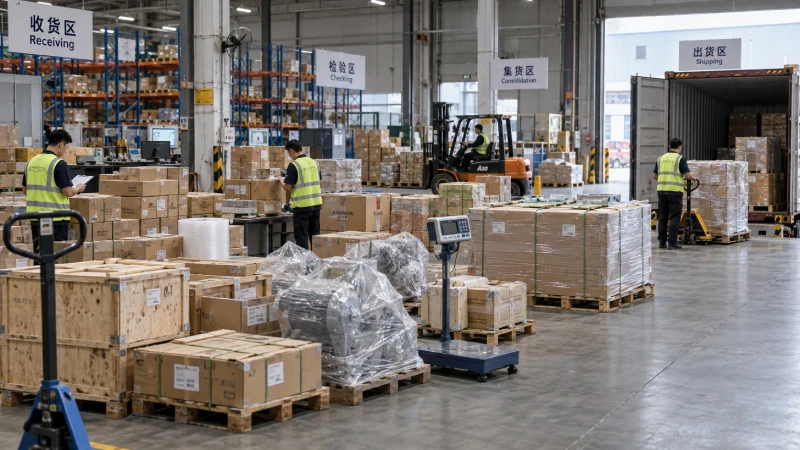
Consolidation allows cargo from several suppliers to be collected at one warehouse before onward shipment.
A typical process looks like:
Supplier A + Supplier B + Supplier C → China warehouse → receiving/checking → consolidation → export shipment → Kenya
When Consolidation Helps
It can be useful when:
- individual orders are too small for economical standalone shipping
- several suppliers are located within manageable pickup areas
- the cargo can travel under the same transport plan
- you want one consolidated LCL shipment
- you need warehouse receiving before shipment
- you want to coordinate cargo from multiple factories
When You Should Not Wait for Every Supplier
Consolidation is not automatically cheaper.
Suppose three suppliers are ready, but the fourth supplier is three weeks late.
Waiting may create:
- warehouse charges
- delayed stock arrival
- missed selling periods
- production disruption in Kenya
- cash-flow pressure
In that situation, compare:
cost of splitting the shipment versus commercial cost of waiting.
Also avoid treating incompatible cargo as if it can simply be placed together.
Special attention is required when combining:
- dangerous goods with general cargo
- liquids
- chemicals
- lithium batteries
- oversized equipment
- fragile products
- cargo with different compliance requirements
Pro Tip: Consolidate because it improves the total shipment—not simply because all purchases were made in China.
Step 8: Choose Sea, Air, or Express Freight
Only after the product, compliance position, cargo details, and required delivery timing are reasonably clear should you choose the freight method.
There is no universally “best” way to ship from China to Kenya.
The correct method depends on:
- shipment size
- gross and volumetric weight
- urgency
- cargo value
- destination
- dangerous-goods status
- order frequency
- inventory needs
- total logistics budget
Express Freight
Express courier can work well for:
- samples
- documents
- replacement parts
- small urgent consignments
It is usually selected for convenience and speed rather than large commercial volumes.
Air Freight
Air freight is useful when the shipment is too large for economical express service but still needs faster transport than sea freight.
Common examples include:
- high-value components
- urgent stock
- commercial electronics
- spare parts
- production materials
- time-sensitive retail goods
Air cargo still requires attention to import clearance and product compliance.
Sea Freight LCL
LCL allows your cargo to share container space with other shipments.
It can make sense when you do not have enough cargo for a full container.
However, compare the entire logistics cost—not only the quoted ocean-freight amount.
LCL can include:
- origin handling
- consolidation
- documentation
- destination handling
- deconsolidation
- customs-related costs
- inland delivery
Sea Freight FCL
FCL gives your shipment the use of a full container.
It becomes increasingly relevant as cargo volume grows or when the cargo benefits from:
- dedicated container space
- simpler loading control
- reduced handling between suppliers and destination
- machinery or bulky goods
- regular commercial volumes
Do not choose LCL or FCL based on CBM alone.
Actual quotations should be compared using:
- cargo volume
- weight
- product type
- China origin
- Kenya destination
- local charges
- delivery arrangement
For broader cost, transit-time, and method comparisons, see our Shipping from China to Kenya guide.
For full-container planning, you can also review 20ft and 40ft container shipping cost from China to Kenya.
Step 9: Prepare the Export, ACD, and Shipping Documents
In 2026, document preparation deserves particular attention for Kenya-bound imports.
Do not think of documentation as something that starts after the vessel arrives.
Several important documents need to be prepared or coordinated before shipment.
Depending on the shipment, the document set may include:
- commercial invoice
- packing list
- Bill of Lading or Air Waybill
- Certificate of Origin
- Certificate of Conformity where applicable
- permits or licences
- export declaration or equivalent export document
- freight invoice
- insurance documentation
- Import Declaration Form and customs documentation as applicable
- Advance Cargo Declaration for applicable containerized sea cargo
Certificate of Origin
KRA states that imported consignments are generally required to be accompanied by a Certificate of Origin issued by a competent authority in the country of export.
The requirement initially took effect in July 2025, followed by a transition period, with full enforcement from October 1, 2025, subject to the exceptional cases and provisional measures described by KRA.
Do not assume that a supplier-created invoice showing “Made in China” automatically replaces the applicable Certificate of Origin requirement.
Coordinate the document early enough for the exporter to arrange it correctly.
Export Declaration Requirement from September 2026
Kenya added another important import-document requirement in 2026.
KRA states that from September 1, 2026, importers must obtain and retain an export declaration, export entry, customs export certificate, or equivalent document from the country of export.
KRA further states that importers should keep these records for at least five years, and the document should support information including the exporter, importer, goods description, quantity, value, tariff classification, and country of export.
For goods exported from China, coordinate this requirement with the supplier and China export side before the shipment departs.
Waiting until Customs asks for the document in Kenya can create unnecessary difficulty.
Advance Cargo Declaration for Containerized Cargo
The ACD is another major 2026 change.
KRA launched its Advance Cargo Declaration platform on August 3, 2026 for containerized cargo destined for Kenyan ports.
According to KRA’s ACD notice, the shipper or exporter must obtain an ACD Reference Code at the port of loading before the cargo is loaded.
The ACD application requires:
- draft Bill of Lading
- commercial invoice
- freight invoice
- export declaration
The reference code must then be shown on the Bill of Lading before the shipment proceeds to Kenya.
This means an ACD problem should not be treated as something to solve only after the container reaches Mombasa.
For LCL cargo, ask your consolidator or forwarder to confirm how the ACD requirement is being handled at the relevant container and Bill of Lading level before cargo is accepted for loading.
Pre-Shipment Document Checklist
| Document | Main Purpose | When to Check |
|---|---|---|
| Commercial Invoice | Value and commercial transaction | Before booking / clearance |
| Packing List | Packages, weights and cargo details | Before pickup |
| Certificate of Origin | Confirms country of origin | Before shipment |
| CoC where applicable | Supports conformity compliance | Before shipment |
| Export declaration / equivalent | Supports export and Kenya import records | Before shipment |
| Draft B/L | Sea-freight shipping details | Before vessel loading |
| ACD reference where applicable | Pre-loading declaration for containerized cargo to Kenyan ports | Before loading |
| Final B/L | Transport and cargo record | After departure |
| AWB | Air-cargo transport record | At air shipment |
| Permit / licence | Product-specific authorization | Before shipment |
Warning: Never assume the Chinese supplier, forwarder, and Kenyan clearing agent are automatically checking the same document set. Assign responsibility for each document before shipment.
Step 10: Ship the Cargo and Prepare for Arrival
The vessel or aircraft departing China does not mean your work is finished.
The transit period should be used to prepare for Kenyan clearance.
After departure, obtain and review the final shipping documents.
Check that important information is consistent across documents, including:
- importer name
- exporter name
- product description
- package count
- weights
- quantities
- values
- B/L or AWB details
- origin
- destination
- reference numbers where applicable
Send the required document set to the Kenyan clearing party early enough for pre-arrival review.
Do Not Wait for the Arrival Notice to Start Clearance Preparation
Before arrival, you should already be considering:
- customs classification
- anticipated taxes and charges
- required permits
- CoC availability
- Certificate of Origin
- export declaration records
- final B/L or AWB
- delivery destination
- Mombasa versus inland routing
- funds required for clearance and delivery
For normal commercial imports, KRA’s current guidance directs importers to use a licensed customs clearing agent to process import documentation and assist with Customs clearance.
The agent should receive the documentation before arrival rather than being introduced to the shipment only after cargo starts generating destination costs.
Pro Tip: A shipment can be physically moving normally while the paperwork is already creating a future clearance problem. Track the documents as carefully as you track the vessel.
Step 11: Clear the Goods Through Kenya Customs
Once the goods reach Kenya, the shipment moves into the import-clearance stage.
The exact process can vary depending on:
- cargo type
- port or airport
- HS classification
- regulator
- customs controls
- inspection requirements
- importer status
For typical commercial cargo, the process broadly involves:
- preparing and lodging the applicable customs declaration;
- submitting supporting documents;
- determining customs value and classification;
- assessing duties and taxes;
- paying applicable amounts;
- completing any Customs or Partner Government Agency verification;
- obtaining release for compliant cargo.
KRA lists documents for imported commercial goods including the commercial invoice, Bill of Lading or Air Waybill, Certificate of Origin, packing list, permits or licences where applicable, and CoC for regulated products.
What the Importer Still Needs to Control
Hiring a freight forwarder or clearing agent does not mean you should stop checking the shipment.
The importer should remain involved in critical matters such as:
- correct product description
- HS classification
- customs value
- origin documentation
- permits
- conformity documentation
- authenticity of supplier documents
- payment of taxes
- final delivery instructions
A clearing agent can prepare and submit declarations, but the commercial facts still originate from the importer, supplier, and transaction documents.
Do not ask a supplier or logistics provider to artificially reduce invoice values to reduce taxes.
Incorrect valuation or classification can create customs exposure far greater than the short-term amount someone hoped to save.
How Are Import Duty and Taxes Calculated?
There is no single duty percentage that applies to every product imported from China.
The final tax treatment can depend on:
- HS code
- customs value
- applicable EAC tariff
- VAT treatment
- excise duty where applicable
- levies
- exemptions or remissions where legitimately available
For that reason, a serious landed-cost calculation should begin with the product’s classification rather than an online statement such as:
“Kenya import tax is X%.”
Use a product-specific customs and landed-cost review when calculating the actual import cost.
Importer vs Forwarder vs Clearing Agent
| Task | Importer | Chinese Supplier | China Forwarder | Kenya Clearing Agent |
|---|---|---|---|---|
| Define product accurately | Primary | Supports | Reviews for logistics | Uses for clearance |
| Supplier contract | Primary | Primary counterparty | — | — |
| Product compliance check | Primary | Provides documents | Can coordinate | Can support locally |
| China pickup | Coordinates | Releases cargo | Usually handles if booked | — |
| Export shipment | Approves | Supports | Coordinates | — |
| Shipping documents | Checks | Provides commercial data | Coordinates transport docs | Reviews |
| Kenya customs declaration | Provides correct data | Provides supporting docs | Sends shipment docs | Usually handles |
| Duty/tax payment | Responsible under agreed structure | Depends on Incoterm | — | Coordinates |
| Final inland delivery | Approves destination | — | May coordinate through network | May coordinate locally |
The exact responsibility can change according to your Incoterm and service agreement, so confirm it in writing for each shipment.

Step 12: Arrange Mombasa, Nairobi ICD, or Final Inland Delivery
Customs release is not necessarily the end of the shipment.
You still need to move the cargo to:
- your warehouse
- your shop
- a distributor
- a construction site
- a factory
- another inland destination
Sea Freight Through Mombasa
Mombasa is Kenya’s principal maritime gateway for containerized commercial cargo.
Depending on the booking, Bill of Lading, clearance plan, and inland arrangement, the shipment may be handled through the Mombasa logistics chain or move inland toward Nairobi.
Mombasa to Nairobi ICD
The Kenya Ports Authority states that the Nairobi Inland Container Depot is connected to the Port of Mombasa by rail.
KPA also states that imports can move from Mombasa to inland depots using arrangements including a Through Bill of Lading or merchant haulage.
The right routing depends on the shipment.
Do not automatically assume:
“Nairobi importer = container must clear in Nairobi.”
Instead, review:
- carrier routing
- Bill of Lading destination
- customs arrangement
- inland transport
- delivery address
- local costs
- container return conditions
before booking.
Air Freight to Nairobi
For many commercial air shipments, Nairobi is the practical gateway.
After arrival and clearance, cargo can be collected or delivered onward by truck depending on the shipment and service arrangement.
Air freight may simplify the international transit portion, but product permits, Customs, conformity requirements, and importer responsibilities still apply.
Plan the Final Unloading Before the Truck Arrives
Importers sometimes focus entirely on getting cargo into Kenya and overlook what happens at the delivery address.
Before dispatching the final truck, confirm:
- delivery address
- road access
- truck restrictions
- unloading time
- forklift availability
- crane requirements
- loading-dock conditions
- workers required
- container unloading capacity
- empty-container return requirements
- oversized-cargo handling
- dangerous-goods handling
This is especially important for:
- machinery
- full containers
- construction materials
- oversized cargo
- industrial equipment
- heavy cargo
A container arriving at a site without suitable unloading equipment can create avoidable delay and additional cost.
Importing from China to Kenya: Final Pre-Shipment Checklist
Before allowing the shipment to leave China, work through this checklist.
Product
- Exact product description confirmed
- Specifications confirmed
- Likely HS classification checked
- Restricted/prohibited status checked
- Product-specific regulator identified where relevant
- Dangerous-goods status confirmed
Supplier
- Supplier identity verified
- Written order specifications approved
- Sample approved where applicable
- Final quantity confirmed
- Packaging confirmed
- Cargo-ready date confirmed
Compliance
- Kenyan product requirements checked
- PVoC applicability checked
- CoC obtained where required
- Required permits/licences obtained
- Product labeling or technical requirements checked
Commercial Terms
- Incoterm confirmed
- Named Incoterm location confirmed
- Payment terms documented
- Insurance responsibility confirmed
- Buyer/seller responsibility split understood
Logistics
- China pickup arranged
- Final cartons/pallets confirmed
- Final weight confirmed
- Final CBM confirmed
- Consolidation decision made
- Sea / air / express method selected
- Special cargo requirements disclosed
Documents
- Commercial invoice checked
- Packing list checked
- Certificate of Origin arranged
- CoC available where applicable
- Export declaration or equivalent document obtained
- Draft B/L checked for sea freight
- ACD arranged where applicable
- Final transport document reviewed
Kenya Arrival
- Clearing arrangement confirmed
- Required documents sent before arrival
- Estimated taxes and destination charges reviewed
- Delivery destination confirmed
- Mombasa / Nairobi / inland routing confirmed
- Unloading equipment planned where required
If several of these items are still unknown, the shipment is probably not ready to leave China yet.
Common Mistakes When Importing from China to Kenya
Many costly import problems can be traced back to decisions made before shipment.
Paying the Supplier Before Checking Kenya Requirements
This is one of the biggest risks.
Once production is complete, changing the product, markings, packaging, documentation, or specification becomes harder.
Choosing a Product Based Only on the Supplier’s FOB Price
The cheapest product quotation may not produce the lowest landed cost.
Compare:
product + China logistics + conformity + international freight + clearance + taxes + destination charges + inland delivery
Using the Supplier’s HS Code Without Checking It
The supplier’s export classification may be useful information, but Kenyan import classification should still be verified.
Assuming CIF Means Door-to-Door
CIF is not the same as customs-cleared delivery to your Nairobi warehouse.
Discovering PVoC After Cargo Is Ready to Ship
Conformity should be part of purchasing and production planning.
Shipping Without a Complete Document Set
The 2025–2026 changes concerning Certificate of Origin, export documentation, and ACD make pre-shipment document control increasingly important.
Treating Freight and Customs as Separate Projects
The freight route, Incoterm, documentation, conformity status, and Kenyan clearance arrangement should be coordinated before departure.
Who Should Coordinate Each Stage?
A successful China-to-Kenya shipment normally involves several parties.
Kenyan Importer
Should control:
- purchasing decision
- importer information
- product requirements
- compliance confirmation
- payment approval
- Incoterm choice
- customs and tax responsibility
- destination instructions
Chinese Supplier
Should support:
- correct product
- commercial invoice
- packing list
- export information
- technical documents
- inspection access
- conformity process where applicable
- cargo release
China Freight Forwarder
May coordinate:
- supplier pickup
- warehouse receiving
- consolidation
- export logistics
- sea or air booking
- shipping documentation
- special cargo handling
- communication with destination partners
Kenyan Customs Clearing Agent
Typically supports:
- customs entry
- document submission
- duty/tax assessment process
- Customs coordination
- Partner Government Agency coordination where applicable
- release procedures
KRA distinguishes the roles of a freight forwarder and clearing agent: the forwarder arranges transport, while the clearing agent handles Customs clearance functions.
For smaller operators these services may be coordinated through one logistics network, but the legal and operational roles should still be understood.
When Should You Contact a Freight Forwarder?
You do not need to wait until the goods are finished.
In fact, earlier involvement is often better.
Useful times to involve your freight forwarder include:
Before Ordering
When you need to understand:
- whether the cargo has special transport requirements
- rough shipping volume
- China pickup options
- consolidation feasibility
- likely sea/air suitability
Before Paying the Production Balance
When you need:
- final freight planning
- warehouse booking
- supplier coordination
- cargo inspection arrangements
- compliance document confirmation
Before Cargo Ready Date
When actual:
- carton count
- dimensions
- gross weight
- pickup location
- cargo-ready date
are available.
That allows the transport quotation to be based on the real shipment rather than estimates.
Information to Send for a China-to-Kenya Shipping Plan
For a useful shipping assessment, provide:
Product
- exact product name
- material/use
- HS code if already confirmed
- battery, liquid, powder, chemical, or magnetic content
Cargo
- number of cartons/pallets
- dimensions
- gross weight
- total CBM
- cargo value
Supplier
- pickup city
- number of suppliers
- cargo-ready date
Commercial
- EXW, FOB, or other Incoterm
- invoice value
Kenya
- Mombasa, Nairobi, or other final destination
- business/commercial import
- any permits or conformity documents already obtained
For several suppliers, send each supplier’s cargo information separately.
The objective is not simply to obtain the lowest freight number.
It is to create a workable route from the Chinese supplier to the final destination in Kenya without discovering major documentation, compliance, or routing problems after departure.
For timing decisions, see how long shipping from China to Kenya takes.
FAQ
What do I need before importing goods from China to Kenya?
Start with a detailed product specification, likely HS classification, Kenyan compliance requirements, supplier verification, Incoterm, and an initial landed-cost plan. Before shipment, prepare the applicable commercial, conformity, export, transport, and Kenya clearance documents.
Do I need a Certificate of Conformity when importing from China to Kenya?
It depends on whether your goods fall within the applicable KEBS conformity requirements. Products within the PVoC scope should complete the required conformity process before export.
Is a Certificate of Origin required for imports from China to Kenya?
KRA states that imported consignments generally require a Certificate of Origin issued by a competent authority in the country of export, subject to KRA's published exceptions and provisional measures.
What is Kenya’s ACD and who should arrange it?
The Advance Cargo Declaration is a pre-loading declaration for applicable containerized cargo destined for Kenyan ports. The shipper or exporter should coordinate the ACD reference before loading, with the required shipment documents.
Can I combine goods from several Chinese suppliers into one shipment?
Yes, when the products and shipping arrangements are compatible. The goods can be collected at a China consolidation warehouse before onward shipment, but delays and incompatible cargo should be considered.
Should I use FOB, CIF, or DDP when importing from China to Kenya?
There is no single best Incoterm. Compare who controls China origin handling, international freight, Kenya import clearance, taxes, and final delivery rather than choosing only by the supplier's headline price.
Do I need a clearing agent in Kenya?
For normal commercial imports, KRA's current guidance directs importers to use a licensed customs clearing agent to process import documentation and assist with customs clearance.
Final Thoughts
Importing from China to Kenya becomes much easier to manage when the shipment is planned in the correct order.
The most important work often happens before the container is loaded or the air cargo is handed to the airline.
Start with:
What exactly is the product?
Then confirm:
Can it be imported, what rules apply, and what documents will be required?
Only then should you move through supplier payment, production, freight booking, customs planning, and final delivery.
For a first-time importer, the safest operating sequence is:
Product → HS and compliance → supplier → Incoterm → production → conformity → pickup → consolidation → freight → documentation → clearance → delivery
Kenya’s recent documentation changes make this pre-shipment planning particularly important. The Certificate of Origin requirement is now fully enforced under KRA’s current framework, importers have had an additional export-document retention requirement since September 1, 2026, and applicable containerized sea cargo now requires the ACD process before loading.
If you are importing from several suppliers or are not sure whether the cargo should move by LCL, FCL, air, or another arrangement, prepare the product details, package information, supplier locations, Incoterm, and final Kenya destination before requesting a shipping plan.
That gives the logistics team enough information to evaluate the shipment as a complete China-to-Kenya import project—not simply as a freight rate.
