
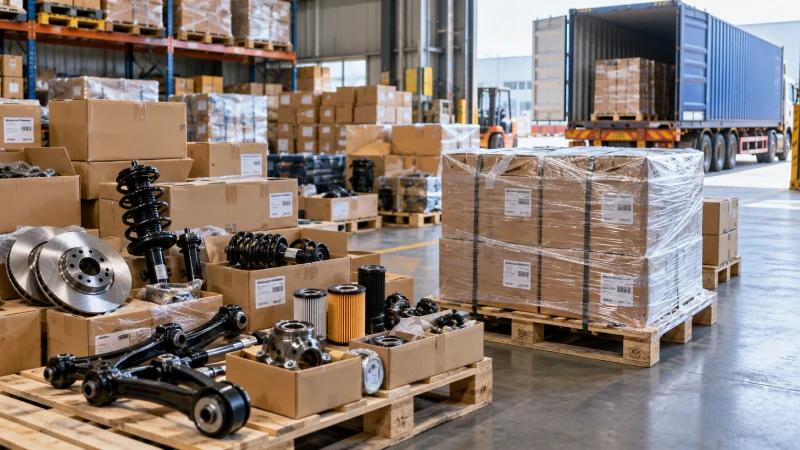
Shipping auto parts from China to Kenya is not simply a matter of choosing sea freight or air freight.
The first question is what exactly is inside the shipment.
A consignment containing brake pads, oil filters and shock absorbers is very different from one containing starter batteries, lubricants, airbags or used components. These products can involve different HS classifications, conformity requirements, transport restrictions and documentation.
That is why descriptions such as “auto parts,” “car parts” or “spare parts” are usually not detailed enough for proper freight planning or customs preparation.
Before cargo leaves China, Kenyan importers should identify the individual parts, confirm whether they are new or used, check HS classifications, review KEBS requirements, identify dangerous goods and prepare the correct import and shipping documents.
This guide explains how to approach that process for shipments originating in China.
Data Note: Freight rates, carrier acceptance rules and regulatory procedures can change. Customs treatment also depends on the exact product and HS classification. Any product-specific compliance requirement should therefore be confirmed before the cargo is dispatched from China.
Quick Answer: How Should You Ship Auto Parts from China to Kenya?
For ordinary new, non-dangerous automotive replacement parts, the most suitable shipping method normally depends on shipment size, urgency, density and handling requirements.
- LCL sea freight can work well for smaller commercial shipments that do not fill a container.
- FCL sea freight may be more practical for larger inventories, heavy parts, mixed-SKU distributor orders or cargo that benefits from reduced handling.
- Air freight is useful for urgent, compact or higher-value parts where vehicle downtime or stock shortages matter more than freight cost.
- Express freight may suit samples and very small replacement-part shipments, subject to courier commodity restrictions.
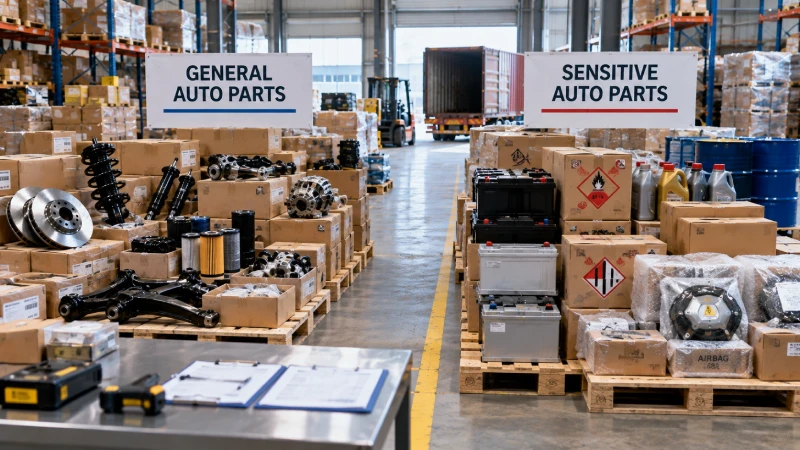
- Batteries, airbags, inflators, lubricants and other sensitive components must be screened separately before booking.
- Used auto parts require additional regulatory checks and should not automatically be treated the same as new parts.
For sea shipments in containers, there is another important 2026 requirement. Kenya Revenue Authority launched its Advance Cargo Declaration system for containerised cargo on August 3, 2026. The exporter must obtain the ACD reference at the port of loading using shipment documents including the draft Bill of Lading, commercial invoice, freight invoice and export declaration. The ACD reference is then endorsed on the Bill of Lading. Kenya Revenue Authority
The most important step therefore happens before freight booking:
Build an accurate parts list and identify any compliance-sensitive products first.
For a broader route overview covering shipping methods, general costs, transit times and destination planning, see Shipping from China to Kenya.
Start With the Parts List, Not the Freight Method
Importers often approach a forwarder with a request such as:
“I have 80 cartons of auto parts in Guangzhou. How much is shipping to Kenya?”
That information is enough to start a conversation, but not enough to properly plan the shipment.
The forwarder still needs to know what those 80 cartons contain.
Different automotive products can fall under different customs classifications, face different standards requirements and require different transport arrangements.
Kenya applies the East African Community Harmonised System and Common External Tariff, under which traded goods are classified into chapters, headings and subheadings. Kenya Revenue Authority
There is no single HS code called simply “all auto parts.”
Some vehicle-specific components fall within Chapter 87, but common automotive products can also appear elsewhere in the tariff.
For example, filters, batteries and ignition components belong to different product families from many conventional vehicle body or suspension parts.
This is why classification should begin with the actual product, not with the fact that it is used in a vehicle.
Why “Auto Parts” Is Not a Sufficient Customs Description
Consider these descriptions:
| Too vague | More useful commercial description |
|---|---|
| Auto parts | Front brake pads for passenger vehicles, new |
| Spare parts | Engine oil filters for diesel engines, new |
| Car electrical parts | 12V lead-acid starter batteries, new |
| Engine parts | Spark plugs for petrol engines, new |
| Suspension parts | Front shock absorbers for passenger vehicles, new |
| Safety parts | Driver-side airbag module with inflator, new |
The descriptions in the right column still do not automatically determine the final HS code, but they give the importer, clearing agent, forwarder and conformity-assessment provider enough information to begin proper classification and compliance checking.
A commercial invoice that only says:
AUTO PARTS — 800 PCS — USD 12,000
creates unnecessary uncertainty.
A better invoice separates major product lines:
- brake pads
- oil filters
- wheel bearings
- shock absorbers
- ignition coils
- sensors
- starter batteries
Where practical, also include part numbers or model references.
One Shipment Can Contain Multiple HS Codes
A distributor may purchase hundreds of SKUs but ship them in the same LCL shipment or container.
That does not mean the shipment has one customs classification.
The Kenyan customs declaration may need to reflect multiple tariff lines based on the actual products.
Kenya’s official Trade Facilitation Platform also treats motor-vehicle spare-parts importation as a structured customs and standards process rather than one generic “auto parts” category. InfoTrade Kenya
Before booking, prepare a master SKU list containing at least:
- product name
- part number where available
- function
- vehicle application
- new or used condition
- quantity
- unit value
- total value
- carton or pallet information
- gross weight
- dimensions
- proposed HS code where available
- whether batteries, liquids, gases or inflators are present
For complex mixed shipments, this information is more important than the number of cartons alone.
Pro Tip: Do not ask the supplier to classify everything as “automotive accessories” simply to make the invoice shorter. A shorter invoice is not necessarily a better customs document.
LCL, FCL, Air or Express: Which Works for Your Auto Parts?
There is no universal “best” freight method for automotive components.
The right choice depends on:
- shipment volume
- gross weight
- density
- urgency
- cargo value
- number of suppliers
- packaging
- risk of damage
- dangerous-goods status
- destination in Kenya
A compact carton of electronic sensors should not be planned the same way as 18 CBM of mixed brake, suspension and engine components.
LCL Sea Freight for Smaller Commercial Orders
LCL allows cargo from different shippers to share container space.
It can be suitable when a Kenyan importer is ordering:
- several pallets of new replacement parts
- regular stock replenishment
- smaller wholesale orders
- goods from several Chinese suppliers that will be consolidated before shipment
Dense automotive components can sometimes work particularly well with sea freight because many parts are relatively heavy compared with the space they occupy.
However, LCL involves additional cargo handling during consolidation and deconsolidation.
That matters for:
- exposed metal components
- fragile sensors or electronics
- irregular cartons
- painted body parts
- components vulnerable to moisture
- products packed in weak supplier cartons
For mixed supplier shipments, the China warehouse should also check whether all cargo can legally and operationally travel together.
A shipment that appears to contain only normal spare parts may change once one supplier delivers:
- lithium batteries
- starter batteries
- lubricants
- aerosol products
- airbag inflators
Those items should be identified before the LCL booking is finalized.
FCL Sea Freight for Larger or Handling-Sensitive Orders
FCL gives one shipper use of the container.
It can become more attractive when an importer has:
- larger wholesale inventory
- high carton counts
- multiple pallets
- heavy components
- engines or transmissions
- crated assemblies
- mixed-SKU distributor orders
- cargo that benefits from reduced handling
FCL is not automatically cheaper simply because the shipment is large.
The proper comparison should consider:
- total origin charges
- ocean freight
- destination charges
- container utilization
- cargo handling
- inland transport
- customs-related costs
For some volumes, both LCL and FCL should be quoted before a decision is made.
Shipping Method Decision Guide
| Shipment situation | Method worth checking first | Main issue to verify |
|---|---|---|
| Small commercial replenishment | LCL | Minimum charges and handling |
| Large mixed spare-parts order | FCL | Container utilization |
| Urgent compact parts | Air freight | Chargeable weight |
| Samples or a few replacement pieces | Express / air | Carrier restrictions |
| Multiple Chinese suppliers | Consolidation + LCL/FCL | Cargo compatibility |
| Batteries or airbags | DG-capable service | Classification and carrier acceptance |
Compare LCL and FCL based on the final packed volume, gross weight and Kenya destination rather than using a fixed CBM rule.
Air Freight for Urgent Auto Parts
Air freight is often selected when the cost of waiting is higher than the additional freight cost.
Typical examples include:
- ECU and control modules
- sensors
- injectors
- ignition components
- small bearings
- electronic parts
- emergency maintenance parts
- production or fleet-critical components
A fleet operator with a vehicle or machine out of service may care more about receiving a replacement part quickly than minimizing freight cost per kilogram.
Air freight calculations normally depend heavily on chargeable weight, so cartons should be measured after final packing rather than estimated from supplier catalog dimensions.
Air freight becomes more complicated when the parts contain:
- lithium batteries
- wet batteries
- compressed gas
- flammable liquids
- pyrotechnic devices
Those shipments require product-specific screening.
Express Freight for Samples and Small Replacement Parts
Courier or express freight can work for:
- samples
- prototype components
- replacement sensors
- small quantities of non-restricted components
- low-volume urgent orders
But express does not mean unrestricted.
Courier networks may reject or limit:
- batteries
- liquids
- oils
- aerosols
- airbags
- oversized pieces
Always disclose the actual commodity before choosing a courier service.
Consolidating Auto Parts From Multiple Suppliers in China
Many Kenyan importers do not buy automotive parts from one factory.
A typical purchasing structure might include:
- brake components from Guangzhou
- filters from Dongguan
- electrical components from Shenzhen
- suspension parts from Zhejiang
- accessories from Yiwu
Shipping each supplier separately can create duplicated freight and destination charges.
Consolidation allows the different orders to be collected into one export shipment where commercially and operationally appropriate.
But good consolidation involves more than putting cartons together.
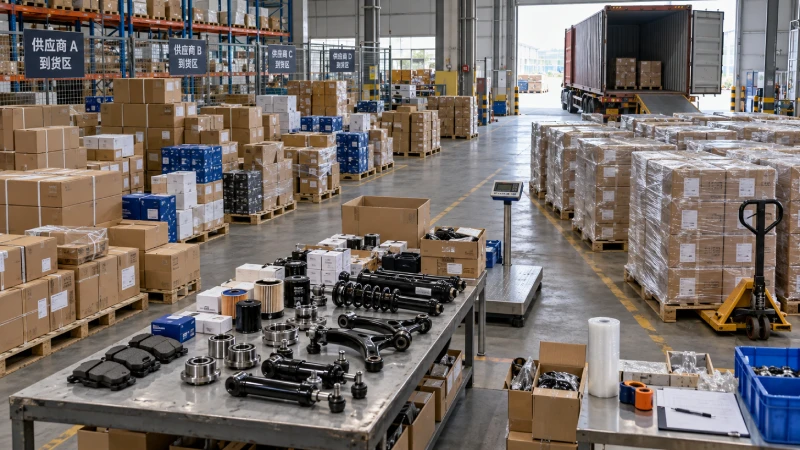
What Each Supplier Should Provide Before Pickup
Before cargo collection, ask every supplier for:
- commercial invoice
- packing list
- pickup address
- contact person
- cargo-ready date
- carton count
- gross weight
- carton dimensions
- product list
- part numbers where available
- confirmation of new or used condition
- confirmation of batteries, liquids, gases or inflators
- SDS or battery documentation where relevant
Do not wait until the cargo reaches the warehouse to ask whether batteries are inside.
What Should Be Checked at the Consolidation Warehouse
Once cargo arrives, useful operational checks may include:
- Confirm supplier and shipment reference.
- Count cartons or pallets.
- Compare quantities against the supplier packing list.
- Check visible carton damage.
- Measure final packed dimensions.
- Confirm gross weight.
- Verify shipping marks and labels.
- Identify obvious compliance-sensitive products.
- Repack or palletize where required and agreed.
- Build a consolidated packing list.
- Separate cargo that cannot use the same transport arrangement.
- Finalize the LCL, FCL or air booking.
The precise scope of warehouse checking should always be agreed before cargo pickup. A freight warehouse inspection is not automatically a product-quality inspection.
Do Not Hide Sensitive Parts Inside General Cargo
Suppose three suppliers send ordinary brake and suspension components and a fourth supplier adds ten lithium battery packs.
The shipment is no longer simply:
“mixed auto parts — general cargo.”
Battery classification, packing, documentation and carrier acceptance must be reviewed.
The same principle applies to airbags, certain liquids and other dangerous goods.
Pro Tip: Ask suppliers to identify batteries, lubricants, aerosols, inflators and other potentially regulated components before collection. Discovering them after the freight has already been booked can require new documentation, new packing or an entirely different booking.
Kenya Import Requirements to Check Before the Parts Leave China
Customs and standards preparation should not start when the vessel reaches Mombasa.
Several important requirements need attention while the goods are still in China.
The exact requirements depend on the product, but the following areas should normally be checked.
Certificate of Origin
Kenya Revenue Authority introduced a general mandatory Certificate of Origin requirement under Section 44A of the Tax Procedures Act.
The requirement took effect in 2025, with full enforcement beginning from October 1, 2025, subject to stated exceptions and provisional arrangements. Kenya Revenue Authority
For a normal shipment of new automotive components from China, the importer should therefore confirm the Certificate of Origin arrangement with the supplier before shipment.
KRA’s notice states that in exceptional circumstances where a COO is unavailable, certain alternative export-origin documents may be considered subject to Customs verification and approval. However, this should not be used as a reason to ignore COO preparation.
The safest operational approach is:
confirm the COO before the cargo is dispatched.
KRA’s notice also lists certain exceptions, including used goods. For a particular used-parts shipment, the importer should confirm how the relevant exception applies rather than assuming it automatically covers every situation.
KEBS PVoC and Certificate of Conformity
The Kenya Bureau of Standards operates the Pre-Export Verification of Conformity program to assess imported products against applicable Kenyan technical regulations, mandatory standards or approved specifications before shipment.
KEBS states that importers should ensure suppliers understand the applicable Kenya requirements and that goods subject to PVoC are accompanied by the appropriate Certificate of Conformity. Kenya Bureau of Standards
KEBS’s current PVoC information lists China within the general-goods inspection zone and identifies appointed inspection organizations serving that zone.
However, the important question is not simply:
“Are auto parts under PVoC?”
The better question is:
“What exactly is the product, which Kenya standard applies and what conformity procedure applies to this shipment?”
A brake pad, battery, filter and lubricant should not automatically be treated as one regulatory category.
For regulated goods, the supplier may need to coordinate testing, inspection or certification before shipment.
Do not ship first and assume conformity documentation can always be fixed at Mombasa.
Import Standardization Mark
KRA’s import guidance lists an Import Standardization Mark among the documents or requirements that may apply to imported goods. Kenya Revenue Authority
Whether it applies to the actual automotive product should be checked using the final product classification and KEBS requirements.
Import Declaration and Local Clearing Agent
KRA states that an importer needs to engage a licensed customs clearing agent to process import documentation and assist with customs clearance.
Import documentation may include, depending on the shipment:
- commercial invoice
- packing list
- Import Declaration Form
- customs entry
- Bill of Lading or Air Waybill
- Certificate of Origin
- CoC for regulated products
- permits or licences for restricted products
- freight invoice for sea cargo
- purchase documentation
- other commodity-specific approvals
The Kenya importer and local clearing agent should review the product list before departure, especially for mixed-SKU shipments.
2026 Update: Advance Cargo Declaration for Containerised Cargo
This is now an important planning step for sea freight to Kenya.
KRA launched the Advance Cargo Declaration platform for containerised cargo destined for Kenyan ports on August 3, 2026.
The exporter or shipper must obtain the ACD reference at the port of loading before the cargo is loaded.
KRA currently lists the required submission documents as:
- draft Bill of Lading
- commercial invoice
- freight invoice
- export declaration
Once approved, the ACD reference is endorsed on the Bill of Lading. Kenya Revenue Authority
For an auto-parts container shipment, this means the exporter, importer and freight team should align the cargo description and shipping documents before final loading.
An invoice saying one thing while the export declaration or draft B/L uses an inconsistent description can create avoidable correction work.
Pro Tip: Prepare ACD data while the container shipment is being finalized in China—not after the container has already sailed.
Kenya Auto Parts Compliance Checklist
| Item | Typical status | When to check |
|---|---|---|
| Detailed commercial invoice | Core shipment document | Before booking |
| Packing list | Core shipment document | Before booking |
| HS classification | Customs requirement | Before customs declaration |
| Certificate of Origin | General import requirement, subject to exceptions | Before shipment |
| PVoC / CoC | Product-dependent | Before shipment |
| ISM | Where applicable | Import process |
| ACD | Applicable containerised Kenya-port shipment | Before loading |
| DG documentation | Product-dependent | Before carrier booking |
| Local permits/licences | Product-dependent | Before import |
Check My Kenya Import Requirements before cargo leaves China if the shipment contains multiple product types or regulated components.
New and Used Auto Parts Should Not Follow the Same Compliance Assumptions
One of the biggest mistakes an importer can make is assuming that used parts follow exactly the same route as new replacement parts.
They may not.
KEBS has a dedicated framework for conformity assessment of used vehicles, mobile equipment and used vehicle spare parts.
A 2026 KEBS tender document states that used spare parts covered by the program undergo inspection against applicable standards and that conformity is assessed before shipment in specified exporting countries. Kenya Bureau of Standards
New Replacement Parts
For new parts, the workflow typically starts with:
- accurate identification
- HS classification
- applicable KEBS standards
- PVoC/CoC screening
- freight classification
- normal customs documentation
The product itself determines whether additional licences or transport requirements are involved.
Used Parts Require an Additional Compliance Check
The current KEBS documentation reviewed for used motor vehicles, mobile equipment and used spare parts lists specific countries where that dedicated certification service is provided.
China is not included in the country list shown in the 2026 used-spare-parts tender document reviewed for this guide.
That does not justify assuming that used parts from China are automatically prohibited.
It does mean the correct inspection and import pathway should be confirmed directly with KEBS before the importer pays the supplier or commits the cargo to shipment.
For used parts from China, confirm:
- whether the product is eligible for import
- which Kenya standard applies
- whether pre-export inspection is available
- which inspection route applies to China-origin cargo
- required evidence of condition or conformity
- documentation required at import
If that process is unclear, do not solve it by declaring used goods as new.
Verify Used-Part Eligibility Before Supplier Payment
The safest sequence is:
Identify product → verify Kenya eligibility → confirm inspection route → agree supplier terms → arrange freight.
Not:
Buy product → load container → ask whether it can be cleared.
For a wholesaler buying a large quantity of used automotive components, this check should happen before paying a non-refundable balance to the Chinese supplier.
Review My Cargo Before Shipping if the order includes used components or the applicable inspection route is unclear.
Batteries, Lubricants, Airbags and Other Sensitive Automotive Components
Some parts require more attention because the commodity itself affects transportation or import control.
Four categories deserve particular scrutiny.
Automotive Batteries
Do not describe a battery shipment simply as:
“car spare parts.”
At minimum, determine:
- battery chemistry
- battery type
- model
- voltage
- capacity
- whether the battery is shipped alone or with equipment
- whether it is new, used or damaged
Different batteries involve different transport requirements.
Lithium Batteries
Lithium batteries are regulated as dangerous goods for air transport.
IATA states that applicable requirements can include UN testing, packaging limits, suitable packaging, marks, labels and documentation. International Air Transport Association
Depending on the shipment, information requested before an air-freight booking may include:
- battery model
- chemistry
- Watt-hour rating
- UN38.3 evidence where applicable
- SDS
- packing configuration
- quantity per package
Airline acceptance also matters. Meeting a general regulatory framework does not guarantee that every airline will accept every battery shipment.
Lead-Acid Starter Batteries
Lead-acid starter batteries are also a distinct automotive product category and should be declared accurately rather than hidden within a general spare-parts description.
KEBS maintains standards relating to lead-acid starter batteries, reinforcing the need to check product-specific conformity requirements. Kenya Bureau of Standards
For wet, filled or used batteries, transportation and handling requirements may differ further.
Damaged or waste batteries should never be assumed to follow the same process as new starter batteries.
Lubricants, Engine Oils and Other Automotive Liquids
Lubricants should also be separated from ordinary mechanical components during shipment planning.
Kenya’s Energy and Petroleum Regulatory Authority publishes a dedicated licence category for the import of lubricants. Energy and Petroleum Regulatory Authority
This means the importer should verify local licensing requirements rather than treating lubricants as ordinary boxed accessories.
Transport classification is a separate question.
Not every lubricant is dangerous goods.
The freight forwarder may need the manufacturer’s SDS to check characteristics such as:
- composition
- flash point
- hazard classification
- packing requirements
Therefore two checks are required:
- Can the product legally be imported under the importer’s Kenya arrangements?
- Is it regulated as dangerous goods for the selected transport mode?
Those are not the same question.
Airbags, Inflators and Seatbelt Pretensioners
Airbag systems deserve special attention because the inflator may contain a pyrotechnic or gas-generating device.
Certain safety devices can fall under dangerous-goods transport classifications.
The exact classification depends on the manufacturer’s product and transport documentation.
Do not assume:
“all airbags use the same UN number.”
Instead, ask the supplier or manufacturer for:
- transport classification
- SDS or relevant safety documentation
- proper shipping name where applicable
- UN number where applicable
- packing information
Only then should the freight booking be finalized.
Used or Damaged Sensitive Components
Exercise additional caution with:
- damaged batteries
- used batteries
- waste oil
- contaminated components
- scrap electrical parts
- damaged safety devices
A product sold as a “spare part” can potentially become regulated as waste or hazardous material depending on its condition.
Those cargoes require separate review before shipping.
Sensitive Auto Parts Screening
| Product | What to disclose | What must be checked |
|---|---|---|
| Lithium batteries | Chemistry, Wh rating, quantity, condition | UN testing, DG packing, airline/carrier acceptance |
| Starter batteries | Chemistry, wet/dry condition, new/used | Transport + KEBS requirements |
| Lubricants | Product name, quantity, SDS | Import licensing + DG status |
| Airbags/inflators | Manufacturer transport data | DG classification and carrier acceptance |
| Used/damaged parts | Condition and intended use | Import eligibility + inspection route |
Mombasa or Nairobi: Where Should the Auto Parts Go?
For sea freight, Mombasa is Kenya’s main ocean gateway.
For Nairobi-based importers, however, the operational destination does not necessarily end at the Port of Mombasa.
Kenya Ports Authority operates inland container depots and states that imports can move from Mombasa to inland depots under appropriate transport and Bill of Lading arrangements.
Nairobi ICD is connected to Mombasa by rail infrastructure and handles both containerised and loose cargo. Kenya Ports Authority
Delivery Around Mombasa
Mombasa-based clearance and delivery may make sense when:
- the importer is based on the coast
- the warehouse is near Mombasa
- customers are located in the coastal region
- the shipment’s customs and delivery plan is already arranged around Mombasa
The clearing agent should confirm local clearance procedures and destination charges before vessel arrival.
Nairobi and Nairobi ICD
For a Nairobi importer, container routing may involve movement inland depending on:
- carrier arrangements
- Bill of Lading
- merchant haulage or through-routing arrangements
- customs plan
- container type
- final warehouse location
This should be agreed before shipment because changing the intended destination after documentation has been finalized can create extra work and cost.
If your warehouse is in Nairobi, tell the freight forwarder at the quotation stage.
Do not simply request:
“Sea freight to Kenya.”
Specify the actual required delivery point.
For example:
“40ft container from Shenzhen supplier to our warehouse in Industrial Area, Nairobi.”
That produces a much more useful logistics discussion.
Air Cargo to Nairobi
For urgent parts, air freight normally avoids the ocean and inland-container routing decision entirely.
However, air freight still requires:
- Kenya import documentation
- customs clearance
- applicable conformity documentation
- dangerous-goods compliance where relevant
- final local delivery
The advantage of air freight is speed—not exemption from import requirements.
Check My Mombasa-to-Nairobi Route if the final warehouse is inland and you need to compare port clearance with onward delivery arrangements.
What to Send for an Accurate Auto Parts Freight Quote
The quality of a freight quote depends on the quality of the cargo information.
A message saying:
“Please quote 5 CBM car parts to Kenya.”
may produce only a preliminary estimate.
A useful quotation request should include the following.
Cargo Information
Send:
- detailed product names
- OEM or part numbers where available
- new or used condition
- quantity
- number of cartons or pallets
- gross weight
- carton dimensions
- total CBM
- cargo value
For mixed shipments, attach the supplier packing list rather than typing dozens of products into a message.
Declare Sensitive Products Clearly
State whether the shipment contains:
- lithium batteries
- lead-acid batteries
- lubricants
- engine oils
- other liquids
- aerosols
- airbags
- inflators
- seatbelt pretensioners
- other dangerous goods
- damaged products
- used products
Do not wait for the forwarder to discover these during warehouse receiving.
Supplier Information
Provide:
- supplier name
- pickup address
- pickup city
- contact person
- cargo-ready date
- number of suppliers
- supplier Incoterm
If cargo will come from three or four factories, state that from the beginning so the quotation can include consolidation planning.
Kenya Destination
Specify:
- Mombasa
- Nairobi
- another Kenya city
- port/airport only
- customs clearance required or arranged separately
- warehouse delivery required or not
- local clearing agent already appointed or not
“Kenya” alone is not a final delivery address.
Documents Already Available
If available, send:
- commercial invoice
- packing list
- proposed HS codes
- Certificate of Origin status
- CoC/PVoC information
- SDS
- battery specification sheet
- UN38.3 documentation
- dangerous-goods declaration data
- importer permits
This allows potential problems to be identified before they become shipment delays.
Auto Parts Quote Checklist
Before requesting the final rate, try to have:
- Product list
- New/used condition
- Carton or pallet quantity
- Dimensions
- Gross weight
- Supplier pickup addresses
- Cargo-ready date
- Sensitive goods identified
- Kenya destination
- Shipping method preference, if any
- Import/compliance documents available
Send Cargo Details
For a practical shipment review, send the supplier packing list, cargo dimensions, gross weight, pickup location and Kenya destination together with details of any batteries, liquids, airbags or used components.
Pre-Shipment Checklist for Auto Parts Going to Kenya
Before authorizing your supplier to dispatch the cargo, work through this checklist.
Product Identification
- Each major product is described specifically.
- The invoice does not rely only on “auto parts.”
- Part numbers are included where useful.
- New and used goods are clearly separated.
- Quantities match the packing list.
Customs
- Proposed HS classifications have been reviewed.
- The importer understands that different components may have different tariff codes.
- The Kenya clearing agent has received the parts list where necessary.
- Duty and tax assumptions are based on actual classification rather than one generic “auto parts” rate.
KEBS and Product Compliance
- PVoC applicability has been checked.
- Relevant Kenya standards have been identified where necessary.
- CoC arrangements have been confirmed where applicable.
- Used-parts eligibility has been verified separately.
Dangerous Goods
- Batteries have been identified by chemistry.
- Lithium battery documents are available where relevant.
- Lubricant SDS documents have been reviewed.
- Airbag/inflator transport classification has been checked.
- No supplier has hidden dangerous goods inside general-cargo cartons.
Documentation
- Commercial invoice is complete.
- Packing list matches the cargo.
- Certificate of Origin arrangements are ready where required.
- Bill of Lading or Air Waybill information is accurate.
- Export documentation is available.
- Permit or licence requirements have been addressed.
Containerised Sea Freight
- Draft B/L information is ready.
- Freight invoice is available.
- Export declaration is available.
- ACD submission has been planned before loading.
- Final ACD reference will be reflected on the shipping documentation as required.
Destination
- Port/airport destination is confirmed.
- Mombasa or Nairobi routing is clear.
- Local clearing-agent responsibilities are defined.
- Inland delivery scope is understood.
The key principle is simple:
Do not load the cargo first and try to solve classification, conformity or dangerous-goods questions afterward.
Common Mistakes When Shipping Auto Parts From China to Kenya
Even experienced importers can create unnecessary problems by treating spare parts as one simple commodity.
Using “Auto Parts” for Every Invoice Line
This hides the information needed for accurate classification and compliance checking.
Use meaningful product descriptions instead.
Assuming Everything Falls Under HS 8708
Automotive use does not determine HS classification on its own.
The product’s function, construction and tariff wording matter.
Kenya applies the EAC Harmonised System framework, under which products are classified through chapters, headings and subheadings. Kenya Revenue Authority
Booking Freight Before Checking Batteries or Airbags
A general-cargo booking may no longer be valid when dangerous goods are identified.
Check first.
Book second.
Treating Used Parts Like New Parts
Used components can have different standards and inspection implications.
For China-origin used parts, confirm the current KEBS route before purchasing or shipping.
Waiting Until Mombasa to Think About KEBS
PVoC is specifically designed around conformity assessment in the exporting country for goods within its scope. Kenya Bureau of Standards
A destination problem can be much harder to solve than a pre-shipment question in China.
Comparing Freight Rates Without Comparing Scope
Two quotations may appear to differ significantly because one covers:
China pickup → Mombasa
while another covers:
China pickup → consolidation → ocean freight → Kenya destination charges → inland delivery to Nairobi
Always compare the same service scope.
FAQ
What is the best way to ship auto parts from China to Kenya?
There is no single best method. LCL may suit smaller commercial shipments, while FCL can work better for larger inventories or cargo that benefits from reduced handling. Air freight is useful for urgent, compact or higher-value parts, while express services may work for samples or small replacement orders. The correct method depends on the final volume, gross weight, urgency, packaging, destination and whether batteries, liquids, airbags or other regulated goods are included.
Do all auto parts use HS code 8708 in Kenya?
No. The fact that a product is used in a vehicle does not automatically place it under HS heading 8708. Automotive filters, batteries, electrical and ignition components, and other products can fall under different HS chapters or headings. Mixed shipments should therefore be reviewed by product or SKU rather than declared under one generic auto-parts code.
Do auto parts from China need KEBS PVoC and a Certificate of Conformity?
The exact requirement depends on the product. KEBS operates the PVoC program to assess imported products against applicable Kenya standards or approved specifications before shipment. Importers should verify the requirements for each specific component rather than assuming every automotive part follows the same conformity procedure.
Can I ship car batteries from China to Kenya by air?
Potentially, but battery chemistry and configuration must be checked first. Lithium batteries are regulated dangerous goods for air transport, and applicable testing, packing, marking, labelling, documentation and airline acceptance requirements must be confirmed before booking.
Can airbags be shipped with normal auto parts?
Do not assume they can. Airbag modules and inflator assemblies may contain devices subject to dangerous-goods transport rules. The manufacturer should provide the transport classification before the parts are included in a general auto-parts booking.
Can used auto parts be imported from China into Kenya?
Used parts need additional verification. KEBS maintains a dedicated conformity framework for used vehicle spare parts, but the current inspection route for China-origin used spare parts should be confirmed directly with KEBS and the Kenya clearing agent before purchase or shipment.
What documents should my Chinese supplier prepare for a Kenya auto-parts shipment?
Depending on the product and shipping method, documents may include the commercial invoice, packing list, Certificate of Origin, export declaration, Bill of Lading or Air Waybill data, PVoC/CoC documentation where applicable, SDS or battery documents for sensitive cargo, and other product-specific certificates or permits. Containerised sea cargo also requires the information needed for Kenya's current ACD process before loading.
Plan the Cargo Before It Leaves China
Shipping auto parts from China to Kenya becomes much easier when the shipment is treated as a collection of specific products rather than one generic commodity.
The practical sequence should be:
Identify the parts → classify the products → check new/used status → screen batteries, liquids and airbags → review KEBS requirements → confirm documents → choose LCL, FCL or air → consolidate suppliers → complete China-side export and ACD preparation → ship → coordinate Kenya clearance and inland delivery.
The most expensive mistakes often begin earlier than the port.
They happen when:
- suppliers use vague product descriptions
- sensitive products are not disclosed
- used goods are purchased before import eligibility is checked
- conformity requirements are reviewed too late
- the wrong freight method is booked
- shipping documents do not match the actual cargo
If you already have supplier quotations or packing lists, the fastest way to build a realistic shipment plan is to start with the real cargo data.
Send:
- supplier locations
- detailed parts list
- carton or pallet quantity
- dimensions
- gross weight
- new/used condition
- batteries, lubricants or airbags if included
- final destination in Kenya
From there, the shipment can be reviewed as an actual China-to-Kenya logistics project rather than a generic “auto parts” enquiry.
Regulatory Note: Kenya customs requirements, standards, carrier acceptance policies and product controls can change. Importers should verify product-specific requirements using the exact cargo description, HS classification and current official guidance before shipment.
For a broader overview of sea freight, air freight, customs, shipping times and destination options, see Shipping from China to Kenya.
