

Abuja has no seaport, so container cargo from China needs two transport decisions rather than one: which Nigerian maritime gateway to use, and how to move the released cargo inland to the Federal Capital Territory (FCT).
For most commercial sea freight, the practical route is:
China → Nigerian seaport → customs and cargo release → inland transport → Abuja
For urgent or higher-value shipments, air freight can be routed through Nnamdi Azikiwe International Airport (ABV) or, when the available airline connection makes more commercial sense, through another Nigerian air gateway followed by inland transfer.
The Federal Airports Authority of Nigeria identifies Nnamdi Azikiwe International Airport as the international airport serving Abuja. However, an international airport designation does not mean direct cargo capacity from every Chinese airport is continuously available. Airline routing, connection points, aircraft capacity and local cargo handling still need to be confirmed for each shipment.
For a broader overview of the full country route, see Shipping from China to Nigeria.
For Abuja importers, the important question is therefore not simply, “What is the freight rate from China to Nigeria?” It is:
Which combination of international transport, customs clearance and inland delivery gives the best total cost, lead time and operational reliability to the final Abuja address?
Last reviewed: October 2026. Gateway, rail, airline and inland-delivery arrangements should always be reconfirmed against live schedules and operating conditions before booking.
China to Abuja Route Options at a Glance
There are four main ways to plan China-to-Abuja freight.
| Route | Best For | Main Advantage | Main Constraint |
|---|---|---|---|
| China → Lagos-area port → road → Abuja | FCL, LCL and general commercial cargo | Broad ocean carrier choice | Long inland road movement after release |
| China → Apapa → inland multimodal segment → road → Abuja | Suitable container flows | Can reduce dependence on the first road section | Rail schedule, terminal and onward-truck coordination |
| China → ABV through available airline routing | Urgent, valuable or time-sensitive cargo | Faster international main leg | Airfreight cost and cargo-space availability |
| China → express network → Abuja | Documents, samples and small urgent parcels | Simple handling for small shipments | Expensive for larger commercial cargo |
There is no single best route for every shipment.
A 40-foot container of construction materials, a 300 kg shipment of medical equipment and a 25 kg box of urgent replacement parts should not be routed in the same way.
The right plan depends on the cargo’s volume, gross weight, value, urgency, delivery address, customs requirements and project deadline. Importers still comparing the basic transport modes can also review Best Shipping Methods from China to Nigeria.
Why Abuja Container Cargo Must Enter Through a Seaport First
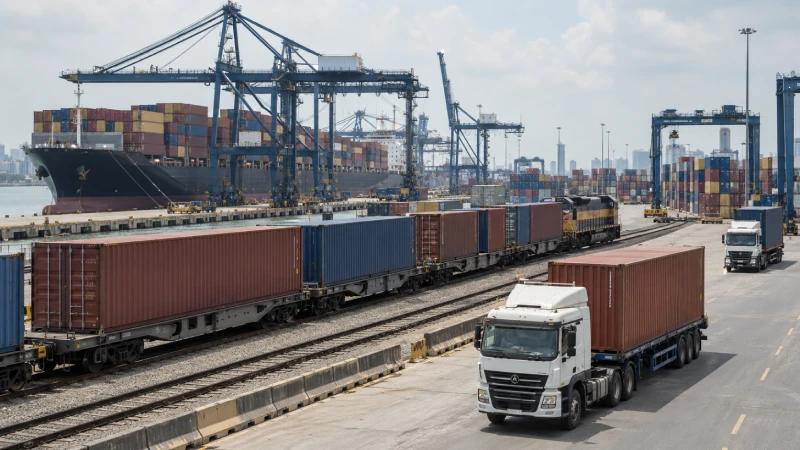
Abuja is an inland city. It has no maritime container terminal where an international container vessel can discharge cargo.
That means sea freight to Abuja is actually a combined ocean-and-inland movement:
China factory or warehouse → Chinese export gateway → ocean freight → Nigerian seaport → customs and terminal release → inland transport → Abuja warehouse, project site or consignee
The Nigerian Ports Authority lists Lagos Port Complex, Tin Can Island Port Complex, Lekki Deep Sea Port and Onne Port Complex among Nigeria’s major ports. The choice of port therefore affects much more than the ocean freight rate.
It can change:
- inland trucking cost;
- terminal handling;
- customs-agent coordination;
- equipment availability;
- empty-container return;
- total delivery time;
- and the risk of destination charges or delays.
For more detail on the ocean leg itself, see Sea Freight from China to Nigeria.
For air cargo, the structure is different:
China → airline hub if required → ABV or another suitable Nigerian air gateway → customs release → local delivery to Abuja
Both ocean and air routes should be evaluated as complete supply chains rather than as isolated international freight legs.
Which Seaport Should Abuja Cargo Use?
For many China-to-Abuja shipments, the comparison begins with the Lagos-area ports: Apapa, Tin Can and Lekki.
Onne can also be considered when the actual vessel service, cargo profile and total inland economics support it, but it should not automatically be treated as the preferred gateway simply because Abuja lies inland.
Apapa
Lagos Port Complex at Apapa is one of Nigeria’s major container gateways and has road, water and rail connectivity.
For Abuja-bound containers, the available inland connections make Apapa worth comparing when the current service schedule matches the shipment.
Tin Can Island
Tin Can Island Port handles diversified cargo, including containerized cargo and RoRo traffic.
It can be commercially suitable when the selected shipping line, terminal, ocean rate and inland trucking arrangement produce a better overall result than the alternatives.
Lekki
Lekki Deep Sea Port is another Lagos-area maritime gateway.
For an Abuja importer, however, the fact that a vessel can call Lekki does not by itself make it the best option. The inland leg, container-return terms, customs setup, terminal process and carrier service must still be considered.
Onne
Onne Port Complex handles containerized, general, bulk and project-related cargo.
It should be evaluated for Abuja only when the complete route makes commercial sense—for example, because of a specific carrier schedule, cargo requirement or advantageous ocean-and-inland combination.
Apapa is not automatically best, and Onne is not automatically wrong. Total landed logistics is what matters.
Abuja Gateway Decision Table
| Gateway | Carrier Availability | Inland Connection | Best Cargo Profile | Empty Return Issue | What to Confirm |
|---|---|---|---|---|---|
| Apapa | Check current China service | Road; rail option to Moniya/Ibadan for suitable flows | FCL and general containers | Confirm depot or inland return arrangement | Vessel schedule, terminal, rail/truck plan |
| Tin Can | Check selected carrier | Primarily road for Abuja planning | Containers, RoRo and general cargo depending on terminal | Confirm nominated empty depot | Ocean rate, terminal and inland trucking |
| Lekki | Check selected carrier | Road | Containers where Lekki service is commercially competitive | Can materially affect inland economics | Line service, release process and return depot |
| Onne | Shipment-specific | Road or other confirmed inland arrangement | Selected project, industrial or carrier-specific cargo | Must be included in total route costing | Ocean advantage versus inland complexity |
Apapa’s Multimodal Options Can Matter for Inland Cargo
One useful Abuja planning option is the standard-gauge container service between APM Terminals Apapa and Moniya, Ibadan.
APM Terminals currently describes the service as handling 20-foot and 40-foot containers between Lagos and Ibadan and as useful for customers moving cargo inland and toward northern markets.
That creates two possible inland concepts for an Abuja-bound FCL:
Option A: Apapa → direct long-haul truck → Abuja
Option B: Apapa → rail to Moniya/Ibadan → truck → Abuja
Option B should not be described as a direct railway service from Apapa to Abuja. Abuja still requires an onward inland solution after the rail segment.
| Inland Plan | Potential Benefit | What Must Be Checked |
|---|---|---|
| Apapa → truck → Abuja | Fewer handovers and simpler coordination | Truck availability, road conditions, return depot and delivery window |
| Apapa → Moniya by rail → truck → Abuja | Reduces road exposure on the Lagos-Ibadan portion | Rail schedule, cargo-release status, Moniya handling and onward truck |
| Alternative gateway → road → Abuja | May suit a particular carrier or cargo | Complete ocean, terminal and trucking cost |
The multimodal option must be checked against the actual shipment. Rail availability, terminal procedures, cargo status, onward trucking and the total cost all matter.
Most importantly, a multimodal plan does not mean an uncleared import container can automatically leave the port. The applicable customs and cargo-release arrangement must be confirmed before inland movement.
Air Freight from China to Abuja
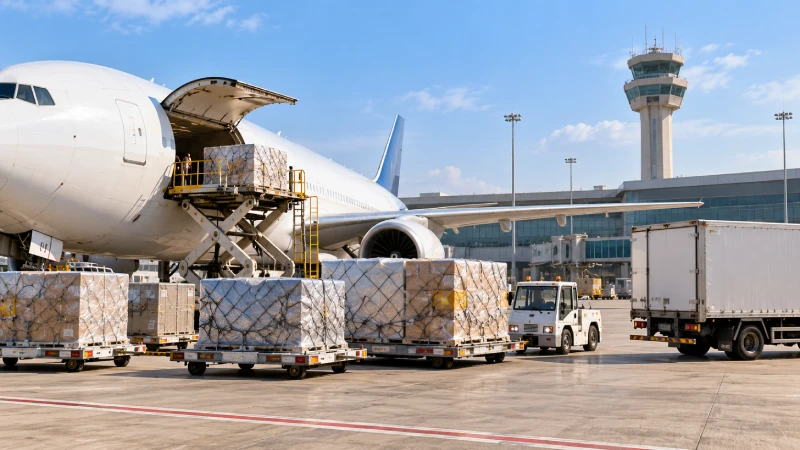
Air freight is often the stronger option when a shipment cannot wait for an ocean sailing, port handling, customs clearance and long-distance inland delivery.
Nnamdi Azikiwe International Airport is Abuja’s international airport. Commercial cargo handling is available in Abuja, but the air route should still be quoted using the actual shipment details rather than assuming a fixed direct China-to-ABV service.
A booking requires confirmation of:
- origin airport in China;
- airline and connection routing;
- available cargo capacity;
- aircraft restrictions;
- chargeable weight;
- commodity acceptance;
- dangerous-goods status where applicable;
- destination cargo handler;
- customs documentation;
- and final Abuja delivery address.
Airlines generally price freight using chargeable weight, so a lightweight but bulky shipment can cost more than its scale weight suggests.
For this reason, provide packed dimensions as well as gross weight before comparing air and sea. For more detail on Nigeria air-cargo planning, see Air Freight from China to Nigeria.
ABV Is Not Automatically Better Than LOS
For urgent freight, the comparison may need to include:
China → ABV → Abuja delivery
versus:
China → LOS → clearance → domestic or inland transfer → Abuja
ABV is physically closer to the final Abuja consignee, but the closest airport is not necessarily the most efficient cargo gateway.
A routing through Lagos can sometimes provide better capacity, schedules or pricing. Conversely, ABV can avoid a substantial inland transfer when the airline route and cargo handling work well.
Pro Tip: For urgent cargo, compare air freight to ABV with an LOS-based alternative. The nominally closest airport is not automatically the fastest or cheapest cargo routing.
When Sea + Inland Delivery Beats Air
There is no reliable rule such as “anything above X kg must move by sea.”
The cargo itself should determine the mode.
| Shipment Factor | Sea + Inland Usually Gains Advantage When… | Air Usually Gains Advantage When… |
|---|---|---|
| Volume | Cargo occupies several CBM or a substantial container share | Shipment is compact |
| Weight | Cargo is heavy relative to its value | Weight remains commercially acceptable for air |
| Cargo value | Freight cost must be minimized | Inventory value justifies faster transport |
| Urgency | Buyer has sufficient stock or project buffer | Stockout or downtime is imminent |
| Project schedule | Delivery date allows port and inland stages | Missing a deadline carries a high penalty |
| Product type | Machinery, building materials or bulk commercial goods | Electronics, medical equipment or urgent spares |
A good China-to-Abuja freight plan compares the cost of transport with the cost of being late.
Airfreighting a complete low-value construction shipment may make little sense. Airfreighting one critical component that is stopping equipment or delaying a project can be entirely rational.
Small urgent parcels and samples may also be better suited to Express Shipping from China to Nigeria than to a conventional airport-to-airport airfreight shipment.
Customs Clearance: At the Gateway or Inland?
Abuja may be the commercial destination, but it is not automatically the customs point where imported sea cargo is cleared.
For a standard sea-freight movement, cargo is processed according to the agreed Nigerian customs and terminal procedure at the entry gateway before unrestricted inland delivery.
Nigeria’s import process can involve documentation and customs steps such as Form M, PAAR, declaration, assessment and release, depending on the shipment.
For a practical overview of the broader process, see Customs Clearance in Nigeria.
If goods are intended to move from one customs-controlled location to another before final clearance, that movement cannot simply be assumed.
The correct customs, bonded or transit arrangement must be confirmed by the Nigerian broker and relevant parties before the cargo moves.
Normal scenario: gateway clearance → cargo release → inland delivery.
Special customs-controlled movement: only where the appropriate transit or bonded procedure is properly arranged and approved.
Important: Do not plan an Abuja shipment on the assumption that an uncleared import container can simply be collected from a Lagos terminal and driven to Abuja. The Nigerian customs broker must confirm the applicable clearance or transit structure before movement.
Customs requirements also vary by commodity. Regulated goods can require additional permits, certificates or agency approvals, so product details should be checked before the shipment leaves China.
FCL vs LCL for Abuja
FCL: Full Container Load
FCL can be efficient for larger Abuja shipments because the importer has a dedicated container.
After release, the inland movement may look like:
port → Abuja site → unloading → empty-container return
That final stage matters.
Shipping-line equipment normally has to be returned according to the carrier’s instructions. For an inland city such as Abuja, the empty return can materially affect the trucking rate.
Pro Tip: For FCL to Abuja, price the empty-container return at the same time as the loaded inland move. A cheap outbound truck rate can become expensive if the empty equipment movement has not been included.
Do not automatically promise that the original container will remain sealed all the way from discharge to the Abuja warehouse. Customs examinations, terminal procedures, security requirements or other operational processes can affect the seal status.
For full-container planning, see FCL Shipping from China.
LCL: Less than Container Load
LCL works differently.
The goods share container space with other importers’ cargo, so the consolidated container normally has to reach the appropriate destination facility and be deconsolidated before the Abuja inland leg can be arranged.
The Abuja movement will therefore usually involve loose cargo rather than an intact international container.
LCL can involve:
- destination deconsolidation;
- warehouse or CFS handling;
- cargo release;
- additional handling;
- inland truck loading;
- and final unloading in Abuja.
For smaller commercial shipments, this can still be much more economical than paying for a full container.
The key is to compare the complete destination cost—not only the China-to-Nigeria ocean rate. For more detail on consolidation, see LCL Consolidation Services from China.
Abuja Final Delivery Planning
A shipment is not complete when it reaches Abuja city limits.
The final delivery plan should be built around the actual consignee location.
Before arranging trucking, provide:
- full delivery address;
- district or industrial area;
- consignee contact;
- available receiving hours;
- truck-access conditions;
- gate or security requirements;
- required delivery appointment;
- forklift or crane availability;
- loading-dock details;
- and any site-specific unloading rules.
This becomes especially important for industrial machinery, construction equipment and institutional projects.
Idu Industrial Area, for example, is recognized in Nigerian investment documentation as an Abuja manufacturing cluster. It is a useful freight-planning example because an industrial delivery can require a different truck, unloading arrangement and access plan from a smaller commercial delivery elsewhere in the FCT.
Winsail therefore needs the actual Abuja delivery address, not simply “Abuja, Nigeria,” when preparing an inland-delivery plan.
For customers who want pickup, international freight and final delivery coordinated as one chain, see Door-to-Door Shipping from China.
Cargo-Specific Considerations for Abuja
Construction Equipment and Materials
Heavy or bulky products usually favor sea freight, especially when several containers or oversized pieces are involved.
Confirm the required container or special equipment, lifting requirements, final-site access, unloading equipment and delivery sequence before booking.
Institutional and Project Cargo
Government, contractor and institutional orders can have strict delivery windows.
Instead of selecting the lowest ocean rate automatically, work backward from the required site date and include customs and inland contingency.
IT and Electronics
High-value electronics can favor air freight when speed, security and inventory cost outweigh the freight premium.
Packaging should also withstand multiple handling points when the routing includes airline connections.
Medical Equipment
Time-sensitive equipment may justify airfreight to ABV, but the exact product classification and Nigerian regulatory requirements should be checked before departure.
Industrial Machinery
For heavy machinery, sea freight is normally the first comparison.
The Abuja delivery site should confirm truck access, lifting capacity and whether the machine can be unloaded directly from the container or delivery vehicle.
Urgent Spare Parts
Urgent spares are often where air freight provides the clearest business value.
If one component is stopping equipment or delaying a project, compare the airfreight cost with the financial impact of additional downtime.
Build Abuja Lead Time from Separate Stages
The biggest mistake when estimating China-to-Abuja transit time is to treat the vessel schedule to Lagos as the complete delivery time.
It is not.
A realistic lead-time model is:
China pickup + origin handling/export + ocean or air transport + Nigerian arrival handling + customs clearance + terminal or cargo release + inland movement + final-site delivery
For sea cargo, a carrier’s port-to-port transit estimate ends at the Nigerian maritime gateway. Abuja still requires the release and inland stages.
For air cargo, the international flight time is also only one component. Connection time, cargo breakdown, customs processing and final trucking have to be added.
For country-level benchmarks and the difference between port-to-port and total delivery time, see How Long Does It Take to Ship from China to Nigeria?.
Why We Do Not Promise a Fixed Lagos-to-Abuja Trucking Time
The inland leg depends on live operating conditions, including:
- container availability for collection;
- actual customs release time;
- terminal gate conditions;
- truck availability;
- vehicle type;
- road and traffic conditions;
- driver scheduling;
- security requirements;
- destination receiving hours;
- unloading time;
- and empty-equipment return arrangements.
A responsible quotation should therefore show a current inland estimate rather than permanently advertising a fixed Lagos-to-Abuja transit promise.
What an Abuja Door-to-Door Freight Plan Should Include
When comparing door-to-door shipping from China to Abuja, ask for the quotation to separate the major stages.
A useful commercial comparison should identify:
- pickup or factory delivery in China;
- China export handling;
- international sea or air freight;
- destination terminal or airport charges;
- customs-clearance scope;
- duties and taxes where applicable;
- deconsolidation for LCL if applicable;
- Lagos or other gateway-to-Abuja transport;
- FCT final delivery;
- unloading responsibility;
- empty-container return for FCL;
- excluded or variable charges.
This makes it easier to compare two offers that may initially look similar but include very different destination services.
Winsail Logistics handles shipments originating from China and can structure the international and inland route around the shipment’s cargo profile and Abuja delivery requirements.
Compare Abuja Route Options
For many Abuja shipments, the useful comparison is not simply air versus sea.
It may be:
Apapa + direct truck
versus
Apapa + Moniya rail + truck
or:
Lagos-area gateway A
versus
Lagos-area gateway B
or, for urgent cargo:
China → ABV
versus
China → LOS + inland transfer
The best option is the one that works across the complete journey.
To compare the available route options, prepare:
- pickup city in China;
- product description;
- number of packages;
- dimensions;
- gross weight;
- total CBM;
- cargo value;
- FCL or LCL requirement if known;
- target delivery date;
- and the full Abuja delivery address.
FAQ
Can goods ship by sea directly to Abuja?
No. Abuja is not a seaport. Sea cargo from China must first enter Nigeria through a maritime gateway, complete the applicable customs and release process, and then move inland to Abuja.
Which seaport should I use for cargo going to Abuja?
There is no port that is automatically best for every Abuja shipment. Apapa, Tin Can and Lekki are common comparison points, while Onne may make sense for selected routings. Compare ocean service, terminal handling, customs coordination, trucking and empty-container return together.
Can I ship air freight directly to Abuja?
Nnamdi Azikiwe International Airport serves Abuja and handles international traffic, but direct China-to-ABV cargo capacity should not be assumed. The airline, connection, available space and cargo acceptance must be checked for the shipment.
Is Lagos-to-Abuja trucking included in ocean freight?
Not unless the quotation specifically includes inland delivery. A basic ocean rate may cover only the international port-to-port movement, so confirm terminal charges, clearance scope, trucking, final delivery and any empty-container return.
Where is customs clearance completed for Abuja cargo?
For a standard sea shipment, cargo is normally processed under the applicable customs arrangement at the Nigerian entry gateway before normal inland delivery. Any customs-controlled inland movement requires a properly confirmed transit or bonded procedure.
Is LCL suitable for Abuja deliveries?
Yes. LCL can work well for smaller commercial shipments, but the consolidated container normally needs to be deconsolidated before the individual shipment moves inland. Include destination handling and Abuja trucking when comparing costs.
How do I return an empty container after delivery in Abuja?
The return arrangement depends on the shipping line, nominated empty depot, equipment terms and inland trucking plan. Confirm the return point and related trucking cost before dispatching the loaded container inland.
