
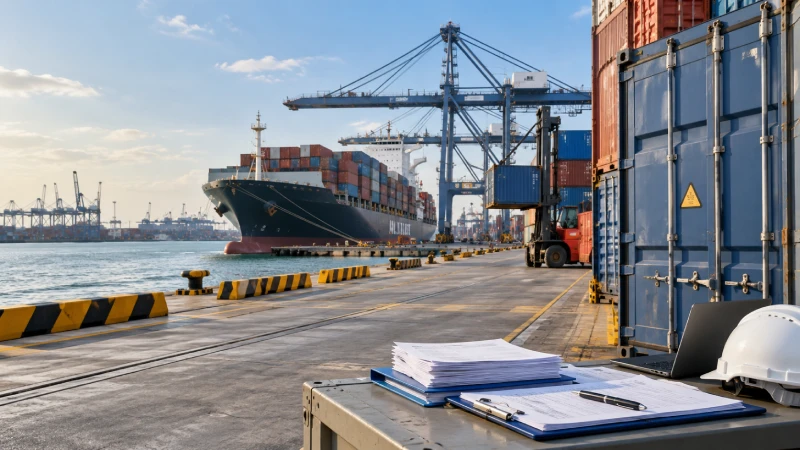
Shipping from China to Nigeria does not end when the vessel reaches Lagos or the aircraft lands at the airport.
Cargo arrival and customs-ready cargo are two different things.
For a commercial import to move efficiently, the importer should already have addressed product admissibility, importer registration, HS classification, Form M and regulatory requirements where applicable, shipment documents, and PAAR preparation before the cargo becomes available for clearance.
Nigeria Customs Service now describes its Unified Customs Management System, known as B’Odogwu, as the electronic environment for core customs procedures including Form M, PAAR, goods declaration, assessment and release. Nigeria’s National Single Window also provides trader and clearing-agent registration and supports broader trade-agency integration. Because these platforms and agency integrations continue to evolve, importers should confirm the current operational workflow for their shipment before cargo departure. Nigeria Customs Service
This guide explains the complete customs clearance process in Nigeria for imports from China—from pre-shipment preparation to declaration, assessment, examination, Customs release, terminal release and final delivery.
Important: Customs release cannot be guaranteed by a freight forwarder, shipping line or customs agent. Release remains subject to Customs requirements, regulatory approvals, payment, risk controls and shipment-specific compliance.
Also remember: An ocean freight or air freight quotation does not automatically include Nigerian import duty, taxes, regulatory certification, port charges or Customs release unless those items are expressly included.
Nigeria Customs Clearance Process at a Glance
For a normal commercial import, think of Nigerian clearance as a chain rather than a single event.
| Stage | What Happens | Main Responsible Parties | Possible Hold Point |
|---|---|---|---|
| 1. Product screening | Check HS code, prohibition, restriction and regulator | Importer, supplier, adviser | Product cannot legally enter or requires approval |
| 2. Importer readiness | Confirm TIN, trade registration and importer identity | Nigerian importer | Registration or identity mismatch |
| 3. Pre-shipment compliance | Complete Form M and product approvals where applicable | Importer, bank, regulator | Missing permit or certificate |
| 4. Shipment documentation | Finalize invoice, packing list and transport documents | Supplier, forwarder, importer | Document inconsistencies |
| 5. PAAR preparation | Submit required pre-arrival information | Importer/authorized representative | Missing or inconsistent documents |
| 6. Customs declaration | Declare classification, value, quantity and procedure | Declarant/authorized representative | HS code or data query |
| 7. Assessment and payment | Customs assesses applicable duties and taxes | NCS, importer | Valuation or payment issue |
| 8. Risk control/examination | Documentary review, scanning or physical examination where selected | NCS and relevant agencies | Examination or regulatory query |
| 9. Customs release | NCS authorizes release when Customs requirements are satisfied | NCS | Outstanding query or intervention |
| 10. Terminal/carrier release | Shipping line, airline, terminal or warehouse completes its release procedures | Carrier, terminal, importer | Charges or delivery-order issue |
| 11. Gate-out and delivery | Cargo leaves the port, terminal or cargo warehouse | Trucker, forwarder, consignee | Truck or gate delay |
The important point is that Customs release is only one part of cargo availability. A shipment may have completed its Customs requirements but still require carrier, terminal or warehouse procedures before it can physically leave the facility.
Step 1 — Confirm the Product Can Be Imported
Before discussing freight rates, confirm whether the product can legally enter Nigeria and what compliance path applies.
Nigeria Customs maintains tariff and import-control resources linked to HS classifications. Its tariff tools include an import-prohibition list, while the Nigeria Customs Service Act provides the legal framework for prohibited and restricted imports. Nigeria Customs Service CET
A practical screening sequence is:
Product identified accurately
↓
Determine likely HS classification
↓
Check whether the goods are prohibited
→ If prohibited: do not ship
↓
Check whether the goods are restricted or controlled
↓
Identify the responsible Nigerian regulator
↓
Determine whether SONCAP, NAFDAC approval, an import permit or another authorization applies
↓
Complete required pre-shipment compliance
↓
Book and dispatch cargo
Do not rely only on the product’s common commercial name.
“Machine,” “chemical,” “food equipment,” “electrical parts” or “medical device” may be too vague to establish the correct classification or regulatory treatment. Customs and regulators may need specifications such as material, function, power rating, composition, model, intended use or technical datasheets.
SONCAP-regulated products
SONCAP is a pre-shipment conformity-assessment scheme for products regulated by the Standards Organisation of Nigeria. SON states that regulated products are assessed in the country of supply before shipment, and the appropriate Product Certificate and SONCAP Certificate form part of the import and clearance process. The SONCAP Certificate is used for PAAR processing. Standards Organisation of Nigeria
This is particularly important for China-origin shipments because a supplier should not simply load regulated products and assume certification can be fixed after arrival.
For a dedicated compliance guide, see SONCAP Requirements for Nigeria Imports from China.
NAFDAC-regulated products
Food, drugs, cosmetics, medical devices, chemicals and other NAFDAC-regulated categories can follow additional regulatory procedures. NAFDAC publishes separate guidelines covering matters such as authorization to open Form M and PAAR, import permits and clearance of regulated products. The exact requirements depend on the product category. NAFDAC
For product-specific requirements, see NAFDAC Requirements for Goods Imported from China.
For that reason, do not treat “Customs clearance” as a Customs-only issue. A shipment may be correctly declared to NCS but still be unable to proceed until the relevant product regulator’s requirements have been satisfied.
Pro Tip: Complete classification and regulatory screening before booking cargo—not when the vessel is approaching Lagos.
Step 2 — Prepare the Nigerian Importer
Commercial clearance requires a properly identified Nigerian importer.
The National Single Window’s current importer-registration interface requests a TIN/Tax ID, business identification and registration information. It separately provides registration routes for licensed customs agents and freight forwarders. Nigeria National Single Window
Before shipment, check that:
- the importer has a valid TIN/Tax ID;
- the importer is correctly registered for the relevant trade processes;
- the same legal identity is used consistently across trade documents;
- the importer is eligible for any product-specific registration required;
- the person or organization making the declaration has the appropriate mandate;
- the commercial invoice, Form M, regulatory certificates and transport documents do not identify different importing entities without a legitimate reason.
Importer-name inconsistencies are often underestimated.
For example, if one document shows the Nigerian company, another identifies a director personally, a certificate is issued to another company and the bill of lading shows a different consignee, the shipment may require clarification or correction before clearance can proceed.
NCS states that TIN functions as the registration key across the electronic trade process, including registration, Form M, PAAR and declaration. Nigeria Customs Service
Who submits the Customs declaration?
The importer remains responsible for the accuracy and legitimacy of the import transaction, but an appropriately authorized customs representative may perform declaration work depending on the arrangement.
For normal commercial imports, many businesses therefore work with a Nigerian licensed customs agent or other properly authorized declarant familiar with the relevant command and product category.
The freight forwarder handling transportation from China should not automatically be assumed to be the legal Nigerian customs declarant.
Step 3 — Prepare the Pre-Shipment Import Documents
Nigeria import clearance should begin while the goods are still in China.
The exact document set depends on the product, transaction, transport mode and regulatory status, but the following documents are commonly relevant.
| Document | Main Purpose | Key Check Before Shipment |
|---|---|---|
| Commercial Invoice | Supports transaction details and customs value | Buyer, seller, description, quantity, price and currency must be consistent |
| Packing List | Shows packing and shipment quantities | Packages, weights and quantities should match the physical cargo |
| Form M | Part of the normal commercial import process where applicable | Product and transaction data should align with later documents |
| Bill of Lading | Transport document for sea freight | Consignee, packages and cargo description |
| Air Waybill | Transport document for air freight | Consignee, weight and description |
| SONCAP documents | Compliance for SON-regulated products | Must match regulated products and shipment |
| NAFDAC approval/permit | Required for applicable regulated categories | Confirm correct permit or registration pathway |
| Insurance documentation | May support the import transaction and valuation | Ensure shipment details are correct |
| Technical literature | Supports classification or regulatory review | Model, function, composition and specifications |
| Other permits | Required for controlled products | Must be valid for the actual goods being imported |
Do not treat this table as a universal checklist. Some products require additional documentation, while others will not require every document listed.
The most important principle is consistency.
The HS description, quantity, product model, invoice value, importer identity and shipping details should tell the same commercial story across the document set.
For a deeper document-by-document checklist, see Documents Required to Import from China to Nigeria.
For the financial and pre-arrival stages, see Form M & PAAR for Imports from China to Nigeria.
Check Before Shipping
Before your supplier loads the cargo in China, review:
commercial invoice + packing list + product specifications + intended HS classification + Nigerian importer details + applicable regulatory certificates.
Correcting a product description in Guangzhou before loading is normally easier than resolving a compliance discrepancy after the container has entered a Lagos terminal.
Step 4 — PAAR and Pre-Arrival Preparation
PAAR means Pre-Arrival Assessment Report.
It is an important part of Nigeria’s pre-arrival customs process, but it should not be confused with Customs release.
Think of the sequence as:
Import preparation → Form M/compliance → shipment documents → PAAR → goods declaration → assessment → risk controls → Customs release
NCS currently identifies Form M, PAAR, goods declaration, assessment and release as connected electronic customs processes within B’Odogwu. Nigeria Customs Service
For SONCAP-regulated cargo, SON specifically states that the SONCAP Certificate is used to process PAAR. SON also warns that SONCAP is an offshore, pre-shipment scheme rather than something intended to be completed after regulated goods have already left the exporting country. Standards Organisation of Nigeria
This is why PAAR should not be viewed as paperwork to start only after arrival.
Does PAAR mean the cargo is cleared?
No.
PAAR supports the customs process before the final declaration, assessment, examination or release stages are completed.
A shipment with PAAR may still face:
- classification review;
- customs valuation questions;
- regulatory checks;
- declaration discrepancies;
- duty and tax payment;
- scanning or examination;
- requests for additional documents.
PAAR therefore means the shipment has advanced through an important pre-arrival stage—not that Customs has granted physical release.
Step 5 — Customs Declaration and Classification
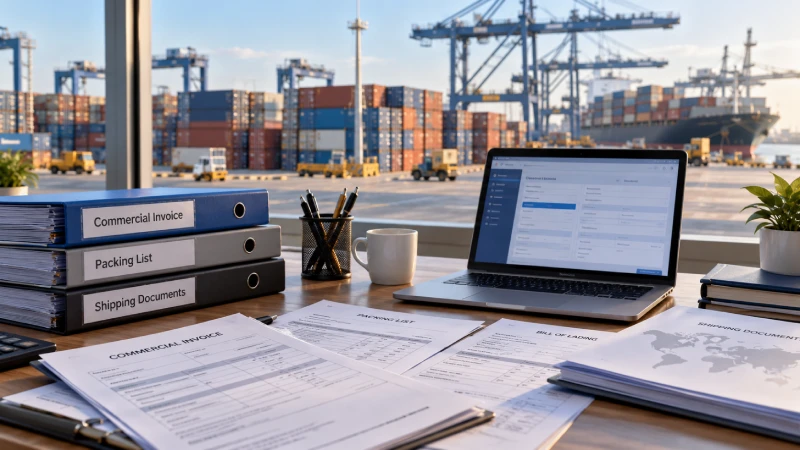
Once the shipment is ready for declaration, the declarant must submit the shipment information required by Customs.
Core data normally includes:
| Declaration Area | What Customs Needs to Understand |
|---|---|
| Importer | Who is legally importing the goods |
| Supplier | Who supplied or sold the goods |
| Goods description | What the goods actually are |
| HS classification | Which tariff line applies |
| Quantity | Number, unit and commercial quantity |
| Customs value | Value declared for Customs purposes |
| Origin | Country of origin where relevant |
| Transport | Vessel, flight, B/L or AWB data |
| Procedure | Customs procedure under which goods enter |
| Regulatory status | Relevant approvals, certificates or permits |
| Supporting documents | Evidence supporting the declaration |
HS classification matters
Nigeria applies the Harmonized System through its tariff framework and ECOWAS Common External Tariff environment. NCS provides an online CET/HS code library and tariff resources for classification reference. Nigeria Customs Service CET
Classification affects more than duty.
An HS code may also influence:
- import prohibition or restriction;
- SON or another regulator’s involvement;
- levy or fiscal treatment;
- eligibility for concessions;
- documentary requirements;
- Customs risk assessment.
That is why selecting an HS code simply because it has a lower duty rate creates unnecessary risk.
What if the HS code is uncertain?
For recurring or commercially important imports, consider resolving the issue before shipment.
Nigeria Customs operates an electronic Advance Ruling framework for matters including tariff classification, customs valuation and origin. NCS describes advance rulings as a way to improve predictability and reduce future classification and valuation disputes. Nigeria Customs Service
Pro Tip: If you will repeatedly import the same machine, component or technical product from China, resolving a genuine classification uncertainty before multiple shipments can be more valuable than arguing about the code after every arrival.
Step 6 — Customs Valuation and Assessment
The commercial invoice is important, but Customs valuation is not simply a process of copying the supplier’s invoice total into a declaration.
NCS states that Nigeria applies customs valuation under the WTO Customs Valuation Agreement, the ECOWAS CET valuation rules and Nigerian customs legislation. The primary basis is the transaction value method, provided the legal conditions for using it are satisfied. If it cannot be used, the alternative valuation methods are applied sequentially rather than arbitrarily. Nigeria Customs Service
Under the transaction-value approach, relevant additions may include items such as transport to the Nigerian place of importation, loading/handling associated with that transport and insurance where those amounts meet the applicable valuation conditions and are not already included in the price. Nigeria Customs Service
| Issue | Good Practice | Possible Customs Concern |
|---|---|---|
| Invoice value | Use genuine transaction documents | Artificially low or unsupported value |
| Freight | Clearly identify whether included | Inconsistent freight basis |
| Insurance | Keep supporting evidence | Missing valuation component |
| Related parties | Disclose relationship where relevant | Whether relationship influenced price |
| Discounts | Document genuine commercial basis | Unexplained reduction |
| Assists/commissions | Determine whether valuation rules require addition | Undeclared dutiable additions |
| Currency | Use accurate invoice currency | Mismatch between documents |
| Product description | Specific enough to identify merchandise | Generic description inconsistent with value |
NCS also states that Customs may test the truth or accuracy of declarations and supporting documents. Nigeria Customs Service
Therefore, Customs can question a declared value.
This does not mean Customs can value goods without rules. It means the importer should be able to support the declared transaction with credible commercial evidence.
After classification and customs value are established, the applicable duty, VAT and other statutory charges are assessed according to the relevant tariff and fiscal rules.
For a separate explanation of these charges, see Nigeria Import Duty & Taxes for Goods from China.
Step 7 — Examination, Customs Queries and Other Regulatory Agencies
Not every shipment should be described as receiving exactly the same physical examination.
Nigeria Customs has been expanding risk-based processing, electronic controls, scanning and non-intrusive inspection while seeking to reduce unnecessary dependence on physical examination. Nigeria Customs Service
Depending on the shipment, possible outcomes include:
Declaration processed
↓
Customs risk assessment
↓
→ Documentary processing/review
→ Scanning or other non-intrusive control
→ Physical examination where selected
→ Valuation query
→ Classification query
→ Regulatory-agency intervention
→ Request for additional supporting documents
↓
Queries resolved
↓
Customs release
For physical port examinations, the Nigerian Ports Authority describes a process in which the clearing agent applies for Customs examination, the terminal positions the cargo, relevant agencies are notified and Customs coordinates the examination with other agencies where applicable. Nigerian Ports Authority
Other agencies may also be involved
Depending on the goods, agencies such as SON or NAFDAC may have regulatory roles.
This matters because a shipment can satisfy one agency and still have an unresolved requirement with another.
Examples include:
- electrical or manufactured products requiring SON-related compliance;
- food, cosmetics, medical devices or chemicals requiring NAFDAC procedures;
- agricultural or other controlled goods requiring the appropriate competent agency;
- security-sensitive or specially controlled products requiring additional permits.
The exact combination depends on the cargo.
Do not use “Customs has seen the documents” as proof that every regulator has approved the shipment.
Step 8 — Customs Release Is Not the Final Logistics Step
A common importer misunderstanding is:
“Customs released my container, so why can’t my truck collect it?”
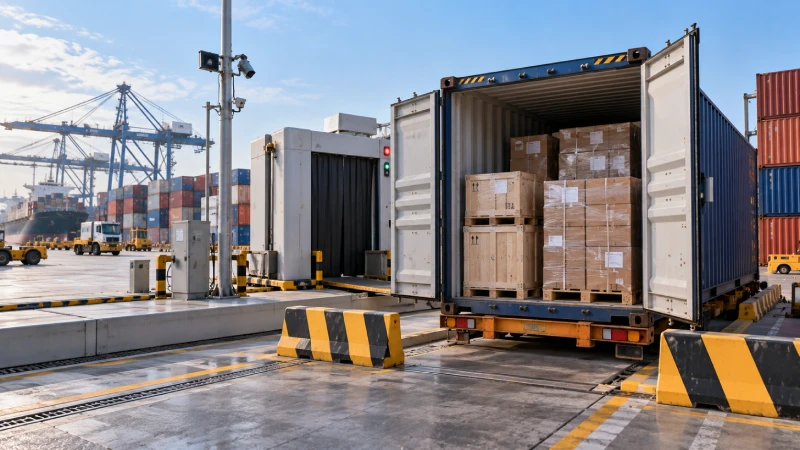
Because Customs release and physical cargo delivery are separate milestones.
After Customs release, the shipment may still need to complete:
NCS release
↓
shipping line / airline release requirements
↓
delivery order or equivalent carrier process
↓
terminal or cargo-warehouse charges
↓
terminal release / exit formalities
↓
truck assignment
↓
gate-out
↓
inland delivery
NPA’s cargo-handling guidance confirms that Nigerian import operations involve multiple parties including the terminal operator, Nigeria Customs Service and shipping company/agent. Nigerian Ports Authority
This distinction also explains why port delays are not always “Customs delays.”
NCS’s Time Release Study for Tin Can Island identified delivery-order issuance, truck dispatch, idle waiting and inter-agency coordination among the factors affecting overall cargo exit time. Nigeria Customs Service
Storage, demurrage and detention exposure
Once cargo arrives, time becomes financially important.
Depending on the transport mode and service contract, delays can expose the importer to:
- terminal or warehouse storage;
- shipping-line demurrage;
- container detention;
- examination positioning costs;
- additional handling;
- truck waiting or rescheduling costs.
Free-time rules and charges vary by carrier, terminal and shipment, so they should be checked for the actual booking.
The best way to reduce this exposure is not to “push Customs harder” after arrival. It is to make as much of the shipment customs-ready as possible before arrival.
Sea Cargo vs Air Cargo Clearance
The compliance principles are similar, but the operating environment is not identical.
| Area | Sea Freight | Air Freight |
|---|---|---|
| Main transport document | Bill of Lading | Air Waybill |
| Typical gateway | Seaport/container terminal | Airport cargo terminal/warehouse |
| Cargo form | FCL, LCL, breakbulk or project cargo | Pallets, cartons or air cargo units |
| Customs declaration | Required as applicable | Required as applicable |
| PAAR/compliance | Required according to import procedure/product | Required according to import procedure/product |
| Examination | May require terminal positioning or scanning | Conducted within airport cargo environment |
| Carrier release | Shipping-line procedures | Airline/handling-agent procedures |
| Storage exposure | Terminal storage plus possible container demurrage/detention | Cargo-warehouse storage |
| Final handoff | Container/truck or LCL delivery | Truck/van collection from cargo facility |
NCS maintains separate operational commands for major sea and air gateways, including Apapa, Tin Can Island and Murtala Muhammed cargo operations. Nigeria Customs Service
For routing and freight planning, see Sea Freight from China to Nigeria and Air Freight from China to Nigeria.
How Long Does Customs Clearance Take in Nigeria?
There is no reliable single number that can be guaranteed for every shipment.
Clearance time depends on factors including:
- whether compliance was completed before departure;
- document accuracy;
- Customs risk selection;
- payment timing;
- classification or valuation queries;
- involvement of other regulators;
- examination requirements;
- terminal operations;
- carrier release;
- truck availability and gate operations.
For context—not as a nationwide service guarantee—the Nigeria Customs Service’s 2026 Time Release Study for Tin Can Island analyzed 601 declarations and reported an average of approximately 3 days 14 hours from consignment booking to physical port exit for 98.7% of the sampled imports. It also found that a small group experienced much longer delays and highlighted idle waiting as a major contributor to total clearance time. Nigeria Customs Service
NCS has separately been implementing its One-Stop-Shop reform with a stated objective of moving compliant cargo toward much faster processing, including a 48-hour clearance target. That should be understood as a reform objective, not a promise that every import will clear within 48 hours. Nigeria Customs Service
For an importer, the more useful question is therefore:
“What can we complete before arrival so that our shipment does not lose time after arrival?”
What Can Stop or Delay Release?
Use this warning checklist before dispatching cargo from China.
1. Incorrect HS classification
A code chosen without reviewing the product’s actual function, material or technical specifications may trigger reassessment or regulatory issues.
2. Inconsistent customs value
If the commercial invoice, payment records, freight data and declared value do not support one another, Customs may request clarification.
3. Missing regulatory approval
SONCAP, NAFDAC or another permit may be required depending on the goods.
4. Invalid or mismatched certificate
A certificate may exist but fail to correspond to the importer, HS code, quantity, value or shipment.
SON specifically lists mismatched HS codes, item counts, declared values and missing documents among reasons PAAR-related certificate activation can fail. Standards Organisation of Nigeria
5. Quantity mismatch
Invoice, packing list, certificate and physical cargo should correspond.
6. Weak product description
Descriptions such as “parts,” “equipment,” “accessories” or “chemicals” may be insufficient for correct classification or compliance review.
7. Missing PAAR-related documentation
Waiting until the cargo is already in port to assemble core pre-arrival documents increases risk.
8. Regulatory examination
Some shipments require additional agency checks regardless of the freight schedule.
9. Late duty or charge payment
A completed assessment does not move cargo if required payments remain outstanding.
10. Shipping before compliance is ready
This is one of the most avoidable problems.
For SONCAP-regulated products in particular, SON describes SONCAP as a pre-shipment scheme and warns that regulated cargo shipped without the required conformity process can face default procedures and penalties. Standards Organisation of Nigeria
For more preventive steps, see How to Avoid Customs Delays When Shipping from China to Nigeria.
Who Is Responsible for Each Part of the Clearance Process?
Clearance works best when responsibilities are agreed before shipment.
| Task | Importer | China Supplier | Customs Representative | NCS | Product Regulator |
|---|---|---|---|---|---|
| Accurate product information | ✓ | ✓ | Support | Review | Review |
| Commercial invoice | Review | ✓ | Review | Review | May review |
| Packing list | Review | ✓ | Review | Review | May review |
| HS classification | Responsible for declaration accuracy | Technical input | Prepare/advise | Determine/review | May use HS for controls |
| Importer registration | ✓ | — | Support | System/control role | May require registration |
| Form M | ✓ | Provide documents | Support | Customs-system role | May provide prerequisite approval |
| SONCAP/NAFDAC compliance | ✓ | Supplier cooperation | Support | Verify where relevant | ✓ |
| PAAR preparation | ✓ | Documents | Usually supports/files as authorized | ✓ | Certificates feed process where applicable |
| Customs declaration | Responsible | Documents | Files when authorized | Processes | — |
| Duty/tax payment | ✓ | — | Coordinate | Assesses/receives confirmation | — |
| Examination | Attend/authorize | — | Coordinate | ✓ | Participate where applicable |
| Customs release | — | — | Follow up | ✓ | May need to clear regulatory hold |
| Carrier/terminal release | Pay/authorize | — | Coordinate | Customs role completed | — |
| Inland delivery | Arrange | — | Coordinate | — | — |
This is a responsibility guide, not a legal allocation for every transaction. Contract terms, Incoterms and local representation arrangements can change who performs specific tasks.
Practical Clearance Strategy for Importers Buying from China
A strong Nigeria import process begins with the purchase order.
Before paying a Chinese supplier or confirming production, identify the product sufficiently to establish the likely HS code and regulatory pathway.
Before booking freight, confirm that any pre-shipment certification is complete.
Before loading, check invoice, packing list, consignee and compliance details against each other.
Before arrival, make sure the Nigerian importer and authorized representative have the documents needed for PAAR, declaration and payment.
Before Customs examination, resolve obvious document discrepancies instead of waiting for an officer or regulator to discover them.
And before promising a delivery date to a Nigerian customer, remember that vessel ETA is not cargo-availability time.
That sequence is usually more effective than trying to solve every problem after the container reaches Apapa, Tin Can or another Nigerian gateway.
For the full route overview, see Shipping from China to Nigeria.
For restricted cargo screening, see Restricted & Prohibited Goods for Nigeria Imports.
Review My Clearance Documents
If you are preparing a shipment from China to Nigeria, review the paperwork before the goods leave China.
Useful documents for an initial freight-side review include:
- commercial invoice;
- packing list;
- detailed product description;
- product photos or technical datasheets;
- proposed HS code, if known;
- SONCAP, NAFDAC or other approvals where applicable;
- Nigerian consignee/importer details;
- cargo dimensions and weight;
- China pickup location;
- Nigerian destination.
Winsail Logistics can coordinate the China-origin freight side and help identify document inconsistencies that should be discussed with the Nigerian importer, licensed customs representative or relevant regulator before shipment.
For related guidance, continue with:
- Shipping from China to Nigeria
- Documents Required to Import from China to Nigeria
- Form M & PAAR for Imports from China to Nigeria
- SONCAP Requirements for Nigeria Imports from China
- NAFDAC Requirements for Goods Imported from China
- Nigeria Import Duty & Taxes for Goods from China
- Restricted & Prohibited Goods for Nigeria Imports
- How to Avoid Customs Delays When Shipping from China to Nigeria
- Sea Freight from China to Nigeria
- Air Freight from China to Nigeria
Regulatory note: Nigerian customs and product-regulatory procedures can vary by product, importer, customs procedure, port or airport, and current government implementation. This article provides general operational guidance and does not replace instructions from Nigeria Customs Service, the applicable regulator or an authorized Nigerian customs professional. Clearance time and release cannot be guaranteed.
FAQ
What happens during Nigeria customs clearance?
The process normally includes pre-arrival preparation, declaration, classification and valuation, assessment and payment, risk processing or examination where required, resolution of Customs or regulatory queries, and Customs release. Carrier and terminal procedures may still remain after Customs release.
Can clearance begin before the vessel arrives?
Yes. Product compliance, Form M where applicable, shipment-document preparation and PAAR-related procedures should be addressed before arrival rather than waiting for the vessel to berth.
Who submits the customs declaration?
The declaration may be submitted by the importer or an appropriately authorized customs representative under the applicable legal and operational arrangement. Many commercial importers use Nigerian licensed customs agents.
Does PAAR mean cargo has been cleared?
No. PAAR is part of the pre-arrival assessment process. Declaration, assessment, payment, possible examination or queries and final Customs release still follow as applicable.
Is every shipment physically inspected?
No. NCS uses risk-management processes, documentary controls, scanning and other inspection methods. Physical examination may be selected depending on risk, cargo type and regulatory requirements.
What happens after Customs issues release?
The shipment may still need shipping-line or airline release, terminal or warehouse procedures, local-charge settlement, delivery-order processing, gate procedures and inland transportation before physical delivery.
Can Customs change the declared HS code or question value?
Customs can review classification and valuation and request evidence supporting the declaration. NCS also provides formal mechanisms such as advance rulings for classification, valuation and origin issues.
Does air cargo follow exactly the same process as sea cargo?
No. The main customs principles overlap, but sea cargo uses shipping-line and container-terminal processes, while air cargo uses airline and airport cargo-warehouse procedures.
