
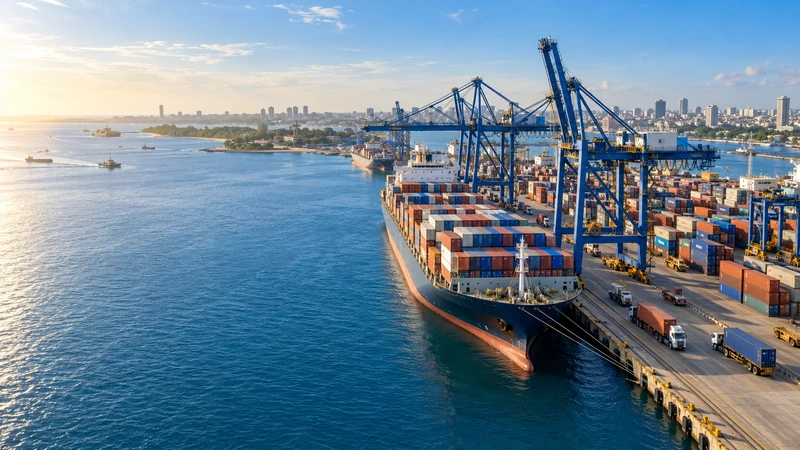
Shipping from China to Dar es Salaam usually means FCL or LCL sea freight arriving at Dar es Salaam Port, or air cargo arriving at Julius Nyerere International Airport (DAR). After arrival, importers must arrange customs clearance, obtain the relevant cargo-release documents, settle applicable charges, and organize collection. Final delivery to a warehouse requires separate transport planning. Door-to-door service does not automatically mean duties and taxes are included.
For a nationwide comparison of shipping methods, costs, and transit times, see our shipping from China to Tanzania guide.
For businesses receiving machinery, electronics, construction materials, and other commercial goods in Dar es Salaam, the critical question is not simply when the shipment reaches Tanzania. It is when the cargo becomes available for collection, who can authorize its release, and how it reaches the receiving warehouse.
This guide explains the practical handover process for Tanzania Mainland imports, from the arrival terminal to final local delivery.
Data Note — October 23, 2026: Port procedures and import-document requirements are based on Tanzania Ports Authority (TPA) and Tanzania Revenue Authority (TRA) guidance. Port charge categories are referenced against TPA’s January 2026 tariff book. Actual fees, free time, release requirements, and delivery availability must be confirmed for each shipment.
Dar es Salaam Port vs DAR Airport: Which Gateway Should You Choose?
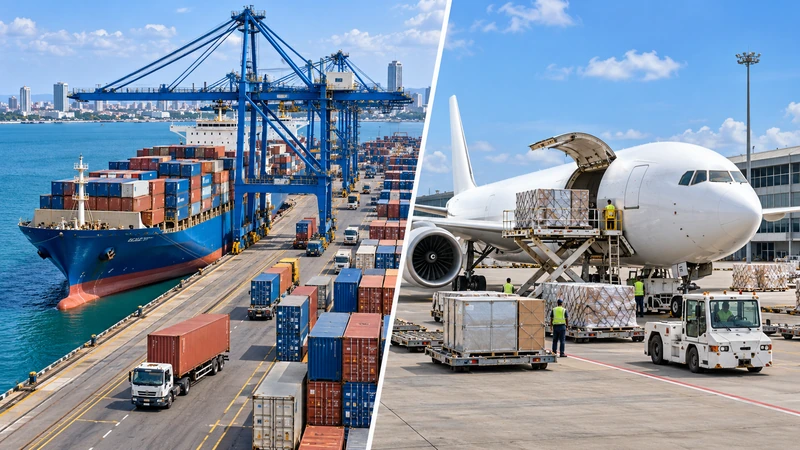
Dar es Salaam has two principal international cargo gateways relevant to commercial shipments from China: the Port of Dar es Salaam for ocean freight and Julius Nyerere International Airport (DAR) for air freight.
Both can support local delivery, but their cargo handling, release procedures, and collection arrangements differ.
Dar es Salaam Port for FCL and LCL Shipments
The Port of Dar es Salaam is Tanzania’s principal seaport and an important gateway for imports serving Tanzania Mainland and neighboring countries.
For businesses importing containerized goods from Chinese manufacturing centers, ocean freight is generally suitable when shipment volume, weight, and cost efficiency are more important than rapid arrival.
Two common options are:
- Full Container Load (FCL): A shipment occupying a dedicated container, typically collected as a container after release and transported to an approved unloading location.
- Less than Container Load (LCL): Cargo consolidated with other shipments, normally requiring deconsolidation and release through a designated Container Freight Station (CFS) or another authorized facility.
The port of discharge shown on the Bill of Lading does not necessarily identify the final pickup facility. Importers should confirm the designated terminal, depot, or CFS before arranging local transport.
For additional information about container shipping, see sea freight from China to Tanzania.
Julius Nyerere International Airport (DAR) for Air Cargo
Julius Nyerere International Airport serves Dar es Salaam and provides an entry point for international air cargo.
Air freight may be appropriate for urgent industrial spare parts, smaller commercial shipments, high-value components, or goods needed to prevent production interruptions.
However, arrival at DAR does not mean the consignee can collect the cargo immediately. Customs clearance, ground-handler processing, applicable payments, and cargo-release authorization must be completed first.
The receiving party also needs to identify the correct cargo-handling facility rather than assuming all airlines use the same collection point.
For broader airfreight planning, consult air freight from China to Tanzania.
Dar es Salaam Port and Airport Cargo Handover Comparison
| Arrival Gateway | Typical Cargo | Collection Method | Key Documents |
|---|---|---|---|
| Dar es Salaam Port — FCL | Machinery, wholesale goods, containerized materials | Released container collected from designated terminal or depot | B/L, customs release, Delivery Order, applicable gate authorization |
| Dar es Salaam Port — LCL | Cartons, pallets, smaller consolidated orders | Cargo collected after deconsolidation at designated CFS or facility | B/L or house B/L, customs release, CFS release instructions |
| DAR Airport — Air Freight | Urgent components, commercial samples, time-sensitive goods | Cargo-terminal collection followed by local transport | AWB, customs release, handling payment evidence, gate pass where required |
Document requirements vary by carrier, cargo type, and release arrangement. The table is a planning reference, not a universal document checklist.
For most importers, the best gateway depends on the total delivery requirement, including the collection process and final receiving location—not international freight cost alone.
Before Arrival: Import Documents and Clearing-Agent Preparation
Import preparation should begin before the vessel or aircraft reaches Dar es Salaam.
A shipment can arrive on schedule and still remain unavailable for pickup because of missing documents, unresolved conformity requirements, or incomplete customs declarations.
Appoint a Licensed Clearing and Forwarding Agent
The Tanzania Revenue Authority requires importers to appoint a licensed Clearing and Forwarding Agent (CFA) for customs clearance.
Import documentation is processed through the Tanzania Customs Integrated System (TANCIS). TRA advises agents to lodge complete documentation at least seven days before vessel arrival where applicable.
Under the official TRA import procedures, the importer and appointed agent must ensure that the declaration and supporting documents meet the applicable requirements.
The freight forwarder, shipping-line agent, customs-clearing agent, and local transporter may perform different functions. Importers should establish who is responsible for each activity before the cargo reaches Tanzania.
For product classification, customs valuation, and general regulatory requirements, read our customs clearance in Tanzania guide.
Check Commercial Documents Before Shipment
The following documents should be reviewed before dispatching goods from China.
| Document | Important Checks |
|---|---|
| Commercial Invoice | Buyer, seller, accurate product description, value, currency, and agreed trade terms |
| Packing List | Package count, weight, dimensions, and consistency with the invoice |
| Bill of Lading / Air Waybill | Consignee, cargo description, shipment reference, and destination |
| Importer Authorization | Proper appointment of the clearing agent |
| Product Permits / Certificates | Applicable regulatory approvals and conformity documents |
| Arrival Notice | Shipment identification and expected arrival details |
Additional documentation may be required depending on the goods, their classification, and the importer’s circumstances.
The consignee details on the transport document must also be consistent with the intended cargo-release arrangement.
Check TBS Product Compliance
Certain imported products are regulated under the Tanzania Bureau of Standards (TBS) Pre-shipment Verification of Conformity (PVoC) program.
Where PVoC applies, the relevant Certificate of Conformity (CoC) should normally be obtained before shipment. Product-specific requirements must be checked against the applicable regulations.
Not every shipment requires the same certification. Importers should verify the HS code, product specifications, and any special permits with their licensed agent.
This guide addresses imports into Tanzania Mainland. Zanzibar-bound goods may involve different regulatory procedures and should be reviewed separately.
Pro Tip — Review Documents Before Departure
Ask your clearing agent to check the commercial invoice, packing list, and transport document before the shipment leaves China. Identifying inconsistent product descriptions or consignee details early can reduce avoidable release problems.
Container Import at Dar es Salaam Port: From Discharge to Gate-Out
For FCL shipments, the most important local process begins when the container reaches the port.
A vessel’s arrival, customs release, shipping-line authorization, and terminal gate-out are different milestones. Completing one does not automatically complete the others.
The following workflow reflects the principal stages described by the Tanzania Ports Authority import process.
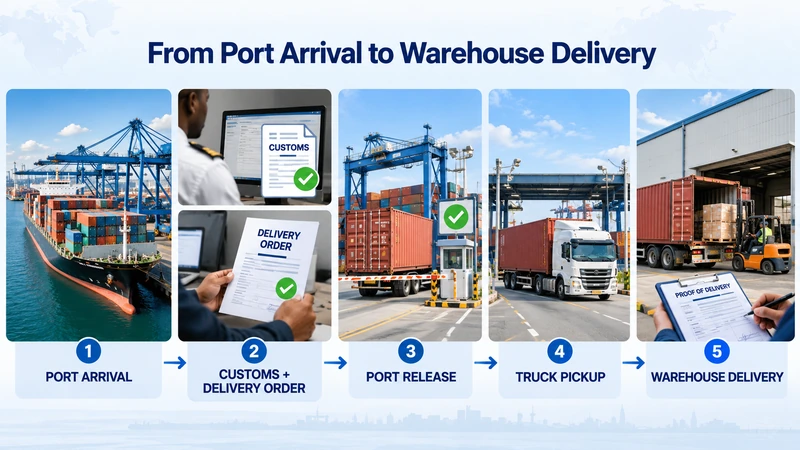
Step 1: Vessel Arrival and Container Discharge
The shipping line provides arrival information, and the container is discharged into the relevant terminal’s custody.
The importer or appointed agent should confirm the actual discharge status, container number, collection facility, and any outstanding document requirements.
Estimated time of arrival (ETA) is a planning reference. Truck pickup should not be scheduled solely on the original ETA.
Step 2: Customs Assessment and Release
The licensed clearing agent coordinates the import declaration, applicable customs assessment, duty and tax payment, and any required verification.
Customs may examine documents or select the cargo for inspection.
Once the required customs procedures are completed, the relevant release authorization becomes available. A customs release does not, by itself, mean all carrier and terminal requirements have been satisfied.
Step 3: Obtain the Shipping-Line Delivery Order
The shipping-line agent must authorize the delivery of the cargo.
Depending on the carrier and transport-document arrangement, this may require presentation or surrender of the appropriate Bill of Lading, confirmation of an authorized electronic release, and settlement of applicable carrier charges.
The Delivery Order (DO) is a key document in the port release process.
Importers should confirm the carrier’s release requirements in advance instead of assuming that a scanned Bill of Lading is always sufficient.
Step 4: Settle Applicable Port Charges
The clearing agent coordinates the port billing and release requirements.
TPA’s published process describes the use of its Electronic Payment Portal (TePP), where relevant shipping and release documents are submitted for port invoicing.
The authorized payer settles the applicable invoice and confirms that payment is reflected in the cargo system.
Any additional terminal-specific requirements must also be completed before physical collection.
Step 5: Truck Announcement, Collection, and Gate-Out
After the required releases are available, the appointed transporter can be registered for collection.
TPA’s published workflow includes truck and driver announcement, issuance of a gate-in ticket, cargo collection, and security verification before gate-out.
The following table summarizes the main handover responsibilities.
| Release Stage | Party Typically Involved | Evidence to Confirm |
|---|---|---|
| Import declaration | Licensed CFA / Importer | Customs declaration and assessment |
| Customs release | TRA / Licensed CFA | Relevant release authorization |
| Carrier release | Shipping-line agent | Delivery Order |
| Port billing | CFA / Authorized payer | Applicable port payment confirmation |
| Truck collection | Transporter / Terminal | Gate-in and collection authorization |
| Exit verification | Terminal / Port security | Gate-out confirmation |
| Warehouse delivery | Transporter / Consignee | Signed Proof of Delivery |
Some activities can proceed in parallel. The exact sequence depends on the cargo, shipping line, terminal, and relevant inspection requirements.
A container leaving the port is not the same as cargo being delivered to the consignee. The final transport, unloading arrangements, and equipment return must still be completed.
How to Collect FCL, LCL, and Air Cargo in Dar es Salaam
The collection procedure varies according to the shipment type. Importers should confirm how the cargo will be handed over before booking a local truck.
FCL Container Pickup and Empty Return
A released FCL container may be collected from its designated terminal or depot and transported to the receiving warehouse.
The transporter must use equipment suitable for the container and comply with applicable loading and access requirements.
Before dispatch, confirm the container number, seal condition, collection authorization, delivery address, and unloading arrangements.
After unloading, the empty container generally needs to be returned to the carrier’s nominated location within the applicable allowance. The party responsible for arranging and paying for that return should be stated in the transport agreement.
LCL Cargo Collection from a CFS
LCL cargo follows a different collection process because several consignees may share one container.
After arrival, the consolidated cargo must be handled and separated at the designated deconsolidation facility.
The consignee’s shipment becomes available only after the necessary customs, carrier, and CFS release requirements are satisfied.
Before sending a vehicle, confirm the actual pickup address, number of packages, cargo availability, handling requirements, and operating arrangements.
Local delivery may use a smaller cargo vehicle rather than a container truck, depending on shipment size and handling needs.
Air Cargo Collection at DAR Airport
Air cargo arriving at Julius Nyerere International Airport is identified through its Air Waybill and associated shipment records.
After customs clearance, the relevant cargo handler may require payment confirmation, release documents, and a gate pass before handing the goods over.
Special handling may apply to temperature-sensitive, regulated, valuable, or dangerous goods.
Importers should confirm the handling facility, operating arrangements, and cargo availability with the airline or appointed agent before collection.
Local Delivery in Dar es Salaam: Trucking, Warehousing, and Final Handover
Once cargo is released, the importer needs a delivery plan suited to the actual receiving location.
Dar es Salaam deliveries may involve different vehicles, unloading requirements, and access arrangements. A warehouse receiving full containers has different needs from a commercial premises receiving a few pallets.
Confirm the Delivery Address and Site Access
Providing only “Dar es Salaam” as the destination is insufficient for an accurate local transport quotation.
The transporter should receive the full address or location pin, receiving contact, preferred delivery hours, and any restrictions affecting access.
For container delivery, the consignee must confirm whether the site can accommodate the relevant truck and safely unload the container.
For palletized or loose cargo, the receiving party should identify whether a forklift, loading dock, manual unloading team, or other handling equipment is necessary.
These details can affect vehicle selection, waiting time, additional handling, and the delivery price.
Choose the Right Transport Arrangement
FCL deliveries commonly require appropriate container transport equipment.
LCL shipments may be delivered as pallets or cartons after CFS collection. Industrial equipment, oversized goods, and sensitive cargo may require additional planning.
The best arrangement depends on cargo dimensions, weight, loading configuration, site access, and confirmed local transport availability.
If a warehouse cannot receive a loaded container, the importer may need an approved transfer or unloading arrangement before final delivery.
Complete Warehouse Receipt and Proof of Delivery
At the receiving location, the consignee should check the shipment against the packing list and delivery documents.
Verify the container seal where applicable, package count, and visible external condition.
Any apparent shortage or damage should be recorded at handover and reported promptly under the applicable carrier, transport, and insurance procedures.
A signed Proof of Delivery (POD) or equivalent receiving record helps establish when the cargo was handed over and whether discrepancies were noted.
For FCL, the delivery plan should also identify who arranges empty-container return.
Dar es Salaam Destination Charges: What Should Importers Budget For?
The ocean freight price from China does not necessarily include the charges required to release and deliver cargo in Dar es Salaam.
The total destination budget can involve port or terminal fees, carrier charges, customs duties and taxes, clearing-agent services, and local transportation.
Some charges may already be included in the contracted freight service. Others may be billed separately.
Port, Terminal, and CFS Charges
The Tanzania Ports Authority publishes its applicable cargo-service tariffs, including categories such as wharfage, shore handling, CFS operations, and storage.
Its January 2026 Sea Ports Tariff Book provides an official reference for published tariff categories.
However, the applicable charge depends on the shipment type, terminal, tariff implementation status, and relevant service.
The 2026 tariff framework also includes Port Infrastructure Development and Green Port Initiatives charge categories. Subsequent implementation changes mean the actual amounts and current applicability must be confirmed against the latest TPA instructions and shipment invoice.
Carrier and Customs-Related Charges
Shipping lines may impose applicable documentation or delivery-order fees, demurrage, detention, and other carrier-specific charges.
Customs duties, taxes, and regulatory assessments are separate from port handling charges. Their treatment depends on the HS classification, customs value, applicable regulations, and contractual responsibilities.
A licensed clearing agent may also charge for import declaration and related services.
Importers should request an itemized destination estimate rather than relying on an undefined “all-in” amount.
Dar es Salaam Destination Charge Responsibility Matrix
| Charge Category | Potential Billing Party | What to Confirm |
|---|---|---|
| Wharfage and port handling | TPA / Relevant operator | Applicable tariff and service |
| Shipping-line documentation / DO | Shipping-line agent | Carrier charges and payer |
| LCL CFS handling | CFS operator / Agent | Deconsolidation and release costs |
| Import duties and taxes | TRA | HS code, assessment, and liable party |
| Clearing-agent services | Licensed CFA | Declaration and inspection scope |
| Local trucking | Transport provider | Pickup, destination, vehicle, and unloading |
| Storage | Port / Terminal / CFS | Free period and charging basis |
| Demurrage / Detention | Shipping line | Carrier-specific free time and return terms |
A shipment’s destination cost can be estimated by adding the applicable amounts across these categories while removing charges already included in another contracted service.
For broader freight budgeting, see shipping cost from China to Tanzania.
Storage vs Demurrage vs Detention
These three terms should not be treated as interchangeable.
Storage generally refers to charges for keeping cargo or containers at a port, terminal, or storage facility beyond the applicable allowance.
Demurrage commonly concerns the shipping line’s container equipment remaining in the terminal beyond the carrier’s free-time terms.
Detention commonly concerns the use of carrier equipment after collection and before the required empty return.
Actual definitions, free periods, and charging rules depend on the facility and carrier agreement.
Pro Tip — Check Every Free-Time Deadline
Ask for the terminal storage allowance, shipping-line demurrage allowance, detention terms, and empty-container return deadline separately. A delay at one stage can create charges under more than one billing arrangement.
Local truck delivery prices should always be based on an actual pickup point, final address, vehicle requirements, and delivery scope. A generic citywide price is not a reliable quotation.
Port-to-Port vs Door-to-Door Shipping to Dar es Salaam
Choosing between port-to-port and door-to-door shipping affects how much work the importer must coordinate after the cargo arrives.
The correct choice depends on the buyer’s local capabilities, contracted trade terms, and destination service requirements.
When Port-to-Port Shipping Makes Sense
Port-to-port shipping may suit importers who already work with a licensed Tanzanian clearing agent and have reliable arrangements for local transport.
Depending on the freight contract and sale terms, the importer may need to organize customs clearance, port payments, carrier release, trucking, and warehouse delivery separately.
The phrase “port-to-port” describes a transport-service scope; it does not, by itself, define every contractual obligation.
When Door-to-Door Shipping Is More Practical
Door-to-door arrangements can bring international transport and the final delivery leg into one coordinated service.
However, door-to-door shipping is not automatically DDP shipping.
Under Incoterms 2020:
- DAP (Delivered at Place): The seller arranges delivery to the named destination, while the buyer is generally responsible for import clearance, duties, and applicable import taxes.
- DDP (Delivered Duty Paid): The seller assumes responsibility for import clearance and applicable duties and taxes, provided the seller can legally meet those requirements.
DDP should not be promised without confirming the lawful importing arrangement in Tanzania. A freight forwarder’s involvement does not automatically make that company the legal importer.
The quotation should clearly state who pays destination charges, appoints the licensed clearing agent, arranges unloading, and handles any container return.
What Information Is Needed for a Delivery Quote?
For a useful China-to-Dar es Salaam quotation, provide the following shipment details:
| Required Information | Details to Provide |
|---|---|
| China Origin | Supplier or warehouse pickup address |
| Cargo | Product description, quantity, and HS code if known |
| Dimensions | Package count, gross weight, dimensions, and CBM |
| Shipping Method | FCL, LCL, or air freight |
| Cargo Readiness | Expected ready date |
| Arrival Details | Port, terminal, CFS, or airport if already booked |
| Delivery Location | Full Dar es Salaam warehouse address |
| Import Arrangement | Consignee, licensed agent, and proposed Incoterm |
| Special Requirements | Unloading equipment, delivery appointment, or handling restrictions |
FAQ
Can I ship to Dar es Salaam Port and arrange warehouse delivery separately?
Yes. International ocean freight and local delivery can be contracted separately. The importer must ensure that customs clearance, shipping-line release, port charges, and truck collection are arranged by the appropriate parties. Confirm whether the local transport quotation includes loading, unloading, waiting time, and empty-container return where applicable.
Do I need an original Bill of Lading to collect my container in Dar es Salaam?
It depends on the Bill of Lading type and shipping-line release arrangement. Some shipments require presentation or surrender of original documents, while authorized telex or electronic-release arrangements may eliminate that requirement. The shipping-line agent must confirm the acceptable procedure before issuing the Delivery Order.
Can my LCL shipment be collected immediately after customs clearance?
Not necessarily. LCL cargo may need to be deconsolidated and processed at a designated CFS. Applicable handling charges and release procedures must also be completed. Confirm the individual shipment’s ready-for-collection status and pickup address before sending a transport vehicle.
Who returns the empty container after delivery to my Dar es Salaam warehouse?
The responsible party depends on the trucking agreement and carrier equipment terms. If the delivery service includes empty-container return, the transporter generally coordinates the return to the nominated location. Otherwise, the importer must ensure that responsibility is assigned. Missing the return deadline can result in detention charges.
What if my warehouse cannot accommodate a 20ft or 40ft container truck?
The delivery plan may require an alternative receiving location, cargo transfer, or a different vehicle arrangement. Before selecting an option, verify cargo dimensions, unloading requirements, site access, insurance implications, and the availability of suitable handling facilities. These arrangements should be agreed upon before dispatching the container.
Can air freight arriving at DAR be delivered directly to my business address?
Yes, where appropriate local delivery services are available. Commercial air cargo must first satisfy customs and cargo-handler release requirements. After release, a transporter can collect the shipment and deliver it to the agreed address. Confirm the delivery coverage, vehicle type, and unloading scope before booking.
How do I confirm that my shipment has been delivered rather than only released from the port?
Ask for separate confirmation of customs release, terminal gate-out, and final delivery. A gate-out record indicates that the cargo has left the collection facility; it does not establish warehouse receipt. Final handover should be supported by a signed Proof of Delivery or comparable receiving record, including any noted shortages or damage.
