

Commercial shipments from China to Dubai commonly enter through Jebel Ali Port for sea freight or DXB/DWC for air cargo. FCL suits many larger orders, LCL handles smaller consignments, and express couriers serve eligible parcels. Before booking, verify the importer, customs destination, exact warehouse address, unloading arrangements, and delivery terms. Mainland, JAFZA, and Dubai South facilities may require different release procedures.
Shipping from China to Dubai involves more than selecting a freight rate and an arrival port. For importers, wholesalers, distributors, and e-commerce businesses, the shipment is not complete until the goods have been released and accepted at the intended delivery location.
A container arriving at Jebel Ali may be destined for a mainland distributor in Al Quoz, a licensed warehouse inside JAFZA, or a fulfilment facility in Dubai South. These destinations can involve different customs procedures, receiving instructions, access requirements, and local transport costs.
This guide explains how to choose between sea freight, air freight, and express shipping, how Dubai’s main cargo gateways operate, and what happens between cargo arrival and warehouse delivery.
For businesses comparing Dubai with other Emirates, our broader shipping from China to UAE guide covers country-level shipping considerations. Here, the focus is specifically on getting commercial cargo to the correct address in Dubai.
Before You Book: Identify Your Dubai Delivery Destination
The first decision is not necessarily which shipping line or airline to use. It is determining where the cargo must be delivered, who is authorised to import it, and what the receiving facility requires.
A quotation addressed simply to “Dubai, UAE” may be insufficient for reliable customs and final-delivery planning.
Identify the Exact Delivery Location
Dubai importers commonly receive cargo at several types of commercial locations:
- Mainland warehouses: Distribution and wholesale facilities in areas such as Al Quoz and Ras Al Khor.
- JAFZA warehouses: Licensed facilities within Jebel Ali Free Zone, potentially used for storage, trading, or re-export.
- Dubai South facilities: Logistics, distribution, and e-commerce operations whose customs status must be verified at the facility level.
- Third-party logistics warehouses: Facilities operated by 3PL or fulfilment providers on behalf of importers and inventory owners.
- Commercial premises and project locations: Stores, workshops, offices, factories, or project sites with specific receiving restrictions.
The name of an industrial area does not establish its customs status.
For example, a business located in the wider Jebel Ali area is not automatically inside JAFZA. Similarly, a facility described as being in Dubai South should not automatically be treated as a bonded warehouse.
Before arranging freight, request the full delivery address, warehouse operator’s details, and confirmation of the applicable customs status.
Confirm the Importer, Consignee, and Warehouse Receiver
Three parties may be involved in a shipment, and their responsibilities should not be confused.
The importer of record is the party responsible for importation under the applicable legal and customs arrangements. The consignee is the party identified to receive the goods under the transport documentation. The warehouse receiver physically accepts the delivered cargo.
They may be the same company, but they do not have to be.
For example, a Dubai trading company may import merchandise and instruct the carrier or delivery provider to deliver it to an independent fulfilment warehouse. The warehouse can receive inventory without necessarily acting as the legal importer.
Before shipment, confirm:
- The importer and its relevant customs registration or eligibility.
- The consignee and notify-party details on transport documents.
- The authorised customs broker or representative.
- The business and location receiving the goods.
- Whether the proposed arrangement is accepted by the relevant customs authority and service providers.
Incorrectly identifying these parties can create document amendments, release delays, and unexpected charges.
Check Warehouse Access and Unloading Requirements
A cleared container or air shipment cannot always be delivered immediately.
Some commercial warehouses require advance receiving appointments, designated vehicle access, palletised cargo, or specific delivery documentation. Others have limited unloading equipment or restrictions on the size of trucks they can accommodate.
For FCL shipments, confirm whether the warehouse can unload a container mounted on a truck and complete the work within the agreed period.
For LCL and air shipments, check whether the receiver accepts loose cartons, pallets, or both.
The importer should also identify who will sign the proof of delivery and report shortages or visible cargo damage.
Choose the Right Shipping Method for Your Dubai Shipment
The appropriate method depends on cargo volume, weight, handling sensitivity, stock urgency, and the total cost of delivery to the receiving facility.
Sea freight normally deserves consideration for larger or less urgent commercial orders. Air freight may be justified when delivery urgency outweighs the additional transport cost.
FCL Sea Freight for Full-Container Imports
Full Container Load (FCL) shipping is suitable for importers whose shipment volume, cargo characteristics, or handling requirements justify the use of a dedicated container.
Common equipment options include 20-foot general-purpose containers, 40-foot general-purpose containers, and 40-foot high-cube containers. The correct equipment depends on the cargo’s dimensions, weight distribution, loading method, and applicable container limits.
FCL can be practical for Dubai wholesalers importing furniture, machinery, packaging materials, auto parts, or large volumes of retail inventory.
The container is loaded in China and transported through the maritime network to Jebel Ali. After the necessary release formalities, it can be collected for delivery to an approved receiving location.
However, FCL delivery requires additional planning:
- Can the truck access the warehouse?
- Is there enough room to unload the container?
- Who provides forklifts or unloading personnel?
- How much unloading time is allowed?
- Who arranges the return of the empty container?
FCL should be compared with LCL using the total delivered cost, not only the international ocean freight rate.
LCL Sea Freight for Smaller Commercial Orders
Less than Container Load (LCL) shipping allows multiple consignments to share container space.
It can suit importers purchasing smaller quantities from China, placing trial orders, or replenishing inventory without booking a full container.
The cargo is typically consolidated at origin, shipped to the destination, and separated at a container freight station (CFS) before individual consignments become available for release.
For a Dubai warehouse delivery, this means the importer must consider more than vessel arrival.
LCL shipments may involve destination CFS handling, consolidation-related documentation, cargo availability notices, customs processing, and local pickup.
Because LCL cargo normally passes through more handling points than an intact FCL shipment, packaging and carton identification deserve particular attention.
An importer should request an LCL quotation that clearly identifies both the freight charge and the applicable destination handling and delivery costs.
Air Freight for Urgent Commercial Inventory
Air freight can suit urgent spare parts, replenishment stock, samples, and other commercial goods for which delays would have a significant business impact.
China-origin air cargo may enter Dubai through Dubai International Airport (DXB) or Al Maktoum International Airport (DWC), depending on airline service availability and the booked routing.
Air freight is generally charged according to chargeable weight, considering actual gross weight and volumetric weight under the applicable carrier or service rules.
A shipment containing lightweight but bulky cartons can therefore cost more than its scale weight alone suggests.
Importers should provide accurate carton dimensions and gross weights before requesting an air quotation.
The delivery plan must also cover terminal handling, cargo release, applicable customs clearance, and transportation from the airport facility to the consignee.
An airline arrival confirmation does not mean the cargo is already available for collection.
Express Courier for Eligible Parcels and Samples
Express courier services can be useful for eligible samples, documents, small commercial parcels, and urgent replacement items.
Courier operators manage shipments through their own networks, subject to the selected service and destination conditions.
However, express shipping is not automatically the best solution for larger commercial orders, palletised cargo, or restricted commodities.
Importers should verify the courier’s weight and dimension limits, product acceptance rules, customs declaration requirements, and treatment of duties and taxes.
For batteries, liquids, chemicals, and other potentially regulated products, acceptance must be checked before booking.
Sea, Air, LCL & FCL for Dubai Deliveries
| Shipping method | Suitable shipment | Typical delivery arrangement | Main cost consideration |
|---|---|---|---|
| Sea FCL | Larger commercial orders and dedicated-container cargo | Jebel Ali container release followed by trucking | Container freight, destination handling, local transport, and unloading |
| Sea LCL | Smaller orders and partial-container cargo | Jebel Ali/CFS release followed by warehouse delivery | Chargeable volume or weight, CFS fees, and local charges |
| Air freight | Urgent commercial inventory and time-sensitive parts | DXB/DWC cargo release and local delivery | Chargeable weight, airport handling, and trucking |
| Express courier | Eligible samples and parcels | Courier-network delivery | Courier tariff, size/weight limits, and applicable import charges |
There is no universal cargo-volume threshold at which FCL becomes cheaper than LCL.
The decision should be based on actual quotations, cargo handling requirements, and the total cost of getting the goods into the Dubai warehouse.
Dubai Shipping Gateways: Jebel Ali Port, DXB and DWC
Dubai has established maritime and air cargo infrastructure, but each gateway serves a different operational role.
The preferred gateway depends on the transport method, carrier routing, cargo handling requirements, customs arrangements, and final delivery location.
Jebel Ali Port: The Main Sea Freight Gateway
Jebel Ali Port is a major maritime gateway for containerised trade entering Dubai.
For China-origin sea freight, it is an important arrival point for both FCL containers and LCL consignments.
After arrival, the cargo must go through the applicable transport-document release, customs and terminal or CFS procedures before it can move to the consignee or another authorised destination.
The subsequent process differs significantly between FCL and LCL.
An FCL shipment normally involves collecting the container through the applicable terminal and haulier arrangements. An LCL shipment involves releasing the importer’s cargo after deconsolidation at the relevant facility.
For more detail about maritime routing and port-specific procedures, see our guide to shipping from China to Jebel Ali.
Dubai International Airport (DXB): Commercial Air Cargo Access
DXB supports international air cargo operations and provides access to specialised cargo-handling infrastructure.
Its location may be convenient for some mainland delivery addresses, but the airport’s geographic position should not be the sole reason for selecting a route.
The airline’s available service, cargo terminal, release procedure, customs processing, and local collection arrangement all influence the practical delivery schedule.
For example, a shipment arriving at DXB may still require document processing, terminal release, and a separate truck booking before reaching a distributor’s warehouse.
Al Maktoum International Airport (DWC): Cargo and Dubai South Connectivity
DWC is Dubai’s other major air cargo gateway and forms part of the wider Dubai South logistics environment.
Its location and connections with Jebel Ali make it relevant to logistics operations involving air cargo, distribution facilities, and certain authorised multimodal movements.
Dubai Airports identifies a bonded road connection between DWC and Jebel Ali Port for eligible sea-air operations.
However, that does not mean any ordinary commercial shipment can move between facilities without the applicable customs procedures.
For importers delivering goods to Dubai South, DWC may be operationally attractive when a suitable airline route and handling arrangement are available.
The correct airport should be selected using the complete shipment plan, not simply the shortest road distance.
For current airport infrastructure information, consult Dubai Airports’ official cargo information.
Dubai Shipping Gateway Comparison
| Gateway | Main transport role | Dubai delivery consideration | Confirm before booking |
|---|---|---|---|
| Jebel Ali Port | Sea freight: FCL and LCL | Container or CFS release followed by local transport | Terminal/CFS, cargo release, customs procedure, and trucking |
| DXB | International air cargo | Airport handling, customs release, and onward delivery | Actual airline, cargo terminal, collection requirements |
| DWC | International air cargo and eligible multimodal operations | Dubai South connectivity and local delivery | Flight routing, facility status, handling, and customs movement |
Practical rule: Compare the complete route from the Chinese supplier to the final Dubai delivery address. A gateway with a shorter transport leg does not necessarily offer the lowest total cost or earliest warehouse delivery.
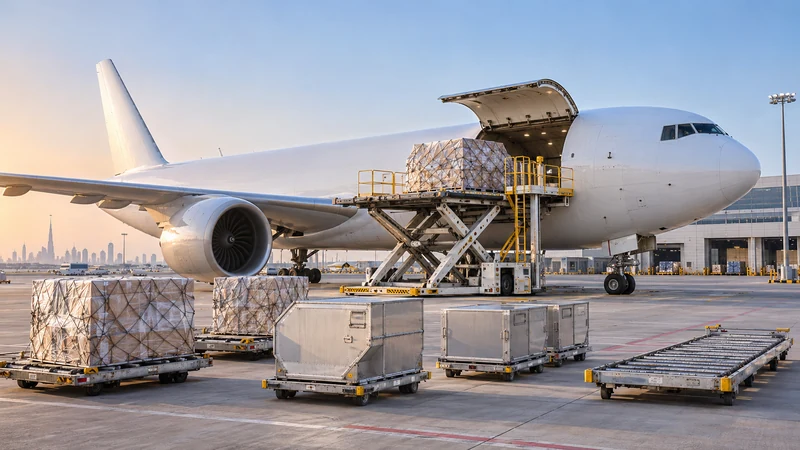
Dubai Mainland vs JAFZA vs Dubai South Warehouse Delivery
Dubai warehouse delivery must be planned according to the receiving facility’s legal and operational status.
A mainland importer, a JAFZA business, and a Dubai South warehouse operator may require different customs instructions, supporting documents, and receiving arrangements.
Delivery to a Dubai Mainland Warehouse
Mainland delivery is common for wholesalers, distributors, manufacturers, and other businesses receiving goods for use or circulation within the UAE domestic market.
Examples include commercial warehouses in Al Quoz and Ras Al Khor.
For an ordinary mainland import, the responsible importer or authorised representative must arrange the applicable import declaration and complete the necessary customs formalities before the cargo is released into the intended domestic circulation.
Duty, VAT, and other charges must be determined according to the actual product, declaration, importer, and applicable rules.
Once the goods are authorised for delivery, local transport can be arranged.
The consignee should confirm warehouse opening hours, vehicle access, unloading equipment, and receiving appointments.
A warehouse may be physically close to Jebel Ali but still require separate mainland import clearance and a local trucking arrangement.
Delivery to a JAFZA Warehouse
Jebel Ali Free Zone (JAFZA) is a designated business and logistics area connected with the Jebel Ali port ecosystem.
A shipment destined for a licensed JAFZA facility must follow the customs and zone-entry procedure appropriate to the receiving entity and intended movement.
The importer and logistics provider should confirm the free-zone company details, applicable declaration, warehouse location, authorised receiving contact, and gate requirements.
JAFZA operates controlled access arrangements. Depending on the visit and vehicle movement, appropriate permissions or passes may be necessary.
Importers should not confuse three separate activities:
- Arriving at Jebel Ali Port.
- Entering a JAFZA facility under the applicable procedures.
- Releasing goods from a free-zone arrangement into the UAE mainland.
These activities can have different documentary and customs requirements.
A container being discharged at Jebel Ali does not automatically mean it has been admitted to the consignee’s free-zone warehouse.
Delivery to a Dubai South Logistics Facility
Dubai South includes logistics, commercial, aviation, and business facilities with different operating arrangements.
Some facilities operate under bonded or free-zone arrangements, while other facilities or operating areas may involve non-bonded activities.
EZDubai, a logistics development within Dubai South, identifies facilities that can support both bonded and non-bonded operations under specified arrangements.
Consequently, “Dubai South” is not a complete customs delivery instruction.
Before dispatching cargo, confirm:
- The exact facility and warehouse identifier.
- Whether the receiving operation is bonded or non-bonded.
- The licensed company responsible for the cargo.
- The authorised customs movement and declaration.
- Gate permissions and receiving appointments.
- Whether the goods will remain in storage or enter mainland circulation.
These details are particularly important for e-commerce operators using warehouses to receive inventory before distributing orders to UAE customers.
Delivery to a Third-Party or E-commerce Warehouse
A third-party warehouse may manage storage, inventory processing, fulfilment, or distribution without taking legal responsibility for importing the goods.
For example, a Dubai trading company might instruct a logistics provider to deliver imported merchandise directly to its contracted fulfilment centre.
The trading company and its authorised representatives may remain responsible for the relevant import requirements, while the warehouse manages the physical receipt.
Many fulfilment facilities require information before the vehicle arrives, including:
- Advance shipment notification (ASN).
- SKU or product identification.
- Carton and pallet labels.
- Number of packages.
- Delivery appointment reference.
- Driver and vehicle information.
- Inbound receiving or purchase-order references.
If the goods reach the warehouse without the correct receiving instructions, delivery may be rejected or rescheduled.
This can create additional transport and waiting charges even when customs clearance has been completed.
Free Zone Status Does Not Automatically Determine Tax Treatment
Free-zone licensing, customs-bonded status, and VAT Designated Zone status are related but distinct concepts.
A company being registered in a free zone does not by itself determine how every shipment will be treated for customs duty or VAT.
Similarly, the fact that a warehouse is physically located in Dubai South does not establish that every movement is treated as a bonded movement.
The UAE Federal Tax Authority has issued guidance distinguishing free zones and designated zones for different tax purposes. Importers should review the current FTA guidance on Free Zones and Designated Zones and seek appropriate advice for their specific transaction.
Dubai Mainland vs Free Zone Delivery
| Delivery destination | Customs arrangement to verify | Importer/receiver requirements | Common delivery risk |
|---|---|---|---|
| Dubai mainland warehouse | Applicable mainland import | Eligible importer, customs documentation, receiving appointment | Incomplete clearance or restricted unloading access |
| JAFZA warehouse | Free-zone entry, transfer, or other applicable movement | Licensed entity, correct declaration, gate access | Incorrect consignee or movement instruction |
| Dubai South bonded facility | Authorised bonded movement and facility status | Facility details, eligible recipient, movement approval | Assuming all Dubai South facilities have the same customs status |
| Dubai South non-bonded facility | Applicable mainland or other legal arrangement | Importer details and receiving instructions | Using incorrect customs treatment |
| Independent 3PL warehouse | Actual customs status of the facility | Importer of record and separate physical receiver | Warehouse unable to accept cargo under the proposed arrangement |
For a broader explanation of these distinctions, read our free zone vs mainland delivery in UAE guide.
From Jebel Ali Port to a Dubai Warehouse: Step-by-Step Delivery
For a sea shipment, arrival at Jebel Ali is only one milestone.
Before goods can reach a Dubai warehouse, several organisations may need to coordinate: the carrier or shipping agent, importer, customs broker, terminal or CFS operator, trucking provider, and warehouse receiver.
The sequence below describes a typical planning workflow. Actual order and responsibilities may vary according to the carrier, declaration type, and service agreement.
Before Arrival: Documents and Cargo Release Preparation
Step 01 — Verify Shipping Documents
Before the vessel arrives, the importer or its authorised representative should confirm that the commercial documents are consistent.
Check the commercial invoice, packing list, bill of lading, product descriptions, quantities, weights, and consignee details.
The declared cargo must also match the intended customs arrangement.
If the shipping documents identify the wrong consignee or contain incorrect cargo information, amendments and approvals may be necessary before release.
Step 02 — Confirm Delivery Order Arrangements
The destination shipping agent or relevant release party may require completion of transport-document formalities before issuing or enabling cargo release.
Depending on the shipment, this can involve the required bill of lading release status, payment of applicable carrier charges, and fulfilment of the shipping agent’s conditions.
The delivery order is an important part of the cargo-release process, but it does not replace customs authorisation.
The importer should confirm who obtains the delivery order and who pays the associated charges.
Customs Clearance and Release at Jebel Ali
Step 03 — Submit the Appropriate Customs Declaration
The importer or authorised representative must arrange the applicable customs declaration for the intended cargo movement.
Dubai Customs provides declaration procedures covering import, export, transit, transfer, and temporary admission, among other relevant processes.
The correct procedure depends on whether the goods are entering the mainland, moving to an authorised free-zone facility, or following another permitted arrangement.
Supporting information must be accurate and consistent.
Importers can review the Dubai Customs declaration service for official procedural information.
Step 04 — Complete Applicable Payments, Checks and Approvals
The customs process may involve declaration fees, applicable duties and taxes, document checks, inspections, or product-specific approvals.
Not every shipment follows the same inspection or approval path.
If the goods are regulated, the responsible importer may need to obtain additional permissions from the relevant authority.
Cargo should not be dispatched from the port or customs-controlled facility until the appropriate release or authorised movement requirements have been satisfied.
Port Collection and Local Transport
Step 05 — Settle Terminal or CFS Handling Charges
For FCL shipments, the container must become available for collection through the relevant terminal arrangement.
For LCL shipments, the consolidated container must undergo the applicable deconsolidation process before the individual consignment can be released.
Depending on the quotation and service contract, outstanding terminal, CFS, shipping-agent, or documentation charges may need to be settled.
The importer should confirm whether those charges are included in the freight agreement or payable separately.
Step 06 — Arrange Cargo Pickup and Truck Access
For FCL, the responsible party coordinates the nominated haulier, terminal collection arrangement, applicable electronic permissions or tokens, and container pickup.
For LCL, the local collection provider retrieves the released consignment from the applicable CFS or cargo facility.
These processes are different: an LCL importer is normally collecting its individual shipment, not the whole consolidated shipping container.
The local transport provider must also know whether the destination requires a standard delivery truck, a container trailer, or specialised equipment.
Step 07 — Deliver to the Correct Dubai Receiving Facility
Before dispatching the truck, confirm the complete delivery address, warehouse contact, vehicle access, and agreed receiving time.
For JAFZA or another controlled facility, verify the necessary gate and vehicle permissions.
For mainland warehouses, confirm whether the receiving dock can accommodate the nominated vehicle.
For full containers, the consignee must be ready to unload according to the agreed arrangement.
If the receiving facility cannot accept the vehicle, the resulting waiting time or rescheduling may create additional costs.
Receiving and Container Return
Step 08 — Confirm Receipt and Close the Shipment
The warehouse should check the package count and visible cargo condition against the relevant delivery records.
Shortages, visible damage, or discrepancies should be recorded promptly and reported under the applicable claim and transport procedures.
The receiving party should issue or sign the appropriate proof of delivery.
For FCL shipments, the empty container must also be returned according to the carrier’s instructions and the contracted equipment-return arrangements.
The shipment should not be considered operationally closed until these outstanding responsibilities have been addressed.
Jebel Ali Port-to-Dubai Warehouse Delivery Workflow
The simplified sequence is:
China Supplier → Origin Export Handling → Ocean Freight → Jebel Ali Arrival → Delivery Order and Applicable Customs Release → FCL Terminal Collection or LCL CFS Release → Dubai Warehouse Delivery → Proof of Delivery
For a shipment entering a free zone or moving under a bonded arrangement, the customs movement and warehouse-entry steps must follow the applicable authorised procedure rather than an assumed mainland import path.
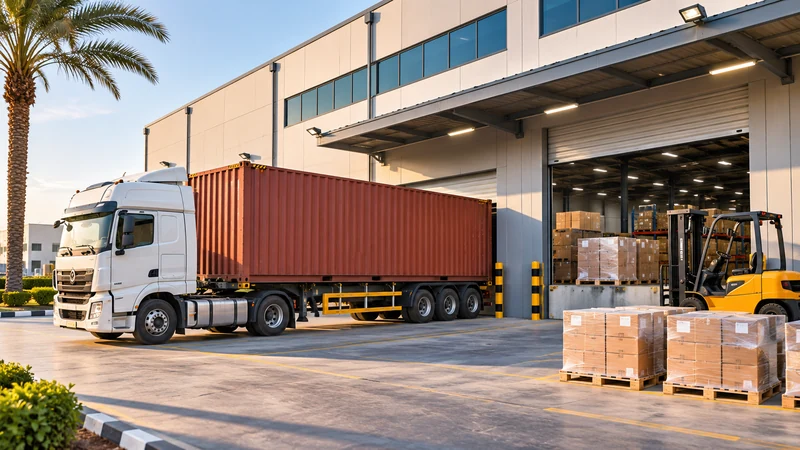
Port-to-Warehouse Cost Components for Dubai Deliveries
A low international freight quote does not necessarily mean a low delivered cost.
For Dubai importers, destination charges, customs-related expenses, local transport, and warehouse receiving requirements can materially affect the total amount payable.
The most useful comparison is between quotations that cover the same cargo, origin, delivery address, and service scope.
Understand What Your Freight Quote Includes
A freight quotation may cover only port-to-port transport, or it may include additional services such as origin pickup, export handling, destination brokerage coordination, and final delivery.
These inclusions must be stated clearly.
Commercial terms such as EXW, FOB, CIF, DAP, and DDP allocate responsibilities between buyer and seller under the agreed sales contract.
They should not be confused with transport methods.
For example, a shipment can move by sea under an FOB sale, or it can be delivered to an agreed destination under DAP, provided the applicable contractual and operational arrangements are correctly established.
Under Incoterms® 2020, DAP generally places import clearance and applicable import duties on the buyer. Under DDP, the seller takes responsibility for import clearance and applicable duties and taxes. The practical ability to perform DDP obligations must be confirmed before it is agreed.
Neither term automatically means that unloading at the final warehouse is included.
For DAP and DDP, the seller normally delivers the goods ready for unloading at the named destination; unloading responsibilities and any separately contracted unloading services must be clear.
Typical Jebel Ali Destination Charges
Depending on the service and shipment, destination costs may include:
- Delivery order and shipping-agent documentation charges.
- Terminal handling and container-related charges.
- CFS handling and deconsolidation charges for LCL.
- Customs declaration and brokerage service charges.
- Applicable import duties and taxes.
- Inspection, permit, or specialised handling expenses when required.
- Local trucking and delivery charges.
- Warehouse access, unloading, or receiving-related costs.
Some charges may already be included in the agreed freight price.
Others may be payable by the importer, consignee, seller, or another contracted party.
A useful quotation should identify the relevant charges and distinguish confirmed costs from conditional expenses.
Costs That Change with the Dubai Delivery Address
Delivery to a commercial warehouse in Al Quoz or Ras Al Khor may involve different vehicle and unloading requirements from delivery to a controlled logistics facility in JAFZA.
Similarly, a Dubai South warehouse may require facility-specific gate permissions, appointments, or customs-movement arrangements.
Road distance matters, but it is not the only cost factor.
A shorter route can still be expensive if it requires specialised equipment, restricted access, extended waiting time, or additional handling.
For accurate pricing, provide the precise delivery address rather than only the district name.
Port-to-Warehouse Cost Components
| Cost component | When it may apply | What to check |
|---|---|---|
| International ocean freight | Sea shipments | Carrier, routing, equipment, surcharges, and validity |
| Delivery order / shipping-agent charges | Applicable cargo-release arrangements | Payer, release conditions, and inclusion in the quote |
| Terminal handling | Container and terminal operations | Whether destination handling is included |
| CFS handling | LCL cargo | Minimum charges, charging basis, and release fees |
| Customs declaration and brokerage | Applicable customs procedure | Responsible party and service scope |
| Duty and import VAT | Subject to shipment’s legal and tax treatment | Classification, valuation, regime, and responsible payer |
| Inspection or special handling | When required | Conditional charges and approvals |
| Local trucking | Port/CFS to warehouse | Address, vehicle, delivery appointment, and equipment |
| Warehouse handling | Depending on the receiving facility | Unloading, pallet handling, and access requirements |
| Storage or equipment delay charges | When contractual conditions trigger them | Free periods, responsibility, and applicable rate schedule |
Example: How LCL Chargeable Volume Can Be Calculated
Illustrative calculation — not a freight quotation
Assume an importer ships:
- Cargo volume: 6.4 CBM.
- Gross weight: 3,100 kg, equal to 3.1 metric tonnes.
If the specific LCL quotation uses a weight-or-measurement basis of one CBM or one metric tonne, whichever is greater:
Chargeable W/M = max(6.4 CBM, 3.1 tonnes) = 6.4 revenue units.
This determines the chargeable quantity under that assumed pricing rule, not the actual amount payable.
The importer must still obtain the applicable freight rate and check destination charges, minimums, local transport, and other contracted costs.
Different providers may use different charging rules, so the quotation must govern the calculation.
Example: Comparing Delivered Costs
A practical comparison can use the following structure:
Total Delivered Cost = Origin Charges + International Freight + Destination Release and Handling + Customs/Brokerage Charges + Applicable Duties and Taxes + Local Trucking + Other Charges If Incurred
When comparing two quotations, check whether both include the same services.
One provider might quote a lower ocean freight rate but exclude destination release and delivery. Another may present a higher transport price with more local handling included.
Neither quotation can be fairly compared until the inclusions, exclusions, and importer responsibilities are aligned.
Demurrage, Detention, Storage and Failed-Delivery Risks
These terms describe different potential costs.
Demurrage may arise when a carrier-owned container remains within the relevant terminal or port area beyond the applicable free period under the carrier’s terms.
Detention may arise when carrier-owned equipment is retained outside the relevant terminal beyond the agreed free period.
Storage may be charged by a terminal, CFS, warehouse, or other facility when cargo remains beyond the applicable storage allowance.
Waiting or failed-delivery charges can arise when a truck cannot unload, the receiving appointment is missed, or the consignee is unable to accept cargo.
Actual definitions and charging arrangements depend on the carrier, terminal, facility, and contract.
The best prevention is to prepare documents early, confirm cargo release, arrange delivery appointments, and understand the applicable free periods before the shipment arrives.
Documents and Import Risks to Check Before Shipping
Dubai customs and cargo release planning should begin before the goods leave China.
A shipment can arrive on schedule but remain unavailable for delivery because the importer details, commercial documents, or required approvals are incomplete.
Confirm the Core Shipping and Import Documents
Common commercial shipping and customs documents include:
- Commercial invoice: Seller, buyer, detailed goods description, quantities, values, and commercial transaction information.
- Packing list: Package count, contents, gross and net weights, dimensions, and relevant packing details.
- Bill of lading or air waybill: Transport details and the parties identified under the shipment.
- Certificate of origin: Origin evidence for customs or other applicable requirements.
- HS code and commodity information: Information used to support classification and determine applicable treatment.
- Importer and consignee details: Identification and eligibility information for the intended declaration.
- Product approvals or permits: Documents required for particular regulated goods or movements.
Dubai Customs identifies invoices, packing lists, certificates of origin, and permits from relevant restriction authorities among the supporting documents for its declaration service. The precise documentation needed must be confirmed for the individual transaction.
A supplier’s informal product name may not be sufficiently descriptive for customs purposes.
Descriptions such as “accessories,” “parts,” or “general merchandise” should be replaced with accurate commercial descriptions identifying what the goods actually are.
Check Product Restrictions Before Booking
Certain commodities require additional review before they are accepted for transport or released for import.
Examples may include particular electrical products, battery-powered equipment, chemicals, cosmetics, and other regulated goods.
The applicable requirements depend on the actual product, classification, technical characteristics, and regulatory scope.
Not all electrical products require identical conformity documents, and not all battery shipments can use the same airline or packing arrangements.
Before booking, the importer should identify relevant regulatory obligations and provide the documents necessary for the chosen transport mode and destination.
Resolve Customs and Delivery Mismatches
| Potential problem | Operational consequence | Preventive action |
|---|---|---|
| Incorrect consignee | Document amendments or release problems | Verify consignee and importer roles before booking |
| Vague goods description | Customs questions or classification issues | Use accurate product descriptions and supporting data |
| Missing regulated-product approvals | Inspection, hold, or inability to release cargo | Check commodity requirements before export |
| Incorrect customs destination | Inappropriate declaration or movement plan | Confirm mainland, free-zone, or other status |
| Missing warehouse instructions | Failed delivery or additional waiting | Obtain receiving requirements before local dispatch |
The supplier, importer, customs representative, and freight provider should each understand which documents and confirmations they are expected to supply.
Practical Shipping Scenarios for Dubai Importers
The following examples are illustrative planning scenarios, not records of completed Winsail shipments. They demonstrate how different commercial requirements affect freight decisions.
Scenario 1: Wholesale Inventory for a Dubai Mainland Warehouse
Illustrative Scenario — Not an Actual Winsail Shipment
A Dubai wholesaler purchases several product lines from a manufacturer in China and plans to receive the goods at its distribution warehouse in Al Quoz.
The cargo includes multiple pallets and cartons intended for subsequent sales within the UAE.
The importer is considering both FCL and LCL.
The decision should not depend solely on the shipment’s CBM. The importer needs to compare the complete FCL and LCL costs, including origin handling, freight, destination release, local transport, and potential unloading expenses.
If FCL is selected, the wholesaler must ensure that the warehouse can unload the container and that the truck can enter the site.
If LCL is selected, the importer should confirm CFS release, carton handling, and whether the local delivery price includes transport to the receiving dock.
The importer must also arrange the appropriate mainland import procedure.
Key takeaway: The lowest international freight charge may not produce the lowest cost of accepted inventory at the warehouse.
Scenario 2: E-commerce Inventory for a Dubai South Fulfilment Facility
Illustrative Scenario — Not an Actual Winsail Shipment
An e-commerce operator needs to replenish several fast-selling products sourced from China.
The goods are destined for a third-party fulfilment facility in Dubai South, and some inventory is needed urgently.
Instead of shipping the entire order by air, the importer considers dividing the shipment.
A smaller urgent quantity could be evaluated for air freight, while the remaining inventory could move by sea.
The decision depends on actual flight and sailing availability, cargo economics, product restrictions, and the required stock-replenishment date.
Before booking, the importer must confirm the fulfilment facility’s specific customs status and receiving rules.
The warehouse may require advance shipment data, SKU labels, carton identification, and an inbound delivery appointment.
The importer must also establish whether the warehouse operator is only receiving goods or has an authorised role in the import process.
Key takeaway: Replenishment speed depends on the entire process, including customs release and successful warehouse receiving, not merely the aircraft’s arrival.
Scenario 3: Consolidated Purchases from Multiple Chinese Suppliers
Illustrative Scenario — Not an Actual Winsail Shipment
A Dubai trading company purchases merchandise from manufacturers in Guangzhou, Dongguan, and Yiwu.
Each supplier has a different cargo-ready date, and the buyer wants to reduce the complexity of receiving multiple international shipments.
China-side cargo consolidation may be worth evaluating.
Under a coordinated consolidation arrangement, cargo can be collected from suppliers, checked against packing information, and prepared for an appropriate consolidated shipment.
However, consolidation also introduces planning requirements.
The buyer should confirm supplier readiness, pickup charges, packing compatibility, carton markings, and the documentation required for each product or commercial transaction.
Combining goods from several suppliers does not automatically mean that every item can share identical customs classification, regulatory documents, or declaration treatment.
Depending on total cargo volume and packing requirements, a consolidated FCL shipment or a suitable LCL arrangement may be considered.
Key takeaway: Consolidation can simplify coordination, but its value must be established through real shipment data and the total logistics cost.
Dubai Shipping Route & Delivery Checklist
Use this checklist before confirming a shipment from China to a Dubai commercial address.
It covers the information needed to establish the shipping route, arrange the appropriate customs procedure, and reduce preventable final-delivery problems.
Before Cargo Leaves China
Confirm the product information, supplier locations, packing details, cargo-ready date, selected Incoterms, and the intended Dubai consignee.
Identify whether any product restrictions or transport-specific requirements apply.
The importer should also confirm the destination facility’s legal status and delivery instructions before freight is booked.
Before the Shipment Arrives in Dubai
Confirm the arrival notice, transport-document release status, customs declaration arrangements, and any outstanding documentation or payments.
Check whether inspections or product-specific approvals are required.
The destination agent and receiving warehouse should understand the expected cargo collection and delivery process.
Before Final Warehouse Delivery
Verify that the cargo has the necessary release or movement authorisation and that the nominated transport provider can collect it.
Confirm access permissions, the delivery appointment, unloading equipment, receiving personnel, and the procedure for recording receipt.
For FCL shipments, verify the container return instructions and agreed responsibility.
Dubai Shipping Route & Delivery Checklist
| Checkpoint | Information to confirm | Main party involved |
|---|---|---|
| Cargo details | Product description, quantities, weight, volume, and packing | Supplier / importer |
| China origin | Supplier addresses and cargo-ready dates | Supplier / forwarder |
| Transport mode | FCL, LCL, air, or express suitability | Importer / forwarder |
| Delivery address | Full Dubai address, facility, and receiving contact | Importer / warehouse |
| Customs destination | Mainland, free zone, bonded, or other applicable arrangement | Importer / authorised broker |
| Documents | Invoice, packing list, transport documents, and approvals | Supplier / importer / broker |
| Arrival arrangements | Arrival notice and expected cargo availability | Carrier / destination agent |
| Cargo release | Delivery order, applicable payments, customs release, or movement approval | Responsible local parties |
| Local transportation | Vehicle, collection authorisation, and delivery appointment | Haulier / logistics provider |
| Warehouse receiving | Access, unloading, carton count, and receiving instructions | Warehouse / consignee |
| Shipment completion | Proof of delivery, discrepancy report, and container return where applicable | Receiver / haulier |
Completing these checks does not guarantee that a shipment will be free from inspections or disruption. It does, however, give the responsible parties a clearer basis for booking, customs coordination, and final delivery.
FAQ
Can my shipment be delivered directly to a Dubai warehouse after arriving at Jebel Ali?
Yes, warehouse delivery may be arranged as part of an agreed port-to-door service after the appropriate cargo release or customs-movement requirements are completed. For FCL, this may involve container pickup and trucking. For LCL, the consignment is normally released from a CFS before delivery. Availability depends on the consignee, destination address, transport equipment, and local arrangements.
Is every warehouse in Dubai South treated as a free-zone warehouse?
No. Dubai South includes facilities with different operating and customs arrangements. Some facilities support bonded operations, while others may operate under non-bonded arrangements. The exact warehouse location, licensed entity, applicable customs status, and intended cargo movement must be checked. A Dubai South address alone does not establish duty or VAT treatment.
Can the importer and the Dubai warehouse receiver be different companies?
Yes, the importer and physical warehouse receiver may be separate entities. For example, a trading company may import goods while a contracted 3PL facility receives them. The parties must ensure that the import declaration, transport documents, receiving instructions, and applicable authorisations support the arrangement. The warehouse should not automatically be named as importer without confirmation.
Is DWC always faster than DXB for delivery to Dubai South?
No. DWC may offer a location advantage for certain Dubai South facilities, but actual delivery speed depends on the available airline service, flight routing, cargo terminal handling, customs release, and local transport. A DXB shipment with earlier cargo availability may reach the warehouse sooner than a shipment routed through DWC. The complete delivery schedule should be compared.
Who is responsible for unloading an FCL container at my Dubai warehouse?
Responsibility depends on the agreed sales terms, transport contract, and delivery-service scope. Under standard DAP and DDP delivery arrangements, the seller generally delivers the cargo ready for unloading rather than automatically providing unloading. The consignee should confirm personnel, equipment, permitted unloading time, and empty-container return responsibilities before the truck is dispatched.
Information to Prepare for a Dubai Shipping Enquiry
Whether you are importing wholesale goods, e-commerce inventory, machinery, or products from multiple Chinese suppliers, the right shipping arrangement should reflect the cargo and the exact receiving location.
Winsail Logistics supports China-origin international freight coordination and can review suitable transport options for Dubai-bound commercial shipments.
To help evaluate a practical shipping arrangement, prepare:
- Product name and description.
- Supplier address or pickup locations in China.
- Number of cartons or pallets.
- Cargo dimensions, gross weight, and total CBM.
- Commercial invoice and packing list, if available.
- Exact Dubai delivery address and receiving company.
- Mainland, JAFZA, Dubai South, or other facility status, if known.
- Required delivery date or inventory deadline.
- Agreed Incoterms and requested service scope.
- Any special packaging, customs, or unloading requirements.
These details help the relevant parties assess available sea or air freight arrangements, identify delivery requirements, and clarify the services needed for an accurate shipment proposal.
First Published: July 6, 2026
Last Updated: To be set on publication of the revised article
Operational Review: Winsail Logistics Team — pending final verification
Content Scope: Commercial cargo exported from China to Dubai, including Jebel Ali sea freight, DXB/DWC air cargo, mainland warehouse delivery, and applicable free-zone arrangements.
Shipping arrangements, costs, schedules, customs requirements, and final-delivery procedures depend on the cargo, route, importer, facility, and prevailing operating conditions. Freight coordination does not guarantee customs approval, tax treatment, or unrestricted access to any destination. Importers should verify applicable legal and product requirements with the responsible authorities and authorised service providers.
