
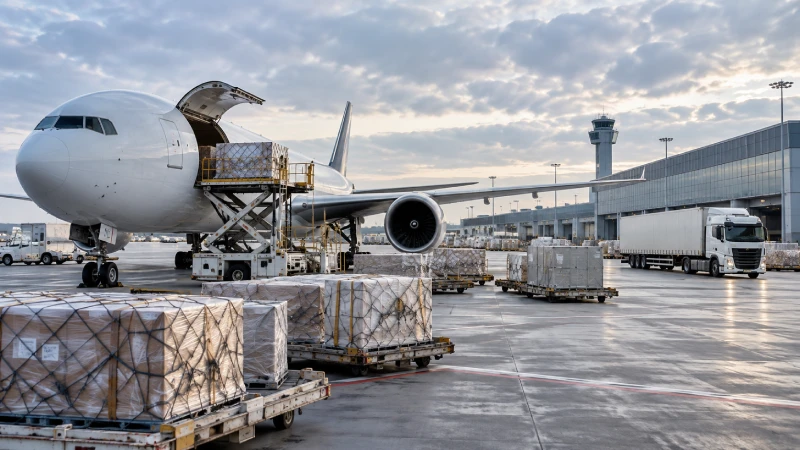
Shipping from China to Frankfurt is primarily an air freight route, with Frankfurt Airport (FRA) acting as one of Europe’s most important gateways for cargo arriving from Asia. For importers in Frankfurt and the wider Rhine-Main region, the shipment normally involves much more than the flight itself: factory pickup in China, export handling, airport selection, air transport, FRA terminal handling, German customs clearance and final truck delivery all affect the real cost and transit time.
Air freight is usually the strongest option for urgent, higher-value or relatively compact commercial cargo. Express courier services can work better for samples and small urgent consignments, while larger or less time-sensitive shipments should also be compared with rail or sea freight.
For a broader overview of all transport modes, costs and import considerations, see our shipping from China to Germany guide.
China to Frankfurt Shipping at a Glance
| Shipping Method | Best For | Typical Planning Transit | Main Pricing Basis | Final Delivery |
|---|---|---|---|---|
| Express courier | Samples, small parcels, urgent cartons | About 3–6 business days in many normal cases | Actual or dimensional weight | Usually integrated |
| Priority air freight | Production-critical and urgent commercial cargo | Fastest conventional air option | Chargeable weight | Can be arranged from FRA |
| Standard air freight | General commercial shipments | Commonly several days from pickup to delivery | Chargeable weight | Available |
| Rail freight | Larger inland shipments with moderate urgency | Usually measured in weeks | Weight, volume and service type | Truck from rail terminal |
| LCL / FCL sea freight | Heavy, bulky or high-volume cargo | Usually several weeks | CBM or container | Truck from seaport |
These are planning ranges rather than guaranteed schedules. Flight availability, consolidation, customs checks, dangerous-goods requirements, weekends, peak seasons and the consignee’s final postcode can all affect the actual delivery date.
Pro Tip: Do not compare routes only by flight time. Ask for the expected factory-to-door transit time. A direct flight may take only hours, while pickup, export processing, cargo availability at FRA, customs release and final trucking can add several days.
Why Frankfurt Airport Is Important for China Air Cargo
Frankfurt Airport is not simply a convenient airport for Frankfurt-based companies. It is one of Europe’s major air-cargo gateways and is strategically located within Germany’s most important road, rail and industrial networks.
According to Fraport, Frankfurt Airport handled around 2.1 million metric tons of cargo in 2025 and once again ranked as Europe’s largest cargo hub. Fraport also describes FRA as being located at the intersection of major air, road and rail networks, with the surrounding Frankfurt Rhine-Main-Neckar region acting as an important European economic and logistics center.
For companies importing products from China, this combination matters because cargo can arrive at FRA, complete the German import process and then move by truck to warehouses, factories, distributors and commercial facilities throughout the Rhine-Main region and beyond.
FRA as an Asia–Europe Cargo Gateway
China and the wider Asia-Pacific region are particularly important to Frankfurt’s cargo network.
In November 2025, Frankfurt Airport and Shanghai Pudong International Airport announced a strategic cargo partnership. According to Fraport, the cooperation is intended to improve coordination between the two airport cargo communities and support more efficient regulatory, customs and cross-border cargo processes.
Fraport specifically describes Frankfurt as a major gateway between Asia and Europe, making the FRA-China connection strategically important rather than simply another airport pair.
This does not mean every shipment from China should automatically move through Shanghai Pudong. Shenzhen, Guangzhou, Beijing and other Chinese cargo gateways may be better depending on the factory location, cargo characteristics, airline capacity and required delivery date.
CargoCity South and the FRA Cargo Community
Frankfurt has a large cargo ecosystem rather than a single handling warehouse.
Fraport describes the local cargo community as a network of more than 250 on-site companies and service providers. CargoCity South includes cargo terminals, freight forwarders, trucking companies, handling providers and specialized infrastructure for different types of air freight.
FCS Frankfurt Cargo Services, for example, provides import and export handling, bonded storage, deconsolidation and specialized handling for dangerous goods, express cargo, valuable freight, perishables and temperature-controlled shipments. Fraport states that FCS handles more than 500,000 metric tons annually for more than 40 airlines.
For importers, the practical point is simple: FRA is designed to move commercial cargo from aircraft arrival through handling and onward transport, rather than functioning only as a passenger airport with limited freight activity.
Which Airports in China Can Ship Cargo to Frankfurt?
The best Chinese departure airport is not always the airport geographically closest to the supplier.
A forwarder should compare:
factory pickup + export handling + flight schedule + capacity + airfreight rate + expected FRA arrival
before selecting the origin gateway.
| China Airport | Code | Common Origin Region | Typical Cargo Profile | When It May Make Sense |
|---|---|---|---|---|
| Shanghai Pudong | PVG | Shanghai, Suzhou, Hangzhou, Ningbo and East China | Electronics, machinery, automotive parts, general cargo, e-commerce | Strong East China gateway with extensive international cargo connectivity |
| Shenzhen Bao’an | SZX | Shenzhen, Dongguan, Huizhou and Pearl River Delta | Electronics, components, high-value products | Particularly relevant to South China electronics supply chains |
| Guangzhou Baiyun | CAN | Guangzhou, Foshan, Zhongshan, Dongguan | Machinery, consumer goods and general cargo | Good option for many Guangdong suppliers |
| Beijing Capital / Daxing | PEK / PKX | Beijing, Tianjin, Hebei and North China | General cargo, technology products, higher-value goods | Useful for northern Chinese suppliers |
| Zhengzhou | CGO | Henan and Central China | Electronics, e-commerce and general air cargo | Possible alternative for Central China manufacturing |
Should You Always Use the Airport Closest to the Factory?
No.
Suppose your supplier is located in Dongguan. Shenzhen may appear to be the obvious choice, but Guangzhou or another gateway could sometimes offer a more suitable departure schedule, cargo capacity or total routing cost.
Likewise, cargo manufactured near Suzhou may move through Shanghai Pudong even when another airport appears competitive on distance alone.
The correct comparison is the total route from the Chinese factory to FRA, not just the airline’s airport-to-airport freight rate.
Pro Tip: Always provide your supplier’s city or postcode when requesting an air freight quotation. A lower FRA airfreight rate from another Chinese airport can be cancelled out by higher domestic trucking, handling or additional transit time.
Air Freight from China to Frankfurt
Conventional air freight is usually the core solution for commercial shipments that need to reach Germany faster than rail or sea freight can reasonably provide.
Typical cargo includes:
- electronics and electrical components;
- machinery parts;
- automotive components;
- industrial spare parts;
- medical or technical equipment;
- production materials;
- high-value consumer products;
- urgent replacement components;
- commercial replenishment inventory.
For a Germany-wide explanation of airport selection, rates and airfreight planning, see our air freight from China to Germany guide.
Standard Air Freight
Standard air freight provides a balance between cost and speed.
Cargo may move as consolidated freight or under a routing using available passenger belly capacity or freighter capacity. The forwarder coordinates pickup in China, export processing, airline booking and arrival handling according to the service scope.
Standard air freight is generally suitable when the cargo is commercially significant enough that express courier rates become inefficient, but the shipment cannot wait for rail or sea transport.
Possible service scopes include:
- airport-to-airport;
- factory-to-FRA;
- airport-to-door;
- door-to-door.
The quotation should state clearly where the forwarder’s responsibility starts and ends.
Priority Air Freight
Priority air freight should be considered when the delivery deadline is more important than obtaining the lowest possible rate.
Typical situations include:
- production line stoppages;
- urgent spare parts;
- delayed components required for assembly;
- product-launch inventory;
- trade-show equipment;
- time-sensitive project cargo.
A genuine priority solution should be based on the actual routing, available flight and handling plan. The word “priority” by itself does not guarantee that a shipment will arrive faster.
Direct and Connecting Flights
A direct service generally reduces transfer points and can provide a more predictable routing.
Connecting services may sometimes offer:
- lower freight rates;
- additional capacity;
- more departure options.
However, each additional transfer can introduce more handling and schedule variability.
For high-value or genuinely urgent freight, it is often worth comparing the difference between the most economical routing and the most reliable routing rather than automatically choosing the lowest USD/kg rate.
Express Courier vs Air Freight to Frankfurt
Express courier services such as integrated parcel networks remain useful for certain China-Frankfurt shipments, but they are not automatically better for every urgent cargo.
| Factor | Express Courier | Conventional Air Freight |
|---|---|---|
| Typical use | Samples, parcels and smaller urgent shipments | Commercial and palletized cargo |
| China pickup | Usually integrated | Forwarder or local pickup |
| Import process | Courier-managed process | Forwarder / customs representative |
| Final delivery | Normally integrated | Added according to delivery scope |
| Pricing | Actual or dimensional weight | Chargeable weight |
| Larger shipments | Can become expensive | Often more suitable |
| Routing flexibility | Limited to courier network | Wider airline/routing options |
| Special cargo | Often more restricted | Specialist solutions may be available |
Avoid using a rigid rule such as “under 100 kg use express, over 100 kg use air freight.”
A 70 kg shipment consisting of large lightweight cartons may have a very high dimensional weight, while a dense 150 kg shipment may still be commercially attractive through a particular express tariff.
The correct decision depends on:
- dimensions;
- actual weight;
- commodity;
- customs requirements;
- delivery deadline;
- final postcode;
- current freight rates.
For more detail, see our express shipping from China to Germany guide.
How Air Freight Chargeable Weight Is Calculated
One of the most common misunderstandings when importing by air is assuming that the airline charges only according to the shipment’s scale weight.
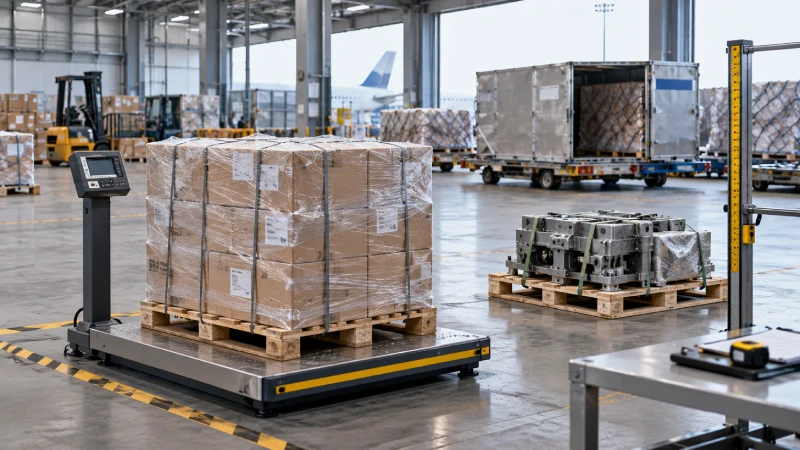
Air cargo occupies both weight capacity and physical space inside an aircraft. For this reason, freight pricing generally compares actual gross weight with volumetric weight.
IATA explains that volumetric weight is commonly calculated by dividing shipment volume in cubic centimeters by 6,000, with the higher of volumetric or actual weight being used for pricing.
Standard Formula
Volumetric Weight (kg) = Length × Width × Height (cm) ÷ 6,000
For multiple cartons, calculate the volume of all packages.
Then compare:
Actual Gross Weight vs Volumetric Weight
The higher figure becomes the chargeable weight.
Chargeable Weight Examples
| Cargo | Actual Weight | Dimensions | Volumetric Weight | Approx. Chargeable Weight |
|---|---|---|---|---|
| Dense machinery parts | 180 kg | 100 × 80 × 60 cm | 80 kg | 180 kg |
| Lightweight commercial product | 80 kg | 120 × 100 × 100 cm | 200 kg | 200 kg |
| Multiple cartons | 120 kg | Total calculated dimensions | 150 kg | 150 kg |
This is why requesting an airfreight quotation with only “500 kg cargo” is incomplete.
If the goods occupy enough aircraft space to produce 800 kg of volumetric weight, the price will normally be based on approximately 800 kg rather than 500 kg.
Pro Tip: Send the number of cartons or pallets, dimensions of each package and gross weight before asking for a China-Frankfurt airfreight price. Accurate dimensions can materially change the quotation.
What Determines Air Freight Cost from China to Frankfurt?
There is no single stable “China to Frankfurt price per kilogram.”
Air freight pricing changes according to origin, airline capacity, shipment density, season, cargo type and service scope.
A complete China-to-Frankfurt cost may contain several components:
| Cost Component | Main Cost Drivers |
|---|---|
| Factory pickup | Supplier location, vehicle type and distance to airport |
| China export handling | Origin airport and cargo requirements |
| Air freight | Origin, chargeable weight, route, capacity and season |
| Airline surcharges | Carrier and service conditions |
| FRA terminal handling | Cargo handler and shipment arrangement |
| Customs brokerage | Declaration complexity |
| Customs duty | Product classification and applicable tariff treatment |
| Import VAT | Import VAT basis and applicable rate |
| Special handling | Batteries, DG, high-value or oversized cargo |
| Final delivery | Destination postcode, shipment size and truck requirements |
Information Needed for an Accurate Quote
To compare realistic airfreight options, provide:
- commodity description;
- HS code if known;
- number of cartons or pallets;
- package dimensions;
- gross weight;
- factory city/postcode in China;
- commercial cargo value;
- Incoterm;
- lithium battery or dangerous-goods status;
- requested delivery deadline;
- German delivery postcode;
- whether customs-clearance support is needed.
The more complete the information, the easier it is to compare the correct airport and service rather than giving a rate that later needs to be revised.
Need an Air Freight Plan to Frankfurt?
Send your cargo description, carton or pallet dimensions, weight, factory location and German delivery postcode.
We can compare the practical China airport, airfreight routing, FRA import process and final delivery into Frankfurt or the wider Rhine-Main region.
CTA: Check My China-Frankfurt Route
How Long Does Air Freight from China to Frankfurt Take?
Transit time should be understood as a chain of individual stages rather than simply the number of hours between two airports.
A typical shipment includes:
| Stage | What Happens |
|---|---|
| 1. Factory pickup | Cargo moves from the supplier to the export warehouse or airport |
| 2. Export handling | Documents, security screening and airline acceptance |
| 3. Air transport | Direct or connecting movement to FRA |
| 4. FRA handling | Unloading, breakdown and terminal processing |
| 5. Customs clearance | Import declaration and any required controls |
| 6. Cargo release | Freight becomes available after clearance |
| 7. Final delivery | Truck moves the shipment from FRA to the consignee |
For normal commercial shipments, the flight itself is often only a small part of the total door-to-door transit.
What Can Delay a China-FRA Shipment?
Common delay factors include:
- cargo not ready at the factory;
- incorrect invoice or packing-list information;
- missed airline cut-off;
- limited peak-season capacity;
- connecting-flight delays;
- lithium battery or dangerous-goods approval;
- customs inspection;
- HS classification questions;
- product-compliance issues;
- incomplete importer or EORI information;
- weekend or public-holiday arrival;
- delayed consignee instructions;
- special final-delivery requirements.
A cheaper routing that requires additional consolidation or transshipment can therefore produce a longer total transit than a more direct service.
Pro Tip: If the shipment is linked to a production deadline, calculate the required warehouse delivery date backwards, rather than choosing an air service based only on advertised airport-to-airport transit.
What Happens When Air Cargo Arrives at Frankfurt Airport?
Arrival at FRA does not mean the shipment is immediately ready for delivery.
The practical sequence normally looks like:
Aircraft arrival → cargo terminal → unloading and breakdown → import documentation → customs declaration → possible customs control → customs release → cargo availability → truck pickup → final delivery
The exact process depends on the airline, handler, forwarder, customs arrangement and cargo type.
Typical Import Documents
| Document | Main Purpose |
|---|---|
| Commercial Invoice | Product description, value and customs information |
| Packing List | Package count, dimensions, weight and packing details |
| Air Waybill | Air transport record |
| HS / TARIC classification | Customs classification and tariff treatment |
| EORI details | Identification for EU customs operations |
| Product documentation | Required where regulations apply |
| Dangerous-goods documents | Required for relevant regulated cargo |
| Origin documentation | Used where applicable |
Not every product requires the same certification or import documentation.
Electrical products, machinery, medical products, food, chemicals, batteries and other regulated categories can each involve different compliance requirements.
The forwarder can coordinate transport and customs processes, but the importer should still confirm the product’s German and EU compliance obligations before shipment.
For a deeper explanation, see our Germany customs clearance for imports from China guide.
Does the German Importer Need an EORI Number?
For commercial customs operations in the European Union, the EORI number is a key requirement.
The European Commission states that an Economic Operators Registration and Identification number is mandatory for customs clearance of import, export and transit operations in EU customs territory. EU-established economic operators generally obtain their EORI from the customs authority of the Member State where they are established.
For a normal commercial import into Germany, the importer arrangement should therefore be established before the cargo arrives.
Exporter, Importer and Customs Representative Are Different Roles
Exporter / Supplier
Usually the Chinese seller or exporting entity responsible for supplying the goods and export documents.
Importer
The party taking the relevant import position in Germany or the EU and responsible for the obligations associated with the import.
Customs Representative
The party appointed to submit or manage the customs declaration according to the agreed representation arrangement.
These roles should not be confused.
Pro Tip: Confirm the importer, EORI and customs-clearance arrangement before the cargo leaves China. Hiring a freight forwarder does not automatically make the forwarder the importer of record.
Customs Duty and Import VAT in Germany
German import charges cannot be calculated correctly from the cargo value alone.
Customs duty depends on factors such as:
- TARIC / HS classification;
- product characteristics;
- customs value;
- origin;
- applicable EU trade measures;
- possible anti-dumping or countervailing duties.
Germany commonly applies 19% import VAT, while certain qualifying goods may fall under the reduced 7% rate. German Customs also demonstrates that customs duty rates vary significantly by product rather than following one universal percentage.
For this reason, avoid assumptions such as:
“All imports from China into Germany pay 5% duty.”
That is not how EU tariff classification works.
A laptop, furniture item, auto part, textile product and bicycle can all have materially different tariff treatment.
The HS/TARIC classification should therefore be checked before a landed-cost calculation is finalized.
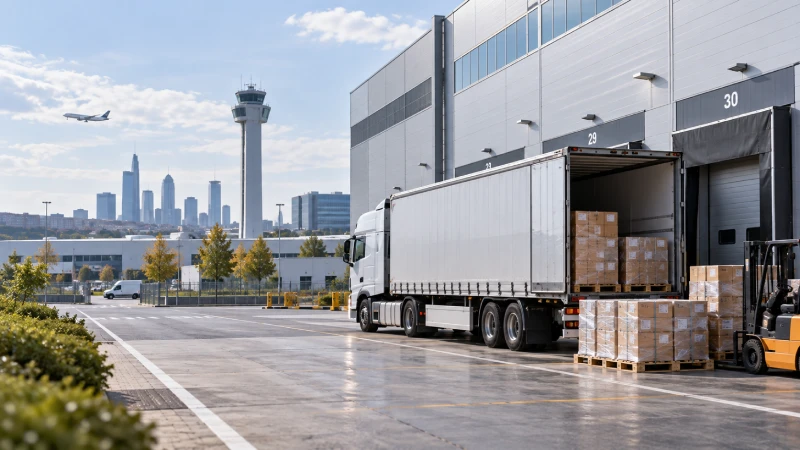
Airport-to-Door Delivery from FRA
For most commercial importers, Frankfurt Airport is an entry point rather than the final destination.
The full logistics chain may look like:
Factory in China → China Airport → Frankfurt Airport FRA → German Customs Release → Local Truck → Consignee Warehouse
This is particularly relevant because FRA sits directly inside one of Germany’s strongest logistics and industrial regions.
Fraport highlights Frankfurt Airport’s location at the intersection of important European transport networks, while the surrounding Frankfurt Rhine-Main-Neckar region is a major economic and logistics area.
Final Delivery Across the Rhine-Main Region
After customs release, air cargo can continue by truck to commercial and industrial destinations throughout the region.
| Destination Area | Typical Relevance |
|---|---|
| Frankfurt | Commercial, wholesale, distribution and industrial deliveries |
| Kelsterbach | Immediately adjacent to FRA with strong airport/logistics activity |
| Raunheim | Logistics and commercial locations west of FRA |
| Rüsselsheim am Main | Major industrial and automotive-related area |
| Mörfelden-Walldorf | Logistics and commercial facilities south of FRA |
| Groß-Gerau | Warehousing and distribution locations |
| Darmstadt | Technology, industrial and commercial customers |
| Offenbach / Hanau | Eastern Rhine-Main destinations |
| Mainz | Commercial and industrial destination west of Frankfurt |
| Wiesbaden | Rhine-Main commercial and industrial destination |
The same FRA shipment can also continue much farther into Germany when the airport offers the right airfreight routing.
What Determines the FRA Final Delivery Cost?
Final trucking depends on more than kilometers.
Important factors include:
- final postcode;
- cargo weight;
- pallet count;
- shipment dimensions;
- loose cartons versus pallets;
- standard cargo versus dangerous goods;
- oversized pieces;
- tail-lift requirement;
- loading dock availability;
- commercial versus residential address;
- delivery appointment;
- restricted delivery hours;
- waiting time;
- special unloading requirements.
Pro Tip: Always provide the German final postcode when requesting a China-to-Frankfurt quotation. An FRA airport-to-airport price does not show the real logistics cost to the consignee.
Airport-to-Airport vs Airport-to-Door vs Door-to-Door
Importers should confirm the precise service boundary before comparing freight quotations.
| Service | China Pickup | Air Freight | FRA Customs | German Delivery |
|---|---|---|---|---|
| Airport-to-Airport | No | Yes | Importer arranges | No |
| China Door-to-FRA | Yes | Yes | Depends on quotation | No |
| Airport-to-Door | Optional / separate | Yes | Depends on quotation | Yes |
| Door-to-Door | Yes | Yes | Can be coordinated | Yes |
| DDP | Yes | Yes | Subject to agreed DDP structure | Yes |
Door-to-Door Does Not Automatically Mean DDP
This distinction is important.
A quotation described as “door-to-door” may cover physical transportation from the Chinese factory to the German address while leaving customs duty, import VAT or importer obligations to the consignee.
Under a DDP arrangement, the seller assumes a much broader set of delivery responsibilities, but whether DDP is operationally and legally appropriate depends on the transaction, importer structure, taxation and product requirements.
For more detail, see our DDP shipping from China to Germany guide.
Pro Tip: When comparing quotations, ask explicitly whether the price includes destination terminal handling, customs brokerage, duty, import VAT and final truck delivery. Two offers both labeled “door-to-door” may have very different inclusions.
Cargo That Needs Extra Planning Before Flying to Frankfurt
Not every shipment can be treated as standard general cargo.
Lithium Batteries and Battery-Powered Products
Battery shipments may require:
- correct UN classification;
- battery test documentation where applicable;
- compliant packaging;
- marks and labels;
- shipper documentation;
- airline approval;
- route-specific acceptance.
A product containing a small lithium battery should therefore not automatically be quoted as ordinary general cargo.
Dangerous Goods
Chemicals, flammable products, aerosols and other regulated commodities require classification and airline acceptance before departure.
Frankfurt has specialist handling capabilities. Fraport states that FCS, for example, handles dangerous goods as part of its specialized cargo services.
However, FRA’s ability to handle dangerous goods does not mean every airline will accept every commodity from every Chinese airport.
The full routing must still be checked.
High-Value Cargo
Higher-value shipments may require:
- controlled handling;
- secure storage;
- cargo insurance;
- limited handover points;
- careful route selection.
Temperature-Sensitive Cargo
Pharmaceuticals, life-science products, chemicals and certain food products may require controlled-temperature handling throughout the chain.
The temperature plan should cover not only the flight but also:
China pickup → export warehouse → airline handling → FRA handling → final trucking
When Is Express Better Than Air Freight?
Express is usually worth considering when simplicity and speed are more important than building a customized commercial airfreight solution.
| Shipment Situation | Option to Consider First |
|---|---|
| Documents and samples | Express |
| A few urgent cartons | Compare express and air freight |
| Commercial palletized cargo | Air freight |
| Larger urgent shipments | Air freight |
| Frequent commercial replenishment | Air freight consolidation |
| Emergency spare parts | Compare priority air and express |
| Regulated or battery cargo | Specialist airfreight assessment |
Do not make the decision using weight alone.
Dimensions, commodity and service requirements can be more important.
When Rail Freight May Be Cheaper Than Air Freight
Rail becomes worth comparing when the shipment is too large or bulky to justify airfreight pricing but still needs to reach inland Germany faster than many sea solutions.
Rail can be particularly relevant when:
- several pallets are involved;
- cargo has a high volumetric weight by air;
- the delivery deadline allows additional transit time;
- the consignee is inland Germany;
- inventory planning can tolerate a multi-week transport cycle.
The trade-off is straightforward:
Air freight prioritizes speed. Rail gives up some speed to reduce transport cost.
For larger inland shipments, see our rail freight from China to Germany guide.
When Sea Freight May Be Cheaper Than Air Freight
Sea freight should normally be compared when cargo is:
- heavy;
- bulky;
- lower in value relative to freight cost;
- several cubic meters in volume;
- suitable for FCL;
- not required urgently.
For a Frankfurt consignee, sea cargo will normally arrive through a European seaport and then continue inland by truck or intermodal transport.
This means Frankfurt does not need to be close to the ocean for sea freight to remain economically viable.
For larger shipments, compare our sea freight from China to Germany and shipping from China to Hamburg guides.
Air vs Rail vs Sea for Frankfurt Importers
| Mode | Relative Cost | Relative Speed | Strongest Use Case |
|---|---|---|---|
| Air freight | Highest | Fastest | Urgent, compact, high-value cargo |
| Rail freight | Medium | Medium | Larger inland cargo with moderate urgency |
| LCL sea freight | Lower | Slower | Bulky non-urgent cargo |
| FCL sea freight | Low unit cost at scale | Slowest | High-volume/container cargo |
Pro Tip: Do not decide between air and rail using actual weight alone. A lightweight but bulky shipment can create a very high airfreight chargeable weight, making rail or LCL substantially more economical.
How to Choose the Best China-to-Frankfurt Shipping Method
A useful decision starts with three questions.
How Urgent Is the Cargo?
If a delayed shipment could stop production, create lost sales or disrupt a project, air freight may be worth the additional cost.
If the shipment can wait several weeks, rail or sea deserves comparison.
How Dense Is the Shipment?
Compact machine parts may work well by air.
Large lightweight products can generate high volumetric weight and quickly make airfreight pricing unattractive.
What Is the True Factory-to-Warehouse Cost?
The cheapest freight rate is not always the cheapest logistics solution.
Compare:
China pickup + origin handling + international freight + destination handling + customs brokerage + final delivery
alongside the required delivery date.
The most useful comparison is therefore not:
“Which mode has the lowest freight rate?”
It is:
“Which route meets the required delivery date at the lowest practical total logistics cost?”
China to Frankfurt Shipping Process
1. Send Cargo Details
Provide the commodity, package quantity, dimensions, gross weight, cargo value, supplier address and German delivery postcode.
2. Check Cargo Requirements
Confirm HS classification, battery status, dangerous-goods requirements and any product-specific documentation.
3. Select the China Airport
Compare the appropriate gateway based on supplier location, flight options, capacity and cost.
4. Confirm Air Freight Service
Choose between express, standard air freight, priority air freight or another suitable routing.
5. Pick Up from the Chinese Factory
The shipment is collected and transferred to the export warehouse or airport facility.
6. Complete China Export Handling
Cargo undergoes documentation checks, security procedures, airline acceptance and export processing.
7. Fly to Frankfurt Airport
The shipment moves to FRA under a direct or connecting routing according to the booking.
8. Complete FRA Cargo Handling
The shipment is unloaded, broken down and processed through the relevant cargo terminal.
9. Complete German Customs Clearance
The import declaration, importer/EORI information, classification and any required customs controls are completed.
10. Deliver to the Consignee
Once released and available, the cargo is collected by truck and delivered to Frankfurt, the Rhine-Main region or another German destination.
Planning a Shipment from China to Frankfurt?
Send us:
- supplier city in China;
- commodity;
- carton or pallet count;
- dimensions;
- gross weight;
- cargo value;
- battery or DG information;
- requested delivery date;
- German delivery postcode.
We can compare the appropriate Chinese departure airport, airfreight route, FRA import arrangement and final delivery plan.
CTA: Plan My Frankfurt Shipment
FAQ
How long does shipping from China to Frankfurt take by air?
Commercial air freight can often move from China to Germany within several days, but the actual door-to-door transit depends on factory pickup, export handling, available flights, direct or connecting routing, FRA terminal processing, customs clearance and final delivery. The flight time alone should not be used as the total transit estimate.
Which airport in China is best for air freight to Frankfurt?
Shanghai Pudong, Shenzhen, Guangzhou and Beijing are among the main gateways to consider. The best airport depends on where the factory is located, the cargo type, flight capacity, routing, freight rate and required delivery date. The closest airport is not always the most efficient overall option.
How is air freight from China to Frankfurt charged?
Air freight normally uses chargeable weight. Actual gross weight is compared with volumetric weight, commonly calculated by multiplying length × width × height in centimeters and dividing by 6,000. The higher value is normally used for pricing.
Does a German company need an EORI number to import through Frankfurt Airport?
Economic operators involved in EU customs import operations generally require an EORI number. The importer and EORI arrangement should be confirmed before the shipment leaves China.
Can cargo clear customs at Frankfurt Airport and then be delivered elsewhere in Germany?
Yes. FRA can serve as the air-cargo import gateway, after which customs-released freight can continue by truck to Frankfurt, the Rhine-Main region or destinations elsewhere in Germany.
Can air cargo from FRA be delivered to Darmstadt, Mainz or Wiesbaden?
Yes. Final trucking can be arranged from Frankfurt Airport to commercial and industrial destinations throughout the Rhine-Main region, including Darmstadt, Mainz, Wiesbaden, Rüsselsheim, Kelsterbach and surrounding areas. The delivery charge depends on the postcode, cargo dimensions, weight and vehicle requirements.
Is airport-to-door shipping the same as DDP?
No. Airport-to-door describes the physical transportation scope from the airport to the consignee. DDP involves a broader allocation of seller responsibilities connected with import clearance, duties, taxes and delivery. The exact arrangement should always be confirmed before shipment.
Is express or air freight better from China to Frankfurt?
Express can be convenient for samples, parcels and smaller urgent shipments. Conventional air freight is often more suitable for palletized and larger commercial cargo. The best option depends on dimensions, chargeable weight, commodity, customs requirements and deadline rather than a fixed kilogram threshold.
When should I use rail freight instead of air freight to Frankfurt?
Rail is worth comparing when the cargo is larger or bulkier and the delivery deadline allows a longer transit. It can reduce transport cost while remaining suitable for inland German destinations when airfreight chargeable weight becomes expensive.
When should I use sea freight instead of air freight?
Sea freight normally makes more sense for heavy, bulky, high-volume or non-urgent shipments. A Frankfurt consignee can receive sea cargo after it enters Europe through a seaport and continues inland by truck or intermodal transport.
What information is needed for a China-to-Frankfurt air freight quotation?
At minimum, provide the commodity, number of packages, package dimensions, gross weight, factory location, cargo value and German delivery postcode. Also identify lithium batteries, dangerous goods or other special cargo before the quotation is prepared.
Why can two China-to-Frankfurt air freight quotations be very different?
Two quotations may use different Chinese origin airports, airlines, routings, transit times and service scopes. One may include FRA handling, customs brokerage and final delivery while another covers only airport-to-airport freight. Always compare the inclusions as well as the headline freight rate.
