
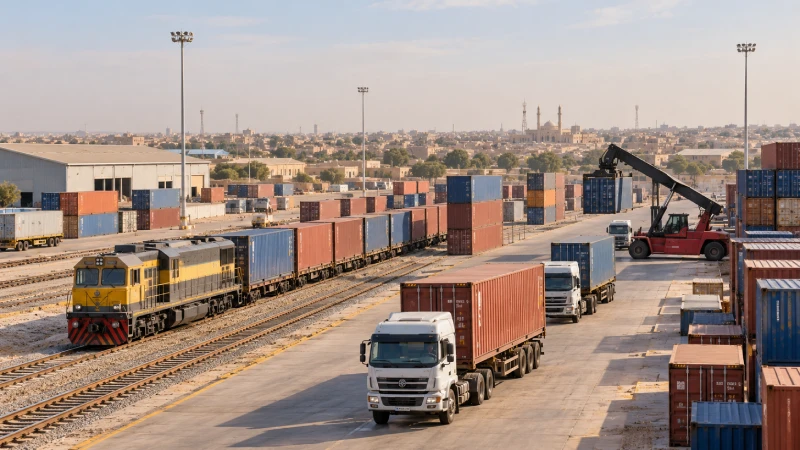
Shipping from China to Kano requires more route planning than shipping to a Nigerian coastal destination.
Kano is inland, so ocean freight does not end when your container reaches Nigeria. A sea shipment normally combines an international ocean leg, a Nigerian seaport, Customs or properly arranged transit procedures, and a long inland movement to Kano. Depending on the cargo, that inland leg may be handled by road or through an available rail/inland-terminal arrangement.
Air freight is another option when cargo value, urgency or shipment size makes the shorter transit time worthwhile.
Kano also has freight infrastructure that makes it different from many other inland destinations in Nigeria. APM Terminals operates an inland container terminal in Kano linked commercially with its Apapa operation, while Dala Inland Dry Port was declared a Port of Origin and Final Destination and commissioned in January 2023. Mallam Aminu Kano International Airport also handles international aviation operations.
However, none of these facilities means that every shipment from China can automatically move under a through bill of lading, travel by rail, clear Customs inland or fly directly from a Chinese airport to Kano.
The correct route must be confirmed shipment by shipment.
For a broader view of sea, air and express options into the country, see Shipping from China to Nigeria.
China to Kano Route Options at a Glance
For most importers, there are five practical route structures to evaluate.
| Route | Best For | Main Benefit | Main Constraint | What Must Be Confirmed |
|---|---|---|---|---|
| China → Apapa → road → Kano | FCL, project cargo and released loose cargo | Flexible inland delivery | Long-haul road movement | Trucking, clearance, unloading and empty return |
| China → Apapa → rail/ICT → Kano | Suitable containerized cargo | Reduces reliance on long-distance trucking | Train schedule, space and service eligibility | Rail booking, TBL/non-TBL structure and Customs procedure |
| China → Nigerian seaport → road → Kano | Cargo where another port produces better total economics | More gateway options | Inland distance may offset lower ocean freight | Total landed route cost |
| China → airline network → KAN | Urgent or high-value cargo | Faster international movement | Capacity and routing | Current airline routing and cargo acceptance |
| China → express courier → Kano | Samples, documents and small parcels | Simple handling for small shipments | High cost per kilogram | Courier limits, duties and product restrictions |
The cheapest ocean freight quotation is not necessarily the cheapest Kano solution.
For an inland destination, the correct comparison is usually:
international freight + port charges + clearance/transit + inland movement + unloading + container return
rather than ocean freight alone.
For ocean-mode planning, Sea Freight from China to Nigeria explains FCL, LCL and Nigerian port-side considerations in more detail.
Kano Is an Inland Destination, Not a Seaport
A basic distinction prevents many routing mistakes:
Kano does not have a seaport.
A container vessel from China cannot sail directly to Kano.
For sea freight, the cargo must first arrive at a Nigerian seaport. It then continues inland after Customs clearance or under an approved Customs transit arrangement.
A typical FCL routing may look like:
China → Lagos Port Complex (Apapa) → road or inland intermodal movement → Kano
For LCL, the structure is more commonly:
China → Nigerian CFS → deconsolidation and release → road delivery to Kano
The Nigerian Ports Authority identifies Lagos Port Complex at Apapa as a major Nigerian port with road, rail and inland-waterway connections, and lists APM Terminals as the operator of its container terminal.
Why Apapa Deserves Special Evaluation for Kano Cargo
When the final destination is Kano, choosing a seaport involves more than comparing ocean rates from Shenzhen, Guangzhou, Ningbo, Shanghai or Qingdao.
Apapa has an important inland advantage: APM Terminals operates both its container terminal at Apapa and an inland container terminal in Kano.
APM Terminals describes the Kano facility as directly connected with Apapa by rail and says both Through Bill of Lading, or TBL, and non-TBL cargo use the Kano terminal. The operator also reported a 51% year-on-year increase in TBL volumes at Kano during the first half of 2025.
This makes several routing structures worth investigating.
Through Bill of Lading
Where the shipping line and service support it, the transport document may cover movement beyond the seaport to an inland destination.
For Kano cargo, this can simplify the commercial structure because the booked destination may be the inland terminal rather than Apapa itself.
But a TBL should never be assumed.
Before shipment, confirm:
- whether the selected shipping line accepts Kano as the inland destination;
- whether the quoted service actually includes the inland leg;
- which inland terminal is specified;
- whether rail or another inland mode will be used;
- which charges are prepaid and which are payable in Nigeria;
- where Customs formalities take place; and
- where the shipping line considers the container returned.
Non-TBL Cargo
A container may also arrive at Apapa under a standard port-destination bill of lading and then have its onward movement arranged separately.
This may provide more flexibility, but the importer or logistics provider must coordinate the additional inland transport, documentation, Customs status and empty-container return.
Rail Availability Must Be Checked
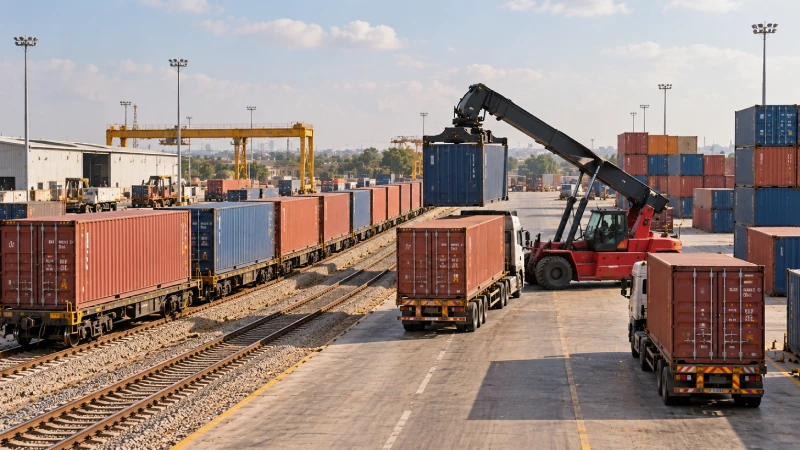
APM Terminals continues to describe its Kano terminal as directly rail-linked to Apapa. Its rail information also describes inland container movement from the port.
That does not mean a fixed train departure is available for every container on every booking date.
Nigeria’s rail freight network and private cargo operations continue to develop. Nigerian Railway Corporation reported further expansion of private-sector freight participation from Apapa in 2026, but its published update did not provide a guaranteed Apapa–Kano timetable for individual commercial bookings.
For that reason, Winsail should confirm the actual rail service, equipment availability, cut-off and expected inland transit before presenting rail as the booked solution.
Pro Tip: Before booking an FCL shipment to Kano, ask whether the freight quotation ends at Apapa, an inland terminal in Kano or the consignee’s warehouse. These are three very different service scopes.
Dala Inland Dry Port: What It Changes and What It Does Not
Dala Inland Dry Port is another important part of Kano’s freight infrastructure.
The Nigerian Shippers’ Council states that Dala Inland Dry Port was declared a Port of Origin and Final Destination in August 2022 and commissioned on January 30, 2023. The Council lists the facility at Zawachiki, Kano State.
This gives Kano an inland-port structure intended to support import and export logistics away from the coastal seaports.
But the term dry port needs to be understood correctly.
Myth: A vessel can ship directly from China to Dala
Reality: Dala is inland. The ocean leg still ends at a Nigerian seaport before the cargo moves inland.
Myth: Every carrier can issue a through B/L to Dala
Reality: Through documentation depends on the shipping line, service contract, inland operator and Customs arrangement.
Myth: Every China shipment can automatically be cleared at Dala
Reality: Customs clearance and bonded-transit procedures must be operationally supported for the specific shipment.
This distinction is particularly important because the Nigerian Shippers’ Council reported in September 2024 that Dala was still facing operational issues, including its treatment at that time as a bonded terminal and the absence of a Nigeria Customs Service desk at the facility.
Therefore, importers should not rely on Dala’s formal designation alone.
For a current China-to-Kano shipment, confirm:
- whether the chosen shipping line supports the required inland structure;
- whether Customs transit to Dala is available;
- whether the intended cargo can complete clearance there;
- which operator controls the inland movement;
- what documents are required; and
- what terminal, handling and delivery charges apply.
Sea + Road vs Sea + Rail/Inland Terminal
For container cargo, the main inland decision is often between direct road haulage from the port and an intermodal route using rail and an inland terminal.
| Factor | Sea + Road | Sea + Rail / Inland Terminal |
|---|---|---|
| Routing flexibility | High | Depends on service |
| Long-haul road exposure | High | Potentially reduced |
| Schedule dependence | Mainly truck availability | Train and terminal schedule |
| FCL suitability | Strong | Strong where service supports cargo |
| Loose cargo suitability | Possible after release | More service-specific |
| Final local trucking | Required | Usually still required |
| Empty-container planning | Critical | Depends on line/terminal arrangement |
| Best use case | Flexible door delivery | Suitable container flows with confirmed inland service |
Direct Road from the Port
Road transport is generally easier to arrange around a consignee’s exact delivery location.
Once the container or cargo has been properly released, a truck can move it toward Kano and continue to the consignee’s warehouse or unloading point.
The disadvantage is the long inland haul.
The transport plan therefore needs to include more than a truck price. It should account for:
- container weight;
- 20ft or 40ft equipment;
- truck type;
- destination accessibility;
- unloading time;
- driver waiting;
- cargo security;
- empty-container return; and
- possible detention exposure.
Rail or Inland Intermodal Movement
Rail can reduce some long-distance road exposure for suitable container movements.
However, the container still normally requires truck handling at one or both ends of the rail movement.
A practical structure may therefore be:
Apapa terminal → rail/inland terminal → local truck → Kano warehouse
rather than:
Apapa → train → customer’s factory
The commercial advantage depends on the cargo, available schedule, terminal charges and final delivery location.
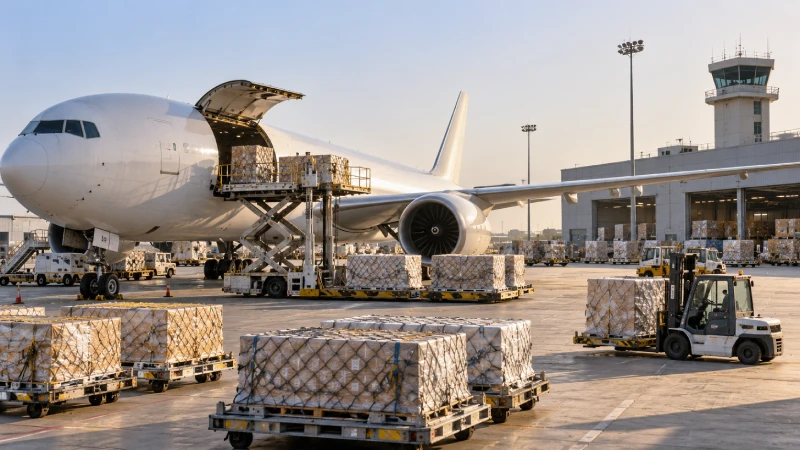
Air Freight from China to Kano
Air freight can be attractive for:
- urgent spare parts;
- high-value electronics;
- samples;
- production-critical components;
- small commercial shipments; and
- cargo where a long sea-and-inland supply chain would cause costly delays.
Mallam Aminu Kano International Airport, airport code KAN, serves Kano. FAAN identifies international operations at the airport and lists cargo complex/warehouse and cargo-management functions among the airport’s facilities or investment areas.
That does not mean Winsail should advertise a direct Guangzhou–Kano, Shenzhen–Kano or Shanghai–Kano cargo flight.
China-origin air cargo may need to move through an airline hub before reaching Kano, and the usable route depends on current airline schedules, cargo capacity, commodity restrictions and the shipment dimensions.
Current international cargo capacity and China-origin routing should therefore be confirmed at quotation.
In some cases, an alternative Nigerian airport plus domestic or road transfer may also be commercially relevant. The decision should be based on the complete door-to-door route rather than airport-to-airport freight alone.
For general air-cargo planning from China, see Air Freight Services from China.
What Kano Cargo Is Well Suited to Each Mode?
Kano supports significant manufacturing, processing and commercial distribution activity.
Nigerian Investment Promotion Commission records show activity in areas such as rice milling, leather manufacturing and other industrial operations in Kano. A 2024 NIPC working visit also highlighted major rice-processing and manufacturing facilities in the state.
That commercial profile makes several China-origin cargo categories particularly relevant.
Machinery and Processing Equipment
Industrial machines, production equipment and larger processing systems usually favor sea freight because of their weight and dimensions.
FCL is particularly useful when the machinery requires:
- secure container loading;
- export packing;
- blocking and bracing;
- controlled unloading; or
- multiple related components shipped together.
Manufacturing Inputs and Packaging
Raw materials, packaging products and regular production inputs may work well as LCL during early purchasing stages and move to FCL once shipment volumes increase.
Industrial Spare Parts
Routine spares can travel by sea, while production-critical replacements may justify air freight.
Some importers therefore use a mixed supply-chain model:
planned replenishment by sea + emergency stock by air
Commercial Inventory
Wholesale goods and commercial stock are usually selected according to shipment volume, inventory turnover and delivery deadlines.
A high-volume order may favor FCL, while a smaller test order can be more practical as LCL.
Leather and Textile Equipment
Machines, components and consumables supporting Kano’s leather, textile and related manufacturing sectors can be evaluated according to shipment density and urgency.
FCL Planning for Kano
Full-container shipping to Kano needs more inland planning than an FCL quotation ending at Lagos.
Before booking, answer the following questions.
1. Where does the bill of lading end?
Check whether it shows:
- Apapa;
- another Nigerian port;
- an inland terminal; or
- another agreed place of delivery.
2. Is the container moving under TBL or a separate inland arrangement?
This affects commercial responsibility, terminal procedures and possibly the empty-return process.
3. Will the container move inland by road or rail?
Do not leave this decision until the container has already arrived.
4. Where will Customs clearance occur?
The plan must distinguish cargo that is cleared at the coastal gateway from cargo moving inland under an approved transit procedure.
5. Where will the container be unloaded?
A terminal delivery is different from delivery to a factory, warehouse or wholesale facility.
6. Where is the empty container returned?
For Kano, this can materially affect the total inland cost.
APM Terminals states that its Kano facility supports container handling and says its TBL arrangements can include Kano empty drop-off benefits in applicable cases.
That should still be verified against the actual shipping line and booking.
Pro Tip: Price the empty-container return before choosing long-haul road transport. A low outbound trucking price can become much less attractive if the empty must be repositioned a long distance.
LCL Shipping to Kano
LCL works differently.
A consolidated container contains cargo belonging to multiple importers, so the box normally moves first to the nominated Nigerian container freight station or deconsolidation facility.
The shipment is then separated and released before the individual consignment continues inland.
For planning purposes, the safest default model is:
China LCL → Nigeria CFS → deconsolidation → Customs release → road delivery to Kano
Do not assume that an LCL shipment booked in China automatically remains consolidated all the way to an inland Kano terminal.
A specific inland LCL product may exist from time to time, but it should be confirmed before booking.
LCL may be practical when:
- the shipment is too small for a full container;
- the goods are not extremely urgent;
- the importer accepts an additional handling stage; and
- inland road delivery after release remains economical.
For dense or heavy cargo, compare the LCL charge plus inland delivery against FCL before deciding. For volume-based planning, Shipping Cost per CBM from China to Nigeria provides additional context.
Customs Clearance and Inland Transit
Customs status is one of the most important parts of China-to-Kano planning.
There are two fundamentally different situations.
Option 1: Clear the Cargo at the Seaport
The cargo completes the required Nigerian import formalities at the coastal gateway.
After release, the container or loose cargo moves inland as released cargo.
This is often the simplest model to explain.
Option 2: Move the Cargo Inland Under a Proper Transit Arrangement
Where the necessary Customs, carrier and terminal procedures support it, cargo may move under controlled transit to an approved inland facility.
This must be formally arranged.
An uncleared import container cannot simply be collected from the seaport and driven to Kano as though it were already released.
Nigeria Customs Service identifies import, export and transit as distinct Customs services and continues to require core import documentation and procedures such as Form M and the Pre-Arrival Assessment Report, or PAAR.
The exact requirements depend on the commodity.
Depending on the product, the importer may also need regulatory approvals, certificates or other product-specific documentation.
For Kano cargo, establish the Customs structure before departure from China, especially when an inland terminal or dry-port arrangement is intended.
Long-Haul Delivery Cost Drivers
There is no reliable universal “Lagos to Kano trucking price.”
Actual inland cost depends on multiple operational variables.
Container Size
A 20ft container and 40ft container require different equipment and pricing.
Cargo Weight
Heavy cargo can affect the truck specification, route economics and handling plan.
Truck Market and Fuel Cost
Long-distance haulage pricing changes with market conditions and fuel costs.
Final Delivery Location
“Kano” is not a complete delivery address.
Delivery to an accessible industrial warehouse may be very different from delivery to a congested commercial location or a site with restricted truck access.
Unloading
Confirm whether the consignee has:
- forklift access;
- crane access;
- loading dock;
- labor;
- sufficient unloading space; and
- ability to unload within the allowed truck or container time.
Empty Return
For FCL, establish where the empty box must be returned and how that leg will be charged.
Rail and Inland-Terminal Charges
Where intermodal transport is used, the comparison must include the rail service, terminal handling, local trucking and any applicable storage or documentation charges.
Customs Transit
Bonded inland movement can create additional documentation and operational costs.
Security and Insurance
Cargo value, routing and insurance requirements can also influence the final transport plan.
For a wider cost framework before comparing specific Kano inland options, see Shipping Cost from China to Nigeria.
Gateway Decision Guide
| Gateway / Route | Inland Mode | Suitable Cargo | Customs Structure | Empty Return | Main Planning Risk |
|---|---|---|---|---|---|
| Apapa → Kano by road | Truck | FCL, released cargo, machinery | Usually port clearance or arranged transit | Must be priced | Long haul |
| Apapa → Kano ICT | Rail/intermodal | Suitable containers | Depends on TBL/transit structure | Confirm terminal/line rules | Service availability |
| Seaport → Dala structure | Inland transit | Cargo supported by current procedure | Must be formally arranged | Booking-specific | Operational eligibility |
| Air network → KAN | Air + local truck | Urgent/high-value cargo | Airport import clearance | Not applicable | Space and routing |
How to Choose the Best Route
For most Kano importers, start with four questions.
How large is the shipment?
Small cargo may favor LCL or air. Larger commercial shipments may favor FCL.
How urgent is it?
Sea freight is normally used when cost control is more important than speed. Air is stronger when delay would create a larger commercial loss than the additional freight cost.
Does the container need to reach Kano intact?
If yes, compare direct truck delivery with a confirmed TBL or rail/inland-terminal arrangement.
Where will Customs clearance take place?
This determines much of the inland documentation and operating structure.
For smaller urgent parcels and samples, Express Shipping from China to Nigeria can be compared with standard air freight.
Compare Kano Shipping Routes
Winsail can compare the practical route from the China pickup point through the Nigerian gateway and onward to Kano rather than evaluating only the international freight rate.
For accurate routing, provide:
- origin city in China;
- product description;
- number of packages;
- dimensions;
- gross weight;
- cargo value;
- FCL or LCL requirement if known; and
- exact Kano delivery location.
We can then compare sea + road, available sea + inland intermodal options, or air freight to Kano based on the shipment.
Where final delivery is required beyond the port or airport, Door-to-Door Shipping from China explains the broader end-to-end service structure.
FAQ
Can a container ship directly from China to Kano?
No. Kano is inland and has no seaport. An ocean shipment must first arrive at a Nigerian seaport and then continue inland by road, rail/intermodal transport or another properly arranged inland service.
Which Nigerian seaport is best for Kano cargo?
Apapa deserves particular evaluation because its container terminal has an established commercial connection with APM Terminals Kano and rail capability. However, the best gateway depends on the carrier, ocean freight, inland availability, Customs plan and total delivered cost.
Is there rail freight from Apapa to Kano?
APM Terminals describes its Kano inland container terminal as directly rail-linked with Apapa. Actual departures, space, equipment and eligibility should still be confirmed for the individual booking.
What is Dala Inland Dry Port?
Dala Inland Dry Port is an inland logistics facility in Kano. The Nigerian Shippers' Council states that it was declared a Port of Origin and Final Destination and commissioned in January 2023. It does not mean ocean vessels sail to Kano, and actual inland Customs and shipping-line procedures must still be confirmed.
Can China imports be customs-cleared in Kano?
Potential inland-clearance structures exist, but they depend on the facility, Customs procedure, shipping documentation and current operating arrangements. Do not assume every import can automatically bypass seaport clearance and clear in Kano.
Can air freight arrive at Kano airport?
Mallam Aminu Kano International Airport handles international aviation operations, but China-origin cargo routing and capacity must be checked when the shipment is quoted. A direct flight from a Chinese airport to Kano should not be assumed.
Is LCL practical for Kano?
Yes, for suitable smaller shipments. The normal planning model is for LCL cargo to be deconsolidated and cleared at its Nigerian CFS before loose cargo continues to Kano by road unless a specific inland LCL service has been arranged.
How is an empty container returned after Kano delivery?
It depends on the shipping line and inland-service structure. The empty may need to return to a designated depot, or an approved Kano inland facility may support the return under certain services. Confirm the empty-return location and detention rules before the container leaves the port.
Send Cargo & Kano Delivery Location
For a practical China-to-Kano route comparison, send the cargo description, package count, dimensions, gross weight, China pickup location and exact Kano delivery address.
Winsail can then assess whether the shipment is better suited to FCL, LCL, air freight, direct inland trucking or an available intermodal structure, while confirming the gateway, Customs arrangement and final-delivery requirements before booking.
Operational note: Inland rail availability, TBL acceptance, Dala Inland Dry Port procedures, Customs transit arrangements, KAN air-cargo routing and long-haul trucking conditions can change. These items should be reconfirmed against the actual shipment and booking date rather than treated as guaranteed services.
