

Shipping from China to Sharjah involves choosing a suitable UAE gateway, arranging customs procedures, and delivering cargo to a mainland warehouse or free zone. Compare Jebel Ali with available Port Khalid or Hamriyah Port services; for urgent shipments, consider Sharjah Airport or alternative air gateways. The best route depends on confirmed schedules, cargo type, consignee status, delivery requirements, and total door-to-door cost.
For many commercial importers, the shipping decision begins with the final delivery address—not the port of arrival.
A container destined for a mainland trading warehouse may follow a different customs and delivery process from industrial equipment entering Hamriyah Free Zone or spare parts required at a SAIF Zone facility.
Sharjah also has its own maritime ports, international airport, industrial districts, and customs infrastructure. Although Jebel Ali is an important gateway for containerized cargo, it should not automatically be treated as the only option.
This guide explains how to compare shipping routes, choose between FCL, LCL, air freight, and express delivery, understand customs responsibilities, and prepare cargo for delivery to a Sharjah warehouse.
For broader country-level information, see our guide to shipping from China to UAE.
Where Will Your Cargo Be Delivered in Sharjah?
Before selecting a shipping method or UAE arrival port, establish the exact receiving destination.
For importers, the distinction between Sharjah mainland, Hamriyah Free Zone, and Sharjah Airport International Free Zone (SAIF Zone) affects customs planning, delivery documentation, and warehouse access.
Sharjah Mainland Warehouses and Industrial Areas
Sharjah mainland includes commercial warehouses, trading company premises, manufacturing facilities, and industrial locations used by importers and distributors.
Typical shipments include:
- Machinery, industrial equipment, and replacement parts.
- Construction materials and factory supplies.
- Electrical components, tools, and hardware.
- Packaging materials and wholesale inventory.
- Furniture, textiles, and general commercial goods.
For mainland delivery, the receiving business must have an appropriate import arrangement. This may involve its own importer registration and an authorized customs broker.
If the goods arrive at Jebel Ali and complete the applicable mainland import procedures, they may generally be transported onward to a Sharjah warehouse after customs release.
However, delivery arrangements still need to be confirmed.
Some warehouses can receive a loaded shipping container directly. Others may have limited access, insufficient unloading space, or restrictions on heavy vehicles.
Before booking, ask the receiving company:
- Can a container trailer access the warehouse?
- Is a forklift or unloading crew available?
- Are deliveries accepted without an appointment?
- Is there a maximum vehicle size or permitted delivery window?
- Who will sign the proof of delivery?
A shipment is not operationally complete simply because the container has been released from the port.
Hamriyah Free Zone: Industrial and Warehouse Receiving
Hamriyah Free Zone is an important industrial and commercial area in Sharjah, with manufacturing facilities, warehouses, and businesses involved in international trade.
It is located adjacent to Hamriyah Port, which can be relevant for suitable industrial and general cargo movements.
For importers shipping machinery, industrial materials, or manufacturing components to Hamriyah Free Zone, the receiving company should confirm its customs and warehouse arrangements before the cargo leaves China.
Important information includes:
- The registered free zone consignee.
- The precise warehouse or industrial plot.
- The intended customs entry procedure.
- Any required receiving authorization.
- Cargo handling and unloading arrangements.
- Whether the goods will remain within the free zone or later enter the UAE mainland.
A Hamriyah Free Zone delivery address does not automatically require the shipment to arrive at Hamriyah Port.
Depending on available vessel services and customs arrangements, a shipment may be routed through another UAE gateway before being moved to the free zone under an appropriate authorized procedure.
The correct arrangement should be confirmed with the consignee, the responsible customs authorities, and the appointed logistics providers.
SAIF Zone: Airport-Connected Commercial and Logistics Facilities
Sharjah Airport International Free Zone, commonly called SAIF Zone, is located near Sharjah International Airport.
Its location can be useful for businesses handling commercial inventory, spare parts, and time-sensitive shipments.
Air freight through Sharjah International Airport may be worth evaluating when a suitable flight and cargo-handling service is available.
However, SAIF Zone businesses are not limited to air freight.
A company importing larger quantities of inventory may choose sea freight through an available UAE port, followed by an appropriately arranged movement to its SAIF Zone warehouse.
The main considerations are:
- Whether the consignee is properly registered to receive the cargo.
- Which customs procedure applies to the movement.
- Whether an authorized customs-controlled transfer is required.
- Which documents the warehouse needs before delivery.
- Whether the receiving facility has gate access or unloading restrictions.
Do not assume that cargo arriving at a Dubai port can simply be transported into SAIF Zone without checking the necessary customs and free zone procedures.
Sharjah Mainland vs Free Zone Delivery
| Delivery Requirement | Sharjah Mainland | Hamriyah Free Zone | SAIF Zone |
|---|---|---|---|
| Typical destination | Trading warehouse, factory, distributor | Industrial facility, warehouse, manufacturing company | Commercial warehouse, logistics facility, trading company |
| Typical cargo | General commercial goods, machinery, wholesale inventory | Industrial materials, machinery, components, commercial inventory | Spare parts, commercial inventory, electronics and other suitable goods |
| Customs planning | Applicable mainland import procedure | Free zone entry or authorized customs transfer | Free zone entry or authorized customs transfer |
| Consignee requirements | Appropriate importer and customs arrangements | Registered free zone receiving entity and applicable authorization | Registered free zone receiving entity and applicable authorization |
| Possible gateways | Jebel Ali, suitable Sharjah ports, airports | Hamriyah Port or another suitable UAE gateway | SHJ, Jebel Ali or another suitable gateway |
| Final delivery checks | Road access, unloading, receiving hours | Free zone entry, gate access, warehouse handling | Free zone entry, gate access, warehouse handling |
| Later mainland distribution | Goods already imported may generally circulate subject to applicable rules | Additional declaration and tax implications may apply | Additional declaration and tax implications may apply |
Important customs and tax distinction: Free zone status does not mean every transaction is automatically exempt from customs duties or VAT.
Hamriyah Free Zone and SAIF Zone are listed among the UAE’s VAT Designated Zones, but the treatment of specific goods and transactions depends on the applicable conditions.
The UAE Federal Tax Authority explains these distinctions in its guidance on Free Zones and Designated Zones for Tax Purposes.
For a broader explanation of UAE receiving arrangements, see our guide to UAE free zone vs mainland delivery.
Which UAE Gateway Should Handle Your China-to-Sharjah Shipment?
Sharjah-bound cargo does not need to enter the UAE through a single designated port.
The best gateway depends on available carrier services, cargo characteristics, customs procedures, destination charges, and the final warehouse location.
Importers should compare the complete route from the Chinese supplier to the receiving address rather than choosing a port based on distance alone.
Jebel Ali Port: Container Shipping Followed by Sharjah Trucking
Jebel Ali Port in Dubai is an established international container gateway with extensive shipping and inland transport connections.
It is a practical option to evaluate for commercial container shipments arriving from China and destined for Sharjah.
A typical FCL movement may involve:
- Container loading at the supplier or an export warehouse in China.
- Export customs procedures and loading onto the booked vessel.
- Arrival and discharge at Jebel Ali.
- Delivery order, terminal handling, and applicable customs procedures.
- Container release and trucking to the Sharjah warehouse.
- Unloading and empty-container return.
For LCL cargo, an additional deconsolidation step normally takes place at an approved destination facility before the goods are released for delivery.
Jebel Ali can be particularly relevant for regular commercial inventory, standard containers, and shipments requiring established shipping-service connections.
However, its international connectivity does not make it the best gateway for every shipment.
The importer must also consider inland transport, destination handling charges, container collection, customs arrangements, and warehouse access.
For more detail about this specific gateway, read our guide to shipping from China to Jebel Ali.
Port Khalid: A Sharjah Port Option for Suitable Cargo
Port Khalid is a multipurpose port located in Sharjah, serving maritime cargo and commercial activities.
For importers with receiving facilities in Sharjah city or nearby industrial districts, it may be worth considering when an appropriate vessel service and cargo-handling arrangement are available.
Its relevance can include selected general cargo, containerized shipments, and other cargo types supported by the applicable terminal facilities.
However, the port’s ability to handle cargo does not establish the availability of a direct scheduled container service from every Chinese export port.
Before selecting Port Khalid, verify:
- Whether the shipping line or agent offers a suitable service.
- Whether the route involves transshipment.
- Whether the vessel can discharge the specific cargo at Port Khalid.
- What terminal handling and customs arrangements apply.
- Whether suitable local transport is available.
- How the complete delivery cost compares with Jebel Ali.
A shipment from Ningbo, Shanghai, or Shenzhen should not be advertised as having a direct Port Khalid sailing unless that service has been confirmed for the relevant booking period.
Hamriyah Port: Industrial Cargo and Free Zone Access
Hamriyah Port is located alongside Hamriyah Free Zone, north of Sharjah city.
It is particularly relevant to investigate for selected industrial cargo, general cargo, and shipments requiring specialized handling.
The adjacent industrial and free zone infrastructure may create practical advantages for some consignees.
For example, an importer receiving large industrial equipment at a Hamriyah Free Zone factory may wish to compare Hamriyah Port with a containerized route through Jebel Ali.
The comparison should consider more than the distance from the port to the factory.
Important checks include:
- Vessel or feeder service availability.
- Terminal acceptance of the cargo.
- Container, breakbulk, or specialist handling requirements.
- Cargo dimensions and weight.
- Discharge equipment and lifting arrangements.
- Customs and free zone procedures.
- Trucking and final unloading requirements.
Some machinery can move safely in a standard container. Other equipment may need an open-top container, flat-rack equipment, or a different cargo-handling solution.
The appropriate choice depends on the actual loading dimensions, weight distribution, securing plan, and available services.
Hamriyah Port should be considered when its confirmed service and handling arrangements suit the cargo—not simply because the final delivery address is inside Hamriyah Free Zone.
Port Khorfakkan: An Additional Sharjah Emirate Gateway
Port Khorfakkan is located on the UAE’s east coast, on the Gulf of Oman.
It is an important container terminal and transshipment gateway within Sharjah’s maritime infrastructure.
For certain shipments, a confirmed carrier service through Khorfakkan may provide another route to evaluate.
However, a vessel calling at Khorfakkan for transshipment does not necessarily mean the importer can arrange local cargo discharge there.
Before considering it for a Sharjah mainland or free zone delivery, verify:
- Whether local import discharge is available for the booked service.
- Whether the cargo can be released or moved under the intended customs procedure.
- The onward inland transport arrangements.
- Additional handling or transfer charges.
- The complete door-to-door transit schedule.
Khorfakkan should therefore be treated as a conditional gateway option, not an assumed substitute for Jebel Ali or Sharjah’s Gulf-side ports.
Sharjah International Airport (SHJ): Air Cargo and SAIF Zone Access
Sharjah International Airport has dedicated cargo-handling facilities serving commercial freight operations.
Its infrastructure includes facilities for general cargo and certain specialized cargo categories, subject to airline acceptance and applicable regulations.
For Sharjah-based businesses, SHJ may be an attractive arrival airport for urgent shipments when suitable air services are available.
Examples include:
- Production-critical machinery components.
- Commercial samples.
- High-value replacement parts.
- Urgent inventory replenishment.
- Other suitable time-sensitive commercial goods.
The important question is whether a viable air freight booking can be arranged from the Chinese origin to SHJ, directly or through an appropriate connection.
Dubai International Airport (DXB) and Al Maktoum International Airport (DWC) may also be worth comparing when available flight schedules, cargo capacity, and destination handling make them practical.
The nearest airport does not always provide the earliest warehouse delivery.
A flight arriving at a more distant airport may still be competitive if the full arrival, clearance, and delivery sequence is better suited to the shipment.
For dangerous goods, batteries, chemicals, oversized cargo, or temperature-sensitive products, obtain acceptance confirmation before booking.
UAE Gateway Options for Sharjah Importers
| UAE Gateway | Transport Mode | Cargo Relevance | Main Advantage to Evaluate | Main Verification |
|---|---|---|---|---|
| Jebel Ali Port | Sea freight | FCL, LCL, commercial container cargo | International container connectivity | Sailing, arrival charges, customs and trucking |
| Port Khalid | Sea freight | Suitable general and containerized cargo | Sharjah-side port handling | Actual vessel service and terminal acceptance |
| Hamriyah Port | Sea freight | Selected industrial, general and specialist cargo | Port and nearby industrial zone relationship | Service availability, cargo handling and free zone arrangements |
| Port Khorfakkan | Sea freight | Suitable container cargo | East-coast gateway and transshipment infrastructure | Local discharge eligibility and inland delivery |
| Sharjah Airport (SHJ) | Air freight | Urgent spare parts, samples, suitable commercial cargo | Proximity to Sharjah commercial and industrial facilities | Available flight, cargo acceptance and clearance |
| DXB / DWC | Air freight | Alternative urgent or specialized shipments | Potential alternative airline connections | Total airport-to-warehouse delivery performance |
For the official description of Sharjah’s maritime infrastructure, refer to the Sharjah Ports Authority.
Route selection rule: Compare confirmed schedules, cargo acceptance, all destination handling charges, customs procedures, and final delivery requirements before choosing a gateway.
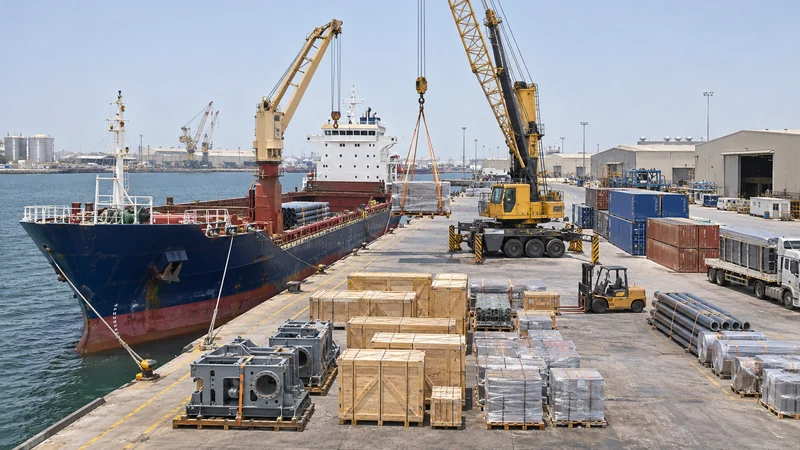
FCL, LCL, Air Freight or Express: Which Method Fits Your Cargo?
The appropriate shipping method depends on volume, weight, cargo sensitivity, business urgency, and the receiving warehouse’s capabilities.
A lower international freight rate does not necessarily produce a lower total delivery cost.
FCL Sea Freight for Commercial Inventory and Container Loads
Full Container Load (FCL) shipping is worth considering for substantial cargo volumes, repeat inventory replenishment, or shipments that benefit from dedicated container space.
Commercial importers commonly evaluate FCL for:
- Large quantities of boxed wholesale goods.
- Industrial materials and factory supplies.
- Machinery and equipment.
- Multiple pallets of commercial inventory.
- Consolidated purchases from several Chinese suppliers.
Depending on cargo dimensions and loading requirements, suitable equipment may include standard dry containers or specialized container types.
FCL offers greater control over how goods are loaded and secured, although it does not eliminate handling or transport risks.
Before booking FCL to a Sharjah warehouse, confirm that the receiving site can accept the arriving container vehicle.
If direct container delivery is unsuitable, alternative unloading or transfer arrangements may be required.
Container detention, waiting time, unsuccessful delivery, and additional handling should be considered when comparing quotations.
LCL Sea Freight for Smaller Commercial Shipments
Less than Container Load (LCL) shipping allows smaller consignments to share container space with other cargo.
It may be suitable for importers purchasing limited quantities of industrial components, accessories, or wholesale goods.
A typical LCL shipment involves:
- Delivery of the cargo to an approved consolidation facility in China.
- Cargo checking, measurement, and consolidation.
- International ocean transport.
- Arrival and deconsolidation at a destination container freight station (CFS).
- Customs clearance or other applicable customs arrangements.
- Collection and delivery to the Sharjah consignee.
LCL rates are often calculated using chargeable weight or measurement rules.
For example, consider an illustrative shipment of 12 cartons, each measuring 0.60 × 0.40 × 0.50 meters.
The volume calculation is:
0.60 × 0.40 × 0.50 × 12 = 1.44 CBM
This is the physical volume before any additional measurement or chargeable-unit adjustments imposed by the service provider.
The importer should also obtain the destination CFS charges, documentation fees, delivery charges, and any minimum billing requirements.
LCL may be economical for smaller shipments, but additional handling can make it less suitable for particularly fragile, oversized, or time-critical cargo.
Air Freight for Production-Critical Spare Parts
Air freight is worth considering when the commercial consequences of a delay exceed the additional transport cost.
For example, a Sharjah factory may need replacement control components to restore production.
In this situation, the decision should account for:
- The required delivery deadline.
- Available flights and transshipment connections.
- Cargo acceptance and chargeable weight.
- Customs and product-specific requirements.
- Airport handling and final trucking.
- The potential cost of production downtime.
Air freight is generally priced using the greater of actual gross weight and calculated volumetric weight, subject to the carrier’s applicable rules.
Illustrative calculation:
A carton measuring 60 × 40 × 50 cm has a gross weight of 8 kg.
Using an illustrative air cargo volumetric divisor of 6,000:
60 × 40 × 50 ÷ 6,000 = 20 kg
Under that divisor, the volumetric weight exceeds the actual gross weight.
The applicable airline or freight service must confirm the actual calculation method, minimum charges, and final billable weight.
Express Courier for Samples and Small Parcels
Express courier services may be suitable for prototypes, product samples, small commercial parcels, and certain replacement parts.
However, courier acceptance, customs requirements, and destination delivery conditions still apply.
Before selecting express shipping, check:
- The full product description and customs value.
- Whether the cargo is accepted by the courier.
- Any special documentation or import permissions.
- The consignee’s ability to complete import formalities.
- Whether delivery to the specific warehouse or free zone address is supported.
A small or low-value parcel should not automatically be assumed to qualify for duty-free or unrestricted entry.
Cargo Type vs Shipping Method
| Cargo Type | Shipping Methods to Evaluate | Main Decision Factors | Special Handling Considerations |
|---|---|---|---|
| Industrial materials | FCL, suitable specialist sea freight | Weight, packaging, volume | Heavy lifting, securing, unloading |
| Machinery and equipment | FCL, open-top, flat-rack, suitable breakbulk | Dimensions, weight distribution | Lifting plan, equipment acceptance |
| Machinery spare parts | Air freight, express, LCL | Urgency, value, weight | Protective packaging, classification |
| Wholesale inventory | FCL, LCL | Shipment volume, replenishment needs | Carton labels, pallet handling |
| Commercial samples | Express, air freight | Parcel size, delivery urgency | Accurate declarations, acceptance |
| Mixed supplier purchases | LCL consolidation, FCL | Supplier readiness, combined volume | Consolidation and cargo identification |
Where goods are regulated, hazardous, oversized, or temperature-sensitive, the shipping method must also meet the applicable carrier, authority, and handling requirements.
Customs Clearance, Free Zone Entry and Importer Responsibilities
Customs planning should begin before the shipment departs China.
The importer must understand which authority will handle the arrival or customs movement, who is authorized to make the declaration, and whether the goods are intended for mainland use or a free zone facility.
Confirm the Importer and Customs Procedure Before Booking
The consignee named in the shipping documents is not necessarily the only party relevant to customs responsibility.
Before booking, clarify:
- Who will act as the legal importer.
- Whether the importer has the required registration or customs code.
- Which customs authority will handle entry.
- Who will submit the customs declaration.
- Whether the goods require permits or regulatory approval.
- Who will pay applicable duties, VAT, and clearance charges.
- Whether the cargo requires a customs-controlled transfer.
For a shipment arriving at Jebel Ali, the initial arrival procedures involve the relevant Dubai customs and port arrangements.
For a shipment entering through a Sharjah port or airport, the appropriate Sharjah customs procedures must be considered.
Moving goods onward to a Sharjah free zone may require additional arrangements even when the original gateway is elsewhere in the UAE.
A freight forwarder may coordinate shipping and delivery, but this does not automatically make the forwarder the importer of record or the holder of every required customs authorization.
Documents for Commercial Shipments to Sharjah
The required documents depend on the cargo, gateway, customs procedure, and applicable regulations.
A typical commercial import document set may include:
| Document | Purpose | Important Check |
|---|---|---|
| Commercial Invoice | Establishes seller, buyer, goods and transaction value | Accurate product descriptions, currency and values |
| Packing List | Identifies cargo packages, quantity, weights and dimensions | Consistent with actual cargo and shipping documents |
| Bill of Lading / Air Waybill | Transport document | Correct consignee, shipment and routing details |
| Delivery Order | Supports cargo release where applicable | Required release and agent arrangements |
| Certificate of Origin | Supports origin declaration where required | Applicable format and authentication requirements |
| HS Classification | Identifies goods for customs purposes | Classification must reflect the actual product |
| Importer Registration | Supports authorized import procedures | Valid registration and responsible customs account |
| Product Permits or Certificates | Supports regulated goods approval | Applicable authority and product requirements |
| Customs Transfer Documentation | Supports eligible controlled movements | Correct procedure, authorization and movement status |
Sharjah Customs’ published import requirements include documents such as the commercial invoice, packing list, bill of lading, delivery order, and certificate of origin.
The precise submission format, original-document or attestation requirements, and additional documents should be verified for the particular procedure.
For machinery and industrial materials, importers should also prepare technical descriptions or supporting product documents when needed for correct classification or approvals.
Do not ship goods under vague descriptions such as “machine parts” or “general equipment” when more precise product identification is required.
Mainland Import Clearance vs Free Zone Entry
Consider two illustrative import situations.
Scenario A: Delivery to a Sharjah Mainland Warehouse
A Sharjah trading company imports packaged commercial inventory from China.
The goods arrive at an agreed UAE seaport. The responsible importer or broker completes the applicable mainland import procedures and obtains release.
Once the goods are lawfully released for circulation, the local transport provider arranges delivery to the receiving warehouse.
The consignee then checks package quantities and visible cargo condition.
Scenario B: Delivery to a Hamriyah Free Zone Warehouse
A manufacturing company imports components for use or storage at its Hamriyah Free Zone premises.
The shipment may arrive through an appropriate UAE gateway, after which the responsible parties must arrange the required free zone entry or authorized customs movement.
The receiving company may need to provide its registration details, entry documents, and warehouse authorization.
Any later movement of the goods into the UAE mainland must be evaluated under the applicable customs and tax rules.
These two shipments may have similar international freight arrangements but different customs and final delivery requirements.
Sharjah Customs — Free Zone Procedures publishes distinct documentary requirements for goods entering free zones and goods subsequently moving to local markets.
Can Containers Be Cleared at Sharjah Inland Container Depot?
Sharjah has a Container Customs Centre at its inland container depot in Industrial Area 18.
According to Sharjah Customs, this centre provides clearance and inspection services for containers arriving from Sharjah ports and other emirates.
This may be relevant for certain industrial and commercial shipments, including cargo destined for nearby business facilities.
However, the existence of an inland clearance centre does not mean every container arriving at Jebel Ali or another port can automatically be moved there.
Eligibility depends on the customs procedure, terminal arrangements, responsible operator, and authorized transfer documentation.
An importer considering this option should confirm the arrangement with the customs authority and appointed logistics provider before shipment.
DAP, DDP and Warehouse Delivery Responsibility
Shipping methods and Incoterms are separate decisions.
FCL, LCL, air freight, and express describe how cargo is transported.
Incoterms® define particular delivery, cost, and risk responsibilities between the seller and buyer.
Under DAP (Delivered at Place), the seller is generally responsible for delivering the goods to the named destination, ready for unloading, while the buyer handles import clearance and applicable import duties and taxes.
Under DDP (Delivered Duty Paid), the seller assumes import clearance and applicable duty and tax obligations, in addition to its delivery responsibilities.
However, a seller must be legally and practically able to fulfill those obligations.
A quotation described as “door-to-door shipping” should not automatically be interpreted as DDP.
Before agreeing to DDP, verify the importer arrangement, customs responsibilities, tax treatment, cargo eligibility, and full service scope.
Similarly, delivery to the warehouse does not automatically include unloading. This responsibility should be clarified in the sales contract and transport agreement.
China-to-Sharjah Shipping Process: From Supplier to Warehouse
A well-organized shipment should have a clear procedure covering the entire movement from China to the receiving facility.
The following eight steps provide a practical workflow for commercial importers.
Step 01 — Confirm the Sharjah Delivery Destination
Obtain the complete warehouse address and determine whether the consignee operates in Sharjah mainland, Hamriyah Free Zone, or SAIF Zone.
Confirm receiving contacts, delivery hours, site access, and unloading capabilities.
These details help determine suitable gateways and delivery arrangements.
Step 02 — Verify Cargo and Supplier Information
Collect accurate information about the goods:
- Product name and intended use.
- Quantity and package count.
- Dimensions, CBM, and gross weight.
- Packaging and pallet details.
- HS code, where available.
- Cargo ready date.
- Applicable permits or special cargo information.
If multiple Chinese suppliers are involved, confirm whether their goods will be consolidated before export.
Step 03 — Compare Shipping Methods and UAE Gateways
Evaluate FCL, LCL, air freight, or express according to the cargo.
For sea freight, compare Jebel Ali with available Sharjah port options.
For urgent cargo, compare SHJ with other feasible air gateways.
Request quotations that include destination handling, customs coordination scope, and Sharjah delivery—not simply international freight.
Step 04 — Arrange China Export Preparation
The responsible parties arrange the applicable pickup, export documentation, cargo acceptance, and booking requirements.
For FCL shipments, container loading and cargo securing must be appropriate for the goods.
For LCL, the supplier may need to deliver cargo to the specified consolidation facility.
The agreed Incoterms determine which party is responsible for the relevant origin tasks and costs.
Step 05 — Monitor International Transport
Track the booked vessel or flight and keep the consignee informed of changes.
For sea freight, monitor the actual departure, transshipment arrangements where applicable, and updated estimated arrival.
For air cargo, check the arrival airport and cargo availability arrangements.
A scheduled arrival time does not mean the cargo will immediately be available for warehouse delivery.
Step 06 — Complete UAE Arrival and Customs Procedures
After arrival, the responsible parties coordinate:
- Arrival documentation and notices.
- Delivery order or cargo-release arrangements.
- Applicable customs declaration or authorized transfer.
- Regulatory approvals where required.
- Inspection if selected by customs.
- Payment or settlement of applicable charges.
- Cargo or container release authorization.
For free zone cargo, confirm the correct receiving and customs entry procedures before transport.
Step 07 — Arrange Sharjah Trucking and Warehouse Access
Book an appropriate vehicle after the cargo’s release or movement authorization has been confirmed.
For FCL, verify container vehicle access, unloading arrangements, and empty-container return requirements.
For LCL and air freight, confirm package count, vehicle capacity, and delivery appointment.
Where specialized lifting equipment or a site gate pass is required, arrange it before dispatch.
Step 08 — Confirm Warehouse Receipt and Shipment Completion
The receiving party should check the delivered goods against the available documents.
Record any visible damage, missing packages, or discrepancies promptly.
Obtain appropriate delivery confirmation, such as a signed proof of delivery.
Keep the shipping, customs, and receiving records required for the transaction.
Who Handles Each Shipping Stage?
| Stage | Typical Responsible Party | Main Confirmation |
|---|---|---|
| Cargo preparation | Supplier | Packaging, description, measurements |
| Origin pickup and export | Party responsible under the agreed terms and its service providers | Collection and export documents |
| International transport | Contracted carrier/forwarder arrangement | Booking and transport milestones |
| UAE customs | Authorized importer/declarant and relevant broker | Declaration, approvals and release |
| Free zone transfer | Authorized parties under the applicable procedure | Entry or controlled movement documents |
| Local trucking | Appointed transport provider | Delivery booking and vehicle suitability |
| Warehouse receiving | Consignee or authorized warehouse operator | Unloading, inspection and receipt confirmation |
These allocations are illustrative. Actual responsibilities must be agreed in the sales and logistics contracts.

Shipping Costs and Transit Time from China to Sharjah
Freight pricing should be based on a complete shipment profile and destination delivery scope.
A quote covering only ocean or air freight can exclude substantial charges that become payable after the cargo arrives in the UAE.
What Determines the Cost of Shipping to Sharjah?
The total logistics cost may include:
Origin charges in China
Supplier pickup, consolidation, export handling, customs documentation, and origin terminal charges.
International freight
Ocean freight, air freight, or courier transportation, including applicable surcharges.
Destination handling
Terminal charges, delivery order fees, CFS handling, cargo storage, and other applicable arrival costs.
Customs services and government charges
Customs brokerage or declaration services, applicable import duties, VAT, inspection costs, permits, and other government charges.
Sharjah inland delivery
Trucking from the port, airport, or cargo facility to the final warehouse.
Additional handling
Unloading equipment, container positioning, cargo transfer, or special warehouse arrangements.
Potential incidental charges
Storage, demurrage, detention, truck waiting time, unsuccessful delivery, or redelivery.
These items should be disclosed separately where possible so that the importer can understand which costs are included and which remain conditional.
Jebel Ali vs Sharjah Ports: Compare Total Delivered Cost
Consider a distributor importing one container of commercial inventory to a Sharjah mainland warehouse.
Two possible routing scenarios are:
- Route A: China → Jebel Ali → Sharjah warehouse.
- Route B: China → an available Sharjah port → Sharjah warehouse.
Route B may involve a shorter final trucking distance. But this does not automatically make it less expensive.
If the available vessel routing involves additional transshipment, specialized handling, or less suitable cargo connections, the overall result may be different.
A useful comparison should include the following components.
| Cost Component | Route A: Jebel Ali | Route B: Suitable Sharjah Port |
|---|---|---|
| China origin handling | Obtain actual charge | Obtain actual charge |
| International freight | Confirmed quotation | Confirmed quotation |
| Transshipment | Check if applicable | Check if applicable |
| Destination terminal handling | Actual terminal charges | Actual terminal charges |
| Customs services | Applicable procedure and charges | Applicable procedure and charges |
| Inland trucking | Port to warehouse | Port to warehouse |
| Warehouse handling | Confirm receiving requirements | Confirm receiving requirements |
| Equipment or storage charges | Check conditions | Check conditions |
| Container return | Confirm applicable terms | Confirm applicable terms |
| Total logistics cost | Calculate from verified charges | Calculate from verified charges |
For comparison:
Total Delivered Logistics Cost = Origin Charges + International Freight + Destination Handling + Customs Service Charges + Inland Transport + Warehouse/Delivery Charges + Applicable Additional Costs
Applicable duties and VAT should be assessed separately under the relevant customs and tax rules.
To make the comparison meaningful, both quotations should use the same cargo information, intended delivery location, service scope, and quotation period.
How Long Does Shipping from China to Sharjah Take?
Transit time depends on the specific origin, transport mode, carrier routing, destination gateway, and customs and delivery arrangements.
For sea freight, the complete timeline includes more than time spent aboard the vessel.
It may involve:
- Supplier preparation and China collection.
- Export handling and consolidation, where applicable.
- Waiting for vessel departure.
- Ocean transportation and possible transshipment.
- UAE arrival and terminal handling.
- Customs clearance or authorized transfer.
- Inland transport and warehouse receiving.
Air freight involves fewer ocean-related stages but still requires flight availability, cargo handling, customs procedures, and last-mile delivery.
For example, a shipment arriving at SHJ may not be ready for same-day warehouse receipt if documentation is incomplete or the receiving facility cannot accept delivery.
Similarly, a container arriving at Jebel Ali may require additional time for release, truck scheduling, and delivery coordination.
When comparing transit times, always ask whether the quoted period is port-to-port, airport-to-airport, port-to-door, or door-to-door.
For production-critical shipments, evaluate the entire receiving timeline and allow for reasonable uncertainty rather than relying exclusively on a carrier’s estimated arrival date.
Cargo-Specific Shipping Recommendations for Sharjah Businesses
The most suitable shipping arrangement differs between industrial equipment, urgent components, and wholesale inventory.
The following examples are illustrative planning scenarios, not records of completed Winsail shipments.
Industrial Materials and Heavy Equipment
Illustrative Scenario: Manufacturing Equipment for Hamriyah Free Zone
A manufacturing company in Hamriyah Free Zone purchases machinery from a supplier in China.
The equipment includes heavy components that may not be suitable for conventional pallet handling.
Before booking, the importer should obtain:
- A detailed machinery packing list.
- Individual unit dimensions and gross weights.
- Lifting points and center-of-gravity information where relevant.
- Packaging and securing details.
- Required loading and unloading equipment.
- The receiving factory’s access and unloading requirements.
A suitable standard container may be sufficient if the cargo fits safely and meets all loading restrictions.
For oversized equipment, specialist container equipment or an appropriate breakbulk arrangement may be necessary.
The importer should compare not only freight charges but also discharge feasibility, lifting equipment, inland transport, and delivery to the actual factory premises.
Where Hamriyah Port has an appropriate service and handling arrangement, it may be worth evaluating alongside other UAE gateways.
Practical recommendation: Confirm cargo dimensions, receiving equipment, and the available vessel service before deciding on the port.
Machinery Spare Parts and Production-Critical Components
Illustrative Scenario: Urgent Components for a Sharjah Factory
A factory in Sharjah requires replacement electrical control components to restore production.
The original purchase order includes both urgent parts and routine maintenance inventory.
Shipping everything by sea may reduce transport costs but may not meet the production deadline.
Shipping the entire order by air may increase expenditure unnecessarily.
A possible solution is to separate the shipment:
- Urgent components are evaluated for air freight or express delivery.
- Non-urgent inventory is evaluated for sea freight.
- Each shipment receives the correct invoice, packing list, and transport documentation.
- Cargo acceptance and customs requirements are checked independently.
The importer should also check whether any component contains batteries or other regulated materials.
Practical recommendation: Compare freight cost with production downtime and the actual required receiving date.
Wholesale Inventory and Distributor Replenishment
Illustrative Scenario: Mixed Supplier Orders for a Sharjah Mainland Warehouse
A Sharjah distributor purchases commercial inventory from several Chinese manufacturers.
Some suppliers have completed their orders while others are still preparing goods.
The buyer should decide whether to consolidate all orders in China or ship them separately.
A consolidated shipment may reduce duplicated handling or transportation costs, but only when supplier readiness, cargo compatibility, warehouse capacity, and the chosen freight method make consolidation practical.
For smaller shipments, LCL may provide flexibility.
For larger combined volumes, FCL may deserve comparison.
Before dispatch, the importer should coordinate:
- Consistent carton labels and SKU references.
- Packing lists from each supplier.
- Final consolidated dimensions and weights.
- Cargo inspection or checking requirements.
- Warehouse receiving instructions.
- Expected delivery sequence.
Practical recommendation: Treat supplier coordination and warehouse receiving as part of the freight plan, not tasks to resolve after arrival.
Sharjah Warehouse Delivery Checklist
A successful freight movement requires more than cargo release at the UAE gateway.
Warehouse access, consignee documentation, unloading capacity, and delivery appointments can all affect the final result.
Use the following checklist before confirming the shipping arrangement.
Before Booking: Confirm the Receiving Location
- Exact Sharjah warehouse address and location pin are available.
- Mainland, Hamriyah Free Zone, or SAIF Zone status is confirmed.
- Legal importer and receiving consignee are identified.
- Appropriate customs and free zone arrangements have been checked.
- Cargo descriptions, dimensions, package quantities, and weights are accurate.
- The receiving site can accommodate the proposed vehicle.
- Forklift, crane, or unloading labor requirements are agreed.
- Delivery hours and gate access procedures are confirmed.
- Any required free zone entry permission is arranged.
- Waiting time, redelivery, and container return terms are understood.
- The warehouse knows who will receive and inspect the goods.
- A proof-of-delivery and discrepancy-reporting procedure is agreed.
Before Delivery: Avoid Common Last-Mile Problems
Problem 1: The truck cannot enter the warehouse
A large container trailer arrives at a site with restricted access or insufficient turning space.
Preventive action: Confirm vehicle dimensions and receiving access. Where needed, arrange a suitable cargo transfer solution before dispatch.
Problem 2: Free zone entry documentation is incomplete
The cargo reaches the receiving area, but the required customs entry or gate authorization has not been completed.
Preventive action: Confirm the receiving company, customs procedure, and required documents before arranging the final movement.
Problem 3: The warehouse cannot unload the cargo
The shipment arrives without an available forklift, crane, unloading crew, or appointment.
Preventive action: Obtain written confirmation of unloading responsibility, equipment availability, and the receiving time window.
For FCL shipments, also verify the permitted unloading period and empty-container return arrangements.
Documents and Information to Prepare for a Shipping Quotation
To compare practical shipping options, prepare the following details before contacting a forwarder.
| Information | What to Provide |
|---|---|
| China pickup location | Supplier city and collection address |
| Cargo description | Product name, intended use, and HS code if available |
| Shipment quantity | Cartons, pallets, pieces, or equipment units |
| Dimensions and weight | Package dimensions, gross weight, total CBM |
| Cargo ready date | Estimated availability for collection |
| Shipment terms | Agreed Incoterms and named place |
| Delivery destination | Full Sharjah address and mainland/free zone status |
| Consignee information | Registered receiving company and customs arrangement |
| Delivery deadline | Required warehouse receipt date, if applicable |
| Receiving conditions | Truck access, delivery hours, forklift or crane |
| Special cargo details | Batteries, chemicals, oversized goods, or regulated products |
| Additional requirements | Supplier consolidation, cargo checking, special packaging |
Providing accurate information reduces unnecessary quotation revisions and helps identify possible customs or delivery problems before booking.
Plan Shipping to Your Sharjah Warehouse or Free Zone
Shipping commercial cargo from China to Sharjah requires a route that fits the goods, the receiving company, and the final delivery address.
A mainland warehouse, a Hamriyah Free Zone factory, and a SAIF Zone distribution facility may require different customs and delivery arrangements—even when purchasing similar products from China.
Winsail Logistics can help importers review suitable international freight options, compare available UAE gateways, and coordinate shipment arrangements based on confirmed cargo requirements and service availability.
For containerized cargo, we can help evaluate FCL or LCL options and the implications of delivering through Jebel Ali or an appropriate Sharjah gateway.
For urgent spare parts or commercial samples, air freight and express options can be reviewed according to available services and cargo acceptance.
For industrial equipment or free zone shipments, customs responsibility, handling requirements, and receiving arrangements should be established before booking.
To plan your shipment, share:
- China supplier location and cargo ready date.
- Cargo description, dimensions, weight, and packing details.
- Exact Sharjah mainland warehouse or free zone delivery address.
- Required delivery timing.
- Incoterms and importer information.
- Any special customs, handling, or unloading requirements.
Submit Your Sharjah Shipping Details
Our team can review the information and help identify an appropriate shipping and delivery plan. Final routing, customs coordination, costs, and service scope remain subject to confirmation.
FAQ
Can I ship directly from China to Port Khalid or Hamriyah Port?
A shipment may be routed to Port Khalid or Hamriyah Port when a suitable vessel service and cargo-handling arrangement are available. Neither port should be assumed to have a regular direct container service from every Chinese export port. The actual route may involve a direct service, feeder movement, transshipment, or another suitable arrangement. Before booking, verify the carrier, discharge location, vessel schedule, cargo acceptance, and destination charges. Compare the complete delivery cost with routing through Jebel Ali where appropriate.
Can a shipment arriving at Jebel Ali be delivered to Hamriyah Free Zone or SAIF Zone?
Such delivery may be possible under the appropriate customs and free zone arrangements. However, cargo arriving at Jebel Ali cannot automatically be treated as cleared for entry into a Sharjah free zone. The responsible parties must determine whether the shipment requires mainland import clearance, an authorized customs-controlled movement, or another applicable procedure. Confirm the consignee's registration, customs documents, receiving authorization, and delivery arrangements before dispatching the cargo from the arrival facility.
Can I deliver a full shipping container to a Sharjah Industrial Area warehouse?
A full container can be delivered to a suitable warehouse when vehicle access, cargo release, and unloading arrangements permit it. Before booking, confirm the warehouse's road access, gate dimensions, turning space, delivery hours, and unloading equipment. The receiver should understand the permitted unloading time and empty-container return conditions. If the warehouse cannot accommodate a loaded container trailer, a suitable cargo transfer or alternative delivery vehicle may be required. Agree on these arrangements before the shipment arrives.
Can I split an order between urgent air freight and regular sea freight to Sharjah?
Yes, splitting a commercial order can be considered when different products have different delivery priorities. For example, production-critical components may be evaluated for air freight while routine inventory moves by sea. Each shipment must have suitable packing, transport documents, cargo descriptions, and customs arrangements. The importer should also consider whether separate shipping creates additional handling, documentation, or destination charges. Base the decision on required receiving dates, available services, and the commercial cost of delay.
Who is responsible for unloading goods at a Sharjah warehouse?
Unloading responsibility depends on the agreed Incoterms, sales contract, and transport service scope. A door-delivery arrangement does not automatically mean the carrier or forwarder will provide unloading labor, a forklift, or a crane. For a typical delivery under DAP, the goods are delivered ready for unloading, but unloading is generally not the seller's responsibility. Before dispatch, confirm who will provide equipment, unloading personnel, site access, and receiving supervision, and agree on any waiting-time or special-handling charges.
Last Updated: November 7, 2026
Operational Review: Pending confirmation by Winsail Logistics Operations Team before publication.
Geographical Scope: Shipments exported from China to Sharjah mainland, Hamriyah Free Zone, SAIF Zone, and relevant UAE gateways.
Shipping and Compliance Disclaimer: This guide provides general freight planning information for commercial shipments from China to Sharjah. Actual carrier services, port availability, freight charges, transit times, customs requirements, free zone procedures, and delivery arrangements depend on the shipment. Importers should confirm applicable requirements with the relevant authorities, customs broker, consignee, and logistics providers before booking.
