
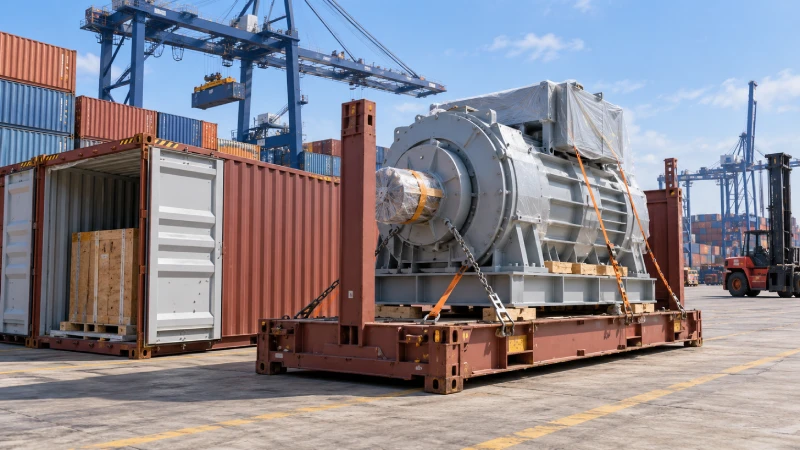
Shipping machinery from China to Kenya is not simply a matter of choosing sea freight and booking a container. The correct shipping plan depends first on the final packed dimensions, gross weight of each machine, loading method, lifting points, centre of gravity, packing design, and final delivery location in Kenya.
A compact CNC machine may fit safely inside a standard 20ft container. A tall production machine may require an open-top container. An over-width industrial unit may need a flat rack, while a very large or heavy piece of equipment may have to move as breakbulk or project cargo.
For Kenyan factories, contractors, manufacturers and project buyers, the most important decision is therefore not “Which container is cheapest?” but:
Can the machinery move as standard containerized cargo, or does it require an OOG or project-cargo solution?
Getting this decision right before the machinery leaves the factory in China can reduce re-packing, terminal handling, customs complications and inland-delivery problems after arrival in Mombasa.
If you are still comparing the overall route, shipping modes, customs process and inland options, start with Shipping from China to Kenya. This guide goes deeper specifically into machinery, special equipment, lifting and project-site delivery.
Data Note: Container dimensions, payloads, special-equipment availability and carrier acceptance vary by shipping line and individual equipment unit. Freight rates and inland transport conditions also change. Final packed cargo specifications should always be confirmed before booking.
Quick Answer: What Is the Best Way to Ship Machinery from China to Kenya?
If the packed machinery fits through the container door and stays within the internal dimensions, payload and safe loading limits of a standard container, FCL is usually the simplest sea-freight solution.
If height or top loading is the main problem, an open-top container may be more suitable. If the machinery is over-width, irregularly shaped or requires side loading, a flat rack may be required.
Very large, heavy or technically complex machinery that cannot be handled safely on special container equipment may need breakbulk or project-cargo planning.
The first assessment should therefore be based on:
- final packed length, width and height;
- gross weight of each unit;
- number of pieces;
- lifting points;
- centre of gravity for heavy or uneven equipment;
- loading and unloading method;
- whether parts can safely be removed;
- China factory loading conditions;
- final delivery and unloading conditions in Kenya.
Carrier equipment specifications should be treated as planning references rather than universal limits. Hapag-Lloyd, for example, notes that published container specifications are examples because actual containers can differ by manufacturer. Hapag-Lloyd container specifications
| Cargo condition | Starting shipping option |
|---|---|
| Machine fits completely inside a standard container | 20ft / 40ft / 40HC FCL |
| Smaller well-packed machinery not filling a container | LCL assessment |
| Machinery needs top loading or is mainly over-height | Open top |
| Over-width, irregular or side-loading machinery | Flat rack |
| Very large or heavy indivisible machinery | Breakbulk / project cargo |
| Small, high-value or urgently required machine | Air freight assessment |
The final method should be confirmed only after the packed cargo data and handling requirements have been reviewed. For the broader ocean-shipping process, see sea freight from China to Kenya.
How to Decide Whether Your Machine Is Standard or OOG Cargo
The first step is to determine whether the machinery can be handled as in-gauge container cargo.
Do not make this decision from the equipment brochure alone.
A supplier may describe a machine as 2.25 metres wide, for example, but the shipping skid, protective frame, crate, shock-absorbing base or waterproof covering may increase the packed dimensions. The packed machine may therefore no longer fit through a standard container door even though the bare machine appears to fit.
Start with four questions.
1. Can the Packed Machine Enter a Standard Container?
Check:
- packed length;
- packed width;
- packed height;
- gross weight;
- door-opening clearance;
- container internal dimensions;
- available loading method;
- ability to position and secure the machine safely.
Door dimensions matter as much as internal dimensions.
A machine may theoretically fit inside the container but still be impossible to load horizontally through the doors.
2. Is Height or Top Access the Main Problem?
If the machine is reasonably narrow but too tall for normal door loading, or if a crane must lower it vertically into the container, an open-top container may be considered.
Open tops have a removable roof arrangement that can make crane loading possible, but the cargo dimensions, roof opening, payload and any over-height projection still need carrier approval.
3. Is the Machine Too Wide or Irregular for a Box Container?
A flat rack may be more suitable where the machinery:
- exceeds normal container width;
- requires side loading;
- cannot pass through a conventional container door;
- has an irregular shape;
- needs crane access from above or the side.
MSC describes flat racks, platforms and open tops as equipment options for cargo that does not fit standard containers and states that specialist OOG and project shipments are considered case by case. MSC Project Cargo
4. Is the Machine Too Large or Heavy for a Practical Special-Container Solution?
Some equipment should not be forced into a flat-rack solution simply because flat racks exist.
A very heavy transformer, production-line component, pressure vessel or industrial unit may require:
- engineered lifting;
- vessel or terminal feasibility studies;
- special stowage;
- heavy-duty securing;
- dedicated crane arrangements;
- low-bed or modular inland transport;
- route surveys;
- coordinated project-site unloading.
At that point, the shipment becomes a project-cargo operation, not ordinary FCL shipping.
Check My Machinery Shipping Method
Before booking, send the final packed dimensions and gross weight of every machine. For large or irregular units, include photos, lifting information and drawings so the container or OOG option can be assessed before cargo collection.
Measure the Packed Machine Before Choosing the Shipping Method
One of the most common problems in machinery shipping is quoting from incomplete measurements.
A freight forwarder normally needs more than a machine model number and total shipment weight.
For every significant machine or package, prepare:
- final packed length × width × height;
- gross weight per piece;
- total shipment weight;
- base or skid dimensions;
- quantity;
- packing method;
- photos from several sides.
For larger machinery, also provide:
- lifting points;
- lifting-eye information where available;
- centre of gravity;
- forklift pockets;
- technical drawings;
- whether the unit can be tilted;
- whether removable parts can reduce height or width;
- whether the machine contains oil, fuel, batteries, gases or other regulated materials.
Packed Dimensions Are More Important Than Catalogue Dimensions
Consider a machine that leaves the assembly line at:
2.20 m × 1.90 m × 2.20 m
Once mounted on a heavy export skid and protected inside a frame, the shipping dimensions might become:
2.35 m × 2.05 m × 2.45 m
That difference can change:
- whether it passes through the container door;
- whether crane loading is necessary;
- whether it becomes OOG;
- whether a special container is required;
- how much securing material is needed;
- how it can be transported after arrival in Kenya.
This is why the supplier should confirm shipping dimensions after packing design, not simply copy numbers from a sales catalogue.
Pro Tip: Ask the Chinese supplier for the final packed dimensions and gross weight after the shipping skid, frame or crate has been designed. Do this before confirming the sea-freight equipment.
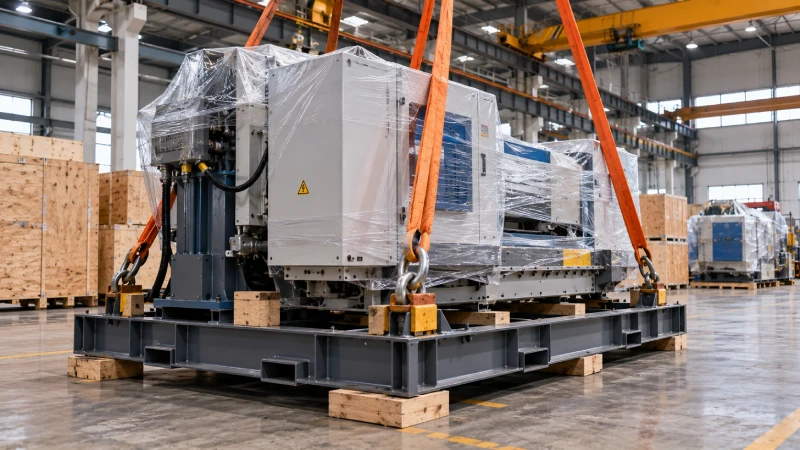
Standard Container vs Open Top vs Flat Rack vs Breakbulk
There is no single shipping method that is best for all machinery.
The most economical option is usually the simplest equipment that can carry the machine safely and legally through the entire transport chain.
| Shipping option | Usually suitable for | Main advantage | Main planning issue |
|---|---|---|---|
| Standard dry / high cube | Fully container-compatible machinery | Simple container handling | Door, internal space, weight and loading access |
| Open top | Tall machinery or top-loading requirement | Crane loading from above | Roof opening and over-height approval |
| Flat rack | Wide, irregular or heavy machinery | Side and top access | OOG dimensions, lashing and carrier approval |
| Breakbulk / project cargo | Very large or heavy indivisible equipment | Not limited by container walls | Vessel, crane, terminal and inland feasibility |
Standard Dry or High-Cube Container
This is normally the first option to assess.
If the machinery fits entirely within the container, it benefits from:
- enclosed protection;
- standard container-terminal handling;
- easier onward trucking;
- less exposure during the transport chain.
Do not choose a 40HC automatically just because it has more cubic capacity.
Industrial machinery can be extremely dense. A smaller 20ft container may sometimes be more practical for a compact heavy machine, depending on the actual weight, container floor loading and carrier limits.
Open-Top Container
Open tops are useful when the problem is mainly vertical loading or height.
Typical situations include:
- a machine that must be lowered by crane;
- a unit that cannot pass through the normal door;
- a machine slightly exceeding standard container height.
The removable top does not mean dimensions are unlimited. Roof-opening dimensions, payload, securing method and any cargo protrusion still require technical review and carrier acceptance.
Flat Rack
Flat racks become particularly useful for:
- over-width machinery;
- machines requiring side loading;
- irregular equipment;
- large units that cannot enter a container box.
Because the cargo may project beyond normal container dimensions, the shipping line needs accurate OOG data.
The forwarder may need to submit:
- exact dimensions;
- exact gross weight;
- photos;
- drawings;
- lifting information;
- securing plan;
- centre of gravity.
Breakbulk and Project Cargo
Breakbulk may be considered when a machine is too large or heavy for a practical flat-rack arrangement or requires specialised vessel handling.
This can involve much more than ocean freight.
The complete operation may need to coordinate:
factory lifting → origin transport → port handling → vessel loading → stowage → sea transport → Mombasa discharge → Kenyan inland transport → final crane unloading
For this reason, project cargo should be priced and planned as an end-to-end logistics operation rather than simply as a port-to-port freight rate. For cargo that clearly falls outside normal container handling, review project logistics from China.
Shipping Standard Machinery in FCL Containers
Standard FCL is often the most straightforward solution for production equipment that fits within normal equipment limits.
Examples may include:
- CNC machines;
- packaging machines;
- small production lines shipped in sections;
- compressors;
- industrial pumps;
- printing machinery;
- food-processing equipment;
- workshop machinery;
- electrical equipment.
The exact method still depends on each machine’s dimensions and weight.
20ft vs 40ft or 40HC for Machinery
Do not decide solely from cargo volume.
For machinery, important considerations include:
- gross weight;
- weight distribution;
- length;
- loading access;
- centre of gravity;
- floor-loading requirements;
- ability to block and secure the equipment.
A dense machine may fill very little cubic volume but still be better planned in a 20ft unit than combined with additional heavy equipment.
A longer production line shipped as several moderate-weight crates may be more suitable for a 40ft or 40HC.
The forwarder should therefore consider weight and handling geometry together, rather than treating machinery like ordinary cartons.
For shipments that are clearly suitable for dedicated containers, see FCL shipping from China.
Secure the Machine, Not Just the Container
Once inside the container, the machine should not be allowed to move during:
- truck transport;
- terminal handling;
- vessel movement;
- rail transfer where applicable;
- inland delivery.
Depending on the cargo, proper securing may involve:
- timber blocking;
- chocking;
- braces;
- steel frames;
- suitable lashing;
- anti-slip material;
- securing the machine to its transport base.
Loose accessories should be inventoried and secured separately.
Photographs taken after loading and securing but before the container is sealed can also be useful records for the shipper, consignee and logistics parties.
When LCL Can Work for Smaller Machinery
Smaller machinery may sometimes move as LCL when it does not justify a full container.
However, LCL creates additional handling because cargo moves through consolidation and deconsolidation warehouses.
For machinery, this makes packing especially important.
A suitable LCL machine should normally have:
- a strong transport base;
- sufficient crate or frame protection;
- protected controls and protruding parts;
- clearly marked lifting or forklift positions where appropriate.
High-value, fragile or difficult-to-handle machinery may justify FCL even if it does not physically fill the container.
How Flat Rack and Open Top Shipping Works for Machinery
When machinery cannot move in a normal dry container, the next decision is often open top vs flat rack.
The choice should be based on the machine’s geometry and loading method.
Open Top: When Height or Top Loading Is the Problem
An open-top container can work when the machine:
- is within acceptable width;
- requires crane loading from above;
- exceeds normal door height;
- cannot be safely pushed or rolled through container doors.
The machine may be lowered onto the container floor using suitable lifting equipment.
If it protrudes above the container structure, the shipment becomes out-of-gauge and must be declared accordingly.
Flat Rack: For Over-Width or Irregular Machinery
A flat rack removes the side-wall restrictions that prevent many industrial machines from being containerized.
It can be useful when:
- the machinery is wider than a standard container;
- side access is required;
- the unit is irregular in shape;
- crane lifting from above is necessary.
However, flat rack does not mean “any size is acceptable.”
The shipping line will consider:
- overall length;
- overall width;
- overall height;
- gross weight;
- cargo projection;
- weight distribution;
- lifting and handling;
- securing arrangements.
Special equipment availability also needs to be confirmed at the Chinese origin location and for the intended vessel routing.
Hapag-Lloyd’s published equipment data demonstrates why dimensions should be checked against the actual carrier: even containers in the same category can vary by manufacturer. Hapag-Lloyd special cargo equipment
Why Carrier Approval Should Come Before Final Booking
For ordinary container cargo, booking can often begin with commodity, weight and container quantity.
OOG machinery normally requires more information.
A booking may need carrier technical approval before equipment is released.
If a supplier changes the packing after approval—for example, increasing the width by 15 cm—the OOG profile may change.
That can affect:
- slot planning;
- available vessel space;
- freight cost;
- equipment choice;
- terminal handling;
- inland transport.
Final measurements therefore need to stay controlled once the shipment is approved.
Operational Warning: Do not dismantle structural parts of machinery simply to make the unit fit a container without first confirming with the manufacturer. Improper dismantling may affect alignment, calibration, commissioning or warranty conditions.
When Machinery Should Move as Breakbulk or Project Cargo
Flat racks are useful, but not every oversized machine should be put on one.
Very large or heavy indivisible units may need breakbulk or a dedicated project-cargo arrangement.
Typical triggers include:
- exceptionally heavy single pieces;
- extreme width or height;
- long industrial modules;
- unusual centre of gravity;
- engineered lifting requirements;
- cargo that cannot be safely supported by standard special equipment;
- several heavy units forming one industrial project.
MSC describes its project-cargo and breakbulk operations as case-by-case solutions requiring analysis of handling, stowage and securing rather than standard container booking. MSC Project Cargo
Project Cargo Requires End-to-End Feasibility
A machine can be easy to load in China but difficult to deliver in Kenya.
Before confirming the transport plan, consider:
- Can the Chinese factory lift the machine?
- Can the origin road transport accommodate it?
- Can the selected port and vessel handle it?
- How will it be discharged at Mombasa?
- What Kenyan trailer configuration is required?
- Does the inland route accommodate the loaded height and width?
- Are abnormal-load approvals required?
- Is the project site accessible?
- Is a suitable crane available at destination?
The Port of Mombasa has multipurpose and conventional cargo facilities in addition to its container terminals. The exact berth and handling arrangement for heavy machinery still has to be confirmed for the individual shipment. Kenya Ports Authority – Port of Mombasa
For heavy, oversized or technically complex cargo, Winsail’s project logistics service is the relevant service page to review before the route is finalized.
Packing, Lifting and Loading Machinery in China
Good machinery shipping begins inside the supplier’s factory.
Ocean freight cannot correct a poor lifting plan or weak export packing after the cargo reaches the terminal.
Choose Packing for the Machine and Handling Chain
Possible machinery packing methods include:
- export wooden cases;
- steel frames;
- reinforced skids;
- protective wrapping;
- waterproof covers;
- vacuum or moisture-barrier packing for sensitive equipment.
The design should protect:
- control panels;
- motors;
- electrical components;
- exposed shafts;
- precision surfaces;
- hydraulic connections;
- sensors;
- protruding components.
For long sea voyages, corrosion and moisture protection may be particularly important for machined surfaces and electrical equipment.
Check Wood Packaging Requirements
If solid raw-wood crates, pallets, skids or dunnage are used, check ISPM 15 compliance before shipping.
ISPM 15 regulates raw-wood packaging used in international trade to reduce phytosanitary risk, and the International Plant Protection Convention lists Kenya under ISPM 15 implementation. IPPC ISPM 15 country information
Engineered wood products may be treated differently, so the packaging contractor should identify the actual material used rather than assuming every wooden-looking crate requires the same treatment.
Provide Correct Lifting Information
Heavy machinery should not be lifted by whatever point happens to be easiest to reach.
Where relevant, obtain from the manufacturer:
- approved lifting points;
- gross lifting weight;
- centre of gravity;
- lifting drawing;
- recommended sling arrangement;
- spreader-beam requirement;
- lifting-eye capacities.
Centre of gravity becomes especially important where a machine contains a heavy motor, gearbox, hydraulic section or other concentrated mass on one side.
An incorrect assumption can cause the unit to tilt unexpectedly during lifting.
Check the Chinese Factory Before Sending a Truck
For heavy or OOG equipment, confirm:
- whether a container truck can enter the factory;
- gate width and height;
- turning space;
- floor and yard conditions;
- available forklift capacity;
- crane capacity;
- loading-dock height;
- whether the machine can be loaded directly onto a flat rack or trailer.
If the supplier cannot load the equipment safely, cargo may need to move to a specialist loading facility.
Machinery Containing Batteries, Fuel or Other Regulated Materials
Do not automatically declare machinery as ordinary general cargo.
Machines containing:
- lithium batteries;
- fuel;
- flammable liquids;
- pressurised gas;
- chemicals;
- certain refrigerants;
may require a dangerous-goods assessment.
The correct handling depends on the substance, quantity, installation method and applicable transport regulations.
Kenya Import Requirements for Machinery
Kenyan import compliance should be checked before the machinery leaves China.
The requirements are not identical for every machine.
They depend on factors including:
- HS classification;
- machine type;
- intended use;
- importer status;
- applicable Kenya Standards;
- whether the goods are for the importer’s own manufacturing operation or for local sale.
HS Classification Comes First
“Machinery” is not one customs classification.
Different machines fall under different HS headings based on their function and technical characteristics.
The HS code can affect:
- import duty;
- taxes and levies;
- regulatory controls;
- documentation;
- customs valuation and declaration.
Kenya Revenue Authority confirms that Kenya uses the Harmonised System and the East African Community Common External Tariff framework for classification and customs treatment. KRA import and customs information
Do not rely on a generic statement such as “machinery attracts X% import duty.”
The actual classification should be checked using:
- product function;
- specification sheet;
- technical drawings where necessary;
- manufacturer’s description;
- the current tariff;
- the Kenyan clearing agent’s assessment.
Does Machinery Require PVoC and a Certificate of Conformity?
For regulated products, Kenya’s Pre-Export Verification of Conformity programme checks conformity before export and can result in a Certificate of Conformity.
KRA lists a CoC from the PVoC agent among import documents for regulated products. KRA – How to Import
However, it is inaccurate to say that every imported machine always requires PVoC.
KEBS identifies exemptions in specified circumstances, including machines and spares imported by qualifying registered local manufacturers under the applicable exemption procedure. KEBS PVoC information
Therefore, before shipping, the Kenyan importer should determine whether:
- the particular machine is regulated under the current PVoC programme;
- a CoC is required;
- an exemption applies;
- other product-specific approvals apply.
Do not wait until the machine reaches Mombasa to ask this question.
Certificate of Origin
Kenya strengthened its Certificate of Origin requirements in 2025.
KRA states that imported consignments are required to be accompanied by a Certificate of Origin issued by a competent authority in the country of export, with full enforcement from October 1, 2025, subject to specified exceptional or provisional arrangements. KRA Certificate of Origin notice
For machinery purchased from China, the supplier or exporter and importer should therefore confirm the COO process before shipment rather than treating it as an optional document.
Advance Cargo Declaration for Containerized Cargo
A major 2026 change is Kenya’s Advance Cargo Declaration system.
KRA launched the ACD platform on August 3, 2026 for containerized cargo destined for Kenyan ports.
For applicable containerized shipments, the exporter obtains an ACD reference at the loading stage by submitting documents including:
- draft Bill of Lading;
- commercial invoice;
- freight invoice;
- export declaration.
The ACD reference must then be endorsed on the Bill of Lading before the shipment proceeds to a Kenyan port. KRA Advance Cargo Declaration notice
For machinery moving as conventional breakbulk rather than containerized cargo, confirm the current ACD treatment before shipment rather than automatically applying the container rule.
Keep the Chinese Export Declaration
Another important 2026 change affects the export-country documentation retained by Kenyan importers.
KRA’s Finance Act 2026 guidance states that from September 1, 2026, importers must obtain and retain an export declaration, export entry, customs export certificate or equivalent document from the country of export.
KRA says the document should support information including the exporter, importer, goods description, quantity, value, tariff classification and country of export and should be retained for at least five years. KRA Finance Act 2026 guidance
For China-origin machinery, coordinate this with the exporter before departure.
Other Documents to Prepare
Depending on the shipment, documentation may include:
- Commercial Invoice
- Packing List
- Bill of Lading or Air Waybill
- Import Declaration Form
- Customs declaration
- Certificate of Origin
- Certificate of Conformity where applicable
- PVoC exemption documentation where applicable
- Export declaration from China
- Freight invoice
- Insurance documentation
- technical literature
- product-specific licences or permits where required
KRA states that machinery imports require coordination with a customs clearing agent for normal import clearance procedures. KRA – How to Import
For the wider documentation and risk-management process, see customs clearance and cargo insurance services.
| Requirement | General status | Who should verify |
|---|---|---|
| HS classification | Required for customs declaration | Importer + clearing agent |
| Import Declaration Form | Import-process requirement | Importer + clearing agent |
| Certificate of Origin | Generally required, subject to official exceptions | Exporter + importer |
| PVoC / CoC | Conditional on product and status | Importer + KEBS / PVoC agent |
| PVoC exemption | Conditional | Qualified importer + KEBS |
| ACD | Applicable to current containerized port cargo rules | Exporter / forwarder |
| Export-country customs document | Current importer record requirement | Supplier/exporter + importer |
| Product-specific licence | Conditional | Relevant Kenyan regulator |
Review My Cargo Before Shipping
Before the machine leaves China, check the HS classification, conformity status, COO, ACD preparation where applicable and Chinese export documentation with the Kenyan importer and clearing agent.
What Happens When Machinery Arrives at Mombasa?
For sea shipments, Mombasa is normally the principal entry point.
The exact handling sequence depends on whether the machinery arrives as:
- a sealed standard container;
- open-top cargo;
- flat-rack/OOG cargo;
- breakbulk/project cargo.
For ordinary containerized machinery, the sequence typically includes:
vessel arrival → discharge → customs/agency procedures → release → inland handoff
The Kenyan importer should already have coordinated with its clearing agent before vessel arrival.
KRA states that imports such as machinery are handled through the customs declaration process using a customs clearing agent, with supporting documents provided for customs processing. KRA – How to Import
OOG or breakbulk machinery can require additional terminal coordination because lifting, positioning and collection equipment may differ from ordinary container operations.
The forwarder, consignee, clearing agent and inland transporter should therefore agree on responsibilities before discharge rather than making arrangements only after the machine is already sitting at the port.
Moving Machinery from Mombasa to Nairobi or the Project Site
Arrival at Mombasa is only part of the transport plan.
For many machinery buyers, the actual destination is:
- Nairobi;
- an industrial area;
- a factory;
- a construction project;
- a mine;
- an agricultural operation;
- another inland Kenyan location.
The inland plan should be assessed before booking the international leg.
Standard Container Cargo to Nairobi
Containerized cargo can continue inland by appropriate road or rail-linked arrangements.
Kenya Ports Authority states that Nairobi Inland Container Depot is directly connected to Mombasa by Standard Gauge Railway and Meter Gauge Railway and handles containerized as well as loose cargo. KPA also describes through-Bill-of-Lading and merchant-haulage arrangements for inland cargo. KPA Inland Container Depots
However, this does not mean every flat rack, OOG unit or unusual heavy piece can automatically use the same rail arrangement.
Special-equipment acceptance should be confirmed for the actual shipment.
OOG Machinery by Road
Oversized machinery can require:
- low-bed trailers;
- extendable trailers;
- special axle configuration;
- escorts;
- route surveys;
- movement permits;
- travel scheduling.
The important number is no longer only the machine width.
You must consider the loaded transport dimensions:
machine + securing structure + trailer + ground clearance
A 3.5-metre-high machine on a low-bed trailer creates a different road profile from the same machine sitting directly on the ground.
KeNHA provides for abnormal or wide-load permits and route-related requirements in its current road regulatory framework. KeNHA
This is why road feasibility cannot be assumed from a map or from straight-line distance between Mombasa and the site.
Plan Final-Site Delivery Before the Cargo Sails
For large machinery, obtain information about the project site:
- exact location;
- access road;
- road surface;
- bridge restrictions;
- narrow sections;
- overhead cables;
- gate width and height;
- turning radius;
- available staging area;
- unloading location;
- ground condition;
- crane availability;
- forklift capacity.
Also determine where the logistics provider’s responsibility ends.
A door-to-door movement does not automatically mean the same party is responsible for:
- site preparation;
- crane mobilisation;
- rigging;
- positioning inside the factory;
- installation;
- commissioning.
These responsibilities should be defined before the shipment is priced. For shipments that need coordinated origin pickup and final delivery, review door-to-door shipping from China, while confirming the exact Kenya service boundary for the specific cargo.
Pro Tip: For OOG machinery, plan the logistics backward from the final unloading point. A solution that appears cheaper to Mombasa may become impractical if the loaded machine cannot legally or physically reach the final site.
Check My Mombasa-to-Site Route
For oversized machinery, provide the final delivery location together with the packed dimensions and weight. Inland truck selection and abnormal-load feasibility should be reviewed before the sea-freight plan is finalized.
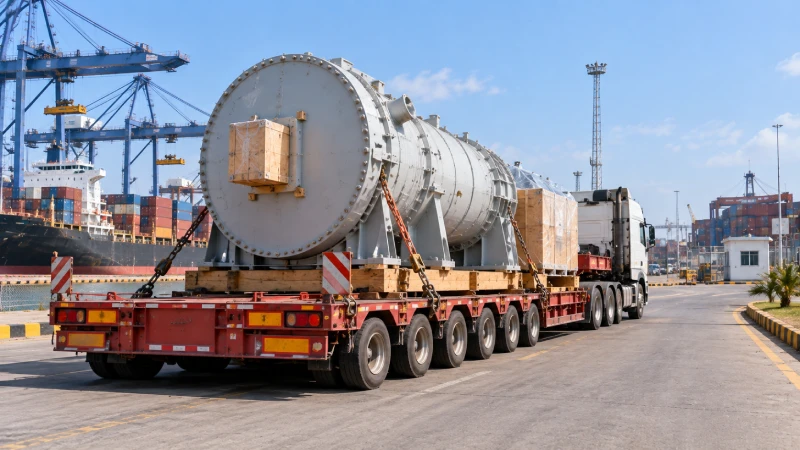
What Actually Determines Machinery Shipping Cost from China to Kenya?
There is no reliable single “machinery shipping rate.”
Two machines with the same weight can produce very different logistics costs.
Consider two hypothetical machines.
Machine A
- 18 tonnes;
- compact dimensions;
- fits safely inside a standard container;
- normal factory loading;
- standard inland delivery.
Machine B
- also 18 tonnes;
- over-width;
- requires crane loading;
- needs a flat rack;
- requires special securing;
- must move from Mombasa on an abnormal-load trailer.
The machines weigh the same, but their logistics requirements are completely different.
Main Cost Drivers
A machinery quotation may depend on:
- supplier location in China;
- pickup distance;
- one or multiple suppliers;
- final packed dimensions;
- gross weight per piece;
- number of pieces;
- standard container vs special equipment;
- open-top or flat-rack availability;
- OOG dimensions;
- loading crane;
- specialist loading warehouse;
- blocking and lashing;
- port of loading;
- carrier and routing;
- Mombasa handling;
- customs-clearance scope;
- inland truck type;
- abnormal-load permit requirements;
- escorts or route planning;
- destination crane;
- final site access.
For project cargo, the freight rate is therefore only one component of the total logistics budget.
A meaningful comparison should be made on comparable scope.
For example, one quotation might stop at Mombasa, while another includes:
- port release;
- low-bed trailer;
- permits;
- escorts;
- site delivery.
Those quotations cannot be compared by ocean freight alone.
Information Needed for an Accurate Machinery Shipping Quote
The fastest way to obtain a usable shipping plan is to provide complete cargo information from the beginning.
Sending only:
“We have one machine, 10 tons. How much to Kenya?”
is usually not enough.
Machinery Details
Provide:
- machine name;
- function;
- new or used condition;
- quantity;
- final packed dimensions for every unit;
- gross weight per unit;
- total weight;
- declared value;
- HS code if known.
Use:
L × W × H in cm or mm
Gross weight in kg
Do not send only total CBM.
Lifting and Handling Information
For large machinery, include:
- lifting points;
- centre of gravity where relevant;
- forklift pockets;
- lifting diagram;
- whether the machine can be tilted;
- whether parts can safely be removed;
- whether it is self-propelled;
- whether it can roll under its own power;
- required crane capacity if known.
Packing Information
State whether the machine will be:
- bare;
- on a skid;
- wooden-crated;
- steel-framed;
- shrink-wrapped;
- weatherproofed.
Send photos of the proposed packing whenever possible.
Cargo Photos and Drawings
Useful files include:
- front photo;
- side photo;
- rear photo;
- base/skid photo;
- packing photo;
- dimensioned drawing;
- lifting diagram.
For a heavy irregular machine, one clear technical drawing may prevent more mistakes than a long email description.
Pro Tip: For large machinery, send a dimensioned drawing or photo showing the actual measurements. “About three metres wide” is not accurate enough for OOG planning.
China Pickup Information
Provide:
- supplier name;
- factory address;
- number of pickup locations;
- cargo-ready date;
- supplier Incoterm;
- factory loading capability;
- available forklift or crane.
If several Chinese factories are supplying one project, consolidation should be planned before containers or specialist equipment are positioned.
Kenya Delivery Information
State clearly whether the quotation should end at:
- Mombasa Port;
- Nairobi;
- Nairobi ICD;
- another warehouse;
- factory;
- construction site;
- final project location.
For project-site delivery, provide:
- complete address;
- coordinates if useful;
- site photos;
- gate dimensions;
- road/access conditions;
- unloading equipment;
- crane availability.
Compliance Information
Where available, provide:
- Kenyan importer details;
- HS classification;
- PVoC/CoC status;
- exemption information;
- required permits;
- clearing-agent contact or status.
Machinery Shipping Quote Checklist
Before requesting a final shipping plan, check that you have:
- Machine description
- Quantity
- Final packed L × W × H per piece
- Gross weight per piece
- Packing method
- Photos
- Lifting points
- Centre of gravity if relevant
- Technical drawing for OOG cargo
- Battery/fuel/chemical information
- Chinese factory address
- Cargo-ready date
- Factory loading capability
- Kenya destination
- Final-site access information
- Unloading requirements
- HS code if known
- PVoC/CoC or exemption status if known
Common Mistakes When Shipping Machinery from China to Kenya
Most avoidable machinery problems occur before the cargo reaches the vessel.
Using Bare-Machine Dimensions
A machine that fits before packing may become OOG after a shipping frame or crate is added.
Always use final shipping dimensions.
Estimating Heavy-Cargo Weight
For heavy equipment, “approximately 20 tons” may not be good enough.
The confirmed gross weight affects:
- equipment selection;
- crane planning;
- road transport;
- lashing;
- carrier approval.
Selecting a Flat Rack Before Checking the Final Site
A flat rack may solve the ocean problem while creating an inland road problem.
Check the full Mombasa-to-site route.
Ignoring Centre of Gravity
Heavy machinery is not always evenly balanced.
The weight distribution can affect both lifting and securing.
Assuming Every Machine Has the Same KEBS Requirement
PVoC depends on the actual goods and importer circumstances.
Registered local manufacturers may qualify for specific exemptions for machinery and spares, but eligibility should be confirmed with KEBS. KEBS PVoC information
Starting Compliance After the Vessel Has Sailed
COO, conformity requirements, ACD for applicable containerized cargo and Chinese export documentation should be considered before loading—not after arrival in Mombasa. KRA Certificate of Origin notice
Forgetting the Destination Crane
Delivering the machine to the gate is not the same as unloading it safely.
Confirm in advance who supplies:
- crane;
- forklift;
- riggers;
- spreader beam;
- unloading crew.
Comparing Quotes with Different Scope
Check whether each quotation includes the same items.
Pay particular attention to:
- China pickup;
- loading;
- lashing;
- ocean freight;
- destination charges;
- customs clearance;
- taxes;
- port handling;
- inland delivery;
- abnormal-load permits;
- escorts;
- crane unloading.
FAQ
What is the best way to ship machinery from China to Kenya?
For machinery that fits safely within standard container dimensions and weight limits, FCL is normally the first option to assess. Tall machinery may require an open top, while over-width or irregular machinery may require a flat rack. Very large or heavy equipment can require breakbulk or project-cargo planning.
Can heavy machinery fit inside a 20ft container?
Sometimes. A heavy machine can fit into a 20ft container if its packed dimensions, gross weight, weight distribution and loading method are compatible with the actual equipment and carrier requirements. Weight alone does not determine suitability.
Should I use a flat rack or open top for oversized machinery?
An open top is often considered when height or vertical crane loading is the main issue. A flat rack is more likely when the machine is over-width, irregular or requires side loading. Final equipment selection requires carrier approval.
Does machinery imported into Kenya require a KEBS Certificate of Conformity?
It depends on the exact machine and importer status. Regulated goods may require conformity assessment and a CoC, while qualifying importers may have applicable exemptions. Confirm the requirement for the actual shipment before export.
What information is needed to quote oversized machinery from China to Kenya?
Provide final packed dimensions, gross weight per piece, quantity, packing method, photos, Chinese pickup address and Kenya destination. For large or irregular machinery, also provide lifting points, centre of gravity, technical drawings and final-site conditions.
Can oversized machinery be delivered directly from Mombasa to a project site?
Yes, where the route, vehicle configuration, permits and site access make the move feasible. Abnormal-load permits, escorts, route assessment and unloading arrangements may need to be confirmed using the actual loaded transport dimensions.
Can machinery move from Mombasa to Nairobi ICD?
Containerized cargo can move between Mombasa and Nairobi ICD through established inland arrangements. For flat racks, OOG units or unusual heavy equipment, confirm acceptance and routing for the individual shipment rather than assuming normal container procedures apply.
Plan the Machinery Shipment Before It Leaves the Factory
The safest way to ship machinery from China to Kenya is to make the important decisions before the cargo leaves the Chinese supplier.
Start with:
final packed dimensions
→ gross weight per piece
→ lifting points and centre of gravity
→ standard or OOG classification
→ container / open top / flat rack / breakbulk selection
→ China loading plan
→ Kenya compliance
→ Mombasa handling
→ inland and project-site feasibility
This approach is particularly important for factories, contractors and project buyers because machinery freight is rarely just a port-to-port movement.
The correct shipping method should work from the supplier’s factory floor in China all the way to the point where the machine will actually be unloaded in Kenya.
Send Machinery Details
For a machinery shipping assessment, prepare:
Machine:
Name, quantity and function
Cargo:
Final packed dimensions and gross weight of each piece
Handling:
Lifting points, centre of gravity if relevant, photos and drawings
Origin:
Chinese supplier/factory address and cargo-ready date
Destination:
Mombasa, Nairobi or complete final project-site location
Site:
Road access, gate dimensions and unloading conditions for large equipment
With this information, the shipment can be reviewed as a complete logistics operation rather than estimating freight from weight or CBM alone.
Regulatory Note: Kenya import requirements can vary according to HS classification, product specification, importer status and intended use. Current requirements should be verified with KRA, KEBS and the importer’s Kenyan clearing agent before shipment.
Rate Note: No fixed machinery freight rates are quoted in this guide because ocean freight, special-equipment availability, OOG surcharges, terminal handling and inland transport costs change by shipment and booking period.
