
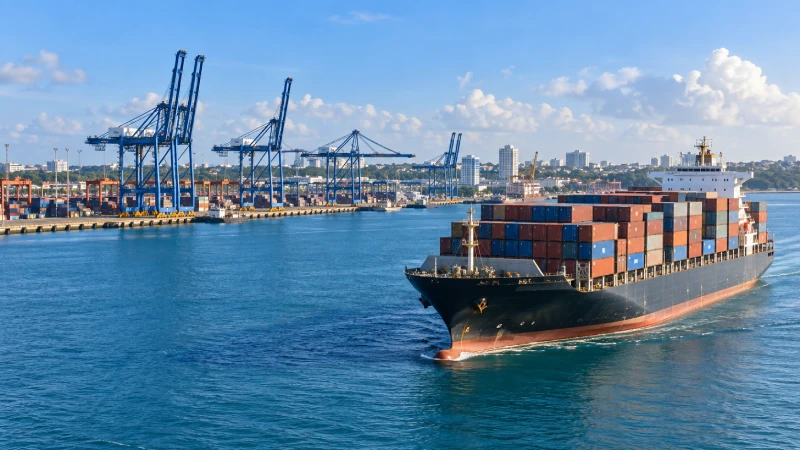
Sea freight from China to Kenya involves more than booking a container to Mombasa. A typical shipment starts with supplier pickup or cargo delivery to a warehouse in China, moves through export handling at the origin port, sails to Mombasa, completes Kenyan import procedures, and then continues to Nairobi or another inland destination.
The important decisions often need to be made before the cargo leaves China. The origin port, LCL or FCL setup, sailing route, Kenyan compliance documents, customs-clearing arrangements and final inland destination can all affect the shipment.
For importers buying commercial quantities of machinery, electronics, furniture, building materials, auto parts or other general cargo from China, this guide explains how the sea-freight process works from the supplier’s warehouse to final delivery in Kenya.
Data Note — Updated September 2026
Carrier transit times below are based on currently published schedules and are planning references rather than guaranteed delivery times. Shipping schedules, port calls and surcharges can change. Kenya import requirements also depend on the product, HS classification and current regulations, so cargo-specific requirements should be checked before shipment.
Quick Answer: Sea Freight from China to Kenya
| Question | Planning Answer |
|---|---|
| Main sea gateway in Kenya | Port of Mombasa |
| Common China origins to compare | Shanghai, Ningbo, Nansha and other gateways depending on supplier location |
| Current scheduled ocean transit examples | Roughly 17–27 days from selected major China ports to Mombasa on the carrier services reviewed |
| Main shipment options | LCL for shared-container cargo and FCL for dedicated containers |
| After Mombasa | Customs and applicable regulatory processing, release, then local or inland delivery |
| Nairobi cargo | May move inland by road or through appropriate ICD/rail arrangements |
| Important pre-loading checks | ACD, Certificate of Origin, PVoC/CoC where applicable, HS classification and other cargo-specific documents |
Mombasa is Kenya’s main maritime cargo gateway. The Kenya Ports Authority states that the port has two container terminals and connections into Kenya and the wider East African hinterland.
For an importer, however, the useful question is not simply, “How many days does the vessel take?” It is:
How long will it take from the Chinese supplier being cargo-ready until the goods can actually be received in Kenya?
That requires looking at the whole logistics chain.
If you are still comparing ocean freight with air freight, express or other transport options, start with the complete Shipping from China to Kenya guide.
How Sea Freight from China to Kenya Works
A typical China-to-Kenya ocean shipment follows these stages:
1. Confirm the Cargo Details
Before routing or pricing can be checked properly, the freight forwarder needs accurate information about the shipment.
This normally includes:
- product description;
- number and type of packages;
- dimensions;
- gross weight;
- total volume;
- cargo value;
- supplier location;
- cargo-ready date;
- final destination in Kenya;
- whether the cargo contains batteries, liquids, chemicals or dangerous goods;
- whether any piece is oversized or unusually heavy.
These details determine whether the shipment can move as normal LCL or FCL cargo and whether special equipment or documentation is required.
2. Pick Up Cargo from the Supplier
The cargo can either be delivered by the supplier to the nominated warehouse or container yard, or collected from the factory.
For buyers purchasing from several factories, the cargo may first move to a consolidation warehouse in China so that several supplier orders can be checked and combined into one shipment.
For smaller shipments from multiple suppliers, China LCL consolidation services can help combine cargo before export.
3. Prepare the LCL Shipment or Load the Container
For LCL cargo, cartons, crates or pallets are consolidated with cargo belonging to other shippers.
For FCL, the importer books a dedicated container, which may be loaded at or near the supplier’s facility depending on the shipment setup. Importers who need a dedicated container can also review Winsail’s FCL shipping service from China.
4. Complete China Export Procedures
The shipment must be prepared for export customs and meet the carrier’s documentation and cutoff requirements.
At this stage, the shipment should also be checked against Kenya’s pre-loading requirements. Waiting until the vessel reaches Mombasa to identify a missing Certificate of Origin, ACD reference or required conformity document can cause avoidable problems.
5. Load and Sail to Mombasa
After export release and terminal handling, the cargo is loaded onto the scheduled vessel.
Depending on the origin port and carrier service, the vessel may make calls at other Asian or Indian Ocean ports before reaching Kenya. Some routings involve intermediate port calls while the container stays on the same vessel; others may involve an actual transshipment to another vessel.
6. Discharge at the Port of Mombasa
Once the vessel arrives, containers are discharged and processed through the port and carrier systems.
Arrival at Mombasa does not mean that the importer can immediately collect the cargo.
7. Complete Kenya Import Clearance
The Kenyan importer and licensed clearing agent coordinate the customs declaration, supporting documents, applicable duties and taxes, and any KEBS or other regulatory requirements.
KRA’s current import guidance states that imported commercial goods generally require a licensed customs clearing agent and supporting documents such as commercial invoices, the Bill of Lading, Certificate of Origin, packing list and applicable conformity certificates or permits.
8. Release and Move Cargo Inland
After the required releases are completed, cargo can be collected for coastal delivery or moved onward toward Nairobi or another destination.
For Nairobi-bound containers, inland routing should ideally be discussed before the ocean shipment is booked, rather than deciding only after the vessel arrives.
For shipments that need coordinated pickup, international transport and final delivery, see door-to-door shipping from China.
Which China Origin Port Should You Use for Kenya?
There is no single “best port in China” for every Kenya shipment.
A supplier in Foshan, a factory in Ningbo and a manufacturer in Qingdao should not automatically use the same origin simply because one port has an attractive advertised ocean rate.
The better decision is based on the total logistics chain.
Important factors include:
- supplier location;
- domestic trucking cost;
- available sailing date;
- container equipment availability;
- LCL consolidation schedule;
- direct mainline or connecting service;
- cargo-ready date;
- origin handling cost;
- total expected lead time.
Shanghai and Ningbo
Shanghai and Ningbo are important options for cargo manufactured in eastern China.
Ningbo is often practical for suppliers in Zhejiang, while Shanghai or Ningbo may both be evaluated for cargo originating in parts of Jiangsu or the wider Yangtze River Delta.
The correct choice should be based on the actual factory address and the sailing available when the cargo is ready.
Guangzhou, Nansha and South China
For manufacturers in Guangzhou, Foshan, Dongguan and surrounding Guangdong manufacturing areas, Nansha is one of the important gateways to compare.
Current Maersk and CMA CGM East Africa services both include Nansha in their published China-to-Mombasa rotations.
Shenzhen-area ports may also be relevant depending on supplier location and carrier options, but the routing should be checked against the current sailing schedule rather than assuming the nearest port is automatically best.
Qingdao and Other China Origins
Northern or coastal China suppliers may use Qingdao or other regional gateways.
Not every origin will have the same direct or mainline options at every point in the year. In some cases, cargo can connect through another Chinese or Asian hub.
Winsail has previously handled a published ocean shipment of LED TV CKD cargo from Qingdao to Mombasa using COSCO. That shipment recorded a 24-day transit in November 2025; it is a historical shipment example rather than a guaranteed current transit time. See the Qingdao-to-Mombasa ocean freight case study.
| Supplier Area | Origin Option to Compare | Main Decision |
|---|---|---|
| Guangdong | Nansha / Shenzhen-area gateways | Pickup cost + sailing schedule |
| Zhejiang | Ningbo | Factory distance + carrier service |
| Shanghai / Jiangsu | Shanghai / Ningbo | Schedule + inland trucking |
| North China | Qingdao / other regional gateway | Available Kenya routing |
| Multiple supplier cities | Consolidation warehouse + selected gateway | Total consolidation cost and timing |
Pro Tip: Do not select the origin port only by comparing ocean freight rates. A slightly cheaper vessel rate can be cancelled out by longer China trucking, extra handling or an inconvenient sailing date.
Direct vs Transshipment Sea Routes to Mombasa
Importers often ask whether there is “direct shipping from China to Kenya.”
The answer depends on what is meant by direct.
A container can stay on the same vessel while the vessel calls at several ports before Mombasa. That is different from a true transshipment, where the container is discharged at an intermediate hub and loaded onto another vessel.
Current Mainline Service Examples
Maersk’s current Mashariki Express Westbound publishes the following rotation:
Shanghai → Ningbo → Nansha → Singapore → Tanjung Pelepas → Mombasa
CMA CGM’s current Kilima Xpress publishes:
Shanghai → Ningbo → Nansha → Singapore → Colombo → Lamu → Mombasa
These routes contain intermediate port calls. That does not automatically mean a China-loaded container is transshipped at each port.
When a Transshipment Route Can Still Make Sense
A route involving a vessel connection should not automatically be rejected.
It may make sense when it provides:
- an earlier departure;
- better coverage from the supplier’s origin;
- more suitable container equipment;
- better freight economics;
- carrier acceptance for the cargo type;
- a more practical total routing.
The decision should therefore consider the actual vessel connection and total shipment plan, rather than simply choosing whichever quotation contains the word “direct.”
How Long Does Sea Freight from China to Kenya Take?
For major China gateways, current published carrier schedules show that the ocean leg itself can be around the low-to-high 20-day range, with some South China schedules shorter.
The following examples are useful planning references as of September 2026:
| Published Service | Shanghai → Mombasa | Ningbo → Mombasa | Nansha → Mombasa |
|---|---|---|---|
| Maersk Mashariki Express | ~22 days | ~21 days | ~17 days |
| CMA CGM Kilima Xpress | ~27 days | ~26 days | ~22 days |
These numbers are scheduled port-to-port references, not guaranteed delivery times.
Supplier-to-Port Time
Before the vessel departs, time may be needed for:
- factory pickup;
- supplier coordination;
- cargo consolidation;
- warehouse handling;
- container loading;
- export customs;
- pre-shipment inspection;
- document preparation;
- carrier cutoff.
If several Chinese suppliers are involved, the shipment may also need to wait until all purchase orders reach the consolidation warehouse.
LCL Requires Additional Handling
LCL cargo generally goes through more handling stages than FCL.
The cargo needs to be received and consolidated at origin and deconsolidated again after arrival.
That means an LCL importer should not simply take a carrier’s vessel transit and assume that is the complete shipment timeline.
Mombasa Arrival Is Not the Final Delivery Date
After arrival, time is still required for:
- vessel discharge;
- document availability;
- customs processing;
- regulatory checks where applicable;
- duty and tax settlement;
- release;
- CFS handling for LCL;
- container collection;
- inland transport.
A shipment for Nairobi therefore has at least three important dates:
ETD China → ETA Mombasa → estimated final delivery
These should not be treated as the same thing.
Operational Warning
A carrier showing “22 days to Mombasa” does not mean your buyer will receive the cargo in Nairobi on day 22. Always calculate the shipment from the supplier’s cargo-ready date through final release and inland delivery.
Check My Shipping Timeline
If your purchasing schedule depends on a specific arrival date, provide the supplier city, cargo-ready date, cargo volume and final Kenya destination so the ocean leg and inland plan can be evaluated together.
LCL or FCL for a Kenya Sea Shipment?
The basic distinction is simple:
LCL shares container space with other shipments.
FCL uses a dedicated container for one shipment.
The correct choice is not determined by one universal CBM number.
| Decision Factor | LCL | FCL |
|---|---|---|
| Cargo quantity | Usually smaller shipments | Usually larger shipments |
| Container use | Shared | Dedicated |
| Origin process | Consolidation required | Container loading |
| Destination process | Deconsolidation required | No LCL deconsolidation |
| Handling points | More | Fewer |
| Cost comparison | Freight + CFS/local charges | Container + local charges |
| Best decision method | Compare actual total quote | Compare actual total quote |
Some online guides suggest fixed breakpoints such as 10 CBM or 15 CBM. In practice, the economic crossover changes according to cargo density, minimum LCL charges, destination handling, the container rate and local charges.
For example, a dense 12 CBM machinery shipment and a light 12 CBM furniture shipment do not necessarily produce the same comparison.
If you are close to the point where FCL may become practical, compare both shipment structures using the same:
- origin;
- cargo dimensions;
- weight;
- destination;
- sailing date.
Compare LCL and FCL
For borderline shipments, ask for both an LCL and FCL option rather than deciding only from cargo volume.
Which Container Type Fits Your Cargo?
Most standard commercial shipments use general-purpose dry containers, but the cargo itself determines what equipment is suitable.
20GP
Commonly considered for general cargo when the shipment does not require the volume of a larger container.
Dense cargo may reach practical weight limits before the container’s full cubic volume is used.
40GP and 40HQ
Used for larger-volume general cargo.
A 40HQ offers additional internal height and volume and is frequently considered for bulky but relatively light products such as furniture or consumer goods.
Reefer Container
Used where controlled temperature is required.
The temperature range, ventilation requirement and cargo preparation must be confirmed before booking.
Open-Top or Flat-Rack
Oversized machinery, industrial equipment and project cargo may require equipment such as open-top or flat-rack containers.
The freight forwarder will need the exact dimensions and weight of each piece, not only the total cargo weight.
For non-standard cargo, Winsail’s project logistics for oversized cargo from China covers OOG, flat-rack and open-top shipping arrangements.
Dangerous Goods
Batteries, chemicals, flammable liquids and other regulated cargo require a separate acceptance review.
Depending on the commodity, documentation may include:
- MSDS;
- UN number;
- dangerous-goods classification;
- packaging information;
- test reports;
- carrier-required declarations.
Carrier acceptance should be confirmed before treating dangerous goods as standard ocean cargo.
What Happens When Your Container Arrives at Mombasa?
Mombasa is not simply a place where the container is unloaded and collected.
The shipment passes through several operational and regulatory stages before it can move to the final destination.
Kenya Ports Authority describes Mombasa as a major gateway to Kenya and the East/Central African hinterland and states that the port currently operates two container terminals.
A typical import sequence includes:
- vessel arrival;
- container discharge;
- carrier and terminal processing;
- customs declaration;
- document review;
- applicable customs or regulatory verification;
- payment of applicable import duties, taxes and charges;
- customs release;
- carrier/terminal release;
- collection or onward inland movement.
The Kenyan Importer and Clearing Agent Matter
The freight forwarder in China cannot replace every responsibility of the Kenyan importer.
KRA states that commercial import clearance generally requires engagement of a licensed customs clearing agent.
Before the vessel arrives, the importer should therefore know:
- who the Kenyan importer is;
- who will handle customs clearance;
- which HS classification is being used;
- whether regulated-product documentation is complete;
- how duties and taxes will be settled;
- whether cargo is being delivered around Mombasa or moved inland.
Waiting until cargo is already discharged before appointing the local clearing party can create unnecessary delay.
Mombasa Arrival Checklist
Before ETA, check that:
- commercial documents are consistent;
- Bill of Lading details are correct;
- Certificate of Origin is available;
- ACD was completed where required;
- applicable CoC/PVoC documentation is ready;
- Kenyan clearing agent has shipment documents;
- HS classification has been reviewed;
- final delivery instructions are confirmed;
- container free-time conditions have been checked for FCL.
Mombasa or Nairobi: How Should Inland Delivery Be Planned?
Many China-to-Kenya shipments are not ultimately destined for Mombasa.
For importers whose warehouse or customer is in Nairobi or upcountry Kenya, the inland leg should be considered when the ocean shipment is planned.
There are three broad scenarios.
1. Mombasa or Coastal Delivery
Cargo is cleared and released for delivery in Mombasa or another coastal destination.
This generally gives the simplest inland leg.
2. Mombasa Clearance Followed by Road Delivery Inland
After release, cargo can move by truck toward Nairobi or another Kenyan destination.
The total delivery cost will depend on the cargo type, container arrangement, final address and equipment required.
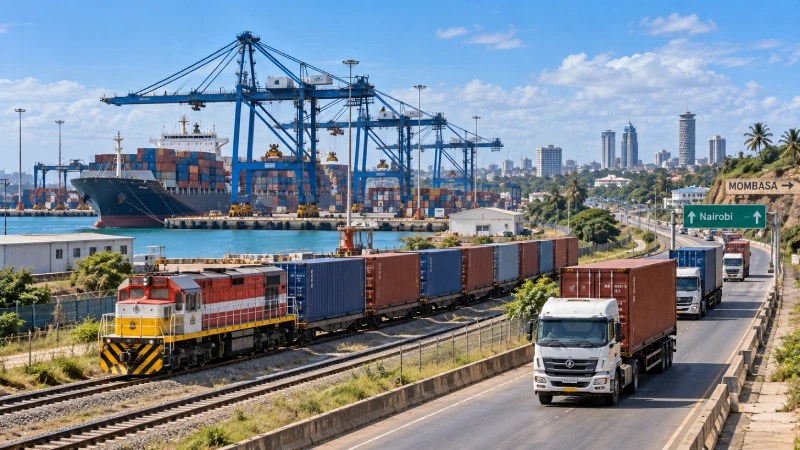
3. Inland Container Depot Routing
Kenya Ports Authority operates inland container depots including Nairobi.
KPA states that Nairobi ICD is connected to Mombasa by both Standard Gauge Railway and Meter Gauge Rail through rail-tainer services. It also describes cargo moving under Through Bill of Lading or merchant haulage arrangements.
That does not mean every Nairobi shipment should automatically use the ICD.
The suitable arrangement depends on:
- Bill of Lading destination;
- carrier setup;
- customs arrangement;
- importer preference;
- cargo type;
- current inland schedule;
- final delivery address.
| Final Destination | Routing Question to Resolve |
|---|---|
| Mombasa / Coast | Clear and deliver locally? |
| Nairobi | Road delivery or appropriate ICD/rail arrangement? |
| Central / Upcountry Kenya | Where should clearance and inland handover occur? |
| Special project site | What truck, lifting or route restrictions apply? |
Pro Tip: If the final destination is Nairobi, discuss the inland routing before booking the ocean shipment. The chosen B/L and movement structure can influence what happens after Mombasa.
Check My Mombasa-to-Nairobi Route
For Nairobi or upcountry cargo, provide the final delivery location together with the China shipment details so the sea and inland legs can be planned as one movement.
Kenya Documents and Compliance to Check Before the Vessel Sails
This is one of the most important parts of planning sea freight from China to Kenya.
Some importers focus on documentation only when the vessel is approaching Mombasa. Several requirements should instead be checked while the goods are still in China.
Commercial Invoice
The commercial invoice should accurately describe the goods and match the shipment information used for customs and supporting procedures.
Product description, quantity, value and trading parties should be internally consistent.
Packing List
The packing list should show how the cargo is packed, including package counts, weights and other shipment details.
For machinery or mixed cargo, a detailed packing list is especially useful.
Bill of Lading
The Bill of Lading is the main sea-transport document.
Before final issuance, check:
- shipper;
- consignee;
- notify party;
- cargo description;
- package quantity;
- gross weight;
- ports;
- container information where applicable.
Errors should be identified as early as possible.
Certificate of Origin
Kenya’s Certificate of Origin rules changed in 2025.
KRA states that imported consignments generally must be accompanied by a Certificate of Origin issued by a competent authority in the exporting country. Full enforcement began on October 1, 2025, subject to specified exceptions and provisional alternatives in certain cases.
For a normal commercial shipment from China, the COO requirement should therefore be checked before sailing rather than assumed to be something that can always be resolved after arrival.
Advance Cargo Declaration — ACD
The ACD is particularly important because it is a newer requirement.
KRA launched its Advance Cargo Declaration platform for containerized cargo destined for Kenyan ports on August 3, 2026.
For applicable containerized shipments, the exporter or shipper obtains an ACD Reference Code at the point of loading.
KRA lists the following documents for the application:
- draft Bill of Lading;
- commercial invoice;
- freight invoice;
- export declaration.
The approved ACD reference must then be endorsed on the Bill of Lading before the shipment proceeds to Kenya.
This changes the practical workflow for China exporters.
The ACD is not something that should first be considered after the vessel reaches Mombasa.
PVoC and Certificate of Conformity
Kenya’s PVoC system verifies conformity with applicable Kenyan standards before shipment for goods within the program’s scope.
KEBS states that importers should ensure applicable consignments are accompanied by a Certificate of Conformity issued through appointed PVoC agents, and its current country-zone information includes China.
However, compliance treatment depends on the product and applicable exemption or regulatory structure.
Do not assume that every product follows exactly the same inspection route.
Before shipment, check:
- product classification;
- applicable Kenyan standard;
- whether PVoC certification applies;
- inspection/testing route;
- required CoC;
- whether another Kenyan regulator is involved.
HS Classification
The HS code influences more than customs duty.
It can affect:
- import tax treatment;
- PVoC applicability;
- permits;
- restricted-goods rules;
- customs declaration data.
A vague commercial description should not be used as a substitute for proper classification.
Product-Specific Permits
Certain products may require additional regulatory review.
Examples can include:
- food and agricultural products;
- chemicals;
- medical products;
- controlled goods;
- dangerous goods;
- certain electrical or technical products.
Requirements should be checked based on the actual commodity rather than copied from a general Kenya shipping checklist.
Warning: Check Before Loading
Do not load the container first and investigate Kenya compliance later. A missing pre-shipment certificate, ACD reference, permit or document discrepancy can create much more expensive problems once the cargo is already moving.
Pro Tip: Finalize the cargo description, invoice information, HS classification and draft Bill of Lading early. These details are reused across several shipping and compliance documents, and inconsistent information is harder to correct after departure.
Review My Cargo Before Shipping
If the product involves batteries, chemicals, electrical goods, machinery, controlled products or other compliance-sensitive cargo, review the documentation requirements before booking the final sailing.
What Makes Up the Total Cost of Sea Freight to Kenya?
The ocean freight shown on a carrier or forwarder quotation is only one part of the shipment.
A useful cost comparison should look at the entire logistics chain.
China-Side Costs
These may include:
- supplier pickup;
- domestic trucking;
- warehouse handling;
- consolidation;
- export documentation;
- export customs handling;
- CFS charges for LCL;
- terminal-related charges;
- container loading arrangements.
Ocean Freight
The international sea leg can include:
- base ocean freight;
- carrier surcharges;
- seasonal surcharges;
- special-equipment charges;
- dangerous-goods charges where applicable.
Rates are market-sensitive and can change according to:
- carrier capacity;
- sailing date;
- container availability;
- seasonal demand;
- fuel and carrier surcharges;
- route disruption.
For this reason, an old online container-rate table should not be treated as a current quotation.
Kenya-Side Costs
Depending on the shipment, destination-side costs may include:
- destination handling;
- customs-clearance services;
- applicable import duties and taxes;
- regulatory processing;
- CFS handling for LCL;
- port or terminal charges;
- storage where incurred;
- demurrage or detention where incurred;
- inland trucking or other inland transport.
The key distinction is:
Ocean freight cost is not the same as total landed logistics cost.
Two quotations showing different ocean rates can reverse position once origin, destination and inland charges are added.
Check My Shipping Cost
To compare the real cost, provide the supplier city, cargo dimensions, weight, final destination and cargo-ready date—not only “price for one container to Kenya.”
Common Causes of Delay on China–Kenya Sea Freight
Many delays happen outside the actual ocean crossing.
Understanding where problems occur makes it easier to protect the shipment schedule.
Before Departure from China
Common issues include:
- supplier misses the cargo-ready date;
- incorrect packing information;
- documents do not match;
- export declaration is delayed;
- PVoC or another required approval is incomplete;
- ACD reference has not been obtained;
- dangerous-goods acceptance is incomplete;
- container arrives late for terminal cutoff;
- vessel space rolls to another sailing.
During the Ocean Leg
Possible schedule changes include:
- carrier schedule adjustment;
- port congestion;
- vessel delay;
- omitted port call;
- transshipment connection delay;
- weather or operational disruption.
A published vessel schedule should therefore be treated as a planning tool rather than an arrival guarantee.
At Mombasa
Delay can occur when:
- import documents are incomplete;
- invoice, B/L or cargo descriptions conflict;
- HS classification is questioned;
- applicable compliance documentation is missing;
- customs or regulatory verification is required;
- taxes or charges are not settled promptly;
- local clearing instructions are delayed.
During Inland Delivery
For FCL cargo, the operational plan also needs to consider:
- container pickup;
- delivery appointment;
- truck availability;
- unloading;
- empty-container return.
For machinery and project cargo, route access, cranes and unloading arrangements may need to be confirmed before the cargo leaves Mombasa.
| Shipment Stage | Typical Risk | Practical Action |
|---|---|---|
| Supplier | Cargo not ready | Confirm ready date before booking |
| Pre-loading | Missing ACD/CoC/document | Run compliance check before cutoff |
| Vessel | Schedule change | Track actual sailing and ETA |
| Mombasa | Clearance query | Send documents to agent before arrival |
| Inland | Delivery not arranged | Confirm destination plan before release |
What Information Is Needed to Plan a Kenya Sea Shipment?
The quality of the shipping plan depends heavily on the information supplied at the start.
Instead of sending only:
“How much is shipping from China to Kenya?”
prepare the following information.
Supplier Information
- pickup city;
- full pickup address if available;
- number of suppliers.
Cargo Information
- product name;
- HS code if known;
- package quantity;
- package dimensions;
- gross weight;
- total CBM;
- cargo value.
Special Cargo Details
State clearly if the shipment contains:
- lithium batteries;
- chemicals;
- liquids;
- magnets;
- dangerous goods;
- oversized machinery;
- heavy individual pieces;
- temperature-sensitive cargo.
Timing
Provide:
- expected cargo-ready date;
- required arrival period if relevant.
Kenya Destination
Specify whether delivery is required to:
- Mombasa;
- Nairobi;
- another Kenyan city;
- a warehouse;
- a construction/project site.
Commercial Arrangement
Also confirm:
- supplier Incoterm;
- preferred LCL/FCL setup if known;
- whether a Kenyan clearing agent is already appointed;
- whether only port delivery or inland delivery is required.
Send Cargo Details
For a practical China-to-Kenya sea-freight plan, send:
Supplier location + product + packages + dimensions + weight + CBM + cargo-ready date + final Kenya destination.
With these details, the origin port, LCL/FCL setup, available sailing and inland route can be compared using the actual shipment rather than a generic freight estimate.
FAQ
How long does sea freight from China to Kenya take?
For selected major China gateways, current carrier schedules reviewed in September 2026 show roughly 17–27 days to Mombasa, depending on the origin port and service. This is a port-to-port planning reference; supplier pickup, consolidation, customs clearance and inland delivery must be added separately.
Is there direct sea freight from China to Mombasa?
Yes. Current mainline services connect major Chinese ports with Mombasa. Some services make intermediate port calls while the container stays on the same vessel, which is different from a true transshipment.
Which Chinese port is best for shipping to Kenya?
The best origin depends on the supplier location, domestic trucking cost, available sailing, cargo type and total shipment plan. Ningbo, Shanghai, Nansha, Shenzhen-area gateways and Qingdao can all be relevant depending on where the cargo originates.
Should I use LCL or FCL for Kenya?
LCL is commonly used for smaller shipments that share container space, while FCL provides a dedicated container. There is no universal CBM threshold, so compare the actual total LCL and FCL costs for the same shipment.
Can a container move from Mombasa to Nairobi ICD?
Yes. Kenya Ports Authority states that Nairobi ICD is connected to Mombasa by rail-tainer services and supports different inland movement arrangements. The suitable routing should be decided when planning the ocean and inland legs.
What documents should be ready before sea freight leaves China?
Depending on the cargo, documents may include the commercial invoice, packing list, Bill of Lading information, Certificate of Origin, Advance Cargo Declaration, import documentation, applicable CoC/PVoC documents and cargo-specific permits.
Do containers from China to Kenya need an Advance Cargo Declaration?
KRA launched the ACD platform for containerized cargo destined for Kenyan ports on August 3, 2026. For applicable shipments, the ACD reference is obtained at the loading stage and endorsed on the Bill of Lading.
Plan the Sea Shipment as One Complete Route
The most reliable way to plan sea freight from China to Kenya is not to treat the shipment as separate pieces.
The origin port affects the sailing.
The sailing affects the ETA.
The cargo type affects LCL/FCL, equipment and compliance.
Kenyan documentation can affect whether the cargo should be loaded at all.
And the final destination—Mombasa, Nairobi or elsewhere—affects what should happen after the vessel arrives.
For most commercial importers, the practical planning sequence is:
Supplier in China → origin-port decision → LCL/FCL setup → Kenya pre-loading compliance → vessel to Mombasa → customs clearance → Nairobi or final inland delivery.
If ocean freight is already the chosen method, plan the shipment around the actual supplier location, cargo characteristics and Kenyan destination rather than relying on a generic “China to Kenya” container rate.
Send Cargo Details: supplier city, cargo description, package dimensions, weight, CBM, cargo-ready date and final Kenya destination.
