
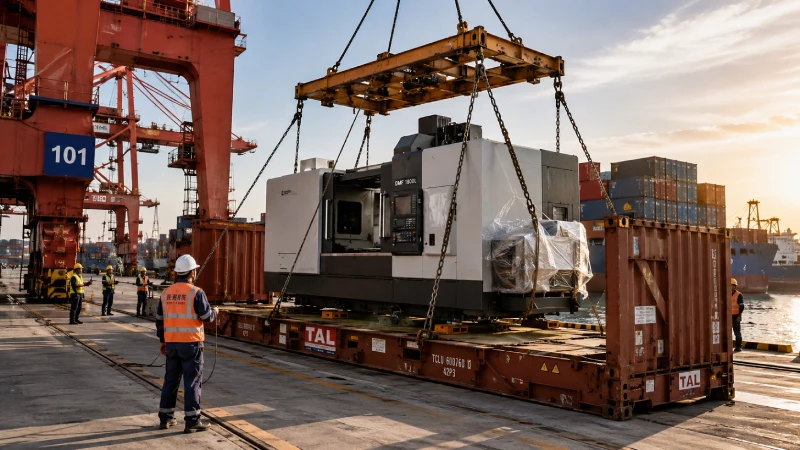
Importing machinery from China to UAE is very different from shipping standard commercial goods. Industrial equipment is often oversized, heavy, high-value, and highly sensitive to handling damage. A single mistake in packaging, loading, customs documentation, or delivery coordination can lead to expensive delays, damaged equipment, or unexpected port charges.
For UAE importers, machinery shipping also involves additional considerations such as heavy cargo handling at ports, customs inspections for industrial equipment, delivery permits, and unloading coordination at warehouses or construction sites.
Whether you are importing CNC machines, factory production lines, hydraulic systems, packaging machines, or construction equipment, proper logistics planning is essential.
This guide explains how to ship machinery from China to UAE safely and efficiently while reducing costs, delays, and cargo risks.
Why Machinery Shipping Requires Specialized Logistics
Machinery cargo cannot be treated like regular palletized freight. Industrial equipment creates unique transportation challenges because of its size, weight distribution, and handling requirements.
Large machines often exceed standard container dimensions. Some equipment may require flat rack containers, open top containers, or even breakbulk shipping arrangements. Heavy machinery also places significant pressure on container floors and lifting points, which increases loading risks.
In addition, machinery often contains:
- Sensitive electronic systems
- Hydraulic components
- Precision calibration parts
- Servo motors
- Control panels
- Fragile internal structures
Even small vibrations during transportation can cause hidden damage if the equipment is not properly secured.
UAE importers commonly source:
- Construction machinery
- CNC machines
- Industrial assembly lines
- Packaging machinery
- Agricultural equipment
- Factory automation systems
- Manufacturing equipment
Unlike consumer goods shipments, machinery imports usually involve:
- Crane coordination
- Heavy truck delivery
- Port handling approvals
- Customs inspections
- Specialized unloading arrangements
This is why working with an experienced freight forwarder for machinery cargo is critical.
Best Shipping Methods for Machinery from China to UAE
Sea Freight for Heavy and Oversized Machinery
Sea freight is the most common and cost-effective shipping solution for machinery imports into UAE.
For standard industrial machines, Full Container Load (FCL) shipping is typically preferred because it provides:
- Better cargo protection
- Lower handling risk
- More stable loading conditions
- Faster port processing
However, oversized equipment may require:
- Flat rack containers
- Open top containers
- Breakbulk shipping
- RoRo (Roll-on/Roll-off) shipping
Flat rack containers are commonly used for machinery that exceeds standard width or height limits. Open top containers work well for tall industrial equipment that can be loaded by crane from above.
RoRo shipping is ideal for wheeled or self-propelled machinery such as:
- Excavators
- Bulldozers
- Forklifts
- Construction vehicles
Sea freight is usually the best choice when:
- Cargo is extremely heavy
- Equipment dimensions exceed air cargo limits
- Shipping cost control is important
- Transit urgency is moderate
When Air Freight Makes Sense
Air freight for machinery is generally limited to:
- Urgent spare parts
- Small industrial equipment
- High-value electronic systems
- Emergency production replacement components
While air freight significantly reduces transit time, it also comes with major limitations:
- Very high shipping cost
- Strict cargo size restrictions
- Airport handling limitations
- Higher loading sensitivity
For example, shipping a small CNC control unit by air may make sense if a UAE factory is facing production downtime. However, shipping an entire production machine by air is often economically unrealistic.
Most machinery importers use air freight only for urgent operational situations.
Choosing Between FCL, Flat Rack, Open Top, and RoRo
The correct shipping method depends on:
- Cargo dimensions
- Weight
- Machine structure
- Lifting capability
- Delivery requirements in UAE
Here is a practical comparison:
| Shipping Method | Best For |
|---|---|
| Standard FCL | Compact industrial machines |
| Flat Rack | Oversized heavy machinery |
| Open Top | Tall equipment loaded by crane |
| RoRo | Wheeled machinery |
| Breakbulk | Extremely large industrial projects |
Choosing the wrong equipment type can result in:
- Port refusal
- Re-loading charges
- Cargo instability
- Customs delays
- Major cost increases
For first-time importers, many companies prefer DDP shipping because the freight forwarder handles customs clearance, import coordination, and final delivery.
Internal Link Opportunity:
Machinery Packaging and Heavy Cargo Handling
Export Crating and Moisture Protection
Proper packaging is one of the most important parts of machinery shipping.
Unlike ordinary cargo, machinery faces:
- Constant vibration
- Saltwater humidity exposure
- Crane lifting pressure
- Container movement
- Shock impact during loading
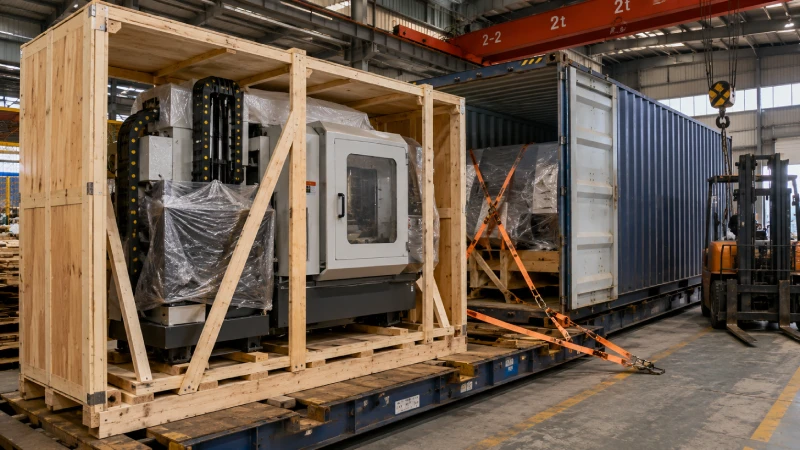
Export machinery is commonly packed using:
- ISPM15-certified wooden crates
- Steel-reinforced bases
- Vacuum-sealed packaging
- Moisture barrier wrapping
- Anti-rust protection
Sensitive industrial equipment may also include:
- Shock sensors
- Tilt indicators
- Humidity monitoring devices
For UAE-bound cargo, moisture protection is especially important because sea freight routes expose machinery to long periods of humidity and temperature fluctuation.
Loading, Lashing, and Crane Handling
Heavy machinery handling is one of the highest-risk stages of transportation.
Improper lifting or poor weight balancing can lead to:
- Structural damage
- Container floor collapse
- Machine misalignment
- Crate breakage
- Safety incidents
Professional machinery loading involves:
- Center-of-gravity calculations
- Floor load distribution
- Steel lashing systems
- Timber blocking and bracing
- Crane lifting point verification
For oversized cargo, ports may require:
- Advance loading approval
- Special crane scheduling
- Heavy equipment handling permits
Flat rack shipments especially require professional lashing because the cargo remains partially exposed during transport.
Common Packaging Mistakes That Cause Damage
Some of the most common machinery shipping mistakes include:
- Weak wooden bases
- Insufficient moisture protection
- Unlocked moving machine parts
- Poor internal cushioning
- Incorrect lifting points
- Inadequate lashing
CNC machinery is particularly sensitive because even minor movement can affect calibration accuracy.
Many insurance claims occur not because of accidents, but because of poor packaging preparation before export.
UAE Customs Clearance and Required Documents
Essential Shipping Documents for Machinery
Machinery shipments into UAE require accurate documentation to avoid customs delays.
The most important documents include:
- Commercial invoice
- Packing list
- Bill of lading
- Certificate of origin
- Import permits (if required)
The commercial invoice should clearly state:
- Machinery type
- Model number
- Serial number
- Unit value
- HS code
- Country of origin
Incomplete descriptions are one of the biggest causes of customs inspections.
HS Codes, Inspections, and Used Machinery Risks
Correct HS code classification is extremely important for machinery imports.
Incorrect HS codes may lead to:
- Duty calculation errors
- Customs penalties
- Cargo inspection delays
- Reclassification disputes
Used machinery imports often face stricter customs inspections in UAE because authorities may check:
- Equipment condition
- Manufacturing year
- Residual contamination
- Safety compliance
Some machinery categories may also require:
- Technical specification sheets
- Product manuals
- CE certification documents
- Operational descriptions
Importers should prepare these documents before cargo departure rather than waiting until arrival.
UAE-Specific Import Considerations
Machinery shipments into UAE may involve different customs procedures depending on the destination:
- Mainland UAE
- Free zones
- Industrial parks
For example, deliveries to Jebel Ali Free Zone may follow different documentation requirements compared to mainland Dubai deliveries.
Heavy cargo deliveries may also require:
- Delivery scheduling permits
- Industrial zone access coordination
- Crane unloading arrangements
Experienced importers usually begin customs preparation before the vessel even departs China.
Internal Link Opportunity:
- Shipping Time from China to UAE
- DDP Shipping Guide
Machinery Shipping Costs from China to UAE
Main Cost Factors for Heavy Cargo
Machinery shipping costs depend on much more than freight rates alone.
Major cost factors include:
- Cargo dimensions
- Weight
- Container type
- Port handling
- Crane usage
- Customs clearance
- Truck delivery
- Unloading equipment
Oversized cargo often generates additional fees such as:
- Out-of-gauge surcharges
- Flat rack premiums
- Heavy lift charges
- Special handling fees
A machine weighing 8 tons may cost significantly more than ordinary container cargo even if the shipment volume is similar.
Hidden Charges Importers Often Miss
Many UAE importers underestimate secondary logistics costs.
Common hidden charges include:
- Port storage fees
- Demurrage
- Detention
- Customs inspection fees
- Crane rental
- Heavy unloading equipment
- Delivery permit costs
These expenses can quickly become expensive if cargo clearance is delayed.
This is why proper documentation and pre-arrival coordination are extremely important.
How DDP Shipping Simplifies Budgeting
DDP shipping is popular among UAE machinery importers because it creates more predictable total costs.
With DDP shipping, the logistics provider handles:
- Export procedures
- Freight transportation
- UAE customs clearance
- Duties and taxes
- Final delivery
This reduces operational complexity for buyers who may not have in-house logistics teams.
Transit Time and Delay Prevention
Typical Shipping Timelines
Sea freight transit time from China to UAE usually ranges between:
- 18–35 days port-to-port
- 25–45 days door-to-door
Transit time depends on:
- Origin port
- Vessel schedule
- Container type
- Customs processing
- Final delivery location
Air freight shipments may arrive within:
- 3–8 days total transit time
However, oversized machinery shipments often require additional handling coordination that can extend timelines.
Why Heavy Cargo Often Gets Delayed
Machinery cargo experiences delays more frequently than standard cargo because of:
- Heavy lift scheduling
- Crane availability
- Customs inspections
- Documentation problems
- Port congestion
- Improper packaging
UAE customs inspections are particularly common for:
- Used machinery
- High-value industrial equipment
- Incomplete documentation
- Unclear cargo descriptions
What Experienced Importers Do Differently
Professional importers reduce delays by:
- Reviewing documents before shipment
- Conducting pre-loading inspections
- Confirming HS codes early
- Planning unloading equipment in advance
- Working with machinery-specialized freight forwarders
Proper planning often saves far more money than simply choosing the cheapest freight quote.
Shipping Insurance and Risk Management
Common Machinery Damage Scenarios
Machinery cargo faces significant transportation risks.
Common damage situations include:
- Rust exposure
- Water damage
- Forklift impact
- Crate collapse
- Internal vibration damage
- Electronic system failure
Even if external packaging appears intact, internal machine components may still be damaged.
Why Cargo Inspection Matters
Professional cargo inspection reduces risk significantly.
Important inspections include:
- Pre-loading cargo inspection
- Container condition inspection
- Lashing verification
- Arrival condition assessment
Photographic documentation is also important for insurance claims.
Best Practices for Insurance Coverage
Machinery importers should strongly consider all-risk cargo insurance.
Insurance should reflect:
- Full cargo replacement value
- Transportation cost
- Potential installation losses
- Project delay exposure
Underinsured machinery cargo can create major financial problems if damage occurs during transit.
Common Machinery Shipping Mistakes
One of the biggest mistakes importers make is choosing the wrong shipping method purely based on price.
Cheap shipping solutions may lack:
- Proper lashing expertise
- Heavy cargo handling capability
- Customs experience
- Oversized cargo coordination
Other common mistakes include:
- Weak export crating
- Incorrect HS codes
- Missing machine specifications
- No unloading plan at destination
- Ignoring UAE delivery restrictions
Some importers also forget to prepare cranes or forklifts at the final delivery site, which creates expensive unloading delays.
Machinery shipping requires end-to-end planning, not just freight booking.
Conclusion
Shipping machinery from China to UAE requires much more than simply booking container space. Heavy equipment transportation involves specialized packaging, loading coordination, customs preparation, heavy cargo handling, and risk management.
The most successful UAE importers focus on:
- Proper shipping method selection
- Professional export crating
- Accurate customs documentation
- Cargo inspection
- Insurance protection
- Experienced freight forwarding support
Whether you are importing CNC machinery, industrial production lines, hydraulic systems, or construction equipment, careful logistics planning can significantly reduce delays, damage risks, and unexpected costs.
Before shipping machinery from China to UAE, it is always worth reviewing cargo dimensions, packaging requirements, customs documents, and delivery conditions in advance to ensure a smoother and safer import process.
