

If you are shipping 5kg, 10kg, 20kg, 50kg or 100kg from China to Kenya, the first question is usually simple: how much will it cost per kilogram?
The answer is less simple. A 20kg shipment may move by DHL, FedEx, UPS or another express service, while a 50kg or 100kg shipment may be quoted as standard air cargo to Nairobi. The two services use different pricing structures, and the weight on your supplier’s packing list may not be the weight you are charged for.
For small commercial shipments, the most useful question is therefore not only:
What is the air freight rate per kg?
It is:
What is my chargeable weight, which shipping service should I compare, and what is included in the quotation?
This guide focuses specifically on 5–100kg commercial shipments from China to Kenya and explains how to compare courier, standard air freight and, when relevant, LCL sea freight.
Data Note: Air and courier rates can change frequently with airline capacity, fuel surcharges, origin city, cargo type, dimensions and service scope. Public market references can be useful for planning, but they should not be treated as a live Winsail quotation. Always compare quotations based on the same cargo details and the same service scope.
Quick Answer: What Should You Compare at 5kg, 10kg, 20kg, 50kg and 100kg?
There is no universal weight at which courier automatically becomes expensive or standard air freight automatically becomes cheaper.
A practical starting point is:
| Shipment Weight | First Option to Check | Also Compare | Main Reason |
|---|---|---|---|
| 5kg | Express courier | Forwarder express service | Fixed air-cargo charges can make standard freight inefficient |
| 10kg | Express courier | Forwarder parcel service | Simple door delivery may outweigh a lower base freight rate |
| 20kg | Express courier | Consolidated air service | This is where comparison starts becoming useful |
| 50kg | Courier + standard air freight | Airport-to-door air freight | Fixed cargo charges have less impact per kg |
| 100kg | Standard air freight + courier | LCL if the cargo is non-urgent | Air-cargo rate breaks become more relevant |
These are comparison starting points, not hard cutoffs.
A dense 50kg shipment may price very differently from a bulky 50kg shipment. Likewise, a courier account with a strong contracted rate may remain competitive at weights where standard air freight would normally be considered.
The only reliable comparison is based on the same:
- packed dimensions;
- gross weight;
- product;
- pickup location in China;
- destination in Kenya;
- customs scope; and
- delivery scope.
How Much Does Air Freight from China to Kenya Cost for 5kg–100kg?
For small shipments, multiplying the actual weight by an advertised air-freight rate often gives the wrong budget.
Your total cost may include several elements:
chargeable weight × applicable freight rate
plus, depending on the service:
- supplier pickup in China;
- consolidation or warehouse handling;
- export customs processing;
- security screening;
- fuel or carrier surcharges;
- airport handling;
- customs brokerage in Kenya;
- applicable duties and taxes;
- regulatory or inspection costs;
- delivery from Nairobi to the final address.
That is why a public rate of, for example, USD 6/kg does not necessarily mean that a 10kg shipment costs USD 60.
Why a Single China-to-Kenya Price per Kg Can Be Misleading
Air-freight advertisements often refer to a particular weight bracket, such as +45kg, +100kg or several hundred kilograms.
A 5kg parcel may instead be subject to an express courier tariff.
A 20kg consignment may be affected heavily by minimum charges.
A 100kg shipment may enter a more favorable airline rate bracket, but still incur origin and destination handling.
There is another important distinction: service scope.
These quotations are not equivalent:
- airport-to-airport air freight;
- express courier;
- airport-to-door service;
- duty-paid door delivery.
The higher rate may include services that the lower rate excludes.
So before comparing two rates, ask:
Where does each quotation start, where does it end, and which charges remain payable in Kenya?
For a broader comparison with sea freight, FCL and other modes, see our guide to shipping costs from China to Kenya.
Check My Shipping Cost
For an accurate comparison, send the packed weight and carton dimensions, not weight alone.
Courier vs Air Freight: Which Is Better for 5–100kg Shipments?
For small shipments from China to Kenya, there are two very different ways to move cargo by air.
Express Courier
This typically means an integrated courier network such as DHL, FedEx or UPS.
Courier is particularly useful when:
- the shipment is small;
- delivery is urgent;
- there are only a few cartons;
- the cargo is straightforward general merchandise;
- door delivery is important;
- the importer prefers fewer logistics handovers.
With courier, collection, international transport, customs coordination and final delivery may be connected under one network, although the exact customs and tax arrangement still needs to be checked.
Standard Air Freight
Standard air freight is handled as commercial air cargo.
A typical movement may involve:
China supplier
→ forwarder pickup
→ consolidation warehouse
→ export processing
→ airline cargo terminal
→ flight to Nairobi
→ cargo handling and customs clearance
→ optional local delivery.
It becomes increasingly worth comparing as shipment weight rises because fixed handling costs represent a smaller percentage of the shipment.
Courier vs Standard Air Freight
| Factor | Express Courier | Standard Air Freight |
|---|---|---|
| Typical use | Small, urgent parcels | Commercial cargo |
| China pickup | Usually integrated | Supplier pickup or warehouse delivery |
| Pricing basis | Courier tariff + surcharges | Airline rate + handling/minimum charges |
| Volumetric calculation | Courier dimensional-weight rules | Air-cargo volume-weight rules |
| Multiple suppliers | Less suitable for complex consolidation | Well suited to consolidation |
| Kenya arrival | Courier network | Air-cargo handling in Nairobi |
| Customs coordination | Courier-managed workflow with importer cooperation | Clearing-agent coordination commonly required |
| Final delivery | Commonly integrated | Optional depending on quotation |
| Duties and taxes | Check quotation terms | Usually separate unless specifically included |
When Courier Can Still Make Sense at 50–100kg
Do not assume that courier becomes automatically unsuitable when the cargo reaches 50kg.
Courier may remain commercially attractive when:
- the cartons are compact and dense;
- the shipper has access to a favorable courier tariff;
- delivery is urgent;
- final delivery is already included;
- avoiding additional cargo-terminal handling is valuable;
- there is only one supplier and one simple shipment.
When Standard Air Freight Can Make Sense Below 100kg
Standard air freight becomes worth checking when:
- the shipment is commercial rather than a sample parcel;
- you are collecting cargo from several Chinese suppliers;
- final delivery is not extremely urgent;
- you already work with a clearing agent in Kenya;
- the shipment is heavy enough that fixed handling costs are less significant;
- the cargo does not fit standard courier pricing efficiently.
Winsail can coordinate supplier pickup, consolidation and air-freight movements from China. You can learn more about our air freight services from China.
Compare Courier and Air Freight
How Chargeable Weight Changes Your Air Freight Cost
This is one of the most important calculations for anyone shipping small cargo from China.
The weight printed on the scale is not always the weight used for billing.
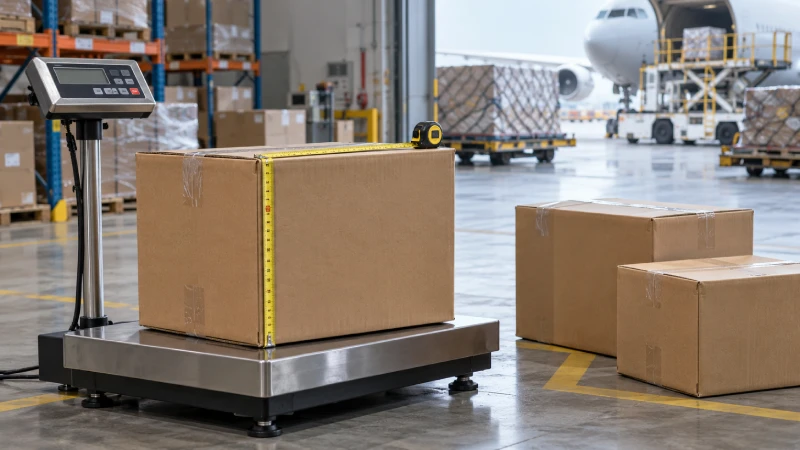
Carriers compare the shipment’s actual weight with its volumetric or dimensional weight. When volumetric weight is higher, that higher figure may become the chargeable weight.
This matters particularly for:
- plastic products;
- lighting products;
- shoes;
- assembled consumer goods;
- lightweight machinery housings;
- furniture components;
- packaging;
- products shipped in oversized cartons.
Courier Volumetric Weight
For many express services, a commonly published dimensional-weight formula is:
Length × Width × Height in cm ÷ 5,000
DHL and FedEx publish dimensional-weight methods using a 5,000 cm³/kg divisor for relevant services. The exact courier product and tariff should still be checked when booking.
Standard Air Cargo Volume Weight
For conventional air cargo, a common industry calculation is:
Length × Width × Height in cm ÷ 6,000
IATA air-cargo guidance uses the 6,000 cm³/kg conversion when illustrating volume-weight calculations.
Volumetric Weight Example
Suppose one carton from your Chinese supplier measures:
60 × 40 × 40 cm
and physically weighs:
12kg
Its volume is:
60 × 40 × 40 = 96,000 cm³
Using a 5,000 courier divisor:
96,000 ÷ 5,000 = 19.2kg
Using a 6,000 standard-air calculation:
96,000 ÷ 6,000 = 16kg
So although the supplier says:
“The cargo weighs 12kg.”
the transport provider may price it at approximately 16kg or 19.2kg, depending on the service and applicable carrier rules.
That difference can materially change your shipping budget.
Pro Tip: Ask your supplier for the dimensions of the final packed export cartons, not the dimensions of the product. Extra foam, retail boxes and oversized master cartons can increase chargeable weight significantly.
This is also why a quote based only on “50kg of goods” should be treated as preliminary.
Minimum Charges and the 45kg / 100kg Air-Freight Weight Breaks
Importers researching China-to-Kenya air freight frequently see terms such as:
- minimum charge;
- under 45kg;
- +45kg;
- +100kg;
- +300kg.
These terms are related, but they do not mean the same thing.
Minimum Freight Charge
Air cargo can have a minimum freight amount.
If the calculated freight based on your chargeable weight is below that minimum, the minimum amount may apply instead.
There can also be fixed costs for:
- export handling;
- security screening;
- documentation;
- pickup;
- terminal handling.
This is one reason standard air freight can look cheap “per kg” but still be inefficient for a 5kg shipment.
Why 45kg Appears So Often
Air-cargo tariffs commonly use weight breaks, and +45kg is a familiar commercial bracket.
But this should not be interpreted as:
“Every air shipment below 45kg is automatically billed as 45kg.”
The actual calculation depends on the applicable tariff, minimum charge and airline or forwarder pricing structure.
Minimum charges and rate breaks are separate pricing concepts. The total payable freight amount matters more than the displayed per-kilogram figure.
Why the Cost per Kg Can Fall at Higher Weights
Suppose a shipment includes fixed handling charges.
Those fixed costs are spread across:
- 10kg for a small shipment;
- 50kg for a medium shipment;
- 100kg for a larger shipment.
The effective cost per kilogram can therefore decline as shipment size grows.
Airlines and consolidators may also provide different rate levels for higher weight brackets.
This does not mean you should add unnecessary cargo simply to reach a new bracket. Instead, ask the forwarder to calculate the total payable amount under the relevant rate structure.
Pro Tip: If your shipment is close to a pricing breakpoint, compare the total freight amount, not just the displayed rate per kg.
What Is Included in a China-to-Kenya Air Freight Quote?
This is where many apparently “cheap” quotations become expensive.
A quotation should clearly show where responsibility begins and ends.
| Cost Item | Express Courier | Airport-to-Airport Air | Airport-to-Door / DAP | DDP |
|---|---|---|---|---|
| Supplier pickup in China | Often included or quoted | Confirm | Confirm | Confirm |
| China export handling | Usually integrated | Usually quoted separately or bundled | Confirm | Confirm |
| International transport | Yes | Yes | Yes | Yes |
| Fuel/security surcharge | May be separate or built into rate | Confirm | Confirm | Confirm |
| Nairobi handling | Usually integrated into courier process | Often separate | Confirm | Confirm |
| Customs brokerage | Service-dependent | Usually separate | Usually buyer-side under DAP | Seller-side under a valid DDP arrangement |
| Import duty/taxes | Do not assume included | Usually excluded | Normally buyer responsibility | Included only where specifically confirmed |
| Final Kenya delivery | Usually part of courier service | No | Yes to named destination | Yes to named destination |
| Special cargo fees | If applicable | If applicable | If applicable | If applicable |
Always obtain the actual inclusions in writing.
Freight-Only, DAP and DDP Are Different Products
A low airport-to-airport air rate may cover little more than the international freight movement.
Under a typical DAP arrangement, the shipment is delivered to the agreed place, but import clearance and import taxes remain the buyer’s responsibility.
A properly arranged DDP movement goes further and places import-clearance and duty or tax obligations on the seller-side arrangement. However, DDP feasibility must be checked for the specific product, importer structure and destination.
It should never be assumed simply because a forwarder advertises “door to door.”
For a deeper explanation, see DDP shipping from China to Kenya.
Important: Do not compare a USD/kg airport-freight quotation with a tax-paid door-delivery quotation. Ask both providers to price the same origin, destination, cargo dimensions and service scope.
Check Door-to-Door Feasibility
What Happens When Your Shipment Arrives in Nairobi?
Most commercial air-freight comparisons for Kenya involve arrival in Nairobi.
The operational process differs depending on whether the cargo moves through an express courier network or as standard air cargo.
Courier Shipment
A typical courier shipment may follow this sequence:
- Cargo is collected from the supplier in China.
- The courier processes the export shipment.
- The parcel moves through the courier’s international network.
- It arrives in Kenya.
- Customs documentation and assessment are coordinated.
- The importer provides any requested documents and pays charges according to the agreed service terms.
- After release, the courier completes delivery.
Because the courier controls more stages of the movement, this can be convenient for small shipments.
Standard Air Cargo
A standard commercial-air shipment usually involves more parties:
- Supplier pickup or delivery to the China consolidation warehouse.
- Cargo measurement, weighing and export preparation.
- Airline booking and export customs procedures.
- International air transport.
- Arrival and cargo handling in Nairobi.
- Kenyan customs clearance and any regulator coordination.
- Release from the cargo facility.
- Final delivery if arranged.
Kenya Revenue Authority guidance states that imported commercial goods generally require a licensed customs clearing agent and identifies documents such as the commercial invoice, Air Waybill, Certificate of Origin and, where applicable, permits and conformity documents among clearance requirements.
This destination process is one reason an airport-to-airport rate should not be mistaken for the final cost of getting goods to your shop or warehouse.
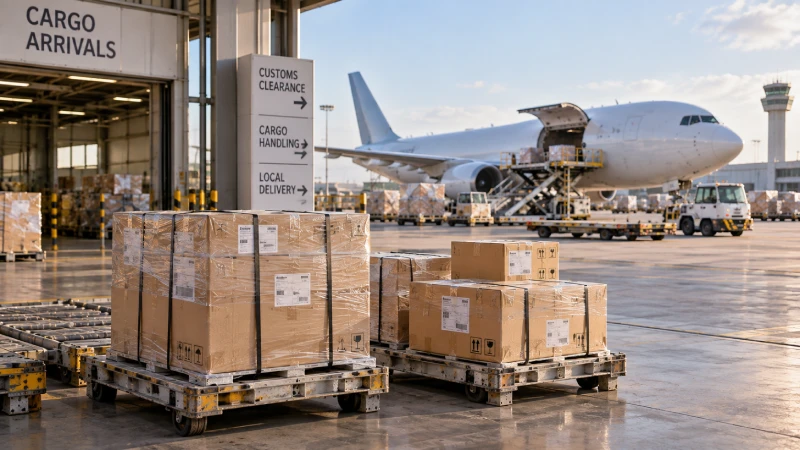
Winsail also has a real Guangzhou-to-Nairobi air-freight shipment involving approximately 102kg of speakers. It is useful as an example of an actual commercial air movement, although the transit result from one shipment should not be treated as a guaranteed standard for every booking.
Kenya Customs and Compliance Costs to Check Before Shipping
For a 5–100kg shipment, compliance can matter more than the physical size of the cargo.
A 10kg shipment of regulated electronics may require more preparation than 80kg of straightforward general cargo.
HS Code, Import Taxes and Importer Responsibilities
Kenyan import charges depend on factors including:
- HS classification;
- customs value;
- product type;
- applicable tariff treatment;
- regulatory requirements;
- available exemptions, if any.
Do not calculate import duty simply from the freight cost.
Before goods leave China, the importer and forwarder should have a sufficiently accurate product description to support HS classification.
Useful information includes:
- product name;
- material;
- function;
- model;
- commercial invoice value;
- catalogue or specification;
- product photos where necessary.
Kenya Revenue Authority import guidance identifies invoices, packing lists, Air Waybills, Certificates of Origin and applicable permits or Certificates of Conformity among documents that may be relevant to commercial import clearance.
Certificate of Origin for Kenya Imports
Kenya strengthened its Certificate of Origin requirements in 2025.
KRA states that imported consignments generally require a Certificate of Origin, while listing specific exceptions and provisional document arrangements.
This is relevant to small courier shipments because one listed exception concerns individual packages imported through a registered courier that remain within the limits specified under Regulation 119(3) of the East African Community Customs Management Regulations.
What Does the 70kg / USD 1,000 Courier Rule Mean?
Regulation 119 allows simplified customs declaration treatment for qualifying registered-courier shipments. It states that this treatment does not apply where an individual package exceeds 70kg or USD 1,000 in value. Licensed couriers must still present imported goods for customs examination and assessment of duty.
This point is often misunderstood.
It does not mean that shipments below 70kg or USD 1,000 are automatically duty-free.
It relates to courier customs procedures and is referenced by KRA in its current Certificate of Origin exception.
Tax liability still depends on the goods and applicable customs rules.
For commercial shipments close to these limits, confirm the treatment with the registered courier or Kenyan clearing agent before dispatch.
KEBS, PVoC and Certificate of Conformity
Small weight does not automatically remove Kenyan product-compliance obligations.
The Kenya Bureau of Standards operates the Pre-Export Verification of Conformity (PVoC) programme, designed to verify compliance with applicable Kenyan standards before goods are shipped.
KEBS’s current programme places China within its PVoC structure, with appointed inspection companies handling conformity assessment.
Depending on the product and applicable exemptions or waivers, this can mean arranging conformity assessment and obtaining the relevant Certificate of Conformity (CoC) before shipment.
This is especially important because sending a small parcel by courier does not automatically convert regulated commercial goods into an exempt shipment.
Check the requirement before shipping, particularly for products such as:
- electrical products;
- machinery or equipment;
- consumer products subject to standards;
- regulated components;
- products requiring another Kenyan authority’s permit.
Does Air Freight Need Kenya’s ACD?
For this type of shipment, do not confuse the sea-freight Advance Cargo Declaration (ACD) with air-cargo documentation.
KRA’s ACD system introduced in August 2026 applies to containerised cargo destined for Kenyan ports. It should therefore not automatically be added to the document checklist for a 5–100kg Nairobi air shipment.
Check My Kenya Import Requirements
When Should You Compare LCL Instead of Air Freight?
At around 100kg, some importers immediately assume that sea freight will be cheaper.
Sometimes it is worth checking. Sometimes it is not.
There is no universal kilogram threshold because LCL sea freight and air freight are priced differently.
Air freight is heavily influenced by chargeable kilograms.
LCL is primarily influenced by cargo volume, usually expressed in CBM, together with minimum charges, origin handling, destination CFS charges, clearance and inland transport.
Consider comparing LCL when:
- the goods are not urgent;
- the shipment is bulky relative to its weight;
- the cargo can tolerate a much longer transport cycle;
- the dimensions and CBM are known;
- Mombasa destination charges have been included;
- the importer is comfortable with sea-freight clearance and inland delivery.
For example, a bulky 100kg shipment occupying a large volume may be expensive by air because volumetric weight is high.
A compact, dense and high-value 100kg shipment may remain suitable for air freight because the time saving can justify the transport cost.
The correct comparison is not:
Air: USD X/kg
versus
LCL: USD Y/CBM
Instead compare:
Total cost from the supplier in China to release or delivery in Kenya.
If you are evaluating larger shipments as well, our main Shipping from China to Kenya guide covers the broader sea, air and door-to-door options.
What Information Is Needed for an Accurate 5–100kg Shipping Quote?
For small air shipments, the quality of the information you provide directly affects the quality of the quotation.
Sending only:
“I have 50kg from China to Kenya. How much?”
is usually not enough.
Provide the following details.
1. Supplier Pickup City in China
For example:
- Guangzhou;
- Shenzhen;
- Dongguan;
- Yiwu;
- Shanghai;
- Ningbo;
- another factory location.
Domestic pickup can materially affect the total price.
2. Number of Suppliers
If you are purchasing from several factories, tell the forwarder before quoting.
It may be more efficient to collect the shipments into one China warehouse, check the cartons and consolidate them before export.
3. Number of Cartons
Include the packaging format:
- cartons;
- wooden cases;
- pallets;
- bags;
- other packages.
4. Final Packed Dimensions
Provide:
Length × Width × Height for each carton
This is essential for chargeable-weight calculation.
5. Gross Weight
Use packed gross weight where possible, not product net weight.
6. Exact Product Description
Instead of:
“accessories”
provide:
“aluminium mobile-phone stands”
or another specific description.
This helps with cargo acceptance, HS classification and customs preparation.
7. Commercial Value
Courier and customs procedures can depend on cargo value as well as weight.
8. Special Cargo Information
Declare whether the shipment contains:
- lithium batteries;
- equipment with batteries installed;
- liquids;
- powders;
- magnets;
- chemicals;
- aerosols;
- pressurized products;
- dangerous goods.
Do not send special cargo under a general-cargo description to obtain a lower rate.
Airline acceptance, packaging, documentation and surcharges may be different.
9. Cargo-Ready Date
Air-freight prices depend on the actual booking period.
A rate obtained today may not remain valid when the supplier finishes production several weeks later.
10. Kenya Destination
Specify:
- Nairobi airport pickup;
- Nairobi business address;
- another Kenyan city;
- warehouse;
- residential destination.
Final delivery outside the normal service area can materially change the quotation.
11. Preferred Shipping Scope
Tell the forwarder whether you need:
- airport-to-airport;
- airport-to-door;
- DAP;
- another door-to-door arrangement;
- DDP, where a compliant option is available for the shipment.
If you are unsure, ask for two comparable options.
Before You Choose the Cheapest Rate
For a 5–100kg China-to-Kenya shipment, the lowest advertised cost per kilogram is rarely enough information to make a shipping decision.
Before confirming a booking, check five things:
- What is the chargeable weight?
- Is this courier or standard air freight?
- Where does the quoted service end?
- Which Kenya customs, tax and compliance costs are excluded?
- Would another method give a lower total delivered cost?
For a 5kg or 10kg parcel, express courier is usually the logical service to price first.
At around 20kg, it can be worth asking whether a forwarder-managed option is available.
At 50kg, compare courier and standard air freight on the same basis.
At 100kg, standard air freight deserves serious comparison, while non-urgent or bulky cargo may also justify checking LCL sea freight.
But the deciding factor is never weight alone.
A compact 100kg shipment and a lightweight shipment occupying several large cartons are completely different freight jobs.
The fastest way to obtain a useful comparison is to send:
product + cartons + gross weight + packed dimensions + cargo value + China pickup city + Kenya destination + required delivery scope.
That allows the quotation to be based on the shipment you actually have, not a generic “price per kg” that may have little connection to the final bill.
Send Cargo Details
FAQ
How much does it cost to ship 10kg from China to Kenya?
There is no reliable universal 10kg price because the quotation depends on carton dimensions, chargeable weight, cargo type, pickup location, courier tariff and delivery scope. For a 10kg shipment, express courier is usually the first service worth pricing.
Is DHL or standard air freight cheaper for a 20kg shipment to Kenya?
It depends on the shipment dimensions, available courier tariff and whether final delivery is included. At around 20kg, courier is still commonly worth checking first, but a forwarder-managed consolidated air option may also be worth comparing.
How is volumetric weight calculated for China-to-Kenya air freight?
Many express services use length × width × height in centimetres divided by 5,000, while standard air cargo commonly uses a 6,000 divisor. The applicable carrier rule should be confirmed before booking.
Does a 50kg air shipment automatically get charged as 45kg or 50kg?
No. Chargeable weight, minimum freight charges and airline weight breaks are separate concepts. The total payable amount depends on the applicable tariff and the shipment's actual or volumetric weight.
Does a DHL, FedEx or UPS price include Kenya import duty and VAT?
Not automatically. Import taxes and clearance charges depend on the exact service and billing arrangement. Confirm whether duties, taxes and brokerage are included or remain payable by the consignee.
Are courier parcels below 70kg or USD 1,000 duty-free in Kenya?
No. The 70kg and USD 1,000 limits relate to simplified registered-courier customs treatment under the relevant East African Community regulation. They are not a blanket duty-free threshold.
Should I use LCL sea freight for a 100kg shipment?
Weight alone cannot determine that. Compare the shipment's CBM, urgency, chargeable air weight, LCL minimum charges, Mombasa destination costs, clearance and inland delivery before choosing between air and sea freight.
