

Before asking “How do I get SONCAP?”, ask a more important question first:
Does SONCAP actually apply to this product?
For goods shipped from China to Nigeria, that decision should be made before shipment—and preferably before the importer pays the final production balance or the supplier books cargo space.
SONCAP is Nigeria’s pre-shipment conformity assessment system for products regulated by the Standards Organisation of Nigeria (SON). For goods within its scope, the process may involve a Product Certificate, conformity verification or testing in China, and a shipment-specific SONCAP Certificate before the goods can proceed through Nigeria’s import process.
But not every product imported into Nigeria follows the same SONCAP route. Some categories are excluded from the offshore scheme, some may fall under other regulators such as NAFDAC, and certain manufacturing, project or non-commercial imports may qualify for a SON Import Permit pathway instead.
Do not assume every product shipped from China to Nigeria needs SONCAP.
First confirm the exact product, intended use, proposed HS classification and applicable regulator.
Last regulatory source check: October 3, 2026.
SONCAP applicability depends on the exact product and transaction. Regulations, appointed conformity-assessment firms and electronic workflows can change. This guide is for operational planning and does not replace a product-specific decision from SON or another competent Nigerian authority.
What SONCAP Is — and What It Is Not
SONCAP stands for the Standards Organisation of Nigeria Conformity Assessment Programme.
SON describes SONCAP as an offshore, pre-shipment conformity assessment scheme for products regulated by SON and imported into Nigeria. Its purpose is to verify conformity with applicable Nigerian Industrial Standards, approved international or national standards, and other applicable technical requirements before regulated goods are shipped.
Depending on the applicable route, the conformity assessment may involve:
- documentary review;
- physical inspection;
- product sampling;
- laboratory testing;
- verification against applicable standards;
- production or quality-system review where required.
SON explains that inspection, sampling, testing and documentary checks can form part of the SONCAP certification process. See the official SONCAP service guidance and SON certification-process FAQ.
SONCAP is not simply a customs document purchased after arrival
This distinction matters operationally.
SONCAP is designed as a pre-shipment conformity process. It should therefore not be treated as another destination document that can safely be arranged after the container has already sailed from China.
If regulated goods leave China without the applicable conformity pathway being completed, the importer may face a different default or enforcement procedure rather than the normal offshore process.
Do not ship regulated goods before the applicable pre-shipment conformity pathway is confirmed.
Late certification can affect vessel cut-off, PAAR preparation, cargo release and destination costs.
If you are still building the broader Nigeria import file, review Documents Required to Import from China to Nigeria separately from this SONCAP-specific guide.
Does My Product Require SONCAP?
The fastest way to create a SONCAP problem is to classify a product only by a broad commercial description.
“Machine,” “electronic product,” “spare part,” “chemical” or “medical product” is usually not enough for a reliable regulatory decision.
A useful SONCAP screening process starts with the exact product.
Step 1: Identify the product precisely
Prepare:
- commercial product name;
- exact model number;
- manufacturer;
- technical specification;
- material or composition where relevant;
- electrical ratings where applicable;
- intended end use;
- whether the goods are new, used, refurbished or re-engineered;
- proposed HS code.
The purpose is to avoid screening one product while the supplier actually ships another variation.
Step 2: Check whether SON regulates the category
SONCAP applies to SON-regulated imported products unless a published exclusion or another route applies.
Do not rely only on a Chinese supplier’s statement that a product is “not controlled.” Nigerian regulatory treatment depends on Nigerian rules, not only on the export-side description.
Step 3: Check the current SONCAP exclusions
Some categories sit outside the standard offshore SONCAP scheme.
However, exemption from SONCAP does not automatically mean the goods can enter Nigeria without regulatory control.
Step 4: Check whether a SON Import Permit route may apply
Certain manufacturing inputs, machinery, project goods, humanitarian items or non-commercial imports may potentially qualify for an Import Permit pathway, subject to SON’s conditions and approval.
An Import Permit should be treated as a separate regulatory route, not as a workaround for ordinary commercial goods.
Step 5: Check whether another Nigerian regulator applies
Some categories may be primarily controlled by NAFDAC or another authority.
For example, food, medicine, some medical products and certain chemicals may require a different regulatory pathway. For those categories, use a dedicated NAFDAC or sector-specific compliance review rather than assuming SONCAP is the only question.
Step 6: Obtain authoritative confirmation if the classification is uncertain
Borderline products should be confirmed before shipment.
This is especially important when:
- one model differs technically from another;
- the product has several possible uses;
- the HS code is uncertain;
- the importer is claiming an exemption;
- the importer intends to use an Import Permit route;
- another regulator may have overlapping jurisdiction.
SONCAP Screening Matrix
| Product Category | SONCAP? | Other Possible Regulator | Action Before Shipment |
|---|---|---|---|
| Typical SON-regulated consumer or industrial product | Often yes | Depends on product | Confirm exact product, HS code and SONCAP route |
| Electrical or electronic equipment | Often within SON scope | Other agencies may apply to certain functions or uses | Screen exact model and technical specification |
| Food products | Listed by SON among offshore SONCAP exclusions | NAFDAC and other authorities may apply | Confirm food-import requirements before shipment |
| Medicines | Listed among SONCAP exclusions | NAFDAC | Follow the competent pharmaceutical regulatory process |
| Some medical products | May be excluded from offshore SONCAP depending on category | NAFDAC or other authority | Confirm the exact product category |
| Medical equipment or machines | Do not assume exempt | SON and/or another regulator may apply | Screen the exact equipment and intended use |
| Certain raw-material chemicals for bona fide manufacturing | May fall under a different treatment depending on product and use | NAFDAC or other authority may apply | Verify chemical identity and industrial use |
| Machinery, raw materials or packaging for a bona fide manufacturer | Import Permit may potentially apply | Depends on goods | Confirm Import Permit eligibility before shipment |
| Project-specific, humanitarian or genuinely non-commercial goods | Import Permit may potentially apply | Depends on product | Obtain SON determination where required |
| Used products | Some categories may have different SONCAP treatment | Depends on product | Verify the current rule before purchase and shipment |
| Prohibited or restricted goods | SONCAP does not create permission to import | NCS and other competent agencies | Check import legality first |
The matrix is for screening only. It should not replace a product-specific regulatory decision.
SONCAP Exemptions Need Careful Interpretation
Before relying on an exemption, check the restricted and prohibited goods guide for other controls.
SON currently lists several categories as excluded from the offshore SONCAP scheme, including food products, medicines and certain other classes.
The important point is SON’s own warning: being exempt from offshore SONCAP does not necessarily mean the product is unregulated. See SON’s official guidance on products exempted from the SONCAP scheme.
For importers buying from China, this creates three broad outcomes:
- Standard SONCAP applies.
- SONCAP does not apply, but another regulator or Nigerian control does.
- A separate SON Import Permit or another special route may potentially apply.
For example, a food product may not follow the normal offshore SONCAP process, but the importer should still check the applicable Nigerian food regulatory requirements before production and shipment.
Likewise, a sensitive industrial or medical item should not be treated as freely importable merely because it does not fit the normal SONCAP route.
Do not assume “SONCAP-exempt” means “unregulated.”
An exemption answers whether the standard offshore SONCAP scheme applies. It does not automatically answer what other permits, registrations, inspections or approvals the shipment needs.
This distinction is particularly important for importers who are also reviewing Restricted & Prohibited Goods for Nigeria Imports. Product legality, product conformity and customs documentation are related but separate questions.
Product Certificate — PC1, PC2 and PC3
For SONCAP-regulated goods, the Product Certificate (PC) is a major early-stage document.
SON states that Product Certificates are used in Form M processing for regulated products. The certificate establishes the product’s conformity status under the applicable route.
SON identifies three Product Certificate routes or statuses:
- PC1 — Unregistered Status / Route A
- PC2 — Registered Status / Route B
- PC3 — Licensed Status / Route C
These are not simply three price options.
The appropriate route depends on the product, exporter or manufacturer, conformity history and the applicable certification structure.
PC1: Unregistered Status
PC1 is the unregistered-product route.
It is generally intended for products that do not have registered or licensed status under the higher routes. It is commonly associated with more shipment-specific conformity verification.
SON’s published FAQ states that PC1 is single-use and currently has a six-month validity period.
That does not mean one PC1 can be reused indefinitely during those six months. Its single-use status remains the key operational limitation.
PC2: Registered Status
PC2 is the registered-product route.
It is intended for products that have satisfied the applicable registration requirements and can support multiple qualifying shipments during the certificate’s validity, subject to the SONCAP process and any required verification.
SON currently describes PC2 as valid for 12 months and multiple use.
PC3: Licensed Status
PC3 is the licensed-product route.
It represents a higher level of established conformity status within the SONCAP framework and may involve additional assessment of the manufacturer or quality system.
SON currently describes PC3 as valid for 12 months and multiple use.
Product Certificate comparison
| Certificate | Status | Typical Use Structure | Current SON Guidance |
|---|---|---|---|
| PC1 | Unregistered | Single-use product certification route | Six-month validity, single use |
| PC2 | Registered | Multiple qualifying shipments during validity | 12 months, multiple use |
| PC3 | Licensed | Licensed product route for established conformity status | 12 months, multiple use |
Before publication or live use, the importer should verify the current PC conditions directly with SON or the appointed conformity-assessment firm because route requirements can change.
A Product Certificate is not the shipment SONCAP Certificate
This distinction is essential.
The Product Certificate supports the product/Form M stage. The SONCAP Certificate (SC) is connected to the shipment and downstream PAAR/clearance process.
An importer should therefore not assume that having a valid PC2 or PC3 means no further shipment-level conformity step is required.
Certificate Table
| Document | Purpose | Applicant / Named Party | Process Stage | Validity / Use |
|---|---|---|---|---|
| Product Certificate PC1 | Establishes unregistered product conformity status and supports Form M | Issued within the SONCAP product-certification process | Before/for Form M | Single use; confirm current validity before application |
| Product Certificate PC2 | Establishes registered product conformity status and supports Form M | Issued within the SONCAP product-certification process | Before/for Form M | Currently 12-month multiple-use route |
| Product Certificate PC3 | Establishes licensed product conformity status and supports Form M | Issued within the SONCAP product-certification process | Before/for Form M | Currently 12-month multiple-use route |
| Certificate of Conformity | Records successful conformity assessment under the applicable route | Generated through the approved conformity-assessment process | After required verification/testing | Use depends on the assessed product/shipment |
| SONCAP Certificate | Supports PAAR and downstream clearance for regulated goods | Shipment/import process | After applicable shipment conformity stage | Consignment-specific |
| SON Import Permit | Alternative SON route for qualifying imports | Nigerian importer/applicant | Before relevant import-processing stages | Subject to SON approval and permit conditions |
Shipment Conformity and the SONCAP Certificate
The Product Certificate does not end the process.
For a regulated shipment, the goods may still need shipment-level conformity verification before the SONCAP Certificate can be completed.
Depending on the route, SON describes conformity-assessment activities that may include:
- inspection;
- sampling;
- laboratory testing;
- documentary review;
- verification against applicable standards;
- production-system assessment where relevant.
A successful assessment can support issuance of the applicable conformity documentation. If the goods do not satisfy the required standard, the process may instead identify non-conformity that must be resolved.
Typical shipment conformity timeline
1. Product is identified and screened
Confirm exact model, specification, manufacturer, intended use and proposed HS classification.
↓
2. Applicable Product Certificate route is established
Determine whether PC1, PC2 or PC3 applies.
↓
3. Product Certificate supports Form M
The importer proceeds with Form M using the required regulatory documentation.
↓
4. Supplier prepares the actual production lot
The goods should remain consistent with the product information used in the conformity file.
↓
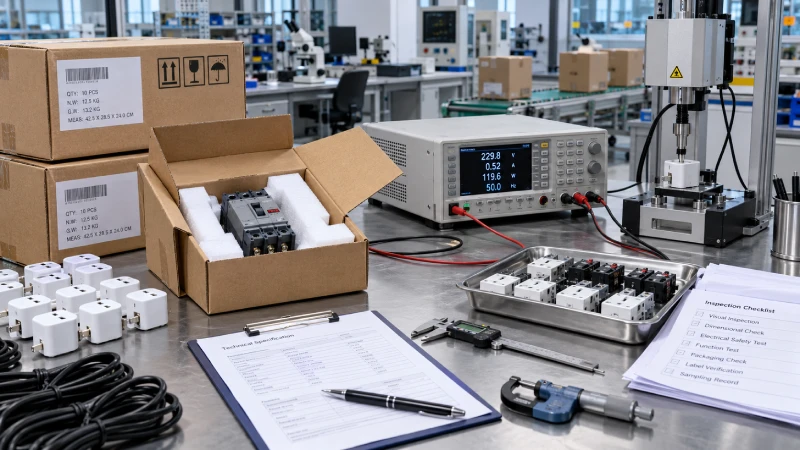
5. Inspection, testing or documentary review takes place where required
The appointed conformity-assessment firm applies the route-specific checks.
↓
6. Conformity documentation is completed
Any identified discrepancy or failed requirement may need to be corrected before the shipment can proceed normally.
↓
7. SONCAP Certificate is processed for the consignment
The shipment-level certificate connects the conformity process to the specific import transaction.
↓
8. The importer proceeds toward PAAR and downstream clearance
The SONCAP Certificate becomes part of the broader Nigeria import-document chain.
When should product testing happen?
As early as practical.
If the product needs laboratory testing, waiting until the container is packed and ready to load creates unnecessary risk.
A failed test or missing technical document at that stage can affect:
- vessel cut-off;
- container booking;
- production rework;
- lab lead time;
- final-payment timing;
- delivery commitments.
For a new product or new supplier, regulatory screening should begin while the manufacturer can still correct specifications, labels or documentation without disrupting shipment.
How SONCAP Fits with Form M and PAAR
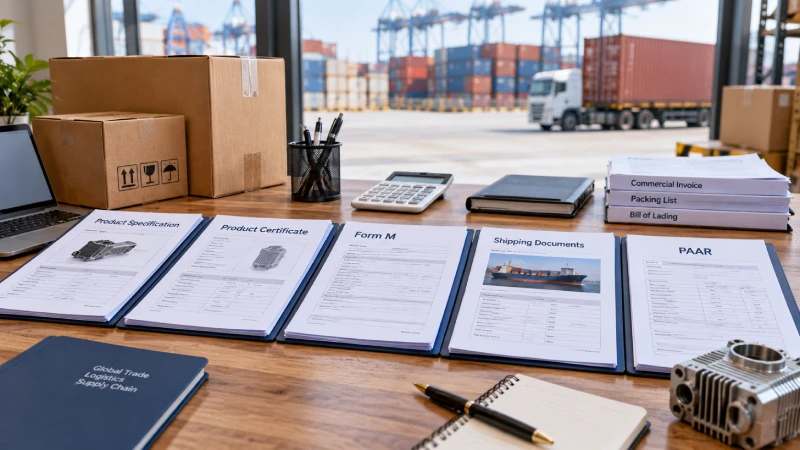
Coordinate the complete import document set, the Form M and PAAR sequence, and customs clearance.
SONCAP is not an isolated certificate process. It connects with Nigeria’s broader import-document workflow.
For a typical SONCAP-regulated shipment, the simplified sequence is:
Product classification
↓
Product Certificate
↓
Form M
↓
Shipment conformity process
↓
SONCAP Certificate
↓
PAAR
↓
Customs declaration and downstream clearance
SON’s guidance states that the Product Certificate is used for Form M processing and that the SONCAP Certificate supports the PAAR/clearance stage.
For the full document chain, see Form M & PAAR for Imports from China to Nigeria.
For the wider border process after the pre-arrival documentation is ready, see Customs Clearance in Nigeria for Imports from China.
Why consistency across the documents matters
The following data should not contradict one another without a valid documented reason:
- product description;
- model;
- manufacturer;
- HS classification;
- quantity;
- invoice details;
- shipment value;
- importer information;
- certificate details;
- shipping documents.
A common problem is that the importer starts the regulatory file with one product description, then the supplier changes the commercial paperwork before shipment.
For example:
- the invoice adds new models;
- the final quantity changes materially;
- the supplier switches the manufacturer;
- a model number changes;
- the proposed HS code changes;
- the product specification differs from the certified version.
These mismatches should be resolved before the shipment moves downstream.
SONCAP Import Permit Is a Different Route
A SON Import Permit should not be presented as an easy substitute for normal SONCAP certification.
SON publishes an Import Permit pathway for certain qualifying categories or circumstances. Current guidance includes examples such as:
- some raw materials, machinery or packaging imported by bona fide manufacturers;
- certain project-specific items;
- humanitarian or charitable goods;
- other qualifying non-commercial circumstances.
Eligibility depends on the product, importer, intended use and the current SON rules.
See SON’s official explanation of the SONCAP Import Permit.
Import Permit decision tree
Is the shipment ordinary commercial merchandise for resale or distribution?
→ If yes, do not assume an Import Permit can replace the standard Product Certificate/SONCAP route.
Is the shipment machinery, a raw material or packaging for a bona fide Nigerian manufacturer?
→ An Import Permit may potentially be relevant, subject to SON’s current conditions and approval.
Is it genuinely project-specific, humanitarian, charitable or non-commercial?
→ A special permit pathway may potentially apply. Confirm before shipment.
Is the only reason for considering an Import Permit that SONCAP seems expensive or inconvenient?
→ That is not a valid basis for assuming eligibility.
Even where an Import Permit applies, the goods may still be subject to Nigerian conformity controls or inspection.
The permit should therefore be treated as a different regulatory pathway—not a waiver from product responsibility.
2026 National Single Window Change
Important 2026 Update
SON announced mandatory migration changes affecting SONCAP and Import Permit processing through Nigeria’s National Single Window, effective March 27, 2026.
Under SON’s March 2026 notice, relevant SONCAP and Import Permit processing moved into the National Single Window environment.
SON explained that offshore Product Certificate and Shipment Certificate generation could continue through the applicable conformity-assessment process, while activation relevant to Form M, PAAR and cargo clearance must follow the National Single Window workflow.
See SON’s official notice: Mandatory Migration of SONCAP and Import Permit Processes to the National Single Window Platform.
Why this matters for importers using older guides
Nigeria import guides written before March 2026 may show:
- legacy portal screenshots;
- older activation steps;
- outdated login flows;
- old assumptions about where certificates are activated.
An importer should not copy an old process merely because the certificate names remain the same.
For a 2026 shipment, confirm the current NSW workflow before beginning Form M or PAAR activation.
Confirm the currently appointed conformity-assessment firm
This is another area where old articles can become unreliable.
The operating list of SON-appointed offshore conformity-assessment firms can change. In 2026, SON announced the voluntary withdrawal of Bureau Veritas from the SONCAP scheme, making it particularly important not to rely on an old provider list.
Before paying a testing or certification invoice, confirm that the organisation handling the offshore process is currently recognised within SON’s applicable SONCAP framework.
Do not treat a historical IAF list copied from an old FAQ, supplier file or freight agent message as permanent.
What the Chinese Supplier Needs to Prepare
The Nigerian importer owns the responsibility for arranging a compliant import structure, but the Chinese manufacturer or exporter usually supplies much of the technical evidence required for conformity assessment.
Before the certification file begins, ask the supplier to prepare:
- exact manufacturer name and address;
- exact product models;
- technical specifications;
- product photographs;
- label or rating-plate information;
- applicable existing test reports;
- samples if testing is requested;
- access for inspection where required;
- production or quality information where relevant;
- commercial invoice details;
- packing information;
- quantity and model breakdown;
- other documents requested by the conformity-assessment provider.
Keep the certified product and shipped product aligned
Problems can arise when the regulatory file is correct at the start but the production order changes later.
Examples include:
- adding three new models to the order after the PC process starts;
- changing voltage, wattage or other technical characteristics;
- using a different manufacturer for part of the shipment;
- shipping more models than appear in the conformity file;
- changing product labels;
- using a vague invoice description;
- changing the proposed HS classification.
The supplier should notify the importer before making changes that could affect the conformity file.
Do not assume the supplier alone owns SONCAP
The exporter may provide the technical documents and cooperate with inspection or testing, but the Nigerian importer still needs to ensure that:
- the correct regulatory route has been selected;
- Form M is compatible with the regulatory documents;
- the consignee/importer data are correct;
- the shipment-level conformity process is complete;
- the correct documents are available for PAAR and clearance.
This division of responsibility should be agreed before shipment rather than discovered after cargo arrival.
Pro Tip
Send the supplier’s exact model, technical specification and proposed HS code for regulatory screening before paying the final production balance.
This leaves time to identify testing, Product Certificate or permit requirements while production and shipment can still be adjusted.
What Happens If Compliance Is Started Too Late?
Late SONCAP planning can create costs far beyond the certification fee itself.
The shipment may miss the intended sailing
If inspection, testing or revised technical documentation is required after cargo is already packed, the supplier may not be able to complete the process before the vessel cut-off.
This can lead to:
- rebooking;
- warehouse handling;
- container changes;
- missed delivery commitments.
The supplier may need to rework the product or documentation
If labels, models, technical specifications or documentation do not match what was submitted for conformity assessment, the supplier may need to correct the discrepancy before the shipment proceeds.
Form M or PAAR processing may be disrupted
Because the Product Certificate and SONCAP Certificate connect to the broader Nigerian import process, an incomplete or inconsistent conformity file can prevent downstream documentation from moving normally.
For a wider review of the Nigerian import document sequence, see Documents Required to Import from China to Nigeria.
Port, terminal and container costs can increase
A regulatory problem is operationally more expensive once cargo has arrived in Nigeria.
Potential exposure can include:
- terminal storage;
- container demurrage or detention;
- extra handling;
- inspection costs;
- broker coordination;
- delayed inland delivery.
The exact cost depends on the carrier, terminal, cargo and duration of the delay.
The shipment may enter a default or enforcement process
SON publishes a SONCAP Default procedure for relevant cases where regulated goods did not complete the proper pre-shipment process.
Do not treat this as an alternative planning method.
It is a problem-resolution path after the normal conformity process was not completed correctly.
Non-compliant goods may face detention, testing or other enforcement action
SON warns that regulated products imported without the applicable SONCAP requirements may face detention, testing and, where the applicable rules require, possible destruction at the importer’s expense.
See SON’s guidance on why a SONCAP Certificate is required.
Warning
Do not ship first and plan conformity later.
For a regulated product, a few days spent screening the product before shipment can prevent a much longer and more expensive problem after arrival.
Practical SONCAP Checklist Before Shipping from China
Before approving shipment, confirm that:
- The exact product and proposed HS code have been screened.
- SONCAP applicability has been confirmed.
- Any claimed SONCAP exemption has been checked against the actual product and intended use.
- Other regulators have been identified where applicable.
- The correct PC1, PC2 or PC3 route has been determined.
- The Product Certificate details match the product being shipped.
- Form M has been processed with the required regulatory documentation.
- Required inspection, testing or documentary verification has been completed.
- The shipment-specific conformity process is complete before departure.
- Certificate activation follows the current National Single Window workflow.
- Invoice, model, quantity, HS code and importer details are consistent.
- The current SON-appointed conformity-assessment provider has been confirmed.
For complex machinery, electronics or multi-model orders, start this review while production is still in progress rather than at container loading.
Review Product Compliance Before Shipping
For a China-to-Nigeria shipment, begin with the product rather than the freight rate.
Prepare:
product name + exact model + specification + manufacturer + intended use + proposed HS code
Use those details to determine whether the shipment follows:
- standard SONCAP;
- another regulator’s requirements;
- a SON Import Permit pathway;
- another product-specific control.
Winsail Logistics can coordinate the China-side freight process and help identify where regulatory documentation may affect cargo readiness, booking or shipment timing.
However, Winsail does not issue, approve or replace SON Product Certificates, SONCAP Certificates, Import Permits or regulatory decisions.
Certification and approval belong to SON and the competent authorised conformity-assessment process.
For the wider route, freight method and Nigeria delivery structure, see Nigeria import compliance and freight guide.
FAQ
Does every Nigerian import need SONCAP?
No. SONCAP applies to SON-regulated products within the scheme’s scope. Some categories are excluded from offshore SONCAP, may be controlled by another regulator, or may follow another SON route. Confirm the exact product, intended use and HS classification before shipment.
Which products are exempt from SONCAP?
SON currently lists categories including food products, medicines and certain other classes among offshore SONCAP exclusions. The current SON exemption list should be checked for the exact product before shipment.
Does SONCAP exemption mean no SON regulation?
No. SON states that exemption from the offshore SONCAP scheme does not necessarily mean the goods are unregulated. Another SON control, permit or Nigerian regulator may still apply.
What is a Product Certificate?
A Product Certificate establishes the conformity status of a SONCAP-regulated product and is used in the Form M stage. SON identifies PC1 for unregistered status, PC2 for registered status and PC3 for licensed status.
What is the SONCAP Certificate?
The SONCAP Certificate is the shipment-level certificate used for SONCAP-regulated consignments and supports the downstream PAAR and clearance process. It should not be confused with the Product Certificate.
Does SONCAP need to be prepared before shipping?
Yes for products within the scheme. SONCAP is a pre-shipment conformity process, so required testing, inspection, document review and certification should be planned while the goods are still in the country of export.
How does SONCAP connect to Form M and PAAR?
For a typical regulated shipment, the Product Certificate supports Form M, the shipment completes the applicable conformity process, and the SONCAP Certificate supports the PAAR and downstream clearance stage.
Can Winsail issue a SONCAP Certificate?
No. Winsail Logistics can coordinate freight planning and help identify where compliance documents affect shipment timing, but certification and approval belong to SON and the competent authorised conformity-assessment process.
Regulatory note: This article is for freight and operational planning only. SONCAP scope, PC conditions, appointed conformity-assessment firms, fees, Import Permit criteria, National Single Window workflows and enforcement procedures may change. Verify the current requirements with SON or the competent Nigerian authority before shipment.
