
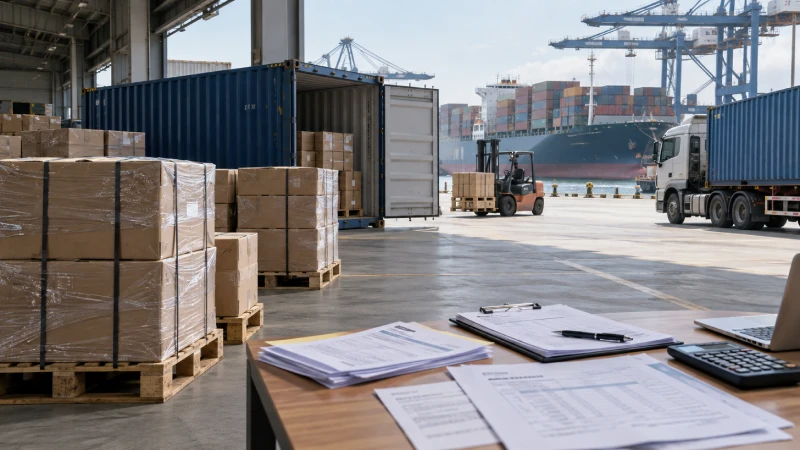
When importing goods from China to Kenya, DAP and DDP can look very similar on a freight quotation. In both cases, the seller can arrange transportation from China to an agreed destination in Kenya.
The important difference appears at Kenyan import clearance.
Under DAP (Delivered at Place), the seller arranges transportation to the agreed named destination, but the buyer is responsible for Kenya import clearance and applicable import duties and taxes.
Under DDP (Delivered Duty Paid), the seller takes responsibility for the import-clearance formalities and applicable import duties and taxes as well as transportation to the agreed destination.
For a Kenyan importer, however, the decision should not stop at asking, “Which option is easier?”
The more useful questions are:
- Who will be declared in the Kenya import process?
- Who will work with the licensed customs clearing agent?
- Who pays the KRA customs assessment?
- Who controls the HS classification and declared value?
- Who obtains and retains the required import documents?
- What happens if KRA or KEBS asks for additional information?
- Which costs are actually included in the quoted DAP or DDP price?
This guide explains those differences specifically for commercial shipments moving from suppliers in China to Kenya.
Data Note — Updated September 2026
Kenya import requirements can change and may vary according to HS classification, product type, importer status and the government agency responsible for the goods. This guide uses current ICC, Kenya Revenue Authority (KRA) and Kenya Bureau of Standards (KEBS) information available in September 2026. Incoterms® allocate responsibilities between the seller and buyer; they do not replace Kenyan customs, tax or product-compliance requirements.
Quick Answer: DAP vs DDP China to Kenya
The main difference between DAP and DDP is who handles import customs clearance and import taxes in Kenya.
| Question | DAP | DDP |
|---|---|---|
| Supplier pickup and China-side transport | Seller, according to agreed scope | Seller |
| China export clearance | Seller | Seller |
| International freight | Seller | Seller |
| Delivery to agreed named place in Kenya | Seller | Seller |
| Kenya import clearance | Buyer/importer | Seller’s responsibility |
| Import duties and applicable taxes | Buyer/importer | Seller |
| Kenya customs-agent coordination | Buyer controls the clearance arrangement | Seller must arrange a workable clearance solution |
| Unloading at named destination | Normally buyer | Normally buyer |
| Main importer advantage | More direct control over Kenya clearance and taxes | More centralized landed-delivery arrangement |
| Main point to verify | Local clearance capability | Whether the DDP import structure is actually workable |
ICC explains that both DAP and DDP require the seller to arrange delivery to the agreed destination, with the goods ready for unloading. Under DAP, the buyer manages and pays for import clearance. Under DDP, the seller assumes that additional responsibility.
This means DAP is not automatically a port-only shipment, and DDP is not simply another name for door-to-door freight.
For a China-to-Kenya shipment, the real decision is:
Who is in the better position to control Kenyan import clearance, tax payments, documentation and local customs coordination?
DAP vs DDP China to Kenya: Key Differences at a Glance
DAP and DDP are both destination-based Incoterms® rules.
They can be used for sea freight, air freight or multimodal transportation, and both can involve delivery to locations such as:
- Mombasa
- Nairobi
- Nairobi ICD
- a warehouse
- a factory
- a project site
- another specifically agreed Kenyan destination
The physical transport route can therefore look almost identical.
A container may be collected from a supplier in Foshan, trucked to Nansha, shipped to Mombasa, cleared through Kenya customs and then transported to a warehouse in Nairobi under either arrangement.
The difference is which party is responsible for the import stage.
The Difference Is Import Clearance, Not Whether Cargo Reaches Your Door
Under DAP, the seller still arranges and pays for carriage to the named destination. ICC specifically notes that the named destination under DAP can be a port, airport, terminal, buyer’s warehouse, factory or other agreed place.
The buyer, however, is responsible for Kenya import clearance and the associated import charges.
Under DDP, the seller also takes responsibility for import clearance and applicable import duties and taxes.
That distinction affects much more than who makes a payment.
It determines who must coordinate:
- customs documentation;
- the licensed Kenyan clearing agent;
- tariff classification;
- customs valuation information;
- KRA queries;
- applicable KEBS documentation;
- tax assessment and payment;
- release of the cargo.
For Kenyan importers, those are often more important than the three-letter Incoterm shown on the supplier’s commercial invoice.
What DAP Means for a Kenya Importer
A common misunderstanding is that DAP means the Chinese seller or forwarder transports the cargo only as far as Mombasa or Nairobi airport, after which the buyer must arrange everything else.
That is not necessarily correct.
Under DAP, the seller’s transportation obligation extends to the agreed named place of destination.
For example, a sales contract could specify:
DAP Buyer Warehouse, Industrial Area, Nairobi, Kenya — Incoterms® 2020
The seller would then be responsible for arranging carriage to that agreed location, while the buyer would be responsible for completing Kenyan import clearance and paying the applicable import duties and taxes.
Under DAP, delivery and risk transfer occur when the goods are placed at the buyer’s disposal at the agreed destination, ready for unloading.
What the Kenyan Buyer Handles Under DAP
For a commercial import into Kenya, the buyer should normally be prepared to coordinate the import side of the shipment.
That can include:
- providing importer information;
- appointing or working with a licensed customs clearing agent;
- confirming the HS classification;
- supplying permits or product documents where required;
- reviewing the customs declaration;
- paying assessed import duties, taxes and applicable levies;
- responding to customs or regulatory questions;
- coordinating clearance timing with the seller’s transport provider.
KRA’s current import guidance states that importers use licensed customs clearing agents to process import documentation and customs declarations. KRA also lists documents such as the commercial invoice, bill of lading or air waybill, packing list, Certificate of Origin, relevant permits and taxpayer/PIN information among the documents that may be required for import clearance.
For a step-by-step look at the import side, see our guide to customs clearance in Kenya.
DAP can therefore work well when a Kenyan business already has:
- an established import process;
- a trusted customs agent;
- experience with its product classification;
- good visibility over local taxes and destination charges.
That does not make DAP universally better. It simply means the importer retains more direct control over the Kenyan clearance stage.
Why the Named Place Must Be Precise
“DAP Kenya” is not a sufficiently useful description for an operational freight agreement.
Even “DAP Nairobi” leaves important questions unanswered.
Compare:
- DAP Mombasa CFS
- DAP Nairobi ICD
- DAP warehouse in Industrial Area, Nairobi
- DAP specific factory address in Athi River
These are not the same logistics commitment.
They can involve different:
- inland transport legs;
- terminal handling;
- container movement;
- delivery equipment;
- waiting time;
- unloading arrangements;
- delivery restrictions.
Pro Tip
State the named destination as precisely as practical. “DAP Nairobi” or “DDP Nairobi” may still leave room for disputes over whether the quoted service ends at an ICD, terminal, warehouse or exact street address.
Another important point is timing.
If cargo arrives in Kenya under DAP but the buyer has not completed the required import clearance, the seller may be unable to continue transportation to the final named place.
For that reason, DAP works best when the importer, customs broker and China-side logistics provider coordinate before the cargo arrives.
What DDP Means—and Does Not Mean—in Kenya
DDP creates the greatest level of seller responsibility among the Incoterms® rules.
Under DDP, the seller is responsible for arranging transportation to the agreed destination and handling the required export, transit and import-clearance formalities.
The seller is also responsible under the DDP contract for applicable import duties and taxes.
For a deeper explanation of this structure, see how DDP shipping from China to Kenya works.
But several common assumptions about DDP need to be corrected.
DDP Does Not Mean the Freight Forwarder Automatically Becomes the Seller
Incoterms® allocate obligations between the seller and buyer under the sales contract.
A seller may appoint:
- a Chinese freight forwarder;
- an ocean carrier;
- an airline;
- a Kenyan customs agent;
- a trucking company;
- another logistics provider.
Those providers can perform tasks on the seller’s behalf.
That does not automatically transfer the seller’s DDP contractual responsibility to the freight forwarder.
For an importer, this distinction matters when something goes wrong.
If KRA requests additional documentation, changes the tariff classification, questions the declared customs value or requires additional regulatory processing, the importer needs to know which party is responsible for resolving the issue under the agreed commercial arrangement.
DDP Does Not Remove Kenya Import Requirements
Changing an Incoterm does not make customs requirements disappear.
A DDP shipment may still require, depending on the cargo:
- commercial invoice;
- packing list;
- Bill of Lading or Air Waybill;
- Certificate of Origin;
- export-country customs documentation;
- ACD for applicable containerized sea cargo;
- PVoC / Certificate of Conformity;
- licences or permits;
- correct HS classification;
- accurate customs value;
- Kenyan importer or taxpayer information required by the actual clearance structure.
DDP changes who is responsible for organizing these requirements under the contract. It does not exempt the shipment from them.
DDP Does Not Automatically Include Cargo Insurance
Another common assumption is that because the seller carries transportation risk to the named destination under DDP, cargo insurance must automatically be included.
That is not correct.
Neither DAP nor DDP automatically creates an obligation for the seller to arrange cargo insurance for the buyer.
If insurance matters for high-value machinery, electronics or other commercial cargo, confirm it separately.
DDP Does Not Mean the Buyer Should Ignore the Customs Structure
The importer should still understand:
- which entity appears in the Kenya import declaration;
- which taxpayer/PIN information is used;
- which licensed customs agent processes the declaration;
- what HS code is declared;
- what customs value is declared;
- how tax payments are handled;
- which official clearance records will be available.
Operational Warning
DDP is an Incoterm, not an exemption from Kenyan customs rules.
A quotation marked “DDP Nairobi” is not enough by itself to explain how the goods will be legally imported and cleared.
DDP can be difficult where local import rules prevent or complicate import clearance by a foreign seller. In those situations, an alternative structure such as DAP may be more appropriate.
That is why DDP feasibility should be checked before the cargo is booked—not after it reaches Mombasa or JKIA.
Who Actually Handles Kenya Customs Under DAP vs DDP?
This is where the distinction between commercial responsibility and operational execution becomes important.
A seller may be responsible for customs clearance under DDP, but customs declarations are still processed through the applicable Kenyan customs system and local clearance structure.
KRA states that customs agents prepare documents on behalf of importers, submit them to Customs, act as the link between importer and Customs, and liaise with other government agencies.
A practical responsibility map therefore looks like this:
| Task | Seller / Appointed Forwarder | Buyer / Kenya Importer | Licensed Customs Agent | Customs / Regulator |
|---|---|---|---|---|
| Supplier pickup in China | Arrange under service scope | Provide supplier details | — | — |
| China export preparation | Coordinate | Assist if required | — | China authorities |
| International freight | Seller under DAP/DDP | — | — | — |
| Kenya importer information | Request as required | Provide required details | Use for declaration where applicable | Validate/process |
| Import-clearance coordination | DDP: seller responsible | DAP: buyer responsible | Prepare/lodge declaration | Review declaration |
| HS classification | Provide accurate cargo data | Review product/use | Supports declaration | May verify/reassess |
| Duties and taxes | DDP: seller responsible | DAP: buyer responsible | Processes clearance workflow | Assesses/collects |
| PVoC/CoC | Coordinate export-side information | Verify applicability | Uses documents during clearance | KEBS controls conformity requirements |
| Customs query | Coordinate according to Incoterm | Provide required commercial/product information | Liaise with authorities | Decide/inspect |
| Inland delivery | Seller to agreed DAP/DDP named destination | Receive cargo | Clearance support | — |
| Unloading | Normally not seller’s DAP/DDP obligation | Normally buyer | — | — |
The table should not be interpreted to mean that customs authorities are parties to the Incoterm.
They are not.
KRA applies Kenyan customs law regardless of what the buyer and seller wrote in their sales agreement.
Likewise, a customs broker performs customs work but does not automatically assume the commercial responsibilities of the buyer or seller.
Pro Tip
Before accepting a DDP offer, ask for clarity on the Kenyan clearance path: who will be declared in the import process, which licensed customs agent will process the entry, what importer/PIN details will be used and what customs documents will be available after release.
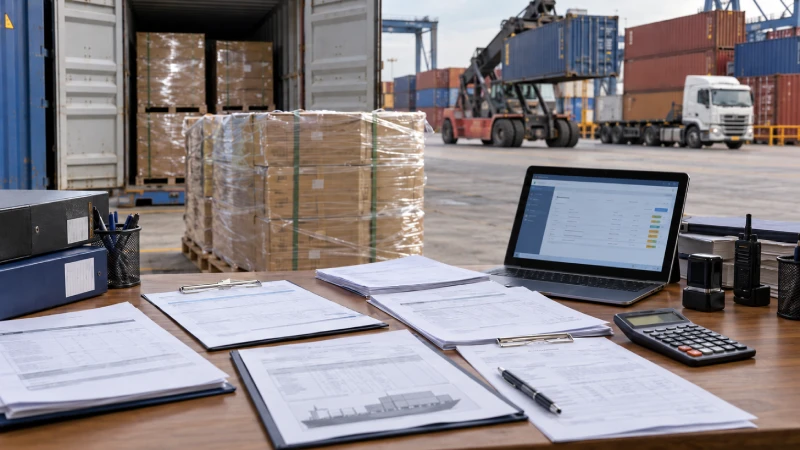
Kenya Documents and Compliance Responsibilities Under DAP vs DDP
One of the most useful ways to compare DAP and DDP is to stop asking:
“Do I need this document?”
and instead ask:
“Who is responsible for making sure this document exists and reaches the party handling clearance?”
The Incoterm changes responsibility. It normally does not remove the underlying regulatory requirement.
| Document / Requirement | When Relevant | Typical Source | Why It Matters Under DAP/DDP |
|---|---|---|---|
| Commercial invoice | Core import document | China supplier/exporter | Supports product description and customs value |
| Packing list | Core shipping document | Supplier/exporter | Supports package, weight and quantity verification |
| Bill of Lading / Air Waybill | Sea / air shipment | Carrier/forwarder | Must align with shipment and consignee structure |
| Certificate of Origin | Current Kenya import requirement, subject to stated exceptions | Competent authority in export country | Needs China-side coordination before clearance |
| Export declaration / equivalent | Current Kenya record requirement | Export country | Kenyan importer must obtain and retain required evidence |
| ACD | Applicable containerized cargo to Kenyan ports | Exporter/shipping party | Must be arranged at loading stage |
| PVoC / CoC | Applicable conformity-controlled goods | KEBS-appointed PVoC process | Should be addressed before shipment |
| Importer/PIN information | Depending on clearance structure | Kenyan importing entity | Needed for compliant customs processing |
| Product licence or permit | Product-specific | Relevant regulator | Incoterm does not remove product regulation |
Certificate of Origin
Kenya strengthened its Certificate of Origin requirements in 2025.
KRA’s notice states that imported consignments are required to be accompanied by a Certificate of Origin issued by a competent authority in the country of export, subject to the exceptions and provisional measures set out by KRA. Full enforcement following the transition period began on October 1, 2025.
For imports from China, this makes early supplier/exporter coordination important.
The importer should not discover after arrival in Mombasa that the required origin documentation was never prepared.
Whether the shipment is DAP or DDP, someone on the China side still needs to ensure the required origin documentation is available.
New Export-Document Requirement from September 2026
A newer requirement is particularly important for China sourcing.
KRA states that from September 1, 2026, importers must obtain and retain an export declaration, export entry, customs export certificate or equivalent document from the country of export.
KRA also states that the records should be retained for at least five years and should contain key shipment information such as exporter, importer, goods description, quantity, value, tariff classification and country of export.
This makes the China supplier’s export documentation more important to Kenyan importers than before.
Under DAP, the importer should coordinate with its supplier and logistics provider to make sure this documentation is obtained.
Under a DDP arrangement, the seller or its appointed logistics chain may coordinate the shipment, but the Kenyan importer should still verify how the statutory record requirement will be satisfied.
Advance Cargo Declaration for Containerized Sea Freight
Kenya’s Advance Cargo Declaration system is another requirement that needs to be handled before cargo reaches Mombasa.
KRA launched the ACD platform on August 3, 2026 for containerized cargo destined for Kenyan ports.
According to KRA, exporters shipping applicable containerized cargo must obtain the ACD reference at the loading stage. The application requires:
- draft Bill of Lading;
- commercial invoice;
- freight invoice;
- export declaration.
The ACD reference is then endorsed on the Bill of Lading before the shipment proceeds to a Kenyan port.
This is an important planning point for FCL and other applicable containerized sea cargo from China.
It should not be presented as a standard requirement for an ordinary China-to-Nairobi air-freight AWB.
For a deeper look at the sea route, see our guide to Sea Freight from China to Kenya.
PVoC and Certificate of Conformity
KEBS operates Kenya’s Pre-Export Verification of Conformity system.
KEBS advises importers to ensure that suppliers understand the applicable Kenyan quality requirements and that consignments subject to the PVoC program obtain the required Certificate of Conformity through appointed agents.
KEBS currently lists China within its PVoC inspection-zone structure.
The practical rule is simple:
Do not wait until the cargo is already on the vessel to investigate whether the product requires conformity assessment.
For products requiring a CoC, this should be addressed with the Chinese supplier before departure.
DAP versus DDP changes who coordinates the process commercially.
It does not remove KEBS requirements.
Duties, Taxes and Price Transparency: What Changes Between DAP and DDP?
Choosing DAP or DDP does not normally change the underlying Kenyan tax law applying to a particular product.
It changes who is responsible for arranging and paying those charges under the sales contract.
Depending on the goods and current legislation, Kenyan import costs can involve:
- import duty based on HS classification;
- VAT where applicable;
- Import Declaration Fee;
- Railway Development Levy;
- excise duty for excisable goods;
- product-specific levies or regulatory fees;
- customs-broker costs;
- port, terminal or carrier charges;
- inspection or testing costs;
- inland transportation.
KRA advises importers to confirm tariff classification and applicable VAT, excise, IDF and RDL treatment rather than applying one generic tax percentage to every shipment.
That is why a freight forwarder should not estimate final Kenyan import tax solely from statements such as:
“This is machinery.”
The actual product, HS code, value, origin and applicable current legislation matter.
DAP: More Direct Control of Kenya-Side Charges
Under DAP, the Kenyan importer directly controls the import-clearance side.
That can make it easier for an experienced importer to see:
- the customs declaration;
- customs valuation;
- HS classification;
- tax assessment;
- customs-agent invoice;
- destination costs;
- regulatory charges.
This visibility can be useful for businesses that import regularly and already work with a trusted Kenyan customs agent.
However, DAP should not automatically be described as cheaper.
The importer may still have to pay separately for:
- customs brokerage;
- duties and taxes;
- terminal charges;
- inspection;
- storage;
- inland operational costs.
The correct comparison is total landed cost, not the supplier’s headline DAP price.
DDP: One Price Is Useful Only When the Scope Is Clear
DDP can simplify commercial planning because more of the import-side responsibility is placed on the seller.
But “DDP USD 5,000” does not tell you enough.
Ask whether the quotation includes:
- China supplier pickup;
- export customs;
- international freight;
- destination handling;
- Kenya customs brokerage;
- duties;
- VAT;
- IDF / RDL where applicable;
- KEBS/PVoC-related costs;
- inspections;
- final inland delivery;
- remote-area surcharge;
- delivery appointment;
- unloading.
And ask what happens to exceptional costs such as:
- customs examination;
- valuation dispute;
- laboratory testing;
- cargo storage;
- demurrage;
- container detention;
- document correction;
- permit delays.
DDP Quote Transparency Checklist
Before comparing two DDP quotations, check whether each quote clearly states:
Included
- China pickup
- export clearance
- international freight
- Kenya customs clearance
- import duty and applicable taxes
- customs-broker fee
- destination handling
- inland delivery to exact named place
Confirm Separately
- PVoC / CoC
- inspection/testing
- storage
- demurrage/detention
- DG surcharge
- oversized-cargo handling
- cargo insurance
- unloading
This is particularly important when comparing an apparently low DDP quotation against a DAP quotation where Kenya-side costs are shown separately.
For sea shipments, our guide to Mombasa destination and port charges explains why destination charges should be separated from customs taxes and inland transport.

DAP vs DDP by Importer Situation
There is no universally correct Incoterm for every Kenya shipment.
The better commercial structure depends on the importer, cargo and clearance setup.
| Importer Situation | DAP Considerations | DDP Considerations | What to Verify |
|---|---|---|---|
| Established Kenyan importer with trusted broker | Keeps customs and tax process under importer control | May reduce coordination but can duplicate existing local capability | Total cost and document access |
| First commercial import | Requires a workable Kenyan clearance setup | Can centralize coordination if the DDP structure is transparent | Importer/PIN/broker structure |
| Cargo from several Chinese suppliers | Kenya importer handles one consolidated import process | Provider may coordinate consolidation plus clearance where feasible | Document consistency and declared values |
| FCL machinery | Importer directly controls classification and customs | Can work if product and import structure are confirmed | HS code, permits, delivery site |
| KEBS-regulated goods | Importer coordinates local clearance | Seller still needs compliant PVoC/CoC process | Product conformity before shipment |
| Batteries / chemicals / DG | Import responsibility remains with buyer | DDP availability can be cargo- and channel-specific | DG acceptance and permits |
| Oversized/project cargo | Local importer often plays a major operational role | Requires case-specific feasibility planning | Permits, lifting, inland route |
| Urgent air freight | Buyer manages import clearance at arrival | Duty-paid delivery depends on the specific import structure | Broker and importer setup |
Established Kenyan Importers
A business importing regularly into Kenya may prefer DAP because it already has:
- its own customs broker;
- established KRA processes;
- known HS classifications;
- internal finance procedures for tax payments;
- visibility over port and destination charges.
In that situation, transferring the same process to an overseas DDP provider may not necessarily add value.
First-Time Importers
First-time importers are often attracted to DDP because it appears simpler.
That can be reasonable, but simplicity should not replace transparency.
Before choosing DDP, the buyer should still understand:
- who is legally involved in the Kenya import entry;
- how the customs agent is appointed;
- what buyer information is required;
- how taxes are declared;
- what records will be available afterward.
DDP should not mean:
“Pay us one number and do not ask how customs works.”
Regulated Cargo
For regulated products, Incoterm selection should come after the compliance path is understood.
A DDP quotation does not make KEBS, sector permits, dangerous-goods requirements or other product controls disappear.
If the cargo is:
- lithium batteries;
- chemicals;
- medical products;
- food;
- electrical products;
- vehicles;
- oversized machinery;
- other controlled goods,
confirm the product-specific requirements before choosing the final shipping structure.
How to Check Whether a Kenya DDP Offer Is Actually Workable
A useful DDP quotation should explain more than the total price.
Before accepting “DDP Mombasa” or “DDP Nairobi,” ask the provider these questions.
1. Who Will Be Declared in the Kenya Import Process?
You need to understand what entity is being used in the actual customs transaction.
Do not assume the answer simply because the freight quote says DDP.
2. What KRA PIN or Importer Details Will Be Used?
KRA’s general import guidance includes taxpayer/PIN information among the documents involved in commercial import clearance.
The exact structure can depend on the shipment and importing entity, so this should be confirmed before booking.
3. Which Licensed Customs Agent Will Handle the Entry?
KRA identifies licensed clearing agents as key parties in preparing and submitting import documentation.
For a commercial DDP shipment, you should understand who is performing that role in Kenya.
4. Who Will Lodge the Customs Declaration?
“Customs included” is not a complete answer.
Ask who actually prepares and submits the declaration.
5. Who Pays the Customs Assessment?
Under DDP, the seller bears the contractual responsibility for import duties and taxes.
The operational payment flow should still be clear.
Where appropriate, ask what evidence of customs clearance or tax payment will be available after release.
6. Who Handles the China-Origin Documents?
For a shipment from China, confirm responsibility for:
- commercial invoice;
- packing list;
- export declaration;
- Certificate of Origin;
- ACD for applicable sea containers;
- PVoC/CoC where required.
This has become especially important following Kenya’s recent documentation changes.
7. What Happens if KRA Changes the Classification or Customs Value?
A DDP quote may be calculated using an estimated HS code or customs treatment.
Ask what happens if KRA:
- applies a different classification;
- requests additional documentation;
- questions the value;
- orders an inspection;
- requires another regulator’s approval.
Do not assume that every unexpected customs cost is automatically included in a fixed DDP quotation.
The quotation and commercial agreement should make this clear.
8. What Is Excluded?
Ask specifically about:
- storage;
- demurrage;
- detention;
- inspection charges;
- KEBS testing;
- licence or permit costs;
- DG handling;
- container examination;
- waiting time;
- remote-area delivery;
- tail-lift or crane delivery;
- unloading.
DDP Warning
A DDP price without a clear Kenya customs structure is not enough. Before booking, understand how the goods will be declared, who will handle clearance, what value and HS code will be used and what happens if Customs or another regulator requires additional action.
Where the DAP and DDP Processes Diverge
DAP and DDP can follow almost the same physical route from China to Kenya.
The responsibility split happens mainly around the Kenyan import process.
01 — Supplier Pickup in China
Cargo is collected from one or more factories or delivered to a forwarder’s China warehouse.
For multiple suppliers, the shipment may first be consolidated.
02 — Cargo Review and Preparation
Before export, confirm:
- product description;
- cartons/pallets;
- gross weight;
- dimensions;
- value;
- HS classification;
- dangerous-goods status;
- Kenya compliance requirements.
03 — China Export Documentation and Clearance
Prepare the appropriate export documents and complete China export procedures.
For Kenya-bound shipments, China-origin documentation now deserves particular attention because of the COO, ACD and export-document requirements discussed earlier.
04 — International Freight
Cargo moves by:
- FCL;
- LCL;
- air freight;
- express or another appropriate transport service.
For sea cargo, Mombasa is the main gateway.
For most commercial air cargo, Nairobi JKIA is the main entry point.
For broader route and mode planning, see our complete shipping from China to Kenya guide.
05 — Arrival in Kenya
At this stage, the cargo enters the Kenyan customs and regulatory process.
This is where DAP and DDP responsibilities become materially different.
06 — DAP / DDP Responsibility Split
Under DAP
The buyer/importer coordinates and pays for the import-clearance process.
The seller remains responsible for the contracted transport to the named DAP destination, but the buyer must complete the import obligations allocated to it.
Under DDP
The seller is responsible for arranging the import-clearance process and paying applicable import duties and taxes under the DDP sales arrangement.
07 — Customs Release
The licensed customs agent handles the required declaration and coordinates with customs and other agencies as necessary.
Compliant cargo is released after the applicable customs and regulatory requirements have been completed.
08 — Inland Movement
After release, cargo may continue:
- within Mombasa;
- by road toward Nairobi;
- through an appropriate ICD or rail arrangement;
- to another Kenyan city;
- directly to a customer’s warehouse or project site.
Not every Nairobi-bound shipment follows exactly the same inland route.
09 — Arrival at the Named Destination
The shipment reaches the exact destination stated in the agreed Incoterm.
That might be a warehouse, factory, ICD, terminal or other named location.
10 — Unloading
Under normal DAP and DDP rules, the goods are delivered ready for unloading, and unloading is generally the buyer’s responsibility unless the parties or transport contract have agreed otherwise.
This illustrates why the physical shipping route alone does not tell you whether a shipment is DAP or DDP.
The key difference is who controls and bears responsibility for the import-clearance stage.
What to Send for an Accurate DAP vs DDP Comparison
If you want to compare DAP and DDP properly, a forwarder needs more than:
“How much is shipping from China to Nairobi?”
A useful comparison starts with complete cargo and importer information.
China Origin
Provide:
- supplier city;
- supplier pickup address;
- number of suppliers;
- cargo-ready date.
If you have suppliers in Guangzhou, Foshan, Shenzhen, Yiwu and Ningbo, for example, the consolidation plan can affect the China-side cost and routing.
Cargo Information
Provide:
- exact product name;
- intended use;
- product photos or specifications when necessary;
- HS code if known;
- commercial value;
- quantity;
- carton/pallet count;
- package dimensions;
- gross weight;
- total CBM.
Avoid vague descriptions such as:
- accessories;
- machine parts;
- electronics;
- chemicals;
- samples.
Customs and carrier requirements depend on what the product actually is.
Special Cargo Information
Tell the forwarder before quotation if the shipment contains:
- lithium batteries;
- battery-powered equipment;
- liquids;
- powders;
- chemicals;
- magnets;
- dangerous goods;
- oversized machinery;
- heavy equipment.
These details can affect:
- carrier acceptance;
- documentation;
- packing;
- route;
- inspection;
- DDP feasibility.
Kenya Destination
Provide the actual destination:
- Mombasa;
- Nairobi;
- another Kenyan city;
- exact warehouse or project address where possible.
Do not request “DDP Kenya” when what you really require is delivery to a construction site several hundred kilometres inland.
Importer Information
For a realistic DAP/DDP assessment, clarify:
- whether you are importing as a company or other entity;
- whether appropriate KRA importer/PIN information is available;
- whether you already have a customs agent;
- whether the product requires any licences;
- whether PVoC/CoC has been checked.
Required Shipping Scope
Specify whether you want to compare:
- LCL;
- FCL;
- air freight;
- express;
- DAP;
- DDP;
- cargo insurance;
- unloading arrangements.
The goal is not to force every shipment into DDP.
The goal is to compare two clearly defined scopes so you know what you are actually paying for.
DAP vs DDP China to Kenya: Which Structure Should You Use?
There is no single answer that applies to every importer.
DAP can make sense when a Kenyan importer already has a reliable customs-clearance process and wants direct visibility over customs declarations, tax assessments and local charges.
DDP can make sense when the seller can genuinely provide a compliant, transparent import-clearance arrangement and the buyer prefers a more centralized landed-delivery structure.
The decision should therefore not be based only on:
“Which quote looks cheaper?”
Compare:
- freight;
- customs responsibility;
- duties and taxes;
- documentation;
- local broker coordination;
- delivery point;
- exclusions;
- compliance risk;
- price transparency;
- importer control.
Most importantly, ask exactly how the Kenya import stage will work before cargo leaves China.
A good freight plan should make it possible to answer:
Who is clearing the cargo, under whose importer information, through which customs agent, who pays the assessment, what documents will be available and exactly where does the seller’s delivery responsibility end?
If those questions do not have clear answers, the three letters “DDP” on a quotation do not solve the underlying import problem.
For a broader overview of FCL, LCL, air freight, express, customs and inland delivery, see our complete shipping from China to Kenya guide.
FAQ
Is DAP the same as door-to-door shipping to Kenya?
DAP can be structured as door-to-door delivery if the buyer's premises or another final address is the agreed named destination. The seller arranges transportation to that named place, while the buyer handles and pays for Kenya import clearance and applicable import duties and taxes. DAP does not automatically mean delivery stops at Mombasa Port or Nairobi airport.
Under DAP, who pays import duty and taxes in Kenya?
Under DAP Incoterms® 2020, the buyer is responsible for import-clearance formalities and the associated import duties and taxes. The actual amount depends on HS classification, customs value, VAT treatment, excise where applicable and other current statutory rules.
Under DDP, does the Kenyan buyer still need a KRA PIN or customs broker?
DDP places import-clearance responsibility on the seller under the sales contract, but the actual Kenyan customs structure still needs to comply with Kenya's import procedures. The parties should confirm which entity and taxpayer/PIN details will be used and which licensed customs agent will process the declaration.
Can a Chinese freight forwarder clear DDP cargo in Kenya without a Kenyan importer?
Do not assume this simply because a provider offers “DDP Kenya.” The actual import declaration still has to comply with Kenyan customs rules. Confirm who will be declared in the import process, what importer/PIN details will be used, which licensed customs agent will process the entry and what official customs records will be available.
Does DDP automatically include PVoC and Certificate of Conformity?
No. DDP allocates commercial responsibilities between buyer and seller, but it does not remove KEBS conformity requirements. Whether PVoC inspection or certification costs are included in a DDP quotation must be confirmed separately.
Who obtains the ACD for shipments from China to Kenya?
For applicable containerized cargo destined for Kenyan ports, the ACD reference must be coordinated at the loading stage using the required shipment documents. The seller, exporter and freight forwarder should agree who handles this operationally. The current ACD requirement should not be generalized to ordinary air-freight AWBs.
Which provides better cost transparency in Kenya: DAP or DDP?
Neither Incoterm automatically guarantees better transparency. DAP can give an established Kenyan importer more direct visibility into customs assessments and local charges, while DDP can provide a simpler consolidated landed price. The real issue is whether the quotation clearly explains what is included and how customs is handled.
Source and Regulatory Note
This guide was prepared using current information from the International Chamber of Commerce, Kenya Revenue Authority and Kenya Bureau of Standards available in September 2026.
Kenya customs, tax and product-compliance rules can change, and individual requirements may depend on HS classification, cargo type, importer status and the relevant regulatory authority.
Confirm shipment-specific requirements before goods leave China.
DAP and DDP allocate contractual responsibilities between buyer and seller. They do not override Kenyan law or guarantee customs clearance.
