
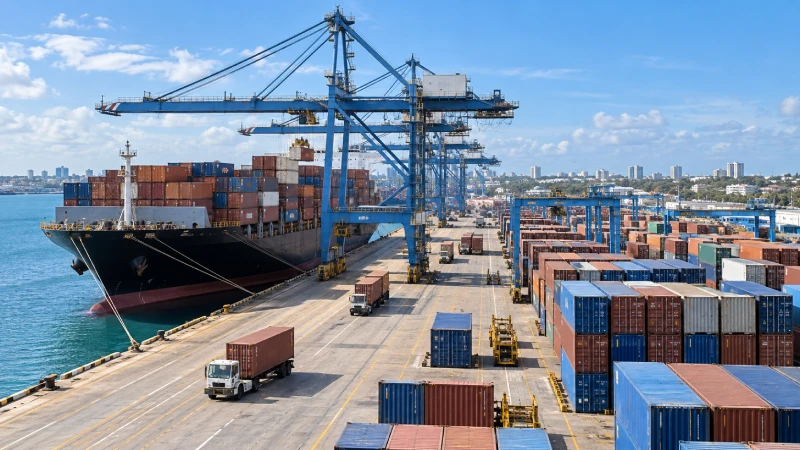
A freight quote from China that says “to Mombasa” does not necessarily tell you how much the shipment will cost before you can actually collect the cargo.
Once a container or LCL shipment reaches Mombasa, several different parties may charge for different parts of the arrival process. Kenya Ports Authority (KPA) may levy port handling and wharfage charges. The shipping line may issue destination handling and documentation fees. An LCL shipment can have CFS and deconsolidation costs. Customs duties and taxes are separate again, as are clearing-agent fees and transport from Mombasa to Nairobi or another inland destination.
That is why there is no single universal “Mombasa destination charge.”
For an importer buying from China, the practical question is not simply, “How much are Mombasa port charges?” It is:
Which charges will apply to my shipment, who will invoice them, which ones are already included in my China freight quote, and which costs can increase if clearance is delayed?
Data Note: The KPA tariff figures referenced in this guide are from the Kenya Ports Authority Tariff effective 15 September 2025, which remains the current tariff published by KPA at the time this article was updated in September 2026. Shipping-line, CFS, brokerage and inland-transport tariffs can change independently and should be reconfirmed for the actual shipment. See the Kenya Ports Authority Tariff.
Quick Answer: What Charges Can Appear After Cargo Arrives in Mombasa?
For a typical sea shipment from China, destination costs can fall into the following groups:
| Cost category | Usually charged by | Typical examples | Always applicable? |
|---|---|---|---|
| Port charges | Kenya Ports Authority | Shore-handling, wharfage, storage, special handling | Depends on cargo and routing |
| Carrier charges | Shipping line / local agent | Destination handling, delivery order, documentation, equipment-related fees | Carrier-specific |
| LCL / CFS charges | Consolidator / CFS | Deconsolidation, stripping, warehouse handling, HBL release | Mainly LCL |
| Customs-related costs | KRA / government | Import duty, VAT, applicable levies | Depends on classification and import treatment |
| Inspection / compliance | KEBS or other regulator | Inspection, testing, certification-related costs | Conditional |
| Clearing-agent fee | Licensed customs agent | Customs declaration and clearance service | Normally required for commercial imports |
| Inland transport | Truck, rail, carrier or forwarder | Mombasa to Nairobi or final delivery | Only if required |
The important point is that these costs do not all belong to the same organization.
A KPA charge is not automatically a shipping-line charge. A customs tax is not a port handling fee. A customs broker’s service fee is not a government tax. And a trucking charge from Mombasa to Nairobi is not part of the ocean freight unless the quotation specifically says it is.
If you are still planning the overall route, first review our Shipping from China to Kenya guide for the broader comparison of FCL, LCL, air freight, customs clearance and inland delivery.
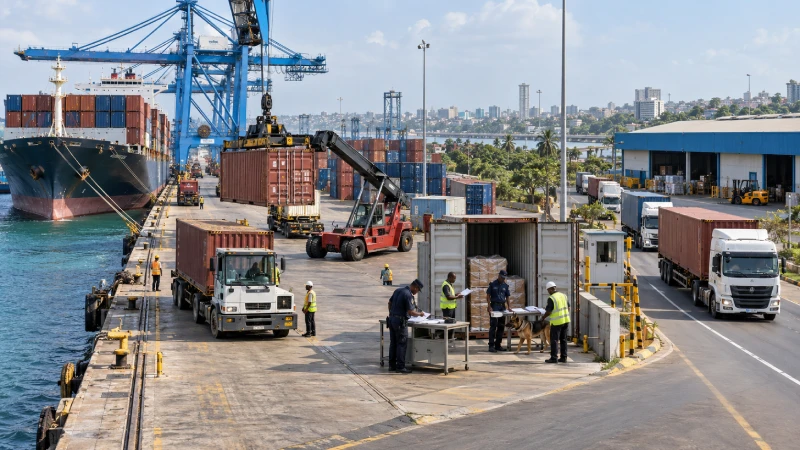
Official KPA Port Charges: What the Port Authority Actually Charges
The Kenya Ports Authority tariff is the best starting point for understanding the port-controlled portion of destination costs.
For standard domestic import FCL containers, KPA’s current tariff lists separate charges for shore-handling and wharfage.
Shore-Handling and Wharfage
KPA lists domestic import FCL shore-handling at:
| KPA tariff item | 20ft container | 40ft container |
|---|---|---|
| Domestic import FCL shore-handling | USD 120 | USD 180 |
| Wharfage for full container | USD 88 | USD 132 |
These are official tariff line items, not an all-in Mombasa destination cost. See the Kenya Ports Authority Tariff.
For illustration, those two KPA tariff items alone amount to USD 208 for a 20ft container or USD 312 for a 40ft container. However, an importer should not take those totals and assume, “That is everything I will pay at Mombasa.”
Other charges can still arise from the shipping line, customs process, clearing agent, container storage, inspections and inland delivery. The way port-related charges appear on the actual carrier or agent invoice can also differ.
For the international ocean-freight portion, see our 20ft & 40ft Container Shipping Cost from China to Kenya guide.
Additional Port Services Can Change the Cost
The same KPA tariff contains separate charges where extra port services are required. Examples include:
- transfer within the port area;
- stripping or stuffing a container;
- container survey;
- reefer power connection;
- re-marshalling after the applicable free period;
- dangerous-goods handling;
- out-of-gauge container handling.
For example, KPA lists container stripping or stuffing at USD 100 for a 20ft container and USD 150 for a 40ft container. Reefer containers connected to reefer points are charged separately per hour. See the Kenya Ports Authority Tariff.
These costs are conditional. They should not simply be added to every shipment estimate.
The right approach is to identify the cargo type and movement first, then check which tariff lines actually apply.
Shipping-Line Destination Charges Are Separate from KPA Charges
One of the most common sources of confusion is receiving an invoice from the shipping line after the cargo reaches Kenya even though the importer already paid ocean freight in China.
This can happen because ocean freight and destination local charges are not the same thing.
Depending on the carrier and service contract, a local shipping-line invoice may contain items such as:
- destination terminal handling;
- delivery order fee;
- local documentation;
- import service fee;
- container return fee;
- container maintenance or protection charges;
- equipment guarantee arrangements;
- amendments;
- late delivery-order collection;
- other carrier-specific local services.
Not every line charges the same items in the same way.
For example, CMA CGM has published Kenya local tariffs containing separate destination handling, documentation and container-related service charges. This illustrates why carrier charges must be checked against the actual shipping line and current tariff, rather than treated as one standard Mombasa amount. Review the carrier’s current Kenya local charges information before publishing or quoting an exact figure.
Per Container and Per B/L Charges Are Different
When reviewing an invoice, pay attention to the billing unit.
A destination charge may be:
- per 20ft container;
- per 40ft container;
- per bill of lading;
- per delivery order;
- per shipment;
- per day;
- per tonne;
- or subject to another tariff basis.
This matters when comparing two freight quotes.
For example, a documentation charge per B/L cannot be compared directly with a charge per container without considering how many containers or bills are involved.
Check Whether the Charge Is Prepaid or Collect
Before booking in China, ask whether each destination item is:
- included in the origin quotation;
- prepaid in China;
- payable by the consignee in Kenya;
- or payable separately to the shipping line’s local office.
Terms such as “freight prepaid” do not automatically mean every Mombasa local charge has been prepaid.
The quotation needs to say what is actually included.
Check My Mombasa Destination Charges
LCL Destination Charges: Why Small Shipments Need a Separate Budget
LCL is particularly easy to misunderstand because the importer is not receiving an entire container.
Several shipments may be consolidated into one container in China. After arrival in Kenya, the master container may need to be transferred, stripped and separated so each house-bill shipment can be released independently.
A typical operational chain may look like this:
China supplier pickup → consolidation warehouse → export CFS → ocean shipment → Mombasa/CFS → container stripping → HBL cargo separation → customs clearance → pickup or inland delivery
Because of this process, an LCL shipment may have destination-side charges such as:
- CFS handling;
- deconsolidation;
- stripping;
- warehouse handling;
- HBL documentation or release;
- transfer charges;
- minimum handling charges;
- storage if cargo is not collected within free time;
- local delivery.
Why KPA’s Container Tariff Is Not Your LCL Invoice
KPA publishes tariffs for containerized cargo moving through CFS facilities, including container-level shore-handling and wharfage. See the Kenya Ports Authority Tariff.
However, that does not mean an LCL consignee simply divides the KPA container charge by the number of shipments inside the container.
The consolidator, NVOCC or CFS may have its own destination tariff for individual LCL shipments.
Depending on the arrangement, charges might be calculated by:
- CBM;
- weight/measurement, or W/M;
- HBL;
- shipment;
- minimum charge;
- or a combination of these.
Therefore, before booking LCL from China, ask for the destination tariff in Mombasa, not only the ocean freight rate per CBM.
If the forwarder quotes only an origin-to-Mombasa rate per CBM, that still does not tell you what the consignee will pay after arrival.
Ask:
“What are the Mombasa destination CFS and deconsolidation charges, and are they charged per CBM, W/M, HBL or minimum shipment?”
For a deeper explanation of the freight calculation itself, see our guide to Shipping Cost per CBM from China to Kenya.
Plan My Consolidated Shipment
Storage, Demurrage and Detention: Three Different Cost Clocks
Importers often use these three terms interchangeably, but they can refer to different costs.
Port Storage
Port storage relates to cargo or containers remaining at the port or terminal beyond the applicable free storage period.
Under KPA’s current tariff, a standard domestic import container receives the first five consecutive days free.
After that, KPA lists the following storage rates:
| Domestic import storage | 20ft | 40ft |
|---|---|---|
| First 5 consecutive days | Free | Free |
| Days 6–21 | USD 30/day | USD 60/day |
| Thereafter | USD 50/day | USD 100/day |
These are KPA storage charges. See the Kenya Ports Authority Tariff.
Demurrage
Demurrage generally concerns the shipping line’s container remaining beyond the carrier’s allowed free time under the applicable import terms.
The carrier’s free-time rules are separate from KPA’s port-storage rules.
For example, Maersk publishes Kenya-specific import demurrage and detention terms for Mombasa. The exact free time and progressive daily charges depend on container type, routing and the applicable commercial terms, so they should be checked against the actual booking rather than treated as a universal Mombasa rule. See Maersk Kenya import information.
So you should not assume that:
“KPA gives five free days, therefore I have five free days for everything.”
You may be dealing with more than one clock.
Detention
Detention normally becomes relevant after a carrier-owned FCL container leaves the terminal and remains outside the port beyond the carrier’s allowed equipment free time.
A common example is:
- the container is released;
- a truck collects it from Mombasa;
- cargo moves to the importer’s warehouse;
- the container is unloaded;
- the empty container must be returned to the carrier’s nominated depot.
If the empty container is returned late, equipment-related charges can continue even though the container has already left the port.
A Better Pre-Arrival Question
Before the vessel arrives, ask for all three items separately:
- What is the applicable KPA/CFS storage free period?
- What is the carrier’s demurrage/detention free time?
- Where and by when must the empty container be returned?
Pro Tip: Do not rely on someone saying there is “standard Mombasa free time.” Get the port/CFS storage period and the carrier’s equipment free time separately and in writing.
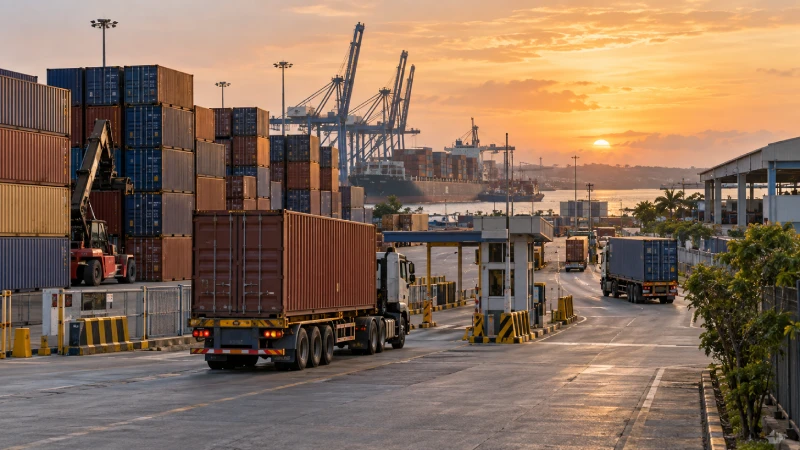
Customs, Taxes, Inspection and Broker Fees Are Not Mombasa Port Charges
Another common budgeting mistake is to treat every payment made during clearance as a port charge.
They are not the same.
Customs Duty and Import Taxes
Kenya Revenue Authority administers import duties and taxes. The amount due depends on factors such as:
- HS classification;
- customs value;
- product type;
- applicable tariff treatment;
- VAT treatment;
- excise status where relevant;
- exemptions or concessions where applicable.
KRA’s importer guidance distinguishes taxes such as import duty, VAT and applicable import levies from the physical clearance and port-handling process. See KRA import guidance.
These amounts should therefore be budgeted separately from the KPA tariff.
Do not accept a statement such as:
“Mombasa charges are USD 500”
unless you know whether the figure includes or excludes customs taxes.
For many commercial shipments, taxes can be much more significant than the port handling itself.
For a deeper explanation of the entry process, documents and duty assessment, see Customs Clearance in Kenya.
Customs Clearing-Agent Fee
KRA states that an importer needs the services of a licensed customs clearing agent to process import documentation and assist with customs clearance. See KRA import guidance.
The clearing agent may charge a professional or service fee.
That fee is:
not a KPA charge, and not itself an import tax.
When reviewing a clearance quotation, separate:
- government taxes;
- port/terminal charges;
- carrier local charges;
- clearing-agent service fees;
- third-party inspection or handling costs.
KEBS and Inspection-Related Costs
For products covered by Kenya’s conformity requirements, KEBS operates the Pre-Export Verification of Conformity, or PVoC, system.
Current KEBS guidance includes China within the PVoC country framework and requires applicable goods to undergo conformity assessment under the relevant programme before shipment. Goods that do not meet the applicable pre-shipment certification arrangements can become subject to destination inspection and/or testing. See KEBS PVoC guidance.
For an importer, the operational lesson is straightforward:
Compliance work that should have been completed before the cargo left China can become a destination delay and cost problem in Kenya.
Do not wait until the container reaches Mombasa to find out whether a CoC or other product approval was required.
Documentation Problems Can Turn Into Destination Costs
A missing document is not always a “fee” by itself.
But it can delay customs processing, and delays can create storage, demurrage and other costs.
For China-to-Kenya shipments, several current documentation requirements deserve attention before loading.
Advance Cargo Declaration (ACD)
KRA launched its Advance Cargo Declaration platform for containerised cargo on 3 August 2026.
For applicable containerized cargo destined for Kenyan ports, the exporter or shipper obtains an ACD reference code at the loading stage. KRA’s published process requires supporting shipment documents, and the ACD reference is endorsed on the Bill of Lading before the shipment proceeds to Kenya. See the KRA Advance Cargo Declaration platform.
For cargo shipping from China now, the ACD should therefore be part of the pre-loading workflow, not something the consignee first investigates after arrival.
Certificate of Origin
KRA’s Certificate of Origin requirement was introduced in 2025, with full enforcement from 1 October 2025, subject to stated exceptions and provisional measures. See the KRA Certificate of Origin notice.
For a normal commercial shipment from China, the exporter and Kenyan importer should confirm the applicable COO documentation before departure.
China Export Declaration / Equivalent Export Document
A separate 2026 requirement is also important.
KRA states that from 1 September 2026, importers must obtain and retain an export declaration, export entry, customs export certificate or equivalent document from the country of export. KRA states that the records should support information including exporter, importer, goods description, quantity, value, tariff classification and country of export. See KRA Finance Act 2026 guidance.
For a shipment originating in China, this means coordination with the supplier, exporter and China-side logistics team should happen before departure.
The arrival stage is too late to discover that the necessary export documentation was never collected.
Mombasa to Nairobi: Inland Delivery Adds Another Cost Layer
Many containers discharged in Mombasa are not actually destined for a warehouse in Mombasa.
The real delivery point may be Nairobi, another inland city, or an inland container depot.
In that case, destination budgeting needs another layer.
Scenario 1: Clearance in Mombasa and Local Collection
If the consignee clears the cargo and collects it near Mombasa, the destination cost may finish after:
- port/CFS release;
- customs clearance;
- local pickup or short-distance delivery.
Scenario 2: Clearance in Mombasa and Truck Delivery to Nairobi
If cargo clears at Mombasa and then moves by road, additional costs may include:
- truck haulage;
- waiting time;
- chassis or equipment arrangements;
- unloading;
- final-mile access conditions;
- empty-container return for carrier-owned FCL equipment.
The final delivery address matters.
A quote to a warehouse in Nairobi Industrial Area is not necessarily the same as a quote to a site outside Nairobi requiring difficult access or special unloading.
Scenario 3: Through Routing to Nairobi ICD
Some shipments can be arranged with an inland destination or ICD movement as part of the transport structure.
KPA publishes different shore-handling provisions for domestic import containers handled through ICDs, which confirms that the tariff structure is not always the same as a simple Mombasa port pickup. See the Kenya Ports Authority Tariff.
Carrier inland tariffs also move independently from ocean freight. For example, Maersk announced revised Mombasa–Nairobi rail import haulage and fuel-surcharge charges effective June 2026. See the Maersk Kenya inland haulage notice.
That does not create a universal market rate for Nairobi delivery. It demonstrates why inland transport should be priced for the actual routing and date.
When requesting a quote, specify whether you need:
Mombasa port only, Mombasa clearance plus delivery, Nairobi ICD, or delivery to an exact Nairobi address.
For overall freight budgeting, compare this inland layer with the broader Shipping Cost from China to Kenya guide.
Check My Mombasa-to-Nairobi Route
Special Cargo Can Trigger Different Mombasa Charges
Standard dry-container examples should not be applied automatically to every shipment.
Dangerous Goods
KPA requires dangerous cargo to be properly declared by class and provides separate surcharges and storage treatment for dangerous goods. See the Kenya Ports Authority Tariff.
The current tariff applies specific handling and storage provisions to dangerous cargo rather than the normal standard dry-container treatment.
That means DG cargo should be planned before booking, not quoted using a normal dry-container assumption.
Out-of-Gauge Cargo
KPA publishes separate OOG container shore-handling and storage treatment. See the Kenya Ports Authority Tariff.
Flat rack or other OOG cargo can also involve:
- special lifting;
- direct delivery requirements;
- lashing or unlashing;
- route limitations;
- abnormal-load transport arrangements.
The exact destination cost needs shipment-specific confirmation.
Reefer Cargo
KPA separately charges for reefer containers connected to reefer points. Carrier reefer equipment and monitoring charges can also apply independently. See the Kenya Ports Authority Tariff.
For temperature-controlled cargo, clearance readiness is especially important because delays can create both storage and equipment-related costs.
Oversized and Project Cargo
Breakbulk, heavy machinery and project cargo should normally be assessed individually.
Potential costs may include:
- heavy lifting;
- special terminal handling;
- low-bed or special truck equipment;
- route survey;
- permits;
- escort arrangements;
- site unloading.
A normal 20ft/40ft container destination-cost table is not suitable for these shipments.
Warning: Do not use a standard dry-container Mombasa cost estimate for dangerous goods, reefer, OOG, flat rack or project cargo.
How to Ask Whether Your China Freight Quote Includes Mombasa Destination Charges
This is the most important practical step before booking.
Do not simply ask:
“Is this all-in?”
The term all-in is often too vague.
Instead, first establish the actual scope of the quotation.
Is it:
- port-to-port?
- CY/CY?
- CFS/CFS?
- only to Mombasa port?
- to Nairobi ICD?
- DAP to a warehouse?
- DDP?
- another door-to-door arrangement?
“To Mombasa” does not automatically mean:
customs cleared + taxes paid + cargo available at your warehouse.
For shipments where responsibilities are intentionally bundled, review DDP Shipping from China to Kenya and confirm the actual importer, clearance and tax-payment arrangement in writing.
Ask These Questions Before Booking
Send the following checklist to the China forwarder or supplier:
- Which shipping line and service will be used?
- Is destination terminal handling included or payable in Kenya?
- Which KPA-related charges are included?
- Is the delivery-order fee included?
- Are local documentation or import-service fees included?
- Is any container guarantee, maintenance or return fee applicable?
- What is the shipping line’s import demurrage/detention free time?
- What is the applicable KPA or CFS storage free period?
- Where must an empty FCL container be returned?
- For LCL, what are the Mombasa CFS and deconsolidation charges?
- Are LCL charges calculated per CBM, W/M, HBL or minimum shipment?
- Are customs duties and taxes excluded?
- Is the customs clearing-agent fee included?
- Are KEBS or other inspection charges excluded if an inspection is triggered?
- Does the quote include transport from Mombasa to Nairobi or another city?
- Does inland delivery include unloading?
- Which charges are specifically not included?
- How long are the destination charges and freight rates valid?
Freight Quote Audit
| Ask about | What a useful quote should show | Warning sign |
|---|---|---|
| Destination handling | Included/collect and billing basis | “Local charges apply” with no detail |
| LCL CFS | CBM/W/M/HBL/minimum basis | Only ocean freight per CBM shown |
| Free time | Carrier + exact free-time terms | “Normal free time” |
| Inland delivery | Exact destination and scope | “Nairobi delivery” without address |
| Customs taxes | Included or excluded | No HS code/product discussion |
| Clearance | Who handles declaration | “Customs included” with no agent/process |
| Special cargo | Cargo-specific tariff | Standard dry rate used for DG/OOG |
A low ocean freight rate can still become an expensive shipment if the destination-charge scope is unclear.
That is why two China-to-Mombasa quotations should only be compared after you place them on the same cost basis.
Pro Tip: Compare quotes by shipment type, carrier, destination, included local charges, free time and inland scope—not by ocean freight alone.
Review My Cargo Before Shipping
Pre-Arrival Checklist to Reduce Avoidable Mombasa Costs
Many destination costs cannot be eliminated.
Port handling, customs taxes and necessary transport services are part of importing.
But avoidable storage and delay costs can often be reduced by preparing earlier.
Before Booking in China
Confirm:
- correct cargo description;
- HS classification;
- Kenyan importer details;
- whether the product needs PVoC/CoC or another regulator approval;
- FCL vs LCL routing;
- destination-charge scope;
- Mombasa vs Nairobi delivery arrangement;
- dangerous-goods status where applicable.
Before Cargo Is Loaded
Prepare or confirm, as applicable:
- commercial invoice;
- packing list;
- export declaration;
- Certificate of Origin;
- PVoC/CoC;
- ACD reference for applicable containerized cargo;
- draft B/L details;
- freight invoice required for the ACD workflow;
- any product-specific permit.
Verify names, values, cargo descriptions, package quantities and B/L information before final documents are issued.
Before the Vessel Arrives in Mombasa
The Kenyan importer and clearing agent should already be working on the clearance file.
Confirm:
- the customs agent has the document set;
- duties and taxes have been assessed or budgeted;
- destination carrier invoice is available;
- free-time dates are known;
- KEBS or other regulatory processing is ready where applicable;
- truck or inland transport is planned;
- warehouse can receive the cargo.
After Cargo Is Released
For FCL:
- collect the container promptly;
- unload according to plan;
- inspect container condition where appropriate;
- return the empty container to the instructed depot;
- obtain return evidence.
For LCL:
- confirm CFS release;
- arrange cargo pickup before storage escalates;
- check package condition and quantity on collection.
A good Mombasa destination-cost plan starts in China, not after the vessel reaches Kenya.
Final Takeaway
There is no single figure that accurately represents Mombasa port charges for every import from China.
For a standard FCL shipment, KPA publishes identifiable port tariff items such as shore-handling, wharfage and storage. But the importer may also face carrier destination charges, customs taxes, clearing-agent fees, inspections and inland transport.
LCL has another layer because the shipment must be separated from a consolidated container and may attract CFS/deconsolidation charges.
And if documents are late, compliance is incomplete or the container remains too long at the port or outside the terminal, time-based charges can quickly change the final cost.
The best way to budget a China-to-Kenya shipment is therefore to separate the destination cost into six questions:
- What does KPA charge?
- What does the shipping line charge?
- What does the CFS/consolidator charge for LCL?
- What must be paid to customs or regulators?
- What does the clearing agent charge?
- What will it cost to move the cargo from Mombasa to the real final destination?
If every item is clear before the cargo leaves China, comparing freight offers becomes much easier—and the risk of an unexpected Mombasa invoice becomes much lower.
Regulatory Note: Customs taxes, conformity requirements, permits and inspections depend on the cargo’s HS classification, product characteristics, importer status and current Kenyan regulations. Product-specific requirements should be checked before shipment.
Rate Note: KPA figures above are based on the published tariff effective 15 September 2025. Carrier, CFS, brokerage and inland transport charges may change separately and should be reconfirmed for the actual carrier, cargo, bill of lading and arrival date.
Are Mombasa port charges included in sea freight from China?
Not necessarily. A China ocean-freight quote may include some destination items while leaving others payable by the consignee in Kenya. Check whether terminal handling, delivery-order fees, carrier local charges, CFS charges, customs clearance and inland transport are prepaid, included or destination collect.
How much are Mombasa port charges for a 20ft or 40ft container?
There is no single all-in amount. KPA's current tariff separately lists specific 20ft and 40ft handling and wharfage items, but carrier charges, storage, customs taxes, clearance and inland delivery may be additional.
What is the difference between storage, demurrage and detention in Mombasa?
Port storage relates to how long cargo or a container remains in the port or terminal. Demurrage and detention relate to carrier equipment and the shipping line's applicable free-time rules. Always verify the port or CFS clock and the carrier equipment clock separately.
Are LCL destination charges in Mombasa calculated per CBM?
Sometimes, but not always. A consolidator or CFS may calculate destination charges using CBM, W/M, HBL, shipment minimums or multiple fee types. Ask for the destination tariff before booking rather than assuming the origin LCL rate per CBM covers arrival charges.
Are Kenya import duty and VAT included in Mombasa port charges?
No. Import duty, VAT and other applicable customs charges are separate from KPA's port tariffs. The actual tax treatment depends on HS classification, customs value, product type and applicable regulations.
Does CIF, DAP or DDP include Mombasa destination charges?
It depends on both the Incoterm and the actual commercial quotation. CIF, DAP and DDP allocate responsibilities differently, but the contract and quote still need to state which port, carrier, customs, tax, clearance and inland costs are included.
