

Most customs problems become more expensive after the cargo arrives in Nigeria.
A missing certificate that could have been identified before pickup in China may become a customs hold at destination. A vague product description may trigger a classification or valuation query. A consignee who is not ready may lose valuable time while the container, LCL shipment, or air cargo is already accumulating destination costs.
The sequence can quickly become:
clearance delay → terminal or CFS storage → demurrage or detention → truck rescheduling → missed delivery → inventory or project disruption
That is why the best way to avoid customs delays when shipping from China to Nigeria is not to “speed up customs” after arrival. It is to identify preventable compliance, documentation, classification, and importer-readiness problems before the shipment leaves China.
Nigeria Customs Service currently operates key trade processes through its Unified Customs Management System, commonly referred to as B’Odogwu, while Form M, PAAR, declarations, regulatory certificates, classification, valuation, and other compliance requirements remain important parts of the import process. Nigeria Customs Service
This guide focuses on the failure points importers should check before booking cargo.
Important: Nigerian import requirements vary according to the product, HS classification, importer, intended use, applicable regulator, and current government rules. This article is a risk-prevention guide, not a guarantee of customs release or a substitute for instructions from Nigeria Customs Service or the relevant regulatory agency.
The Best Time to Prevent a Customs Delay Is Before Shipment
Customs preparation should not begin when the vessel reaches Lagos or when an air shipment lands.
For China-to-Nigeria cargo, there are three useful control points.
| Checkpoint | What to Confirm | Why It Matters |
|---|---|---|
| Before placing the order | Product legality, likely HS classification, SON/NAFDAC or other regulatory exposure, importer eligibility | Some problems affect whether the product should be ordered or produced at all |
| Before cargo pickup | Certificates, Form M status where applicable, final invoice, packing list, labels, product specifications, consignee data | Gives time to correct discrepancies while the supplier still controls the cargo |
| Before vessel or flight departure | Final document reconciliation, transport-document instructions, regulatory documents, clearance-agent readiness | This is the last practical checkpoint before many corrections become expensive |
A common mistake is to treat compliance as something that can be completed during ocean transit.
That approach is particularly dangerous for requirements designed to be completed before shipment, including SONCAP for applicable regulated products.
Never ship first and plan compliance during ocean transit unless the applicable regulatory process explicitly allows it.
For a new product, a new Nigerian importer, or a shipment involving regulated goods, the compliance review should begin before the supplier finishes production.
For the broader transport and import workflow, see Shipping from China to Nigeria.
Delay Cause #1 — Wrong or Weak HS Classification
The HS code is not simply a number used to calculate duty.
It can influence:
- applicable customs duty and taxes;
- regulatory controls;
- import restrictions or prohibitions;
- SONCAP exposure;
- documentation requirements;
- valuation questions; and
- how Customs interprets the product being imported.
Nigeria Customs maintains tariff and import-control resources using HS classifications, including a current tariff/CET lookup environment and import-prohibition controls. Nigeria Customs CET Platform
Warning Signs
Your HS classification deserves another review if:
- the supplier simply copied a code from a previous export to another country;
- the code was selected only because it appears to have a lower duty rate;
- the invoice description is too general to support the classification;
- the product has multiple functions or complex technical specifications;
- the importer, supplier, and Nigerian clearance agent are using different codes;
- the code changes when the same product appears on different documents.
What to Do Before Shipping
Start with the product itself, not the desired duty rate.
Collect the model number, material composition, function, technical specifications, photos, catalogue, MSDS where relevant, and any other information needed to identify what the product actually is.
For material uncertainty, Nigeria Customs Service provides an advance ruling mechanism covering areas including tariff classification, customs valuation, and origin. NCS guidance indicates that supporting information such as technical specifications, product literature, pictures, invoices, contracts, and other relevant documents may be required depending on the ruling requested. Nigeria Customs Service Legal Framework
Do not deliberately select an HS code because it creates a lower duty result. Classification should be defensible from the actual characteristics of the goods.
Related guide: Nigeria Import Duty & Taxes for Goods from China
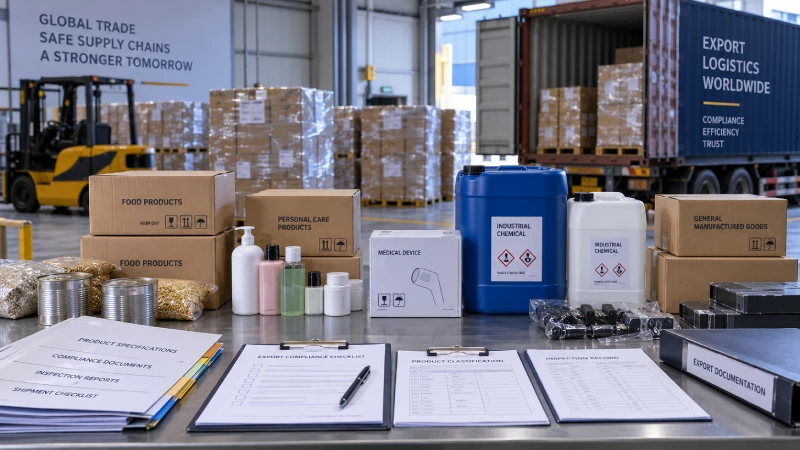
Delay Cause #2 — The Product Was Never Screened for Regulation
A shipment may have complete freight documents and still face problems because nobody checked whether the product was prohibited, restricted, controlled, or subject to another Nigerian regulator.
Before booking, ask four separate questions:
1. Is the Product Prohibited or Restricted by Nigeria Customs?
NCS maintains import-control information by tariff line, and Nigerian customs law provides for import prohibitions and restrictions arising from areas such as public health, environmental protection, security, controlled goods, and other applicable laws. Nigeria Customs Import Prohibition Information
2. Is the Product Regulated by SON?
Many regulated products fall within the Standards Organisation of Nigeria conformity framework.
3. Is the Product Regulated by NAFDAC?
NAFDAC regulatory pathways cover categories including food, drugs, cosmetics, medical devices, chemicals, and other regulated products. NAFDAC Regulatory Services
4. Is Another Nigerian Authority Involved?
Depending on the cargo, additional agencies may have requirements that sit outside NCS, SON, or NAFDAC.
A Simple Pre-Shipment Decision Tree
Product identified clearly
↓
Confirm HS classification
↓
Check NCS prohibition/restriction status
↓
Check SON applicability
↓
Check NAFDAC applicability
↓
Check other sector-specific regulator if relevant
↓
Confirm required approval/certificate status
↓
Only then finalize shipment instructions
Do not assume that a supplier in China knows which Nigerian regulatory regime applies. The supplier can provide technical documents, test reports, labels, certificates, and production information, but Nigerian import compliance ultimately needs to be checked from the destination side.
Related guide: Restricted & Prohibited Goods for Nigeria Imports
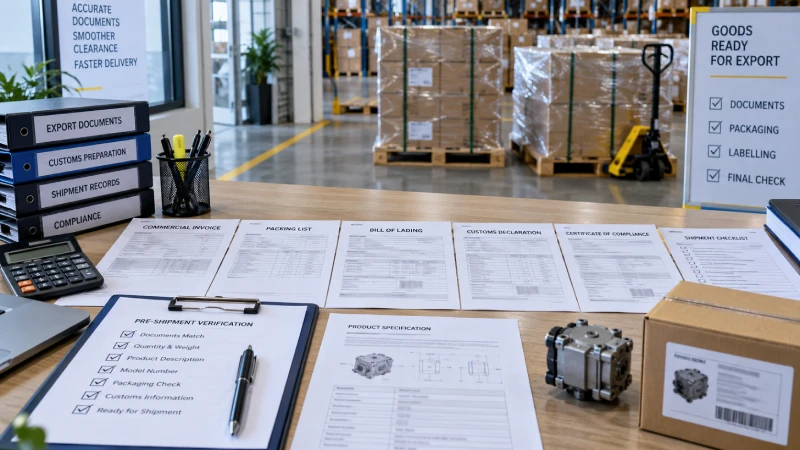
Delay Cause #3 — Document Details Do Not Match
A document can be individually correct and still create a problem when compared with the rest of the shipment file.
For example, the commercial invoice may describe the goods as “industrial equipment,” while the packing list uses a model-specific description and the shipping instructions use another commercial name.
The problem is not always that one description is false. It may be that the documents do not clearly describe the same transaction and the same goods.
Document Reconciliation Table
| Field | Commercial Invoice | Packing List | Form M / Trade Record | B/L or AWB | Regulatory Certificate |
|---|---|---|---|---|---|
| Importer / Consignee | Check | Check if shown | Check | Check | Check |
| Supplier / Exporter | Check | Check | Check | Check if shown | Check if applicable |
| Product description | Check | Check | Check | Check | Check |
| HS code | Check if shown | Check if shown | Check | Check where applicable | Check |
| Quantity | Check | Check | Check | Check transport data | Check where applicable |
| Weight | Check | Check | Review | Check | Check if applicable |
| Value | Check | Usually not primary value document | Check | — | Check where applicable |
| Model / specification | Check | Check | Check | Use suitable description | Check |
| Invoice number | Check | Reference correctly | Check | Check if referenced | Check where required |
| Shipment details | Check | Check | Check | Check | Check |
The goal is not to force every document to contain exactly the same fields.
The goal is to make sure that the information appearing across the file does not create contradictions about what is being imported, in what quantity, at what value, by whom, and under which regulatory documentation.
Pro Tip
Run one final side-by-side document comparison before departure instead of reviewing the invoice, packing list, certificate, and transport document independently.
This catches inconsistencies that are difficult to see when documents are checked one at a time.
Related guide: Documents Required to Import from China to Nigeria
Delay Cause #4 — SONCAP Was Started Too Late
SONCAP does not apply to every product imported into Nigeria, but when a product is subject to SONCAP, timing matters.
The Standards Organisation of Nigeria describes SONCAP as an offshore and pre-shipment conformity assessment scheme. Under the programme, applicable products undergo conformity verification in the exporting country before shipment. SON states that regulated imports may require a Product Certificate and a SONCAP Certificate as part of the applicable import and customs-clearance process. Standards Organisation of Nigeria SONCAP FAQ
That means the dangerous question is:
“Can we ship now and complete SONCAP when the cargo is on the water?”
For applicable SONCAP goods, that should not be the operating assumption.
SON’s published FAQ specifically states that SONCAP is a pre-shipment process and warns that an application cannot simply be handled as a normal SONCAP application after the consignment has already left the country of origin. Standards Organisation of Nigeria SONCAP FAQ
Before Booking a SON-Regulated Product
Confirm:
- whether SONCAP applies;
- the correct HS classification;
- what Product Certificate route applies;
- whether testing or inspection is needed;
- whether the supplier’s documents and product details are consistent;
- whether the required shipment-level certificate can be completed before departure.
Do this before the cargo is loaded.
Related guide: SONCAP Requirements for Nigeria Imports from China
Delay Cause #5 — NAFDAC Requirements Were Discovered After Shipping
NAFDAC is another area where product screening should happen early.
Depending on the product and intended import pathway, NAFDAC may be relevant to goods such as:
| Product Category | Typical Compliance Question Before Shipping |
|---|---|
| Food and food products | Does the product require registration, approval, or another NAFDAC process? |
| Drugs / pharmaceutical products | Is the product authorized and is the importer eligible for the applicable pathway? |
| Cosmetics | Are registration, labeling, documentation, or clearance requirements applicable? |
| Medical devices | What registration and port-clearance requirements apply? |
| Industrial or laboratory chemicals | Is an import permit, clearance permit, or other authorization required? |
| Restricted / controlled chemicals | Are additional permits or controls involved? |
NAFDAC publishes regulatory application and clearance guidance covering multiple categories, including imported cosmetics and medical devices, general chemicals and raw materials, restricted chemicals, Form M-related authorizations, and other regulated products. It also operates digital regulatory services for product registration and import/export permits. NAFDAC Regulatory Resources
The important point is not to assume that every NAFDAC-regulated product follows one identical workflow.
Instead, identify the category first and confirm the applicable requirement before the supplier ships.
An approval that is missing on arrival can be much harder and more expensive to deal with than an approval requirement identified before pickup in China.
Related guide: NAFDAC Requirements for Goods Imported from China
Delay Cause #6 — Form M or PAAR Data Problems
Form M and PAAR deserve dedicated guidance, so they do not need to be recreated here.
From a delay-prevention perspective, the main issue is data consistency.
Current NCS service guidance identifies regulatory certificates, the pro forma invoice, and insurance information among the documents relevant to Form M registration. For PAAR, the published document set includes the registered Form M, applicable regulatory certificates, transport document, commercial invoice, packing list, and certificate of origin. Nigeria Customs Service Published Service Requirements
Problems can arise when:
- the product description changes materially after the original documentation;
- a model or specification on a regulatory certificate does not match the shipment;
- the commercial invoice is revised but related records are not updated;
- consignee or importer information differs;
- quantity, value, weight, or other trade data conflict;
- an applicable regulatory certificate has not been finalized;
- the transport document is issued using inconsistent cargo details.
B’Odogwu/UCMS has been introduced as NCS’s integrated digital trade platform, including trade-documentation processes such as Form M and PAAR. Because systems and operational workflows can evolve, importers should follow the current NCS, authorized dealer bank, and Nigerian customs-agent instructions rather than relying on an old screenshot or an outdated blog tutorial. Nigeria Customs Service
Pre-Departure Form M / PAAR Check
Before departure, make sure the importer and clearance team have reviewed:
product → HS code → description → quantity → value → regulatory certificate → Form M information → commercial invoice → packing list → transport-document instructions
A change near the end of the chain should trigger a review of the records earlier in the chain.
Related guide: Form M & PAAR for Imports from China to Nigeria
Delay Cause #7 — Customs Valuation Questions
Declaring an artificially low value is not a customs-delay prevention strategy.
It can create the opposite result.
Nigeria Customs follows customs valuation rules that begin with transaction value when the applicable conditions are met, with other valuation methods used sequentially when the transaction-value method cannot be applied. NCS guidance also identifies additions that may form part of customs value, including relevant transport, insurance, packing, commissions, assists, royalties, and other elements where applicable. Nigeria Customs Service Customs Valuation
If Customs questions the declared value, the importer may need evidence supporting the transaction.
Useful records can include:
- genuine commercial invoices;
- purchase contracts;
- supplier quotations;
- payment records;
- freight and insurance information;
- distributor or related-party information where relevant;
- technical and commercial information explaining unusual pricing.
NCS also provides advance rulings on customs valuation for qualifying situations where greater certainty is needed before importation.
Cheap freight cannot compensate for storage, demurrage, regulatory default, or non-release risk.
Do not deliberately undervalue cargo. Your declared transaction should be supported by genuine commercial records.
Related guide: Nigeria Import Duty & Taxes for Goods from China
Delay Cause #8 — The Nigerian Importer or Clearance Agent Is Not Ready
Not every delay originates in China.
Cargo can depart with good supplier documents and still lose time because the destination side is not prepared.
Before departure, confirm that the Nigerian side is ready for the shipment.
| Readiness Item | What to Confirm |
|---|---|
| Importer identity | Correct company/importer details and applicable tax/trade registrations |
| TIN | Valid information for applicable trade procedures |
| Customs representative | Clearance responsibility is assigned before arrival |
| Regulatory accounts | Required regulator access/application is already being handled |
| Duty and tax funding | Importer understands that assessment may require prompt funding |
| Release documents | Required originals, electronic releases, or carrier instructions are understood |
| Destination transport | Trucking or inland-delivery planning is ready |
| Communication | Importer, agent, forwarder, and supplier know who handles each issue |
For sea freight in particular, waiting until the vessel berths before deciding who will handle clearance creates unnecessary operational risk.
Related guide: Customs Clearance in Nigeria
For transport planning, also see Sea Freight from China to Nigeria, Air Freight from China to Nigeria, and DDP Shipping from China to Nigeria.
How Customs Delays Become Logistics Costs
A customs delay does not remain only a “customs problem.”
It spreads into the logistics chain.
CUSTOMS OR REGULATORY HOLD
↓
Terminal / CFS storage continues
↓
Container free-time exposure may increase
↓
Carrier demurrage or detention exposure may arise
↓
Truck appointment or inland delivery must be rescheduled
↓
Customer delivery, factory production, retail stock, or project installation is delayed
For LCL cargo, the cost structure differs from FCL. Air cargo has different storage and handling conditions again. Carriers, terminals, CFS operators, ports, airports, and local service providers can also apply different tariffs and free-time rules.
For that reason, there is no responsible universal statement such as:
“Every importer gets X free days in Nigeria.”
Always confirm the applicable destination conditions for the specific carrier, terminal, container, shipment type, and contract.
The practical lesson is simpler:
Every avoidable day spent solving a document or compliance problem after arrival can create costs that did not need to exist.
48-Hour Pre-Shipment Compliance Review
The term 48-hour review does not mean every customs or regulatory issue can be solved within 48 hours.
Some registrations, testing, certifications, rulings, corrections, or government approvals can require significantly more time.
Instead, use the final 48 hours before the planned shipment release as a last internal control point.
Product
- Is the product clearly identified?
- Has its import legality been checked?
- Has the HS classification been reviewed?
- Has the intended use been disclosed?
Regulation
- Has SON applicability been checked?
- Has NAFDAC applicability been checked?
- Has another regulator been identified where necessary?
- Are applicable certificates or permits in the correct status?
Trade Documents
- Is the commercial invoice final?
- Is the packing list accurate?
- Are product descriptions consistent?
- Do quantity and weight figures reconcile?
- Are model numbers and specifications correct?
- Has applicable Form M information been checked?
- Are PAAR-related documents being prepared consistently?
Destination Readiness
- Is the Nigerian consignee ready?
- Is the clearance representative appointed?
- Are applicable importer/TIN details correct?
- Is duty/tax funding planned?
- Has the destination delivery plan been confirmed?
Shipping Instructions
- Are B/L or AWB instructions correct?
- Is the consignee name correct?
- Does the cargo description create any conflict with commercial or compliance documents?
- Have final document copies been shared with the Nigerian clearance team?
Pro Tip
For a new or technically ambiguous product, do not wait until the final 48 hours to solve classification or regulatory questions. Start before production is complete so the supplier still has time to correct labels, documents, test reports, or specifications.
What to Send Winsail Before Booking
The more accurately the cargo can be understood before booking, the easier it is to identify questions that should be resolved before shipment.
For China-to-Nigeria shipments, send Winsail:
| Information | Why We Need It |
|---|---|
| Detailed product description | Helps identify the correct logistics and compliance questions |
| Product photos | Useful when commercial descriptions are too general |
| Technical specification / catalogue | Important for technical or difficult-to-classify goods |
| HS code, if already known | Allows the code to be compared with the cargo description |
| Chinese supplier details | Helps coordinate pickup and export documents |
| Quantity | Required for shipment planning |
| Commercial value | Relevant to transport and import-document review |
| Package dimensions | Needed for CBM and chargeable-volume calculations |
| Gross weight | Needed for mode and equipment planning |
| Nigerian consignee | Helps identify destination-side readiness |
| Intended use | Can materially affect how a product is understood |
| Requested shipping mode | Sea FCL, sea LCL, air freight, express, or another solution |
Winsail can help the shipper and importer identify logistics-document inconsistencies, ask the right pre-shipment questions, coordinate with the supplier, and flag areas that may require confirmation from the Nigerian importer, customs representative, or regulatory authority.
However, Winsail is a freight and logistics provider. We do not replace Nigeria Customs Service, SON, NAFDAC, or another government authority, and we cannot guarantee regulatory approval or customs release.
Check Before Shipping
For a new product, send the product description, photo, specifications, HS code if known, shipment size, commercial value, and Nigerian consignee before the cargo is collected from the Chinese supplier.
Resolving one uncertainty before departure can be far less expensive than resolving the same uncertainty after arrival.
Delay Prevention Matrix
| Failure Point | When It Should Be Detected | Likely Impact | Preventive Action | Deep Guide |
|---|---|---|---|---|
| Incorrect HS code | Before order / production | Classification query, different duty treatment, regulatory issue | Review technical information and classification | Import Duty & Taxes |
| Prohibited/restricted product | Before order | Non-release, enforcement action, serious delay | Screen NCS and applicable regulator controls | Restricted Goods |
| Missing SONCAP | Before shipment | Regulatory problem and clearance delay | Confirm applicability and complete pre-shipment process | SONCAP |
| Missing NAFDAC requirement | Before shipment | Port hold or regulatory intervention | Identify category and applicable approval pathway | NAFDAC |
| Document mismatch | Before departure | Customs/regulatory query | Reconcile the entire document set | Documents Required |
| Form M / PAAR inconsistency | Before departure | Processing delay | Keep trade data consistent across documents | Form M & PAAR |
| Unsupported declared value | Before shipment | Valuation query | Keep genuine transaction and payment evidence | Import Duty & Taxes |
| Importer not ready | Before departure | Destination clearance delay | Confirm importer, representative, funding and release readiness | Customs Clearance |
Final Takeaway
The most effective customs-delay strategy for a shipment from China to Nigeria is to move the decision-making upstream.
Do not wait for the vessel to reach Lagos before asking whether SONCAP applies.
Do not wait for a customs query before checking whether the HS code actually matches the product.
Do not wait for PAAR processing before discovering that the commercial description changed.
Do not wait for cargo arrival before appointing the Nigerian clearance representative.
And do not assume that a low freight rate makes a shipment inexpensive if preventable compliance problems create storage, demurrage, detention, or delivery disruption later.
A stronger workflow is:
identify the product → classify it → screen regulation → prepare compliance → reconcile documents → confirm importer readiness → release cargo for shipment
That does not guarantee that Customs will never inspect, query, or review a shipment. Legitimate customs and regulatory controls can still occur.
What it does is reduce the number of delays caused by problems that could have been identified before the cargo left China.
Send Product & HS Code
Before booking your China-to-Nigeria shipment, send Winsail the product description, photos, technical specifications, HS code if known, quantity, value, dimensions, weight, Nigerian consignee, intended use, and preferred shipping method.
We can review the shipment from a logistics perspective and help identify questions that should be resolved with the importer, customs representative, or relevant Nigerian authority before departure.
Official Regulatory References
This article was reviewed against official information available on October 4, 2026, including:
- Nigeria Customs Service (NCS): current customs digital-platform information, tariff and import-control resources, customs valuation guidance, advance-ruling guidance, and published service requirements for Form M and PAAR. Nigeria Customs Service
- Standards Organisation of Nigeria (SON): official SONCAP service information and FAQs confirming the offshore/pre-shipment nature of the programme and its role for SONCAP-regulated imports. SONCAP FAQ
- NAFDAC: official regulatory application resources, import/clearance guidance, and digital regulatory services covering categories including food, drugs, cosmetics, medical devices, chemicals, and other regulated products. NAFDAC Regulatory Resources
Compliance notice: Government procedures, digital platforms, certificate requirements, tariff classifications, fees, and agency practices can change. Confirm current requirements with the applicable Nigerian authority and qualified destination customs representative before shipment.
FAQ
What are the most common causes of customs delay in Nigeria?
Common preventable causes include incorrect HS classification, prohibited or regulated products not being identified early, missing SONCAP or NAFDAC requirements, inconsistent documents, Form M or PAAR data problems, valuation questions, and an importer or clearance representative who is not ready when the cargo arrives.
Can an incorrect HS code delay clearance?
Yes. HS classification can affect customs duty, regulatory controls, prohibitions or restrictions, and other import requirements. If the classification does not match the actual product, Customs or another regulator may require clarification or correction.
What happens if SONCAP is missing?
If the goods are subject to SONCAP, missing the required pre-shipment conformity documentation can create serious compliance and clearance problems. The safest approach is to determine SONCAP applicability before the supplier ships.
Can NAFDAC documents be completed after the goods arrive?
Do not assume they can. NAFDAC operates different registration, permit, authorization, and port-clearance pathways depending on the type of regulated product. Determine the applicable requirement before shipment.
Why do mismatched invoices and shipping documents cause problems?
Customs and regulatory agencies need to identify the transaction and the goods consistently. Material differences in descriptions, quantities, values, model numbers, HS codes, importer details, or certificate information may require explanation or correction.
Can Nigeria Customs question my declared value?
Yes. Nigeria Customs can review whether the declared transaction value satisfies the applicable valuation rules. Importers should retain genuine invoices, payment evidence, contracts, freight and insurance records, and other commercial documentation supporting the transaction.
How do customs delays create demurrage or storage costs?
While a shipment is waiting for release, terminal, CFS, carrier, container, airport, trucking, or other destination charges may continue or begin to apply according to the specific shipment terms. Always confirm current free time and destination tariffs for the actual shipment.
What should I check before my supplier ships from China?
Confirm the product description, HS classification, import legality, applicable regulator, required certificates or permits, Form M status where applicable, commercial invoice, packing list, consignee information, clearance representative, and transport-document instructions.
