

“NAFDAC approval” is not one document.
For goods shipped from China to Nigeria, the correct NAFDAC pathway depends on what the product is, how it will be used, whether it is a finished commercial product or raw material, and whether it has already been registered in Nigeria.
A packaged food product, pharmaceutical, cosmetic, medical device, industrial chemical and pesticide should not be treated as if they follow one identical approval process.
Depending on the product, NAFDAC involvement may include product registration, an import permit or authorization, permission connected with registration samples, Form M-related authorization, port-of-entry clearance, physical inspection, sampling, laboratory testing or other category-specific controls. NAFDAC publishes separate procedures for registration, import permits and port clearance across different regulated-product classes.
For importers, the most important rule is simple:
Identify the exact NAFDAC regulatory path before the supplier ships the cargo from China.
A freight booking should not be treated as the starting point for regulatory compliance.
For the wider shipping and import workflow, see Shipping from China to Nigeria and Documents Required to Import from China to Nigeria.
Which Imported Products Can Fall Under NAFDAC?
NAFDAC regulates a broad range of products that can affect public health. Its statutory scope includes the manufacture, importation, exportation, distribution, advertisement, sale and use of food, drugs, cosmetics, medical devices, chemicals and related regulated products.
The first screening question should therefore be product classification, not simply the HS code.
| Product | NAFDAC Regulatory Category | Possible Process | Important Pre-Shipment Check |
|---|---|---|---|
| Packaged food and beverages | Food | Product registration, category-specific import and port clearance | Confirm registration status, manufacturer, label and product variant |
| Human or veterinary drugs | Drugs | Registration, dossier review, permits and port clearance | Confirm Nigerian applicant, product registration and manufacturer documentation |
| Cosmetics | Cosmetics | Product registration and port clearance | Check exact product, variant, label, manufacturer and registration |
| Medical devices | Medical Devices | Registration, technical review and relevant import or clearance steps | Confirm device classification, model or family and technical documentation |
| Herbal products and nutraceuticals | Herbal / Nutraceutical | Registration and category-specific port clearance | Confirm whether claims or composition affect classification |
| Industrial chemicals | Chemical | Import permit and port clearance may apply | Confirm chemical identity, composition, HS code, use, MSDS and permit |
| Laboratory chemicals | Chemical | Import permit and clearance may apply | Confirm exact chemical and end use before shipment |
| Pesticides and agrochemicals | Chemical / Pesticide | Registration and/or specific chemical permit pathway | Determine whether the substance is restricted |
| Severely restricted chemicals | Restricted Chemical | Special import-permit and clearance controls | Do not ship before checking exact permit requirements |
| Research, trial or sample products | Depends on category | Special approval or sample-import pathway may apply | Do not assume commercial registration rules apply unchanged |
This distinction matters because two cargoes with similar shipping characteristics can have completely different regulatory requirements.
For example, a 500 kg shipment of ordinary machine components and a 500 kg shipment of laboratory chemicals may both move by air freight, but only the second cargo may trigger a chemical import-permit pathway.
If the product may also fall under a standards conformity scheme, treat that as a separate screening question. Do not use NAFDAC guidance as a substitute for SONCAP Requirements for Nigeria Imports from China.
First Determine the Regulatory Path
Before checking forms or preparing shipping documents, classify the shipment through a regulatory decision process.
Step 1: Is it a finished commercial product?
If the goods are finished products intended for sale or distribution in Nigeria, such as packaged food, medicines, cosmetics, medical devices or finished pesticides, check whether product registration is required before routine commercial importation.
Do not assume a CE certificate, ISO certificate, Chinese export licence, factory registration or another certificate issued outside Nigeria is equivalent to Nigerian product registration.
Do not label a product “NAFDAC-approved” merely because a factory holds certificates in China.
Step 2: Is it a raw material or chemical?
If the cargo is a chemical, ingredient, pharmaceutical raw material or industrial input, determine:
- exact chemical name;
- composition or concentration;
- CAS number where relevant;
- HS code;
- intended industrial or laboratory use;
- Nigerian end user;
- whether it falls within a restricted or controlled category;
- whether an import permit is required; and
- whether separate clearance authorization applies.
Industrial chemicals should not automatically be processed as finished consumer products.
Step 3: Is it a medical device?
Determine the exact device, intended purpose, model, classification and whether it forms part of a device family, system or IVD category.
NAFDAC maintains a dedicated medical-device registration pathway with technical documentation requirements appropriate to the device class and application.
Step 4: Is it a sample, trial, research or donated item?
Do not automatically apply the routine commercial-product pathway.
NAFDAC maintains separate procedures for certain samples, research materials, donated products and other special-use imports.
Step 5: Is the chemical restricted?
General industrial chemicals and severely restricted chemicals should not be grouped together.
If the cargo involves pesticides, agrochemicals, fertilizers or chemicals subject to additional controls, check the dedicated restricted-chemical procedure before placing the shipment.
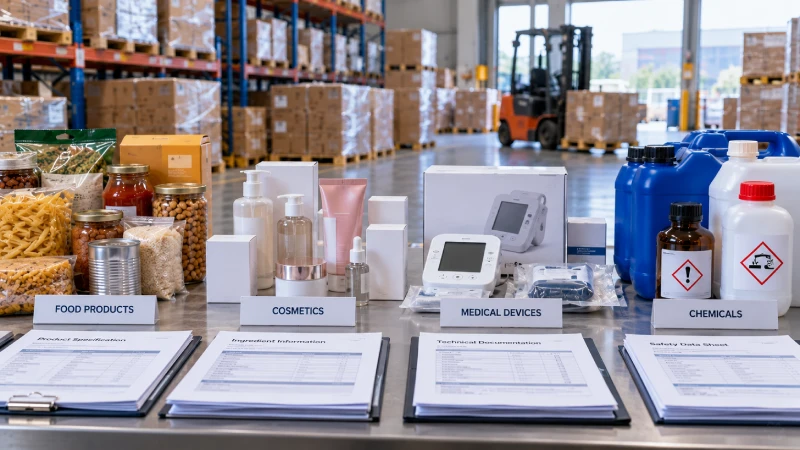
Product Registration vs Import Permit vs Port Clearance
These terms describe different regulatory events.
| Process | Main Purpose | Typical Timing | Does It Replace Other Processes? |
|---|---|---|---|
| Product Registration | Authorizes a regulated product under the applicable Nigerian registration framework | Usually before routine commercial import and sale | No |
| Import Permit / Authorization | Authorizes importation for a defined product, purpose, quantity or regulatory stage | Before shipment where the applicable pathway requires it | No |
| Form M-related NAFDAC Authorization | Supports specific import-control situations identified in NAFDAC guidance | Before the relevant Form M or import process | No |
| Port Clearance | Regulatory review of the actual arriving consignment | At or around arrival at the Nigerian port of entry | No |
| Laboratory Testing / Sampling | Verifies product compliance where required | During registration and/or clearance depending on category | No |
NAFDAC publishes separate procedures for registration, chemical import permits, Form M authorization and port clearance. A registration certificate should therefore not be treated as a permanent substitute for shipment-level regulatory clearance.
NAFDAC product registration, an import permit and cargo clearance are not interchangeable concepts.
This distinction should be checked before the shipping mode is finalized, especially for regulated products moving under Sea Freight from China to Nigeria or Air Freight from China to Nigeria.
NAFDAC Requirements for Imported Food Products
Imported food has its own product-registration pathway.
The version of NAFDAC’s Guidelines for Registration of Imported Food Products in Nigeria currently available on the agency’s website states that imported food products must be registered and describes product-specific application and overseas-manufacturer documentation requirements.
One date requires particular attention.
The currently posted food guideline shows an effective date of March 1, 2021 and a review date of February 28, 2026. That review date has already passed. Importers should therefore verify whether NAFDAC has issued a replacement or revised procedure before submitting a new application rather than relying blindly on the older PDF.
Official guideline: NAFDAC Guidelines for Registration of Imported Food Products in Nigeria
Before shipping food from China, check:
- whether the exact product requires NAFDAC registration;
- whether the registration is current;
- whether the Nigerian applicant or importer matches the approved regulatory arrangement;
- whether the Chinese manufacturer and production source match the registration documents;
- whether the product name, formulation, pack size and label match the approved product;
- whether certificates or testing documents applicable to the product are available;
- whether Form M or another NAFDAC authorization is required for the particular shipment;
- whether current port-clearance requirements have been prepared.
NAFDAC’s port guidance for regulated food lists shipment documents such as the commercial invoice, PAAR, Form M, bill of lading or airway bill, packing list and applicable NAFDAC approvals. Depending on the product and origin, additional certificates or inspection documentation may apply.
Do not assume every food shipment from China needs exactly the same supporting certificate.
NAFDAC Requirements for Imported Drugs and Pharmaceutical Products
Pharmaceutical products involve a more technical regulatory pathway.
NAFDAC’s currently posted Guidelines for Registration of Imported Drug Products in Nigeria (Human and Veterinary Drugs), document reference DR&R-GDL-005-03, show an effective date of March 20, 2025 and a scheduled review date of March 21, 2030.
Official guideline: NAFDAC Guidelines for Registration of Imported Drug Products in Nigeria
The registration framework addresses matters including:
- the Nigerian applicant;
- Power of Attorney or Contract Manufacturing Agreement arrangements;
- evidence of incorporation of the applicant;
- manufacturing authorization;
- pharmaceutical product documentation;
- product dossier requirements;
- manufacturer-related regulatory evidence; and
- subsequent evaluation and registration controls.
A Chinese pharmaceutical manufacturer may therefore be responsible for supplying substantial parts of the technical dossier and manufacturer documentation, but the Nigerian regulatory relationship must still be structured according to NAFDAC requirements.
Registration does not finish the import process
NAFDAC also publishes separate port-clearance guidance for finished pharmaceuticals, nutraceuticals and herbal products.
The port process may involve documentary review, physical examination, sampling, laboratory analysis and final regulatory release or a compliance directive.
For regulated pharmaceutical cargo, compliance should therefore be checked at two levels:
Product level: Is the product properly registered and supported by the required regulatory dossier?
Shipment level: Does the arriving consignment satisfy the applicable import and port-clearance requirements?
Those are not the same question.
Imported Cosmetics and Medical Devices
Cosmetics and medical devices should be treated as separate categories even where some port-clearance procedures are handled under related inspection guidance.
Imported Cosmetics
NAFDAC maintains dedicated guidance for the registration of imported cosmetics. The published procedure addresses the applicant, overseas manufacturer relationship and supporting registration documentation.
The version currently accessible on NAFDAC’s website carries an effective date of December 13, 2021 and a review date of December 12, 2026. Importers filing after the review period should confirm the latest version directly with NAFDAC.
Official guideline: NAFDAC Guidelines for Registration of Imported Cosmetics in Nigeria
A cosmetic importer should not assume that registration of one product automatically covers every fragrance, formulation, size, variant or brand presentation.
Imported Medical Devices
NAFDAC’s medical-device registration guideline currently published on its website carries an effective date of May 3, 2024 and a review date of May 2, 2029.
Official guideline: NAFDAC Guidelines for Registration of Medical Devices in Nigeria
The medical-device pathway can involve requirements such as:
- overseas-manufacturer authorization arrangements;
- evidence of business incorporation;
- Certificate of Manufacture and Free Sale for imported devices;
- product labels or artwork;
- manufacturer information;
- Declaration of Conformity;
- recognized standards where applicable;
- technical dossiers for relevant devices; and
- clinical evaluation information where required.
The medical-device guideline also addresses import permits for registration samples following the applicable screening stage. That is a good example of why the words “import permit” must be interpreted in context: a permit used to bring registration samples into Nigeria should not be confused with routine commercial shipment clearance.
| Check | Cosmetics | Medical Devices |
|---|---|---|
| Product-specific NAFDAC pathway | Yes | Yes |
| Overseas manufacturer documents | Required as applicable | Required as applicable |
| Nigerian applicant or representative documentation | Required | Required |
| Technical conformity documentation | Product-specific | Often more extensive |
| Registration sample process | Depends on current procedure | Specifically addressed in medical-device guidance |
| Port clearance | Required under the applicable import procedure | Required under the applicable import procedure |
Industrial and Laboratory Chemicals
Industrial and laboratory chemicals require particular care because the relevant regulatory question may be permit status rather than finished-product registration.
NAFDAC maintains a specific procedure for permits to import industrial and laboratory chemicals. The published guidance requires chemical-specific information rather than a generic product description.
Official guideline: NAFDAC Guidelines for Obtaining Permit to Import Industrial and Laboratory Chemicals
Typical information to prepare before shipping includes:
- exact chemical name;
- composition and concentration;
- HS code;
- quantity;
- intended use;
- Nigerian importer;
- end user where relevant;
- Material Safety Data Sheet or Safety Data Sheet;
- Certificate of Analysis where required;
- technical officer information;
- company incorporation documentation;
- chemical-marketer documentation where applicable;
- Local Purchase Order where applicable;
- storage or warehouse information; and
- other permits triggered by the specific substance.
The published chemical-permit guidance calls for information such as chemical names and compositions, commodity or HS codes, requested quantities and MSDS documentation.
NAFDAC also maintains port-clearance procedures for general chemicals and raw materials. Covered chemical cargo should not be imported on the assumption that arrival documents alone will replace any required pre-import permit.
Chemical importers should obtain regulatory confirmation before shipment, not after the container reaches Nigeria.
Demurrage, storage, inspection and possible re-export risk can become much more expensive once a non-compliant chemical shipment has already arrived.
Pro Tip: Send the exact ingredient or composition, intended use, manufacturer details, product label or specification and HS code for regulatory screening before placing the shipment booking.
Restricted Chemicals, Pesticides and Agrochemicals
A restricted chemical should not be treated as an ordinary industrial chemical.
NAFDAC publishes a separate permit guideline covering severely restricted chemicals, pesticides, agrochemicals, fertilizers and chemicals subject to specified additional controls.
The currently published version carries an effective date of November 16, 2023 and a review date of November 15, 2028.
Official guideline: NAFDAC Permit Guideline for Severely Restricted Chemicals, Pesticides, Agrochemicals and Fertilizers
Use this screening sequence:
- Confirm that the product is a chemical or chemical-based regulated product.
- Identify the exact substance, composition and concentration.
- Check whether it falls within a restricted or controlled category.
- If it is a general industrial or laboratory chemical, assess the normal chemical import-permit procedure.
- If it is a severely restricted chemical, pesticide, agrochemical or fertilizer, assess the dedicated permit pathway.
- If it is a finished pesticide product, determine whether product registration also applies.
- Confirm permit and clearance requirements before shipment.
For broader import restrictions beyond NAFDAC-regulated products, see Restricted & Prohibited Goods for Nigeria Imports.
NAFDAC and Form M
Form M is part of Nigeria’s import documentation system, but the phrase “NAFDAC Form M approval” should not be treated as one universal procedure applying identically to every NAFDAC-regulated product.
NAFDAC publishes a dedicated Guidelines for Issuance of Authorization to Open Form M, document reference PID-GDL-015-01, effective September 24, 2022 with a review date of September 23, 2027.
Official guideline: NAFDAC Guidelines for Issuance of Authorization to Open Form M
The guideline specifically describes certain product situations, including categories for which ordinary NAFDAC permits or certificates of registration may not be issued.
It should not be interpreted as meaning:
Every NAFDAC product needs exactly the same authorization before opening Form M.
At the same time, NAFDAC port-clearance guidelines for several regulated product categories list Form M among the shipment documents used during clearance.
The practical approach is therefore:
- identify the product category;
- identify the applicable NAFDAC registration or permit pathway;
- check whether a specific NAFDAC authorization is required for the Form M process;
- confirm current Form M and PAAR requirements with the Nigerian importer and its authorized trade or customs professionals; and
- complete the required regulatory steps before the supplier ships from China.
For the broader import-document sequence, read Form M & PAAR for Imports from China to Nigeria and Documents Required to Import from China to Nigeria.
What Happens During NAFDAC Port-of-Entry Clearance?
Even when the product is already registered, an arriving shipment may still need NAFDAC port clearance.
The exact process varies by category, but published NAFDAC port guidelines show a common regulatory structure.
1. Prepare the shipment entry and regulatory documents
The Nigerian importer or authorized representative prepares the applicable shipment information, which may include:
- SGD;
- commercial invoice;
- Form M;
- PAAR;
- bill of lading or airway bill;
- packing list;
- applicable NAFDAC registration certificate;
- import permit or other approval;
- Certificate of Analysis; and
- product-specific certificates.
Not every document applies to every product.
2. Submit the clearance request
The applicable Ports Inspection process is initiated through the service or platform specified for that product category and transaction.
NAFDAC currently operates multiple digital services. Its broader iRIMS Stakeholder Portal is available for regulatory services and verification, while NAPAMS remains associated with product-registration functions. Some published category-specific guidelines also refer to ports inspection or Single Trade Window services.
Importers should therefore follow the current service route specified for their exact product and transaction, rather than assuming one portal handles every NAFDAC procedure.
Official portal: NAFDAC Regulatory Services Portal
3. NAFDAC reviews the documents
Documents are vetted and deficiencies may result in a request for correction, further evidence or another compliance action rather than immediate clearance.
4. Physical inspection may occur
NAFDAC may examine the shipment with other relevant government agencies at the port or another approved location, depending on the applicable procedure.
5. Samples may be taken
For categories requiring sampling or laboratory evaluation, inspectors may draw samples and send them for the applicable analysis.
6. The consignment is released, held or subjected to further regulatory action
Release is not automatic merely because documents have been submitted.
For some regulated products, laboratory evaluation or other compliance checks can still affect when the goods may be marketed or used.
This is why regulatory clearance must be included in shipment planning instead of treated as a paperwork issue after arrival.
For the wider border process, see Customs Clearance in Nigeria for Imports from China and How to Avoid Customs Delays When Shipping from China to Nigeria.
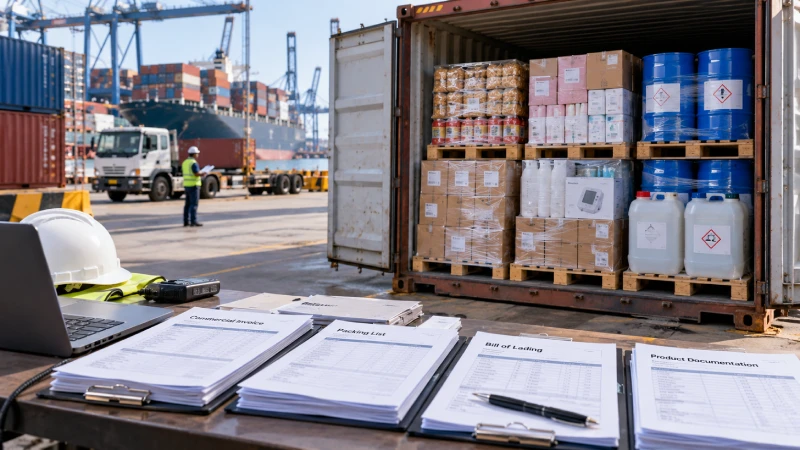
Verify Registration and Approvals Before Shipping
Before cargo leaves China, perform a final regulatory cross-check.
Pre-Shipment NAFDAC Verification Checklist
- Confirm the exact commercial product name.
- Confirm the ingredient list or chemical composition.
- Confirm intended use.
- Confirm HS code.
- Confirm manufacturer name and factory address.
- Confirm the Nigerian applicant or importer.
- Confirm whether product registration is required.
- Confirm the registration number and current status where applicable.
- Confirm whether the exact product, model, variant or pack size is covered.
- Confirm whether an import permit is required.
- Confirm whether Form M-related NAFDAC authorization applies.
- Confirm current PAAR and customs-document requirements.
- Confirm whether pre-shipment testing or inspection applies.
- Confirm whether a Certificate of Analysis is needed.
- Confirm whether MSDS or SDS is required.
- Confirm applicable labelling requirements.
- Confirm port-clearance documents.
- Confirm the live NAFDAC application portal for that specific service.
- Confirm all approvals before the freight booking becomes difficult or expensive to change.
NAFDAC provides digital verification resources, including its regulatory portal and registered-product databases. Product verification should match the actual product and shipment rather than relying on the existence of any NAFDAC number.
Where applicable, compare the registration information with:
- product name;
- manufacturer;
- Nigerian applicant;
- formulation;
- model;
- dosage or strength; and
- other identifying details.
A valid registration belonging to another product does not validate your shipment.
What the Nigerian Importer, Chinese Supplier and Freight Forwarder Should Each Do
NAFDAC compliance works best when responsibilities are separated clearly.
Nigerian Importer or Applicant
The Nigerian party normally needs to coordinate the Nigerian regulatory process, including the applicable registration, permits, portal applications and port-clearance arrangements.
Imported-product guidelines commonly address the relationship between a Nigerian applicant and an overseas manufacturer, including authorization and corporate documentation.
Chinese Manufacturer or Supplier
The supplier may need to provide documents such as:
- Power of Attorney;
- manufacturer licence;
- Certificate of Free Sale;
- Certificate of Analysis;
- full ingredient or chemical composition;
- technical dossier;
- MSDS or SDS;
- labels and artwork;
- GMP-related information;
- technical conformity documentation; and
- factory information.
The exact documents depend on the product class.
Freight Forwarder
A freight forwarder can help coordinate logistics information, shipping documents and cargo movement from China, but the freight forwarder does not replace NAFDAC and cannot guarantee regulatory approval.
Winsail Logistics can review cargo information from a shipping and regulatory-screening perspective and identify issues that should be confirmed before export. Where NAFDAC approval is involved, the Nigerian importer should complete the required regulatory process through NAFDAC or appropriately qualified regulatory representatives.
Common NAFDAC Mistakes That Can Delay China-Nigeria Shipments
Shipping before confirming product classification
A product may appear ordinary from a freight perspective but still fall under food, cosmetic, medical-device, chemical or another regulated category.
Assuming Chinese certificates replace Nigerian approval
ISO, CE, factory certificates, overseas regulatory evidence or Chinese export certificates may support a technical file, but they do not automatically replace NAFDAC requirements.
Treating registration and port clearance as the same thing
A registration certificate relates to the regulatory status of a product. Port clearance concerns the actual consignment entering Nigeria.
Using a permit issued for a different product or purpose
Import permits may be tied to a specific regulatory purpose, product, quantity or stage.
Describing chemicals too generally
“Chemical,” “industrial liquid,” “cleaning material” or “laboratory reagent” is not sufficient.
Provide the exact chemical identity, composition, concentration and intended use.
Booking cargo before the Nigerian importer is ready
Once freight departs China, regulatory problems can become port storage, demurrage, detention, laboratory hold or re-export problems.
Before booking, align the NAFDAC pathway with the broader Nigeria import documentation process.
Check NAFDAC Requirements Before Shipping from China
If your cargo may fall under NAFDAC, do not start with the freight rate.
Start with the product.
Prepare:
- product name;
- HS code if available;
- ingredient or chemical composition;
- intended use;
- manufacturer details;
- product specification or label;
- package quantity;
- gross weight and dimensions; and
- Nigerian destination.
Winsail Logistics can review this information from a shipping and regulatory-screening perspective and identify which issues should be confirmed by the Nigerian importer before cargo leaves China.
FAQ
Which products require NAFDAC involvement?
NAFDAC regulates categories including food, drugs, cosmetics, medical devices, chemicals and other regulated products. Herbal products, nutraceuticals, pesticides, agrochemicals and some raw materials can also have specific NAFDAC pathways. The exact process depends on the product and purpose.
Do all imported foods need the same NAFDAC process?
No. Finished foods, raw materials and special product categories should not automatically be treated identically. Registration, supporting documents, testing and port-clearance requirements can vary by product.
Does a medical device follow the same process as cosmetics?
No. Both are NAFDAC-regulated, but medical devices have dedicated registration and technical-document requirements. Device classification, technical conformity and model or family information can affect the pathway.
Do industrial chemicals need an import permit?
Covered industrial and laboratory chemicals can require a NAFDAC import permit. The requirement should be checked using the exact chemical identity, composition, intended use and applicable classification before shipment.
Does NAFDAC registration automatically clear goods at the port?
No. Product registration and clearance of an arriving consignment are separate regulatory events. Shipment documents, inspection, sampling or other port-entry controls can still apply.
Can the Chinese manufacturer obtain Nigerian product registration?
The Chinese manufacturer can supply technical and legal documentation, but imported-product procedures commonly require a Nigerian applicant or representative relationship. The exact structure depends on the product category.
Does NAFDAC approval replace Form M or customs clearance?
No. NAFDAC regulation, Form M and PAAR processes, and Nigeria Customs clearance perform different functions. Completing one does not automatically complete the others.
Can Winsail obtain or guarantee NAFDAC approval?
No. NAFDAC is the Nigerian regulatory authority responsible for registration, permits and regulatory decisions. Winsail can assist with shipment planning, logistics coordination and pre-shipment information checks, but cannot guarantee regulatory approval or clearance.
Regulatory Information Note
This article was reviewed against NAFDAC regulatory resources available on October 3, 2026. NAFDAC requirements, portals, forms, fees, testing rules and operating procedures can change, and some currently published guidelines carry upcoming or already-passed review dates.
Before importing regulated goods, verify the latest category-specific guideline and application route directly with NAFDAC and the Nigerian importer’s qualified regulatory or customs representatives.
This page provides logistics and regulatory-screening information only. It is not an NAFDAC approval, legal opinion or guarantee of registration, permit issuance, laboratory acceptance or customs clearance.
