

“35 days” and “50 days” can both describe the same shipment from China to Nigeria.
The first number may refer only to the scheduled ocean transit from a Chinese port to Lagos. The second may include supplier pickup, export handling, waiting for the vessel, Nigerian customs clearance and delivery to the importer’s warehouse.
That difference matters when you are planning inventory, a production deadline or a project delivery date.
As a general planning range, sea freight from China to Nigeria is commonly quoted at roughly 35–50 days for the main port-to-port movement, while air freight is often around 5–8 days for normal cargo movements. Express courier shipments can move faster. However, the actual total lead time depends on the departure schedule, routing, transshipment, cargo readiness, customs preparation and final delivery location.
Public 2026 logistics references show substantial variation between individual carrier services, which is why the next actual sailing or flight should always be checked before booking.
Schedule reference: October 3, 2026
Transit-time definition: Unless stated otherwise, the ranges below are planning estimates rather than guaranteed carrier schedules.
Important: Vessel rotations, airline capacity, port conditions and customs processing can change after publication. Confirm the actual ETD, ETA, cut-off and routing before shipping.
If you are still comparing the complete logistics process, start with our guide to China–Nigeria freight transit guide.
China-to-Nigeria Shipping Time at a Glance
The most useful question is not simply, “How long does shipping take?”
It is:
From which milestone to which milestone?
A carrier may quote port-to-port transit, while an importer actually needs to know when the cargo will reach a warehouse in Lagos, Abuja, Kano or Port Harcourt.
| Mode | Main Transport Time | Extra Origin Steps | Extra Destination Steps | Best For |
|---|---|---|---|---|
| FCL sea freight | About 35–50 days on many services | Container loading, export handling, port cut-off and vessel waiting | Discharge, customs, container release and inland delivery | Full containers, regular inventory, heavy cargo |
| LCL sea freight | Often similar sailing time to FCL, but longer total lead time | CFS receiving, consolidation and consolidation cut-off | Deconsolidation, CFS release, customs and delivery | Smaller commercial shipments |
| Air freight | Commonly about 5–8 days for standard routing | Pickup, airport handling, security and flight booking | Airport handling, customs and final delivery | Urgent or higher-value commercial cargo |
| Express courier | Often about 3–7 days door-to-door for suitable shipments | Courier collection and export processing | Courier clearance and final delivery | Samples, documents and small urgent parcels |
| Sea door-to-door | Often several days or weeks longer than port-to-port | Pickup and China export operations included | Customs plus inland delivery included | Importers planning against a warehouse-arrival date |
These are planning ranges, not delivery guarantees. A specific Shenzhen–Apapa sailing, for example, can show a shorter scheduled transit than the broad market average, while a transshipment service may take considerably longer.
For that reason, an importer planning around a fixed sales launch or project deadline should work backward from the required delivery date rather than relying on one average number.
Port-to-Port Transit Time vs Total Lead Time
This is the most important distinction in China-to-Nigeria shipping.
A quoted ocean transit of 38 days does not necessarily mean your goods will arrive at your warehouse 38 days after leaving the supplier.
A complete shipment may look like this:
Supplier cargo ready
→ Pickup from factory
→ China warehouse or port delivery
→ Export handling
→ Waiting for vessel or flight departure
→ Main ocean or air transport
→ Arrival in Nigeria
→ Terminal or CFS handling
→ Customs clearance
→ Cargo release
→ Final delivery
The practical calculation is:
Total lead time = pre-carriage + export handling + waiting for departure + main transit + destination handling + customs + final delivery
Every element can change independently.
For example, the vessel itself may remain on schedule while the cargo loses several days because the supplier missed the container cut-off. Conversely, the cargo may leave China exactly as planned but spend longer at destination because import documentation is incomplete.
This is also why comparing forwarders solely by statements such as “35 days to Nigeria” can be misleading. Before comparing timelines, ask each provider what its clock includes.
Ask These Four Questions
- Does the transit time start when the supplier’s cargo is ready or when the vessel departs?
- Does the quoted time end at Lagos port or at my delivery address?
- Is the route direct or does it involve transshipment?
- Is Nigerian customs clearance included in the estimate?
If the answers are different, the transit numbers are not directly comparable.
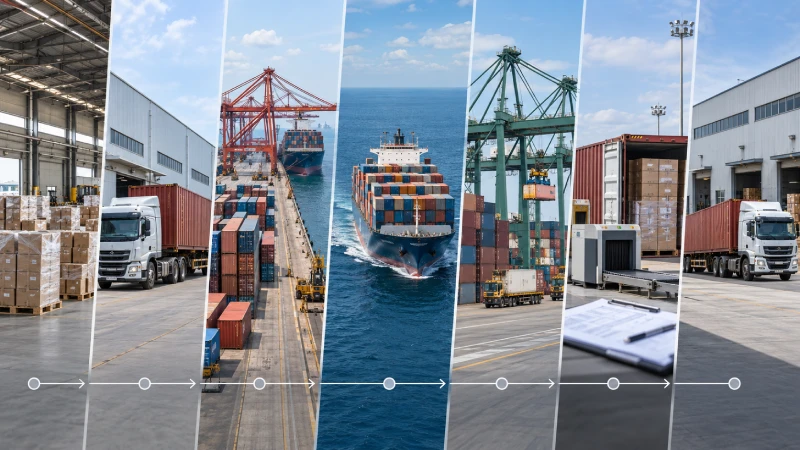
Sea Freight Transit Time — FCL
For full-container shipments, the sea leg usually represents the largest part of the total lead time.
Major China origins used for Nigeria-bound cargo include:
- Shenzhen / Yantian
- Guangzhou / Nansha
- Ningbo
- Shanghai
- Qingdao
On the Nigerian side, containerized cargo may move through gateways including Apapa, Tin Can Island, Lekki and Onne, depending on the carrier service and destination requirements.
Indicative FCL Route Timing
| China Origin | Nigeria Gateway | Direct / Transshipment | Indicative Main Transit | Last Verified |
|---|---|---|---|---|
| Shenzhen / Yantian | Apapa / Lagos | Service-dependent | Roughly 35–45 days as a planning range | Oct. 3, 2026 |
| Guangzhou / Nansha | Lagos | Service-dependent | Roughly 35–45 days | Oct. 3, 2026 |
| Ningbo | Apapa / Lagos | Often service-dependent | Roughly 35–45 days | Oct. 3, 2026 |
| Shanghai | Lagos / Tin Can | Direct or transshipment depending on carrier | Roughly 35–50 days | Oct. 3, 2026 |
| Qingdao | Lagos | Often longer routing than South China | Roughly 38–52 days | Oct. 3, 2026 |
| South / East China | Onne | Routing dependent | Roughly 36–50+ days | Oct. 3, 2026 |
These ranges are intentionally broad. Actual carrier schedules can be shorter or longer, and do not assume that every shipping line offers every China-port/Nigeria-port combination on the same routing.
A vessel marketed as a “Nigeria service” may still require transshipment at an intermediate hub. Transshipment adds another operational dependency because the container must connect with the onward vessel.
What Matters More Than the Average?
For a real shipment, ask for:
- carrier name
- vessel name
- loading port
- Nigerian discharge port
- ETD
- cargo cut-off
- estimated ETA
- direct or transshipment routing
- transshipment port, if applicable
- next alternative sailing
Pro Tip: Ask for the next actual vessel and cargo cut-off—not only the forwarder’s “average transit time.”
Check Current Sailing Time
If your cargo already has a ready date, compare the next available sailings rather than planning from a generic monthly average.
For more information about container transport itself, see Sea Freight from China and FCL Shipping.
Why LCL Usually Takes Longer than FCL
LCL and FCL containers may travel on the same vessel, but that does not mean their total lead times are equal.
With FCL, one shipper normally controls the full container.
A typical sequence is:
Factory → container loading → port cut-off → vessel → Nigerian terminal → customs → delivery
LCL has additional consolidation steps.
A typical LCL sequence is:
Factory → China CFS → cargo receiving → consolidation waiting → container loading → vessel → Nigeria CFS → deconsolidation → cargo release → customs → delivery
The ocean portion may be similar, but LCL often takes longer before departure and after arrival.
FCL vs LCL Timing
| Stage | FCL | LCL |
|---|---|---|
| China warehouse receiving | Usually not required for port-loaded FCL | Required in most cases |
| Waiting for other cargo | No | Yes |
| Consolidation cut-off | Not applicable in the same way | Critical |
| Container loading | Dedicated shipment | Shared container |
| Ocean voyage | Carrier schedule | Usually same or similar vessel network |
| Destination deconsolidation | No | Yes |
| Cargo release | Container release process | Individual shipment must be separated and released |
One missed LCL cut-off can move the shipment onto the next consolidation.
That delay can occur even when vessel space is available.
Destination timing can also increase because the shared container must be discharged, moved to the relevant CFS, opened and separated before an individual consignee’s cargo becomes available.
Pro Tip: For LCL, ask when the consolidation container closes and when deconsolidation is scheduled after arrival.
For smaller shipments, see our detailed guide to LCL cost per CBM. The cost article covers pricing; this page focuses only on the timing implications.
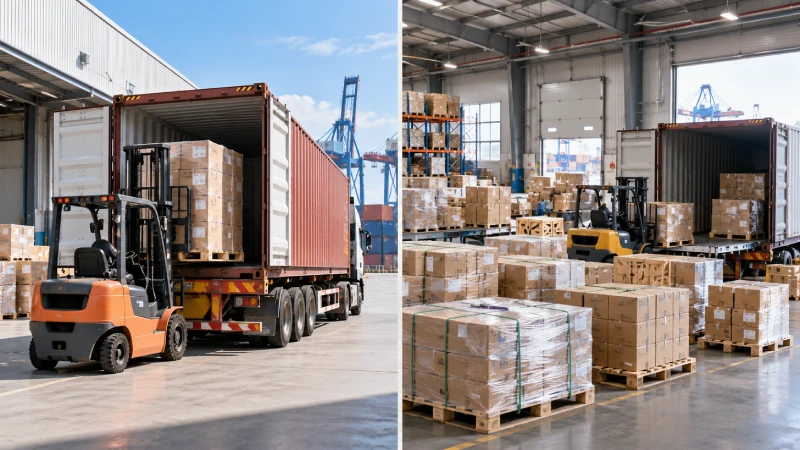
Air Freight and Express Delivery Times
Air freight is much faster than ocean freight, but “flight time” is not the same as total shipping time.
A plane may cover the international transport leg quickly, yet the shipment still requires:
- cargo pickup
- export documentation
- airport terminal acceptance
- security screening
- airline space confirmation
- flight connection where required
- arrival handling
- customs clearance
- final delivery
Standard Air Freight
For general commercial cargo, around 5–8 days is a useful planning range for many China-to-Nigeria air freight movements, although specific routing may be faster or slower.
Air freight is commonly selected for:
- production-critical components
- high-value products
- urgent stock replenishment
- smaller commercial shipments
- cargo where several weeks of sea transit would create excessive inventory risk
Read more about Air Freight from China and air freight from China to Nigeria.
Express Courier
Express services such as DHL, FedEx or UPS are generally designed for smaller shipments and integrated door-to-door movements.
For suitable cargo, approximately 3–7 days is a common planning expectation, although customs, remote-area delivery, restricted goods and peak periods can extend this.
Express is particularly useful when:
- the shipment is relatively small
- delivery speed is more important than freight cost
- integrated tracking is valuable
- the consignee wants simplified parcel-style handling
How Nigeria Customs and Import Readiness Affect Lead Time
One of the easiest ways to lose time is to wait until the cargo reaches Nigeria before resolving import documentation.
Nigeria Customs Service identifies Form M and the Pre-Arrival Assessment Report (PAAR) as core stages of the import process.
Published customs service standards may provide administrative processing benchmarks, but these are not guarantees that a complete shipment will clear a Nigerian port within a fixed number of days. Actual timing depends on documentation quality, cargo type, examination requirements, importer readiness and other operational factors.
Pre-Arrival Readiness Checklist
Before cargo departs China, confirm:
- correct importer details
- Form M status
- correct HS classification
- commercial invoice
- packing list
- Bill of Lading or Air Waybill details
- Certificate of Origin where required
- regulatory certificates applicable to the product
- consistent cargo description across documents
- customs broker or destination agent readiness
- final delivery arrangement
SONCAP-Regulated Products
For products regulated by the Standards Organisation of Nigeria, SONCAP compliance must also be addressed.
Applicable Product Certificates and SONCAP documentation should be prepared according to the product’s regulatory status. For regulated goods, missing or inconsistent documentation can delay PAAR processing, customs clearance or cargo release.
The practical lesson is simple:
Do not use the vessel’s ETA as the date to start checking whether the shipment’s regulatory documents are ready.
Import readiness should be reviewed before departure whenever possible.
Where Shipping Delays Usually Occur
A shipment can lose time at almost any milestone.
| Stage | Delay Cause | Preventive Action | Mainly Controlled By |
|---|---|---|---|
| Supplier preparation | Goods not finished on promised date | Confirm cargo-ready date before booking | Supplier |
| China pickup | Cargo dimensions or quantity changed | Reconfirm packing details | Supplier / forwarder |
| LCL consolidation | Missed CFS cut-off | Deliver before warehouse deadline | Supplier / forwarder |
| FCL loading | Container not loaded before cut-off | Coordinate loading and trucking early | Supplier / forwarder |
| Booking | Vessel rolled or space changed | Confirm booking and backup sailing | Carrier / forwarder |
| Main transport | Schedule change | Track vessel or flight milestones | Carrier |
| Transshipment | Missed connecting vessel | Select routing with appropriate connection | Carrier |
| Nigeria arrival | Terminal congestion | Check current port conditions | Terminal / carrier |
| Customs | Documentation mismatch or examination | Prepare compliant documents before arrival | Importer / broker / authorities |
| Cargo release | LCL deconsolidation or carrier release delay | Confirm release process in advance | CFS / carrier / agent |
| Inland delivery | Truck unavailable or consignee unprepared | Pre-book delivery where practical | Importer / forwarder |
Port and terminal conditions can change from week to week, so congestion should be treated as a variable rather than a permanent fixed number.
Send Cargo Ready Date
If delivery timing is critical, the most useful starting information is your confirmed cargo-ready date, not simply the month you want to ship.
From that date, the actual cut-off, vessel or flight, expected arrival and destination process can be mapped backward from your required delivery date.
How Much Buffer Time Should an Importer Plan?
There is no single buffer that is correct for every China-to-Nigeria shipment.
The appropriate margin depends on the commercial consequence of being late.
Replenishment Inventory
If the goods replenish normal stock, consider:
- average weekly sales
- existing inventory
- reorder point
- normal shipping variability
- whether air freight can be used as an emergency backup
The goal is usually to prevent stock-out without carrying unnecessarily high safety inventory.
Seasonal Goods
For products tied to:
- Christmas
- Ramadan or Eid sales
- promotional campaigns
- school seasons
- trade exhibitions
- fixed retail launches
the required delivery date is usually less flexible.
Do not plan these shipments against the carrier’s ideal ETA alone. Work backward from the actual date the goods must be available for sale.
Production-Critical Parts
If a missing component can stop a production line, the cost of arriving late can be much higher than the freight saving from sea transport.
Importers may:
- ship the main quantity by sea
- hold emergency stock locally
- send a smaller urgent batch by air
- split orders across departures
Project Cargo
Construction and industrial projects often have dependent activities.
A machine arriving late may delay:
- installation teams
- crane booking
- site commissioning
- downstream contractors
- customer acceptance
Project cargo therefore requires schedule margin based on the entire project sequence rather than the ocean transit alone.
A Better Planning Method
Instead of asking:
“Is 40 days enough?”
work backward:
Required warehouse date
minus final delivery allowance
minus customs and destination allowance
minus main transit
minus departure waiting time
minus China export handling
= latest safe cargo-ready date
This approach converts shipping time into a supply-chain decision.
Which Chinese Port Is Fastest for Nigeria?
There is no permanently fastest Chinese port for every shipment.
The best origin depends on:
- supplier location
- next available sailing
- carrier routing
- direct versus transshipment service
- port cut-off
- inland trucking time
- destination gateway
- current schedule reliability
A Shenzhen supplier does not automatically benefit from trucking cargo hundreds of kilometres to Shanghai simply because one Shanghai sailing appears shorter on paper.
The correct comparison is:
factory-to-destination total lead time, not just port-to-port sailing time.
For each real shipment, compare at least two viable departures and identify which one gives the best combination of cargo-ready date, cut-off, ETD, routing and ETA.
Planning a China-to-Nigeria Shipment Around a Deadline
Before booking, collect the following:
- supplier address in China
- confirmed cargo-ready date
- number of packages
- dimensions
- gross weight
- total volume
- product description
- Nigerian destination
- required delivery date
- FCL or LCL preference, if known
- urgency level
- regulatory or special-cargo requirements
Then compare the shipment against actual transport milestones.
For sea freight, focus on:
Cargo ready → cut-off → ETD → ETA → release → final delivery
For air freight:
Cargo ready → airport acceptance → flight departure → arrival → clearance → delivery
For LCL:
Cargo ready → CFS receiving deadline → consolidation → departure → deconsolidation → release → delivery
A reliable logistics plan should make those milestones visible before the cargo leaves China.
FAQ
How long does sea shipping from China to Lagos take?
A practical planning range is generally around 35–50 days for the main ocean movement, depending on the Chinese port, carrier, routing and Nigerian gateway. Add China export handling, destination handling, customs clearance and inland delivery when planning total lead time.
Is LCL slower than FCL to Nigeria?
Usually, yes in total lead time. LCL requires consolidation before departure and deconsolidation after arrival, while FCL avoids these shared-container handling stages.
How long does air freight from China to Nigeria take?
Standard air freight commonly requires around 5–8 days as a practical planning range for many general cargo movements, although the actual flight is only one part of the total process.
Does shipping time include Nigerian customs clearance?
Not necessarily. Always confirm whether a quoted transit time means port-to-port, airport-to-airport, terminal arrival or complete door-to-door delivery.
Why did my container take longer than the advertised transit time?
Common causes include missed vessel cut-offs, rolled bookings, carrier schedule changes, transshipment delays, port congestion, customs examination, documentation errors and delayed inland delivery arrangements.
Which Chinese port is fastest for Nigeria shipments?
There is no universal fastest port. Compare supplier location, next available sailing, routing, cut-off, transshipment and destination gateway to determine the shortest reliable total lead time.
How early should I book before my goods are needed?
Work backward from the required delivery date and include supplier preparation, pickup, export handling, departure waiting, main transit, destination handling, customs, final delivery and an appropriate risk buffer.
Plan Your China-to-Nigeria Shipment
The most accurate answer to “how long does it take to ship from China to Nigeria?” is not one fixed number.
For planning purposes:
- Sea freight: commonly around 35–50 days for the main port-to-port movement
- Air freight: commonly around 5–8 days
- Express: often around 3–7 days for suitable courier shipments
- LCL: usually requires additional time for consolidation and deconsolidation
- Door-to-door: always includes more stages than the advertised ocean or air transit
The safest way to plan is to define the clock first, confirm the cargo-ready date, check the next actual sailing or flight, prepare Nigerian import documentation before arrival and build a buffer around the commercial consequence of a delay.
If you are also comparing budget options, review our guides to shipping cost from China to Nigeria, LCL cost per CBM, 20ft and 40ft container cost and Nigeria destination charges.
To plan a real shipment, send the cargo-ready date, supplier location, cargo dimensions and weight, Nigerian destination and required delivery date. Winsail can then compare the available sea or air schedules from China against your deadline.
Operational note: Transit ranges on this page are planning references, not guaranteed carrier commitments. Carrier rotations, cut-offs, transshipment arrangements and ETAs should be reconfirmed at booking. Nigerian customs timing varies by product, documentation, regulatory requirements, examination status and importer readiness. SONCAP requirements apply according to the product’s regulatory status. Port and terminal operating conditions can change after publication.
