
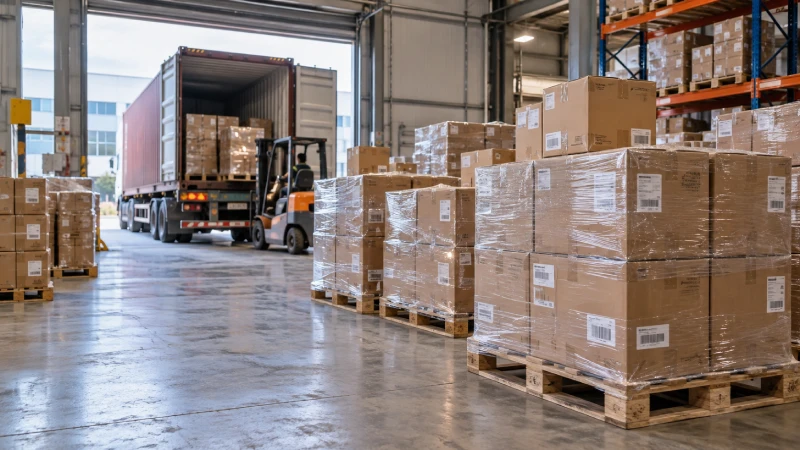
Shipping inventory from a factory in China to Amazon FBA in the UK involves more than booking sea freight or air freight and putting an Amazon warehouse address on the cartons.
Before the cargo leaves China, three separate parts of the shipment need to work together:
- the inventory must be Amazon-ready;
- the shipment must be UK customs-ready;
- the products themselves must be compliance-ready for the UK market.
A problem in any one of these areas can delay customs clearance, prevent a carrier from completing the final Amazon delivery, or leave inventory inside the UK that needs relabelling, repacking or temporary storage.
For broader route planning—including UK ports, airports, general freight methods, customs and typical China–UK transit times—see our Shipping from China to the UK guide. This article focuses specifically on getting commercial inventory from a Chinese supplier into the Amazon UK fulfilment network.
Quick Answer: Should You Ship Directly from China to Amazon FBA UK?
Shipping directly from China to Amazon FBA UK can work well when the inventory has already been checked, the Amazon inbound shipment has been created correctly, the UK importer and customs structure is confirmed, and the final carrier can meet Amazon’s receiving requirements.
However, direct-to-FBA is not always the safest route.
If the goods may still need inspection, relabelling, repacking, bundling, pallet rebuilding, inventory splitting or temporary storage, routing the shipment through a UK 3PL or prep warehouse first can give the seller much more control.
| Shipment situation | Practical starting route |
|---|---|
| Repeat SKU with verified packaging and labels | Direct to FBA may work |
| First shipment from a new supplier | Consider UK 3PL first |
| Carton or product labels are uncertain | UK prep warehouse / 3PL |
| Inventory requires bundling or repacking | UK 3PL first |
| Urgent replenishment and goods are fully ready | Air freight + direct FBA may work |
| Large planned replenishment | Sea freight + FBA or UK 3PL |
| Seller needs buffer stock in the UK | UK 3PL |
| Importer, EORI or VAT arrangement is unclear | Do not ship until confirmed |
The key point is that DDP does not remove the need for a workable importer, customs and tax structure.
Direct to Amazon FBA or via a UK 3PL: Which Route Fits Your Shipment?
The first logistics decision should not be air freight versus sea freight.
If the inventory needs inspection, relabelling or staged replenishment, compare the UK warehouse and 3PL delivery guide before choosing direct delivery.
It should be:
Should the shipment go directly into Amazon, or should it stop at a UK warehouse first?
When Direct China → Amazon FBA UK Can Make Sense
Direct-to-FBA is usually easier to justify when the shipment is operationally predictable.
Typical conditions include:
- the SKU has been shipped before;
- product packaging has already been verified;
- applicable Amazon barcodes and shipment labels are correct;
- carton dimensions and quantities are final;
- no UK-side quality inspection is required;
- no bundling or relabelling is expected;
- the UK customs structure is already established;
- the final delivery process is confirmed.
For a stable replenishment programme, avoiding an extra warehouse stage can reduce handling and potentially shorten the inventory replenishment cycle.
But fewer handling stages do not automatically mean less risk.
A shipment that arrives in the UK with incorrect labels can be considerably harder to correct when the next destination is an Amazon fulfilment centre rather than a warehouse controlled by the seller.
When China → UK 3PL → Amazon Is Safer
A UK 3PL or prep warehouse deserves serious consideration for:
- first production runs;
- first shipments from a new factory;
- mixed inventory from multiple Chinese suppliers;
- products requiring UK-side inspection;
- units requiring bundling or kitting;
- cartons that may need replacement;
- products requiring relabelling;
- inventory that will be released to Amazon gradually;
- seasonal stock where the seller wants a buffer outside FBA.
The additional warehouse stage costs money, but it also creates a recovery point.
If a carton count is wrong or a label needs replacement, correcting the issue at a prep warehouse is normally much easier than dealing with inventory that has already entered the Amazon receiving process.
Pro Tip: For a new product or first production batch, compare the cost of a UK prep warehouse with the potential cost of recovering, storing, correcting and redelivering an unsuccessful direct-to-FBA shipment.
Direct FBA vs UK 3PL
| Decision factor | Direct to Amazon FBA | UK 3PL first |
|---|---|---|
| Verified repeat SKU | Strong fit | Optional |
| New supplier | Higher risk | Strong fit |
| First production batch | Higher risk | Strong fit |
| Relabelling may be needed | Poor fit | Strong fit |
| Kitting or bundling | Poor fit | Strong fit |
| Need UK buffer stock | Limited flexibility | Strong fit |
| Urgent replenishment | Strong if fully ready | Extra handling time |
| Inspection required | Poor fit | Strong fit |
| Staged Amazon replenishment | Less flexible | Strong fit |
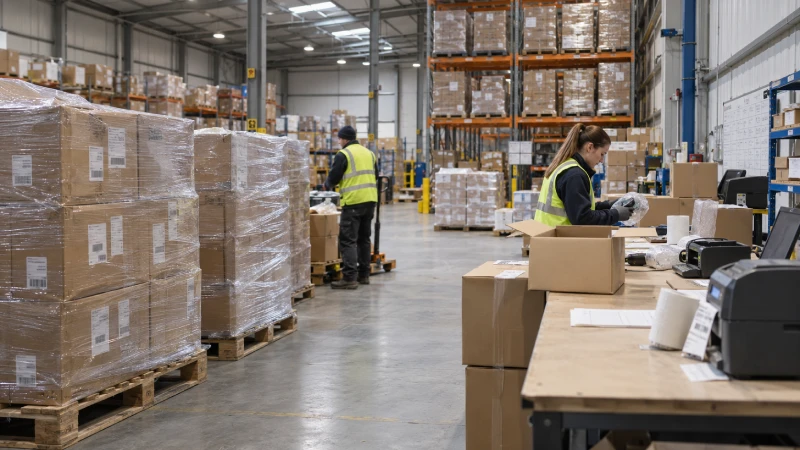
How Shipping from China to Amazon FBA UK Works
A well-planned shipment normally involves seven operational stages.
1. Supplier Pickup or Consolidation in China
The shipment may begin with pickup from a single factory under EXW terms, delivery by the supplier to a nominated warehouse, or consolidation from several manufacturers.
Before international transport is booked, confirm:
- carton count;
- gross weight;
- carton dimensions;
- SKU quantities;
- product description;
- commercial invoice details;
- packing list details;
- battery or dangerous-goods status where applicable.
For multi-supplier orders, consolidation can also be used to combine inventory before export.
One common operational mistake is relying on estimated carton dimensions from the purchase order. Actual finished cartons should be measured because dimensions affect both Amazon shipment data and freight pricing—especially air freight.
2. Check the Inventory Before International Shipping
Transport readiness and Amazon readiness are not the same thing.
A shipment can be perfectly suitable for international freight while still being unsuitable for immediate Amazon delivery.
Before departure, check whether the goods require:
- product inspection;
- quantity verification;
- barcode application;
- outer-carton labels;
- repacking;
- palletisation;
- bundle preparation;
- special handling documentation.
Also separate these tasks from legal product compliance.
A freight forwarder may coordinate transport documentation or preparation work, but that does not mean the forwarder certifies that the product legally complies with all UK product regulations.
3. Create the Amazon Inbound Shipment
The seller should complete the applicable inbound workflow in Seller Central before final FBA preparation is released.
Amazon’s current Send to Amazon workflow includes selecting inventory, packing units, confirming shipping, printing box labels, and providing carrier or pallet information where relevant.
The practical lesson is simple:
Do not treat the Amazon warehouse address as a permanent delivery address that can be reused for every shipment.
Work from the active inbound shipment created for the inventory.
Pro Tip: Do not send final shipment labels to the Chinese factory until the Seller Central shipment configuration and carton quantities are confirmed.
4. Select the International Freight Method
Once the inventory and shipment data are ready, choose the freight mode according to replenishment urgency, cargo volume, product value and stock-out risk.
The right question is not simply which mode is cheapest.
For Amazon inventory, consider the cost of running out of stock as well as the freight rate.
5. Complete UK Import Clearance
Before the inventory can move into the Amazon network in Great Britain, the import structure needs to be workable.
Depending on the shipment, this can involve:
- importer identification;
- GB EORI;
- customs representation;
- commodity classification;
- customs value;
- country of origin;
- Customs Duty;
- Import VAT;
- licences or product-specific controls.
The UK Trade Tariff is the official source for checking commodity codes, tariff measures, Duty and VAT information.
6. Arrange the UK Final-Mile Delivery
Arrival at Heathrow, Felixstowe or another UK gateway is not the same as arrival at Amazon.
After the international freight leg, the shipment may still require:
- terminal release;
- LCL deconsolidation;
- customs clearance;
- pallet preparation;
- warehouse handling;
- carrier collection;
- Amazon delivery booking.
For applicable pallet or truckload deliveries, the final-mile carrier needs to follow Amazon’s current receiving and appointment process.
7. Monitor Delivery and Amazon Receiving
Carrier delivery is another milestone—not the end of the inventory process.
Do not plan replenishment on the assumption that a delivery confirmation automatically means every unit is immediately available for sale.
Allow time between:
UK arrival → customs release → final delivery → Amazon receiving → inventory availability.
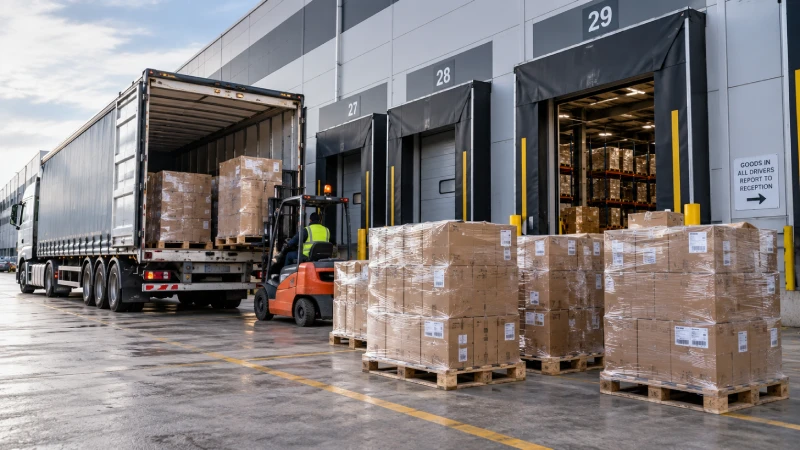
What Must Be Ready in Amazon Seller Central Before the Goods Leave China?
Amazon operational requirements and UK customs requirements should be treated as separate workflows.
Amazon controls how inventory enters its fulfilment network.
HMRC controls how commercial goods enter the UK.
Meeting one does not satisfy the other.
Use the Destination Assigned to the Current Inbound Shipment
Do not build a freight plan around an old list of Amazon fulfilment-centre codes copied from a forwarding website.
The destination should come from the current Amazon inbound process for that shipment.
Amazon can change network allocation and inbound options over time. The freight forwarder and supplier therefore need the shipment information generated for the actual inventory being sent.
Check the Correct Product Barcode Requirement
It is inaccurate to say that every FBA product always requires an FNSKU.
Amazon uses different barcode types, including eligible manufacturer barcodes and Amazon barcodes such as FNSKU.
The seller should check the barcode requirement for the relevant SKU inside Seller Central before production labels are finalised.
FBA Box ID Labels Must Match the Shipment
Each applicable shipping box should carry the correct FBA box ID label generated for the active inbound shipment.
Labels should remain readable and scannable and should not be placed across openings or seams where they may be damaged.
This becomes particularly important when a Chinese supplier is preparing the cartons.
The physical carton count must match the final shipment configuration.
If the factory changes from 20 cartons to 18 cartons after labels have already been generated, do not simply reuse labels without checking the active shipment.
Pallet Shipments Need Additional Preparation
For palletised inbound freight, additional carrier and pallet information may be required during the Send to Amazon process.
Exact pallet dimensions, weight limits and receiving requirements can change, so the seller and final-mile carrier should use the current Seller Central instructions for the active shipment rather than relying on an old checklist.
Express, Air Freight, LCL or FCL for Amazon UK Inventory?
The freight method should match the seller’s inventory strategy.
| Freight method | Practical use | Main consideration |
|---|---|---|
| Express | Samples or urgent small replenishment | High cost per kg |
| Air freight | Time-sensitive commercial restocking | Chargeable weight |
| LCL sea freight | Smaller planned sea shipments | Consolidation and destination handling |
| FCL sea freight | Large planned inventory | Container volume and final UK handling |
Express for Emergency Replenishment
Express can make sense for small quantities where stock-out risk matters more than freight cost.
Typical uses include:
- emergency replenishment;
- replacement inventory;
- samples;
- small launch quantities.
However, do not assume that because an express courier can import the parcel into the UK it can automatically complete the Amazon inbound process correctly.
Amazon shipment creation, labels and applicable receiving rules still need to be handled.
Air Freight for Regular Fast Replenishment
Air freight from China to the UK is often more suitable for larger commercial replenishment that needs to move faster than sea freight.
The important variables include:
- chargeable weight;
- shipment value;
- sales velocity;
- stock-out risk;
- final Amazon delivery deadline.
For general cargo, air freight pricing normally uses the higher of actual weight and volumetric weight. Confirm finished carton dimensions rather than quoting from gross weight alone.
LCL for Smaller Planned Sea Shipments
LCL shipping from China to the UK can work well for sellers that do not have enough inventory for a full container.
But the freight plan needs to include the extra handling stages:
China CFS → consolidation → ocean freight → UK CFS → deconsolidation → customs → final delivery.
This makes LCL different from simply booking a few cubic metres of container space.
If the final destination is Amazon, allow additional time after deconsolidation for customs release and final delivery arrangements.
FCL for Larger Inventory Volumes
FCL shipping from China to the UK becomes increasingly relevant as shipment volume grows.
It provides a dedicated container and reduces the consolidation/deconsolidation stages associated with LCL.
However, a container arriving from China does not automatically mean it can simply be driven directly into an Amazon fulfilment centre.
The actual destination process may involve devanning, pallet preparation, intermediate handling or another final-mile configuration depending on the shipment.
Consider Splitting Urgent and Bulk Inventory
For products at risk of running out of stock, one useful approach is to separate the replenishment:
- send a smaller urgent quantity by air;
- send the main replenishment volume by sea.
This can protect near-term inventory availability without paying air-freight rates for the entire order.
How Long Should You Allow from China Pickup to Amazon Receiving?
Do not plan Amazon inventory using only a vessel transit time or flight schedule.
For FBA inventory, think in three separate time blocks:
- China preparation
- international freight and UK customs
- final Amazon delivery and receiving
As a general China–UK route reference, our China to UK shipping time guide uses approximately:
| Method | Route-level planning reference |
|---|---|
| Express courier | 3–5 days |
| Air freight, airport-to-airport | 4–8 days |
| FCL sea freight | 25–40 days |
| LCL sea freight | 30–45 days |
These are general freight planning ranges—not guaranteed China-to-FBA receiving times. Actual timing depends on origin, routing, carrier schedules, customs, consolidation, final delivery and other shipment-specific factors.
For Amazon inventory, add enough buffer for:
- supplier preparation;
- label verification;
- export handling;
- customs queries if any;
- UK terminal handling;
- FBA booking;
- final delivery;
- Amazon receiving.
Pro Tip: Work backwards from the date you want inventory available for sale, not from the vessel ETA or flight arrival date.
UK Customs, Importer of Record, EORI and VAT for Amazon FBA Inventory
This is one of the most important parts of shipping from China to Amazon FBA UK.
Amazon is a fulfilment destination. It does not remove the seller’s import responsibilities.
Amazon Is Not Your Importer of Record
Amazon’s UK international trade guidance states that sellers sourcing goods from overseas for UK FBA are responsible for the import arrangements and that Amazon does not act as the Importer of Record for inbound shipments.
That means the shipment needs a legally workable importer and customs structure before it reaches the UK border.
Do not put “Amazon” into the importer field simply because Amazon is the final warehouse destination.
Do You Need a GB EORI?
For movements into Great Britain—England, Scotland and Wales—the appropriate customs setup generally involves a GB EORI.
GOV.UK EORI guidance explains when businesses moving goods to or from Great Britain need an EORI beginning with GB, with separate XI rules applying to certain Northern Ireland movements.
Businesses established outside the UK should not assume that obtaining an EORI alone creates a UK customs establishment.
The legal status of the importer and the customs representative still matters.
Overseas Sellers Need to Understand Customs Representation
This point is particularly important for Amazon businesses based in China, the US, the EU or elsewhere outside the UK.
HMRC’s customs representation guidance explains the rules for direct and indirect representation and the additional issues that apply when a business is not established in the UK.
This is one reason a freight forwarder should not simply promise “DDP to Amazon—no EORI or customs concerns” without explaining the actual import structure.
Customs Duty Depends on the Commodity Code
There is no universal UK import-duty percentage for Amazon FBA goods.
Duty depends on factors including:
- commodity classification;
- product type;
- origin;
- applicable tariff measures;
- possible trade remedies or other controls.
The official UK Trade Tariff allows importers to check the commodity code, Customs Duty, VAT and other measures applying to the goods.
A shipment of clothing, kitchen appliances and industrial components should not be given the same duty assumption simply because all three are being sent to Amazon.
Import VAT Is Different from VAT on the Amazon Sale
Import VAT arises when the inventory is imported.
Marketplace VAT rules apply when the inventory is sold.
These are not the same transaction.
HMRC’s guidance for overseas sellers using online marketplaces explains how import VAT and marketplace VAT responsibilities can apply at different stages.
Can Amazon Sellers Use Postponed VAT Accounting?
Potentially—if the importer meets the conditions.
HMRC’s Postponed VAT Accounting guidance explains when eligible UK VAT-registered businesses can account for import VAT on the VAT Return rather than paying it upfront at importation.
PVA does not mean there is no import VAT.
It changes how eligible import VAT is accounted for.
If an overseas Amazon seller is unsure about VAT registration, import VAT recovery or marketplace VAT treatment, a qualified UK VAT adviser should review the structure.
DDP to Amazon FBA UK: When Can It Work?
“DDP Amazon FBA UK” is a popular search phrase because sellers want one provider to manage the shipment from the factory to the fulfilment centre.
The DAP versus DDP guide explains how importer, Duty, VAT and customs responsibilities differ before an all-in quotation is accepted.
But DDP should not be treated as a shortcut around UK customs rules.
What Does a DDP Amazon Quote Actually Include?
Before accepting an all-in quotation, ask exactly what happens at import.
Questions should include:
- Who will be the Importer of Record?
- Which EORI number will appear on the customs declaration?
- How is customs representation structured?
- Who pays Customs Duty?
- How is Import VAT accounted for?
- What import documentation will be available to the seller?
- Is Amazon final-mile delivery included?
- Is an FBA delivery appointment included where required?
- What happens if the delivery is refused?
- Are storage and redelivery excluded or included?
A freight price that includes “tax” but cannot explain the import declaration is not yet a complete customs solution.
Why DDP Is Not Always the Right Choice
DDP feasibility can become more complicated when:
- the importer structure is unclear;
- the seller is not established in the UK;
- the goods are regulated;
- the seller needs specific import VAT evidence;
- product compliance has not been resolved;
- customs representation cannot be arranged on workable terms;
- the provider cannot explain who is responsible for the import entry.
HMRC also makes clear that businesses retain responsibilities when appointing someone else to handle customs.
A safer description is:
DDP may be available where the importer structure, VAT treatment, customs representation, commodity and final delivery arrangement make it workable.
Pro Tip: Ask a DDP provider one question before comparing prices: “Which entity will appear as the importer on the UK customs declaration?” If the answer is unclear, clarify the structure before shipping.
Direct-to-FBA vs China → UK 3PL → Amazon
For many sellers, this decision matters more than whether the international freight travels by air or sea.
Where pickup, international freight and final delivery need one coordinated scope, Winsail’s door-to-door shipping service can be reviewed against the receiving plan.
Direct-to-FBA Advantages
When the inventory is completely ready, direct FBA can provide:
- fewer handling stages;
- less intermediate warehousing;
- potentially quicker replenishment;
- lower prep costs for stable repeat products.
It can be particularly efficient for experienced sellers with repeat SKUs and reliable factories.
Direct-to-FBA Risks
The main weakness is the lack of a controlled correction point in the UK.
Possible problems include:
- incorrect carton labels;
- damaged cartons;
- quantity discrepancies;
- incorrect bundling;
- incorrect product barcodes;
- pallet configuration problems;
- missed delivery appointments.
The cargo may already have cleared customs, yet still be unsuitable for Amazon receiving.
What a UK 3PL Can Add
Depending on the provider and agreed scope, a UK 3PL may be able to provide:
- receiving;
- stock counting;
- inspection;
- storage;
- relabelling;
- repacking;
- palletisation;
- inventory splitting;
- staged FBA replenishment.
This is particularly useful when an importer wants to hold several months of stock in the UK while sending smaller replenishment quantities into Amazon.
Product Compliance Must Be Checked Before the Goods Reach Amazon
Amazon acceptance and UK legal compliance are different things.
A product listing being active on Amazon does not automatically prove that a shipment is legally ready to be imported and placed on the Great Britain market.
CE and UKCA: Check the Product-Specific Rules
Do not assume that every product entering Great Britain must carry UKCA.
Current GOV.UK product marking guidance explains the applicable UKCA and CE framework and requires businesses to identify the relevant rules for the specific product.
For products such as electrical equipment, machinery, toys, PPE or other regulated goods, identify the applicable legislation before production and shipment.
Do not wait until the inventory is sitting at a UK warehouse to investigate compliance.
Lithium Batteries and Dangerous Goods
Products containing lithium batteries require a separate transport review.
Battery configuration, capacity, packaging, documentation and the selected carrier can affect whether the goods are accepted as air or sea cargo.
Dangerous goods also remain subject to applicable UK inland-transport requirements after arrival. The UK HSE dangerous goods guidance covers classification, packaging, consignment procedures and inland carriage requirements.
Amazon’s own dangerous-goods eligibility is a separate issue from carrier acceptance.
Food, Plants and Other Controlled Goods
Some categories require additional import procedures before an Amazon delivery can even be considered.
For regulated plants and plant products, current DEFRA and APHA guidance can require phytosanitary documentation, IPAFFS notification or border checks depending on the commodity and risk category.
Food, animal products, medical products and other controlled goods can have their own rules.
For those categories, confirm import admissibility first and FBA logistics second.
What Does Shipping from China to Amazon FBA UK Cost?
There is no reliable universal “Amazon FBA UK DDP price per kg.”
A useful quotation should separate the cost layers.
Typical Cost Stack
| Cost layer | What it may cover |
|---|---|
| China pickup | Factory collection / domestic trucking |
| China consolidation | Receiving multiple supplier shipments |
| Preparation | Inspection, labels, repacking if agreed |
| Export handling | Warehouse, documentation, export processing |
| International freight | Express, air, LCL or FCL |
| UK destination handling | Terminal, CFS or deconsolidation |
| Customs clearance | Import declaration services |
| Customs Duty | Depends on commodity/tariff |
| Import VAT | Depends on applicable VAT treatment |
| UK warehouse | Storage or prep if used |
| Amazon final mile | Truck or parcel delivery |
| Appointment charges | Where applicable |
| Redelivery/storage | If receiving fails or is delayed |
This is why two “DDP Amazon” quotations can be difficult to compare if they do not include the same scope.
China–UK Freight Planning References
For the international freight component, typical market estimates may vary widely by season, cargo type, origin, capacity and service level.
As a planning reference, our Shipping Cost from China to the UK guide provides updated benchmark ranges for express, standard air freight, LCL and FCL.
Do not treat those route-level ranges as delivered-Amazon prices.
A final FBA quotation may also include supplier pickup, preparation, UK handling, customs clearance, Duty, Import VAT, warehouse services and Amazon final-mile delivery.
Actual rates depend on the shipment date, cargo, origin, carrier capacity, UK gateway and agreed service scope.
Common Reasons China-to-Amazon UK Shipments Go Wrong
Most failed FBA logistics plans are not caused by the ocean crossing or the flight itself.
They occur at the interfaces between supplier preparation, customs and Amazon receiving.
1. Amazon Was Treated as the Importer
Amazon does not become the Importer of Record simply because the goods are being delivered to an Amazon fulfilment centre.
Confirm the importer arrangement before departure.
2. Labels Were Printed Before the Shipment Was Final
If carton quantities or packing configurations change after Seller Central labels are generated, the physical shipment and the Amazon inbound data can become inconsistent.
Use the final active shipment configuration.
3. Carton Data Does Not Match the Cargo
Do not rely on estimated factory measurements where actual finished cartons are available.
Verify quantity, dimensions and weight before international booking.
4. An Old Amazon FC Address Was Reused
Use the destination assigned to the current shipment rather than copying an address from a previous order or an online warehouse list.
5. Product Compliance Was Assumed from the Amazon Listing
Amazon listing eligibility and UK import/product compliance are separate questions.
6. The Seller Accepted “DDP” Without Understanding the Import Entry
Ask who acts as importer, whose EORI is used, how tax is accounted for and what evidence will be available.
7. There Is No Plan for a Failed Delivery
Before shipping direct to FBA, know what happens if the carrier cannot complete the delivery.
Possible consequences can include:
- storage;
- redelivery;
- rerouting to another warehouse;
- pallet rework;
- relabelling.
8. All Inventory Was Sent Directly to FBA
For some products, holding a buffer at a UK 3PL can provide better replenishment control and reduce dependence on one inbound shipment.
What Information Should You Send a Freight Forwarder?
A good China-to-Amazon FBA UK quotation requires more than total weight.
Prepare:
- supplier pickup city and address;
- EXW, FOB or other agreed Incoterm;
- cargo-ready date;
- exact product description;
- commodity code if already confirmed;
- number of cartons;
- carton dimensions;
- gross weight;
- total CBM;
- battery, liquid, powder, magnet or dangerous-goods information;
- Amazon shipment destination;
- relevant FBA shipment/reference information;
- box or pallet delivery format;
- whether product and carton labels are completed;
- importer entity;
- GB EORI status;
- VAT status where relevant;
- preferred customs arrangement;
- direct FBA or UK 3PL route;
- required inventory date.
The more accurate this information is, the easier it is to compare express, air, LCL, FCL and final-mile options on the same basis.
Is Your Shipment Ready for Direct Amazon FBA Delivery?
Before choosing direct-to-FBA, answer these questions.
Amazon Readiness
- Has the inbound shipment been created?
- Are the carton quantities final?
- Are applicable product barcodes correct?
- Are FBA box labels ready?
- Are pallet requirements confirmed where applicable?
Customs Readiness
- Is the Importer of Record identified?
- Is the EORI/customs structure workable?
- Has the commodity code been reviewed?
- Is the customs value supported?
- Is Customs Duty understood?
- Is Import VAT treatment understood?
Inventory Readiness
- Has the supplier’s quantity been checked?
- Is the packaging final?
- Is there any chance relabelling will be needed?
- Is inspection required?
- Is bundling or repacking required?
- Does the seller need UK buffer inventory?
If major questions remain unanswered, a UK prep or 3PL stage may be safer than direct FBA delivery.
Can Winsail Coordinate Shipping from China to Amazon FBA UK?
Winsail Logistics is a China-based freight forwarder. Its Amazon FBA shipping service covers China-origin FBA-related logistics, while the exact UK customs and final-delivery scope should be reviewed shipment by shipment.
Depending on the agreed service scope, Winsail can coordinate areas such as:
- supplier pickup in China;
- consolidation;
- export handling;
- sea or air freight;
- shipment preparation where agreed;
- UK delivery arrangements subject to shipment requirements.
UK customs clearance can be coordinated where applicable and within the agreed service scope, but importer status, VAT treatment, customs representation, product compliance and DDP feasibility must be reviewed for the actual shipment.
For a shipment-specific assessment, provide the supplier location, product details, carton quantity, dimensions, weight or CBM, cargo-ready date, Amazon shipment destination and current preparation status.
FAQs
Can I ship directly from a factory in China to Amazon FBA UK?
Yes, direct shipping can be practical when the goods are already Amazon-ready, the inbound shipment has been created correctly, UK customs arrangements are confirmed and the final carrier can satisfy Amazonu0026#x27;s current receiving requirements. For first shipments, uncertain labels or inventory requiring inspection, a UK 3PL may provide better control.
Does Amazon act as the Importer of Record for UK FBA shipments?
No. The seller needs a workable importer and customs arrangement before the goods enter the UK. Amazon being the final fulfilment destination does not make Amazon the Importer of Record.
Do I need a GB EORI to send inventory to Amazon FBA UK?
Commercial imports into Great Britain generally require an appropriate GB EORI and customs structure. Overseas businesses must also consider customs representation, while Northern Ireland can involve separate XI EORI requirements.
Can I use DDP shipping from China to Amazon FBA UK?
Potentially, but DDP should only be used where the Importer of Record, EORI, customs representation, Customs Duty, Import VAT and final delivery arrangements are transparent and workable.
Is it better to ship directly to Amazon or use a UK 3PL?
Direct FBA can work well for verified repeat inventory. A UK 3PL is usually worth considering when the inventory may need inspection, relabelling, repacking, bundling, storage or staged replenishment.
Does every Amazon FBA product need an FNSKU?
Not necessarily. Amazon can use eligible manufacturer barcodes or Amazon barcodes depending on the product and inventory setup. Check the barcode requirement for the SKU in Seller Central.
How long does shipping from China to Amazon FBA UK take?
There is no single reliable FBA timeline. The total lead time should include China preparation, international freight, UK customs, final Amazon delivery and Amazon receiving—not just the flight or ocean transit time.
Plan the Shipment Around Amazon Receiving, Not Just Freight Arrival
Shipping from China to Amazon FBA UK works best when the seller treats the movement as one connected inventory process rather than a port-to-port freight booking.
Before cargo leaves the factory, confirm three things:
Amazon-ready:
The inbound shipment, product barcodes, cartons and applicable labels are correct.
Customs-ready:
The Importer of Record, EORI, commodity code, Duty, Import VAT and customs representation are workable.
Product-ready:
The goods meet the applicable UK product and import requirements.
Then decide whether the inventory should go:
China → Amazon FBA directly
or
China → UK 3PL/prep warehouse → Amazon FBA.
Direct delivery can be efficient for stable, verified inventory. A UK 3PL can be the better risk-control option when the shipment still needs inspection, relabelling, storage or staged replenishment.
For an upcoming shipment, prepare the supplier location, product details, carton quantity, dimensions, weight or CBM, cargo-ready date, Amazon shipment destination and current preparation status. Winsail Logistics can review the international freight and delivery options that may be coordinated within the agreed service scope.
Continue with related UK shipping guides
Use these focused guides for the next part of your China-to-UK shipping plan.
