
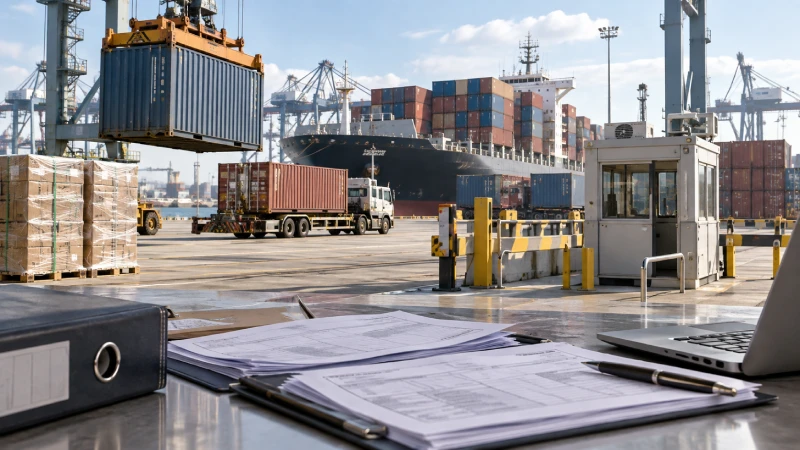
UK customs clearance for imports from China starts well before the vessel reaches Felixstowe or the air shipment lands at Heathrow.
For a commercial importer, the critical work is usually done before departure: confirming who will act as the importer, obtaining the correct EORI number, classifying the goods, establishing customs value and origin, checking whether licences or product controls apply, and giving the customs representative enough information to prepare the import declaration correctly.
Once the shipment reaches the UK, HM Revenue & Customs (HMRC) may release it through the normal customs process or select the declaration or goods for further checks. Missing information at this stage can lead to document requests, examinations, storage costs and delivery disruption.
This guide explains the practical customs workflow for businesses importing commercial goods from China into the UK, with the main process focused on Great Britain—England, Scotland and Wales. Northern Ireland has different customs arrangements and is covered separately below.
Important: This guide provides practical logistics information, not legal, customs or tax advice. Requirements depend on the importer, commodity, customs procedure and destination. Always check the current UK Trade Tariff and relevant GOV.UK guidance for your shipment.
Quick Answer: How Do You Clear Goods from China Through UK Customs?
For most commercial imports from China into Great Britain, the importer needs a GB EORI number and an import customs declaration. The importer or appointed customs representative must provide the correct commodity code, customs value, origin, commercial documentation and any licences or certificates required for the goods. GOV.UK identifies EORI, commodity classification, valuation and licences or certificates as core steps in preparing an import.
The declaration is submitted through the Customs Declaration Service (CDS). Customs Duty and import VAT must then be accounted for under the relevant arrangement. HMRC may accept the declaration without further intervention or select it for documentary or physical checks. Once customs and any other applicable border or operational holds are cleared, the shipment can proceed toward final delivery.
For wider freight planning—including sea freight, air freight, delivery routes, costs and shipping methods—see Shipping from China to the UK.
How UK Customs Clearance Works for Goods Arriving from China
It is useful to think of China-to-UK customs clearance as a seven-stage process rather than a single event at the port.
| Stage | What Happens |
|---|---|
| 1. Before shipment | Importer, EORI, commodity code, origin, value and regulatory requirements are checked |
| 2. Pre-arrival | Customs representative receives the clearance information and supporting documents |
| 3. Customs declaration | Import data is submitted through CDS |
| 4. Arrival | Goods arrive and are presented through the applicable port or airport process |
| 5. Checks if selected | HMRC or another competent authority may request documents, examine or sample the goods |
| 6. Customs release | Customs requirements and applicable duty/VAT arrangements are satisfied |
| 7. Delivery | Remaining carrier, terminal and transport requirements are completed before final delivery |
The key lesson for importers is simple:
Do not wait for the cargo to arrive in the UK before preparing customs clearance.
HMRC’s import goods into the UK guidance requires importers to determine the commodity code, customs value, relevant licences or certificates and who will make the declaration as part of the import preparation process.
What Customs Clearance Does—and Does Not—Cover
Customs clearance deals with the customs status of the imported goods. It determines whether the customs requirements for releasing the shipment have been met.
It does not automatically mean that every other requirement has been completed.
A shipment can be customs-cleared but still require action relating to:
- carrier release
- port or terminal handling
- regulatory inspection
- documentation holds
- freight charges
- container availability
- delivery bookings
- warehouse receiving requirements
Product compliance is also a separate issue. A correct customs declaration does not automatically prove that a product can legally be placed on the UK market.
Who Is Responsible for UK Import Customs Clearance?
Several parties can be involved in one shipment, but their roles should not be confused.
The Importer
The importer is responsible for providing reliable information about the imported goods and the transaction.
Even when a customs broker is appointed, HMRC states that the business remains responsible for exercising due diligence regarding its customs declarations. See GOV.UK guidance on appointing someone to deal with customs on your behalf.
The importer should therefore be able to support important declaration information such as:
- what the product actually is
- its commodity classification
- its commercial value
- its origin
- the importing legal entity
- licences or certificates
- the chosen customs procedure
- VAT and duty payment instructions
Appointing a broker should not be treated as transferring every customs responsibility to another party.
The Customs Representative or Broker
A customs representative may prepare and submit the customs declaration, communicate through HMRC systems, identify missing information and coordinate responses if a declaration is queried.
The actual responsibilities depend on:
- the service agreement
- the representation type
- the customs procedure
- the information supplied by the importer
HMRC requires the terms and conditions of customs representation to be confirmed in writing. The instructions must also show whether the representative is acting directly or indirectly.
The Freight Forwarder
A freight forwarder coordinates the physical international movement of the shipment.
Some freight forwarders also arrange customs clearance themselves or through destination customs partners. Others provide freight transport but require the importer to appoint a separate UK customs broker.
For that reason, never assume:
“I booked freight, so UK customs clearance must automatically be included.”
Confirm the clearance scope before the cargo leaves China.
Direct vs Indirect Customs Representation
The distinction between direct and indirect representation is particularly important when importing from China.
| Issue | Direct Representation | Indirect Representation |
|---|---|---|
| Representative acts | In the importer’s name and on its behalf | In the representative’s own name on behalf of the importer |
| Customs debt | Importer is normally liable | Importer and representative may be jointly and severally liable |
| Typical relevance | Common where importer is established in the UK | Important where importer is not established in the UK |
| Broker acceptance | Subject to broker agreement | Subject to broker agreement and greater liability exposure |
| Instructions | Representation terms should be agreed in writing | Representation terms should be agreed in writing |
HMRC explains these distinctions in its guidance on what to consider before getting someone to deal with customs for you.
With direct representation, the importer is normally liable for the accuracy of the information and Customs Duty or import VAT. With indirect representation, the representative is also responsible for declaration accuracy and can be jointly and severally liable for Customs Duty or import VAT.
A particularly important rule applies to overseas companies:
If a business is not established in the UK and imports goods into Great Britain, HMRC states that it can only ask someone to act indirectly on its behalf.
This is one reason why DDP imports arranged by overseas sellers require careful review rather than simply placing “DDP” on a commercial invoice.
Before the Shipment Leaves China: Make the Import Clearance-Ready
Good customs clearance begins before the booking is finalised.
Confirm the importer identifier early with our EORI number guide, particularly where GB and XI registrations may differ.

1. Confirm Whether the Destination Is Great Britain or Northern Ireland
First determine the actual destination.
Great Britain (GB) means:
- England
- Scotland
- Wales
Northern Ireland remains part of the United Kingdom but follows different customs arrangements for some movements.
A delivery to Belfast therefore should not automatically use the same clearance assumptions as a shipment to Birmingham, Manchester or London.
2. Confirm the Importer and EORI Number
Businesses importing goods into England, Scotland or Wales normally need an EORI number beginning with GB. GOV.UK explains the relevant requirements in its EORI guidance.
Before shipping, verify:
- which legal entity will be the importer
- its registered business information
- its GB EORI
- whether its VAT details are relevant
- whether the information given to the supplier, forwarder and broker is consistent
A common operational problem occurs when the invoice names one company but the customs broker receives the EORI of another.
For shipments into Northern Ireland, do not assume a GB EORI alone is sufficient; the applicable EORI and customs structure should be reviewed separately.
3. Classify the Goods with the Correct Commodity Code
The commodity code is one of the most important pieces of the customs declaration.
The UK Trade Tariff uses commodity classification to determine matters including:
- Customs Duty
- VAT treatment
- tariff measures
- suspensions or reductions
- certain licences and controls
The information required to classify a product may include its type, function, materials, production method and packaging.
Descriptions such as:
- “machine parts”
- “electronic accessories”
- “plastic products”
- “samples”
- “lighting products”
may be too vague to support reliable classification.
Instead, give the person responsible for classification enough technical detail to understand what the product actually is.
Pro Tip: Do not ask a customs broker to confirm a commodity code using only a product photo and the supplier’s short invoice description. Material, function, construction and intended use can change the classification.
4. Confirm Country of Origin
Where the shipment departs from and where the goods originate are not necessarily the same thing.
A product shipped from Shenzhen may contain goods manufactured elsewhere. Likewise, goods consolidated in a Chinese warehouse are not automatically Chinese-origin simply because China is the country of export.
Origin can affect:
- tariff treatment
- trade remedies
- quotas
- other customs measures
As of September 2026, the UK continues to trade with China on WTO Most Favoured Nation terms rather than under a UK-China free trade agreement. The UK Global Tariff therefore generally provides the tariff framework unless another specific measure applies. See GOV.UK guidance on trading under WTO rules.
The actual rate must still be checked against the individual commodity code.
5. Establish a Supportable Customs Value
Do not automatically assume:
Customs value = number shown at the bottom of the supplier invoice.
HMRC’s customs valuation guidance sets out the valuation framework, with transaction value forming the first method where its conditions are met. Adjustments may be required depending on the transaction.
Depending on the shipment, factors that may need consideration include:
- price actually paid or payable
- freight
- insurance
- assists
- royalties
- commissions
- related-party issues
- other additions or deductions under the valuation rules
Importers should also distinguish customs value from the value used to determine import VAT.
Do not deliberately lower an invoice value to reduce import taxes. If a declaration is selected for a documentary check, HMRC may request evidence supporting the value of the consignment.
6. Check Licences and Product Controls Before Departure
Certain goods need licences, certificates, notifications or other specialised controls.
Examples can include particular:
- food and feed products
- products of animal origin
- plants and plant products
- chemicals
- medicines or medical devices
- controlled goods
- agricultural products
- regulated manufactured goods
The exact requirement depends on the commodity.
GOV.UK places licence and certificate checks before the import stage, and the UK Trade Tariff should be checked for commodity-specific measures.
A customs broker cannot make a statutory import requirement disappear because the container has already reached the UK.
If a required licence has not been obtained, resolve the issue before shipment whenever possible.
7. Check Product Compliance Separately
Customs classification and product-market compliance are related but different.
For manufactured products, the importer may need to consider:
- applicable safety regulations
- conformity assessment
- technical documentation
- importer identification
- labelling
- product marking
- sector-specific requirements
Do not assume every manufactured product entering Great Britain now requires UKCA.
Current UK government guidance uses sector-specific UKCA and CE regimes and continues to recognise certain EU requirements, including CE marking, in applicable sectors. Check the current UKCA and CE product marking guidance by sector for the exact product category.
Pre-Arrival: What Should Be Ready Before the Vessel or Aircraft Arrives?
Once the cargo is moving, the priority is to ensure the UK customs representative has a complete clearance file.
Appoint the Customs Representative Early
Before arrival, agree:
- who will make the import declaration
- whether representation is direct or indirect
- which legal entity is the importer
- how Customs Duty will be paid
- how import VAT will be handled
- who will respond if HMRC requests additional information
- whether regulated-goods processes are within the representative’s scope
HMRC recommends agreeing both customs and transport responsibilities with the person appointed to deal with customs.
Send the Clearance Pack Before Arrival
Do not make the customs broker chase documents after the vessel has berthed.
A pre-arrival review creates time to identify problems such as:
- vague invoice descriptions
- conflicting package counts
- missing EORI information
- questionable commodity codes
- missing licences
- incomplete valuation information
- missing PVA instructions
Fixing these issues before arrival is usually operationally easier than resolving them when the cargo is already generating destination charges.
Confirm Customs Duty and VAT Instructions
The broker also needs to know how applicable import liabilities will be accounted for.
Depending on the importer and customs arrangement, this may involve:
- immediate payment
- CDS cash accounting
- a duty deferment account
- an authorised payment arrangement
- Postponed VAT Accounting for eligible VAT-registered importers
Do not wait until customs release is blocked before deciding how the charges will be handled.
Tell the Broker If You Intend to Use PVA
Postponed VAT Accounting, or PVA, can allow a UK VAT-registered business to account for import VAT on its VAT Return instead of paying that VAT upfront and recovering it later.
HMRC confirms that the business must be UK VAT registered to use PVA. See the current Postponed VAT Accounting guidance.
Where a customs representative submits the declaration, the importer should give clear instructions about the VAT treatment required.
Pro Tip: Do not assume your customs broker will automatically use PVA just because your company is VAT registered. Confirm the instruction before the declaration is submitted.
How the UK Import Declaration Is Submitted Through CDS
The UK’s Customs Declaration Service (CDS) is used to submit customs declarations.
Most importers do not prepare CDS declarations themselves. GOV.UK notes that most businesses importing goods use a transporter or customs agent.
Who Submits the Declaration?
A declaration may be submitted by:
- the importer using compatible customs software
- an appointed customs representative
The declaration uses structured customs data rather than simply uploading a commercial invoice.
What Information Feeds the CDS Declaration?
Typical data areas include:
Importer and parties
- importer
- consignor/exporter
- consignee where applicable
- customs representative
Goods
- detailed description
- commodity code
- quantity
- gross and net weight
- packages
- origin
Transaction
- value
- currency
- Incoterm
- relevant freight and insurance information
Transport
- mode of transport
- vessel, aircraft or transport details where applicable
- containers or other transport references
Customs procedure
- requested procedure
- additional procedure information where applicable
- reliefs or special procedures where relevant
Supporting documents
- licences
- certificates
- authorisations
- document references
HMRC’s current CDS import declaration guidance should be used rather than relying on an old declaration template, because CDS instructions and data requirements can be updated.
What Happens After Submission?
Once the declaration has been submitted and the goods reach the relevant stage of the import process, several outcomes are possible.
The shipment may:
- proceed without an extended customs intervention
- require additional supporting documents
- be queried
- be selected for examination
- require action by another border authority
The exact process varies by port, airport, commodity and customs procedure.
What Happens When the Goods Arrive in the UK?
Arrival does not mean the goods are automatically free to leave the port or airport.
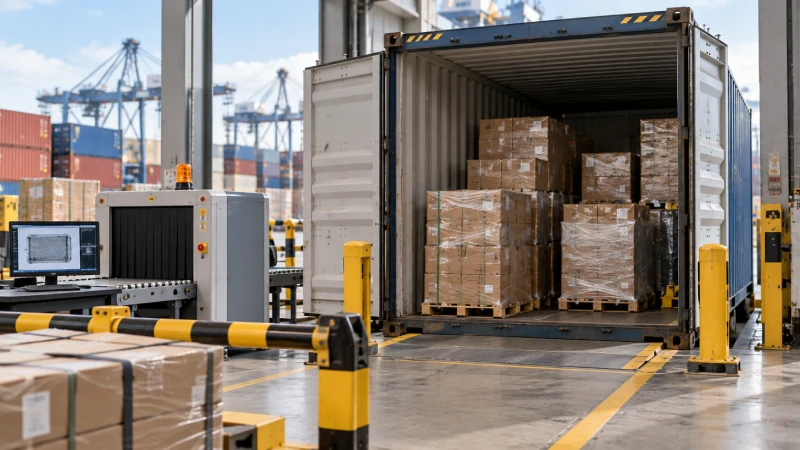
Arrival and Presentation
The declaration and physical cargo must be connected correctly through the relevant UK arrival process.
Depending on the location, this may involve an inventory-linked port or airport and procedures associated with the carrier, terminal or ground-handling system.
Importers normally rely on their forwarder, carrier and customs representative to coordinate these operational steps.
If No Additional Customs Check Is Required
Where the declaration has been properly completed, liabilities have been dealt with and no relevant customs intervention applies, the goods can proceed toward release.
This does not mean every shipment clears within a fixed number of hours.
Avoid planning the delivery on the assumption that:
“UK customs always takes one day.”
There is no reliable universal customs-clearance time for every commercial shipment.
Documentary Checks
If a declaration is selected for further checking, HMRC’s National Clearance Hub may require supporting documentation.
HMRC identifies documents such as:
- evidence of the goods’ value
- packing lists
- licences
- certificates
for declarations selected for documentary checks. See the National Clearance Hub guidance.
This is why supporting evidence should already exist before the declaration is made.
Physical Examination or Sampling
Some shipments may also be physically examined.
The likelihood and type of intervention depend on multiple factors, including the goods and the relevant border controls.
A physical check does not necessarily mean the importer has done something wrong. Customs and regulatory authorities use risk-based controls, and certain products can be subject to additional inspection requirements.
Other Regulatory Inspections
Not every border hold is an HMRC customs issue.
Controlled products may also involve other authorities and procedures—for example, sanitary, phytosanitary, food, product safety or other regulatory controls.
If those requirements apply, customs release alone may not be sufficient to make the shipment available for delivery.
Customs Release Is Not Always the Same as Cargo Availability
This distinction is especially important for containerised imports.
A container can have completed its customs requirement but still be unavailable for immediate collection because of:
- carrier documentation
- terminal holds
- unpaid destination charges
- inspection completion
- container availability
- transport booking requirements
For urgent cargo, build some operational buffer between the estimated arrival date and the final warehouse appointment.
Pro Tip: Do not commit a customer’s production line or warehouse receiving slot solely around the vessel ETA. Arrival, customs release and physical collection are separate milestones.
How Customs Duty and Import VAT Affect Clearance
Customs Duty and import VAT are related but calculated differently.
Use the UK Import Duty and VAT guide to estimate the tax basis and understand how customs value changes the landed amount.
There is no single China-to-UK import tax percentage that applies to every commercial shipment.
Customs Duty Depends on the Commodity
The applicable treatment can depend on:
- commodity code
- customs value
- origin
- tariff suspensions
- tariff quotas
- reliefs
- trade remedies
- intended customs procedure
The UK Trade Tariff is the appropriate live source for checking the treatment of a specific commodity.
Because the UK currently trades with China on WTO/MFN terms rather than under a UK-China FTA, standard UK Global Tariff treatment generally applies unless another measure or relief changes the result.
Import VAT Is Not Simply 20% of the Supplier Invoice
The UK’s standard VAT rate is 20% for most goods, although reduced and zero rates apply to certain goods. See GOV.UK’s current VAT rates.
For imports, however, the amount subject to VAT is not necessarily identical to the supplier’s invoice total.
The import VAT value can start with customs value and include additional amounts such as Customs Duty and relevant incidental expenses under HMRC’s valuation rules. See working out the VAT value using the customs value of imported goods.
Therefore:
Supplier invoice × 20% is not a reliable universal import VAT formula.
Postponed VAT Accounting
For eligible UK VAT-registered businesses, PVA can help cash flow because import VAT is declared and recovered through the VAT Return rather than being paid upfront and reclaimed later, subject to the applicable VAT rules.
PVA does not postpone Customs Duty.
How Customs Duty Can Be Paid
Depending on the customs arrangement, businesses may use mechanisms such as immediate payment, CDS cash accounting or a duty deferment arrangement.
The appropriate payment setup should be agreed with the customs representative before clearance—not after an unpaid customs amount prevents release. HMRC’s current guidance on paying VAT and duties on imports should be checked for the applicable payment options.
Information Your UK Customs Broker Needs
Providing a commercial invoice is not the same thing as providing a complete customs-clearance file.
Use the following table as a preparation guide.
| Information / Document | Normally Provided By | Why It Is Needed | Common Problem |
|---|---|---|---|
| Importer’s legal name and address | UK importer | Identifies importing entity | Different company appears on EORI |
| GB EORI | Importer | Customs identification | Missing or incorrect EORI |
| VAT number, if applicable | Importer | VAT treatment and accounting | VAT details not communicated |
| PVA instruction | Importer | Determines import VAT accounting | Broker assumes wrong treatment |
| Representation instruction | Importer + broker | Confirms direct/indirect status | No clear written authority |
| Commercial invoice | Supplier / importer | Product, parties, value and currency | Description too vague |
| Packing list | Supplier | Packages, quantities and weights | Does not match invoice |
| Detailed product information | Supplier / importer | Classification and control checks | Only generic trade name provided |
| Commodity code | Importer, with appropriate classification support | Tariff declaration | Supplier’s code copied without review |
| Country of origin | Supplier / importer | Tariff and trade-measure treatment | Origin confused with export country |
| Incoterm | Buyer / seller | Commercial and valuation context | Incoterm missing or misunderstood |
| Customs valuation information | Importer | Supports declared customs value | Unsupported low value |
| Freight / insurance figures where applicable | Forwarder / importer | Customs and VAT valuation | Figures unavailable |
| Bill of Lading / Air Waybill or transport reference | Carrier / forwarder | Connects declaration to shipment | Wrong or outdated reference |
| Arrival port / airport details | Forwarder / carrier | Clearance coordination | Broker receives arrival details late |
| Licences / certificates | Importer / relevant parties | Regulated-goods clearance | Application started after arrival |
| Product compliance information | Importer / supplier | Determines product-control requirements | Only checked after purchasing |
| Duty payment instruction | Importer | Allows customs debt to be settled | No payment arrangement |
| UK delivery postcode | Importer | Delivery planning | Final receiving location unclear |
HMRC expects businesses using a customs representative to provide information such as their EORI, evidence of the goods including invoices or contracts, descriptions, and appropriate licences or certification.
The exact clearance file can be more extensive depending on the commodity and customs procedure.
Preparing a Shipment from China?
Before departure, send the freight forwarder or customs coordinator:
- commercial invoice
- packing list
- detailed product description
- cargo weight and dimensions
- confirmed Incoterm
- commodity code if already established
- UK importer information
- UK postcode
- licences or certificates where applicable
Winsail Logistics can coordinate the China-side freight movement and may arrange UK customs-clearance coordination depending on the agreed service scope and shipment structure. Customs representation, importer arrangements, VAT treatment and regulated-goods requirements remain subject to shipment review.
For broader route planning and freight-method selection, see Shipping from China to the UK.
Common Reasons China-to-UK Shipments Are Delayed at Customs
Many clearance problems are not caused by the ocean carrier or airport.
They begin with poor information.
1. Vague Commercial Invoice Descriptions
Descriptions such as:
- “parts”
- “accessories”
- “samples”
- “hardware”
- “plastic items”
- “electrical goods”
do not necessarily tell a broker enough to establish the correct customs treatment.
A useful description should identify the product clearly enough to understand what it is, what it is made from and what it does where those factors are relevant.
2. Incorrect Commodity Codes
A wrong commodity code can result in more than an incorrect Duty rate.
It may also cause:
- wrong VAT treatment
- missed licence requirements
- incorrect trade-remedy treatment
- declaration queries
- later customs corrections
Do not automatically use the Chinese export HS code without checking whether the correct UK commodity classification is the same.
3. Incorrect or Unsupported Customs Values
Possible red flags can include:
- unusually low declared values
- unexplained discounts
- invoice and payment inconsistencies
- freight costs treated incorrectly
- related-party transactions that have not been considered
- “customs invoices” that do not reflect the commercial transaction
Where HMRC selects the declaration for a valuation check, sufficient supporting evidence may be required.
4. Missing Licences or Certificates
A licence problem discovered after arrival can be much harder to resolve than one identified before export.
Depending on the goods, consequences may include additional storage, inspections and significant delays.
Check the UK Trade Tariff and the relevant UK regulator before departure.
5. Importer or EORI Problems
Typical issues include:
- importer not confirmed
- invalid EORI
- EORI belongs to another company
- invoice entity differs from customs entity
- broker has not received representation authority
- GB and Northern Ireland arrangements confused
These are administrative issues, but they can stop an otherwise straightforward shipment.
6. Product-Control Problems
Customs clearance does not certify product compliance.
A shipment may be correctly declared from a customs perspective but still have issues involving:
- product safety
- marking
- technical documentation
- labelling
- importer obligations
- restricted substances
- sector-specific regulation
Check these requirements before purchasing large quantities from the supplier.
7. Documents Do Not Match
Before submitting the clearance pack, compare the:
- commercial invoice
- packing list
- Bill of Lading or Air Waybill
- purchase order where relevant
Look for differences in:
- package count
- weight
- quantity
- seller
- buyer
- product descriptions
- values
A ten-minute pre-shipment document review can prevent a much more expensive problem after arrival.
8. Duty, VAT or PVA Instructions Are Missing
The declaration may be ready technically, but the importer still needs a workable method for accounting for liabilities.
Confirm this before the customs entry needs to be released.
9. The Broker Was Appointed Too Late
This is one of the most avoidable causes of disruption.
A customs representative who receives the paperwork before arrival can identify issues.
A broker contacted after the shipment is already held at the terminal can only react to them.
Pro Tip: For a first shipment or a new commodity, complete the customs review before the supplier delivers the cargo to the China export warehouse.
Great Britain vs Northern Ireland Customs Clearance
Do not treat every UK destination as one customs environment.
Imports into Great Britain
For imports into:
- England
- Scotland
- Wales
businesses normally need a GB EORI and follow the Great Britain import process.
Most of this guide relates to that scenario.
Imports from China into Northern Ireland
Goods entering Northern Ireland directly from China fall under a different framework.
Businesses moving goods into or out of Northern Ireland may need an EORI beginning XI, depending on their establishment and the movement. GOV.UK also provides the Trader Support Service for relevant Northern Ireland customs processes. See trading and moving goods in and out of Northern Ireland.
Current NI arrangements can affect:
- EORI requirements
- who can be declarant
- tariff treatment
- customs declarations
- customs intermediaries
- UK Internal Market Scheme considerations in relevant scenarios
Do not assume a Great Britain customs setup can simply be reused for a direct China-to-Northern-Ireland import.
Destination Belfast Instead of Birmingham?
Re-check the customs structure before departure.
Do not change a Great Britain delivery plan to Northern Ireland at the last minute without confirming the EORI, declaration and tariff implications.
Can DDP Shipments from China Clear UK Customs?
Yes, DDP arrangements can be used for suitable China-to-UK shipments, but DDP is not a substitute for a valid customs structure.
If the seller proposes an all-in structure, review whether Winsail’s DDP shipping service from China is workable for the importer, representation and tax arrangement.
Delivered Duty Paid is an Incoterm governing commercial responsibilities between seller and buyer.
Writing “DDP London” on the supplier invoice does not by itself establish:
- who will be the importer
- which EORI will be used
- who will submit the customs declaration
- what form of customs representation applies
- who accounts for import VAT
- how Customs Duty is paid
- whether the product meets UK regulatory requirements
Why Non-UK Sellers Need Particular Care
Where a business is not established in the UK but imports goods into Great Britain, HMRC says that it can only appoint someone to act indirectly on its behalf.
Because an indirect representative can become jointly and severally liable for Customs Duty and import VAT, a customs broker does not have to accept every proposed DDP structure.
Therefore, before using DDP, confirm:
- who will be the importer
- whether that importer can support the import structure
- which EORI is being declared
- whether the customs representative accepts the required representation
- how Customs Duty and VAT will be accounted for
- whether product controls apply
- who handles final delivery
Pro Tip: “DDP available” should be the result of a shipment review—not a default promise based only on destination postcode.
Winsail can coordinate China-to-UK freight and, where applicable, customs-clearance and door-to-door arrangements through the agreed service structure. DDP feasibility depends on factors including importer structure, customs representation, VAT treatment, commodity, product controls and final delivery requirements.
UK Customs Clearance Checklist Before Shipping from China
Use this checklist before allowing the shipment to depart.
Importer Setup
- Final destination confirmed as GB or Northern Ireland
- Importing legal entity confirmed
- Correct EORI available
- VAT status confirmed where relevant
- Customs representative appointed
- Direct or indirect representation agreed
Product and Customs Data
- Product description is specific
- Commodity code reviewed
- Country of origin confirmed
- Customs valuation basis understood
- Incoterm confirmed
- Any applicable trade measures checked
Documentation
- Commercial invoice checked
- Packing list checked
- Invoice and packing-list quantities match
- Transport reference will be provided
- Supporting value records are available
Regulatory Requirements
- UK Trade Tariff checked
- Required licences obtained
- Certificates available
- Product-marking requirements checked
- Labelling requirements checked
- Any pre-notification or inspection requirement confirmed
Tax and Release
- Customs Duty treatment checked
- Import VAT treatment confirmed
- PVA instruction sent where applicable
- Duty payment arrangement ready
- UK delivery postcode confirmed
- Warehouse receiving requirements confirmed
When You Should Consider Stopping the Shipment
Do not allow cargo to leave China simply because the vessel booking has been confirmed if you still cannot answer basic questions such as:
- Who is the importer?
- Which EORI will be used?
- What is the product’s correct classification?
- Does the product require an import licence?
- Is a regulatory approval missing?
- Has the customs broker accepted the representation arrangement?
- How will Duty and import VAT be accounted for?
It is normally easier to hold cargo briefly at the supplier or China warehouse than to resolve a fundamental customs issue after arrival in the UK.
FAQs
What do I need to clear goods from China through UK customs?
For a typical commercial import into Great Britain, you will normally need a confirmed importer, GB EORI, appropriate commodity code, customs value, country of origin, commercial invoice, shipment information and any licences or certificates required for the goods. A customs declaration must also be submitted through the appropriate UK customs process.
Do I need an EORI number to import from China to the UK?
Businesses importing goods into England, Scotland or Wales normally need an EORI beginning with GB. Northern Ireland can involve XI EORI or other arrangements depending on the importer and movement, so the current GOV.UK rules should be checked before shipment.
Can my freight forwarder handle UK customs clearance for me?
A freight forwarder or customs broker can make customs declarations for an importer when the appropriate service and representation arrangements are in place. Appointing a representative does not remove the importeru0026#x27;s responsibility to exercise due diligence over the declaration information.
How long does UK customs clearance take for goods from China?
There is no reliable fixed clearance time for every China-to-UK shipment. A straightforward declaration may progress without extended intervention, while documentary checks, physical examination, regulatory inspections or missing information can extend clearance. For the wider transport timeline, see u003ca href=u0022https://winsaillogistics.com/how-long-to-ship-from-china-to-uk/u0022u003eu003cstrongu003eHow Long Does It Take to Ship from China to the UK?u003c/strongu003eu003c/au003e.
Why has my shipment from China been held at UK customs?
Possible reasons include documentary checks, unclear product descriptions, classification queries, valuation questions, missing licences, importer or EORI issues, payment problems, physical examination or controls by another border authority.
Can I use Postponed VAT Accounting for imports from China?
A UK VAT-registered business may be able to use Postponed VAT Accounting to account for import VAT through its VAT Return instead of paying the import VAT upfront, subject to the applicable rules. If a customs representative submits the declaration, give the required VAT-accounting instruction before submission.
Is customs clearance different when goods are delivered to Northern Ireland?
Yes. Imports into Northern Ireland can involve different EORI, declaration, tariff and representation rules from imports into England, Scotland or Wales. Direct China-to-Northern-Ireland shipments should be reviewed against current GOV.UK guidance before departure.
Prepare for UK Customs Before the Cargo Leaves China
Successful UK customs clearance is usually determined before the shipment reaches the UK.
For shipment-level document and clearance coordination, see Winsail’s customs and cargo-insurance support.
The practical sequence is:
Confirm the importer → confirm GB or NI → obtain the correct EORI → classify the product → establish value and origin → check licences and product controls → appoint the customs representative → provide a complete clearance pack → confirm Duty and VAT arrangements → submit the declaration → manage any customs checks → release → delivery.
The most expensive customs problems often begin with small unresolved questions:
- an importer that has not been confirmed
- a generic product description
- a commodity code copied from the supplier
- an unsupported invoice value
- a missing licence
- an unconfirmed DDP structure
Solve those issues before departure whenever possible.
If you are planning a commercial shipment from China to the UK, Winsail Logistics can coordinate supplier pickup, consolidation, China export handling, international freight and the applicable destination logistics arrangement according to the agreed service scope. UK customs representation, tax treatment, regulated-goods requirements and DDP feasibility remain subject to shipment review.
For complete route planning, continue with our Shipping from China to the UK guide. For current freight-cost planning, see Shipping Cost from China to UK.
Regulatory information last reviewed: September 2026. Always check the live UK Trade Tariff and current GOV.UK/HMRC guidance before shipping regulated or commercially significant goods.
Continue with related UK shipping guides
Use these focused guides for the next part of your China-to-UK shipping plan.
