
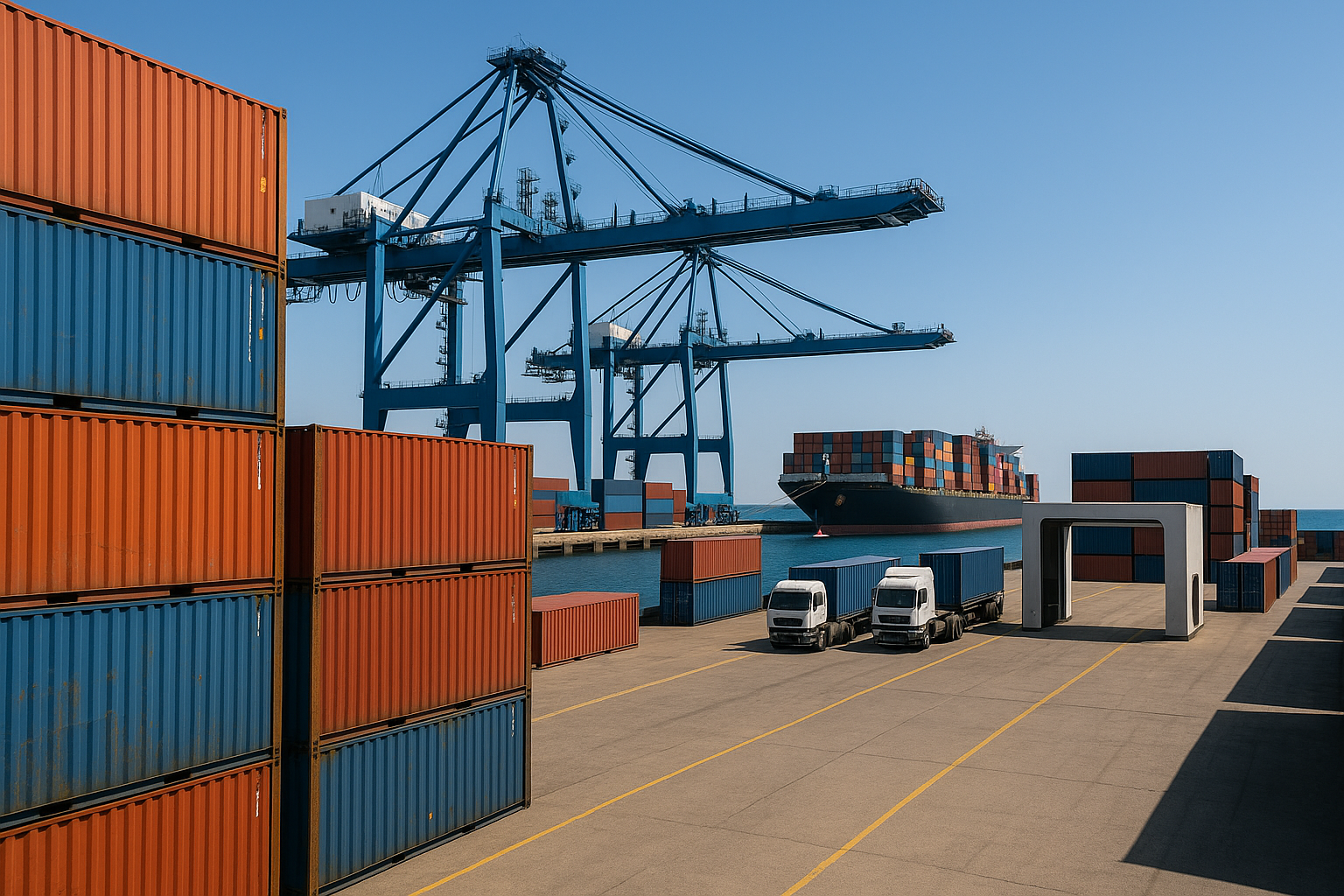
When shipping goods from China to Kenya, customs clearance is one of the most critical stages in the entire logistics process. No matter which shipping method you choose—sea freight, air freight, or DDP service—your cargo cannot be delivered until it has been properly cleared by Kenyan customs authorities.
Customs clearance in Kenya refers to the formal procedure of declaring imported goods, submitting the required documents, and settling applicable duties and taxes before cargo is released for local delivery. This process is overseen by the Kenya Revenue Authority (KRA) and applies to all commercial imports entering the country.
For importers unfamiliar with Kenya’s customs system, clearance procedures can appear complex. Documentation accuracy, correct cargo valuation, and proper HS code classification all play a decisive role in whether shipments move smoothly or face delays. Even minor discrepancies can result in inspections, additional costs, or extended storage time at the port or airport.
In the broader shipping from China to Kenya workflow, customs clearance sits between cargo arrival and final delivery. While transportation determines how fast goods reach Kenya, customs clearance largely determines how quickly they can enter the local market. Understanding this distinction is essential for planning realistic transit times and budgets.
For businesses importing from China, early preparation is the key to avoiding clearance issues. Knowing who is responsible for customs clearance under different Incoterms, what documents are required, and how the process works in practice allows importers to make informed decisions long before the cargo departs China.
How Customs Clearance Works in Kenya (Step-by-Step)
Customs clearance in Kenya follows a structured process designed to verify the legality, value, and classification of imported goods before they are released into the local market. While the exact workflow may vary slightly depending on whether cargo arrives by sea or air, the core steps remain largely the same for most commercial shipments.
Below is a practical, importer-friendly breakdown of how customs clearance typically works in Kenya.
Step 1: Cargo Arrival at Port or Airport
Once the shipment arrives at a Kenyan entry point—such as Mombasa Port for sea freight or Jomo Kenyatta International Airport for air freight—the cargo is registered in the local customs system. At this stage, the goods are placed under customs control and cannot be collected or delivered without clearance approval.
Step 2: Submission of Import Documents
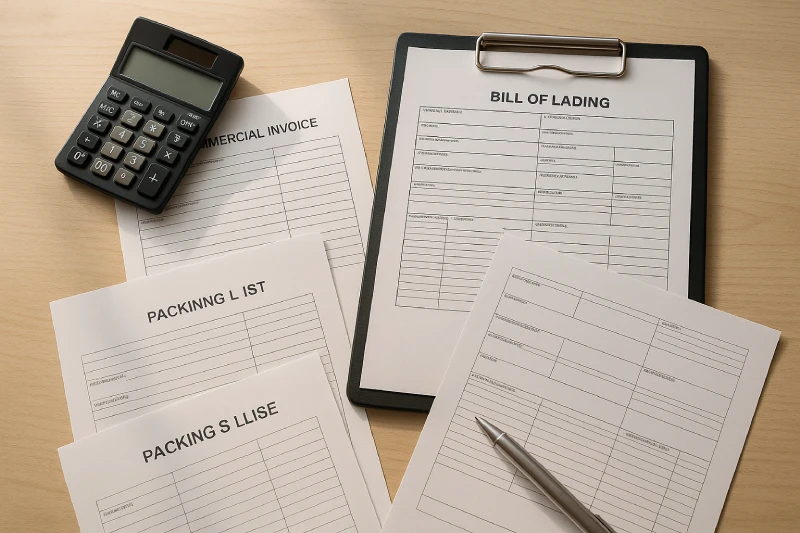
The importer or appointed customs agent submits the required clearance documents, including the commercial invoice, packing list, and bill of lading or air waybill. These documents form the basis for customs declaration and must match the actual shipment details precisely.
Step 3: Customs Declaration and Classification
Customs authorities review the declaration, focusing on HS code classification, cargo description, and declared value. Correct classification is essential, as it directly affects the applicable duties and taxes. Errors at this stage are a common cause of clearance delays.
Step 4: Duties and Taxes Assessment
Based on the declared information, Kenyan customs assess the import duties, taxes, and any additional charges payable. Payment must be completed before the shipment can proceed to the next stage. Final assessed amounts may differ slightly from initial estimates.
Step 5: Inspection or Verification (If Required)
Not all shipments are physically inspected. However, customs may select cargo for document verification or physical examination based on risk profiling, cargo type, or inconsistencies in paperwork. Inspections can extend the clearance timeline but are a routine part of the process.
Step 6: Cargo Release and Delivery Arrangement
Once customs clearance is completed and all charges are settled, the cargo is released. The shipment can then be collected or arranged for final delivery to the consignee’s warehouse or distribution point within Kenya.
Although the process itself is standardized, the efficiency of customs clearance in Kenya largely depends on document accuracy, correct cargo declaration, and advance preparation. Importers who understand these steps in advance are better positioned to avoid unnecessary delays and cost overruns when shipping from China to Kenya.
Who Is Responsible for Customs Clearance in Kenya? (By Incoterms)
Responsibility for customs clearance in Kenya depends largely on the Incoterm agreed upon between the buyer and the seller. Many import delays and unexpected costs occur not because of customs rules themselves, but because the parties involved misunderstand who is responsible for handling clearance procedures and payments.
Below is a practical overview of how customs clearance responsibility is typically allocated under common Incoterms when shipping from China to Kenya.
EXW (Ex Works)
Under EXW terms, the buyer assumes almost all responsibility once the goods leave the seller’s premises in China. This includes export arrangements, international transport, and full customs clearance in Kenya. Importers using EXW must either have strong local expertise or appoint a reliable customs agent in Kenya.
Risk level: High
Best for: Experienced importers with established local clearance support
FOB (Free On Board)
With FOB shipping, the seller handles export procedures in China, while the buyer takes responsibility from the port of loading onward. Customs clearance in Kenya, including duties and taxes, is handled by the importer or their appointed agent.
Risk level: Medium–High
Best for: Importers comfortable managing customs clearance but seeking simpler export handling
CIF (Cost, Insurance, and Freight)
Under CIF terms, the seller arranges transport and insurance to the Kenyan port, but customs clearance remains the importer’s responsibility. While CIF simplifies transportation planning, importers must still prepare documentation, pay duties, and manage clearance procedures locally.
Risk level: Medium
Best for: Importers who want predictable freight costs but retain control over clearance
DDP (Delivered Duty Paid)
DDP is the only Incoterm under which the seller—or the seller’s freight forwarder—assumes responsibility for customs clearance in Kenya, including duties and taxes. For many importers unfamiliar with Kenyan customs procedures, DDP significantly reduces operational complexity and risk.
Risk level: Low
Best for: New importers or businesses seeking door-to-door simplicity
Understanding how Incoterms affect customs clearance responsibility is essential when planning shipments to Kenya. The choice of Incoterm not only determines who handles paperwork and payments, but also directly influences risk exposure, delivery timelines, and overall shipping costs—especially when customs clearance is involved.
Documents Required for Customs Clearance in Kenya
Accurate and complete documentation is the foundation of smooth customs clearance in Kenya. Most clearance delays, inspections, and unexpected charges can be traced back to document errors, inconsistencies, or missing information. Regardless of the shipping method used, Kenyan customs rely heavily on paperwork to assess the legality, value, and classification of imported goods.
Below are the core documents typically required for import customs clearance in Kenya, along with their practical role in the process.
Commercial Invoice
The commercial invoice is the primary valuation document used by customs. It must clearly state the seller and buyer details, product description, unit price, total value, currency, and agreed Incoterm. Inaccurate values or vague descriptions often trigger additional scrutiny.
Packing List
The packing list provides a detailed breakdown of how the cargo is packed, including the number of cartons or pallets, weights, and dimensions. Customs use this document to verify shipment structure and support inspection decisions.
Bill of Lading (Sea Freight) or Air Waybill (Air Freight)
This transport document confirms shipment ownership and transport details. It must match the commercial invoice and packing list exactly, especially the consignee name and cargo description.
HS Code Classification
Each imported product must be classified under the correct Harmonized System (HS) code. HS codes determine applicable duties and taxes in Kenya. Misclassification is one of the most common causes of reassessment and clearance delays.
Import Declaration and Supporting Documents
Kenyan customs require formal import declarations supported by the above documents. Depending on the cargo type, additional certificates or permits may be requested during clearance review.
Certificate of Conformity (When Applicable)
Certain regulated products require a Certificate of Conformity to confirm compliance with Kenyan standards. Shipments without required conformity documents may be held or rejected at the port.
From a practical perspective, consistency across all documents is more important than document quantity. Even small discrepancies—such as mismatched product names or weights—can delay customs clearance and increase storage or demurrage costs.
Preparing documents carefully before cargo departure from China is one of the most effective ways to ensure smooth customs clearance in Kenya.
Document discrepancies can also lead to unexpected charges, which may significantly affect the total shipping cost from China to Kenya.
Customs Duties, Taxes & Import Charges in Kenya
When importing goods into Kenya, customs clearance is not completed until all applicable duties, taxes, and related charges have been assessed and settled. While exact rates vary by product, understanding how import charges are generally calculated helps importers plan realistic budgets and avoid unexpected costs.
In Kenya, customs duties and taxes are typically assessed based on the customs value of the goods. This value is commonly calculated using the CIF value—the cost of the goods, plus international freight and insurance. Even if freight is arranged under different Incoterms, customs authorities may still reference CIF-equivalent values for assessment purposes.
Types of Import Charges
Although rates differ by product category, most commercial imports may be subject to:
- Import duty, determined by the product’s HS code
- Import taxes, applied based on the declared customs value
- Additional fees or levies, depending on cargo type and regulatory requirements
Customs authorities review declared values carefully. If the declared amount appears inconsistent with market references or documentation, reassessment may occur, leading to additional charges or delays.
Why Final Charges May Differ from Estimates
Importers often receive preliminary cost estimates before shipment, but final charges are only confirmed during customs clearance. Differences may arise due to HS code interpretation, valuation adjustments, or inspection outcomes. This is why customs costs should always be treated as estimates rather than fixed amounts.
For businesses shipping from China to Kenya, early coordination between the exporter, freight forwarder, and customs agent is essential. Clear documentation, realistic valuation, and proper classification help minimize disputes and ensure customs clearance proceeds without unnecessary cost escalation.
How Long Does Customs Clearance Take in Kenya?
The time required for customs clearance in Kenya can vary significantly depending on shipment details, document accuracy, and whether inspections are required. While transportation determines when cargo arrives in Kenya, customs clearance determines when it can legally enter the local market.
Typical Customs Clearance Timeframes
Under normal conditions, customs clearance in Kenya may take:
- 1–3 working days for shipments with complete and accurate documentation
- Several additional days if document verification or physical inspection is required
These timeframes apply to both sea freight and air freight, although air shipments may enter the clearance process sooner due to faster arrival schedules.
Factors That Can Extend Clearance Time
Several common factors may cause delays during customs clearance:
- Incomplete or inconsistent import documents
- HS code classification disputes
- Under-declared cargo value
- Selection for physical inspection or compliance checks
It is important to note that inspections are not automatically negative. Many are routine and risk-based, but they can still add time to the clearance process.
Customs Clearance Time vs. Shipping Time
Importers often underestimate the impact of customs clearance when planning delivery schedules. Even if international transit is fast, delays at customs can affect overall lead time. This is why customs clearance should be considered part of the total shipping timeline when moving goods from China to Kenya.
Advance document preparation and realistic scheduling are the most effective ways to keep customs clearance time within expected ranges and avoid disruptions to downstream delivery plans.
This is why customs clearance time should be considered alongside the overall shipping time from China to Kenya when planning delivery schedules.
Common Customs Clearance Problems in Kenya (And How to Avoid Them)
Most customs clearance issues in Kenya are not caused by complex regulations, but by preventable mistakes made before the cargo arrives. Understanding these common problems allows importers to reduce risk, avoid delays, and control overall shipping costs when importing from China.
Incorrect HS Code Classification
Using the wrong HS code can lead to incorrect duty assessment, reassessment by customs, or shipment delays. HS code disputes often require additional review and supporting documents, extending clearance time.
How to avoid it: Confirm HS codes in advance and ensure they accurately reflect the product’s material, function, and usage.
Incomplete or Inconsistent Documentation
Discrepancies between the commercial invoice, packing list, and transport documents are a frequent cause of customs holds. Even small inconsistencies can trigger verification requests.
How to avoid it: Ensure all documents match exactly in terms of product description, quantities, weights, and consignee information.
Under-Declared Cargo Value
Declaring values that are significantly lower than market references may raise red flags during customs review. This can result in reassessment, penalties, or additional inspections.
How to avoid it: Declare realistic transaction values supported by proper invoices and contracts.
Importer Not Properly Registered or Prepared
Customs clearance in Kenya requires the importer to meet certain registration and compliance requirements. Missing or outdated importer information can halt the clearance process.
How to avoid it: Verify importer details and clearance readiness before shipment departs China.
Late Preparation of Clearance Documents
Submitting documents only after cargo arrival often leads to unnecessary delays, especially if corrections are required.
How to avoid it: Prepare and review all clearance documents before shipment arrival to allow time for corrections if needed.
Most customs clearance problems can be avoided with proper planning and coordination. Taking a proactive approach significantly improves clearance efficiency and reduces unexpected costs when importing into Kenya.
Customs Clearance in Kenya Under DDP Shipping
DDP (Delivered Duty Paid) shipping is often chosen by importers who want to minimize their involvement in customs procedures and reduce clearance-related risks. Under DDP terms, customs clearance in Kenya is handled by the seller or the seller’s appointed freight forwarder, rather than by the local importer.
How DDP Changes Customs Clearance Responsibility
Unlike EXW, FOB, or CIF shipments—where the importer is responsible for clearance—DDP shifts the responsibility for:
- Import customs declaration
- Payment of duties and taxes
- Coordination with local customs agents
to the seller’s logistics partner. For the importer, this means customs clearance becomes part of a single door-to-door service rather than a separate task to manage locally.
Why DDP Is Popular for Kenya Imports
Many businesses importing from China to Kenya choose DDP because:
- They lack local customs experience or registration
- They want predictable, all-in costs
- They prefer a single point of responsibility for delays or issues
From an operational standpoint, DDP simplifies planning and reduces the risk of cargo being held due to clearance errors.
Important Considerations Under DDP
Although DDP significantly reduces importer involvement, it does not eliminate customs procedures themselves. Proper documentation, accurate cargo declaration, and compliance with Kenyan import regulations are still required. The difference lies in who manages the process, not whether the process exists.
Importers should ensure that DDP arrangements clearly define customs responsibilities and cost coverage in advance. When structured correctly, DDP shipping provides one of the most straightforward ways to manage customs clearance in Kenya—especially for first-time or high-frequency importers.
Importers seeking a clearer understanding of how customs clearance is handled under DDP terms may find it helpful to review DDP shipping from China to Kenya in more detail.
Should You Handle Customs Clearance Yourself or Use a Freight Forwarder?
Choosing whether to handle customs clearance in Kenya independently or through a freight forwarder depends on your experience level, shipment frequency, and risk tolerance. There is no universal right or wrong choice, but understanding the implications of each option helps importers make informed decisions.
Handling Customs Clearance Yourself
Managing customs clearance directly may be suitable if:
- You have prior experience importing into Kenya
- You are familiar with HS code classification and document preparation
- You have reliable local representation or customs agents
This approach offers greater control but also places full responsibility for delays, errors, and compliance on the importer.
Using a Freight Forwarder or Customs Agent
Working with a freight forwarder is often preferred when:
- Importing into Kenya for the first time
- Shipping high-value or regulated cargo
- Seeking to minimize administrative workload and clearance risk
A qualified forwarder coordinates documentation, declarations, and communication with customs authorities, reducing the likelihood of errors and delays.
Making the Right Choice
For many businesses shipping from China to Kenya, outsourcing customs clearance provides greater predictability and efficiency—especially when combined with DDP shipping arrangements. The right decision depends on balancing operational control with risk management and internal resources.
Evaluating customs clearance responsibility early in the shipping process allows importers to align logistics strategy with business capabilities and delivery expectations.
FAQ
Do I need a local importer to clear customs in Kenya?
In most cases, yes. Kenyan customs clearance typically requires a locally registered importer or an appointed customs agent acting on behalf of the importer. Without proper local representation, shipments may be delayed or held at the port or airport.
Can customs clearance be completed before cargo arrives in Kenya?
Certain preparatory steps can be completed in advance, such as document review and preliminary declarations. However, final customs clearance approval usually occurs only after the cargo has arrived and is registered in the customs system.
Is customs clearance included in DDP shipping to Kenya?
Yes. Under DDP shipping terms, customs clearance in Kenya—including duties and taxes—is handled by the seller or their freight forwarder. This is one of the main reasons DDP is popular among importers who want a simplified process.
What causes customs clearance delays most often in Kenya?
The most common causes include incorrect or incomplete documentation, HS code disputes, under-declared cargo values, and selection for inspection. Many of these issues can be avoided through careful preparation before shipment.
Does air freight clear customs faster than sea freight in Kenya?
Air freight often enters the clearance process sooner due to faster transit times, but customs clearance procedures themselves are similar for both modes. Clearance speed depends more on document accuracy and compliance than on the shipping method.
Final Thoughts: Planning Customs Clearance Before Shipping to Kenya
Customs clearance should never be treated as an afterthought when shipping goods from China to Kenya. While international transportation determines how quickly cargo reaches the country, customs clearance ultimately determines when it can be legally released and delivered to its final destination.
By understanding how customs clearance works in Kenya, who is responsible under different Incoterms, and what documents are required, importers can reduce delays, control costs, and avoid unnecessary risks. Early preparation—before cargo departs China—remains the most effective way to ensure a smooth clearance process.
When customs clearance is planned alongside shipping method selection, cost budgeting, and delivery timelines, businesses are better positioned to move goods into Kenya efficiently and with confidence.
