
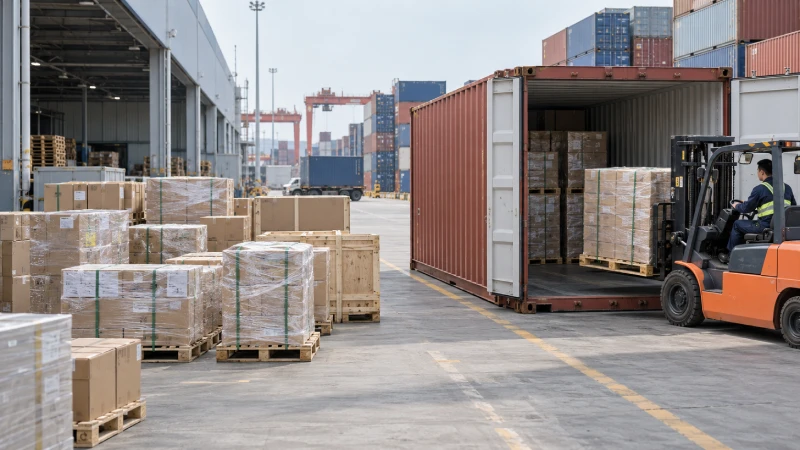
Choosing between LCL and FCL shipping from China to Kenya is not as simple as applying a rule such as “use LCL below 15 CBM and FCL above 15 CBM.”
A shipment of 12 CBM may justify comparing a full container if it is dense, fragile, high-value, or collected from several suppliers. A shipment of 18 CBM may still require careful comparison if current FCL rates are high, the cargo is lightweight, or the LCL service offers a better overall route to the importer’s final destination.
For Kenya importers, the right decision comes from comparing the same shipment under the same service scope: China pickup, origin handling, sea freight, Mombasa destination charges, customs coordination, and delivery to the actual destination.
That destination may be Mombasa, Nairobi, Nairobi ICD, or an importer’s warehouse further inland.
Data Note: Sea freight rates, carrier surcharges, CFS charges, and inland transport costs change frequently. This guide therefore does not use a fixed CBM break-even point. Always compare current LCL and FCL quotations for the same cargo and delivery scope before booking.
Quick Answer: Should You Use LCL or FCL from China to Kenya?
As a starting point:
| Shipment situation | Option to check first |
|---|---|
| Small general-cargo shipment with a flexible schedule | LCL |
| Cargo volume is increasing and LCL charges are becoming significant | Compare LCL and FCL |
| Small-volume but dense or heavy cargo | Compare both earlier |
| Fragile, high-value, or handling-sensitive cargo | Consider the operational advantages of FCL |
| Goods from several Chinese suppliers | Consolidate first, then compare LCL and FCL |
| Large shipment using a substantial part of a container | Compare FCL carefully |
| Dangerous or specially controlled cargo | Check carrier and consolidator acceptance before selecting either |
These are decision starting points, not fixed booking rules.
If you have already decided to use sea freight but are unsure which container strategy makes sense, the most useful next step is to calculate your shipment’s actual CBM and gross weight and request both LCL and FCL pricing on the same basis.
For a broader overview of sea, air, customs, and inland transport options, see Shipping from China to Kenya.
LCL or FCL for Kenya? Start With These Decision Factors
The difference between LCL and FCL goes beyond whether you fill an entire container.
With LCL — Less than Container Load, your goods share container space with cargo belonging to other shippers. Your shipment must normally pass through consolidation and deconsolidation stages before and after the ocean movement.
With FCL — Full Container Load, a container is booked for your shipment. You do not necessarily have to fill every cubic metre of the container for FCL to make commercial sense.
The decision should be based on several factors together.
| Decision factor | LCL tends to make more sense when… | FCL deserves stronger consideration when… |
|---|---|---|
| Cargo volume | Volume is relatively small | Cargo occupies a significant amount of container space |
| Cargo weight | Weight is moderate for the occupied volume | Dense cargo makes LCL charging less attractive |
| Total cost | All-in LCL remains clearly lower | Total LCL and FCL costs become close |
| Handling | Normal cartons tolerate shared handling | Cargo is fragile, high-value, or difficult to stack |
| Urgency | Extra consolidation stages are acceptable | Reducing consolidation/deconsolidation stages matters |
| Supplier count | One or several suppliers still produce a small combined shipment | Several suppliers can fill a meaningful part of one container |
| Cargo-ready dates | Goods can wait for consolidation | Suppliers are ready at roughly the same time |
| Destination | LCL delivery structure works well for the destination | Container movement fits the inland delivery plan better |
| Special cargo | Consolidator accepts the cargo | LCL acceptance is restricted or operationally difficult |
The key word is compare.
A shipment does not become FCL simply because it crosses an arbitrary CBM number.
Compare LCL and FCL
If your cargo dimensions, weights, and supplier locations are already available, compare both options before confirming the booking.
Compare the Total Shipping Cost — Not Just the Ocean Freight
One of the easiest ways to choose the wrong option is to compare two quotations that do not cover the same services.
For example:
- Quote A: LCL ocean freight from Shenzhen warehouse to Mombasa
- Quote B: FCL pickup from a Foshan factory to a warehouse in Nairobi
The second quotation may appear much more expensive, but the quotations do not end at the same place and do not include the same operations.
A meaningful comparison should look more like this:
Supplier warehouse in China → origin handling → ocean freight → Mombasa handling → Kenya clearance coordination → final delivery location
Then compare that same route under LCL and FCL.
China-Side Costs
For LCL, China-side costs may include:
- pickup from the supplier
- warehouse receiving
- measurement and weighing
- export warehouse handling
- consolidation
- documentation
- export customs formalities
- movement to the loading facility
For FCL, the cost structure may instead include:
- empty-container positioning or loading arrangements
- factory pickup or container trucking
- container loading
- export handling
- customs declaration
- terminal handling
- documentation
If several suppliers are involved, warehouse consolidation and domestic pickup costs can become particularly important.
International Sea Freight
LCL quotations are usually linked to the shipment’s chargeable volume or weight under the consolidator’s applicable tariff.
This is why a 5 CBM shipment weighing 800 kg may not have the same cost profile as a 5 CBM shipment weighing several tonnes.
FCL ocean freight, by contrast, is primarily booked by container equipment and route, although weight restrictions, heavy-cargo conditions, and carrier surcharges can still affect the final price.
Do not compare:
LCL price per CBM
with:
FCL container ocean freight
and assume whichever number looks smaller is automatically cheaper.
You need the complete cost to the same endpoint.
Kenya-Side Costs
After arrival in Kenya, the two options can produce different cost structures.
For an LCL shipment, destination costs may include items such as:
- destination handling
- CFS-related handling
- deconsolidation
- documentation or release charges
- customs-agent services
- storage if incurred
- inspection-related costs where applicable
- delivery from the release point
For FCL, the structure may include:
- terminal or container handling
- shipping-line documentation and release charges
- customs clearance
- container transport
- container return
- detention or demurrage if free-time conditions are exceeded
- inland trucking or another available inland movement
The exact charges depend on the carrier, consolidator, destination agent, and service contract.
Kenya Ports Authority’s framework recognizes both container handling and Container Freight Station operations, so destination handling should be treated as part of the real Kenya-side cost rather than ignored when comparing freight options.
Compare the Same Scope
A practical comparison should therefore look like:
LCL
China pickup
→ consolidation warehouse
→ origin handling
→ sea freight
→ Mombasa deconsolidation/CFS handling
→ customs process
→ inland delivery
FCL
China pickup/loading
→ container export handling
→ sea freight
→ Mombasa container release
→ customs process
→ container transport
→ unloading and container return where applicable
Pro Tip: Ask both forwarders to quote from the same China pickup point to the same Kenyan delivery point. A cheap port-to-port LCL quotation cannot be fairly compared with an FCL door-to-door quotation.
Check My Shipping Cost
For a useful comparison, provide the cargo CBM, gross weight, China pickup location, and final Kenya delivery address—not just the product name.
For current route-level budgeting factors, see Shipping Cost from China to Kenya.
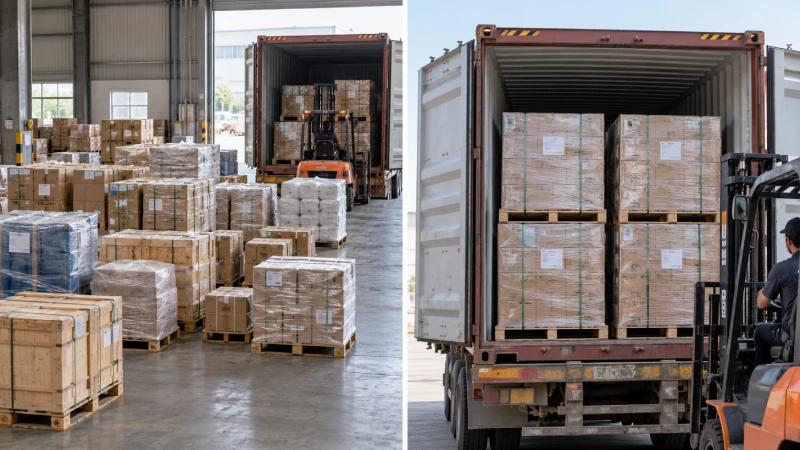
At What CBM Does FCL Become Cheaper Than LCL to Kenya?
There is no permanent CBM number at which every China-to-Kenya shipment should switch from LCL to FCL.
You may see general freight advice using numbers such as 13 CBM, 15 CBM, or 18 CBM. These can be useful reminders to start comparing container options, but they should not be treated as a booking rule.
The actual crossover changes with:
- the current 20ft or 40ft container rate
- the current LCL tariff
- cargo weight
- origin city
- China pickup distance
- warehouse and consolidation costs
- Mombasa destination charges
- final delivery destination
- season and carrier capacity
- equipment availability
- cargo type
- special handling requirements
Cargo Density Can Change the Result
CBM measures space, but LCL pricing does not always depend on space alone.
Dense industrial parts, metal components, machinery parts, stone products, and some construction materials can create a different LCL cost profile from lightweight consumer goods occupying the same volume.
This means two shipments with identical CBM can produce very different LCL quotations.
If your cargo is unusually heavy for its size, ask for both options earlier rather than waiting until the shipment reaches a commonly quoted CBM threshold.
Container Capacity Is Not the Same as Economic Break-Even
Another common mistake is assuming:
“If I cannot physically fill a 20ft container, I should use LCL.”
That is not necessarily true.
You are buying a logistics solution, not trying to maximize container utilization at any cost.
If the total cost of an FCL container is close to the total LCL cost, the additional control over handling or scheduling may justify using FCL even with unused space.
The opposite is also possible.
A relatively large shipment does not automatically make FCL cheaper if container rates are temporarily high or the available LCL service is commercially attractive.
A better decision rule is:
As your shipment becomes larger, heavier, or more sensitive, request an all-in LCL quotation and an all-in FCL quotation at the same time.
Then compare the operational differences as well as the price.
Transit Time and Handling Risk Can Change the Decision
Ocean transit time is only one part of the shipment timeline.
For LCL, the physical flow commonly includes additional cargo-handling stages:
Supplier
→ pickup
→ consolidation warehouse
→ container loading
→ ocean transport
→ destination deconsolidation
→ cargo release
→ delivery
For FCL, the shared-container consolidation and deconsolidation stages are generally reduced:
Supplier or loading point
→ container loading
→ port
→ ocean transport
→ container release
→ inland movement/unloading
This does not mean FCL cargo is never opened.
Customs, security agencies, or other regulators may inspect a container when required.
It also does not mean every FCL shipment arrives faster than every LCL shipment.
Sailing schedules, transshipment, port conditions, documentation, and customs processing can affect both.
Consolidation Time Matters for LCL
The vessel departure date is not the only date that matters.
An LCL shipment normally needs to reach the consolidation warehouse before the required warehouse cutoff.
The consolidator then has to:
- receive the shipment
- verify packages
- process documentation
- build the consolidation
- load the container
- meet the carrier cutoff
If the cargo misses the relevant consolidation schedule, the shipment may need to wait for the next available departure.
This is particularly important for importers buying seasonal products or goods needed for a project deadline.
Vessel Arrival Is Not the Same as Cargo Ready for Collection
For LCL, arrival of the vessel at Mombasa does not necessarily mean the individual shipment is immediately available.
The consolidated container must go through the applicable arrival, release, and deconsolidation process before the individual shipment can be handed over.
When delivery urgency matters, ask for:
- estimated sailing schedule
- consolidation cutoff
- estimated port arrival
- expected deconsolidation process
- customs handover point
- expected inland delivery arrangement
rather than asking only:
“How many days by sea?”
For a broader timing reference, see How Long Does It Take to Ship from China to Kenya?.
Handling-Sensitive Cargo
FCL deserves earlier consideration when the goods are:
- fragile
- high-value
- easily scratched
- moisture-sensitive
- unusually shaped
- difficult to stack
- packed in equipment crates
- vulnerable to repeated forklift handling
Using FCL does not eliminate damage risk, and appropriate export packing remains essential.
However, removing some shared consolidation and deconsolidation handling stages can be valuable for sensitive cargo.
Pro Tip: For fragile cargo, request both a freight comparison and a packing review. The cheapest LCL freight bill may not be the lowest-risk choice once additional warehouse handling is considered.
Dangerous Goods Need a Separate Acceptance Check
For dangerous goods, the LCL-versus-FCL decision cannot be made by CBM alone.
LCL acceptance may depend on:
- UN number
- dangerous-goods class
- packing group
- product compatibility
- carrier policy
- consolidator policy
- packaging
- documentation
- route
FCL also does not remove dangerous-goods requirements.
Carrier approval and correct DG documentation remain necessary.
For batteries, chemicals, liquids, or other potentially regulated cargo, disclose the exact product before requesting the freight option.
Shipping from Multiple Chinese Suppliers? Consolidate Before You Decide
Supplier count can change the LCL/FCL calculation substantially.
Suppose you buy from four factories:
- electronics from Shenzhen
- packaging from Dongguan
- accessories from Guangzhou
- display materials from Foshan
Looking at each supplier separately may make every shipment appear suitable for LCL.
Looking at the combined cargo may produce a completely different result.
One Supplier With a Small Shipment
For one supplier producing a few CBM of ordinary cargo, LCL is often the logical first option to price.
There is usually little reason to reserve an entire container unless:
- the cargo is unusually heavy
- handling risk is high
- LCL acceptance is problematic
- timing requirements justify another solution
Several Suppliers With a Small Combined Volume
If several suppliers together still produce a relatively small shipment, they can often be collected into a China consolidation warehouse.
The flow may look like:
Supplier A + Supplier B + Supplier C → China consolidation warehouse → one LCL shipment → Kenya
This may reduce the complexity of sending several independent LCL shipments.
However, the forwarder needs to coordinate:
- pickup addresses
- cargo-ready dates
- carton markings
- warehouse receiving
- supplier documents
- packing-list reconciliation
- export documentation
Winsail’s LCL consolidation services from China are relevant when shipments from several factories need to be combined before export.
Several Suppliers With a Larger Combined Shipment
Once the total cargo becomes substantial, compare:
multiple LCL shipments
against:
China buyer consolidation → one FCL container
Possible costs include:
- domestic collection from each factory
- warehouse receiving
- temporary storage
- cargo checking
- palletizing or repacking if needed
- final container loading
- export documentation
This can be especially useful when a Kenyan importer buys an entire purchasing cycle from several factories rather than ordering from one large supplier.
Pro Tip: Check cargo-ready dates before deciding on FCL consolidation. If three suppliers are ready this week but the fourth will not finish production for another two weeks, warehouse waiting time and inventory urgency may change the decision.
Winsail’s ocean freight from China service covers FCL and LCL planning and China-side consolidation arrangements where applicable.
Plan My Consolidated Shipment
When planning a consolidated shipment, provide each supplier’s city, estimated CBM, gross weight, and cargo-ready date. This is more useful than sending only the combined volume.
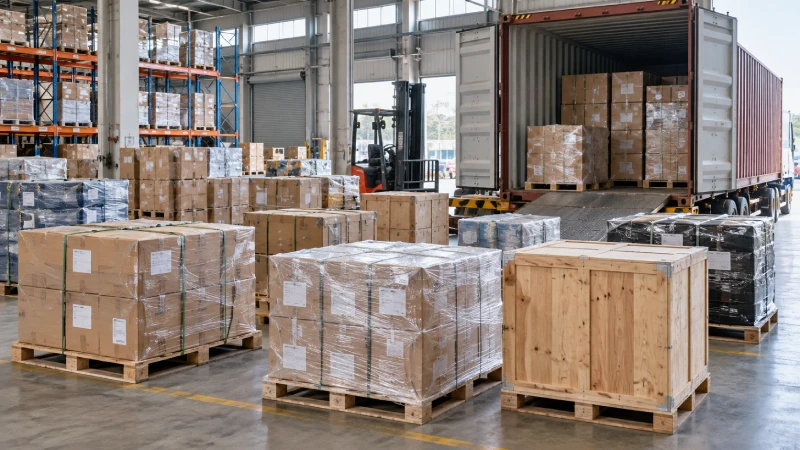
Customs and Kenya Compliance: LCL vs FCL Does Not Remove Import Requirements
Choosing LCL instead of FCL does not remove Kenya customs or product-compliance requirements.
The customs treatment of a shipment is primarily affected by factors such as:
- product
- HS classification
- customs value
- origin
- importer
- applicable taxes
- regulatory controls
- documentation
—not simply by whether your cargo occupies part or all of a container.
Kenya Revenue Authority guidance identifies customs declarations and supporting documents such as commercial invoices, packing lists, Bills of Lading, Certificates of Origin, and conformity documentation where applicable as part of the import process.
HS Classification and Import Documentation
Before cargo leaves China, the importer and forwarder should have a clear description of the goods.
Important information may include:
- product name and use
- material
- HS code
- quantity
- commercial value
- country of origin
- commercial invoice
- packing list
- Bill of Lading information
- applicable licences or permits
Import duties and taxes depend on the imported item, classification, customs value, and applicable Kenyan legal framework rather than on whether the shipment travels as LCL or FCL.
Do not assume a door-to-door arrangement means the importer can ignore classification or import compliance.
The exact responsibilities must be established before booking, particularly where DAP or DDP terminology is being used. For a broader comparison of door services, see DDP Shipping from China to Kenya.
Certificate of Origin
Kenya’s Certificate of Origin requirements should be included in shipment preparation.
KRA states that consignments imported into Kenya are subject to a mandatory Certificate of Origin requirement under Section 44A of the Tax Procedures Act, with full enforcement from 1 October 2025 after the transition period. KRA also provides provisional alternatives for specified exceptional cases, subject to Customs verification and approval. See the official KRA Certificate of Origin notice.
The practical point for LCL and FCL importers is simple:
Choosing LCL does not remove the Certificate of Origin requirement, and choosing FCL does not create an exemption.
Prepare origin documentation before shipment rather than waiting until the cargo reaches Mombasa.
KEBS PVoC and Certificate of Conformity
Product conformity should also be checked before cargo leaves China.
The Kenya Bureau of Standards operates its Pre-Export Verification of Conformity programme for goods within the applicable scope. Current KEBS guidance places China within its PVoC contractor framework and lists appointed inspection companies for covered shipments. See the official KEBS PVoC guidance.
Depending on the product, the process may involve:
- applicable Kenya Standards
- testing
- physical inspection
- conformity assessment
- Certificate of Conformity
- another regulator’s requirements
- an applicable exemption or alternative procedure
Do not assume every product follows exactly the same PVoC path.
The important question should be:
What compliance route applies to this HS code and this product before it is shipped?
not:
Does LCL require KEBS but FCL does not?
Container strategy does not replace product compliance.
Advance Cargo Declaration for Containerized Cargo
This is particularly important for shipments booked in 2026 and later.
KRA launched its Advance Cargo Declaration platform for containerized cargo destined for Kenyan ports with implementation from 3 August 2026.
According to the official KRA ACD notice, the ACD process uses supporting documents including the draft Bill of Lading, commercial invoice, freight invoice, and export declaration, and the ACD reference is endorsed on the Bill of Lading.
For an LCL shipment, the exact operational handling of the ACD across the House Bill of Lading, Master Bill of Lading, and consolidator workflow should be confirmed with the forwarder handling the consolidation.
Do not leave this until after the container has sailed.
Kenya Import Compliance Checklist
| Requirement | LCL | FCL | What to verify |
|---|---|---|---|
| Correct HS classification | Yes | Yes | Product-specific classification |
| Commercial invoice and packing list | Yes | Yes | Values, quantities, and descriptions |
| Certificate of Origin | Yes | Yes | Current KRA requirements |
| ACD for applicable containerized shipment | Yes | Yes | Pre-loading process and B/L reference |
| KEBS/PVoC where applicable | Yes | Yes | Product scope and compliance route |
| Product-specific licence/permit | If applicable | If applicable | Relevant Kenyan regulator |
| Customs clearance | Yes | Yes | Importer and clearing arrangements |
The key operational point is that choosing LCL or FCL changes the cargo-handling structure, not the importer’s underlying obligation to comply with applicable Kenyan import rules.
Mombasa or Nairobi Delivery Can Change the LCL–FCL Calculation
The Port of Mombasa is Kenya’s principal sea gateway and connects to Kenya’s inland market as well as the wider East African hinterland.
But many Kenya-bound shipments do not end in Mombasa.
A buyer may ultimately need delivery to:
- Nairobi
- Nairobi ICD
- a Nairobi warehouse
- Nakuru
- Kisumu
- an industrial or construction site
- another inland Kenyan location
That final destination should be part of the LCL/FCL calculation from the beginning.
FCL Delivery Beyond Mombasa
For FCL, ask where the container will actually be released and how it will move inland.
Depending on the service, questions may include:
- Is the Bill of Lading to Mombasa or through to an inland location?
- Is the container moving by road or an available rail arrangement?
- Where will customs procedures be completed?
- Who arranges container trucking?
- Where will the container be unloaded?
- Who is responsible for empty-container return?
- What free-time conditions apply?
- What happens if unloading is delayed?
Container detention and demurrage exposure should not be ignored when planning inland FCL delivery.
LCL Delivery Beyond Mombasa
For LCL, clarify whether the quotation includes:
- deconsolidation in Mombasa
- collection from a Mombasa facility
- onward trucking to Nairobi
- another inland handling arrangement
- final delivery to the consignee
Do not assume the phrase “shipping to Nairobi” means the same thing on every quotation.
A rate may end at:
- Mombasa
- a Mombasa CFS
- a Nairobi warehouse
- Nairobi ICD
- the buyer’s final address
These are different service scopes.
Nairobi ICD
Kenya Ports Authority’s Inland Container Depots information states that Nairobi ICD is linked to Mombasa by rail services and handles containerized and loose cargo.
That does not mean every China-to-Kenya LCL or FCL booking automatically moves through Nairobi ICD.
Availability depends on the actual carrier, Bill of Lading arrangement, cargo, and inland service.
This is why the correct question is not:
“Is FCL cheaper to Mombasa?”
but:
“Which option gives me the better total cost and operating plan to my real destination?”
Check My Mombasa-to-Nairobi Route
If your cargo is ultimately going to Nairobi, compare the route all the way to the intended handover point rather than choosing LCL or FCL using the Mombasa ocean rate alone.
Example Shipments: When LCL or FCL Deserves a Quote
The following examples show decision logic only.
They are not freight-rate quotations, and the shipment volumes below are deliberately not used as universal break-even points.
Actual selection requires current rates and a review of the cargo.
Scenario 1: 3 CBM of General Merchandise From One Supplier
Cargo profile
- 3 CBM
- ordinary cartons
- one supplier
- no special handling
- flexible schedule
- destination: Nairobi
Starting point: LCL
A dedicated container is likely unnecessary for this shipment profile.
The importer should still compare a quotation covering:
- China pickup
- consolidation
- sea freight
- Mombasa destination handling
- customs coordination
- delivery to Nairobi
The mistake would be choosing the lowest advertised “per CBM” sea freight rate without checking the destination costs.
Scenario 2: 10 CBM of Dense Industrial Parts
Cargo profile
- 10 CBM
- high gross weight
- one factory
- destination: Mombasa
Starting point: Compare both
Ten cubic metres may appear to be an obvious LCL shipment when looking only at volume.
However, high cargo density can materially affect the LCL charging basis and handling.
The importer should compare:
- all-in LCL cost;
- current FCL cost;
- applicable heavy-cargo restrictions;
- loading requirements;
- destination handling for both options.
The correct decision cannot be made from CBM alone.
Scenario 3: 13 CBM of Fragile, High-Value Equipment
Cargo profile
- 13 CBM
- crated equipment
- high cargo value
- sensitive to impact
- one supplier
Starting point: Obtain both quotations
Even if LCL remains cheaper, this shipment deserves an operational comparison.
Ask:
- How many warehouse handling stages are involved?
- How will the crates be loaded?
- Can cargo be safely stacked?
- Does it require “do not stack” handling?
- What is the insurance arrangement?
- How large is the price difference between LCL and FCL?
If FCL costs more but removes several shared handling stages, the importer may decide that the additional control is commercially worthwhile.
That is a business decision—not a universal freight rule.
Scenario 4: 19 CBM From Four Chinese Suppliers
Cargo profile
- four suppliers
- combined volume around 19 CBM
- factories in different South China cities
- cargo-ready dates within several days
- destination: Nairobi
Starting point: Compare buyer consolidation into FCL with LCL
Instead of shipping each supplier separately, collect the goods into one China warehouse.
Then compare:
Option A
Four suppliers
→ consolidation warehouse
→ LCL consolidation
→ Mombasa
→ inland delivery
against:
Option B
Four suppliers
→ consolidation warehouse
→ one FCL container
→ Mombasa or applicable inland arrangement
→ final delivery
The comparison should include:
- domestic supplier pickup
- warehouse receiving
- waiting time
- loading
- documentation
- ocean freight
- Kenya destination charges
- inland movement
This type of shipment is a good example of why supplier count can be as important as CBM.
Scenario 5: 5 CBM of Seasonal Inventory Needed Urgently
Cargo profile
- 5 CBM
- ordinary commercial goods
- Nairobi destination
- required urgently for a sales campaign
Starting point: Do not limit the comparison to LCL vs FCL
LCL probably makes more sense than FCL if you look only at ocean container utilization.
But there is another question:
Will either sea-freight option meet the required delivery date?
If missing the sales window would create a much larger commercial loss than the freight saving, the correct comparison may be:
- LCL sea freight
- air freight
- split shipment: urgent portion by air and balance by sea
A good freight decision optimizes the supply chain—not just the freight rate.
For a wider mode comparison, see Best Shipping Methods from China to Kenya.
What Information Is Needed to Compare LCL and FCL Properly?
A freight forwarder cannot make a reliable LCL-versus-FCL comparison from:
“I have some goods in China. What is the cost to Kenya?”
Prepare the following information instead.
Cargo Details
Provide:
- product name
- HS code if known
- number of cartons, pallets, or crates
- dimensions of each package
- gross weight
- total CBM
- commercial value
Dimensions are particularly important.
A factory estimate such as “around 10 CBM” may change significantly after final packing.
Supplier Information
Provide:
- supplier name
- pickup city
- full pickup address where available
- contact person
- expected cargo-ready date
If several suppliers are involved, provide these details separately for each factory.
Special Cargo Information
Tell the forwarder if the shipment contains:
- lithium batteries
- chemicals
- liquids
- powders
- magnets
- dangerous goods
- oversized items
- machinery
- fragile equipment
- high-value cargo
- cargo requiring special loading
Do not describe potentially regulated cargo simply as “general goods.”
Kenya Destination
Specify the real delivery point:
- Mombasa
- Nairobi
- Nairobi ICD
- commercial warehouse
- shop
- project site
- another Kenyan city
A quote ending in Mombasa cannot be compared directly with a quote ending at your Nairobi warehouse.
Commercial Terms
Provide:
- supplier Incoterm
- required shipping scope
- who will handle Kenyan customs clearance
- whether duties and taxes are excluded or included
- whether DAP, DDP, or another door-to-door structure is being considered
The service boundary must be clear before comparing prices.
Timing
Provide:
- cargo-ready date
- required delivery date
- whether the order is seasonal
- whether part of the shipment is urgent
Then ask one very specific question:
Please compare LCL and FCL for the same pickup point, cargo, and Kenya delivery scope.
That produces a much more useful answer than asking only for the cheapest sea rate.
Send Cargo Details
For an LCL/FCL comparison, send:
- product
- package dimensions
- total CBM
- gross weight
- China supplier location
- number of suppliers
- cargo-ready date
- final Kenya destination
- any special cargo information
This allows the shipment structure to be compared before the booking is confirmed.
LCL vs FCL China to Kenya: Final Decision Checklist
Before choosing LCL, ask:
- Is the shipment genuinely small after final packing?
- Have I checked the gross weight as well as CBM?
- Are destination CFS/deconsolidation charges included?
- Can the cargo tolerate additional handling?
- Does the consolidation schedule fit my deadline?
- Is my final destination included?
- Is the cargo acceptable for LCL consolidation?
Before choosing FCL, ask:
- Is the all-in FCL cost reasonably close to LCL?
- Am I paying for more container capacity than I need?
- Would fewer shared handling stages benefit the cargo?
- Are several suppliers being consolidated?
- Can their cargo-ready dates be synchronized?
- What are the container return conditions?
- Is inland container movement practical at the destination?
- Have I checked weight and loading limits?
Before choosing either:
- confirm the correct HS classification;
- verify current Kenya import requirements;
- check Certificate of Origin preparation;
- confirm applicable KEBS/PVoC requirements;
- arrange the ACD process for applicable containerized cargo;
- define who handles customs clearance;
- compare the same origin-to-destination scope.
The correct answer is rarely:
“LCL is always better below X CBM.”
A better approach is:
Use LCL while it provides the better overall cost and an acceptable handling structure. Start comparing FCL as the shipment becomes larger, heavier, more sensitive, or more complex—and choose based on the complete supply chain rather than one freight number.
FAQ
At what CBM should I switch from LCL to FCL from China to Kenya?
There is no universal CBM threshold. As shipment volume grows, compare current all-in LCL and FCL quotations using the same China pickup point and Kenya destination. Freight rates, cargo weight, origin charges, Mombasa destination costs, supplier count, and handling requirements can all move the economic crossover point.
Is LCL always cheaper than FCL for a small shipment to Kenya?
No. LCL is often the first option to check for genuinely small general cargo, but dense cargo, minimum charges, destination handling, special-cargo requirements, or unusual packing can change the result. Compare the total cost rather than ocean freight alone.
Does LCL take longer than FCL from China to Kenya?
LCL normally involves additional consolidation and destination deconsolidation stages, so its overall cargo-ready-to-delivery timeline can differ from FCL. The actual difference depends on the consolidation schedule, carrier routing, transshipment, Mombasa operations, documentation, customs processing, and inland delivery.
Can I combine products from several Chinese suppliers into one FCL container to Kenya?
Yes, when the shipment and suppliers are suitable for buyer consolidation. Cargo can be collected from several factories into a China warehouse and then loaded into one container. Supplier pickup costs, cargo-ready dates, storage time, container utilization, and the final Kenya delivery plan should be compared first.
Are Kenya customs requirements different for LCL and FCL?
The underlying customs and product-compliance obligations do not disappear because cargo is shipped LCL or FCL. Requirements depend primarily on the product, HS classification, customs value, importer, taxes, and regulatory controls. Applicable Certificate of Origin, ACD, KEBS/PVoC, and product-specific requirements should be checked before shipment.
Should I ship LCL to Mombasa and truck to Nairobi, or move FCL inland?
There is no single route that is best for every importer. Compare Mombasa handling, inland trucking, available rail or container arrangements, destination release point, container-return requirements, delivery urgency, and customs arrangements for the actual shipment.
Regulatory Note: Kenya import requirements can vary by product, HS classification, origin, and applicable government regulation. Confirm current KRA, KEBS, and product-specific requirements before cargo leaves China.
Rate Data Note: Freight rates, CFS charges, carrier surcharges, and inland transport costs are market-sensitive. Any shipment decision should be based on a current quotation for the actual cargo.
Service Limitation: LCL/FCL availability, dangerous-goods acceptance, inland routing, and door-to-door arrangements depend on the specific cargo, carrier, consolidator, importer arrangement, and Kenya destination.
