
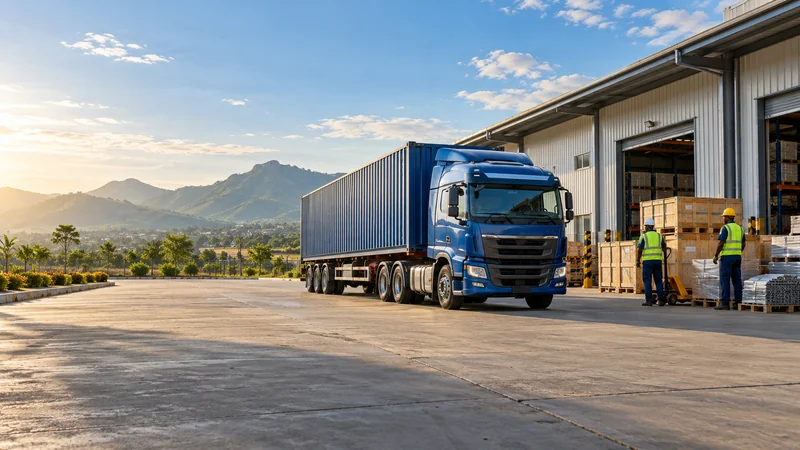
Shipping from China to Morogoro for factories and industrial warehouses typically involves sea freight to Dar es Salaam, customs release, and inland delivery to the receiving site. Before dispatch, confirm the factory address, truck access, cargo format, unloading equipment, and receiving hours. Door-to-factory delivery also requires clear agreements on import clearance, unloading, waiting charges, and container returns. For the wider transport process, see our shipping from China to Tanzania guide.
Destination & Delivery Data Note — October 2026: Kihonda is a documented industrial area in Morogoro, while other industrial facilities require address-specific verification. Published industrial-park information does not establish guaranteed truck access or Winsail-operated delivery facilities. Local transport availability, charges, receiving conditions, and delivery schedules must be confirmed for each shipment.
1. Which Morogoro Industrial Area Is Your Shipment Going To?
When arranging shipping to Morogoro, specifying the city is not enough. A container truck delivering production equipment may face very different access conditions from a smaller vehicle carrying cartons to a warehouse.
The consignee’s exact receiving location determines the final transport arrangement, required vehicle, unloading equipment, and delivery appointment.
Kihonda Industrial Area and Other Factory Locations
Kihonda is an established industrial locality in Morogoro. The Small Industries Development Organization (SIDO) identifies its Morogoro Regional Office as being in Kihonda Industrial Area, opposite Intermech Engineering. Intermech also identifies its workshop and headquarters as being in Kihonda Industrial Estate.
Another identifiable destination is Mwenge Industrial Park in Kingolwira. Its developer, MAC Group, describes industrial and warehousing facilities at that location. However, the current receiving conditions of any particular tenant or warehouse must be confirmed directly.
These locations are geographic references, not designated Winsail warehouses or guaranteed service points.
Importers should provide the individual factory name, delivery address, GPS location, and receiving contact rather than relying on the industrial area’s name.
Confirm the Factory Gate Before Dispatch
The most important questions are practical:
- Can a loaded container trailer reach the factory entrance?
- Is the internal road suitable for the vehicle’s weight and turning requirements?
- Does the warehouse have a loading dock or designated unloading area?
- Is there enough space to position the truck safely?
- Does security require advance vehicle or driver registration?
A factory address may be valid even when the planned delivery vehicle cannot enter the premises. In that situation, a different vehicle or a separately arranged transfer operation may be necessary.
Pro Tip — Confirm the Receiving Gate: Ask the consignee for the correct entrance GPS pin, a recent gate photograph, and the receiving supervisor’s contact information. These details are often more useful for final delivery planning than a general industrial-park address.
2. How Cargo Moves from China via Dar es Salaam to Morogoro
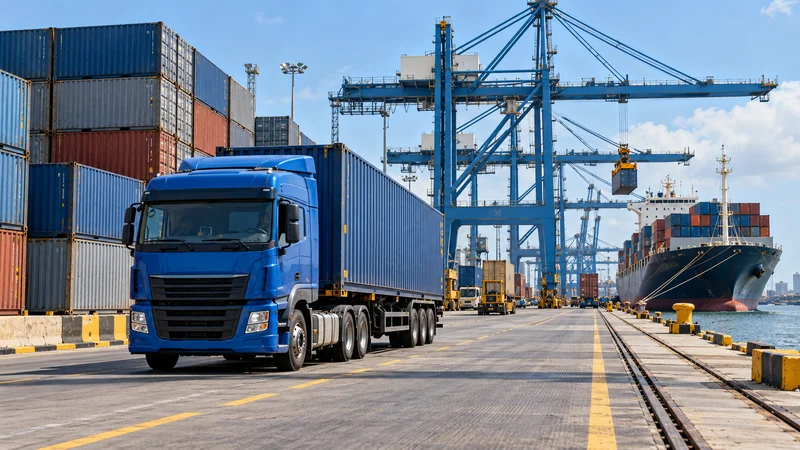
For most industrial sea shipments, Dar es Salaam is the arrival gateway before cargo moves inland to Morogoro. The process includes international freight, import clearance, cargo release, inland transportation, and final factory acceptance.
The general shipment sequence is:
China Supplier → Export Handling → Ocean Freight → Dar es Salaam Port → Customs Release → Inland Trucking → Morogoro Factory
From Chinese Supplier to Dar es Salaam Port
Industrial goods may be collected from suppliers in Guangzhou, Shenzhen, Shanghai, Ningbo, or other Chinese manufacturing locations.
Depending on cargo volume and handling requirements, the shipment may move as a full container load (FCL), less than container load (LCL), or specially arranged non-containerized cargo.
FCL cargo normally remains in its dedicated container during international transportation. LCL cargo is consolidated with other shipments and subsequently separated at the destination facility.
For a broader explanation of these arrangements, see sea freight from China to Tanzania.
Customs and Port Release Before Inland Delivery
The Tanzania Revenue Authority (TRA) requires importers to appoint a licensed clearing and forwarding agent. Import documentation is processed through the Tanzania Customs Integrated System (TANCIS).
The Tanzania Ports Authority import process describes customs clearance, shipping-agent release documentation, port payments, vehicle announcement, and cargo collection requirements.
A container cannot simply be dispatched to Morogoro when its vessel arrives. Applicable customs, shipping-line, terminal, and release requirements must be completed first.
The receiving factory should therefore coordinate its unloading arrangements against confirmed cargo release and truck dispatch, rather than the estimated vessel arrival date alone.
Road Delivery and Possible Rail Connections
Road freight is the practical baseline to assess for delivery from Dar es Salaam to a factory or warehouse in Morogoro.
Rail or combined rail-and-road movement may also be evaluated for suitable cargo, but only after confirming the available freight service, accepting terminal, cargo-transfer arrangements, and final trucking requirements.
An operational railway corridor does not automatically mean that a particular industrial site can receive containers directly by rail.
3. Loose Cargo, Palletized LCL, or Full Container Delivery?
Cargo format has a direct impact on the final vehicle, receiving equipment, and unloading process.
A warehouse accepting cartons by hand has different requirements from a factory receiving a sealed 40ft container or several heavy machinery crates.
Loose Cartons and Palletized LCL
LCL cargo is normally released after deconsolidation at a container freight station (CFS) or another applicable handling facility.
Loose cartons may be suitable for manual unloading, depending on their weight and quantity. Palletized shipments generally require compatible handling equipment and a suitable delivery vehicle.
The importer should establish whether pallet delivery, unloading, and any repacking or cargo transfer are included in the local service.
For smaller industrial orders, review LCL shipping cost per CBM from China to Tanzania before comparing the complete delivery costs.
Full Container Delivery to the Factory
FCL cargo may be delivered in its original 20ft or 40ft container when the receiving site and local transport conditions permit.
Before arranging this service, the importer needs to confirm:
- Whether a container trailer can enter and maneuver safely.
- Whether the factory can unload cargo from the container.
- How long unloading is expected to take.
- Who arranges the return of the empty container.
Container delivery also involves shipping-line equipment-return instructions and applicable free-time conditions.
Importers comparing equipment options can refer to 20ft and 40ft container shipping costs from China to Tanzania.
Cargo Format and Factory Delivery Comparison
| Cargo Format | Typical Destination Handling | Factory Receiving Requirement | Main Delivery Risk |
|---|---|---|---|
| Loose cartons | CFS release and local transport | Receiving labor and counting | Damage or quantity discrepancies |
| Palletized LCL | CFS release and pallet-compatible transport | Forklift or suitable pallet-handling equipment | Equipment incompatibility |
| 20ft FCL | Container release and trailer transport | Container access and unloading arrangement | Restricted access or delayed return |
| 40ft FCL | Container release and trailer transport | Adequate turning and unloading space | Trailer access and waiting time |
| Oversized machinery | Special cargo handling | Approved transport and lifting plan | Route or unloading restrictions |
These are general planning arrangements. The actual vehicle and unloading method depend on cargo characteristics, local availability, and the receiving facility.
Important: Loose cartons, palletized LCL, full containers, and breakbulk cargo are not interchangeable shipment categories. Each may require different handling and pricing.
4. Preparing Machinery and Industrial Materials for Morogoro Delivery
Industrial imports may include processing machinery, production-line components, mechanical parts, metal products, packaging materials, and other manufacturing supplies.
For these shipments, proper delivery planning begins before the goods leave the Chinese supplier.
Machinery Packing and Handling Requirements
A freight forwarder needs accurate cargo specifications to assess suitable equipment and handling arrangements.
For every significant package, provide:
- Packed length, width, height, and gross weight.
- Center of gravity and approved lifting points.
- Crate, skid, or pallet construction.
- Required loading orientation.
- Stacking restrictions and cargo-securing instructions.
- Moisture protection and shock-sensitive components.
Machinery should be secured for international transport and the handling operations it is expected to undergo.
An individually heavy machine may require a lifting assessment even when its total dimensions fit inside a standard container.
Production-Line Equipment and Multi-Piece Deliveries
A production line may consist of several individually packed machines, control cabinets, accessories, and installation components.
Each package should have a clear identification number corresponding to the packing list.
For installation-sensitive deliveries, the importer should confirm whether all components must arrive together or whether staged delivery is acceptable.
A factory may also need a particular unloading sequence to position equipment correctly.
Transport delivery and machinery installation are separate activities. Installation, commissioning, foundation preparation, and internal machinery positioning should not be assumed to form part of a normal freight quotation.
Heavy and Oversized Industrial Cargo
Oversized or unusually heavy equipment may require a special trailer, route assessment, transport authorization, or dedicated lifting arrangement.
The cargo’s overall dimensions, individual weight, lifting configuration, and route characteristics determine which requirements apply.
Do not assume that machinery can travel from Dar es Salaam to Morogoro on a conventional container truck merely because it has already arrived at the port.
5. Can the Delivery Truck Enter and Unload at the Factory?
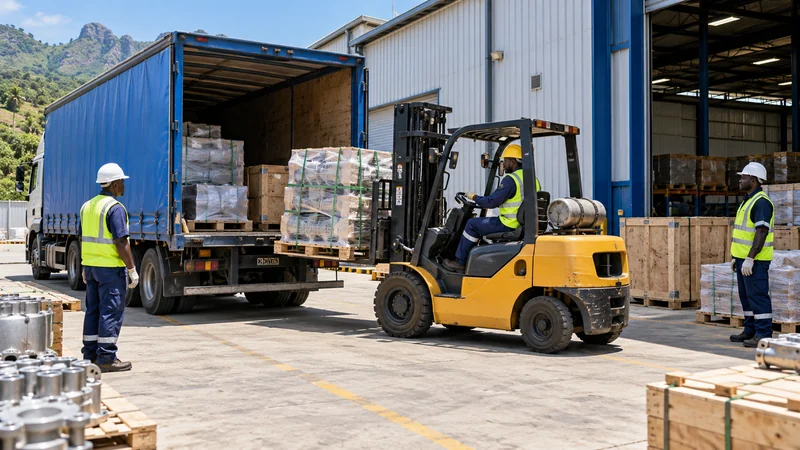
A door-to-factory delivery arrangement must account for what happens after the truck reaches the receiving location.
This is especially important for industrial warehouses, processing plants, and factories receiving heavy materials or production equipment.
Factory Gate Access and Vehicle Restrictions
The receiving party should verify gate dimensions, road conditions, vehicle restrictions, and parking arrangements.
Important questions include whether the truck can turn safely inside the compound, whether the surface can support the vehicle, and whether access requires security registration.
A truck that reaches the correct industrial area may still be unable to enter the factory.
If direct access is unsuitable, an alternative unloading location or cargo transfer may be necessary. Such arrangements require separate feasibility and cost confirmation.
Forklifts, Cranes, and Unloading Responsibility
The receiving factory should confirm who will provide the unloading equipment and personnel.
The required arrangement depends on package weight, handling points, delivery-vehicle height, and the unloading area’s physical conditions.
Possible requirements include forklifts, cranes, loading platforms, lifting accessories, and qualified operators.
Equipment capacity must be appropriate for the actual lift. The availability of a forklift alone does not establish that it can safely handle every machine or pallet.
Receiving Hours and Delivery Appointments
Factory receiving hours must be verified with the actual consignee.
Delivery arrangements may also depend on shift changes, maintenance shutdowns, security authorization, and the availability of unloading personnel.
No single receiving schedule should be assumed to apply to all Morogoro industrial facilities.
Morogoro Factory Receiving Conditions Checklist
| Delivery Condition | What Must Be Confirmed | Why It Matters |
|---|---|---|
| Factory address | Complete address and GPS pin | Prevents incorrect dispatch |
| Receiving gate | Entrance location and dimensions | Determines vehicle access |
| Internal roads | Surface, turning space, and restrictions | Determines truck suitability |
| Delivery appointment | Approved date and receiving hours | Reduces failed-delivery risk |
| Unloading equipment | Equipment type, capacity, and availability | Supports safe unloading |
| Receiving personnel | Supervisor and authorized signatory | Enables cargo acceptance |
| Container unloading | Expected unloading time and method | Affects equipment-return planning |
| Empty-container return | Responsible party, depot, and deadline | Helps control detention exposure |
| Delivery documentation | Signed delivery note and discrepancy process | Confirms the handover |
The checklist should be completed with the consignee before the local delivery vehicle is dispatched.
Pro Tip — Confirm Unloading Resources Before Dispatch: A truck appointment should match the confirmed availability of the receiving crew and lifting equipment. Agree in advance who is responsible for waiting charges or rescheduling if the factory cannot begin unloading when the vehicle arrives.
Assess Delivery to Morogoro
Planning a shipment of industrial materials, machinery, or containerized goods?
Share your factory location, cargo dimensions, shipment format, and unloading conditions with Winsail Logistics. Our team can review the requirements and assess the available transportation arrangements before providing a shipment-specific proposal.
6. Import Clearance, Incoterms, and Delivery Responsibilities
A successful industrial delivery also requires clear arrangements for import clearance, regulatory compliance, and contractual responsibilities.
Importer and Customs Clearance Responsibilities
For Mainland Tanzania imports, the importer should have an appropriate arrangement with a licensed clearing and forwarding agent.
The standard document package generally includes the commercial invoice, packing list, Bill of Lading, importer authorization, and any relevant permits or certificates.
Customs classification, valuation, import duties, taxes, and applicable restrictions depend on the actual goods and import circumstances.
For machinery and industrial materials, accurate product descriptions and technical specifications are especially important.
Product Conformity and Import Certificates
Some imported goods are subject to Tanzania’s Pre-Shipment Verification of Conformity (PVoC) programme.
The Tanzania Bureau of Standards publishes regulated product information, certification procedures, and exemption guidance. Its published materials include an August 2026 summarized PVoC procedure.
Importers should check requirements against the applicable product classification before dispatch from China.
Not every machine or industrial material is subject to identical conformity requirements, and exemptions must not be assumed without verification.
This guide concerns Mainland Tanzania deliveries. Zanzibar may involve distinct regulatory procedures and should be assessed separately.
DAP, DPU, and DDP for Factory Deliveries
The agreed Incoterms® 2020 rule helps establish the buyer’s and seller’s delivery, import-clearance, and unloading responsibilities.
| Delivery Term | Import Clearance and Duties | Unloading at Named Destination |
|---|---|---|
| DAP — Delivered at Place | Generally buyer | Generally buyer |
| DPU — Delivered at Place Unloaded | Generally buyer | Seller |
| DDP — Delivered Duty Paid | Seller | Generally buyer |
Under DAP, the seller normally delivers the goods ready for unloading at the named destination.
Under DPU, the seller is responsible for unloading at the agreed place.
DDP places import-clearance and duty responsibilities on the seller, which requires a legally workable arrangement in the destination country.
The sales contract should identify the precise named destination and any separately agreed unloading services.
Door-to-door shipping is not automatically DDP. A quotation that includes transport to the factory does not necessarily include import duties, local regulatory approvals, crane hire, unloading labor, or machinery installation.
7. What Should a Morogoro Factory-Delivery Quote Include?
A useful quotation should identify the services required from the Chinese pickup address to the actual factory receiving point.
A low ocean-freight price does not necessarily produce the lowest total delivery cost.
Main Cost Components
The complete budget may include origin handling, international freight, Dar es Salaam destination handling, customs brokerage, taxes, inland transport, and receiving-related expenses.
For the wider Tanzania cost structure, see shipping costs from China to Tanzania.
The following matrix helps compare the final-delivery scope of different offers.
Factory Delivery Quote and Responsibility Matrix
| Cost or Service | Charging Basis | What to Confirm |
|---|---|---|
| International freight | Per container or chargeable LCL unit | Carrier, route, included services |
| Dar destination handling | Applicable terminal or service charges | Charge issuer and invoice scope |
| Customs clearance | Agreed brokerage service | Agent, importer, permits, and taxes |
| Inland trucking | Shipment-specific transport quotation | Exact destination and vehicle |
| Cargo transfer | Where additional handling is necessary | Transfer facility and equipment |
| Factory unloading | Contracted labor or equipment | Responsible party and lifting scope |
| Waiting or re-delivery | Applicable transport conditions | Allowances, rates, and triggers |
| Container return | Carrier and transport arrangements | Return depot, deadline, and responsibility |
No fixed trucking rate should be assumed for all Morogoro industrial destinations.
The final price depends on the actual address, cargo characteristics, vehicle requirements, service availability, and quotation date.
Delivery Scheduling and Exception Handling
A practical delivery plan should distinguish four milestones:
- Cargo released: Relevant customs, carrier, and terminal requirements are complete.
- Vehicle dispatched: The correct truck and loading arrangement are confirmed.
- Cargo received: The factory accepts the delivery under the agreed conditions.
- Equipment returned: Where applicable, the empty container is returned according to carrier instructions.
Any change to the delivery address, unloading arrangements, or vehicle type should be approved before it creates additional cost.
For FCL shipments, confirm the applicable carrier free time and container-return deadline. Port storage, demurrage, and detention may arise under different terms and should not be treated as one interchangeable charge.
Proof of Delivery and Factory Handover
The final receiving process should include a delivery note or other agreed proof of delivery (POD).
Depending on the shipment, the receiving record should identify the package count, visible packaging condition, discrepancies, container or seal details, and authorized receiving signature.
Any visible damage or shortage should be recorded promptly under the relevant delivery and claims procedures.
A signed freight-delivery document should not automatically be interpreted as acceptance of machinery installation or successful commissioning.
Assess Delivery to Morogoro
Shipping industrial materials, factory equipment, palletized goods, or a full container from China?
To evaluate the available delivery arrangements, provide your Chinese supplier’s pickup address, cargo description, package dimensions and weights, intended shipment date, Morogoro receiving location, and any truck-access or unloading restrictions.
Winsail Logistics can assess the shipment requirements and clarify the proposed service scope, subject to local transport availability and confirmation.
FAQ
Can a 40ft container be delivered directly to a factory in Kihonda, Morogoro?
Direct container delivery may be possible where the receiving factory and transport route can accommodate the required vehicle. The importer should confirm gate access, turning space, safe unloading, and the empty-container return arrangement. The name Kihonda Industrial Area alone does not establish that every factory is suitable for 40ft container delivery.
Who is responsible for unloading machinery under DAP terms?
Under DAP Incoterms® 2020, unloading at the named destination is generally the buyer’s responsibility. However, the actual sales contract and any separately arranged unloading services should be checked. Machinery requiring cranes, specialized rigging, or additional labor needs a clearly agreed handling plan.
Is palletized LCL better than loose cartons for an industrial warehouse?
Palletized LCL may reduce individual carton handling and support forklift-based receiving when appropriate equipment is available. Loose cartons may suit smaller deliveries or locations without pallet-handling facilities. Compare packaging protection, handling costs, shipment size, and the receiving warehouse’s equipment before selecting the cargo format.
How early should a factory delivery appointment be booked after Dar es Salaam clearance?
Arrange the appointment as soon as the expected release and transport arrangements are sufficiently reliable. The actual delivery slot should be confirmed against completed release requirements, truck availability, receiving hours, and any container free-time deadlines. There is no universal appointment lead time for all Morogoro factories.
Can oversized production-line equipment be transported from Dar es Salaam to Morogoro?
Potentially, but feasibility depends on the cargo dimensions, weight, transport equipment, road conditions, applicable authorizations, and unloading capacity. A route assessment and lifting plan may be necessary. Special equipment movements should be evaluated before shipment rather than after arrival at Dar es Salaam.
Is rail freight available for container delivery to Morogoro industrial sites?
Rail freight should be evaluated only against the current operator’s available services, accepting terminals, cargo-handling arrangements, and onward transport requirements. Even when an inland rail service is available, final delivery to a factory may still require trucking. Do not assume direct factory rail access without confirmation.
Does a door-to-factory quote include port storage, unloading, and empty-container return?
Not automatically. These items depend on the quoted service scope and contractual arrangements. Ask for an itemized offer stating whether destination charges, customs services, unloading equipment, waiting, storage exposure, and container return are included, excluded, or charged separately.
