
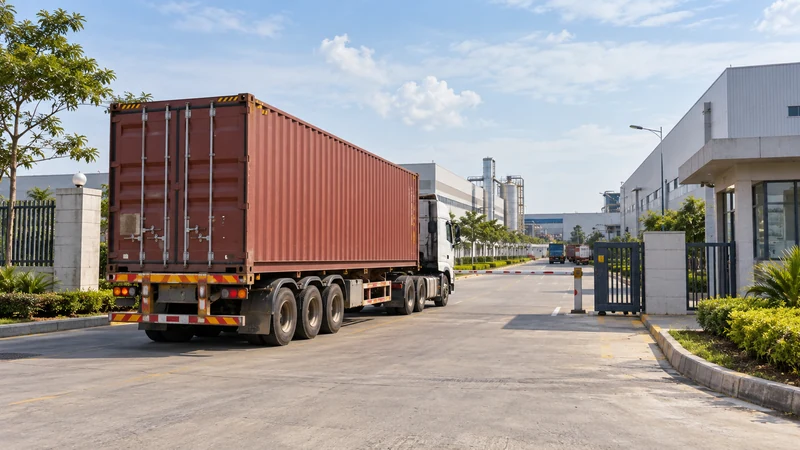
Shipping from China to Ogun State is primarily a gateway-and-factory-delivery decision.
Cargo for an Ogun factory normally enters Nigeria through an appropriate Lagos-area seaport or Lagos air gateway, completes the required port and Customs procedures, and then moves inland to the actual factory, warehouse or industrial estate.
The right route can be very different depending on whether the delivery point is in Ota, Atan–Agbara, Sagamu/Remo, Ijebu, Abeokuta or another part of Ogun State.
For example, an Ota importer may compare Apapa and Tin Can together with available inland options. A factory farther east toward Remo or Ijebu may have stronger reasons to compare Lekki against the traditional Lagos ports. An urgent machinery spare part may instead arrive by air through Lagos and move directly by road to the plant.
Ogun is one of Nigeria’s major manufacturing centers. OgunInvest identifies six Economic Development Clusters, including industrial and logistics development around Atan–Agbara, industrial estates in Remo and Ijebu, and industrial development around Abeokuta. NIPC also identifies Ogun as one of Nigeria’s key manufacturing states. OgunInvest
For a broader overview of route planning, freight modes, Customs and delivery into Nigeria, see Shipping from China to Nigeria.
The important point is not simply “Which port is closest to Ogun?”
It is:
Which gateway, terminal, inland route and container-return plan gives the most reliable delivered solution to the actual factory gate?
China to Ogun Shipping Routes at a Glance
There is no single China-to-Ogun route that works best for every factory.
Typical routing options include:
| Route | Typical Use | Main Planning Point |
|---|---|---|
| China → Apapa → road → Ogun factory | FCL, LCL and industrial cargo | Compare terminal, trucking and factory location |
| China → Apapa → rail/inland segment → final road delivery | Selected container flows | Confirm current rail service, discharge point and final-mile arrangement |
| China → Tin Can → road → Ogun factory | FCL, machinery, containerized or terminal-specific cargo | Carrier and terminal booking strongly affect the solution |
| China → Lekki → road → Ogun factory | Particularly worth comparing for eastern/southeastern Ogun | Compare ocean service with total inland distance and cost |
| China → LOS → road → Ogun factory | Urgent parts, samples and higher-value air freight | Air cost versus production urgency |
Murtala Muhammed International Airport in Lagos remains an established international cargo gateway, and FAAN states that its international and cargo terminals operate 24 hours. Cargo operations have dedicated facilities and procedures separate from passenger operations. FAAN
For urgent shipments, Air Freight from China to Nigeria can be compared with ocean freight based on chargeable weight, cargo value and the operational cost of production delay.
For ocean freight, the final choice should be made against the live carrier schedule, actual Nigerian terminal, destination charges, Customs arrangement, trucking or rail option and empty-container return requirement. For mode-specific planning, see Sea Freight from China to Nigeria.
First Identify the Ogun Industrial Area
Before comparing ocean rates, identify the factory’s exact industrial area and gate location.
Quoting a shipment simply as “delivery to Ogun State” is not sufficient. Ogun covers several industrial corridors with very different approaches from Lagos.
Ota / Ado-Odo-Ota
Ota is one of the most important manufacturing destinations to evaluate from the traditional Lagos port system.
Apapa deserves particular attention because APM Terminals currently lists narrow-gauge rail capability as suitable for customers with cargo bound for Ota, as well as several Lagos destinations. This should not be interpreted as guaranteed rail delivery directly to every Ota factory: the available schedule, discharge arrangement and last-mile leg still need to be checked for the shipment. APM Terminals
Road delivery from Apapa or Tin Can should therefore be compared with any practical inland rail arrangement rather than assuming one mode is always cheaper.
Atan–Agbara
Atan–Agbara has a strong industrial and logistics profile.
OgunInvest describes the Atan–Agbara Economic Development Cluster as supporting industrial estates together with distribution and logistics hubs. OgunInvest
For factories in this corridor, Apapa and Tin Can will usually be logical gateways to compare first because the delivery route approaches Ogun from the western Lagos side.
However, port selection should still follow the actual shipping-line service and inland quotation. A cheaper ocean freight rate can be cancelled out by more difficult terminal evacuation, truck waiting, container detention or an inefficient empty return.
Remo / Sagamu
Remo and Sagamu require a broader comparison.
The area sits far enough east of the western Ogun manufacturing corridors that Apapa, Tin Can and Lekki may all deserve consideration, depending on the carrier and the exact delivery address.
OgunInvest identifies Remo as an area containing industrial estates. OgunInvest
For a Sagamu-area factory, the practical question is therefore not “Is Lekki newer?” but whether the Lekki ocean service plus road leg produces a better overall result than an Apapa or Tin Can booking.
Ijebu
For an Ijebu-area consignee, Lekki should normally be included in the comparison because of its position east of central Lagos.
OgunInvest identifies the Ijebu Economic Development Cluster as including industrial estates and the Gateway International Agro-Cargo Airport. OgunInvest
For China-origin ocean cargo, however, planning should still be based on an operational seaport service verified for the booking. The existence of airport or proposed inland infrastructure does not replace the need to confirm the actual international freight gateway.
Abeokuta / Kajola Corridor
Abeokuta and surrounding industrial areas are more heavily influenced by inland haulage.
OgunInvest identifies industrial estates and the Kajola Free Trade Zone within the Abeokuta Economic Development Cluster. OgunInvest
For these shipments, evaluate not only the ocean freight but also the complete port-to-factory and empty-return movement.
Ogun Industrial-Area Matrix
| Factory Area | Gateways to Compare First | Main Reason | Critical Inland Check |
|---|---|---|---|
| Ota | Apapa / Tin Can | Access from western/northwestern Lagos plus inland options | Road/rail arrangement and factory gate |
| Atan / Agbara | Apapa / Tin Can | Western industrial corridor | Truck route, waiting and empty return |
| Remo / Sagamu | Apapa / Tin Can / Lekki | Port-to-site routing can differ substantially | Total trucking distance and reliability |
| Ijebu | Lekki + other Lagos gateways | Eastern location strengthens the Lekki comparison | Actual site route and carrier service |
| Abeokuta / Kajola | Lagos gateways | Inland haulage is a major part of the move | Trucking, factory access and return plan |
These are comparison priorities, not permanent cheapest-port recommendations.
Check My Ogun Factory Route: Send the exact factory location together with the cargo details before selecting the Nigerian gateway.
Apapa for Ogun Factory Deliveries
Apapa remains an important option for Ogun manufacturers because it combines established container-terminal operations with road and rail connectivity.
The Nigerian Ports Authority lists APM Terminals as the container-terminal operator at Lagos Port Complex, while other Apapa terminals handle bulk, breakbulk, general and container cargo. Nigerian Ports Authority
APM Terminals also offers both standard- and narrow-gauge rail services.
Its current standard-gauge service connects Apapa with Moniya in Ibadan, while its narrow-gauge capability is specifically described as suitable for cargo bound for Ota. The operator states that the Apapa–Moniya service runs on a fixed three-times-weekly schedule, although all actual bookings still depend on operational availability and clearance. APM Terminals
This gives Apapa a useful multimodal advantage, but it does not make Apapa automatically the best port for every Ogun factory.
For each shipment, compare:
- the shipping line and sailing from China;
- the actual Apapa terminal;
- local terminal and destination charges;
- Customs and cargo-release requirements;
- road versus available inland service;
- delivery appointment at the factory;
- container waiting time;
- and the empty-container return arrangement.
Tin Can for Ogun Deliveries
Tin Can Island Port Complex can also be commercially attractive for Ogun-bound cargo, particularly when the selected shipping line, terminal or cargo type favors a Tin Can booking.
It should not be treated as one single terminal.
NPA lists several operators within the Tin Can complex, including container, general-cargo and vehicle-handling facilities. Nigerian Ports Authority
This matters because the operational flow for a container at one Tin Can terminal may differ from cargo handled at another.
Before choosing Tin Can, confirm:
| Check | Why It Matters |
|---|---|
| Shipping line | Determines available China–Nigeria routing |
| Discharge terminal | Controls the terminal workflow |
| Cargo type | Container, general cargo and vehicle handling differ |
| Factory location | Influences the Ogun road route |
| Truck appointment | Affects evacuation planning |
| Empty return depot | Can materially change total trucking cost |
| Detention/free time | Important if the factory cannot unload quickly |
For western Ogun destinations such as Agbara or Ota, Tin Can should often be compared with Apapa rather than excluded on the basis of ocean freight alone.
Lekki for Ogun Deliveries
Lekki is now a real operating gateway and should be evaluated where the ocean service and inland route fit the shipment.
Lekki Freeport Terminal identifies itself as the container-terminal operator at Lekki Deep Sea Port and lists container handling, IMDG services, truck booking, online TDO and other terminal functions. Lekki Freeport Terminal
More importantly for China-origin freight, CMA CGM’s 2026 WAX1 structure includes a westbound rotation from Qingdao, Ningbo, Nansha and Shekou through Asia before calling Lekki after Abidjan. The current service page continues to show Lekki in this rotation. CMA CGM
That gives importers a verified example of direct China-origin service connectivity to Lekki.
Lekki may deserve stronger consideration when:
- a suitable carrier has an attractive direct or well-connected service;
- the factory is in Remo, Sagamu, Ijebu or another eastern Ogun corridor;
- the terminal can handle the cargo type;
- or the total delivered-cost comparison favors Lekki.
But newer does not automatically mean cheaper or faster to every Ogun factory.
A container for Agbara, for example, may face a completely different inland-distance calculation from a container for Ijebu.
Gateway Selection by Factory Location
The most useful way to select a port is to compare the complete shipment from the China supplier to the factory gate.
| Ogun Area | Ports to Compare | Cargo Strength | Inland Mode | Empty Return | Main Planning Risk |
|---|---|---|---|---|---|
| Ota | Apapa / Tin Can | Industrial inputs, FCL, machinery | Road; evaluate available rail option | Confirm for booking | Assuming port proximity equals lowest cost |
| Atan / Agbara | Apapa / Tin Can | Factory materials and repeat containers | Road | Important | Truck routing and waiting |
| Remo / Sagamu | Apapa / Tin Can / Lekki | Broad industrial cargo | Road | Compare by port | Large difference in inland routing |
| Ijebu | Lekki + alternatives | Containerized factory cargo | Road | Confirm | Ocean saving may not equal delivered saving |
| Abeokuta | Lagos gateways | Industrial inputs and machinery | Mainly compare complete inland plan | Important | Inland haulage and factory access |
The calculation should include more than the sea-freight rate:
Delivered logistics cost = ocean freight + destination/terminal charges + clearance-related costs + inland transport + waiting/storage exposure + container return costs.
For repeat imports, reliability may be worth more than a small saving in ocean freight. A factory that receives raw materials every month may benefit from a stable port-and-trucking strategy rather than changing gateways whenever a spot ocean rate moves slightly.
FCL Factory Delivery to Ogun
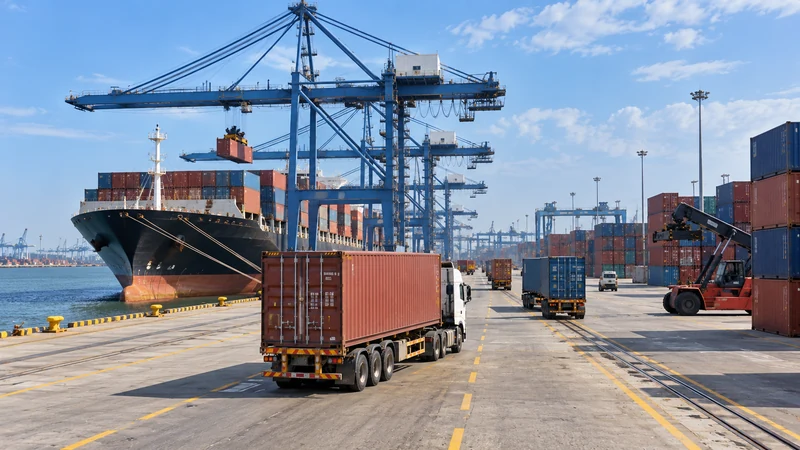
A full-container delivery normally follows this sequence:
China supplier → export loading → ocean freight → Nigerian port → Customs/release → container truck or approved inland movement → Ogun factory → unloading → empty-container return
For more detail on full-container planning, see FCL Shipping from China to Nigeria.
The factory itself is part of the logistics plan.
Before dispatching a 20ft or 40ft container, confirm:
- exact gate address;
- industrial-estate access rules;
- road condition on the final approach;
- gate height and width;
- whether a container chassis can enter;
- truck turning space;
- loading dock availability;
- forklift or crane availability;
- permitted delivery hours;
- unloading time;
- truck waiting restrictions;
- and the agreed empty-return location.
A direct container delivery is only useful when the factory can physically receive and unload it efficiently.
If a production site requires several hours to unload machinery manually, the container and truck plan should reflect that before departure from the port.
Send Factory Address & Cargo Details: Include unloading equipment and site-access information, not just the name of the city.
LCL Delivery to an Ogun Factory
LCL cargo normally follows a different flow:
China consolidation → ocean shipment → Lagos-area CFS/deconsolidation → clearance and release → loose-cargo truck → Ogun factory
For smaller consignments, see LCL Shipping from China to Nigeria.
Because the goods are removed from the consolidation container before final delivery, there is additional cargo handling compared with an intact FCL movement.
LCL can be suitable for smaller shipments such as components, replacement parts, packaging materials and lower-volume factory inputs.
Several Chinese suppliers can also be consolidated before export when the cargo, documentation and shipment timing are compatible.
For a multi-supplier factory order, provide the forwarder with:
- supplier locations in China;
- package count for each supplier;
- dimensions and gross weight;
- cargo description;
- readiness dates;
- and whether the goods can safely be combined.
The cheapest supplier-by-supplier shipment is not always the cheapest overall logistics structure.
Machinery and Production-Line Cargo
Ogun’s manufacturing base creates regular demand for machinery, production equipment and replacement components. NIPC describes Ogun as one of Nigeria’s major manufacturing locations and highlights significant factory activity within the state. NIPC
Machinery shipments require more planning than standard cartons or pallets.
| Information Required | Why It Matters |
|---|---|
| Packing list by piece | Determines handling plan |
| Crate dimensions | Identifies container fit |
| Gross weight per piece | Controls lifting and equipment selection |
| OOG dimensions | Determines whether special equipment is required |
| Container type | Standard, open top or flat rack may need comparison |
| Lift points | Important for heavy machinery |
| Destination crane/forklift | Determines factory unloading |
| Factory access | Confirms trailer and crane access |
| Installation sequence | Can affect delivery order |
Large equipment should be evaluated before booking rather than after the cargo reaches the Nigerian port.
A machine that fits within a container dimensionally may still create a problem if the factory does not have the forklift capacity, crane access or turning space required for unloading.
Raw Materials and Manufacturing Inputs
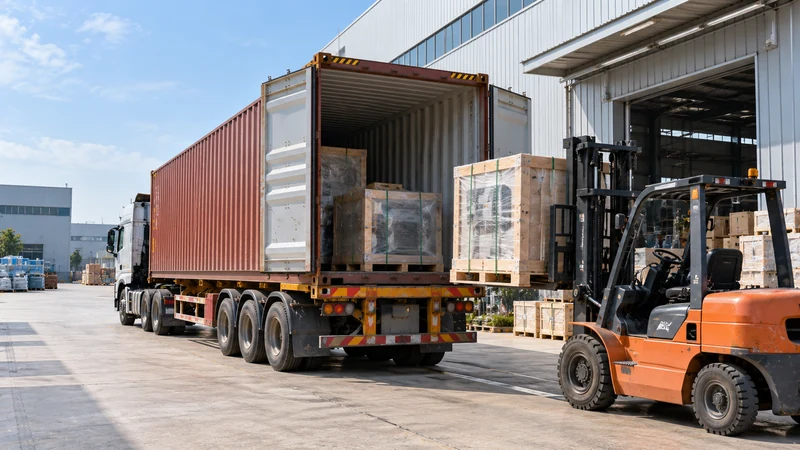
Repeat raw-material imports require a different approach from a one-off machinery shipment.
The logistics plan should consider:
- container payload;
- shipment frequency;
- warehouse capacity;
- production consumption rate;
- supplier readiness;
- inventory buffer;
- container free time;
- potential demurrage or detention exposure;
- and factory unloading capacity.
For regular imports, origin consolidation in China can also reduce fragmented supplier shipments.
A factory buying packaging, components and production inputs from several cities may benefit from coordinating supplier cargo into fewer planned departures where product compatibility and cargo-ready dates permit.
The objective is not simply to reduce freight cost. It is to protect the production schedule.
Inland Delivery Can Decide the Best Port
For Ogun cargo, the last inland segment can determine whether a port choice succeeds.
Before confirming a Nigerian gateway, check:
- the actual factory gate rather than only the town name;
- road approach to the industrial estate;
- container-trailer access;
- bridge, height or turning restrictions where relevant;
- delivery appointment requirements;
- factory security and gate procedures;
- weighbridge requirements;
- forklift or crane availability;
- truck waiting time;
- storage capacity;
- empty-container return instructions;
- and the operational impact of a late delivery.
A manufacturing customer may care more about a predictable arrival on Tuesday than saving a small amount on a container that reaches the factory unpredictably.
For shipments requiring final delivery coordination beyond the port, see Door-to-Door Shipping from China to Nigeria.
Pro Tip: Use the factory’s exact address and, where useful for the local transporter, precise gate location when requesting inland pricing. “Ogun State” is too broad for an accurate factory-delivery comparison.
Pro Tip: For repeat imports, benchmark a consistent gateway-and-inland strategy against shipment-by-shipment spot selection. Reliability can be more valuable than a small ocean-rate saving.
Ogun Customs and Free-Zone Considerations
The factory’s location in Ogun does not by itself determine the Customs process for the international import.
Initial import handling is linked to the actual port or airport of entry and the shipment’s Customs status.
Nigeria Customs currently lists separate commands for Apapa, Tin Can Island, Lekki Free Trade Zone and Murtala Muhammed cargo operations, as well as Ogun I. Earlier NCS operational material also distinguishes Ogun Customs activity associated with excise and free-trade-zone supervision. Nigeria Customs Service
Therefore, first determine:
Is the destination a normal domestic factory?
→ Plan normal import clearance through the relevant Nigerian entry gateway, followed by inland delivery.
Is the destination inside a Free Trade Zone?
→ Confirm the applicable zone, Customs movement procedure and receiving requirements before booking.
Is cargo moving under a transit or bonded arrangement?
→ Confirm the exact approved process with the Nigerian clearing and logistics parties.
Is the product regulated?
→ Complete product-specific compliance checks before shipment.
Do not assume that a factory can bypass seaport Customs formalities simply because the final delivery address is in Ogun.
Do Not Treat Proposed Ogun Infrastructure as a Current China Gateway
Ogun has significant logistics-development plans, but future infrastructure should not be presented as if it were already a normal deep-sea China import gateway.
OgunInvest currently describes the Olokola Deep Sea Port as proposed and also refers to planned dry-port infrastructure. OgunInvest
Therefore:
Do not route a current China shipment on the assumption that the container can discharge at an “Ogun Port.”
For an actual shipment, Winsail should base the routing on a verified operating gateway and a carrier service available at the time of booking.
This distinction is particularly important when comparing future investment maps with today’s operational freight network.
Cargo-Specific Planning for Ogun Factories
Different industrial cargo requires different preparation.
Manufacturing machinery: confirm individual piece weights, lifting, OOG requirements and factory unloading.
Raw materials: focus on payload, production schedule, inventory cycle and repeat-container planning.
Packaging materials: consolidation can be useful when sourcing from multiple suppliers.
Electronics and components: compare air freight with ocean freight when production downtime is expensive.
Chemicals: confirm classification, documentation, carrier acceptance and Nigerian regulatory requirements before booking.
Production equipment: conduct an access and lifting review for heavy units.
FMCG inventory: coordinate shipment volume with warehouse receiving capacity.
Solar and electrical equipment: protect sensitive components and confirm product-specific import requirements.
What Winsail Needs for an Ogun Factory-Delivery Quote
For an accurate China-to-Ogun routing comparison, provide:
- supplier city in China;
- cargo description;
- HS code where available;
- number of packages;
- dimensions;
- gross weight;
- total CBM;
- container or equipment requirement;
- cargo-ready date;
- exact Ogun factory address;
- industrial-estate name;
- factory contact;
- receiving hours;
- unloading method;
- crane or forklift availability;
- preferred port, if any;
- whether the destination is inside a Free Trade Zone;
- and whether the goods are dangerous, oversized or otherwise regulated.
For machinery, also provide piece-by-piece dimensions and weights.
For FCL, provide the unloading plan.
For repeat factory imports, provide expected monthly or annual shipment frequency so that the route can be evaluated as a supply-chain solution rather than a single container.
FAQ
Which Nigerian port should I use for an Ogun factory?
There is no single best port for all Ogun factories. Ota and Agbara shipments normally justify comparing Apapa and Tin Can first, while Remo, Sagamu and Ijebu shipments may also justify a strong Lekki comparison. The final decision should use the live carrier service, terminal, inland trucking or rail option, destination charges and empty-return plan.
Is there a seaport in Ogun State for China imports?
For current China shipment planning, do not assume that Ogun has an operating deep-sea container gateway equivalent to Apapa, Tin Can or Lekki. OgunInvest describes Olokola Deep Sea Port as proposed, so current routing should use operational gateways verified when the shipment is booked.
Which port is better for Ota cargo?
Apapa and Tin Can should generally be compared. Apapa has the additional advantage of rail connectivity, and APM Terminals currently states that its narrow-gauge service is suitable for cargo bound for Ota. Availability and the exact last-mile arrangement still need confirmation for each shipment.
How should cargo for Agbara be routed?
Apapa and Tin Can are logical gateways to compare because of Agbara's western location. The actual choice should depend on the shipping line, terminal, road haulage, factory gate and empty-container return arrangement.
Can containers move by rail toward Ota?
APM Terminals currently lists narrow-gauge rail capability suitable for customers with cargo bound for Ota. Rail schedules, space, discharge arrangements and final delivery should be confirmed for each booking.
Should Sagamu cargo use Lekki or Apapa?
Compare both rather than selecting by port name alone. Lekki may offer a favorable inland position for some eastern Ogun destinations and currently has direct China-origin carrier connectivity, while Apapa offers established container and inland options. The better route depends on the sailing, destination charges, trucking route and factory delivery requirement.
Can a full container be delivered directly to an Ogun factory?
Yes, where the shipment has been properly released and the factory can receive the truck and container. Before dispatch, confirm gate access, trailer turning space, receiving hours, unloading equipment, unloading time and empty-container return requirements.
What information is needed to quote factory delivery?
At minimum, provide the China supplier location, cargo description, weight and volume, cargo-ready date, exact Ogun factory address and unloading arrangement. Machinery, dangerous goods, Free Trade Zone deliveries and oversized cargo require additional details.
Compare Apapa, Tin Can & Lekki Delivery Options
For a factory shipment from China to Ogun State, the port is only one part of the route.
The better solution is the one that connects the China supplier, ocean or air service, Nigerian gateway, Customs process, inland movement and factory receiving operation with the lowest practical combination of cost, risk and delay.
Winsail Logistics handles shipments originating from China and can compare the appropriate Lagos-area gateway and inland-delivery structure for factories in Ota, Atan–Agbara, Remo, Sagamu, Ijebu, Abeokuta and other Ogun industrial areas.
Send the exact factory address together with the cargo details so the route can be evaluated to the actual factory gate, rather than priced only as “shipping to Ogun State.”
Operational note: carrier schedules, terminal arrangements, rail space, container-return depots, trucking conditions and Free Trade Zone procedures can change. These items should be reconfirmed for each live booking. Public infrastructure and service information in this article was checked against available official/operator sources in October 2026.
