

Quick Answer: What Are UAE Destination Charges?
UAE destination charges are fees that may arise after cargo from China reaches a UAE port or cargo station. They can include terminal handling, delivery order issuance, CFS handling for LCL, storage, container demurrage or detention, customs brokerage, inspections and inland trucking. Actual charges depend on the port, terminal, carrier, cargo, delivery terms and release timing. Import duties and VAT are separate. Request an itemized local-charge breakdown before shipment.
When importing goods from China to the UAE, the ocean freight quotation is only one part of the transportation cost. Once the vessel arrives at Jebel Ali or Khalifa Port, additional services may be necessary before the cargo can be released and delivered.
For an importer, the difficulty is not simply the number of charges. It is understanding which company imposes each fee, what the fee covers, whether it is already included in the freight quotation, and whether the amount is supported by the applicable tariff or service agreement.
A terminal handling charge, a shipping line’s delivery order fee and a customs broker’s service fee may all appear on a destination invoice. However, they represent different services and should not automatically be grouped together as “port charges.”
This guide explains the main UAE destination charge categories, how FCL and LCL fees differ, where to verify charges at Jebel Ali and Khalifa Port, and how to check an itemized local-charge quotation before payment.
What Are UAE Destination Charges, and Who Collects Them?
Destination charges cover services and expenses associated with cargo arrival, release, customs processing and onward transportation at the destination.
They are not necessarily collected by one organization. Depending on the shipping arrangement, an importer may receive invoices from the terminal operator, shipping line, destination agent, customs broker, warehouse operator or inland trucking company.
Some charges are collected directly by the original service provider. Others may be paid by a freight forwarder or local agent and subsequently included in the importer’s invoice.
Understanding this distinction is essential when reviewing destination costs.
UAE Destination Charge Categories and Billing Parties
| Charge Category | Common Charges | Typical Original Charging Party | Charging Basis |
|---|---|---|---|
| Port and terminal services | THC, TLUC, terminal storage, shifting | Terminal operator | Container, movement, service or day |
| Shipping line and release services | Delivery order, documentation, demurrage, detention | Shipping line, NVOCC or appointed agent | B/L, container, service or day |
| LCL cargo station services | CFS handling, deconsolidation, storage | CFS or consolidation operator | CBM, weight/measurement, shipment or day |
| Customs and regulatory services | Declaration, inspection and permit-related fees | Relevant government authority | Applicable government schedule |
| Customs brokerage | Declaration preparation and clearance coordination | Authorized customs broker | Entry, shipment or agreed service |
| Inland transportation | Container trucking, cargo delivery, waiting time | Transport provider | Trip, equipment, distance or time |
The organization issuing the invoice may be different from the organization originally providing the service.
For example, a destination agent may collect handling charges on behalf of a warehouse or terminal. The importer should still be able to identify the underlying service and charging basis.
Which Destination Charges Are Mandatory or Conditional?
Not every fee listed in a destination tariff applies to every shipment.
Charges generally fall into three groups:
- Expected service charges: Fees associated with the agreed cargo handling, documentation and release arrangement.
- Service-dependent charges: Expenses that apply only when a particular service is required, such as CFS handling, specialized equipment or inland delivery.
- Event-dependent charges: Additional expenses triggered by circumstances such as prolonged storage, equipment return delays, inspection, document amendments or extra handling.
For example, a standard FCL shipment may require terminal handling and documentation services, but additional terminal storage is not necessarily payable if the container is collected within the applicable free period.
Similarly, customs inspection-related handling should not be presented as an unavoidable fixed charge when no inspection has been requested.
The first step in checking any destination quotation is identifying which charges are expected, which are conditional, and which are excluded.
FCL vs LCL Destination Charges in the UAE
Full Container Load (FCL) and Less than Container Load (LCL) shipments do not follow identical destination handling processes.
With FCL shipping, the importer is generally arranging the release and movement of an entire container. With LCL shipping, the cargo must normally be separated from other shipments at a destination cargo station before individual consignments can be collected.
This difference affects both the types of local fees and how they are calculated.
FCL Destination Charges: Fees Charged Per Container
An FCL shipment arriving at Jebel Ali or Khalifa Port may involve the following charges:
- Terminal handling charges for the relevant container movement.
- Terminal truck loading or other applicable gate-related services.
- Delivery order and destination documentation charges.
- Customs declaration and brokerage services.
- Terminal storage if the applicable free period expires.
- Shipping line demurrage or detention when relevant contractual conditions are triggered.
- Inland container trucking to the receiving warehouse.
- Empty container return arrangements.
- Inspection or additional terminal handling when required.
Container size and equipment type matter.
A 20-foot general-purpose container and a 40-foot high-cube container may fall into different tariff categories. Refrigerated, dangerous goods and out-of-gauge containers may also be subject to additional conditions.
Importers should request a quotation based on the actual equipment rather than accepting a generic “per container” charge without clarification.
LCL Destination Charges: Fees Charged Per Shipment or Measurement
An LCL shipment follows a different release process.
The consolidated container is discharged and transferred to the appointed container freight station (CFS) or another authorized cargo-handling facility. Individual shipments are then separated according to their transport documents and release instructions.
Depending on the arrangement, the importer may encounter:
- Destination agent documentation fees.
- Delivery order or house B/L release fees.
- CFS deconsolidation and handling charges.
- Warehouse receiving, handling or loading fees.
- Cargo storage after the applicable free period.
- Customs brokerage and inspection-related services.
- Local transportation from the cargo station to the consignee.
Unlike FCL, the buyer normally collects its own consignment rather than the entire shipping-line container.
The actual cargo station matters because its handling tariff, release procedures and storage conditions may differ from those of the container terminal.
Why Small LCL Shipments Can Have Minimum Destination Charges
Some LCL charges are calculated according to cargo volume or weight, while others are fixed per shipment or document.
A CFS or consolidation agent may apply a weight/measurement (W/M) rule, a minimum chargeable quantity, or a fixed minimum fee.
For example, a small consignment may require nearly the same document processing and cargo release activities as a larger shipment.
This means a low-volume LCL shipment can still incur several fixed destination charges.
Importers should confirm:
- Whether handling is charged per CBM, metric tonne or revenue ton.
- Whether a minimum charge applies.
- How cargo measurement is rounded.
- Whether documentation is charged per house B/L.
- Whether CFS release and warehouse loading are included.
- When cargo storage charges begin.
FCL vs LCL Destination Charge Comparison
| Charge Item | FCL | LCL | Main Verification Point |
|---|---|---|---|
| Terminal handling | Generally relevant to the container movement | Usually incorporated into the consolidation arrangement or allocated according to contract | Confirm who collects it |
| Delivery order | Usually relevant | Usually relevant at the applicable B/L or house B/L level | Check the issuing agent |
| CFS deconsolidation | Usually not required for intact FCL delivery | Generally required | Check handling basis and minimum |
| Terminal storage | May apply to the full container | May affect the consolidation arrangement | Check whether any cost is passed through |
| Cargo station storage | Not normally applicable to intact container release | May apply after cargo availability | Confirm free period |
| Demurrage and detention | May apply under carrier terms | Not automatically a direct container-level charge to each consignee | Check contractual allocation |
| Customs brokerage | Depends on clearance arrangement | Depends on clearance arrangement | Confirm service scope |
| Inland transportation | Container trucking | Loose cargo or palletized delivery | Verify final address and vehicle requirements |
The key distinction: FCL local charges are often based on containers and equipment movements. LCL destination charges are more likely to combine fixed shipment fees with cargo-handling charges based on measurement, weight or minimum billing rules.
Common UAE Destination Fees Explained
Destination invoices often use abbreviations that are not immediately clear to importers.
The following explanations cover the main charges associated with sea freight arriving in the UAE.
Terminal Handling Charges (THC)
Terminal Handling Charges generally relate to terminal operations associated with loading, discharging or handling containers.
For imports, destination THC commonly relates to the discharge-side terminal handling service, although the exact service definition depends on the terminal and commercial arrangement.
THC may be collected:
- Directly by the terminal operator.
- Through the shipping line.
- Through a destination agent or freight forwarder.
The same charge name may appear on different documents without necessarily representing an additional service.
Before accepting a THC invoice, confirm the actual terminal, equipment type, original charging party and whether the quoted service has already been paid.
Some terminal tariffs also distinguish THC from Truck Loading/Unloading Charges (TLUC).
TLUC can relate to moving a container between the terminal yard and a road vehicle. It should not be confused with the trucking company’s charge for delivering the container to a warehouse.
Where THC and TLUC appear separately, verify that both services apply under the terminal’s tariff and are not already included in another contractual charge.
Delivery Order (D/O) and Documentation Fees
A delivery order is part of the cargo release process.
The shipping line or authorized releasing agent issues the relevant release authorization once the applicable documentation, payment and release requirements have been satisfied.
For LCL cargo, the house B/L releasing agent or consolidator may also have a separate release process.
Common documentation-related charges can include:
- Delivery order issuance.
- Destination documentation processing.
- Bill of lading amendments.
- Additional release instructions.
- Reissuance or other specifically requested services.
These fees are commercial or administrative service charges, not automatically customs duties or government charges.
An importer should ask whether a quoted D/O fee is charged per bill of lading, per release document or per shipment.
If both the shipping line and an LCL agent have release charges, request clarification of which document and service each fee covers.
CFS Handling and Deconsolidation Charges
A Container Freight Station handles cargo associated with consolidated container shipments.
For an LCL import, the operator may perform several activities:
- Receive the consolidated container.
- Unload and separate individual consignments.
- Identify cargo against house B/L information.
- Store cargo pending clearance and release.
- Prepare the consignment for collection or onward delivery.
The CFS may charge for deconsolidation, cargo handling, storage and additional services.
Not every CFS uses the same fee structure. Some services may be charged by revenue ton, while others may be charged per consignment, handling activity or minimum quantity.
Importers should ask for the actual destination CFS name and charge schedule before shipment.
A quotation described only as “LCL destination handling” may be insufficient if it does not explain documentation, warehouse handling and storage conditions.
Terminal Storage Charges
Terminal storage charges may arise when a container or cargo remains at the terminal beyond its applicable free storage allowance.
The terminal operator establishes the relevant storage terms, subject to its tariff and contractual arrangements.
The charge may depend on:
- Container size.
- Import, export or transshipment status.
- Cargo classification.
- Duration of storage.
- Applicable free period.
- Special equipment or handling requirements.
Many terminal tariffs use escalating daily charge tiers. Consequently, an additional delay can move the shipment into a more expensive charging period.
The importer must verify the applicable starting event, the free-time allowance and the charging method rather than assuming that storage starts only when customs clearance is completed.
Demurrage and Detention Charges
Demurrage and detention normally relate to the use or retention of shipping line equipment.
They are separate concepts from terminal storage, although more than one time-based charge may apply to a delayed shipment.
Demurrage commonly relates to a carrier’s container remaining within the relevant terminal or port period beyond the applicable carrier allowance.
Detention commonly relates to container equipment retained outside the terminal beyond the contractual free period, including delays in returning an empty container.
Some carriers combine these periods into a merged demurrage-and-detention arrangement.
The applicable carrier tariff or booking agreement determines the charging method.
Importers should not assume that a terminal’s free storage period is identical to the shipping line’s equipment free time.
Customs Brokerage and Declaration Fees
Customs brokerage fees compensate an authorized customs broker for agreed clearance services.
Depending on the scope, these services may include preparing a customs declaration, reviewing documents, coordinating with authorities and supporting the clearance process.
Government customs declaration fees, import duties and import VAT are separate from the broker’s commercial service fee.
For an accurate breakdown, ask the broker or forwarder to distinguish:
- Brokerage service charges.
- Government declaration and processing fees.
- Customs duty.
- Import VAT.
- Product-specific permit or approval costs, where applicable.
The applicable amount depends on the goods, declaration, importer, customs treatment and relevant authority.
A freight quotation does not itself establish that the cargo is eligible for import or that a customs declaration will be approved.
For a more detailed explanation of the clearance process, see our customs clearance in UAE guide.
Customs Inspection and Additional Handling
UAE customs authorities may select shipments for documentation checks, scanning or physical inspection.
An inspection can result in additional operational services, potentially including:
- Container positioning or shifting.
- Cargo opening and examination assistance.
- Additional handling equipment.
- Repacking or resealing when necessary.
- Broker attendance or coordination.
- Extra storage or equipment time caused by delays.
Not all inspections result in every type of charge.
When a destination invoice includes inspection expenses, request the relevant inspection reference and an itemized description of the services actually performed.
Government assessments and private handling services should be identified separately.
Inland Trucking and Final Delivery
Inland transportation begins after the shipment has met the relevant release requirements and is ready for collection.
For FCL imports, the service may involve moving the container from the terminal to the receiver’s premises and arranging its return to the designated empty depot.
For LCL imports, transportation usually involves collecting the released cargo from the CFS and delivering it using a suitable local vehicle.
Truck quotations should account for:
- Actual pickup location.
- Final delivery address.
- Container or cargo dimensions and weight.
- Vehicle type.
- Loading and unloading responsibilities.
- Warehouse access and appointment requirements.
- Waiting time conditions.
- Empty container return location for FCL.
A quotation for “Dubai delivery” or “Abu Dhabi delivery” is not sufficiently precise if it does not identify the actual receiving address and service scope.
For construction materials, machinery or specialized industrial cargo, additional lifting equipment or site access arrangements may be necessary.
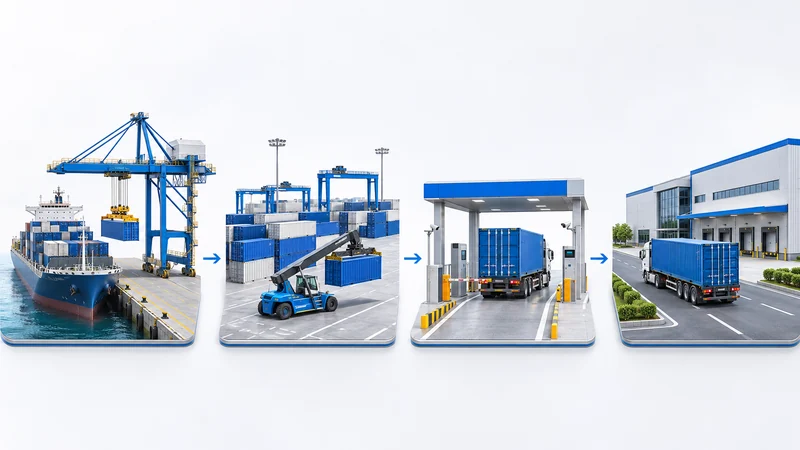
Jebel Ali vs Khalifa Port: How to Verify Destination Charges
Jebel Ali and Khalifa Port are major UAE gateways for imported sea cargo. However, their destination fees cannot be accurately compared through a single generic port-charge table.
The relevant terminal, shipping line, service arrangement and delivery destination must first be identified.
Jebel Ali Port: Checking DP World Charges
Jebel Ali is operated by DP World.
DP World’s published Jebel Ali and Mina Rashid tariff documentation identifies several relevant service categories, including container handling, truck loading/unloading, container storage and CFS-related activities.
The publicly accessible tariff reviewed for this guide is the November 2023 edition, effective November 1, 2023.
Because individual tariffs can be amended or replaced, the edition should not be treated as a guaranteed current price schedule for every shipment in 2026 or later.
Official reference: DP World — Jebel Ali and Mina Rashid Tariff Book
Before checking a Jebel Ali destination invoice:
- Identify the actual Jebel Ali terminal handling the container.
- Confirm the shipping line and destination releasing agent.
- Request the applicable DP World tariff edition or terminal invoice.
- Check whether destination THC is paid directly to the terminal or collected by another party.
- Verify applicable TLUC, storage and additional service charges.
- Confirm the separate shipping line documentation and equipment charges.
- Compare the quotation with the final delivery scope.
For example, a destination quotation may include a terminal handling item and a trucking item.
The importer should determine whether the terminal item covers the container’s handling at the port, while the trucking item covers road transportation to the warehouse.
Both can be legitimate when they represent different services. However, a terminal service already paid directly should not be charged again as an additional identical service without justification.
For broader routing and delivery considerations, see shipping from China to Jebel Ali.
Khalifa Port: Why the Actual Container Terminal Matters
Khalifa Port is an important gateway for Abu Dhabi and surrounding industrial areas.
Unlike a simplified view of the port as one terminal, its container operations involve multiple terminal businesses.
These include Abu Dhabi Terminals, CSP Abu Dhabi Terminal and CMA Terminals Khalifa Port.
The terminal handling an individual shipment must be confirmed before applying a specific tariff.
For example, CMA Terminals Khalifa Port publishes its own terminal tariff, covering container handling, truck loading/unloading, storage and additional services.
The publicly accessible CMA Terminals Khalifa Port tariff revised in October 2026 identifies these services under separate tariff categories.
Official reference: CMA Terminals Khalifa Port — Public Tariff, October 2026 Revision
This tariff applies to that terminal’s defined services. It should not automatically be used to calculate charges at another Khalifa Port container terminal.
For a Khalifa Port shipment, the importer should:
- Confirm the actual container terminal.
- Identify the responsible terminal operator.
- Obtain the applicable operator tariff.
- Confirm the shipping line’s destination service fees.
- Check the equipment type and any special handling conditions.
- Verify the appointed CFS or warehouse for LCL cargo.
- Obtain a separate inland delivery quotation for the Abu Dhabi destination.
If the shipment is being discharged at Abu Dhabi Terminals or CSP Abu Dhabi Terminal, request the appropriate operator’s tariff rather than substituting the CMA Terminals schedule.
For gateway planning and industrial deliveries, refer to our shipping from China to Khalifa Port guide.
Where to Verify Jebel Ali and Khalifa Port Local Charges
| Verification Item | Jebel Ali | Khalifa Port |
|---|---|---|
| Terminal operator | Confirm applicable DP World terminal | Identify ADT, CSP, CMA Terminals or relevant operator |
| Terminal handling | Applicable terminal tariff | Applicable terminal-specific tariff |
| Terminal storage | DP World tariff and applicable terms | Actual terminal operator’s storage tariff |
| Delivery order | Shipping line or releasing agent | Shipping line or releasing agent |
| Carrier demurrage/detention | Shipping line agreement | Shipping line agreement |
| LCL handling | Appointed CFS or destination agent | Appointed CFS or destination agent |
| Customs brokerage | Contracted authorized brokerage arrangement | Contracted authorized brokerage arrangement |
| Inland trucking | Actual UAE delivery address | Actual UAE delivery address |
A meaningful port comparison requires the same cargo, shipping terms and delivery scope. Otherwise, a lower quoted port charge may simply reflect an incomplete list of services.
Who Pays UAE Destination Charges Under FOB, CIF, CFR, DAP and DDP?
The buyer’s responsibility for destination expenses depends on the agreed sales contract, including the Incoterms® rule and named place.
However, the party contractually responsible for a charge is not necessarily the same party that initially receives the service provider’s invoice.
For example, a terminal may invoice the shipping line or agent even when the seller or buyer ultimately bears the cost under the sales agreement.
FOB, CFR and CIF: Which Destination Charges Remain Payable?
Under FOB (Free on Board), the seller delivers the goods on board the vessel at the named shipment port. The buyer generally arranges the main carriage and bears the relevant subsequent costs under the rule.
For CFR (Cost and Freight), the seller arranges and pays for carriage to the named destination port, while the buyer remains responsible for import clearance and related obligations. Risk transfers when the goods are on board the vessel, not upon arrival in the UAE.
CIF (Cost, Insurance and Freight) follows a similar transportation cost structure, with an additional seller obligation to arrange the specified cargo insurance.
CIF does not automatically include import clearance, duties, VAT or inland delivery.
Destination terminal costs require more careful examination. Some may be covered under the seller’s contract of carriage, while others may fall to the buyer under the applicable Incoterms provisions and actual transport agreement.
Therefore, an importer should not assume that all UAE local charges are excluded from CIF or that they are all included.
The correct approach is to check the agreed contract, freight quotation and destination charge breakdown together.
DAP: Destination Transport Included, Import Obligations Separate
Under DAP (Delivered at Place), the seller arranges carriage to the named destination and bears the relevant transportation responsibilities up to delivery at that place.
The buyer generally handles import clearance and pays applicable import duties and taxes.
At the named destination, the goods are normally placed at the buyer’s disposal on the arriving means of transport, ready for unloading.
For example, under DAP to a specified Dubai warehouse, the seller’s agreed transport scope should extend to that destination.
However, the buyer must still understand its import-clearance responsibilities and any costs or delays arising from those obligations.
The contract should clearly define the receiving address, unloading responsibilities and handling of unexpected charges.
DDP: Import Responsibility Must Be Legally and Operationally Feasible
Under DDP (Delivered Duty Paid), the seller assumes the import-clearance and applicable duty and tax obligations specified by Incoterms® 2020, in addition to carriage to the named destination.
This is a substantial responsibility.
The seller must have a legally workable arrangement for completing the necessary UAE import formalities. Naming a shipment “DDP” in a quotation does not establish that a foreign seller or freight forwarder is authorized to act as the importer or customs declarant.
Before agreeing to DDP, confirm:
- Who will fulfill the importer-of-record requirements.
- Which properly authorized party will handle customs declarations.
- How customs duties and import VAT will be accounted for.
- Whether the cargo requires additional regulatory approvals.
- Which expenses are included in the DDP price.
- Who bears the risk of charges arising from unexpected inspections or delays, under the agreed contract.
Free-zone and mainland movements may involve different customs and tax treatment. These arrangements must be verified for the actual transaction.
Destination Charge Responsibility by Incoterms Rule
| Trade Term | Main Carriage | UAE Import Clearance | Destination Cost Considerations |
|---|---|---|---|
| FOB | Generally buyer | Buyer | Buyer should confirm destination handling, release and delivery costs |
| CFR | Seller pays carriage to named port | Buyer | Review what the carriage contract includes at destination |
| CIF | Seller pays carriage and required insurance | Buyer | Freight and insurance do not automatically include every local charge |
| DAP | Seller arranges carriage to named place | Buyer | Seller’s destination transport scope and buyer’s import obligations must be distinguished |
| DDP | Seller arranges carriage to named place | Seller | Seller must be able to fulfill import and tax obligations lawfully |
These summaries follow the framework of ICC Incoterms® 2020. Actual contract wording and named places still matter.
For containerized cargo, parties should also consider whether FCA, CPT or CIP provides a more suitable contract structure than a traditional sea-only trade term.
The most practical question for destination cost control is:
Which UAE services are already included in the seller’s price, and which will the buyer need to arrange or pay separately?
Free Time, Storage, Demurrage and Detention: Understanding the Differences
Time-based charges can become a significant source of unexpected destination expenses.
The main problem is that importers sometimes receive a single statement such as “free time included” without knowing which charging system it applies to.
Terminal storage, shipping line demurrage, detention and LCL warehouse storage may follow different rules.
What Does Free Time Actually Mean?
Free time is a period during which a specific storage or equipment-related charge does not accrue under the applicable terms.
However, different organizations can provide separate allowances.
For an FCL shipment, relevant free-time categories may include:
- Terminal container storage free time.
- Shipping line demurrage free time.
- Shipping line detention free time.
- Combined demurrage-and-detention free time.
For an LCL shipment, the cargo station may have a separate storage allowance after the consignment becomes available.
Always ask:
“Free time for which charge, from which date, and under whose tariff?”
A free period granted by the terminal is not automatically an extension of the carrier’s equipment allowance.
Terminal Storage: Time Inside the Terminal
Terminal storage generally concerns the occupation of terminal space by cargo or containers.
The applicable tariff determines how the storage period is counted and when chargeable days begin.
For example, the October 2026 CMA Terminals Khalifa Port tariff specifies that full import container storage is calculated with reference to a period that includes the discharge date.
This demonstrates why an importer should not simply count days from receiving a delivery order or customs release notice.
The applicable free storage period must be confirmed for the specific terminal, equipment and cargo category.
Different arrangements or cargo classes may have different rules.
Demurrage: Carrier Equipment Remaining at the Port
Demurrage commonly applies when shipping line equipment remains within the relevant port or terminal period beyond the carrier’s agreed allowance.
The shipping line determines the applicable charging basis under the contract and tariff.
An importer may therefore face a carrier-related demurrage charge even when the terminal operator has a separate storage charging arrangement.
Detention: Container Equipment Outside the Terminal
Detention commonly concerns the period during which the carrier’s container remains outside the terminal beyond the applicable allowance.
For example, an importer may collect a container, deliver it to a warehouse and require additional time for unloading.
If the empty container is returned late under the carrier’s rules, detention may accrue.
The relevant end event may depend on the carrier’s requirements and accepted return location. Returning the container to an arbitrary depot is not necessarily sufficient.
Can Storage and Demurrage Apply at the Same Time?
Yes. Separate terminal storage and carrier equipment charges may apply during overlapping periods when their respective tariff conditions are met.
Some carriers also operate combined demurrage-and-detention schedules rather than treating the two stages entirely separately.
The correct approach is to compare the terminal’s charging clock with the carrier’s equipment clock.
| Charge | What It Covers | Typical Charging Party | Main Timing Reference |
|---|---|---|---|
| Terminal storage | Occupation of terminal space | Terminal operator | Discharge, terminal entry or other tariff-defined event to departure |
| Demurrage | Container equipment retained within the relevant terminal period | Shipping line | Carrier-defined event until gate-out or contractual endpoint |
| Detention | Container equipment retained outside the terminal | Shipping line | Gate-out to accepted equipment return or other contractual endpoint |
| Combined D&D | Equipment use under a merged arrangement | Shipping line | Contractually defined combined period |
| LCL warehouse storage | Cargo remaining at CFS or warehouse | CFS or warehouse operator | Cargo availability or other specified starting event to release/collection |
Illustrative Container Free-Time Calculation
Consider a hypothetical FCL shipment:
- Container discharge date: November 3.
- Customs clearance completed: November 7.
- Container gate-out date: November 9.
- Empty container returned: November 12.
These dates are illustrative and do not represent an actual Winsail shipment.
For this example, the importer must perform three independent checks.
Terminal storage
Determine the relevant terminal storage start date, free allowance and charging tiers. Compare those rules with the actual container departure date.
Carrier demurrage
Determine when the carrier’s equipment clock starts and whether the container remained within the terminal beyond the contractual allowance.
Carrier detention
Check the period from the applicable gate-out event until accepted empty return, using the carrier’s specific charging rules.
If the provider uses a combined D&D arrangement, calculate that period under the combined tariff instead of adding separate demurrage and detention calculations without justification.
For a tiered storage schedule:
Storage charge = Sum of chargeable days in each applicable tier × the verified daily rate for that tier.
The actual calculation must also respect the provider’s counting convention, minimum charges and any relevant contractual exceptions.
The purpose of this calculation is to identify which days may be billable—not to assume a standard number of free days at every UAE terminal.

Illustrative UAE Destination Charge Breakdowns
The following examples show how importers can organize destination expenses before requesting actual local quotations.
Both examples are hypothetical planning scenarios, not completed Winsail shipments, customer cases or binding price estimates.
No AED or USD amounts are provided because the applicable rates must be confirmed for the actual terminal, shipping line, agent and service arrangement.
Example 1: FCL Shipment Arriving at Jebel Ali for Delivery to a Dubai Warehouse
Illustrative shipment details
- Origin: China.
- Port of discharge: Jebel Ali.
- Cargo: Non-regulated general merchandise.
- Shipment type: One 40HQ dry container.
- Destination: Dubai mainland warehouse.
- Delivery arrangement: Container release, locally arranged customs clearance and road delivery.
The shipment arrives at Jebel Ali and requires the appropriate cargo release and customs procedures before collection.
After release, a trucking provider transports the container to the Dubai warehouse. The receiver unloads the goods, and the empty container is returned according to the carrier’s instructions.
The following cost checklist identifies possible charges.
Illustrative FCL Destination Charge Breakdown — Jebel Ali to Dubai
| Charge Item | Typical Charging Basis | What the Importer Should Check |
|---|---|---|
| Destination THC | Per applicable 40HQ container movement | Terminal tariff and inclusion in freight quotation |
| TLUC or relevant gate handling | Per applicable movement/service | Whether charged separately and already included |
| Delivery order | Per B/L or release document | Releasing party and applicable schedule |
| Customs brokerage | Per entry or agreed service | Broker’s service quotation |
| Government customs processing | Applicable official fee | Government assessment or transaction record |
| Terminal storage | Chargeable days under applicable tiers | Free period, discharge date and gate-out date |
| Demurrage/detention | Carrier equipment tariff | Free-time conditions and movement dates |
| Inspection-related handling | If triggered | Actual inspection and handling records |
| Inland trucking | Per agreed delivery service | Warehouse address and delivery requirements |
| Empty container return | Included in haulage or separately agreed | Depot location and return responsibility |
| Import duty and VAT | Official tax and customs treatment | Separate assessment, not a generic terminal fee |
Several of these charges can be estimated before departure.
For example, the importer may obtain a destination release fee quotation, terminal handling information and a local trucking price for the specified Dubai warehouse.
Other expenses remain conditional. Storage depends on how long the container stays at the terminal. Detention depends on the applicable carrier terms and equipment return timing. Inspection-related services depend on actual requirements.
Cost reconciliation method
The importer can organize the destination service total as follows:
Destination service total = Terminal charges + Carrier/agent charges + Brokerage services + Inland delivery + Applicable conditional charges − Charges already included or prepaid.
Import duties and import VAT should then be shown separately using the applicable official assessments.
Any VAT charged on local logistics services should also be identified correctly rather than confused with import VAT on the goods.
Operational lesson: A single “Jebel Ali destination charges” figure is less useful than an itemized quotation showing each provider, charging unit and exclusion.
Example 2: LCL Shipment Arriving for Delivery in Abu Dhabi
Illustrative shipment details
- Origin: China.
- Intended destination gateway: Khalifa Port.
- Shipment type: LCL.
- Cargo volume: 3.6 CBM.
- Gross weight: 1.2 metric tonnes.
- Cargo: Non-regulated commercial goods.
- Final delivery: Abu Dhabi consignee.
- Release arrangement: Through the appointed consolidation agent and cargo station.
In this scenario, the LCL cargo must be separated from other consignments before individual release.
The importer should first confirm the actual cargo station and release location. It may not be the same location as the container’s original discharge terminal.
Illustrative LCL Destination Charge Breakdown — Khalifa Port to Abu Dhabi
| Charge Item | Typical Charging Basis | What the Importer Should Check |
|---|---|---|
| Destination agent documentation | Per house B/L or shipment | Agent’s applicable schedule |
| Cargo release / delivery order | Per release document | Whether separately billed or already included |
| CFS deconsolidation | CBM, W/M or minimum | Chargeable measurement and CFS tariff |
| Warehouse handling | Shipment, handling activity or measurement | Services included in CFS handling |
| Cargo station storage | Applicable time and storage unit | Cargo availability and free period |
| Customs brokerage | Per declaration or agreed service | Contracted broker scope |
| Inspection handling | Only when applicable | Actual inspection-related activities |
| Local cargo delivery | Per trip or agreed service | Abu Dhabi address and delivery vehicle |
| Government duties and VAT | Applicable official assessment | Separately identified customs and tax charges |
For LCL shipments, measurement rules can materially affect destination handling costs.
Suppose the appointed CFS applies the common W/M convention of comparing volume in cubic meters with gross weight in metric tonnes, and charging on whichever produces the greater revenue-ton quantity.
For this illustrative cargo:
- Volume: 3.6 CBM.
- Weight: 1.2 metric tonnes.
- Illustrative chargeable quantity: 3.6 revenue tons.
The basic calculation would be:
CFS handling amount = 3.6 × the verified rate per revenue ton.
If the CFS has a minimum fee or rounds measurements upward, the actual payable quantity or amount may differ.
This calculation is only valid where the provider’s agreed charging rules use that W/M convention. It should not be treated as a universal UAE cargo station tariff.
The importer must also consider documentation fees that are fixed per shipment.
Operational lesson: Small LCL shipments require particular attention to minimum charges, document fees, CFS location and storage rules. A low ocean freight price does not establish the final local handling expense.
Review Your UAE Destination Charges Before Booking
Have an FCL or LCL shipment moving from China to the UAE?
Share your destination port, cargo details and existing freight quotation with Winsail Logistics. We can help review the expected destination charge categories, applicable service scope and items requiring confirmation with the relevant providers.
Request a UAE Destination Charge Breakdown
UAE Destination Charge Checklist: What Importers Should Verify
A destination charge checklist is useful both before booking and after the shipment arrives.
The goal is to verify that all expected services are covered without paying for the same service twice or accepting unexplained additional fees.
Before Booking: Confirm the Destination Cost Scope
Before confirming a freight quotation, check the following:
- Actual UAE discharge port and container terminal identified.
- Shipping line and releasing agent confirmed.
- FCL or LCL service arrangement specified.
- Incoterms rule and named place recorded.
- Destination THC and terminal handling scope explained.
- Delivery order and documentation charges itemized.
- CFS handling and minimum charges confirmed for LCL.
- Customs brokerage services separated from government fees.
- Destination storage free time identified.
- Carrier demurrage and detention terms confirmed.
- Inland delivery scope and receiving address specified.
- Conditional inspection and special handling expenses disclosed.
- Quotation currency, validity and applicable tax treatment stated.
Do not assume that a quotation labeled “all-in” covers every destination service. Ask which specific charges are included and which expenses remain conditional.
Before Arrival: Prepare for Cargo Release
As the vessel approaches the UAE, coordinate the following:
- Updated vessel arrival information received.
- Bill of lading release status confirmed.
- Delivery order requirements understood.
- Importer and customs broker arrangements in place.
- Commercial invoice and packing list checked.
- Product-specific approvals confirmed where required.
- Container or cargo availability monitored.
- Terminal and carrier free-time expiry dates recorded.
- Trucking provider or cargo collection arranged.
- Warehouse delivery appointment confirmed.
For FCL shipments, make sure the receiving warehouse can unload the container and the carrier’s empty return requirements are understood.
For LCL shipments, confirm when the individual consignment is available for release at the cargo station.
Before Payment: Reconcile the Destination Invoice
Check every invoice against the quotation, service records and applicable tariff.
| Verification Item | What to Confirm | Supporting Evidence |
|---|---|---|
| Invoice issuer | Correct company and service provider | Invoice and supplier details |
| Shipment reference | Correct B/L, container or consignment | Transport documents |
| Charge description | Identifiable service actually applicable | Service explanation |
| Billing unit | Correct container, CBM, weight or document quantity | Cargo and equipment records |
| Rate basis | Correct tariff or agreed quotation | Tariff edition or agreement |
| Chargeable dates | Correct starting and ending events | Terminal and carrier movement records |
| Free-time allowance | Applicable contractual free period | Carrier/terminal terms |
| Prepaid items | No unsupported duplicate billing | Original quotation and receipts |
| Conditional services | Evidence that the service occurred | Inspection or handling records |
| Taxes and government fees | Correct classification and assessment | Official records where applicable |
If an item cannot be matched to an identifiable service or contractual basis, request written clarification before treating it as a verified cost.
Where payment deadlines affect cargo release, address the discrepancy promptly and manage the potential consequences of delay.
How to Request an Itemized UAE Local-Charge Breakdown
The most effective way to control destination costs is to request an itemized breakdown before the shipment leaves China.
A useful quotation should explain the scope and charging basis, not merely present a total.
What Should the Breakdown Include?
Ask your freight forwarder or destination agent to provide:
- Charge name: A clear description rather than an unexplained abbreviation.
- Service provider: The company originally imposing the charge.
- Billing party: The company collecting payment from the importer.
- Rate and currency: The applicable amount or pricing mechanism.
- Charging unit: Per container, B/L, CBM, revenue ton, service or day.
- Inclusion status: Included, excluded, optional or conditional.
- Free time: Relevant storage and equipment allowances.
- Tariff validity: Applicable schedule, edition and effective date.
- Tax treatment: Any applicable tax on services, separately identified.
- Exclusions: Inspection, amendments, storage, detention or other charges that cannot be finalized in advance.
Where a local agent collects third-party charges, ask whether supporting terminal or carrier invoices can be supplied.
How to Compare Two Destination Charge Quotations
Consider two freight forwarders quoting local delivery of the same FCL container from Jebel Ali to a Dubai warehouse.
Forwarder A provides a lower headline amount but excludes terminal truck loading, document release and empty container return.
Forwarder B quotes a higher amount but includes those services.
The quotes cannot be compared properly until both are adjusted to the same scope.
A useful comparison should include:
| Comparison Point | Forwarder A | Forwarder B |
|---|---|---|
| Actual terminal | Confirm | Confirm |
| Destination THC | Included or excluded | Included or excluded |
| Delivery order | Included or excluded | Included or excluded |
| Customs brokerage | Defined service scope | Defined service scope |
| Local trucking | Same delivery address | Same delivery address |
| Empty return | Included or separately charged | Included or separately charged |
| Terminal storage | Applicable tariff and free time | Applicable tariff and free time |
| Demurrage/detention | Applicable carrier conditions | Applicable carrier conditions |
| Conditional charges | Clearly identified | Clearly identified |
The best quotation is not necessarily the one with the lowest initial total.
It is the quotation that matches the required service scope, provides transparent charging conditions and leaves fewer important cost items undefined.
What If an Unexpected Destination Charge Appears?
Unexpected does not automatically mean incorrect.
A legitimate charge may arise because of an inspection, storage delay, amendment request or additional handling activity.
However, the importer should still be able to obtain a reasonable explanation.
Use the following process:
- Request the exact charge description.
- Identify the original service provider.
- Ask for the applicable tariff or agreed service basis.
- Verify the billed container, document, cargo quantity or service date.
- Compare the charge against the original quotation.
- Check whether the same service has already been prepaid.
- Request correction or clarification if the records do not match.
For time-based expenses, request the container’s relevant movement dates and free-time conditions.
For inspection-related expenses, request the corresponding examination or handling records where available.
For document fees, clarify which document or service was issued and whether a separate charge was authorized.
This approach is more effective than disputing a charge solely because its amount was not anticipated.
Can I Be Charged Terminal Handling Fees Twice at Jebel Ali?
Separate invoices do not automatically mean duplicate terminal handling charges. A terminal, shipping line and freight agent may bill different services or collect charges on behalf of another party. Check the actual terminal service, equipment movement and original charging party. If the same charge has already been paid or included in the quotation, request supporting records before accepting a second identical charge.
Why Does My Small LCL Shipment Have Minimum Destination Charges?
LCL shipments often involve fixed documentation and release activities regardless of cargo volume. A CFS or consolidation agent may also apply minimum handling charges or minimum billable measurement. Request the applicable W/M calculation, minimum quantity, rounding rules and fixed document fees. A low cargo volume does not necessarily eliminate shipment-level destination expenses.
Does Shipping Line Free Time Also Cover Port Storage?
Not necessarily. Terminal storage free time and shipping line equipment free time may be established under separate tariffs or contracts. Some shipping lines offer combined demurrage-and-detention arrangements, but this does not automatically replace terminal storage conditions. Ask the terminal and carrier to confirm the specific free periods, start dates and charging events applicable to the shipment.
What Happens to Destination Charges If UAE Customs Selects My Shipment for Inspection?
Inspection may require additional services such as container shifting, opening, handling, broker coordination or cargo examination support. Charges depend on the actual inspection and applicable government, terminal and service-provider rules. Storage or equipment charges may also accrue if the shipment remains delayed beyond relevant free periods. Request an itemized breakdown and supporting records. Do not assume that all inspections carry the same fee.
Can I Get a Complete UAE Destination Charge Breakdown Before My Cargo Leaves China?
You can request an itemized estimate covering expected terminal, documentation, CFS, brokerage and delivery expenses before departure. However, some costs depend on later events, including customs inspections, document changes, excessive storage and delayed container return. A reliable pre-shipment breakdown should distinguish confirmed charges from estimates and conditional fees, including the applicable tariff validity and exclusions.
Conclusion: Verify the Charge, the Provider and the Conditions
UAE destination charges are not one standard fee collected by the port.
They represent different services performed by terminal operators, shipping lines, consolidators, customs brokers, government authorities and inland transportation providers.
For FCL shipments, importers should pay particular attention to container handling, documentation, equipment free time, trucking and empty return.
For LCL shipments, cargo station handling, minimum charges, documentation and warehouse storage deserve closer examination.
At Jebel Ali and Khalifa Port, the applicable terminal and shipping line must be identified before using any published charge schedule.
The same principle applies to the delivery arrangement. FOB, CIF, DAP and DDP can create different contractual cost responsibilities, but the actual freight quotation must still define what is included.
Before booking, confirm three things:
- What services will be required at destination?
- Who will charge for those services, and on what basis?
- Which costs are confirmed, conditional or excluded?
A transparent local-charge breakdown will not eliminate every unexpected event, but it provides a stronger basis for budgeting, comparing quotations and checking invoices.
Request a UAE Destination Charge Breakdown
Planning an FCL or LCL shipment from China to Jebel Ali, Khalifa Port or another UAE destination?
Winsail Logistics can help review the expected destination charge structure for your China-origin shipment and coordinate relevant quotation information, subject to confirmation by the applicable service providers.
To help us review your requirements, please provide:
- China origin city or port of loading.
- UAE destination port, if known.
- FCL container type and quantity, or LCL volume and gross weight.
- Cargo description and HS code, if available.
- Agreed Incoterms rule and named place.
- Final UAE delivery address.
- Expected shipping or arrival schedule.
- Existing freight quotation, if available.
- Shipping line and destination agent, if already booked.
We can then help identify the relevant cost categories, charging conditions and information requiring further confirmation.
Request a UAE Destination Charge Breakdown
Tariff and Source Notes
Last Updated: November 6, 2026
Scope: Sea freight imports from China to the UAE, including FCL and LCL shipments.
This article was checked against publicly available tariff and service information as of November 6, 2026.
The DP World Jebel Ali reference reviewed was the November 2023 tariff edition. The CMA Terminals Khalifa Port reference was revised in October 2026. CMA CGM’s published UAE local charge schedule effective July 1, 2026 was also reviewed for carrier-specific charging categories.
These sources explain relevant charging mechanisms but do not establish one universal destination price for all UAE shipments.
Service and Pricing Disclaimer
Destination charges vary according to terminal operator, shipping line, cargo classification, equipment type, service arrangements, applicable tariff, shipment dates and contractual terms.
This guide is for general logistics planning and does not constitute a binding freight quotation, legal or tax advice, or a guarantee of customs approval or cargo release. Import duties, import VAT, local service taxes and free-zone treatment must be verified for the actual transaction.
Any local customs clearance or delivery services are subject to confirmation of the appropriate authorized parties and available arrangements.
