

A customs delay in Kenya does not always begin when your container reaches Mombasa.
In many shipments from China to Kenya, the real problem starts days or even weeks earlier: the supplier ships before conformity requirements are checked, the Certificate of Origin is not arranged, the Advance Cargo Declaration is prepared with inconsistent data, the HS classification is uncertain, or the Kenyan clearing agent receives the documents only after the vessel is close to arrival.
By then, correcting the problem can be more difficult and more expensive.
For importers buying from China, the most effective way to reduce Kenya customs clearance delays is therefore to treat customs preparation as part of the shipping process—not as something that starts after the cargo lands.
Data Note: This guide was reviewed against Kenya Revenue Authority (KRA), Kenya Bureau of Standards (KEBS), and Kenya Ports Authority (KPA) information available in September 2026. Requirements may vary by product, HS classification, importer status and shipment structure. Final decisions on classification, valuation, inspection, conformity and cargo release remain with the relevant Kenyan authorities.
Quick Answer: How Can You Reduce Customs Delays in Kenya?
Most avoidable Kenya customs clearance delays come from incomplete, inconsistent or late shipment information.
Before cargo leaves China, the importer and Kenyan clearing agent should check whether the shipment has the required Certificate of Conformity where applicable, Certificate of Origin, product permits, correct importer information, suitable HS classification and consistent commercial documents.
For applicable containerized shipments to Kenyan ports, the Advance Cargo Declaration should also be completed at the loading stage and the reference properly reflected on the Bill of Lading. KRA launched the ACD platform for containerized cargo destined for Kenyan ports on August 3, 2026. KRA’s official ACD notice provides the current framework.
The safest workflow is simple:
Supplier → China freight forwarder → Kenyan importer → licensed clearing agent
should reconcile the important shipment information before loading or departure, rather than waiting until the cargo reaches Mombasa.
Review My Cargo Before Shipping
Why Kenya Customs Delays Often Begin Before the Shipment Reaches Kenya
Importers sometimes think of customs clearance as a destination task:
The ship arrives at Mombasa, the clearing agent receives the documents, duties are paid, Customs releases the goods, and the cargo moves to Nairobi or another inland destination.
Operationally, that approach is too late.
A Kenya import shipment can involve several parties before Customs ever sees the cargo:
Chinese supplier → exporter → China freight forwarder → carrier → Kenyan importer → licensed customs clearing agent → KRA / KEBS / other regulator → port, CFS or ICD → inland transporter
Each party produces or relies on information that may later appear in the customs file.
For example, the supplier creates the commercial invoice and packing information. The freight forwarder prepares shipping instructions. The carrier issues the Bill of Lading. The exporter handles export-side documentation. The Kenyan importer provides local company and tax information. The clearing agent uses these records to prepare the Kenyan customs declaration.
If those records do not match, the problem eventually reaches Customs.
KRA states that import clearance requires the engagement of a licensed customs clearing agent and lists documents such as the commercial invoice, Bill of Lading or Air Waybill, Certificate of Origin, packing list, freight invoice for sea cargo, applicable permits and a Certificate of Conformity for regulated products among the documents that may be needed. See KRA’s import requirements.
For a broader explanation of declarations, documents, duties and release steps, see how customs clearance in Kenya works.
This is why customs-risk control should begin while the shipment is still in China.
A broker receiving a complete file before departure has time to identify questions.
A broker receiving the same file after the vessel has arrived may be working against storage deadlines, carrier free time and customer delivery commitments.
10 Common Causes of Kenya Customs Clearance Delays
The exact reason for a customs hold depends on the shipment, but several problems repeatedly create avoidable risk.
The useful question is not only “What causes the delay?”
It is also:
“At what point could we have detected the problem earlier?”
1. Missing or Incorrect Certificate of Conformity
The problem
A shipment arrives in Kenya without the required Certificate of Conformity, or the conformity documents do not properly correspond with the actual goods.
This is particularly important for products subject to Kenya’s Pre-Export Verification of Conformity program.
KEBS states that importers should ensure their suppliers understand applicable Kenyan standards and that products subject to PVoC obtain the required conformity documentation from appointed agents before shipment. See the KEBS PVoC guidance.
Why it happens
Typical operational causes include:
- the supplier ships before PVoC procedures are completed;
- the buyer assumes the product is exempt without checking;
- the conformity application uses an old product model or quantity;
- final cargo differs from the goods originally submitted for inspection;
- several suppliers are consolidated after the certification scope has already been prepared;
- the importer and supplier each assume the other party is handling KEBS compliance.
The main issue is timing.
If PVoC applies, conformity preparation should not be left until the container is already sailing.
KEBS’s current guidance places conformity verification primarily in the exporting country for products subject to the program. Its destination-inspection framework also shows that goods requiring destination verification can face additional documentary review, inspection or testing.
How to reduce the risk
Before shipment:
- Identify the exact product, model, material and intended use.
- Confirm whether the shipment is subject to PVoC or qualifies for a documented exemption.
- Provide the supplier with the applicable Kenyan compliance requirements.
- Start inspection or certification early enough to avoid delaying loading.
- Compare the final product description, quantities and models with the commercial invoice and shipping documents.
- Send the CoC or other relevant compliance evidence to the Kenyan clearing agent before arrival.
Warning: Do not treat destination inspection as the normal alternative to completing required pre-shipment conformity work. Where PVoC applies, resolving compliance in China is usually operationally safer than discovering the issue at the Kenyan port.
2. Missing Certificate of Origin
The problem
The shipment reaches the Kenyan clearance stage without an acceptable Certificate of Origin.
This is an area where relying on old import guides can create problems.
KRA introduced a mandatory Certificate of Origin requirement in 2025. The requirement initially took effect on July 1, 2025, followed by a transition period, with full compliance required from October 1, 2025, subject to the specific exceptional cases and provisional measures published by Customs. See KRA’s mandatory Certificate of Origin notice.
Why it happens
Some suppliers or importers still treat a COO mainly as a document for preferential tariff claims.
That assumption is no longer sufficient for Kenya.
Another problem occurs in multi-supplier shipments. An importer may consolidate cargo from Guangzhou, Foshan, Shenzhen and Yiwu into one shipment without deciding early enough how origin documentation will be organized.
How to reduce the risk
Before cargo leaves China:
- confirm who will arrange the Certificate of Origin;
- ensure the exporter and goods descriptions are correctly reflected;
- check that the country-of-origin information corresponds with the actual goods;
- send a copy to the Kenyan clearing agent before arrival;
- do not wait for a customs query before asking the Chinese supplier for the document.
KRA has published provisional alternatives for certain exceptional cases where a COO is unavailable, subject to Customs verification and approval. These should not be treated as a routine substitute for obtaining the correct COO before shipment.
Pro Tip: If you are consolidating goods from several Chinese factories, establish the origin-document strategy before consolidation. The warehouse location or export port does not by itself determine the origin of every product in the shipment.
3. Missing or Incorrect Advance Cargo Declaration
The Advance Cargo Declaration is now another important China-side checkpoint for containerized shipments to Kenyan ports.
KRA launched its ACD platform on August 3, 2026 for containerized cargo destined for Kenyan ports. The declaration is obtained at the port of loading, and KRA lists the draft Bill of Lading, commercial invoice, freight invoice and export declaration among the required supporting documents. See the KRA ACD announcement.
The problem
Common risk situations include:
- the ACD is not started before loading;
- the commercial invoice changes after the ACD application;
- consignee or shipper information differs from the B/L;
- the shipment description is too vague;
- freight information has not been finalized;
- the export declaration does not reconcile with the commercial file;
- the final B/L does not correctly show the ACD reference.
KRA states that the ACD reference should be endorsed on the Bill of Lading before the shipment proceeds to Kenya.
How to reduce the risk
For applicable sea-container shipments:
- Finalize key commercial information before loading.
- Prepare the draft B/L carefully.
- Obtain the commercial invoice and freight invoice.
- Ensure the export declaration is available.
- Apply for the ACD at the loading stage.
- Verify the generated reference against the final Bill of Lading.
- Inform the party managing the ACD if important B/L or shipment details change.
The ACD is a good example of why Kenya customs preparation now starts outside Kenya.
Waiting until Mombasa is too late for a requirement that is tied to the loading process.
Important: The current official launch notice specifically addresses containerized cargo destined for Kenyan ports. Do not automatically apply the same requirement to air freight from China to Kenya or other transport modes without checking the latest KRA guidance for the specific shipment.
4. Incorrect or Uncertain HS Classification
The problem
A supplier gives the importer an HS code, and everyone assumes it can be copied directly into the Kenya customs declaration.
That can be risky.
Kenya applies the Harmonized System within the East African Community Common External Tariff framework. Classification can affect tariff treatment and can also influence whether particular regulatory requirements apply. See KRA’s HS and CET guidance.
A Chinese export classification is useful reference information, but it should not automatically be treated as the final Kenyan classification.
Why classification becomes difficult
Simple products may be straightforward.
Others are not.
Consider:
- multifunction machines;
- electrical equipment supplied with accessories;
- composite products;
- machinery parts;
- chemicals;
- complete products shipped in several packages;
- furniture sets;
- vehicle components;
- equipment with batteries;
- products whose marketing name does not describe their technical function.
“LED machine,” “industrial equipment,” or “spare parts” may be adequate language in a supplier conversation but too vague for classification work.
How to reduce the risk
For products with classification uncertainty, prepare a technical file containing:
- clear commercial product name;
- material or composition;
- principal function;
- intended use;
- model number;
- specification sheet;
- catalogue;
- photographs;
- power rating where relevant;
- SDS for applicable chemicals or dangerous goods;
- component breakdown if the product is a kit or assembly.
Give this information to the Kenyan clearing agent early.
For recurring, unusual or high-value products, KRA also provides an Advance Ruling mechanism covering tariff classification, origin and valuation methodology. See KRA’s Advance Ruling guidance.
Pro Tip: If you regularly import the same difficult-to-classify product, solving the classification question before repeated shipments can be more valuable than debating the code after every arrival.
5. The Commercial Invoice, Packing List, B/L and Export Records Do Not Match
“Check your documents” is common freight advice.
It is not specific enough.
For Kenya customs preparation, the important question is:
Which data needs to reconcile across the file?
Typical inconsistencies
Examples include:
- invoice shows 220 cartons while the packing list shows 218;
- B/L consignee differs from the importer documents;
- supplier name changes between invoice and export records;
- the final shipment contains additional SKUs not shown in the conformity paperwork;
- net or gross weights differ materially without explanation;
- commercial invoice uses one currency while another document uses a different figure;
- ACD was prepared using an earlier invoice;
- product model number changes after inspection;
- freight cost cannot be supported;
- export declaration and invoice values do not reconcile.
Not every difference is automatically a customs violation.
For example, a B/L description will often be shorter than an invoice description.
The objective is not to make every document visually identical.
The objective is to ensure that key commercial and shipment data are reconcilable.
KRA currently lists commercial invoices, packing lists, Bills of Lading or Air Waybills, Certificates of Origin, freight invoices for sea shipments and purchase records among documents relevant to import clearance.
There is also a new 2026 record requirement to consider. KRA states that from September 1, 2026, importers must obtain and retain an export declaration, export entry, customs export certificate or equivalent document from the country of export, with specified shipment information retained for at least five years. See KRA’s Finance Act 2026 guidance.
How to reduce the risk
Before departure, create one final document-control checkpoint.
Do not allow the supplier, freight forwarder, exporter and carrier to finalize their documents completely independently.
At minimum, compare the following:
| Information | Documents to Compare | What to Check |
|---|---|---|
| Exporter / supplier | Invoice, COO, export declaration, ACD | Correct legal party and consistent role |
| Kenyan importer / consignee | Invoice, B/L, ACD, broker file | Correct company details |
| Product | Invoice, packing list, CoC, B/L | Clear and reconcilable description |
| Quantity | Invoice, packing list, CoC | Units and cartons |
| Weight | Packing list, B/L, freight records | Major differences explained |
| Value | Invoice, purchase records, export record | Genuine commercial value |
| Currency | Invoice and supporting records | No accidental mismatch |
| Origin | COO and product records | Correct country of origin |
| Freight | Freight invoice and shipping records | Shipment-specific evidence |
| B/L details | Draft B/L, final B/L, ACD | Final shipment data aligned |
This simple comparison can prevent many problems that would otherwise appear only after arrival.
6. Customs Questions the Declared Value
The problem
The commercial invoice exists, but Customs requires further evidence regarding the declared value.
KRA states that duties are assessed using customs value and tariff classification, and its published guidance describes customs valuation as being based on the price actually paid or payable for the imported goods, subject to the applicable customs rules.
A valuation query does not automatically mean the importer has done something wrong.
Customs may simply need additional evidence.
Situations that may create questions
Depending on the shipment, authorities may need clarification where:
- the product description is too vague to assess;
- a large commercial discount is unexplained;
- invoice details conflict with purchase records;
- freight value is unclear;
- there are several versions of the invoice;
- related-party transactions require further explanation;
- commercial terms are not clear;
- shipment records differ from export-side documentation.
These are examples of potential documentary issues, not an automatic list of valuation triggers.
How to reduce the risk
Maintain a clear commercial trail.
Depending on what Customs requests, useful evidence may include:
- final commercial invoice;
- purchase order;
- sales contract;
- supplier quotation;
- payment evidence;
- freight invoice;
- product catalogue;
- technical specification;
- correspondence supporting discounts or commercial terms.
The important principle is authenticity.
Pro Tip: Never respond to a valuation question by asking the supplier to create a second artificial invoice with a different value. That can turn a documentation problem into a much more serious compliance problem. Work through the licensed Kenyan clearing agent and provide genuine transaction evidence.
7. A Required Import Permit or Product Approval Was Not Obtained
Not every import is controlled only by Customs and KEBS.
Some products may require authorization from another Kenyan regulator.
KRA states that restricted goods require the necessary licences or permits from the relevant government institution before Customs processing and release.
Products that deserve early regulatory checking
Depending on the exact item, additional controls may apply to categories such as:
- food;
- agricultural products;
- seeds and plants;
- medicines;
- medical equipment;
- veterinary products;
- chemicals;
- telecommunications equipment;
- drones;
- certain electrical products;
- dangerous goods;
- other restricted or controlled products.
The exact authority and requirement depend on the product.
Do not use a generic “Kenya import permit list” as the only basis for booking a shipment.
A safer sequence
Before freight booking:
Product identification → HS review → regulatory screening → permit/licence confirmation → shipping
This sequence matters because some approvals are difficult or impossible to solve efficiently once the goods are already at the port.
For controlled cargo, the question should not be:
“Can my forwarder clear this when it arrives?”
It should be:
“What authorization must the Kenyan importer have before we ship?”
8. The Shipment Is Selected for Inspection or Verification
A customs delay is not always caused by missing documents.
A shipment can have a complete file and still be selected for examination.
KRA uses risk-management processes within its Integrated Customs Management System. Its published materials describe risk analysis and physical verification within customs procedures.
This distinction is important.
No freight forwarder can responsibly guarantee that cargo will never be inspected.
What importers can control
You may not be able to eliminate the possibility of inspection, but you can reduce the disruption it causes.
Make sure:
- cartons and packages are clearly marked;
- the packing list reflects the actual packing;
- product information is available;
- container loading records are retained where useful;
- permits and conformity documents can be produced quickly;
- the clearing agent understands the cargo;
- undeclared products are not mixed into the shipment;
- technical documentation is ready for unusual products.
If Customs, KEBS or another authority requests verification, fast access to accurate information helps the broker respond without creating new questions.
The goal is inspection readiness, not the unrealistic promise of avoiding every inspection.
9. The Kenyan Importer Is Not Ready
Sometimes the shipment documents are available, but clearance still cannot progress because the importer-side preparation is incomplete.
Potential issues include:
- importer details have not been confirmed;
- the clearing agent has not been formally engaged;
- IDF preparation is incomplete;
- a permit has not been obtained;
- customs taxes and other required payments have not been planned;
- importer documentation is unavailable;
- the local party expected someone else to act as importer.
KRA’s published import process places the licensed clearing agent and importer at the center of IDF lodgement, declaration, payment, verification and release.
How to reduce the risk
Before the shipment departs China, ask the Kenyan clearing agent to confirm:
- correct importer details;
- KRA PIN information where applicable;
- clearance authorization;
- IDF status or information needed to prepare it;
- expected product permits;
- anticipated duty/tax funding;
- any documents still required from China.
This is especially important for first-time importers.
A freight booking should not become the trigger for figuring out who will legally and operationally handle the Kenyan import.
10. The Clearing Agent Receives the File Too Late
This may be one of the simplest risks to fix.
A container can spend weeks moving from China to East Africa, yet the Kenyan broker sometimes receives the final documents only after the vessel is about to reach Mombasa.
That wastes the time available for pre-arrival preparation.
KRA supports pre-arrival customs processing so declarations and supporting information can be handled before cargo release at arrival.
Winsail operational recommendation
Where practical, send the Kenyan clearing agent the draft customs file before departure.
For example:
- commercial invoice;
- packing list;
- draft B/L;
- COO;
- CoC where applicable;
- permits;
- product specifications;
- HS information;
- freight invoice when available;
- export declaration or equivalent export record;
- importer details.
The broker may identify a problem while the supplier can still correct it in China.
That is much easier than asking a factory to reconstruct documentation after the cargo has arrived in Mombasa.
Check My Kenya Import Requirements
Which Shipment Documents Need to Be Consistent?
One of the best ways to prevent a Kenya customs delay is to perform a document reconciliation before departure.
Use the following as an operational review rather than simply checking whether each PDF exists.
| Check | Questions to Ask |
|---|---|
| Exporter | Is the legal exporter correctly identified across the relevant export and commercial documents? |
| Importer | Is the Kenyan consignee/importer information correct? |
| Product | Do invoice, packing and compliance documents describe the same goods? |
| Model / SKU | Are the actual shipped models covered by the documents? |
| Quantity | Do units, cartons and package counts reconcile? |
| Weight | Are gross and net weights reasonable across documents? |
| Value | Does the invoice reflect the genuine commercial transaction? |
| Currency | Is the transaction currency clear? |
| Origin | Is origin properly supported by the COO? |
| HS code | Has an uncertain classification been reviewed rather than copied blindly? |
| Freight | Can freight charges be supported where required? |
| CoC | Does the certificate correspond to the actual regulated products shipped? |
| ACD | For applicable containers, does ACD data match the shipment file? |
| B/L | Does the final B/L reflect the correct shipper, consignee and shipment details? |
| Export record | Is the required China export-side documentation available to the importer? |
The aim is not cosmetic perfection.
The aim is to make sure that Customs can understand one consistent commercial transaction when it compares the records.
If a number changes legitimately—for example, final freight cost or container number—make sure the related records are updated or the difference can be explained.
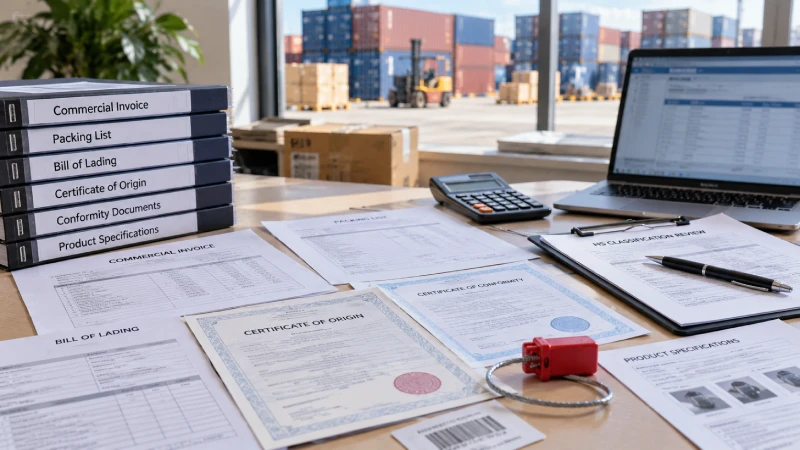
Pre-Departure Checklist Before Cargo Leaves China
The best time to prevent customs problems is while there is still time to change the shipment.
Use the following four-stage checklist.
Stage 1: Before Booking the Freight
Confirm:
- exact product name and use;
- material or composition where relevant;
- preliminary HS classification;
- whether the item is restricted or controlled;
- PVoC/CoC applicability;
- product-specific licences or permits;
- Kenyan importer details;
- licensed clearing agent;
- estimated duty and tax exposure;
- any unusual customs or compliance issue.
For dangerous goods, batteries, chemicals, oversized equipment or project cargo, freight acceptance and handling requirements should also be confirmed before booking.
Customs clearance and carrier acceptance are separate issues. A shipment may be legally importable but still require special airline or shipping-line approval.
Stage 2: Before the Supplier Delivers Cargo
Confirm the physical cargo against the commercial plan:
- final quantity;
- model numbers;
- SKUs;
- carton count;
- net and gross weight;
- dimensions;
- packaging;
- marks and labels;
- commercial invoice;
- packing list;
- conformity documentation;
- COO preparation;
- dangerous-goods documentation where applicable.
For consolidated cargo from several factories, this stage is especially important.
A consolidation warehouse should not merely count cartons.
The shipment coordinator should also identify whether one supplier’s goods create a different compliance, origin or document requirement from the others.
Stage 3: Before Container Loading and Final B/L
For applicable containerized ocean freight from China to Kenya, confirm:
- draft B/L checked;
- commercial invoice finalized;
- freight invoice available;
- export declaration available;
- ACD submitted and approved;
- ACD reference checked;
- required CoC obtained;
- COO obtained or firmly arranged;
- consignee details confirmed;
- product descriptions consistent;
- container and seal information correctly recorded.
KRA’s ACD system specifically requires the process to occur at the loading stage, with the reference reflected on the Bill of Lading before shipment to Kenya.
Do not leave this review until the carrier sends the final B/L after sailing.
Stage 4: While the Cargo Is in Transit
The Kenyan clearing agent should already have enough information to prepare.
Provide:
- commercial invoice;
- packing list;
- B/L copy;
- COO;
- CoC if applicable;
- licences or permits;
- export declaration or equivalent export record;
- product specification;
- importer documents;
- purchase records where appropriate;
- freight cost information.
From September 1, 2026, KRA requires importers to obtain and retain export-side documentation such as an export declaration, export entry, customs export certificate or equivalent document.
This makes early supplier cooperation even more important for China-origin shipments.
A supplier who says, “We already exported the goods; we cannot provide anything else,” can create a difficult situation later.
The buyer should establish export-document responsibilities before shipment.
Review My Cargo Before Shipping
What If Customs Questions the HS Code, Value or Compliance?
Even a carefully prepared shipment can receive a customs query.
The correct response depends on what is being questioned.
If the HS Classification Is Questioned
Do not rely only on the commercial product name.
Provide technical evidence:
- specification;
- composition;
- principal function;
- photographs;
- catalogue;
- operating manual;
- product diagram;
- model information.
Let the licensed clearing agent handle the customs response based on the actual product.
For recurring uncertainty, consider whether a KRA Advance Ruling is appropriate before future shipments. KRA allows applications concerning tariff classification, origin and valuation methodology.
If the Customs Value Is Questioned
Build a commercial evidence file rather than creating replacement paperwork.
Potential supporting records include:
- invoice;
- purchase order;
- contract;
- proof of payment;
- quotation;
- freight invoice;
- product catalogue;
- relevant supplier correspondence.
The objective is to explain the genuine transaction.
If Origin Is Questioned
Provide the Certificate of Origin and supporting export records requested through the clearing process.
For complex sourcing—particularly products assembled using components from several locations—do not assume origin can be resolved simply by showing the supplier’s address.
If Product Compliance Is Questioned
Identify which authority is involved.
A KRA customs query, KEBS conformity issue and product-specific regulator requirement are different problems.
The clearing agent and importer should establish:
- which authority has placed the hold;
- the exact missing document or concern;
- the evidence required;
- whether physical inspection or testing is required;
- what can legally be corrected after arrival.
Trying to solve the wrong problem wastes valuable time.
How Customs Delays Turn Into Storage and Other Destination Costs
The customs issue itself is only one part of the financial risk.
Once cargo arrives, time can create additional logistics costs.
Port or Terminal Storage
KPA states that storage charges apply when containers remain at the terminal beyond the designated free period.
The applicable tariff and free period should be checked for the specific cargo and facility rather than relying on an old generic figure.
A document issue that takes several additional days to resolve can therefore become a direct logistics cost.
For a more detailed breakdown, see Mombasa port storage and destination charges for imports from China.
Shipping-Line Demurrage and Detention
Carrier charges are separate from KPA terminal storage.
The exact definitions and charging structure depend on the carrier and booking terms, but importers should distinguish:
- port/terminal storage;
- carrier demurrage;
- carrier detention;
- container return deadlines.
Never assume that paying one category automatically stops another.
Ask the shipping line or destination agent for the specific free-time conditions attached to the shipment.
CFS, ICD or Warehouse Costs
Depending on the shipment route and handling arrangement, delays can also create costs involving:
- CFS storage;
- ICD storage;
- handling;
- examination;
- positioning;
- extra truck moves;
- delivery rescheduling;
- warehouse waiting.
A container routed onward toward Nairobi may therefore have a different operational exposure from cargo collected directly near Mombasa.
The exact routing needs to be checked shipment by shipment.
The Hidden Commercial Cost
For many importers, the largest loss is not a customs invoice.
It is the business consequence.
A clearance delay may cause:
- a customer delivery deadline to be missed;
- project installation to stop;
- a production line to wait for spare parts;
- inventory to run out;
- a truck booking to be lost;
- sales revenue to be delayed;
- working capital to remain tied up in cargo.
It can also extend the total China-to-Kenya shipping lead time well beyond the port-to-port transit estimate.
That is why clearance preparation should be treated as part of logistics planning rather than as an administrative task at the end of the shipment.
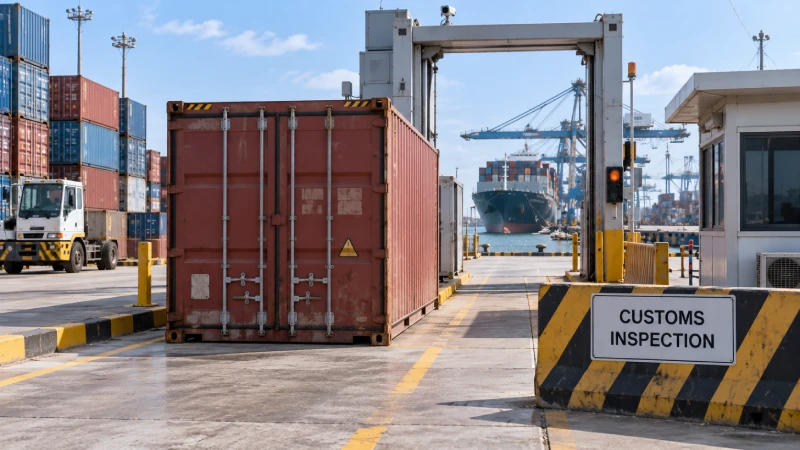
What Should You Do If Your Cargo Is Already Held in Kenya?
If the shipment is already delayed, avoid making random document changes.
Use a structured process.
1. Identify Who Is Actually Holding the Cargo
Ask for the precise status.
Is the issue with:
- KRA Customs?
- KEBS?
- another regulator?
- shipping line?
- KPA?
- CFS?
- ICD?
- missing importer action?
- unpaid customs assessment?
- inspection scheduling?
“Cargo is stuck at customs” is often too vague to act on.
2. Get the Exact Query or Missing Requirement
Where possible, obtain the written query, system status or official explanation through the clearing agent.
Do not rely only on messages such as:
“Customs needs another document.”
You need to know which document, for what reason, and from whom.
3. Assign the Correct Party
Different problems belong to different parties.
Examples:
- commercial invoice correction → supplier/exporter;
- ACD information → shipper/exporter/forwarder handling the filing;
- customs declaration → Kenyan clearing agent;
- importer licence → Kenyan importer;
- CoC issue → importer/supplier/KEBS/PVoC process;
- freight document → freight forwarder or carrier;
- COO → export-side responsible party.
This prevents five companies from making five different corrections at the same time.
4. Reconcile the Entire Document Set Before Making a Correction
If the invoice needs legitimate correction, check whether the same information also appears on:
- packing list;
- COO;
- ACD;
- B/L;
- CoC;
- export declaration;
- customs entry.
Correcting one document while leaving contradictory information on the others can create another query.
5. Respond Through the Proper Clearance Channel
For Customs matters, the licensed Kenyan clearing agent should normally coordinate the declaration and response process.
China-side suppliers and forwarders can provide supporting information, but they should not make assumptions about how KRA will decide the case.
6. Check the Cost Clock Immediately
At the same time as solving the customs issue, ask:
- when does terminal storage begin?
- how much carrier free time remains?
- is demurrage already accruing?
- does the container need to move to a CFS or ICD?
- has inland delivery been booked?
- can delivery appointments be changed?
Solving Customs while ignoring the logistics cost clock can still produce an expensive outcome.
Operational Warning: Do not create false invoices, artificial values, misleading product descriptions or inconsistent replacement records simply to remove a customs query. Any correction should reflect the actual commercial transaction and cargo.
Send Cargo Details
Who Is Responsible for Preventing Each Type of Delay?
International shipping problems often become harder because responsibilities are unclear.
A useful working model is:
| Issue | China Supplier / Exporter | China Freight Forwarder | Kenyan Importer | Kenya Clearing Agent | Authority |
|---|---|---|---|---|---|
| Product specifications | Primary source | Coordinate | Confirm | Review | — |
| Commercial invoice | Primary | Check for shipping consistency | Review | Use for declaration | KRA may verify |
| Packing list | Primary | Verify cargo handover | Review | Use for declaration | KRA/other agencies |
| CoC / PVoC | Provide product support | Coordinate if agreed | Confirm requirement | Clearance support | KEBS / PVoC agent |
| Certificate of Origin | Export-side arrangement | Coordinate if agreed | Ensure available | Submit/use | KRA / competent authority |
| ACD | Shipper/exporter responsibility in process | Often coordinates | Verify completion | Uses correct records | KRA |
| HS classification | Provide technical data | Preliminary support | Import responsibility | Declaration expertise | KRA final authority |
| Import permit | Provide technical data | Flag if identified | Primary responsibility | Verify before entry | Relevant regulator |
| Customs entry | — | — | Authorize/provide info | Primary operational role | KRA |
| Duties/taxes | — | — | Funding responsibility according to arrangement | Coordinates assessment | KRA |
| Cargo release | — | Logistics coordination | Importer coordination | Clearance coordination | Relevant authority |
This table is not a substitute for the contract between the parties.
It simply shows why customs compliance cannot be delegated blindly to one company.
What About DAP or DDP?
Incoterms can change who contracts and pays for different parts of the shipment, but they do not remove Kenya’s regulatory requirements.
A shipment described commercially as door-to-door or DDP still needs a legally workable importer, correct documentation and compliance with applicable Kenyan rules.
Importers should therefore separate two questions:
Who pays for the logistics?
and
Who is legally and operationally responsible for the Kenyan import process?
They are not always the same question.
For a deeper explanation of the commercial arrangement, see how DDP shipping from China to Kenya works.
A Practical China-to-Kenya Clearance Risk Workflow
For a normal commercial shipment, a safer workflow looks like this:
Before placing the freight booking
Confirm the product, importer, preliminary classification and regulatory requirements.
Before pickup from the supplier
Collect the commercial invoice, packing list, product specification and required compliance records.
Before consolidation
Check whether goods from different suppliers create different COO, PVoC, dangerous-goods or permit requirements.
Before loading
Finalize the important commercial and shipping information.
Before final B/L
For applicable containerized cargo, complete the ACD process and verify the reference.
After departure
The Kenyan clearing agent reviews the full file and prepares for pre-arrival processing.
Before arrival
Resolve documentary questions, prepare tax funding and confirm any expected inspection or agency intervention.
After release
Coordinate container collection, Nairobi ICD movement or inland delivery according to the actual route.
The goal is not to guarantee that Customs will never raise a query.
The goal is to prevent avoidable problems from reaching the port.
Final Checklist Before Shipping from China to Kenya
Before your supplier releases the cargo, ask the following questions:
- Do we know exactly what product is being imported?
- Has the HS classification been reviewed?
- Is the Kenyan importer ready?
- Has a licensed clearing agent been appointed?
- Does the product require PVoC or a CoC?
- Is the Certificate of Origin arranged?
- Does the product require another Kenyan permit or licence?
- Do invoice and packing list reflect the final goods?
- Are quantities, weights, models and values consistent?
- For applicable containers, is the ACD ready?
- Is the export declaration or equivalent export record available?
- Does the clearing agent already have the file?
- Are customs taxes and destination costs planned?
- Are there dangerous-goods, oversized or special-handling requirements?
- Has the final B/L information been checked?
If several of those answers are still “not sure,” the shipment is probably not ready to leave China.
Reduce the Problem Before It Reaches Mombasa
The most effective way to deal with Kenya customs clearance delays is not to become faster at fixing problems after arrival.
It is to move the review earlier.
A missing Certificate of Origin can often be solved in China before departure.
An unclear HS classification can be reviewed before the customs declaration.
A CoC requirement can be identified before the supplier loads the goods.
An ACD can be prepared at the port of loading.
An invoice inconsistency can be corrected while the supplier’s commercial team still has the shipment file open.
And a Kenyan clearing agent can review the documents while the vessel is still weeks away from Mombasa.
Winsail Logistics handles shipments originating from China and can coordinate supplier pickup, consolidation, sea or air freight and shipment-document handover with the importer and destination parties. For Kenya-bound cargo, our role is to help identify operational issues early and keep the China-side shipment file organized.
Final Kenyan customs declarations, tariff decisions, valuation decisions, conformity approvals, inspections and cargo release remain under the relevant licensed agents and Kenyan authorities.
If you are preparing a shipment from China to Mombasa, Nairobi or another Kenyan destination, send the cargo details before the goods leave your supplier.
Review My Cargo Before Shipping
Regulatory Note: Kenya import regulations, tariff classifications and product-specific requirements can change. Importers should verify shipment-specific requirements with their licensed Kenyan customs clearing agent and the relevant authority before shipment.
FAQ
What are the most common causes of customs clearance delays in Kenya?
Common avoidable causes include missing or inconsistent documents, missing Certificate of Origin, missing CoC where applicable, ACD problems for applicable containerized cargo, uncertain HS classification, valuation questions, missing permits and late preparation by the importer or clearing agent. Cargo may also be selected for inspection even when the documents are complete, so not every delay indicates an error.
Can a missing CoC delay my shipment in Kenya?
Yes, where the goods are subject to Kenya's applicable PVoC or conformity requirements. Confirm the exact product scope before shipment and complete the required conformity process early enough to avoid discovering the problem after arrival.
Is a Certificate of Origin required for imports into Kenya?
KRA introduced a mandatory Certificate of Origin requirement in 2025, with full compliance from October 1, 2025, subject to KRA's stated exceptional cases and provisional measures. For China shipments, the importer should agree with the exporter or supplier in advance on how the COO will be obtained.
Do containers from China to Kenya need an Advance Cargo Declaration?
KRA launched the Advance Cargo Declaration platform on August 3, 2026 for containerized cargo destined for Kenyan ports. The process uses shipment documents such as a draft B/L, commercial invoice, freight invoice and export declaration, and the ACD reference should be reflected on the Bill of Lading.
Can the wrong HS code delay Kenya customs clearance?
Yes. Classification can affect tariff treatment and regulatory requirements. For unclear products, provide technical specifications and have the classification reviewed rather than relying only on a supplier's product name or Chinese export code.
When should I send documents to my Kenyan clearing agent?
As an operational practice, send the draft clearance file before departure whenever practicable. This gives the clearing agent time to review importer details, classification, COO, CoC, permits and commercial records while the supplier can still resolve issues in China.
