
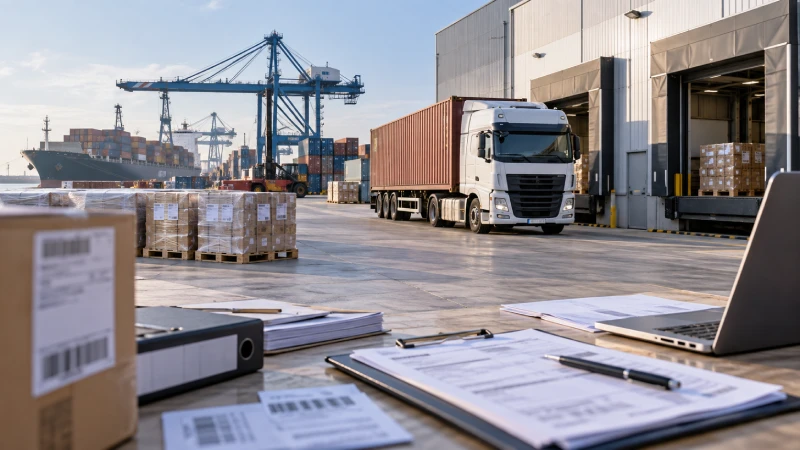
When importing goods from China to Germany, choosing between DAP and DDP affects much more than who pays the freight bill.
Both Incoterms can bring cargo all the way to a warehouse, factory, Amazon preparation centre or another agreed destination in Germany. The key difference is what happens during import customs clearance.
Under DAP (Delivered at Place), the seller arranges transportation to the agreed destination, but the buyer is responsible for import customs clearance, customs duty and import VAT.
Under DDP (Delivered Duty Paid), the seller takes contractual responsibility for arranging import clearance and paying the applicable import duties and taxes before delivering the shipment to the named destination.
That makes DDP sound simpler. For some shipments, it is. But for German businesses that already have an EORI number, VAT procedures and a customs broker, DAP may provide better customs visibility, clearer documentation and more control.
There is also an important distinction between an Incoterms® DDP sale and a freight service commercially advertised as “DDP shipping.” A logistics provider may offer an all-inclusive door-to-door service, but the actual importer, declarant, EORI, VAT treatment and customs procedure still need to be verified for the specific shipment.
This guide explains how DAP and DDP work when shipping from China to Germany and how to decide which arrangement is more suitable for your business.
DAP vs DDP at a Glance
Under Incoterms® 2020, DAP and DDP can both be used with sea freight, air freight, rail freight, road transport or multimodal shipments. With both rules, the seller bears the transport risk until the goods reach the agreed destination and are placed at the buyer’s disposal on the arriving means of transport, ready for unloading.
The major difference is import clearance. Under DDP, the goods arrive cleared for import and the seller assumes responsibility for applicable import duty and taxes. The International Chamber of Commerce describes DDP as the Incoterms rule imposing the maximum level of obligation on the seller.
| Issue | DAP | DDP | What It Means for a German Importer |
|---|---|---|---|
| China export clearance | Seller | Seller | Normally similar |
| International transport | Seller | Seller | Both can cover delivery to Germany |
| Transport risk to named destination | Seller | Seller | Risk does not automatically transfer at the EU border |
| Import customs clearance | Buyer | Seller | One of the main differences |
| Customs duty | Buyer | Seller | DDP price should confirm duty is actually included |
| Import VAT | Buyer handles payment through import clearance | Seller is contractually responsible under DDP | Actual VAT and deduction structure still requires verification |
| EORI / customs identity | Usually buyer’s established import structure | Depends on actual declarant and representation structure | DDP does not remove customs-identification requirements |
| Customs broker | Usually selected by buyer | Usually arranged by seller | Buyer has more broker control under DAP |
| Customs documentation | Buyer normally has direct access | Should be requested and confirmed | Important for accounting and audit trails |
| Product compliance | Not determined solely by Incoterm | Not determined solely by Incoterm | DDP does not automatically transfer EU product-law obligations |
| Final delivery | Seller | Seller | Exact destination should be specified |
| Unloading | Normally buyer | Normally buyer | Neither term automatically means seller unloads |
| Customs control | Higher for buyer | Lower for buyer | Important for regular importers |
| Price presentation | Import costs usually separated | Often marketed as an all-in delivered amount | DDP may be easier to budget but less transparent |
| Best fit | Importers with established customs capability | Buyers wanting a managed import solution | Depends on the actual customs structure |
For many German companies, the decision can be simplified like this:
If you already have a German EORI, an established customs broker and regular import procedures, DAP is often worth considering.
If you want one party to coordinate the entire shipment and the seller has a verified EU import solution, DDP may be practical.
But if a DDP provider cannot explain who will make the customs declaration, which EORI will be involved or how import VAT will be handled, the term “DDP” alone should not be treated as sufficient assurance.
What Does DAP Mean When Shipping from China to Germany?
DAP stands for Delivered at Place.
Under DAP, the seller is responsible for bringing the goods to the named place of destination. Under Incoterms® 2020, delivery occurs when the goods are placed at the buyer’s disposal on the arriving means of transport, ready for unloading. The seller bears the risk of transporting the shipment to that destination.
For a shipment from Shenzhen to Munich, for example, the contract could state:
DAP Buyer’s Warehouse, Munich, Germany, Incoterms® 2020
The Chinese supplier may arrange factory pickup, China export customs clearance, international transportation and delivery from the German port, airport or rail terminal to Munich.
The German buyer then takes responsibility for the import side.
What Does the Seller Handle Under DAP?
The seller normally handles the transportation required to reach the named destination, including export formalities in China and the main international freight movement.
If the shipment travels by sea to Hamburg before continuing by truck to Düsseldorf, the seller can still be responsible for arranging transportation all the way to the Düsseldorf delivery address.
This is why describing DAP as “delivery to the border” is misleading. The named place can be the buyer’s warehouse deep inside Germany.
What Does the German Buyer Handle Under DAP?
The buyer is responsible for import formalities.
In a typical commercial German import, this means the buyer provides the necessary importer information, arranges or authorises customs representation, handles customs duty and import VAT and provides any documents that customs may require from the importer.
For an established German importer, this is often not a major disadvantage. The business may already have an EORI, a customs broker and procedures for processing Einfuhrumsatzsteuer, or EUSt.
DAP can therefore offer a relatively clean division of responsibility: the Chinese side manages transportation to Germany, while the German company retains control over its import declaration.
Pro Tip: Do not write only “DAP Germany” on a purchase order. Specify the actual delivery point, for example DAP 123 Example Street, Munich, Germany, Incoterms® 2020.
What Does DDP Mean When Shipping from China to Germany?
DDP stands for Delivered Duty Paid.
The physical delivery point can look very similar to DAP. The seller still transports the cargo to the agreed German destination, and the goods are generally delivered ready for unloading.
The important additional obligation is import clearance.
Under DDP, the seller is contractually responsible for bringing the shipment to the named destination cleared for import, including payment of applicable import duty and taxes. The International Chamber of Commerce describes DDP as the Incoterms® rule that places the highest level of responsibility on the seller.
That additional responsibility is precisely why DDP needs more operational planning.
A seller in China cannot make EU customs legislation disappear simply by putting “DDP” on a commercial invoice.
The seller must have a workable arrangement that allows the import formalities required by EU law to be carried out.
What Does a DDP Seller Normally Arrange?
A properly structured DDP shipment may include China pickup, China export clearance, international freight, transit procedures, EU import customs clearance, customs duty, applicable import taxes, onward transportation and final delivery.
For the German buyer, the attraction is obvious: instead of coordinating several parties and paying separate destination charges, the buyer may receive a single delivered price.
However, the buyer should understand exactly how the import is being performed.
A quote saying only:
“DDP Hamburg: €5,800 all inclusive”
does not tell you enough about the customs structure.
You still need to understand who is involved in the declaration, how the shipment is being imported and what documentation will exist after clearance.
Who Is the Importer Under DAP and DDP?
This is where many DAP vs DDP explanations become too simplistic.
There are several different concepts that should not be treated as interchangeable:
The party responsible under the sales contract, the customs declarant or represented party under customs law, and the “importer” or economic operator under applicable EU product legislation may not always be the same entity.
Under DAP
The arrangement is usually relatively straightforward for a German commercial importer.
The German buyer normally operates through its own customs structure, supplies its EORI and either submits the customs declaration itself or appoints a customs broker.
An EORI number is mandatory for relevant customs operations in the EU, including import, export and transit activities. The European Commission also explains that non-EU economic operators may require EORI registration when carrying out specified customs activities such as lodging customs declarations.
For regular German importers, this structure provides an important advantage: they know which company appears in their customs records and can normally obtain the customs documentation directly from their broker.
Under DDP
The seller has the contractual obligation to handle import clearance, but that does not mean the words “DDP” automatically determine the legal identity of every party appearing in the customs declaration.
Under the Union Customs Code, the declarant is generally required to be established in the customs territory of the Union, subject to specified exceptions. EU law also allows customs representation. A representative may act directly, in the name and on behalf of another person, or indirectly, in its own name but on behalf of another person.
This is one reason why a non-EU seller offering DDP needs an operationally workable customs arrangement.
The correct question for a German buyer is therefore not simply:
“Is this DDP?”
It is:
“How will this particular DDP shipment be imported?”
For a deeper explanation of the customs process, see Germany customs clearance for imports from China.
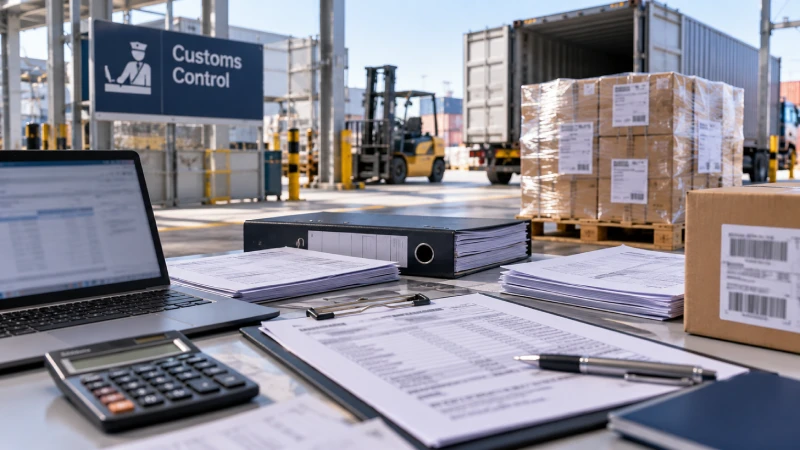
What Should You Verify Before Accepting DDP?
Before accepting a commercial DDP service from China to Germany, verify the actual shipment structure rather than relying only on the Incoterm label.
- Confirm the commodity and intended HS or TARIC classification.
- Confirm the commercial value that will be declared.
- Confirm the country of origin.
- Check the expected customs-duty rate and any additional trade measures.
- Ask where the goods will be entered into the EU and where import clearance will occur.
- Ask who will appear as declarant and who is being represented.
- Ask which EORI number or customs identity will be used where applicable.
- Confirm whether customs representation is direct or indirect where relevant.
- Confirm who will account for or pay import VAT.
- Ask what customs-release or import documents will be available after clearance.
- Confirm whether the German buyer expects to deduct any import VAT and whether the documentation supports that treatment.
- Confirm who is responsible for product-specific EU compliance obligations.
- Confirm whether customs examination, inspection, storage or demurrage costs are included.
- Confirm whether antidumping duties, excise duties or other special measures are included or excluded.
- Confirm the exact delivery postcode, access conditions and unloading responsibility.
- Check whether batteries, dangerous goods, food, chemicals or other regulated cargo require a different arrangement.
- Ask what happens if customs changes the classification or customs value.
- Ask what happens if the originally planned DDP import structure cannot be used.
A competent logistics provider should be able to explain the applicable structure for the shipment rather than answering every customs question with “included in DDP.”
DAP vs DDP and German Import VAT
Import VAT is one of the most important reasons German importers should look beyond the headline freight price.
Germany’s standard import VAT rate is generally 19%, while certain qualifying products can be subject to a reduced 7% rate. Customs duty itself depends on the actual tariff classification and any measures applicable to the goods.
Import VAT is also not calculated only on the Chinese factory invoice.
A simplified way to think about the taxable amount is:
Customs value + customs duty + relevant additional costs = import VAT basis
For a detailed calculation, see Germany import duty and VAT from China.
Import VAT Under DAP
Under a normal DAP arrangement, the German buyer handles import clearance and therefore normally deals directly with the import VAT arising from the import.
For companies that import regularly, this can make the transaction easier to reconcile internally because the customs declaration, import VAT and accounting records are connected to the company’s established import process.
Where the legal conditions are satisfied, a business may be able to deduct the import VAT as input VAT.
But this should not be reduced to the statement:
“Whoever pays the import VAT can reclaim it.”
That is not accurate enough.
Import VAT Under DDP
DDP creates more questions because the seller is contractually responsible for the import taxes, while the buyer may still expect the transaction to fit cleanly into its German VAT accounting.
German VAT guidance makes an important point: Incoterms themselves do not determine entitlement to deduct import VAT.
The relevant VAT analysis depends on the actual import transaction and the legal conditions for input VAT deduction. The person who physically pays the import VAT is not by itself decisive.
This matters enormously when evaluating DDP.
A German buyer should not assume:
“The seller pays EUSt under DDP, therefore I can automatically deduct that EUSt.”
Instead, the transaction needs to be examined based on its actual VAT and import structure.
Pro Tip: When comparing DAP and DDP, compare the net landed cost and the VAT treatment, not simply the amount you pay the freight forwarder before delivery.
Customs Brokers Under DAP vs DDP
A customs broker or customs representative often handles the practical filing of the import declaration.
Under DAP, the German importer normally chooses the broker or works with an existing customs partner. This gives the importer greater visibility over tariff classification, customs valuation, documentation and customs queries.
Under DDP, the seller or its logistics provider normally arranges the customs side.
The Union Customs Code recognises both direct and indirect customs representation. In direct representation, the representative acts in the name and on behalf of another person. In indirect representation, the representative acts in its own name but on behalf of another person.
The distinction matters because customs responsibility and potential customs debt can differ depending on the representation model.
German buyers do not need to become customs-law specialists before every shipment, but for material commercial shipments they should at least know who is making the declaration and on what basis.
EORI Requirements: DDP Does Not Mean “No EORI Exists”
A common sales claim for DDP shipping is:
“You don’t need an EORI.”
This needs context.
If the German buyer is not itself acting as the declarant or represented importer in a particular structure, its own EORI may not necessarily be used for that customs declaration.
That is very different from saying that an EU customs import can take place without the required customs identification.
The European Commission states that an EORI is mandatory for customs clearance operations such as imports and identifies the economic operators involved in customs activities.
Therefore, when a provider says the consignee does not need to supply an EORI, ask how the shipment will actually be declared.
For more detail, see EORI number for importing from China to Germany.
DDP Does Not Automatically Transfer EU Product Compliance
Customs clearance and product compliance are related, but they are not the same thing.
A shipment successfully clearing customs does not automatically prove that the product satisfies every EU rule required before it is placed on the market.
This is particularly important for products such as electrical equipment, machinery, toys, batteries, certain consumer products and other regulated goods.
EU product legislation can place responsibilities on manufacturers, importers, distributors or other economic operators depending on the product and the applicable legal framework. These obligations can include checking conformity procedures, required technical documentation, declarations, markings, labels and safety information.
This means a buyer should never assume:
“The freight forwarder ships it DDP, therefore the freight forwarder has taken over all CE and product-compliance responsibilities.”
That conclusion does not follow from the Incoterm.
For example, imagine a Chinese manufacturer sells a machine DDP to a company in Bavaria.
The logistics provider may arrange transport, import clearance, payment of duty and final delivery.
That alone does not determine whether the manufacturer, German buyer or another economic operator carries each obligation under the EU legislation applicable to that machine.
For regulated products, the compliance structure should therefore be checked before the shipment leaves China, not after customs asks questions in Europe.
Pro Tip: For electronics, machinery, toys, batteries, medical-related products, chemicals, food-related products and other regulated cargo, review product compliance before comparing DAP and DDP freight prices.
Incoterms DDP vs a Freight Service Marketed as “DDP”
This distinction is especially important in China-Europe logistics.
DDP under Incoterms® 2020 is a contractual allocation of obligations between seller and buyer.
A freight forwarder may separately market a logistics product as:
- DDP shipping
- tax-included shipping
- duty-paid door-to-door
- all-inclusive delivery
The service may be perfectly legitimate and useful.
But the label alone does not explain the customs mechanism behind it.
A commercial DDP freight rate may be based on assumptions about HS classification, customs value, destination, cargo type, import country or tax treatment.
Those assumptions may work for one shipment and not another.
For example, a straightforward shipment of general household goods is not operationally identical to electrical equipment containing lithium batteries, food-contact materials or machinery subject to additional EU requirements.
That is why Winsail treats DDP availability as a shipment-specific operational question, rather than a blanket promise that every shipment to Germany can use the same DDP solution.
DAP vs DDP Pricing Transparency
Pricing is another major difference between the two arrangements.
DAP Pricing
A DAP quotation can often be separated into transportation and import-side costs more clearly.
The freight provider may quote factory pickup, export charges, international freight and final delivery.
The German buyer then sees customs brokerage, customs duty, EUSt and any additional customs costs through its own import process.
The disadvantage is that the initial freight quotation does not represent the full cash requirement for the shipment.
The advantage is transparency.
The importer can see what is freight, what is duty, what is import VAT and what is a customs-service charge.
DDP Pricing
DDP is frequently presented as a single all-in price.
This is attractive when a purchasing department wants to know the expected delivered amount before placing the order.
However, an all-in price can also hide important assumptions.
A €6,000 DDP rate is only meaningful if you know whether it genuinely covers the applicable tariff, import VAT, customs broker, destination delivery, customs inspection risk and other charges relevant to the shipment.
Pro Tip: Even when you want one all-inclusive DDP price, ask for the assumptions behind that price: HS code, customs value, duty, VAT treatment, clearance country and major exclusions.
DAP vs DDP Example: Why the Cheapest Quote May Not Be the Best Quote
Suppose a German company buys commercial equipment from Shenzhen.
The cargo is 8 CBM, valued at €35,000 and needs to be delivered to Stuttgart.
Forwarder A offers:
DAP Stuttgart: €3,900
Forwarder B offers:
DDP Stuttgart: €5,400 all inclusive
At first glance, the comparison looks simple.
DDP costs €1,500 more, so the buyer only needs to decide whether avoiding customs administration is worth €1,500.
In reality, that is not enough information.
The DAP shipment may still incur customs duty, import VAT, customs-broker charges and possible inspection costs.
The DDP shipment may already include some or all of those costs—but the buyer also needs to understand how the import VAT is treated, which customs structure is being used and whether all product-specific duties or measures were considered.
The correct comparison therefore looks more like:
DAP landed cost = transport + broker + customs duty + import VAT/cash-flow impact + exceptional destination costs
versus
DDP landed cost = DDP transport price + excluded charges + VAT/accounting implications + operational/compliance risk
For more pricing context, see shipping cost from China to Germany.
When DAP Is Usually the Better Starting Point
Established German Importer
A German company imports several containers or airfreight shipments every month.
It already has an EORI, VAT procedures and a customs broker.
For this company, DAP can make sense because the supposedly difficult part—import clearance—is already part of its normal operation.
Using DAP allows the business to maintain control of its declarations, classification decisions and customs records.
High-Value Machinery or Technically Complex Products
Consider an industrial machine worth €150,000.
Its classification, customs value and technical compliance may be commercially significant.
In this situation, many experienced importers would rather have their own customs specialist involved than accept a completely opaque “all-in DDP” structure.
DDP can still work, but the standard of documentation and operational verification should be much higher.
Businesses Building a Long-Term Import Programme
A company that expects to import from China every month may initially prefer DDP because it appears easier.
Over time, however, developing an internal importer structure can provide better visibility into duty expenditure, tariff classification, customs records and VAT.
For regular commercial imports, customs control can become an asset rather than an administrative burden.
When DDP May Be the Better Starting Point
Occasional Importer Without an Established Customs Process
A company imports from China only once or twice per year.
It has no regular customs broker and does not want to coordinate multiple logistics providers.
If the seller or freight forwarder has a transparent and verified DDP solution for the commodity, DDP can reduce operational work for the buyer.
Buyer Needs a Predictable Delivered Budget
A purchasing team may need one expected delivered amount for internal approval.
When the cargo is straightforward and the DDP provider has already verified the classification, value, import arrangement and final destination, a DDP price can make budgeting easier.
Supplier Consolidation
A buyer purchases products from several factories in China and wants them collected, consolidated and delivered as one shipment.
A professional door-to-door arrangement can simplify supplier pickup, export documentation, consolidation, international transport and final delivery.
However, consolidation makes document accuracy even more important because the customs declaration must properly reflect the different products, values and classifications included in the shipment.
A DDP Red Flag: “Everything Included, No Documents Needed”
Suppose a provider says:
“€1.60/kg DDP Germany. Duty and tax included. No EORI required.”
The rate itself is not necessarily the problem.
The problem is when the provider cannot answer basic questions about how the shipment is imported.
If nobody can explain the declarant, customs representation, customs value, tariff classification, import documentation or VAT treatment, the German buyer should not rely on the term “DDP” as proof that the arrangement is suitable.
Low-friction shipping is useful.
An unexplained customs structure is not.
DAP vs DDP Decision Matrix for German Importers
| Your Situation | More Suitable Starting Point |
|---|---|
| You have an EORI and established customs broker | DAP |
| You import regularly from China | Usually DAP |
| You want maximum visibility over customs declarations | DAP |
| You need control over tariff classification | DAP |
| Customs/VAT documentation is important internally | Usually DAP |
| You import only occasionally | Consider verified DDP |
| You lack internal customs resources | Consider verified DDP |
| Seller has a proven and transparent EU import structure | DDP may work well |
| Seller cannot explain customs structure | Do not accept DDP until clarified |
| Product is heavily regulated | Either term requires separate compliance review |
| You need one predictable delivered amount | DDP may be convenient |
| Classification or customs value is uncertain | DAP or fully verified DDP |
| Shipment value is high | Prioritise transparency over convenience |
The most useful rule is:
Choose the customs structure first. Choose the three-letter Incoterm second.
Common DAP and DDP Mistakes
“DAP Means Delivery Only to the German Border”
No.
DAP can specify a warehouse, factory or other destination anywhere in Germany.
“DDP Means There Is No Customs Duty or Import VAT”
No.
DDP changes which party is contractually responsible for those import costs. It does not make the underlying customs charges disappear.
“DDP Means No EORI Is Needed”
Too broad.
The German consignee may not necessarily supply its own EORI in every DDP arrangement, but the EU customs operation still needs a lawful customs structure involving the relevant identified operators.
“DDP Automatically Makes the Freight Forwarder the EU Product Importer”
No.
Incoterms allocate commercial delivery obligations. They do not by themselves determine every role under EU product legislation.
“Risk Transfers When DAP Cargo Reaches Europe”
No.
Under DAP, the seller’s delivery and risk extend to the agreed named destination, not merely the EU border.
“Whoever Pays Import VAT Can Deduct It”
Not necessarily.
German VAT treatment depends on the substantive import transaction and applicable VAT rules, rather than simply who transferred the money or which Incoterm appears on the invoice.
“DDP Is Always More Expensive Than DAP”
Not necessarily.
DDP normally includes more seller-side costs, so its headline freight price may be higher. But the correct comparison is total landed cost, customs administration, VAT treatment and risk—not just the logistics quotation.
How to Choose Between DAP and DDP
For most commercial German importers, the decision starts with one question:
Do you want to control the import process yourself?
If your company already imports regularly, has an EORI, works with a customs broker and understands German import VAT, DAP is often the cleaner and more transparent arrangement.
If your company imports occasionally and wants one provider to coordinate the complete China-to-Germany movement, DDP may be more convenient—provided the seller has a transparent and legally workable EU import structure.
Neither term is automatically better.
The right choice depends on your cargo, company structure, VAT position, product compliance, frequency of imports and tolerance for customs administration.
For related transport choices, you may also want to compare sea freight from China to Germany, air freight from China to Germany, rail freight from China to Germany, LCL shipping from China to Germany and FCL shipping from China to Germany.
Not Sure Whether DAP or DDP Fits Your Shipment?
A useful DAP vs DDP comparison needs more than the cargo weight.
The commodity, HS code, commercial value, pickup location, German delivery postcode and your preferred customs structure all affect the final arrangement.
Send us your shipment details and we can review whether DAP or a shipment-specific DDP solution is more practical for moving your cargo from China to Germany.
CTA: Compare DAP vs DDP for Your Shipment
For shipments exported from China to Germany.
FAQ
What is the main difference between DAP and DDP shipping to Germany?
Both terms can require the seller to transport the goods to an agreed destination in Germany. Under DAP, the buyer handles import customs clearance and associated import duties and taxes. Under DDP, the seller assumes contractual responsibility for import clearance and applicable import duties and taxes.
Who pays German import VAT under DAP?
In a typical DAP import, the German buyer handles the import process and therefore normally deals with the import VAT arising from customs clearance. Whether that VAT is deductible as input VAT depends on German VAT rules and the facts of the transaction.
Who pays import VAT under DDP?
Under DDP, the seller is contractually responsible for applicable import taxes. However, businesses should distinguish between who bears or pays the cost and who may be entitled to deduct German import VAT. The VAT result cannot be determined solely from the DDP Incoterm.
Do I need an EORI number when using DDP from China to Germany?
Not every DDP structure necessarily requires the German consigneeu0026#x27;s own EORI to appear in the same way as a typical DAP import. However, DDP does not remove EU customs identification requirements. The actual declarant, represented party and EORI arrangement should be confirmed before shipping.
Can a Chinese supplier act as the importer under DDP in Germany?
DDP makes the seller responsible for arranging import clearance under the sales contract, but EU customs rules impose requirements concerning declarants, establishment, registration and customs representation. A Chinese seller therefore needs a legally workable import arrangement rather than simply declaring itself a “DDP seller.”
Do I need a customs broker under DAP?
DAP itself does not require the use of one specific customs broker, but German commercial importers frequently appoint a customs representative to prepare and submit the import declaration. Using your own broker can also provide greater visibility over customs classification and documentation.
Does DDP include customs clearance, duty and VAT?
Under Incoterms® 2020, DDP places responsibility for import clearance and applicable import duties and taxes on the seller. A commercial freight quotation should nevertheless specify exactly what is included because additional charges or shipment-specific exclusions may apply.
Does DDP include unloading at my German warehouse?
Normally, no. Under DDP, delivery occurs when the goods are placed at the buyeru0026#x27;s disposal on the arriving means of transport, cleared for import and ready for unloading. If unloading is required from the seller, it should be agreed separately.
Is DDP cheaper than DAP?
Neither term is inherently cheaper. A DDP rate will normally include more seller-side responsibilities, while a DAP buyer must separately account for customs clearance, duty, import VAT and related import costs. Compare the complete landed-cost structure rather than only the freight quote.
Can a German company deduct import VAT paid under DDP?
Possibly, but not simply because the shipment is labelled DDP. German VAT rules look at the underlying import transaction and the legal conditions for input VAT deduction. The Incoterm alone does not determine entitlement.
Does DDP make the seller responsible for CE marking and EU product compliance?
Not automatically. Incoterms allocate commercial obligations such as delivery, costs and customs formalities. Product responsibilities arise under the EU legislation applicable to the particular product, so the actual economic operators involved should determine their compliance obligations separately.
Is DDU the same as DAP?
DDU, or Delivered Duty Unpaid, is an older Incoterm that is not part of Incoterms® 2020. DAP is commonly used where the seller delivers to the named destination while the buyer is responsible for import formalities.
Can a DDP shipment to Germany clear customs in another EU country?
It can be possible for goods destined for Germany to physically enter the EU through another member state. However, the customs procedure and VAT implications depend on how the goods are entered, whether they are released for free circulation there or moved under another procedure, and how onward movement to Germany is structured.
Which is better for a German company importing regularly from China?
For an established German importer with its own EORI, VAT procedures and customs broker, DAP is often a strong starting point because it gives the importer more control and transparency. DDP can still be suitable when the seller has a proven and transparent EU customs setup.
Final Takeaway
DAP and DDP can both provide door-to-door transportation from China to Germany.
The difference is primarily about who controls and takes contractual responsibility for the import process.
DAP is often attractive to established German importers because it keeps customs declarations, tariff decisions, import VAT and customs documentation within the buyer’s own import structure.
DDP can reduce administration for the buyer and provide a more predictable delivered price, but only when the underlying customs arrangement is transparent and workable.
Before choosing DDP, verify the actual commodity, customs value, classification, importer/declarant arrangement, EORI structure, import VAT treatment, compliance requirements and final-delivery conditions.
A three-letter Incoterm should describe a working logistics and customs arrangement.
It should never be used as a substitute for one.
