
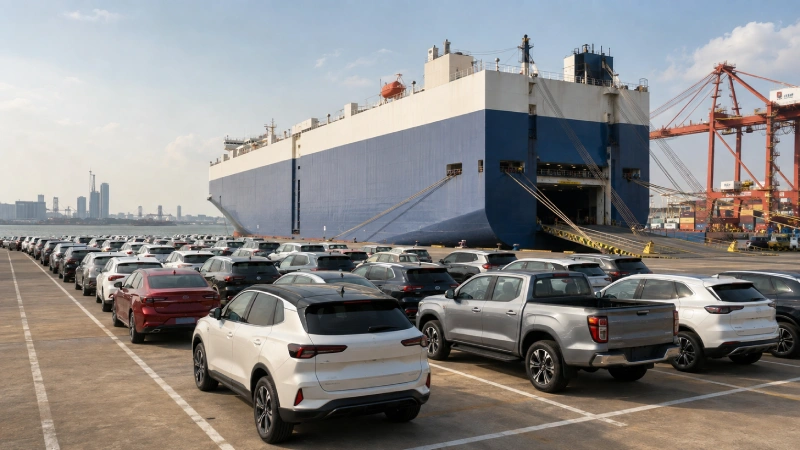
New cars, eligible used cars, petrol vehicles, hybrids and electric vehicles can be shipped from China to Nigeria by RoRo or container. Tin Can Island is an important vehicle and RoRo gateway, while Apapa is commonly assessed for containerized cars.
Since March 31, 2026, Nigeria’s Vehicle Conformity Assessment Programme, or VehCAP, has made pre-shipment inspection and Shipment Certification a central requirement for new and used vehicles. Importers must also coordinate Form M, China export eligibility, carrier acceptance, customs clearance and road registration.
For the wider transport framework, see Vehicle Shipping from China.
Quick Answer: Before buying or booking, confirm the manufacture date, VIN, left-hand-drive configuration, VehCAP eligibility, Nigerian importer, Form M status and carrier acceptance. A car arriving in Lagos without the required pre-shipment certification may face delays, sanctions or refusal.
Can the Vehicle Be Imported and Registered in Nigeria?
For the wider route and service framework, start with the China–Nigeria vehicle shipping overview.
Five separate approval layers
A shipment must pass five separate checks:
- Eligibility under Nigerian import rules
- VehCAP pre-shipment certification
- China export eligibility
- Carrier and terminal acceptance
- Customs clearance and road registration
Passing one approval does not satisfy the others. A car may be exportable from China but too old for Nigerian import, or VehCAP-certified but unacceptable to a carrier because of its condition or battery status.
Personal versus commercial import
An individual or company may act as importer, but the importer should be confirmed before shipment. Prepare the applicable TIN, Nigerian address, Form M, marine insurance, bank arrangements and licensed customs agent.
Dealers, fleet buyers and commercial importers may also need company registration, consistent multi-VIN records and model documentation. Shipment volume, frequency and resale purpose can affect how the import is treated.
Customs release versus registration
Customs release is not road registration. The importer may still need VIO inspection, insurance, a vehicle licence, Roadworthiness Certificate, Proof of Ownership and number plates.
VehCAP, carrier acceptance, customs release and road registration are separate approvals.
Nigeria’s Vehicle Age, Steering and Condition Rules
The current 12-year rule
Nigeria currently prohibits used motor vehicles above 12 years from the year of manufacture within the specified HS 8703 passenger-vehicle range. The actual production date matters, not only the advertised model year.
In 2026, a passenger car manufactured in 2013 will normally be above the limit. A 2014 vehicle should be checked by VIN and production date before payment.
Do not automatically apply this rule to HS 8702 buses, HS 8704 trucks, HS 8705 special-purpose vehicles or HS 8716 trailers. A vehicle within the age limit may still fail VehCAP because of its condition, structure or emissions. Reconfirm the applicable restriction with the Nigeria Customs Service.
Left-hand-drive requirement
Nigeria drives on the right side of the road, so normal road vehicles should be sourced in left-hand-drive configuration. A carrier’s willingness to transport a right-hand-drive vehicle does not make it legal for normal use.
Steering conversion after arrival should not be treated as a reliable compliance solution because it may affect structure, VehCAP, insurance, VIO inspection and registration.
Damaged, salvage and non-running vehicles
If parts ship separately from the vehicle, use the China-to-Nigeria auto-parts guide.
There is no safe blanket rule stating that every salvage vehicle is prohibited or acceptable. Eligibility depends on VehCAP, vehicle history, carrier policy and Nigerian requirements.
Before purchase, obtain the VIN report, ownership and accident history, flood or fire record, airbag status, chassis photographs, odometer record, recall status, repair records and running-condition declaration. For an EV, add a battery-health report.
Severe structural, identity or battery defects may cause certification or carrier rejection.
VehCAP Requirements Before Shipping
What VehCAP is
Nigeria’s Standards Organisation and the National Automotive Design and Development Council launched the Vehicle Conformity Assessment Programme on March 31, 2026.
VehCAP applies to new and used vehicles and may also cover automotive products. It changes the practical process from “buy, ship and inspect in Nigeria” to “pre-check, inspect, certify and then ship.”
What may be checked
Checks may include the VIN, chassis number, model, manufacture date, structural integrity, safety systems, emissions, accident history, vehicle condition and technical records.
The importer should confirm the authorized provider, inspection location, documents, fees and certificate format before booking.
Shipment Certification
The applicable inspection and Shipment Certification should be completed in China before departure. A vehicle shipped without it may not proceed normally through valuation and clearance.
VehCAP is not ordinary SONCAP. VehCAP is the vehicle-specific conformity route, while regulated spare parts or accessories may have separate SONCAP requirements.
Form M, VehCAP and PAAR should be planned together. VIN, HS code, invoice, certificate and bill-of-lading data must remain consistent.
Verify VehCAP eligibility before paying the Chinese supplier, not after the vehicle reaches Tin Can Island.
RoRo or Container Shipping from China to Nigeria?
RoRo shipping
RoRo is commonly assessed for running cars, SUVs, pickups, commercial vehicles and carrier-approved used vehicles or EVs. The vehicle normally must start, steer and brake.
Confirm requirements for keys, fuel, battery state of charge, alarms, cleanliness, leakage and cargo inside the vehicle. Policies for used cars, EVs, PHEVs and non-running vehicles vary by carrier and voyage.
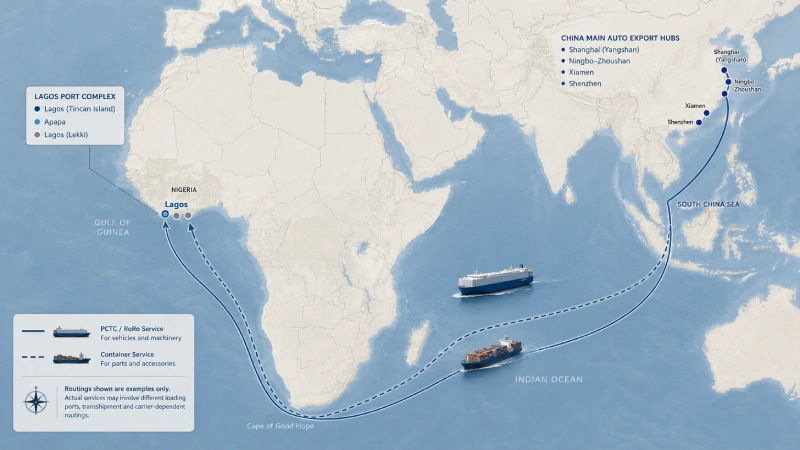
Services may be direct or transshipped, so confirm the Chinese loading port, Nigerian terminal and actual sailing. Do not place undeclared goods inside the vehicle.
See RoRo Car Shipping from China.
Container shipping
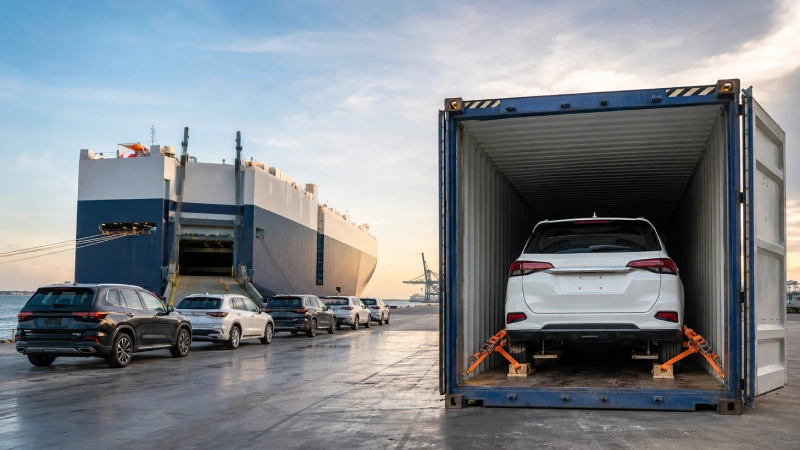
Containers may suit one or several vehicles, high-value cars, enclosed handling or routes with limited RoRo space. Select a 20GP, 40GP or 40HQ using the actual dimensions, weight and loading method.
Professional loading should include wheel chocks, suitable lashing, balanced weight distribution, photographs and VGM. EVs still require carrier approval.
Never promise a fixed three- or four-car capacity for a 40HQ. Capacity depends on vehicle size, container clearance, loading system and safe restraint.
See Container Car Shipping from China.
Non-running or oversized vehicles
Towable RoRo requires written approval. Flat rack, Mafi or breakbulk may suit abnormal vehicles. Provide the length, width, height, weight, ground clearance, operating condition, lifting points, lashing points and photographs.
Tin Can Island, Apapa or Lekki Port?
Compare the operating trade-offs in the Lagos port selection guide.
| Nigerian port | More suitable for evaluation | Confirm before booking |
|---|---|---|
| Tin Can Island / PTML | RoRo cars, volume shipments and some vehicle containers | Vessel, terminal, VehCAP readiness and acceptance |
| Lagos Port Complex / Apapa | Containerized cars and declared vehicle-plus-parts cargo | Unloading, empty return and inland delivery |
| Lekki Deep Sea Port | Specific container or project routings | Do not assume automotive RoRo service |
Tin Can Island, particularly PTML, is an important vehicle and RoRo gateway. Apapa is often evaluated for professionally secured containerized cars. Lekki is modern, but not every PCTC or RoRo service calls there.
Port choice = vessel schedule + vehicle acceptance + shipping method + terminal capability + destination charges + final delivery location.
“Lagos” is not precise enough for booking. Confirm the exact Port of Discharge, terminal, transshipment arrangement and destination agent.
Documents Required to Ship Cars to Nigeria
Cross-check the Nigeria import documents and the customs-clearance process.
The final list must be confirmed by the importer, bank, Nigeria Customs Service, SON or NADDC, inspection provider, carrier and licensed customs agent.
China export documents
Documents may include:
- Commercial invoice and sales contract
- Vehicle specification and VIN list
- Certificate of origin
- Export customs declaration
- Applicable vehicle export licence
- Registration and ownership documents
- Used-vehicle inspection records
- Manufacturer confirmation where applicable
- Modification evidence where applicable
Winsail can coordinate document collection with an eligible exporter but does not issue the export licence.
China’s Ministry of Commerce vehicle export announcement confirms that specified VIN-equipped pure-electric passenger vehicles entered export-licence management from January 1, 2026.
VehCAP and carrier documents
Possible records include the VehCAP application, inspection report, Shipment Certification, VIN report, condition photographs, running declaration, dimensions, weight, booking confirmation, insurance and applicable battery or dangerous-goods documents.
Container shipments may also require a Container Packing Certificate, VGM and loading or lashing record.
Nigerian import and clearance documents
Documents may include importer and TIN details, invoices, Form M, marine insurance, bill of lading, VIN list, certificate of origin, VehCAP Shipment Certification, PAAR, customs declaration, duty-payment evidence, delivery order and release records.
A mismatch involving the importer, VIN, manufacture date, HS code, invoice, certificate or bill of lading may delay clearance.
Step-by-Step Car Shipping Process
- Confirm the importer: identify the individual or company, TIN, final city and licensed customs agent.
- Pre-check the vehicle: verify manufacture date, VIN, left-hand drive, condition, history and VehCAP eligibility.
- Plan Form M: coordinate the bank, insurance and import documents before shipment.
- Confirm China export eligibility: identify the eligible exporter and check licence and 180-day requirements.
- Complete VehCAP: arrange inspection in China and obtain Shipment Certification.
- Choose RoRo or container: compare loading ports, Nigerian terminals, schedules, transshipment and total cost.
- Obtain carrier acceptance: submit the powertrain, condition, dimensions, photographs and EV information.
- Complete origin operations: arrange pickup, export declaration, RoRo delivery or container loading and lashing.
- Finalize documents and PAAR: ensure the VIN, Form M, invoice, certificate and bill of lading match.
- Clear and release: complete valuation, taxes, examination and terminal release.
- Inspect and register: complete VIO inspection, insurance, roadworthiness, ownership and number plates.
Shipping Electric Cars from China to Nigeria
An EV is controlled by three separate systems: China export licensing, maritime dangerous-goods and carrier acceptance, and Nigerian VehCAP, customs and registration requirements.
From January 1, 2026, a lithium-ion battery electric vehicle is generally assessed under UN3556, a lithium-metal vehicle under UN3557 and a sodium-ion vehicle under UN3558. HEVs and PHEVs commonly require assessment under UN3166 because they contain a fuel system.
Do not classify every EV as UN3171. There is also no universal IMDG rule requiring every complete EV to ship at 30% SOC. Carriers may impose their own limits.
Damaged, flooded, recalled or warning-active batteries may cause rejection. EV Green Tax treatment does not remove other duties, VehCAP or transport requirements.
See Electric Vehicle Shipping from China.
Car Shipping Cost from China to Nigeria
Use the broader Nigeria freight-cost guide to separate transport, destination and delivery charges.
Use the complete cost formula:
China pickup + vehicle yard + export documents + VehCAP inspection and certification + customs filing + RoRo or container freight + DG or OOG charges + insurance + Nigerian terminal handling + customs duty and taxes + customs agent + inspection + storage + registration + inland delivery
Do not rely on an old fixed tax percentage. The total depends on HS classification, new or used status, passenger or commercial classification, engine displacement, customs value, import duty, Import Adjustment Tax, VAT, Green Tax and port charges.
From July 1, 2026, certain fuel vehicles of 2,000 to 3,999cc may attract 2% Green Tax, while vehicles of 4,000cc or more may attract 4%. Vehicles below 2,000cc, qualifying mass-transit buses and EVs are treated differently.
Nigeria Customs may use VIN-based valuation rather than automatically accepting a low supplier invoice.
For a quotation, provide the make, model, VIN, manufacture date, engine capacity, powertrain, running condition, dimensions, weight, pickup city, Nigerian port, final city, VehCAP status, Form M status and cargo-ready date.
Transit Time and Delay Risks
The complete lead time includes pickup, export preparation, VehCAP, carrier approval, waiting for sailing, ocean transit, transshipment, PAAR, customs clearance, terminal release, inland delivery and registration.
Common risks include certificate delays, Form M or PAAR mismatches, carrier rejection, limited RoRo space, EV review delays, route changes, terminal congestion, valuation disputes, storage, demurrage and late collection.
Planning Notice: Route availability, transit time, VehCAP processing, freight rates and destination charges must be reconfirmed before booking.
How Winsail Coordinates Car Shipping to Nigeria
Winsail can collect vehicle details, coordinate pickup, compare RoRo and container options, support VehCAP document planning, submit information for carrier review, connect an eligible exporter, coordinate customs filing, arrange loading and lashing, provide transport updates and work with the importer or destination agent.
Winsail does not issue VehCAP certificates or export licences, approve dangerous-goods carriage, determine Nigerian customs value, or guarantee clearance, registration, vessel space or transit time.
FAQ
How much does it cost to ship a car from China to Nigeria?
Cost depends on the vehicle’s size, condition, powertrain, origin, shipping method, VehCAP, carrier approval, terminal charges and customs treatment. A reliable quotation requires the VIN, manufacture date, engine capacity, Nigerian port and final city.
How long does car shipping from China to Nigeria take?
There is no universal transit time. The schedule includes export documents, VehCAP, carrier approval, sailing availability, ocean transit, transshipment, PAAR, customs clearance, terminal release and inland delivery. Each stage must be reconfirmed.
What is the age limit for importing used cars into Nigeria?
The current prohibition applies to used passenger vehicles above 12 years from the year of manufacture within the relevant HS 8703 range. Check the production date and VIN. Other vehicle categories require separate confirmation.
Does every imported car need VehCAP certification?
Nigeria’s 2026 VehCAP programme covers new and used vehicles and requires the applicable Shipment Certification before valuation, port processing, clearance and market entry. Confirm the procedure before shipment.
Can damaged or salvage cars be imported into Nigeria?
There is no blanket answer. Eligibility is subject to VehCAP inspection, vehicle history, Nigerian requirements and carrier acceptance. Severe structural, flood, fire, VIN or battery problems may cause rejection.
Can a right-hand-drive car be used in Nigeria?
A right-hand-drive vehicle should not be treated as a normal road-use option. Carrier transport is separate from legal use and registration. Steering conversion may create structural, insurance, inspection and registration problems.
Is RoRo or container shipping better for cars going to Nigeria?
RoRo often suits accepted running vehicles and volume shipments. Containers may suit high-value cars, small batches or enclosed handling. The choice depends on condition, dimensions, schedule, carrier acceptance and destination charges.
Can electric cars be shipped from China to Nigeria?
Yes, subject to China export eligibility, correct IMDG classification, carrier acceptance, VehCAP and Nigerian customs and registration requirements. Battery damage, flooding, recalls or warning records must be disclosed.
Get a Car Shipping Quote from China to Nigeria
Send the importer type, final Nigerian city, preferred port, number of vehicles, make, model, VIN, manufacture date, engine capacity, powertrain, steering configuration, running condition, damage history, dimensions, weight, pickup city, cargo-ready date, preferred shipping method, VehCAP status, Form M status and available China export documents.
The key question is not simply whether a vessel can carry the car. It is whether the vehicle can satisfy the age rule, obtain VehCAP Shipment Certification, receive carrier acceptance, clear customs and complete normal road registration.
