
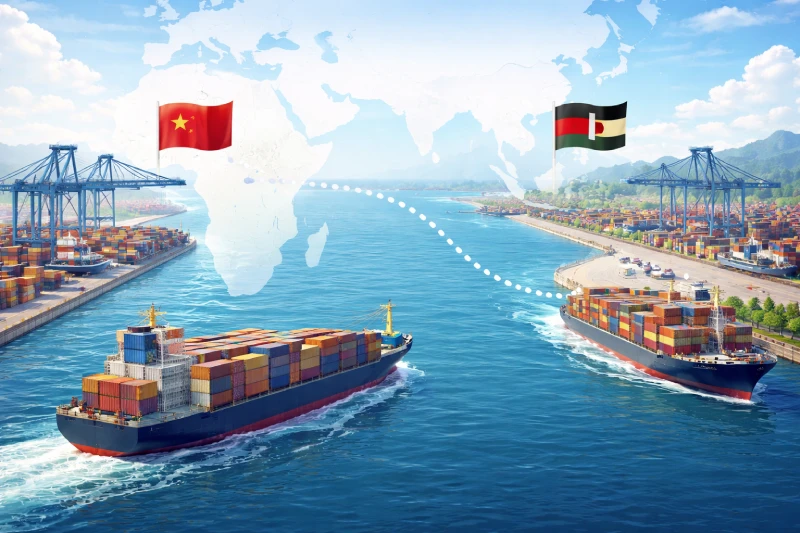
For LCL sea freight from China to Kenya, the shipping cost per CBM typically decreases as volume increases.
Small shipments around 1–2 CBM usually face the highest per-CBM cost, while 5–10 CBM offers better value, and 15–20 CBM approaches near-bulk efficiency.
These are port-to-port ranges, excluding duties, taxes, and inland delivery. Actual costs vary by season, origin port, and consolidation quality.
What “Cost per CBM” Really Means in China–Kenya Shipping
Understanding cost per CBM is essential before comparing quotes, especially for LCL (Less than Container Load) shipments from China to Kenya. A CBM (cubic meter) measures volume, not weight, but freight charges are based on the chargeable unit, which can change depending on cargo density and transport mode. This is why two quotes for the same CBM can look very different.

CBM vs Chargeable Weight (Why Quotes Differ)
For sea freight LCL, charges are typically based on CBM, but many forwarders apply minimum CBM thresholds or blended rates. For air freight, 1 CBM is usually converted to 167 kg of chargeable weight, which can dramatically increase costs for bulky but light cargo.
Why LCL Pricing Is Non-Linear (1–20 CBM)
LCL pricing does not scale evenly. Smaller shipments absorb more fixed handling and consolidation costs, while volumes above 5–10 CBM benefit from better cost efficiency. This is why “cost per CBM” drops as volume increases, rather than staying flat.
Shipping Cost per CBM from China to Kenya (LCL Ranges)
For most Kenya importers shipping 1–20 CBM, LCL sea freight is the default option. At this volume range, pricing is best understood in tiers, not exact numbers. The cost per CBM declines as shipment size increases, because fixed costs—such as CFS handling, documentation, and destination charges—are spread across more volume.
For very small shipments (around 1–2 CBM), the per-CBM cost is usually the highest. This is due to minimum billing units, origin handling fees in China, and destination LCL charges at Mombasa that apply regardless of size. Many first-time importers underestimate this and assume 1 CBM will be “cheap,” which is rarely the case.
The best cost efficiency typically appears in the 5–10 CBM range. At this point, consolidation costs are optimized, and carriers price the shipment more competitively per unit.
For 15–20 CBM, the per-CBM rate may approach near-FCL efficiency, though LCL still includes shared handling and scheduling risks.
These ranges generally assume:
- Major China ports (Shanghai, Ningbo, Shenzhen, Guangzhou)
- LCL sea freight to Mombasa port
- Port-to-port pricing only
Local charges, customs clearance, duties, and inland delivery to Nairobi or upcountry locations are not included and should be reviewed separately.
The table below shows typical range-based cost behavior by CBM size, helping you budget realistically without relying on misleading “flat-rate” quotes.
| Shipment Size (CBM) | Typical Cost per CBM (USD, Range) | Best Use Case |
|---|---|---|
| 1–2 CBM | Higher range | Samples, test orders, urgent small replenishment |
| 3–5 CBM | Medium–high range | Small but regular import batches |
| 5–10 CBM | Medium range (best balance) | Most SME commercial shipments |
| 10–15 CBM | Lower range | Growing volume, cost-focused imports |
| 15–20 CBM | Lowest LCL range | Near-FCL efficiency without full container |
Sea Freight vs Air Freight: Cost per CBM Reality Check
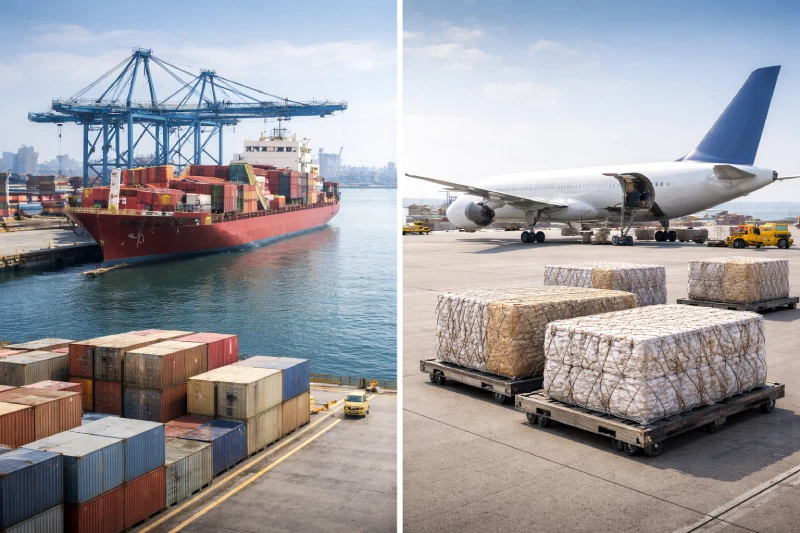
When comparing shipping cost per CBM from China to Kenya, many importers assume sea freight is always cheaper. In most cases that’s true—but not universally. The real decision depends on volume, cargo density, urgency, and risk tolerance, not CBM alone.
When Sea Freight Is Cheaper per CBM
For shipments above 3–5 CBM, LCL sea freight almost always delivers a lower cost per CBM than air freight. Even with longer transit times, spreading fixed handling and destination charges over multiple CBMs makes sea freight the default choice for non-urgent commercial cargo. This is especially true for bulky, low-density goods where air chargeable weight escalates quickly.
When Air Freight Becomes the Smarter Option
For very small volumes (around 1 CBM or less) or time-sensitive goods, air freight can sometimes make sense despite higher nominal rates. Because air freight pricing converts volume into chargeable weight, dense cargo may narrow the cost gap—while saving weeks in transit and reducing inventory holding risk. However, air freight should be evaluated case by case, not assumed cheaper per CBM.
If timing is a deciding factor, review the detailed breakdown in China–Kenya Shipping Transit Time before choosing purely on cost.
What Drives Cost per CBM (China → Kenya)
The shipping cost per CBM from China to Kenya is shaped by multiple variables, not just distance. Understanding these cost drivers helps importers explain why quotes vary and where optimization is actually possible—without increasing operational risk.
Key Cost Drivers (5–8 factors):
- Origin port and CFS handling in China: Different ports and warehouses apply different LCL handling fees and minimums.
- Total shipment volume (CBM): Smaller shipments absorb fixed costs, while larger volumes dilute them.
- Cargo density and packing method: Poorly packed cargo increases CBM without adding value.
- LCL consolidation frequency to Mombasa: Regular, stable consolidations are usually more cost-efficient.
- Seasonality and peak congestion: Q3–Q4 and pre-holiday periods often push rates upward.
- Carrier and fuel surcharges: These fluctuate and are often excluded from headline CBM rates.
- Destination handling scope: Terminal, LCL deconsolidation, and documentation fees in Kenya vary by agent.
For a full landed-cost perspective beyond CBM pricing, see Overall Shipping Cost from China to Kenya.
How to Reduce Cost per CBM Without Increasing Risk
Reducing shipping cost per CBM from China to Kenya is less about chasing the cheapest rate and more about structural efficiency. The steps below focus on lowering real cost per unit while avoiding common risks like delays, recharges, or cargo issues.
Practical Ways to Reduce Cost per CBM (Without Risk):
- Optimize carton dimensions before booking: Reducing unused air inside cartons can significantly lower total CBM.
- Consolidate shipments to reach 3–5 CBM or more: Very small volumes carry the highest per-CBM penalties.
- Use stable, weekly LCL consolidation services: Irregular consolidations often lead to higher handling costs and delays.
- Avoid “too-cheap” ocean rates with inflated local charges: Always review origin and destination fees together.
- Choose Incoterms that give cost visibility: Clear responsibility reduces surprise charges at destination.
- Confirm HS codes early: Incorrect classification can cause re-handling and extra fees during clearance.
- Plan shipments outside peak congestion periods when possible: Timing alone can materially affect CBM pricing.
If you prefer predictable, all-in pricing instead of managing CBM variables, DDP Shipping to Kenya may be a better fit for certain cargo profiles.
Common Quote Mistakes Importers Make
Many Kenya importers run into cost overruns not because rates changed, but because the original CBM quote was misunderstood. The issues below are some of the most common—and most avoidable—when shipping from China to Kenya.
Frequent Quoting Mistakes:
- Comparing CBM rates without local charges: A low ocean rate can be offset by high destination LCL fees in Mombasa.
- Ignoring minimum CBM billing rules: Some forwarders apply 1 or 2 CBM minimums even for smaller shipments.
- Confusing CBM with air chargeable weight: This leads to major budget errors when switching transport modes.
- Assuming port-to-port equals total landed cost: Inland delivery and clearance are often excluded.
- Overlooking rate validity and surcharges: Fuel, congestion, and currency adjustments can change quickly.
Understanding how quotes break down helps avoid surprises—especially when planning multiple shipments rather than one-off imports.
Kenya-Specific Notes Importers Should Know
Shipping cost per CBM from China to Kenya is also influenced by local operational realities. Understanding how cargo moves after arrival helps importers budget more accurately and avoid preventable delays.
Mombasa Port & Inland Delivery Reality
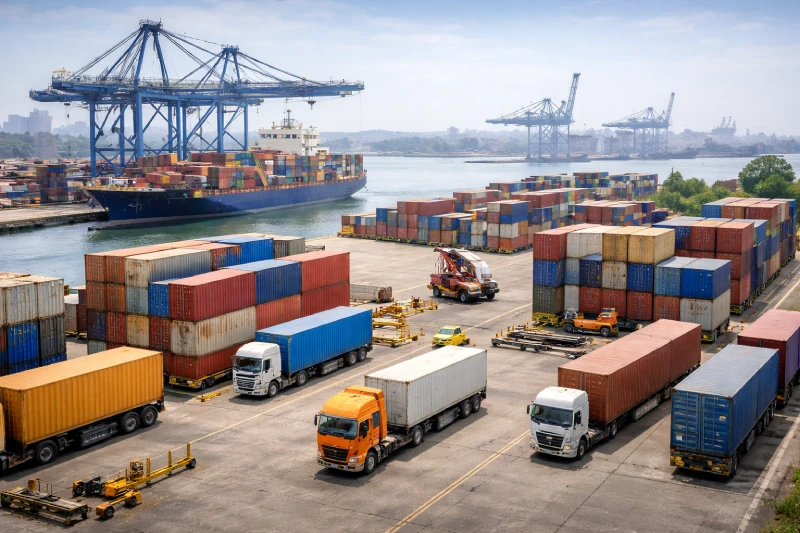
Most LCL shipments arrive at Mombasa, where deconsolidation, documentation checks, and terminal handling take place. While ocean transit is predictable, port handling and release timing can vary depending on congestion, document accuracy, and agent efficiency. Inland delivery to Nairobi or nearby areas typically adds a separate trucking or rail leg.
Nairobi & Upcountry Delays: What’s Typical
Delays are most often caused by incomplete paperwork, HS code discrepancies, or clearance scheduling, not by the ocean leg itself. For upcountry destinations, availability of trucks and coordination between customs release and inland transport can affect final delivery timing and cost.
For a deeper look at documentation and clearance flow, see Customs Clearance Process in Kenya.
When to Consider DDP Instead of Per-CBM Pricing
Per-CBM pricing works well when you want cost control and transparency at each stage, but it’s not always the simplest option. For some Kenya importers—especially SMEs—DDP (Delivered Duty Paid) can reduce operational risk even if the headline cost looks higher.
DDP is often worth considering when shipping small to mid-size LCL volumes, when you don’t have a local clearance team, or when budget certainty matters more than optimizing every cost component. Instead of managing CBM rates, local charges, clearance, and delivery separately, DDP bundles these into a single, predictable landed cost.
This approach is commonly used for first-time imports, e-commerce replenishment, or time-sensitive cargo where cost surprises create bigger problems than slightly higher upfront pricing.
To compare when DDP makes sense versus CBM-based LCL pricing, see DDP Shipping to Kenya.
How to Get an Accurate CBM-Based Quote
To get a realistic shipping cost per CBM from China to Kenya, accuracy starts before you request a quote. Most pricing issues come from incomplete or estimated information, which leads to later adjustments.
Before contacting a forwarder, prepare the following:
- Exact carton count, dimensions, and gross weight (not estimates)
- Pickup location in China and preferred departure port
- Target destination (Mombasa only or final delivery to Nairobi/upcountry)
- Cargo type and HS code (or at least a clear product description)
- Preferred Incoterm and timing expectations
Ask for a quote that clearly separates ocean freight, origin charges, and destination charges, or states what is included. This makes CBM-based comparisons meaningful and helps you avoid under-budgeting when the cargo arrives.
FAQs
1. Is shipping cost per CBM the same for all China ports?
No. Different China ports have different LCL handling fees, consolidation frequency, and carrier access. These differences affect the final cost per CBM even when shipping to the same destination in Kenya.
2. Can two shipments with the same CBM have different prices?
Yes. Cargo density, packing method, shipment timing, and destination handling scope can all change the chargeable cost, even if the CBM is identical.
3. Does shipping cost per CBM include customs clearance in Kenya?
Usually not. Most CBM-based quotes cover ocean freight and basic port handling only. Customs clearance and duties are typically quoted separately unless you choose DDP.
4. Is there a “best” CBM size for cost efficiency?
For most SME importers, shipments in the 5–10 CBM range tend to offer the best balance between cost efficiency and operational flexibility, without committing to a full container.
5. Are online CBM shipping calculators reliable for Kenya routes?
They are useful for rough planning but often exclude local charges and Kenya-specific handling costs. Treat them as estimates, not budgeting tools.
6. Should I wait to combine shipments to lower my CBM cost?
Sometimes, but not always. Delaying shipments to save on CBM cost can increase inventory risk or missed sales. Cost decisions should balance savings against timing and cash flow.
