
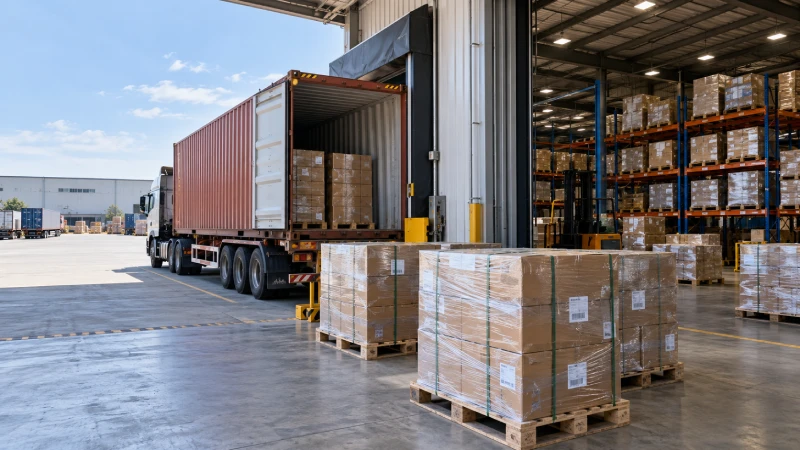
Shipping goods from China to a warehouse or 3PL in Kenya involves more than getting cargo to Mombasa or Nairobi.
For distributors, e-commerce importers and businesses holding inventory locally, the shipment is only complete when the goods have cleared Kenyan import procedures, reached the correct receiving facility, been unloaded successfully and entered the warehouse inventory without unexplained shortages, damaged cartons or rejected pallets.
A typical shipment may involve:
Chinese supplier → China pickup → consolidation warehouse → sea or air freight → Kenya customs clearance → inland transport → warehouse appointment → unloading → inventory handoff
Each handoff matters.
A shipment can arrive in Kenya on schedule and still face additional cost or delay if the receiving warehouse was not told that a container was coming, the cartons do not carry the required references, no forklift is available, or the 3PL cannot match the delivered cargo to its purchase order.
This guide focuses specifically on that final warehouse-delivery process.
For a broader comparison of FCL, LCL, air freight, shipping costs and transit times, see our Shipping from China to Kenya guide.
Data Note — Updated September 2026
Kenya import requirements can vary by product, HS classification, importer status and regulator. Warehouse receiving requirements also vary from one facility to another. Confirm shipment-specific customs, compliance, delivery and unloading requirements before cargo leaves China.
Quick Answer: Can You Ship from China Directly to a Warehouse or 3PL in Kenya?
Yes. Commercial cargo from China can be arranged for final delivery to an importer-owned warehouse, distributor facility or nominated 3PL in Kenya, provided that the shipment structure is confirmed before dispatch.
The logistics plan should normally define:
- the Chinese supplier or suppliers;
- whether cargo will be consolidated in China;
- FCL, LCL or air freight;
- the Kenyan importer;
- customs-clearance responsibility;
- applicable KEBS or other product requirements;
- the exact final warehouse address;
- whether a delivery appointment is required;
- whether cargo should arrive loose or palletised;
- unloading equipment;
- and how receipt will be confirmed after delivery.
For ordinary commercial warehouse delivery, cargo normally proceeds to the receiving facility after the relevant customs and regulatory release.
A bonded warehouse, however, is a different customs-controlled arrangement.
Likewise, Nairobi ICD is not simply another 3PL warehouse. Kenya Ports Authority describes Nairobi ICD as an inland container depot connected to the Port of Mombasa by rail services and able to receive cargo under inland-port arrangements.
The first question for any China-to-Kenya warehouse shipment should therefore be:
Where exactly must the logistics provider’s responsibility end?
Check My Warehouse Delivery Feasibility
Send the product, supplier location, package count, dimensions, weight and final Kenya warehouse location before booking.
First Define What “Warehouse Delivery” Means
“Deliver to my warehouse in Nairobi” sounds straightforward, but it can describe several very different logistics arrangements.
Before comparing freight quotations, identify the exact type of destination.
Your Own Warehouse
A distributor or importer may operate its own facility in Nairobi, Mombasa or another Kenyan city.
In this case, the final-mile plan needs to consider practical receiving conditions such as:
- opening hours;
- truck access;
- delivery booking procedures;
- unloading labour;
- forklift availability;
- container access;
- and the time available for unloading.
For an FCL shipment, this becomes particularly important because delivering a 20ft or 40ft container is very different from delivering ten pallets from an LCL shipment.
Independent 3PL or Fulfillment Warehouse
A third-party logistics provider may store inventory, manage orders and distribute goods locally for the importer.
The freight forwarder does not automatically know that warehouse’s inbound rules.
The importer should obtain receiving instructions covering matters such as:
- PO or inbound reference;
- delivery appointment;
- carton and pallet labels;
- ASN requirements if used;
- barcode requirements;
- pallet limits;
- mixed-SKU rules;
- receiving hours;
- truck restrictions;
- and unloading procedures.
These are warehouse operating requirements, not Kenyan customs rules.
There is no universal Kenya-wide pallet or 3PL labeling standard that can safely be applied to every facility.
Forwarder’s Nairobi Collection Warehouse
Some freight services terminate at the logistics provider’s own warehouse or cargo collection point.
That is not the same as delivery to your own 3PL.
If a quotation says:
China warehouse → Nairobi warehouse
ask whose Nairobi warehouse it refers to.
You may still need to arrange another local delivery from that warehouse to your actual inventory location.
Bonded Warehouse
A bonded warehouse operates under customs control and is not interchangeable with an ordinary commercial warehouse.
Kenya Revenue Authority describes bonded warehousing as a licensed customs arrangement under which dutiable goods may be stored before import duty has been paid.
If your commercial model genuinely requires bonded storage, the customs procedure and movement of the goods must be planned accordingly.
Do not assume that any ordinary Nairobi 3PL can receive uncleared cargo.
Nairobi ICD
Nairobi Inland Container Depot is also a separate logistics point.
Kenya Ports Authority states that Nairobi ICD is linked with Mombasa through SGR and MGR railtainer services. Imports can move from Mombasa to the inland depot under arrangements including a Through Bill of Lading or merchant-haulage status.
A shipment routed to Nairobi ICD may still require another truck movement from the ICD to your commercial warehouse.
So these are not equivalent destinations:
Mombasa Port
Nairobi ICD
forwarder’s Nairobi warehouse
your own Nairobi warehouse
your nominated 3PL
Make the destination precise before the freight booking is confirmed.
Choose the Freight Path Around the Final Warehouse
For warehouse replenishment, do not choose FCL, LCL or air freight based only on the international freight rate.
Consider how the cargo will be received at the destination.
| Shipping Mode | Typical Warehouse Receiving Format | Main Receiving Issue |
|---|---|---|
| FCL | Full container, or cargo devanned before delivery | Container access, unloading time, equipment and empty return |
| LCL | Pallets or cartons after deconsolidation | Release timing, package count and final truck delivery |
| Air Freight | Cartons or pallets | Clearance readiness and rapid delivery coordination |
FCL: Plan the Container Delivery Before It Sails
FCL can work well for regular inventory replenishment or larger orders because one shipper controls the container.
But the key question is:
Can the final warehouse actually receive the container?
Confirm:
- whether 20ft or 40ft containers can enter the site;
- whether the container can remain on the truck during unloading;
- whether a loading dock is available;
- whether forklifts or labour are available;
- whether cargo is floor-loaded or palletised;
- how long unloading is expected to take;
- and who manages the empty-container return.
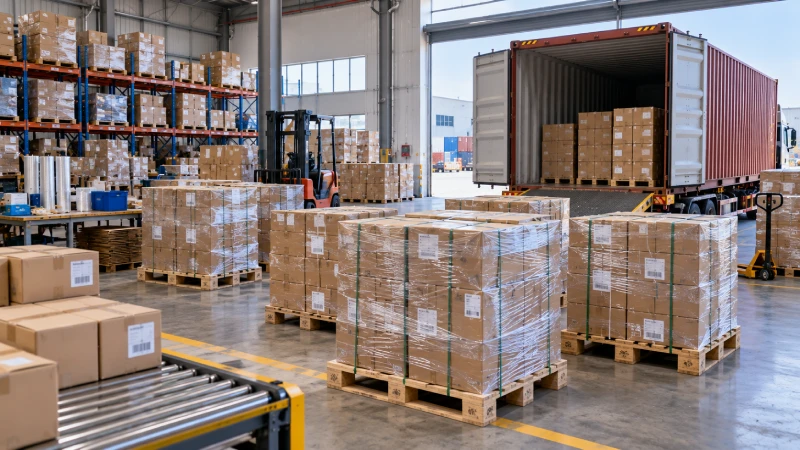
A warehouse designed for pallet deliveries may not want workers manually unloading hundreds of floor-loaded cartons from a container.
On the other hand, palletising every carton in China may reduce container utilisation.
The right solution depends on both freight economics and warehouse operations.
For a deeper comparison of FCL routing and Mombasa handling, see our Sea Freight from China to Kenya guide.
LCL: Allow for Deconsolidation Before Warehouse Delivery
LCL cargo shares container space with other shipments.
After arrival, the consolidated container needs to be deconsolidated and individual shipments become available for their respective customs and delivery processes.
That means the receiving warehouse should not schedule its inbound appointment only from the vessel ETA.
A vessel arriving at Mombasa does not mean your LCL cargo is immediately available for a Nairobi truck.
The sequence may involve:
vessel arrival → container handling → deconsolidation → customs/release process → truck booking → warehouse appointment
For inventory planning, work from actual cargo availability and customs status rather than vessel arrival alone.
Air Freight: Useful for Urgent Warehouse Replenishment
Air freight can make sense when stock availability matters more than the freight-cost difference.
Typical examples include:
- urgent replenishment;
- high-value products;
- replacement parts;
- launch inventory;
- compact e-commerce products;
- or stock needed to prevent a costly sales interruption.
For most commercial air shipments to Nairobi, the important process is:
China supplier → airport/export handling → flight → Nairobi arrival → customs clearance → truck → warehouse
A fast flight does not solve a warehouse problem if the customs documentation, delivery appointment or receiving references are still missing.
See our Air Freight from China to Kenya guide for a deeper explanation of chargeable weight, airline routing and air-freight planning.
Compare LCL and FCL
For a warehouse replenishment shipment, compare not only freight price but also how the receiving facility will unload and book the goods into stock.
Prepare the Cargo in China for Warehouse Receiving
Many warehouse-delivery problems can be prevented before the cargo leaves China.
This is particularly important when the shipment contains goods from several suppliers.
Winsail’s China warehouse operations include supplier consolidation, palletising, repacking, labeling and related origin-side preparation services. See our China consolidation and warehouse services page.
The useful objective is not simply to combine cartons.
It is to prepare one shipment that can be identified, transported, cleared and received consistently.
Consolidate Multiple Chinese Suppliers Before Export
Suppose a Kenyan distributor is buying from three factories:
- Supplier A in Guangzhou;
- Supplier B in Foshan;
- Supplier C in Dongguan.
Instead of exporting three shipments independently, the cargo can be coordinated into one China consolidation plan:
Supplier A + Supplier B + Supplier C → China warehouse → receiving check → consolidation → export shipment → Kenya
Maintain a supplier and purchase-order master list containing:
- supplier name;
- factory location;
- pickup address;
- PO number;
- cargo-ready date;
- product;
- package count;
- dimensions;
- gross weight;
- cargo value;
- special handling requirements;
- and any battery, liquid, chemical or dangerous-goods information.
Do not remove the supplier-level identity merely because the cartons are being consolidated.
You may need it later to investigate discrepancies.
Decide Between Palletised and Floor-Loaded Cargo
Palletisation can simplify:
- forklift handling;
- unloading;
- warehouse receiving;
- carton protection;
- and counting.
But pallets also consume cargo space and add packing cost.
Floor loading can use container volume more efficiently, particularly for cartons that stack well, but it normally requires more manual unloading.
For an FCL shipment, ask the Kenya warehouse first:
Do you prefer to receive a floor-loaded container or palletised inventory?
Do not make that decision only at the China warehouse.
Apply the Correct Warehouse References Before Export
If the Kenyan warehouse or 3PL requires specific inbound labels, obtain the instructions before suppliers complete packing.
Depending on the actual facility, inbound labels may include:
- importer name;
- PO number;
- SKU;
- carton number;
- quantity;
- barcode;
- pallet ID;
- batch or lot reference;
- or an inbound delivery number.
The correct format must come from the receiving warehouse.
Do not invent a generic “Kenya 3PL label.”
Pro Tip
If your 3PL has an inbound-label or ASN specification, obtain it before the suppliers print their final carton labels. Relabelling hundreds of cartons after arrival is much more disruptive than correcting the format during China consolidation.
Identify Special Cargo Early
Tell the freight forwarder before pickup if the shipment contains:
- lithium batteries;
- chemicals;
- liquids;
- dangerous goods;
- heavy machinery;
- long cargo;
- oversized crates;
- fragile equipment;
- or cargo requiring temperature control.
These characteristics may affect:
- warehouse acceptance in China;
- export packing;
- carrier acceptance;
- freight mode;
- destination trucking;
- unloading equipment;
- and the receiving warehouse.
A 3-ton machine cannot be treated operationally like cartons of consumer goods simply because both are being delivered to “a warehouse in Nairobi.”
Complete Kenya Customs and Compliance Before Final Warehouse Delivery
A warehouse address does not replace customs clearance.
Before ordinary imported stock can move into a commercial warehouse as released inventory, the relevant Kenyan customs and product-regulatory requirements need to be addressed.
Kenya Revenue Authority states that clearance of commercial imported goods requires engagement of a licensed customs clearing agent and lists supporting documents including commercial invoices, Bills of Lading or Air Waybills, packing lists, Certificates of Origin, applicable Certificates of Conformity and relevant permits.
Confirm the Kenyan Importer and Clearing Arrangement
Before the shipment leaves China, establish:
- who is the Kenyan importer;
- the correct importer details;
- who will appoint the licensed clearing agent;
- the HS classification to be used;
- whether duties and taxes apply;
- what product permits are required;
- and how the customs documents will reach the clearing agent.
Do not wait until the goods arrive at Mombasa or JKIA to decide who will clear them.
Certificate of Origin
Kenya strengthened its Certificate of Origin requirements in 2025.
KRA states that imported consignments must generally be accompanied by a Certificate of Origin issued by a competent authority in the country of export. The requirement took effect on July 1, 2025, with full enforcement from October 1, 2025, subject to stated exceptional or provisional measures.
For a normal commercial shipment from China, the practical approach is to coordinate the COO before departure rather than assume an exception can be used after arrival.
KEBS, PVoC and Certificate of Conformity
Product compliance should also be checked before the booking is treated as ready.
The Kenya Bureau of Standards’ current PVoC documentation identifies China within its PVoC contractor zone structure, and KEBS continues to publish its Pre-Export Verification of Conformity requirements and designated inspection providers.
The important question is not simply:
Does Kenya require a CoC?
The better question is:
Does this specific product, HS classification and importer arrangement fall under PVoC/CoC or another applicable product-control procedure?
Different products may also fall under other Kenyan regulators.
Verify the actual product requirements before cargo leaves China.
ACD for Containerized Cargo Destined for Kenya Ports
A major 2026 change is Kenya’s Advance Cargo Declaration.
KRA launched the ACD platform on August 3, 2026 for containerized cargo destined for Kenyan ports.
According to the official KRA notice, the exporter obtains an ACD reference code at the loading stage by submitting:
- draft Bill of Lading;
- commercial invoice;
- freight invoice;
- and export declaration.
The reference code is then endorsed on the Bill of Lading before the shipment proceeds to a Kenyan port.
This makes origin-side documentation particularly important.
Do not leave the commercial invoice, freight documentation and export declaration to the last moment before container loading.
New 2026 Export-Documentation Requirement
Another important current requirement took effect on September 1, 2026.
KRA states that Kenyan importers must obtain and retain an export declaration, export entry, customs export certificate or equivalent document from the country of export.
KRA says the documentation should identify information including the exporter, importer, goods, quantity, value, tariff classification and country of export, and the records should be retained for at least five years.
For China sourcing, this means the importer should make sure the required export documentation is preserved rather than treating China export paperwork as something that can be discarded after the vessel departs.
Warehouse-Delivery Compliance Checklist
| Item | Main Purpose | Timing |
|---|---|---|
| Commercial Invoice | Customs value and transaction details | Before shipment |
| Packing List | Packages, weights and cargo breakdown | Before shipment |
| Bill of Lading / AWB | Transport document | During shipment process |
| Certificate of Origin | Origin evidence | Arrange before clearance |
| PVoC / CoC | Product conformity where applicable | Normally pre-export |
| ACD reference | Applicable containerised sea cargo | Before loading / B/L finalisation |
| China export document | 2026 importer record requirement | Obtain from origin |
| Product permits | Product-specific regulation | As required |
| Customs declaration | Kenya import clearance | Destination |
Check My Kenya Import Requirements
Before shipping, confirm the exact product, HS code, importer setup and destination so the compliance checklist can be reviewed shipment by shipment.
Plan the Final Mile from Mombasa or JKIA to the Warehouse
After customs and regulatory release, the international freight stage becomes an inland-delivery problem.
The routing depends on how the shipment entered Kenya.
Mombasa to Nairobi
For sea freight, a simplified FCL route may look like:
China → Mombasa → customs/release → inland move → Nairobi warehouse
Depending on the booking and inland arrangement, some containerized cargo may instead move through Nairobi ICD.
Kenya Ports Authority states that Nairobi ICD is linked to Mombasa by rail and can receive imports under Through Bill of Lading or merchant-haulage arrangements.
That does not mean every Nairobi shipment should automatically use the ICD.
The correct structure depends on the carrier booking, customs setup, container movement and final destination.
Before booking, confirm whether your quotation ends at:
- Mombasa;
- Nairobi ICD;
- a forwarder’s Nairobi facility;
- or your final warehouse address.
For LCL cargo, the workflow is different because the container must first be deconsolidated before individual cargo can proceed to the final delivery stage.
JKIA to a Nairobi Warehouse
For air cargo, the final leg may be much shorter geographically, but it still requires coordination.
A typical flow is:
China airport → JKIA → cargo availability → clearance → local truck → warehouse
Before dispatching the truck, confirm:
- shipment release;
- warehouse appointment;
- delivery reference;
- receiving contact;
- vehicle requirements;
- unloading arrangements.
The objective is to avoid having a cleared shipment sitting on a truck while the warehouse tries to work out whether it can receive it.
Confirm the Warehouse Receiving Requirements Before Dispatching the Truck
This is where warehouse delivery becomes different from an ordinary port-to-port freight shipment.
Before the local vehicle is sent to the receiving site, confirm the facility’s actual inbound requirements.
Delivery Appointment and Pre-Alert
Ask the warehouse whether it requires advance booking.
The pre-alert may need to contain:
- delivery date;
- appointment time;
- PO number;
- booking reference;
- shipment reference;
- carton or pallet count;
- driver details;
- truck registration;
- expected arrival time;
- warehouse contact person.
Some facilities may require an ASN or another inbound reference.
Others may simply require a delivery booking by email or phone.
Use the actual facility’s procedure.
Packaging and Pallet Requirements
Confirm whether the warehouse accepts:
- loose cartons;
- mixed cartons;
- palletised goods;
- mixed SKUs on one pallet;
- tall pallets;
- non-standard pallets;
- crates;
- oversized units.
If pallets are required, obtain any applicable:
- dimensions;
- height limits;
- weight limits;
- label positions;
- wrapping requirements;
- stacking requirements.
Again, these are site-specific conditions.
Unloading Requirements
Do not assume the delivery truck includes unloading.
Ask:
- Is there a loading dock?
- Is a forklift available?
- Does the warehouse provide labour?
- Is a tail-lift vehicle required?
- Can a container truck enter the site?
- How long can the container remain during unloading?
- Does heavy machinery require a crane?
- Who pays additional waiting time if unloading is delayed?
These questions are especially important for FCL.
If nobody at the warehouse can unload the container, having the container arrive on time does not solve the problem.
Dangerous, Heavy or Oversized Cargo
Special cargo requires additional review.
For dangerous goods, the logistics plan may need to consider:
- classification;
- MSDS;
- UN number;
- packing;
- carrier acceptance;
- destination handling;
- storage restrictions.
For machinery or project cargo, the plan may need to consider:
- piece weight;
- lifting points;
- forklift capacity;
- crane requirements;
- truck access;
- unloading area;
- and site safety.
Do not send unusual cargo to a 3PL until the receiving facility has explicitly confirmed it can accept it.
Pro Tip
Ask your warehouse one simple question before booking final delivery: “What would cause you to reject this truck?” A missing appointment reference, incorrect labels, unsuitable vehicle or unavailable unloading equipment can cause a failed delivery even when customs clearance has been completed correctly.
Review My Cargo Before Shipping
Confirm packaging, labels, warehouse access and unloading requirements while the goods are still in China.
Prepare the Delivery and Inventory Handoff Documents
The physical delivery is only one part of warehouse receiving.
For businesses holding local inventory, you also need evidence that the quantity shipped from China became the quantity entered into stock in Kenya.
Prepare a Pre-Alert Pack
Before delivery, the warehouse may need a simple inbound file containing:
- importer or customer name;
- supplier;
- purchase order;
- shipment reference;
- SKU breakdown;
- packing list;
- carton quantity;
- pallet quantity;
- expected arrival date;
- booking reference;
- warehouse contact.
This allows the receiving team to understand what is coming before the truck reaches the gate.
Prepare the Delivery Pack
Depending on the shipment, useful delivery records may include:
- delivery note;
- packing list;
- shipment reference;
- container number;
- seal number;
- booking reference;
- vehicle details;
- unloading instructions.
Do not overload the warehouse team with every customs document if it does not need them for operational receiving.
The objective is to give each party the documents required for its part of the workflow.
Confirm Inventory Receipt
After unloading, the receiving process should establish what actually arrived.
The importer should be able to obtain or confirm:
- cartons received;
- pallets received;
- SKU quantities;
- shortages;
- overages;
- visibly damaged packages;
- rejected items;
- receiving time;
- and proof of delivery or another receiving record.
Different warehouses use different receiving documents. A facility may issue a goods-received record, warehouse receipt, GRN or another internal confirmation.
The document name matters less than the control process.
| Logistics Stage | Useful Evidence |
|---|---|
| China warehouse receiving | Supplier/package receiving record |
| Consolidation | Supplier and PO cargo master |
| Container loading | Loading/container record |
| Kenya final delivery | Delivery note / POD |
| Warehouse receiving | Quantity and condition record |
| Inventory handoff | SKU-level stock confirmation |
Pro Tip
For multi-supplier consolidation, keep supplier-level carton identification even after the cargo is combined. If the Kenya warehouse reports a shortage, you can then investigate whether the discrepancy originated with the supplier, consolidation warehouse, international shipment or final receiving stage.
DAP, DDP or Door-to-Warehouse: Who Handles What?
“Delivered to my warehouse” does not by itself explain who is responsible for import clearance.
That distinction should be agreed commercially.
DAP to a Kenya Warehouse
Under DAP — Delivered at Place, the seller arranges transport to the named destination, but the buyer remains responsible for import clearance and related import formalities.
ICC’s Incoterms® 2020 guidance states that under DAP the seller delivers the goods at the named place ready for unloading, while the seller has no obligation to carry out import clearance or pay import duty.
A practical structure could therefore be:
China supplier → international freight → Kenya arrival → buyer-arranged import clearance → transport resumes → buyer’s warehouse
The exact named destination should be specific.
DAP Nairobi is less useful operationally than:
DAP [named warehouse], Nairobi, Kenya
DDP to a Kenya Warehouse
Under DDP — Delivered Duty Paid, the seller assumes responsibility for import clearance and applicable import duties and taxes under the Incoterm.
ICC describes DDP as the rule that places the maximum responsibility on the seller and advises care where the seller may face difficulty performing import formalities in the destination country.
For this reason, DDP feasibility should be checked for the actual:
- product;
- Kenyan importer structure;
- customs arrangement;
- destination;
- and regulatory requirements.
Do not assume that every China-to-Kenya shipment can automatically be structured as DDP.
Door-to-Door Is Not Automatically DDP
A forwarder may coordinate:
- China pickup;
- consolidation;
- sea or air freight;
- destination agent;
- clearing-agent communication;
- and inland delivery,
while the Kenyan importer still remains responsible for customs formalities, duties and taxes.
That can still be a commercially useful door-to-door service.
The important point is to define the responsibility boundary rather than rely on the words “door-to-door.”
For a deeper comparison, see our Door-to-Door Shipping from China to Kenya and DDP Shipping from China to Kenya guides.
Check Door-to-Door Feasibility
Confirm the importer arrangement and customs responsibility before choosing DAP, DDP or another delivery structure.
What Information Should You Send for a Warehouse-Delivery Freight Quote?
A useful China-to-Kenya warehouse quotation needs more information than:
“How much for one container to Nairobi?”
Provide the freight forwarder with the complete movement.
China Supplier Details
Send:
- supplier city;
- factory or pickup address;
- number of suppliers;
- cargo-ready date;
- current supplier Incoterm.
If several suppliers are involved, identify them separately.
Cargo Details
Provide:
- product description;
- HS code if already confirmed;
- number of cartons, pallets or crates;
- package dimensions;
- gross weight;
- total CBM;
- cargo value;
- battery, liquid or chemical information;
- dangerous-goods information;
- oversized/heavy-piece details.
Do not describe a shipment simply as “general goods” if it contains a product that may affect customs, compliance or carrier acceptance.
Kenya Destination Details
Provide:
- destination city;
- full warehouse location;
- importer-owned warehouse or 3PL;
- warehouse contact;
- receiving hours;
- appointment requirement;
- unloading capability;
- forklift availability;
- container access;
- tail-lift requirement if known.
For FCL, specify whether you expect:
- container delivery;
- cargo devanning before delivery;
- or another destination-handling arrangement.
Customs and Commercial Setup
Also explain:
- who is the Kenyan importer;
- whether you already have a clearing agent;
- whether applicable PVoC/CoC has been checked;
- desired delivery scope;
- and whether you are requesting DAP, DDP or another arrangement.
This allows the forwarder to quote the actual supply chain, rather than only the international freight component.
Warehouse Delivery Checklist
Before approving the shipment, work through this checklist.
Before Cargo Leaves China
- Confirm all suppliers and cargo-ready dates.
- Confirm final Kenya warehouse address.
- Confirm importer details.
- Confirm HS classification.
- Check applicable PVoC/CoC and other product permits.
- Prepare commercial invoice and packing list.
- Arrange Certificate of Origin.
- Prepare ACD documentation for applicable containerized sea cargo.
- Preserve China export documentation required by the Kenyan importer.
- Obtain warehouse pallet, label and carton requirements.
- Decide whether cargo should be palletised in China.
- Confirm whether special cargo requires additional handling.
Before Cargo Is Delivered in Kenya
- Confirm customs release status.
- Confirm actual cargo availability.
- Book the warehouse appointment.
- Send the pre-alert.
- Confirm truck type.
- Confirm site access.
- Confirm forklift, labour or crane requirements.
- Confirm who unloads.
- Confirm container return requirements for FCL.
- Provide PO, SKU and delivery references.
After Delivery
- Obtain proof of delivery.
- Confirm package/pallet counts.
- Check visible damage.
- Record shortages or overages.
- Reconcile received SKUs against the China shipment record.
- Keep supporting customs and export documents in accordance with applicable record-retention rules.
The objective is simple:
the freight record and the inventory record should reconcile.
FAQ
Can I ship goods from China directly to a warehouse in Nairobi?
Yes. The shipment can be arranged from supplier pickup in China through international freight and final delivery to an agreed warehouse in Nairobi, subject to customs release, product compliance, warehouse receiving requirements and the agreed delivery scope.
Is Nairobi ICD the same as a 3PL warehouse?
No. Nairobi ICD is a Kenya Ports Authority inland container depot linked with Mombasa for containerized cargo handling. A commercial 3PL warehouse normally provides storage, inventory management, fulfillment or distribution services, so cargo reaching Nairobi ICD may still need another delivery leg.
Should I use FCL or LCL for warehouse replenishment in Kenya?
It depends on shipment volume, cargo characteristics and the receiving setup. FCL can suit larger replenishment shipments but requires container access and unloading planning. LCL can suit smaller shipments but requires deconsolidation before final delivery.
Does my Kenya warehouse clear customs for me?
Not automatically. A normal warehouse or 3PL receiving service should not be assumed to include customs brokerage. Confirm separately who is acting as the Kenyan importer and who will manage customs clearance through the appropriate licensed clearing-agent arrangement.
What information should I send my 3PL before delivery?
Requirements vary by facility, but useful information commonly includes the purchase-order number, shipment reference, SKU breakdown, carton or pallet count, packing list, expected delivery date, booking reference and any driver or vehicle details requested by the warehouse.
Can cargo from multiple Chinese suppliers be delivered as one shipment to my Kenya warehouse?
Yes, compatible orders can often be consolidated in China before export. Keep supplier, PO and SKU identification throughout consolidation so the final warehouse receipt can be reconciled against the original supplier shipments.
Can dangerous goods or oversized machinery be delivered to a Kenya warehouse?
Potentially, but the shipment requires individual review. Dangerous goods may need special classification, documentation, packaging and carrier acceptance, while heavy or oversized cargo may require special trucks, lifting equipment and confirmation that the receiving facility can handle the cargo.
Plan the Shipment Around the Final Inventory Handoff
Shipping to a Kenya warehouse is not simply an extension of the ocean or air freight booking.
The final destination changes decisions much earlier in the supply chain.
If the warehouse requires palletised inventory, that may affect packing in China.
If the 3PL requires a PO label or ASN reference, the supplier or consolidation warehouse may need that information before export.
If the destination cannot accept a container truck, the FCL delivery plan may need to include another handling stage.
If the shipment needs PVoC, a Certificate of Origin or ACD documentation, those requirements should be addressed before the cargo leaves China rather than after it reaches Mombasa.
And if goods from several suppliers are consolidated, supplier-level carton and SKU records should remain traceable all the way through receiving.
The most useful way to plan the shipment is therefore:
Supplier → China warehouse → international freight → Kenya clearance → final-mile truck → receiving appointment → unloading → inventory confirmation
not simply:
China → Kenya
For importers holding inventory in Kenya, the shipment is not operationally complete when the vessel arrives or even when customs releases the cargo.
It is complete when the correct goods are accepted by the correct warehouse and the quantities can be reconciled against what left China.
Send Cargo Details
To review a China-to-Kenya warehouse shipment, prepare:
Product + Chinese pickup location + number of suppliers + packages + dimensions + gross weight + CBM + cargo value + final Kenya warehouse location + receiving requirements.
For multi-supplier orders, also include each supplier’s cargo-ready date so consolidation and the final FCL, LCL or air-freight plan can be evaluated together.
Regulatory Note: Kenya import requirements vary by product, HS classification, importer status and the government agencies involved. Confirm shipment-specific requirements before cargo leaves China.
Warehouse Note: Appointment rules, pallet specifications, labels, unloading requirements and inventory-receiving procedures are facility-specific. Obtain current instructions directly from the nominated warehouse or 3PL.
Rate Note: Freight and final-mile delivery costs depend on cargo size, shipping mode, origin, destination, equipment requirements, carrier conditions and quotation scope. Shipment-specific pricing should be confirmed before booking.
