

Importing from China to Kenya for the first time is not difficult because there are many steps. It becomes difficult when an important requirement is discovered after the point when it should have been handled.
A wrong HS classification can change your tax estimate or trigger an unexpected permit requirement. A missing Certificate of Conformity can become a problem after the goods are already packed. An incomplete Certificate of Origin can delay documentation. For containerized sea freight, waiting until the vessel is already moving toward Mombasa to think about Kenya’s Advance Cargo Declaration is too late.
That is why this checklist is organized differently from a normal step-by-step import guide.
Instead of explaining how international shipping works, it shows you what to verify before each important stage of your first China-to-Kenya shipment.
Use it as a go/no-go checklist before you:
- place the order;
- pay the supplier;
- finish production;
- collect the cargo;
- load the shipment;
- wait for arrival in Kenya;
- submit the customs entry; and
- arrange final delivery.
If you still need the broader overview of freight methods, costs, transit planning and destination options, start with Shipping from China to Kenya. If you want the complete import workflow rather than a risk-control checklist, use the step-by-step China-to-Kenya import guide.
Data Note — Updated September 2026
Kenya’s import documentation requirements have changed in recent years. KRA’s Certificate of Origin requirement is now fully enforced, a new export-document requirement took effect on September 1, 2026, and the Advance Cargo Declaration system has been introduced for containerized cargo destined for Kenyan ports. Product-specific requirements can also depend on HS classification and the responsible Kenyan regulator. Always confirm the requirements for your actual shipment before cargo leaves China.
Quick Answer: What Should a First-Time Kenya Importer Check Before Shipping?
Before allowing your first commercial shipment to leave China, confirm the following:
| Check | Before You Proceed |
|---|---|
| Product specification | Confirm exactly what you are buying, including model, material, function and quantity |
| HS classification | Review the likely Kenya customs classification before calculating landed cost |
| Import restrictions | Check whether another Kenyan regulator, permit or approval applies |
| PVoC / CoC | Confirm whether the goods require pre-export conformity assessment |
| Certificate of Origin | Confirm how the required origin document will be obtained |
| China export documentation | Make sure the exporter can provide the required export declaration or equivalent record |
| Commercial documents | Invoice and packing list must match the actual shipment |
| Freight scope | Confirm Incoterm, pickup point, destination and who pays each cost |
| Kenya tax estimate | Obtain a shipment-specific estimate before relying on your expected profit margin |
| Final delivery point | Confirm whether the shipment ends in Mombasa, Nairobi ICD, a Nairobi warehouse or another destination |
For containerized sea freight to a Kenyan port, also confirm the Advance Cargo Declaration before loading. KRA’s current process requires the shipper or exporter to obtain the ACD reference at the port of loading and have the code endorsed on the Bill of Lading. See the Kenya Revenue Authority ACD notice.
The main rule for a first shipment is simple:
Do not let the cargo move to the next stage because “everything should be fine.” Move it only after the important items for that stage have been checked.
Before Placing the Order: Confirm the Product Can Be Imported
The first shipping decision happens before you book a forwarder.
It happens when you decide whether the product is suitable to import into Kenya at all.
A common mistake is to negotiate a good factory price, place the order and only later ask a clearing agent:
“How much tax will I pay?”
By then, changing the product, packaging, certification route or supplier may be expensive.
Identify the Product Precisely
Do not begin with a vague description such as:
- machine;
- spare parts;
- electronics;
- chemicals;
- household goods; or
- equipment.
For customs and compliance checking, collect enough information to identify what the goods actually are.
Depending on the product, this may include:
- exact commercial name;
- manufacturer and model;
- material or composition;
- primary function;
- technical specification;
- rated power or voltage;
- whether it is new or used;
- intended application;
- photos;
- datasheet; and
- proposed HS code from the supplier.
The more regulated or technically complex the product is, the less useful a generic description becomes.
Review the Likely HS Classification
The HS code is not just something placed on shipping documents.
It may affect:
- import duty;
- other taxes or levies;
- whether a licence or permit is needed;
- whether another Kenyan government agency becomes involved;
- whether special product standards apply; and
- the information declared to Customs.
KRA notes that taxes payable depend on the value of the imported goods and the applicable tariff classification. For a shipment-specific decision, review the current tariff treatment rather than relying on a generic tax percentage.
Your Chinese supplier may give you an HS code used for export from China. Treat that as useful information, not automatic confirmation of the classification that should be used for the Kenya import entry.
For valuable or difficult-to-classify cargo, review the classification with the Kenya-side customs professional handling the shipment.
Pro Tip
Do not build your landed-cost calculation around the supplier’s HS code without checking it. A classification problem discovered after the goods arrive can affect more than duty—it may also change the permits or conformity requirements applicable to the cargo.
Check Whether the Product Is Regulated
Not every product has the same import requirements.
Depending on the commodity, you may need to deal with an authority responsible for areas such as:
- food;
- agricultural products;
- medical goods;
- communications equipment;
- chemicals;
- plants and plant products;
- controlled goods; or
- other regulated products.
KRA’s import guidance states that restricted goods require the appropriate licence or permit, and import documentation varies according to the cargo. See KRA import and exemption guidance.
The important timing point is:
Check this before placing the order, not when the container is approaching Mombasa.
Build a Preliminary Landed-Cost Estimate
Your factory price is not your Kenya landed cost.
At the planning stage, your estimate may need to consider:
Goods value
+ China pickup or origin handling
+ export handling
+ international freight
+ insurance where applicable
+ estimated Kenya duties and taxes
+ customs-clearance costs
+ destination charges
+ inland delivery
The exact tax calculation depends on the product classification, customs value and current law.
Avoid using a generic statement such as:
“Kenya import tax is X%.”
There is no single percentage that correctly describes every product.
If the business case only works when customs costs are estimated optimistically, the order needs another review before payment.
For a broader freight-cost framework, see shipping cost from China to Kenya.
Check My Kenya Import Requirements
Before ordering, prepare the product description, specification, HS code if known, supplier location, expected shipment size and Kenya destination. These details make a useful first compliance and logistics review possible.
Before Paying the Supplier: Lock Down the Commercial Responsibilities
Once the product appears importable, the next risk is paying for goods without clearly defining what the supplier is actually responsible for.
A low unit price does not automatically mean a low landed cost.
Confirm the Supplier and Order Details
Before paying a deposit, make sure your order documents clearly show:
- supplier’s legal company name;
- payment beneficiary;
- product and model;
- specifications;
- quantity;
- unit price;
- total value;
- packaging requirements;
- production lead time;
- inspection arrangement if any; and
- payment stages.
For customized machinery, private-label goods or technical products, do not rely only on chat messages.
Important specifications should appear in the purchase agreement, PI, purchase order or other accepted commercial documentation.
Put the Incoterm and Named Location in Writing
Do not accept vague shipping descriptions such as:
“FOB price”
or:
“DDP Kenya.”
The location matters.
For example, a quote should make clear whether the agreed scope is:
- EXW supplier factory;
- FOB a named Chinese port;
- CIF Mombasa;
- DAP a named Nairobi address; or
- another clearly defined arrangement.
Also confirm:
- who collects from the factory;
- who handles China export procedures;
- who books international freight;
- whether insurance is included;
- who handles Kenya customs clearance;
- who pays duties and taxes;
- whether Mombasa destination costs are included;
- whether delivery to Nairobi or another city is included; and
- where the transporter’s responsibility ends.
If you are considering DDP because this is your first shipment, make sure you understand the actual customs and importer structure. “DDP” on a quotation should not be treated as proof that every Kenya-side obligation has been properly arranged.
For the broader delivery model, see door-to-door shipping from China.
Confirm the Supplier Can Support Kenya Documentation
Before paying, ask the supplier or exporter questions such as:
- Can you provide the final commercial invoice?
- Can you provide an accurate packing list after production?
- Can you cooperate with Kenya PVoC inspection if it applies?
- Can you support the Certificate of Origin process?
- Who will provide the China export declaration or equivalent export record?
- Can technical reports, product specifications or SDS documents be supplied if required?
This has become especially important because KRA states that from September 1, 2026, importers must obtain and retain an export declaration, export entry, customs export certificate or equivalent document from the country of export. KRA says the record should be retained for at least five years and contain information including the parties, goods, quantity, value, tariff classification and country of export. See KRA’s Finance Act 2026 guidance.
Ask about these documents early.
Trying to reconstruct them months after import is a poor document-control strategy.
Estimate Taxes Before You Calculate Profit
A first-time importer may calculate:
China purchase price → Kenya selling price → profit
That skips too much.
A more useful calculation is:
Estimated landed cost → Kenya selling price → expected margin
Before committing to the order, ask your Kenya clearing agent or other qualified party to help confirm the likely customs treatment based on the actual HS classification and product.
The purpose is not to obtain a guaranteed customs outcome.
It is to avoid placing an order whose economics only work because important import costs were left out.
Before Production Finishes: Start Compliance and Document Preparation
Do not wait until the supplier says:
“Goods ready. Please arrange pickup.”
Some compliance work should begin while production is still underway.
Confirm PVoC and CoC Requirements
Kenya operates a Pre-Export Verification of Conformity program.
KEBS’s current PVoC framework covers imported goods within its applicable scope and uses approved contractors in the country of supply to assess conformity before shipment. China is covered by the current PVoC contractor arrangement. See the KEBS PVoC information.
For applicable cargo, this may result in a Certificate of Conformity (CoC) used as part of the Kenya import process.
However, avoid assuming:
“Every product from China needs exactly the same CoC process.”
The current KEBS framework includes exemptions and special treatment for specified categories, including goods that may fall under other Partner Government Agencies. The correct treatment depends on the actual commodity.
For your shipment, classify the requirement as one of the following:
Mandatory: the product falls within the applicable PVoC requirement.
Conditional: treatment depends on exemption status, another regulator or a product-specific rule.
Operational recommendation: confirm the position before the supplier completes packing and before cargo is dispatched.
Prepare Product-Specific Supporting Documents
Some shipments may need more than an invoice and packing list.
Depending on the cargo, ask whether you will need documents such as:
- technical specifications;
- test reports;
- SDS;
- battery documents;
- dangerous-goods declarations;
- product labels;
- licences;
- permits; or
- conformity documentation.
For lithium batteries, chemicals, dangerous goods or other special cargo, tell the freight forwarder what the cargo is before booking.
Do not describe a shipment as “general cargo” simply to obtain a quick freight quotation.
Plan the Certificate of Origin
Do not confuse the Certificate of Origin with the Certificate of Conformity.
They serve different purposes.
| Document | Main Question It Answers |
|---|---|
| Certificate of Origin — COO | Where do the goods originate? |
| Certificate of Conformity — CoC | Do applicable goods meet the relevant conformity requirements? |
KRA states that imported consignments must generally be accompanied by a Certificate of Origin issued by a competent authority in the country of export. The requirement took effect in July 2025, with full enforcement from October 1, 2025, subject to the exceptional cases and provisional measures described by KRA. See the KRA Certificate of Origin notice.
For a China-origin shipment, ask before dispatch:
- who will arrange the COO;
- when it can be issued;
- what shipment information it will show; and
- whether the details will match the invoice and transport documents.
Do not treat this as something to solve after the vessel arrives.
Review My Cargo Before Shipping
Before production finishes, a useful cargo review should include the product, HS code if known, supplier location, packing details, certification status and Kenya destination.

Before Cargo Pickup: Freeze the Actual Shipment Data
Up to this point, you may have been working with estimates.
Before cargo pickup, switch from estimated information to actual shipment data.
Obtain the Final Packing List
The final packing list should reflect the cargo that will actually be handed to the warehouse or forwarder.
Check:
- number of cartons, crates, pallets or packages;
- quantity by model or SKU;
- gross weight;
- net weight where relevant;
- dimensions;
- total CBM;
- pallet or crate information; and
- marks or reference numbers.
These details affect freight booking, warehouse planning and customs documentation.
Match the Cargo Against the Commercial Documents
Compare the final cargo with the invoice and packing list.
The following should tell a consistent story:
Product description → quantity → model → packages → weight → value
This is especially important when the supplier has:
- changed the packaging;
- partially shipped an order;
- added free accessories;
- changed model quantities;
- combined several purchase orders; or
- substituted components.
Do not automatically reuse the preliminary invoice if the finished shipment is different.
Confirm Supplier Pickup Instructions
For a single supplier, confirm:
- factory address;
- warehouse contact;
- pickup date;
- number of packages;
- total weight and volume;
- cargo reference; and
- loading conditions.
For multiple suppliers, also confirm:
- each cargo-ready date;
- consolidation warehouse;
- supplier labels or reference numbers;
- warehouse receiving instructions;
- consolidation cut-off;
- whether cargo will be repacked; and
- who will issue the final consolidated shipping documents.
Consolidation can reduce unnecessary shipment fragmentation, but only if the cargo and documents from each supplier are controlled correctly.
If the shipment is moving by ocean, see sea freight from China to Kenya for LCL, FCL, Mombasa and inland-routing considerations. For urgent cargo, compare it with air freight from China to Kenya.
Declare Special Cargo Before Collection
Tell the forwarder before pickup if the shipment includes:
- lithium batteries;
- other dangerous goods;
- chemicals;
- liquids;
- magnets;
- oversized machinery;
- unusually heavy pieces;
- fragile cargo; or
- cargo requiring special lifting or securing.
A warehouse is the wrong place to discover that the freight quotation was based on normal general cargo when the actual shipment requires special handling.
Before Loading: Run the Final No-Go Compliance Check
This is one of the most important checkpoints in the entire shipment.
Once cargo is loaded and the vessel sails, correcting an origin-side documentation problem becomes much harder.
Do not allow the shipment to proceed just because:
“Production is finished.”
Production completion and shipping readiness are not the same thing.
Check the Final Commercial Invoice and Packing List
Before loading, confirm that the final invoice and packing list match:
- actual goods;
- quantities;
- declared values;
- package count;
- weights;
- model information; and
- consignee/importer details where applicable.
If two documents use materially different product descriptions, resolve the difference before shipment.
Confirm the Certificate of Origin
Verify that the Certificate of Origin has been arranged in accordance with the current KRA requirement and that the shipment details are consistent with the commercial documentation.
KRA’s current notice states that the COO requirement is fully enforced from October 1, 2025, while also describing specified exceptional cases in which alternative official export documents may be considered subject to Customs verification.
Do not plan your shipment around an exception unless it genuinely applies.
Obtain the China Export Declaration or Equivalent Export Record
For shipments imported into Kenya from September 1, 2026 onward, this should be treated as a core document-control item.
KRA says the importer must obtain and retain one of the accepted forms of official export documentation from the exporting country and produce it when requested. See KRA’s Finance Act 2026 guidance.
For a shipment from China, make sure the exporter and freight arrangement can support the required export documentation.
Pro Tip
Ask about the Certificate of Origin and China export documentation while the goods are still in China. Do not assume every factory will automatically know which records your Kenya import file needs.
Complete the ACD for Applicable Containerized Sea Cargo
If your shipment is moving as containerized sea cargo to a Kenyan port, check the Advance Cargo Declaration before loading.
KRA launched its ACD platform for containerized cargo destined for Kenyan ports in August 2026. Its published workflow requires the shipper or exporter to obtain the ACD reference code at the loading stage.
The documents currently listed for the ACD application include:
- draft Bill of Lading;
- commercial invoice;
- freight invoice; and
- export declaration.
After approval, the ACD reference is to be endorsed on the Bill of Lading before the shipment proceeds to Kenya. See the KRA ACD notice and the KRA ACD platform.
This is important because the ACD is not simply another document your Kenya agent should start thinking about after vessel arrival.
Pro Tip
For containerized sea freight, treat ACD as an origin loading checkpoint, not a Mombasa-arrival task.
For air freight, do not automatically apply the same sea-container workflow. KRA’s implementation notice specifically addresses containerized cargo destined for Kenyan ports.
Review the Draft Bill of Lading
Before the final B/L is issued, check key details such as:
- shipper;
- consignee;
- notify party;
- product description;
- number and type of packages;
- gross weight;
- port of loading;
- port of discharge;
- container details where applicable; and
- required references.
Correcting a draft is easier than dealing with an incorrect final transport document.
STOP BEFORE LOADING
Do not release the shipment simply because the supplier is asking for pickup. Confirm the commercial documents, applicable compliance documents, origin/export records and ACD status where applicable first.
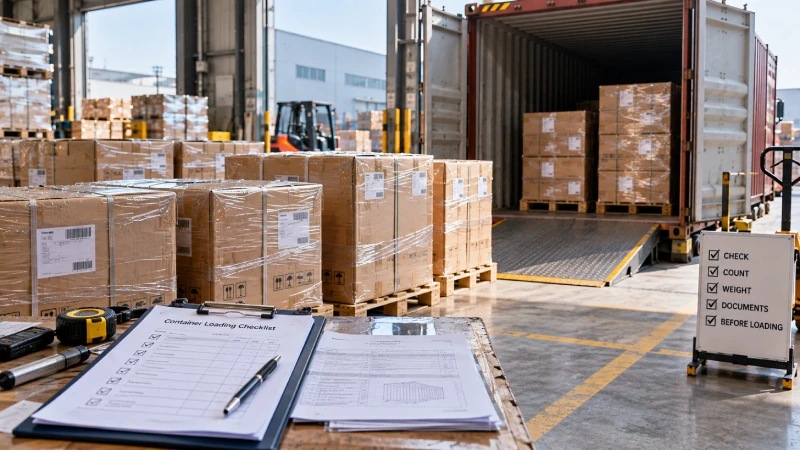
Before the Vessel Arrives: Prepare Customs Clearance in Kenya
Once the shipment has departed China, your job changes.
The focus moves from origin compliance to arrival preparation.
Do not wait until the vessel berths in Mombasa to begin looking for a clearing agent.
Appoint a Kenya Clearing Agent Early
KRA states that importers use licensed customs clearing agents to process import documentation and customs clearance on their behalf.
For a first shipment, early involvement is useful because the agent can help identify problems with:
- classification;
- importer details;
- licences;
- compliance documents;
- customs value; and
- expected taxes
before the cargo is physically available for clearance.
For more detail on the Kenya-side entry process, see customs clearance in Kenya.
Send the Complete Document Pack
Depending on the cargo, your Kenya-side clearance file may include documents such as:
- commercial invoice;
- packing list;
- Bill of Lading or Air Waybill;
- Certificate of Origin;
- CoC for regulated products where applicable;
- permits or licences where applicable;
- China export documentation;
- freight invoice where required;
- purchase order or contract;
- importer identification/PIN information; and
- other commodity-specific supporting documents.
KRA’s current import guidance lists commercial invoices, transport documents, Certificate of Origin, CoC for regulated products, permits where relevant, PIN details, packing lists and other supporting records among documents used for import clearance.
Do not assume every shipment requires exactly the same document set.
Review the Preliminary Customs Assessment
Before the cargo becomes available for release, understand the basis of the expected customs costs.
Ask:
- What HS classification is being declared?
- What customs value is being used?
- What taxes or levies apply?
- Is excise relevant?
- Is any exemption being claimed?
- Are there additional product-specific charges?
- Are all supporting documents ready?
Your clearing agent should be able to explain the assessment rather than simply give you one unexplained number.
Decide Where the Shipment Will Actually Finish
“Shipping to Kenya” does not define a final logistics route.
A sea shipment may be intended for:
- Mombasa;
- a local Mombasa warehouse;
- Nairobi ICD;
- a Nairobi warehouse;
- another inland city; or
- a specific project site.
Kenya Ports Authority states that Nairobi ICD is linked to the Port of Mombasa and that imports can move inland under relevant Through Bill of Lading or merchant-haulage arrangements. See the Kenya Ports Authority Inland Container Depots information.
Confirm this routing before arrival, because it can affect the transport documents, inland plan and delivery quotation.
Remember: Mombasa Is Not Nairobi and Nairobi Is Not Your Door
A quotation that ends at Mombasa port is different from a quotation that ends at Nairobi ICD.
Both are different from delivery to:
your exact warehouse address in Nairobi.
Always ask where the quoted freight scope ends.
If you are budgeting the destination side, use the Mombasa port charges guide to understand which cost categories may appear after arrival.
Before Customs Clearance: Review the Entry Before It Is Finalized
Using a clearing agent does not mean the importer should ignore the customs declaration.
You remain commercially exposed when incorrect information is submitted about your goods.
Reconfirm the HS Code, Description and Value
The customs entry should be consistent with the shipment documentation.
Review:
- HS classification;
- commercial description;
- quantity;
- value;
- origin;
- importer details; and
- supporting certificates.
If the entry describes the cargo in a way that you do not recognize, ask why before it is finalized.
Confirm Conditional Certificates and Permits
By this stage, the status of any required:
- CoC;
- KEBS documentation;
- import licence;
- regulator approval;
- exemption documentation; or
- product-specific permit
should already be clear.
KenTrade’s National Electronic Single Window system supports the electronic submission and processing of trade documentation, permits, licences and related cargo-clearance information. See KenTrade’s Single Window System.
The lesson for the importer is simple:
Do not treat customs as the only government checkpoint.
Some products involve Partner Government Agencies as well.
Confirm the Importer Details
Review:
- importer name;
- Kenya PIN details;
- consignee;
- contact information; and
- address.
Errors in basic party information can create avoidable administrative work.
Review the Tax Amount Before Payment
Do not approve customs payments simply because the amount is close to your rough budget.
Ask your clearing agent to explain how the amount was calculated.
The result should make sense based on:
- declared customs value;
- HS classification;
- applicable duty treatment;
- VAT treatment;
- applicable levies;
- excise where relevant; and
- legitimate exemptions if any.
This article intentionally does not give one universal Kenya import-tax percentage because that would be misleading across different commodities.
Keep Your Kenya and China Documents Together
A good import file should make it possible to trace the transaction from supplier to customs clearance.
Keep records such as:
purchase documents → commercial invoice → packing list → export record → COO → conformity documents → transport document → customs documents → payment records
KRA’s 2026 guidance states that qualifying export documentation should be retained for at least five years.
Document control matters long after the container has left the port.
Before Final Delivery: Confirm the Cargo Is Actually Ready to Move
A vessel arriving at Mombasa does not mean your shipment is ready for delivery.
Before dispatching a truck or telling your warehouse that the cargo is coming, confirm the actual release status.
Confirm Customs and Agency Release
Make sure the cargo has completed the necessary customs and other applicable agency processes.
Do not schedule an urgent inland delivery based only on the vessel’s arrival date.
Clearance timing may depend on:
- document processing;
- customs assessment;
- verification;
- payment;
- agency approval where relevant; and
- operational availability.
Confirm the Inland Route
For sea freight, ask exactly what happens after Mombasa.
Possible arrangements include:
Mombasa → local delivery
Mombasa → Nairobi ICD
Mombasa → Nairobi warehouse by road
Mombasa → another Kenya destination
Do not assume the cheapest ocean-freight option automatically creates the best inland solution.
Reconfirm the Final Delivery Address
Before the truck is dispatched, provide:
- consignee or company name;
- full address;
- city;
- usable location reference where appropriate;
- receiving contact;
- operating hours;
- truck-access restrictions;
- unloading arrangements; and
- special site requirements.
For machinery, oversized cargo or project shipments, also check:
- whether a forklift or crane is required;
- whether the site can accept the vehicle;
- unloading space;
- road-access limitations; and
- any special transport requirements.
These items should be planned before the truck reaches the gate.
Check Container Return Requirements for FCL
If you are receiving an FCL container, understand:
- where the empty container must be returned;
- the carrier’s applicable free-time conditions;
- expected unloading time;
- trucking schedule; and
- potential detention or demurrage exposure.
Do not rely on a generic number of “free days.” Conditions vary by carrier, booking and equipment.
Confirm Who Pays the Last-Mile Costs
This is particularly important when the original purchase or freight agreement uses terms such as:
- CIF;
- DAP;
- DDP; or
- port-to-port.
Before final delivery, there should be no uncertainty about who is responsible for:
- customs-related payments;
- destination handling;
- inland transport;
- unloading; and
- other agreed delivery charges.
If you need a wider explanation of destination delivery scope, see door-to-door shipping from China.
Check Door-to-Door Feasibility
If you need delivery beyond Mombasa, provide the cargo details and exact Kenya destination before shipment so the inland scope can be planned together with the international freight.
One-Page First Import Go/No-Go Checklist
Use this final checklist before allowing your first China-to-Kenya shipment to move through each stage.
| Stage | Do Not Proceed Until |
|---|---|
| Before placing the order | Product, likely HS code and regulatory status have been reviewed |
| Before paying the supplier | Product specification, supplier details, Incoterm and logistics responsibilities are clear |
| Before production finishes | PVoC/CoC and any product-specific compliance requirements have been checked |
| Before cargo pickup | Final dimensions, weight, quantities and packing list are available |
| Before loading | Commercial documents, COO and required China export documentation are ready |
| Before loading containerized sea cargo | Applicable ACD process is completed and reference arrangements are confirmed |
| Before vessel/flight arrival | Kenya clearing agent has the correct document pack |
| Before customs entry | HS code, value, importer details and supporting permits/certificates are checked |
| Before tax payment | Customs assessment has been reviewed and understood |
| Before final delivery | Cargo is released and the final inland destination, truck and unloading arrangement are confirmed |
If one of the important items is still uncertain, the safest question is usually not:
“Can we fix it later?”
It is:
“What is the last point at which we can fix it before it becomes expensive?”
That is the mindset that prevents many first-shipment problems.
Common First-Time Import Mistakes to Avoid
Most first-time import problems are not caused by one complicated rule.
They are caused by decisions being made in the wrong order.
Paying Before Checking Import Requirements
A good supplier and a good product do not automatically mean the goods can be imported under the cost and compliance assumptions you expected.
Check first.
Asking About Taxes Only After Production
An unexpected customs classification can change the landed-cost calculation.
Do not wait until the goods are ready.
Treating COO and CoC as the Same Document
They are different documents serving different functions.
Confirm both independently where applicable.
Leaving PVoC Until Cargo Is Already Moving
Where pre-export conformity assessment applies, start the process before shipment rather than relying on destination-side correction.
Letting the Supplier Book Freight Without Understanding the Scope
A freight-inclusive supplier quote can still leave substantial Kenya-side costs outside the price.
Always identify where the responsibility ends.
Booking Before Declaring Dangerous or Special Cargo
Do not hide batteries, chemicals, heavy equipment or oversized cargo to obtain a standard quotation.
Accurate cargo information should come first.
Waiting Until Mombasa Arrival to Arrange Clearance
Your Kenya clearing agent should have time to review the documentation before arrival.
Assuming “Door to Door” Means Everything Is Included
Ask specifically about:
- customs clearance;
- taxes;
- destination charges;
- inland trucking;
- unloading; and
- delivery address.
The service name is less important than the written scope.
FAQ
What documents do I need for my first shipment from China to Kenya?
A typical commercial shipment may require a commercial invoice, packing list and Bill of Lading or Air Waybill, together with a Certificate of Origin and other documents relevant to the cargo. For regulated goods, a CoC or other conformity documentation may apply. Restricted or specialized products can require additional licences or permits. Kenya also introduced requirements affecting export-country documentation in 2026, so the final document set should be confirmed against the actual product and HS classification.
Does every shipment from China need a KEBS Certificate of Conformity?
No single rule should be applied blindly to every product. KEBS's PVoC framework applies to goods within its scope, while exemptions and special procedures exist for specified categories and goods handled by other regulators. Confirm the treatment using the product details and HS classification before shipment.
Is a Certificate of Origin required when importing from China to Kenya?
KRA introduced a general requirement for consignments imported into Kenya to be accompanied by a Certificate of Origin issued by a competent authority in the exporting country. Full enforcement began on October 1, 2025, subject to specified exceptions and provisional alternatives. For normal planning, arrange the COO before shipping rather than assuming an exception will apply.
Do I need an Advance Cargo Declaration when shipping from China to Kenya?
For containerized sea cargo destined for Kenyan ports, KRA introduced the ACD system in 2026. The current process requires specified shipping documents and an ACD reference at the loading stage. Do not automatically apply the same process to ordinary air freight; verify the requirement for the actual mode and cargo.
When should I appoint a customs clearing agent in Kenya?
Preferably before the shipment arrives, and earlier if you need help confirming classification, import documents or product-specific requirements. Early document review gives you more time to correct a problem before the cargo reaches Kenya.
How can I estimate Kenya import taxes before paying my Chinese supplier?
Start with a reasonably confirmed HS classification and expected customs value. Then check the current duty and tax treatment for that commodity, including any applicable levies, excise or product-specific charges. For a commercial order, ask the Kenya-side clearing professional to review the estimate before you depend on it for your selling-price or margin calculation.
Can I use DDP for my first shipment and avoid dealing with Kenya customs?
DDP may shift more logistics and cost responsibility to the seller or service provider, but it does not remove the need to understand who is importing the goods, who handles customs declarations, whether duties and taxes are included, which destination is covered and what happens if additional documents or inspection are required. Do not rely on the term "DDP" alone.
Final Check Before Your First Shipment Leaves China
For a first-time importer, the most useful logistics habit is not memorizing every customs rule.
It is learning when each question must be answered.
Check the product and HS classification before ordering.
Check the supplier, Incoterm and cost responsibility before paying.
Check PVoC, CoC and product compliance before production finishes.
Check the actual packing information before pickup.
Check COO, export documentation, commercial documents and applicable ACD requirements before loading.
Give the complete document set to your Kenya clearing agent before arrival.
Review the customs entry and estimated taxes before clearance is finalized.
Confirm release, destination and unloading arrangements before dispatching the final-delivery truck.
Following this sequence does not guarantee that Customs will never ask questions or that every shipment will clear without inspection.
What it does is reduce the number of avoidable problems caused by discovering important information too late.
For importers buying from China, that is often the difference between a shipment that was properly planned and one that becomes expensive only after it is already on the way to Kenya.
