
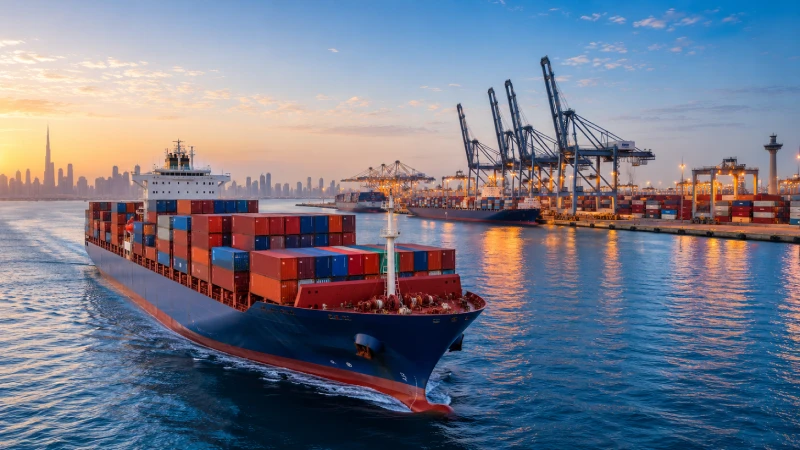
For importers who move regular, bulky, heavy, or higher-value cargo, FCL shipping from China to UAE is often the most practical way to control cost, reduce handling risk, and plan delivery with better visibility. If you are still comparing shipping methods, transit time, customs requirements, and delivery options, start with our complete guide to shipping from China to UAE before choosing a container solution for your shipment.
FCL, or full container load shipping, is not simply “booking a whole container.” For UAE importers, the real decision is whether a dedicated 20ft, 40ft, or 40HQ container gives better commercial value than LCL, air freight, or small-parcel DDP options. This depends on cargo volume, weight, product type, destination port, final delivery address, customs requirements, and whether the goods are for UAE mainland use, free zone warehousing, or re-export.
Many wholesalers, distributors, retailers, construction suppliers, furniture buyers, machinery importers, and auto parts companies use FCL because it gives them more control over loading, routing, and delivery planning. However, FCL also requires better preparation. Importers must confirm cargo details, documents, loading limits, destination charges, and receiving arrangements before the container leaves China.
Quick Answer: When Should You Use FCL Shipping from China to UAE?
You should consider FCL shipping when your cargo volume is large enough to justify a dedicated container, or when the shipment needs better protection than LCL can normally provide. FCL is especially suitable when goods are packed in many cartons, pallets, crates, wooden cases, or mixed SKUs that should not be handled together with other importers’ cargo.
For example, if you are importing furniture to Dubai, building materials to Sharjah, machinery to Abu Dhabi, or wholesale stock to JAFZA, FCL may offer better control than LCL. The container can be loaded at the supplier’s factory or a China warehouse, sealed, shipped by sea, and released for delivery after destination procedures are completed.
FCL is also useful for regular importers. If your company imports from China every month or every quarter, a planned 20ft or 40HQ shipment may reduce unit logistics cost and simplify inventory planning. Instead of managing several smaller LCL shipments, you can consolidate purchase orders into one container and deliver them to a UAE warehouse, free zone facility, or distribution center.
That said, FCL is not always the cheapest choice for every shipment. If your cargo volume is small, your order is a sample batch, or your goods do not fill enough space to justify a container, LCL shipping from China to UAE may still be more cost-effective.
Pro Tip: If your LCL shipment is approaching a high CBM volume, compare it with a 20ft FCL quote. The FCL price may look higher at first, but the total landed cost can become more attractive after you consider CFS handling, warehouse transfers, and cargo-mixing risk.
FCL Shipping Cost from China to UAE
FCL shipping cost from China to UAE is normally quoted by container, not by CBM. This means a 20ft, 40ft, or 40HQ container has its own ocean freight structure, even if the container is not completely full. Importers should calculate the cost per carton, pallet, product unit, or shipment value after all major charges are included.
The main factors that affect FCL pricing include the China origin port, UAE destination port, container type, cargo weight, shipping season, carrier space, routing, and final delivery address. A container moving from Shenzhen to Jebel Ali may have a different cost structure from a container moving from Qingdao to Khalifa Port. Similarly, delivery to JAFZA, Dubai mainland, Sharjah, Ajman, Abu Dhabi, or KEZAD can create different trucking and handling costs.
Importers comparing shipping cost from China to UAE should not only look at the ocean freight rate. A realistic estimate should include China export handling, documentation, origin trucking if needed, ocean freight, destination charges, customs-related handling, container deposit or detention risk, and final delivery. If the cargo is heavy, oversized, fragile, or regulated, additional planning may be required.
| Cost Factor | What It Means | Why It Matters for UAE Importers |
|---|---|---|
| China origin port | Shenzhen, Ningbo, Shanghai, Qingdao, Xiamen, Guangzhou or other loading ports | Affects ocean rate, sailing schedule and inland pickup cost |
| UAE destination port | Jebel Ali or Khalifa Port | Impacts port handling, delivery distance and routing choice |
| Container size | 20ft, 40ft or 40HQ | Determines space, payload and unit logistics cost |
| Cargo type | Furniture, machinery, tiles, auto parts or building materials | Affects loading method, protection and compliance needs |
| Destination charges | Terminal, documentation, delivery order and port-related fees | Must be included in landed cost planning |
| Final delivery | Free zone, mainland warehouse, project site or re-export facility | Determines trucking, unloading and container return requirements |
FCL cost is also affected by the cargo itself. Tiles, stone, machinery, aluminum profiles, furniture, auto parts, and retail goods all require different loading and delivery arrangements. Heavy cargo may fit a 20ft container better, while bulky but lightweight goods often need a 40HQ.
Winsail can help compare container options based on your cargo list, supplier address, loading city, destination port, and UAE delivery point. However, customs duty, VAT, permits, inspections, and importer compliance must be confirmed according to the product and UAE import requirements.
20ft vs 40ft vs 40HQ Container Options
Choosing the right container size is one of the most important parts of FCL planning. Many importers assume that a bigger container is always better, but this is not true if the cargo reaches the weight limit before the space is fully used.
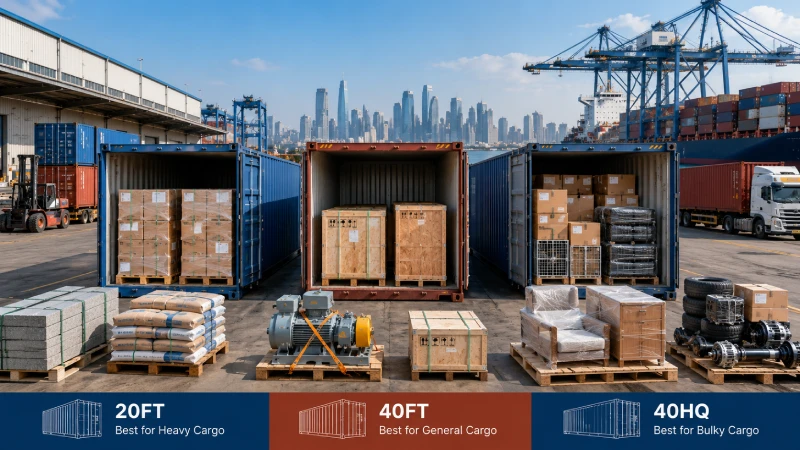
A 20ft container is often used for heavy cargo. This includes tiles, stone, hardware, metal parts, construction materials, industrial components, and some types of machinery. If you are planning shipping building materials to UAE, a 20ft container may be more practical because the cargo weight can become the main constraint.
A 40ft container is suitable for general commercial cargo with moderate weight and volume. It is often used for wholesale goods, palletized stock, retail inventory, packaging materials, auto parts, and mixed purchase orders from several suppliers.
A 40HQ container provides extra height and is commonly used for bulky cargo. Furniture, home products, display fixtures, large cartons, lightweight equipment, and e-commerce stock often benefit from 40HQ space. For furniture buyers and retail distributors, the 40HQ option can reduce unit logistics cost when loading is properly planned.
| Container Type | Best For | Main Advantage | Main Limitation | UAE Use Case |
|---|---|---|---|---|
| 20ft | Heavy cargo, machinery, tiles, stone and hardware | Better for weight-dense cargo | Less internal volume | Building material importers and machinery buyers |
| 40ft | General commercial cargo and palletized stock | More volume than 20ft | Not always ideal for very light bulky cargo | Wholesale and distribution cargo |
| 40HQ | Bulky lightweight cargo, furniture and large cartons | Extra height and better space use | Cargo must be suitable for high-cube loading | Furniture, retail displays and large packaging cargo |
Before choosing the container, importers should confirm carton dimensions, gross weight, pallet size, loading method, stackability, and whether the goods require floor loading, pallet loading, wooden crates, or special securing. A loading plan is especially important for fragile goods, high-value cargo, and mixed SKUs.
Pro Tip: Do not choose 40HQ only because it has more volume. If your cargo is dense or heavy, the payload limit may be reached before the container is full.
FCL Transit Time from China to UAE
FCL transit time is more than the number of sailing days between China and UAE. A realistic timeline includes factory pickup, container booking, empty container pickup, loading, China customs export, ocean transit, UAE port discharge, destination handling, customs-related procedures, and final trucking.
For importers checking how long to ship from China to UAE, it is important to separate port-to-port transit time from door-to-door delivery time. Port-to-port time only measures the ocean leg. Door-to-door or warehouse delivery time includes all additional steps before and after sailing.
| FCL Stage | Why It Matters |
|---|---|
| Factory loading in China | Incorrect loading can cause damage, imbalance or overweight issues |
| Ocean transit | Depends on carrier, routing, schedule changes and port congestion |
| UAE port handling | Jebel Ali and Khalifa Port routing affect release and delivery planning |
| Customs-related process | Documents must match cargo, consignee and importer details |
| Final trucking | Free zone and mainland delivery may follow different procedures |
FCL can be more predictable than LCL because the shipment does not need to wait for consolidation with other cargo at origin or deconsolidation at destination. Once the full container is loaded and sealed, it usually moves as one shipment. This reduces the number of cargo handling points and can make planning easier for warehouse replenishment, project delivery, retail launches, or seasonal stock.
However, delays can still happen. Vessel schedule changes, port congestion, customs inspection, document errors, consignee readiness, delivery appointment issues, and container return problems can all affect the final timeline. That is why importers should prepare documents early and confirm the UAE receiving location before the vessel arrives.
Main Ports for FCL Shipping: Jebel Ali and Khalifa Port
For most FCL shipments to UAE, the two key ports to consider are Jebel Ali and Khalifa Port. The right choice depends on the final destination, consignee type, cargo profile, and onward distribution plan.
Jebel Ali is the most common port for many Dubai-bound shipments. It is especially important for Dubai warehouses, JAFZA companies, Sharjah importers, Ajman buyers, and traders handling re-export cargo. DP World describes Jebel Ali Port as offering container management, cargo handling, storage, and logistics infrastructure, which makes it a major gateway for UAE and regional trade.
If your cargo is going to Dubai, JAFZA, Sharjah, Ajman, or a re-export warehouse, shipping from China to Jebel Ali is often the first route to compare. Jebel Ali is also suitable for many distribution businesses that use Dubai as a base for sales into the GCC, Africa, and other Middle East markets.
Khalifa Port is an important option for Abu Dhabi and industrial cargo. It is especially relevant for shipments going to Abu Dhabi, KEZAD, manufacturing facilities, construction projects, and industrial zones. KEZAD states that it is located next to Khalifa Port and offers global reach with direct links to international markets.
For Abu Dhabi-based importers or companies delivering to KEZAD, shipping from China to Khalifa Port may reduce inland trucking distance and improve destination planning. Khalifa Port should also be considered for machinery, project cargo, construction materials, and industrial supply chains where site access and unloading arrangements are important.
| UAE Destination | Recommended Port to Compare First | Why |
|---|---|---|
| Dubai warehouse | Jebel Ali | Strong Dubai access and distribution network |
| JAFZA | Jebel Ali | Practical free zone connection |
| Sharjah | Jebel Ali | Common routing for northern emirates cargo |
| Ajman | Jebel Ali | Practical trucking connection |
| Abu Dhabi | Khalifa Port | Closer for many Abu Dhabi deliveries |
| KEZAD | Khalifa Port | Suitable for industrial and logistics zone access |
| Re-export cargo | Jebel Ali or Khalifa Port | Depends on free zone, consignee and onward market |
FCL vs LCL Shipping to UAE
FCL and LCL are both sea freight options, but they serve different shipment needs. FCL is better when the importer needs a dedicated container, lower handling risk, better loading control, and more predictable delivery planning. LCL is better when the cargo volume is small and the importer does not want to pay for unused container space.
With FCL, your cargo is loaded into one container and is not normally mixed with other shippers’ goods. This reduces cargo handling and makes it easier to manage carton counts, pallet quantities, loading photos, and container sealing. It is useful for fragile goods, high-value cargo, project shipments, and regular inventory replenishment.
With LCL, your cargo shares container space with other shipments. This can reduce cost for small shipments, but it usually involves more warehouse handling, consolidation, deconsolidation, and possible waiting time. For low-volume trial orders, LCL can be practical. For larger commercial cargo, FCL often provides better control.
| Factor | FCL Shipping | LCL Shipping |
|---|---|---|
| Best shipment size | Medium to large cargo volume | Small cargo volume |
| Pricing basis | Per container | Per CBM or weight-volume |
| Handling risk | Lower, fewer transfers | Higher due to consolidation and deconsolidation |
| Transit predictability | Usually better | May be longer due to CFS handling |
| Best for | Furniture, machinery, building materials and auto parts | Samples, small batches and trial orders |
| UAE delivery planning | Easier for single destination | Depends on CFS release and local delivery |
The key question is not only “Which is cheaper?” It is “Which option gives the best balance of cost, risk, transit time, and delivery control?” A small importer may start with LCL, then move to FCL once order volume becomes stable.
Best Cargo Types for FCL Shipping from China to UAE
FCL shipping is especially suitable for cargo that is bulky, heavy, fragile, high-volume, or difficult to mix with other shipments.
Furniture is one of the strongest examples. Sofas, cabinets, chairs, tables, wardrobes, display units, and home products often require 40HQ containers because the cargo is bulky but not always extremely heavy. Proper loading is important to prevent carton crushing, scratches, and moisture damage.
Machinery is another common FCL category. For shipping machinery from China to UAE, importers should confirm machine dimensions, gross weight, lifting points, center of gravity, packaging method, and whether special lashing or blocking is needed. Some machinery can move in a standard container, while oversized equipment may need special container solutions.
Building materials also benefit from FCL planning. Tiles, stone, sanitary ware, aluminum profiles, flooring, wall panels, and hardware are often heavy and damage-sensitive. Importers should pay attention to pallet strength, weight limits, moisture protection, and container loading distribution.
Auto parts, industrial components, and wholesale distribution goods are also suitable for FCL. These shipments often include many SKUs, so the packing list must be accurate. Clear carton marks, pallet labels, and SKU-level details can help reduce receiving problems at UAE warehouses.
| Cargo Type | Best Container Option | Key Risk | Planning Advice |
|---|---|---|---|
| Furniture | 40HQ | Carton crushing and scratches | Use a loading plan and protective packaging |
| Machinery | 20ft, 40ft or special container | Weight, lashing and dimensions | Confirm weight, lifting points and center of gravity |
| Tiles and stone | 20ft | Overweight and breakage | Check payload and pallet strength |
| Auto parts | 20ft or 40ft | Mixed SKU control | Use clear carton marks and a detailed packing list |
| Building materials | 20ft or 40ft | Weight and damage | Confirm HS code, packing and cargo restrictions |
| Retail stock | 40ft or 40HQ | SKU mismatch | Prepare warehouse receiving and inventory documents |
FCL can also support re-export cargo. Many UAE trading companies import full containers from China, store goods in Dubai or Abu Dhabi, and then redistribute them to GCC, Africa, or other regional markets. For this type of shipment, the consignee structure, free zone status, and re-export plan should be clarified before booking.
Customs, Documents and Destination Charges
FCL shipments require accurate documentation. Common documents include commercial invoice, packing list, bill of lading, certificate of origin, HS code information, and any product-specific permits if the goods are regulated. U.S. trade guidance for UAE import requirements lists documents such as commercial invoice, certificate of origin, packing list with weight and HS code details, and import permits for restricted or duty-exempt goods.
For more detailed preparation, importers should review documents required for shipping from China to UAE before the cargo is loaded. Document errors can delay customs procedures, destination release, and final delivery.
Importers also need to understand destination charges. These may include terminal handling, documentation, delivery order, port storage, customs-related service fees, inspection charges if applicable, container demurrage, detention, and trucking. The exact cost depends on the shipment, port, consignee, delivery address, and local handling process.
For customs clearance in UAE, Winsail can help coordinate with relevant parties, review logistics documents, and support shipment planning. However, customs decisions, duty, VAT, importer registration, product permits, and regulatory compliance depend on the cargo and the UAE importer’s status. These should be confirmed before shipment, not after arrival.
Free Zone, Mainland and Re-export Delivery
UAE delivery planning is not the same for every consignee. A shipment to a Dubai mainland warehouse, a JAFZA company, a KEZAD facility, a Sharjah distributor, or an Abu Dhabi project site may require different delivery instructions.
For free zone delivery, the consignee information must be accurate. Importers should confirm the company name, warehouse address, free zone gate details, delivery appointment, unloading method, and receiving hours. JAFZA, KEZAD, and other free zone facilities may have their own procedures for cargo entry, storage, or re-export handling.
For mainland delivery, importers should confirm whether the warehouse or jobsite can receive a full container truck. Narrow roads, limited unloading space, missing forklift support, and late delivery appointments can create extra trucking cost or container detention risk. If the container cannot be unloaded in time, the consignee may face additional charges.
For re-export cargo, the shipment plan should be clarified early. Goods may enter a free zone, stay under bonded arrangements, or be prepared for onward movement to another market. The importer should explain whether the goods are for UAE local sale, regional redistribution, or direct re-export.
Pro Tip: Before the container departs China, confirm whether the UAE consignee is a mainland company, free zone company, or re-export trader. This affects document preparation, customs handling, delivery planning, and cost estimation.
How Winsail Helps Plan FCL Shipments from China to UAE
Winsail helps importers plan FCL shipments from the China origin side to UAE destination coordination. The process can include supplier communication, cargo detail checking, container booking, export handling, document review, loading coordination, and shipment tracking.
For importers comparing sea freight from China to UAE, Winsail can help evaluate whether a 20ft, 40ft, or 40HQ container is more suitable. The decision is based on cargo volume, weight, product type, loading city, UAE port, final delivery address, and business purpose.
Winsail can also help compare Jebel Ali and Khalifa Port routing. If the shipment is going to Dubai, JAFZA, Sharjah, Ajman, or re-export storage, Jebel Ali may be more practical. If the shipment is going to Abu Dhabi, KEZAD, or an industrial site, Khalifa Port should be considered.
At destination, Winsail can help coordinate delivery planning with the consignee, broker, warehouse, or local logistics partner where applicable. However, final delivery depends on customs release, consignee readiness, local trucking availability, site access, and container return requirements.
Planning a 20ft, 40ft, or 40HQ shipment from China to UAE? Send Winsail your supplier location, cargo dimensions, weight, product name, container preference, and UAE delivery address. Our team can help compare container options, review port routing, and plan delivery to Dubai, Abu Dhabi, JAFZA, KEZAD, Sharjah, Ajman, or mainland UAE with realistic service boundaries and practical logistics advice.
FAQs
How much does FCL shipping from China to UAE cost?
FCL cost depends on the China origin port, UAE destination port, container type, cargo weight, carrier space, season, destination charges, and final delivery address. A 20ft container, 40ft container, and 40HQ container are priced differently, so importers should compare the total landed logistics cost rather than only the ocean freight rate.
How long does FCL shipping from China to UAE take?
The timeline depends on the loading city, vessel schedule, routing, UAE port, customs process, and final delivery location. Port-to-port transit time is only one part of the full timeline. Importers should also allow time for factory loading, export handling, destination release, trucking, unloading, and container return.
Should I choose 20ft or 40ft for UAE cargo?
Choose a 20ft container for heavy and dense cargo such as tiles, stone, hardware, machinery, and some building materials. Choose a 40ft or 40HQ container for bulkier goods such as furniture, retail stock, packaging products, or large cartons. The best option depends on cargo volume, weight, carton size, and loading method.
Is Jebel Ali the best port for FCL to UAE?
Jebel Ali is often the best port for Dubai, JAFZA, Sharjah, Ajman, and many re-export shipments. Khalifa Port may be better for Abu Dhabi, KEZAD, industrial cargo, or project delivery. Importers should compare both port routing and inland delivery cost before booking.
What documents are needed for FCL shipping?
Common documents include commercial invoice, packing list, bill of lading, certificate of origin, HS code details, and product-specific permits if required. The exact requirements depend on the cargo type, importer status, UAE regulations, and whether the shipment is for mainland import, free zone storage, or re-export.
Can Winsail arrange container delivery to UAE mainland or free zones?
Winsail can help coordinate container delivery planning to Dubai, Abu Dhabi, JAFZA, KEZAD, Sharjah, Ajman, and other UAE destinations where service conditions allow. Final delivery depends on customs release, consignee readiness, warehouse access, truck availability, unloading arrangements, and container return timing.
