

For importers planning shipping from China to UAE, Khalifa Port is one of the most important gateways to consider when the final destination is Abu Dhabi, KEZAD, an industrial warehouse, a construction site, or a machinery installation project. While many UAE importers automatically request Jebel Ali because of its strong shipping network, Khalifa Port can be a more practical route for Abu Dhabi-based cargo when the shipment involves containers, RoRo units, breakbulk cargo, heavy machinery, or project cargo.
Khalifa Port is a multi-purpose deep-water port in Abu Dhabi. It handles containers, general cargo, RoRo, dry bulk, liquid and gas cargo, making it relevant for both standard container shipments and industrial cargo movements. Its close connection with KEZAD also makes it attractive for companies operating in manufacturing, logistics, trade, and industrial sectors.
However, choosing Khalifa Port should not be based on port name alone. The better route depends on your China supplier location, cargo type, container size, carrier schedule, UAE consignee status, customs documents, and final delivery point. A good freight plan should compare Khalifa Port with Jebel Ali before booking, especially when cargo is heavy, oversized, time-sensitive, or destined for a free zone or industrial area.
Quick Answer: When Should You Ship from China to Khalifa Port?
You should consider Khalifa Port when your cargo is going to Abu Dhabi, KEZAD, Al Ain, Ruwais, or nearby industrial zones. It is especially suitable when the cargo is containerized, heavy, oversized, wheeled, or related to industrial production and infrastructure projects.
Khalifa Port is often a strong option for FCL containers, machinery, factory equipment, construction materials, vehicles, RoRo cargo, breakbulk shipments, and project cargo. If your buyer, warehouse, factory, or project site is located in Abu Dhabi, routing through Khalifa Port may reduce inland trucking distance compared with discharging at Jebel Ali and trucking from Dubai.
That said, Khalifa Port is not always the best answer. For cargo going to Dubai, JAFZA, Sharjah, Ajman, or mixed UAE distribution points, shipping from China to Jebel Ali may still be more practical. Jebel Ali may also offer broader sailing frequency, more consolidation options for some LCL shipments, and stronger access to Dubai-based logistics networks.
The key decision is simple: do not compare only ocean freight. Compare total logistics cost, including port charges, customs process, inland trucking, delivery appointment, equipment requirements, and possible waiting time.
Pro Tip: If your delivery address is in Abu Dhabi or KEZAD, ask your freight forwarder to compare Khalifa Port and Jebel Ali side by side before confirming the booking.
Shipping Cost from China to Khalifa Port
Shipping cost from China to Khalifa Port depends on multiple factors, including origin city, loading port, shipment volume, cargo weight, container type, Incoterms, sailing schedule, and UAE destination requirements. For industrial cargo, cost is also affected by packaging, lifting points, loading method, trucking equipment, and whether the cargo requires RoRo, flat rack, open-top, or breakbulk handling.
For normal containerized cargo, the most common cost structure includes China local charges, ocean freight, bill of lading fees, destination port charges, delivery order fees, customs declaration support, and trucking from Khalifa Port to the final address. If the shipment is under EXW terms, China pickup and export handling must also be included. If the shipment is under FOB terms, the supplier usually handles local export delivery to the port, while the buyer pays the international freight and destination charges.
For heavy machinery and project cargo, the cost calculation is more complex. A single machine may require special loading, reinforced packaging, lashing, flat rack equipment, crane service, or site delivery planning. In these cases, the cheapest freight quote is often not the safest option. Poor loading or unclear cargo dimensions can result in extra charges, delays, cargo damage, or port handling problems.
For a broader cost benchmark, importers can refer to shipping cost from China to UAE, but Khalifa Port shipments should always be quoted based on final Abu Dhabi delivery details.
| Cost Factor | Why It Matters | Example Impact |
|---|---|---|
| China origin port | Affects carrier options and local charges | Shenzhen, Ningbo, Qingdao, Shanghai, Tianjin |
| Cargo type | Determines FCL, RoRo, breakbulk, or project cargo plan | Machinery may need special handling |
| Cargo weight | Impacts trucking, lifting, and container loading | Heavy cargo may require equipment review |
| Final UAE address | Changes inland delivery cost | KEZAD vs Abu Dhabi mainland |
| Incoterms | Defines cost responsibility | EXW includes supplier pickup |
| Customs documents | Affects release time and risk | Missing invoice details may delay clearance |
Transit Time from China to Khalifa Port
Transit time from China to Khalifa Port varies by origin port, carrier schedule, transshipment route, cargo type, and destination handling process. For standard FCL containers, the main time components are supplier readiness, container pickup, export customs in China, vessel sailing, port discharge, customs release, and final delivery.
For machinery, RoRo, breakbulk, and project cargo, transit planning should begin earlier. These shipments often need cargo photos, technical drawings, packing details, lifting points, center of gravity information, and confirmation of whether the cargo can move safely by container, RoRo vessel, flat rack, or breakbulk service.
Transit time should not be treated as vessel sailing time only. A shipment may arrive at Khalifa Port but still require document approval, customs declaration, terminal release, delivery order processing, truck arrangement, and delivery appointment. If the cargo is oversized or needs special equipment, final delivery can take longer than a normal container.
| Shipment Type | Planning Focus | Main Time Risk |
|---|---|---|
| FCL container | Sailing schedule and destination release | Port congestion or document delay |
| RoRo cargo | Vessel availability and unit acceptance | Limited sailing options |
| Breakbulk cargo | Port handling and lifting plan | Longer discharge and delivery process |
| Project cargo | Engineering review and site coordination | Permit, route, and unloading delays |
Pro Tip: For machinery and project cargo, start freight planning before production is finished. Cargo dimensions, weight, packaging, and lifting method can change the entire route plan.
Khalifa Port vs Jebel Ali: Which Route Is Better?
Khalifa Port and Jebel Ali serve different logistics priorities. Jebel Ali is the most widely recognized UAE port for Dubai, JAFZA, re-export cargo, mixed distribution, and many standard container shipments. Khalifa Port is more focused on Abu Dhabi, KEZAD, industrial cargo, and cargo where final delivery is closer to Abu Dhabi than Dubai.
If your consignee is in KEZAD, an Abu Dhabi factory, a construction project, or an industrial warehouse, Khalifa Port may reduce unnecessary inland trucking from Dubai. This can be important for heavy cargo, oversized cargo, and delivery sites where trucking permits, unloading equipment, and delivery windows must be planned carefully.
However, Jebel Ali may still be better if your cargo is going to Dubai or northern emirates, or if your shipment needs a sailing schedule that is not available to Khalifa Port at the required time. Some LCL and smaller commercial shipments may also be easier to manage through Dubai-based consolidation networks.
A practical decision should compare three points: shipping availability, total landed logistics cost, and final delivery complexity. If Khalifa Port saves trucking distance but has fewer sailing options, Jebel Ali may still be faster. If Jebel Ali has a lower ocean freight rate but requires expensive trucking to Abu Dhabi, Khalifa Port may be more cost-effective.
For Abu Dhabi-focused cargo, it is also useful to compare this route with shipping from China to Abu Dhabi before making the final port decision.
| Factor | Khalifa Port | Jebel Ali |
|---|---|---|
| Best for | Abu Dhabi, KEZAD, industrial cargo | Dubai, JAFZA, UAE-wide distribution |
| Cargo fit | FCL, machinery, RoRo, breakbulk, project cargo | FCL, LCL, retail, re-export cargo |
| Inland delivery | Strong for Abu Dhabi destinations | Strong for Dubai and northern emirates |
| Schedule options | Depends on carrier and cargo type | Often broader on many China routes |
| Heavy cargo | Good option when destination is Abu Dhabi | Good alternative depending on service |
| Decision rule | Best when final delivery is Abu Dhabi-focused | Best when Dubai access matters more |
FCL, RoRo, Breakbulk and Project Cargo Options
For most commercial shipments from China to Khalifa Port, FCL is the first option to evaluate. FCL shipping from China to UAE is suitable for containerized cargo such as machinery parts, building materials, furniture, solar products, industrial supplies, spare parts, and palletized goods. A 20ft container is often used for dense or heavy cargo, while a 40ft or 40HQ container is better for lighter and bulkier goods.
RoRo shipping is suitable for wheeled or self-propelled equipment, including trucks, trailers, construction machinery, buses, and certain industrial vehicles. RoRo can reduce loading complexity for cargo that can be driven on and off the vessel, but it depends heavily on service availability, port acceptance rules, unit condition, and dimensions.
Breakbulk shipping is used when the cargo cannot fit into a standard container and is not suitable for RoRo. This may include large machinery, steel structures, industrial tanks, oversized equipment, or project materials. Breakbulk cargo requires a more detailed handling plan because the cargo is lifted, secured, discharged, and delivered as individual pieces.
For complex heavy cargo, project cargo shipping may be required. Project cargo is not just a shipping method; it is a planning process. It may involve route surveys, lifting studies, lashing design, cargo insurance review, delivery permits, crane coordination, and site unloading arrangements.
For importers planning shipping machinery from China to UAE, Winsail usually reviews cargo dimensions, weight, photos, packing method, loading points, and destination unloading conditions before recommending FCL, flat rack, RoRo, breakbulk, or project cargo solutions.
| Method | Best For | Key Requirement | Main Risk |
|---|---|---|---|
| FCL | Standard containerized cargo | Correct loading plan | Overweight or poor stuffing |
| RoRo | Wheeled machinery or vehicles | Unit must meet RoRo rules | Limited sailing availability |
| Breakbulk | Oversized non-container cargo | Lifting and handling plan | Damage or port delay |
| Project cargo | Heavy or complex cargo | Full engineering review | Site access and permit issues |
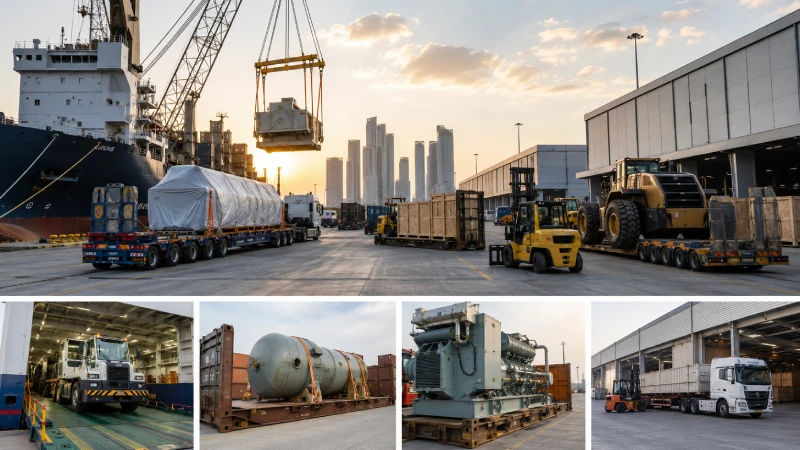
KEZAD and Abu Dhabi Industrial Delivery
Khalifa Port is especially relevant for KEZAD companies and Abu Dhabi industrial buyers because the port and economic zone are closely connected in the same logistics ecosystem. KEZAD supports industrial, logistics, trade, and services businesses, which makes Abu Dhabi delivery planning a key part of the shipment rather than an afterthought.
For importers, the main question is not only “Can the cargo arrive at Khalifa Port?” The more important question is “Can the cargo be released, trucked, received, and unloaded safely at the final destination?”
A container going to a KEZAD warehouse may need delivery appointment coordination, consignee confirmation, gate access information, and free zone-related procedures. A machine going to a factory may require forklift or crane preparation. A project cargo shipment may need route access review, unloading equipment, and site readiness confirmation.
For more detailed planning, importers should understand free zone vs mainland delivery in UAE, because documentation, consignee responsibilities, and delivery procedures may differ depending on the final destination.
| Delivery Scenario | Planning Requirement | Notes |
|---|---|---|
| KEZAD warehouse | Delivery appointment and consignee coordination | Free zone process should be checked |
| Abu Dhabi mainland warehouse | Customs release and truck booking | Importer/broker coordination required |
| Construction site | Site access and unloading equipment | Route survey may be needed |
| Machinery delivery | Crane, forklift, or ramp arrangement | Confirm before arrival |
| Oversized cargo | Permit and route review if applicable | Local rules must be checked |
Customs Documents and Destination Charges
For Khalifa Port shipments, customs documents must be prepared carefully before the cargo arrives. Common UAE import documents include a commercial invoice, certificate of origin, detailed packing list, bill of lading, and relevant permits for restricted or regulated goods. Invoice details, country of origin, packing information, HS codes, and permits should be checked before cargo departure.
For most shipments, importers should prepare the commercial invoice, packing list, bill of lading, certificate of origin, HS code, importer registration details, and product certificates if applicable. Machinery and project cargo may also require technical drawings, cargo photos, serial numbers, packing method, and lifting instructions.
Destination charges should also be confirmed before shipment. These may include terminal handling charges, delivery order fees, customs brokerage or declaration service fees, inspection fees if applicable, storage, demurrage, detention, trucking, crane service, forklift service, or other special handling charges.
This is where service boundaries are important. Winsail can help review shipping documents, coordinate with China suppliers, advise on cargo preparation, arrange freight booking, and support destination coordination through partners. However, customs approval, duty and VAT assessment, inspection decisions, regulated-product permits, and final cargo release depend on UAE authorities, importer eligibility, local customs brokers, and cargo documents.
Importers who are new to the UAE market should review customs clearance in UAE and documents required for shipping from China to UAE before booking cargo, especially for regulated goods, high-value machinery, electrical products, automotive-related goods, or industrial equipment.
Best Cargo Types for Khalifa Port
Khalifa Port is most suitable when the cargo has a clear Abu Dhabi delivery purpose. This includes manufacturing inputs, factory equipment, construction materials, industrial machinery, wheeled equipment, steel structures, project materials, and containerized goods for KEZAD or Abu Dhabi warehouses.
It may also be a good option for cargo that requires RoRo or breakbulk handling, provided the shipping schedule, port acceptance, and delivery plan are confirmed in advance. For standard small LCL shipments, Khalifa Port should be evaluated case by case. In some situations, Jebel Ali may offer better consolidation options or faster routing.
| Cargo Type | Khalifa Port Suitability | Recommended Mode | Notes |
|---|---|---|---|
| Industrial machinery | High | FCL, flat rack, RoRo, breakbulk | Check dimensions and lifting points |
| Construction equipment | High | RoRo or breakbulk | Confirm unit condition and acceptance |
| Building materials | High | FCL or breakbulk | Weight distribution matters |
| Factory equipment | High | FCL or project cargo | Plan unloading before arrival |
| Wheeled cargo | Medium to high | RoRo | Schedule-dependent |
| Small LCL cargo | Case by case | LCL via UAE consolidation | Jebel Ali may be better |
| E-commerce cargo | Lower | Air or Dubai routing | Depends on fulfillment location |
Pro Tip: If the cargo can be safely loaded into a container, FCL may be more predictable than breakbulk. Breakbulk should be used when container loading is not practical, safe, or cost-effective.
How Winsail Helps Plan Khalifa Port Shipments
Winsail helps importers evaluate whether Khalifa Port is the right destination before the shipment is booked. The planning process starts with the supplier address in China, cargo name, HS code if available, dimensions, gross weight, packing method, cargo photos, target delivery address, and required delivery schedule.
For standard FCL shipments, Winsail can help coordinate supplier pickup, export booking, container loading advice, sea freight from China to UAE, documentation support, and destination delivery planning. For machinery and project cargo, Winsail can review whether the cargo should move by standard container, flat rack, open-top, RoRo, breakbulk, or project cargo solution.
For Abu Dhabi and KEZAD shipments, Winsail can also help compare Khalifa Port with Jebel Ali based on total route cost and delivery feasibility. This is especially useful when the ocean freight rate to one port looks attractive but the inland trucking or destination handling cost makes the total shipment more expensive.
Winsail does not overpromise customs clearance, tax handling, or final delivery for every shipment. Instead, we help importers prepare the right information, coordinate with reliable partners, and identify risks before cargo departure. This approach is safer for industrial buyers, machinery importers, and project cargo receivers who cannot afford avoidable port delays or delivery failures.
FAQ
How long does shipping from China to Khalifa Port take?
Shipping time depends on the China origin port, carrier schedule, direct or transshipment routing, cargo type, port handling, customs process, and final delivery address. For planning purposes, importers should calculate total door-to-site time, not only vessel sailing time.
Is Khalifa Port better than Jebel Ali for Abu Dhabi cargo?
Khalifa Port is often worth considering when the final destination is Abu Dhabi, KEZAD, or a nearby industrial area. Jebel Ali may still be better for Dubai, JAFZA, northern emirates, some LCL cargo, or shipments requiring broader sailing frequency.
Can I ship machinery to Khalifa Port from China?
Yes. Machinery can often be shipped to Khalifa Port by FCL, flat rack, open-top, RoRo, breakbulk, or project cargo service. The right method depends on cargo size, weight, packing, lifting points, and destination unloading conditions.
Is Khalifa Port suitable for project cargo?
Khalifa Port can be suitable for project cargo, especially when the project site is in Abu Dhabi or nearby industrial zones. However, project cargo requires early planning, technical review, route assessment, lifting method confirmation, and local delivery coordination.
What documents are needed for Khalifa Port shipments?
Common documents include commercial invoice, packing list, bill of lading, certificate of origin, HS code, importer details, and product-specific permits or certificates if required. Machinery and oversized cargo may require additional technical documents.
Can Winsail arrange delivery from Khalifa Port to KEZAD?
Winsail can help coordinate delivery planning from Khalifa Port to KEZAD through destination partners. Actual delivery depends on customs release, consignee readiness, site access, truck availability, cargo handling requirements, and local procedures.
Final CTA
If your shipment is going to Abu Dhabi, KEZAD, or an industrial project site, do not choose the port based only on ocean freight. Send Winsail your supplier address, cargo details, packing information, dimensions, weight, HS code if available, and final UAE delivery address. Our team will help compare Khalifa Port and Jebel Ali, review FCL, RoRo, breakbulk, and project cargo options, and build a safer China-to-Abu Dhabi shipping plan before you book.
