
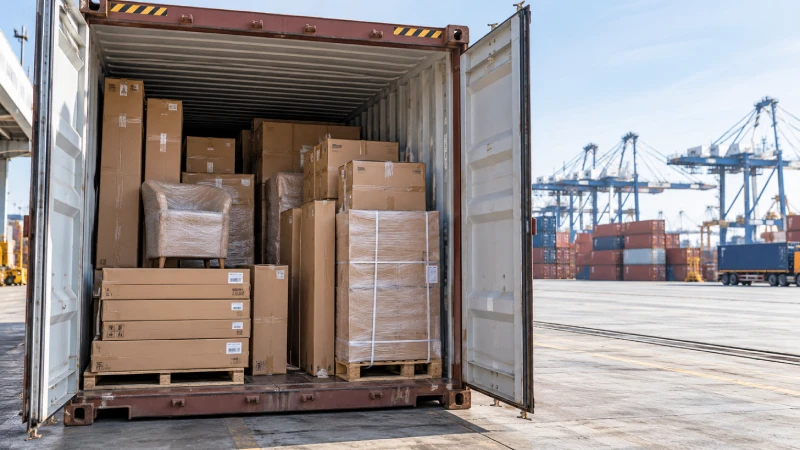
Shipping furniture from China to Germany is different from moving many other types of cargo. Furniture is often relatively light for the amount of space it occupies, which means freight decisions are usually driven by cubic volume rather than gross weight.
A shipment of dining chairs, wardrobes, sofas or cabinets can fill a container long before it reaches the container’s weight limit. For this reason, importers should pay close attention to carton dimensions, total CBM, whether products are flat-packed or assembled, and how efficiently they can be loaded.
For small furniture orders, LCL shipping can be practical because you pay only for the space your cargo uses. As volume increases, however, LCL freight, consolidation charges, destination handling and deconsolidation costs can add up quickly. Once furniture reaches roughly the low-to-mid teens in CBM, it is usually worth comparing the total landed logistics cost of LCL with a dedicated FCL container.
For larger furniture orders, the choice is often between a 20ft container, 40ft standard container and 40ft high cube container (40HC). Because furniture is typically high-CBM cargo, the additional internal volume of a 40HC can make it particularly useful.
The right choice depends not only on freight rates, but also on packaging efficiency, product type, loading plan, customs requirements and the final delivery conditions in Germany. Importers who still need to compare the broader route can review our shipping options from China to Germany.
Why Furniture Is Different From Most China–Germany Cargo
Furniture is usually cube-limited rather than weight-limited.
A shipment of industrial metal components may reach a container’s weight limit before the container is physically full. Furniture often behaves in the opposite way: the container can be full of cartons while the total cargo weight remains well below the maximum payload.
This makes CBM one of the most important numbers when planning furniture freight.
The basic calculation is:
CBM = Length × Width × Height × Number of Cartons
Dimensions should be converted to metres before calculating.
For example, if one carton measures 0.80 m × 0.60 m × 0.50 m, the volume is:
0.80 × 0.60 × 0.50 = 0.24 CBM
If you have 60 cartons:
0.24 × 60 = 14.4 CBM
That 14.4 CBM figure is often more important for sea freight planning than the total weight of the shipment.
For importers buying furniture from China, it is therefore not enough to ask the supplier for unit weight or total order weight. You should request the export carton dimensions, carton quantity and total shipment CBM before deciding how to ship.
Flat-Pack vs Assembled Furniture
How the furniture is packed can significantly change the economics of shipping.
Flat-pack or knock-down furniture allows legs, panels, frames and other components to be packed together more efficiently. This usually reduces empty space and improves container utilization.
Fully assembled furniture may be easier for the end customer to use, but it often creates much more unused space inside both cartons and containers.
| Factor | Flat-Pack Furniture | Assembled Furniture |
|---|---|---|
| CBM per unit | Usually lower | Usually higher |
| Container utilization | Better | Often lower |
| Empty space | Reduced | More common |
| Carton stacking | Usually easier | Can be difficult |
| Internal protection | Parts need separation | Finished surfaces need protection |
| Freight cost per unit | Usually lower | Often higher |
| Suitability for 40HC | Good for large orders | Very useful for bulky orders |
Typical flat-pack products include wardrobes, bed frames, dining tables, cabinets, desks and shelving systems.
Products such as upholstered sofas, armchairs and some commercial furniture may be difficult to reduce significantly in volume.
However, flat-pack furniture is not automatically the best option in every case. Hardware needs to be secured, panels must be protected from rubbing and impact, and assembly requirements at destination may affect the overall commercial decision.
Pro Tip: Ask your supplier for both finished-product dimensions and packed export dimensions. Freight should be calculated from the shipping carton, not from the dimensions shown in the product catalogue.
LCL, FCL or 40HC: Which Is Best for Furniture?
The most important shipping decision is usually not simply “sea or air freight.” For normal commercial furniture orders, it is:
How much container space should you buy?
Small shipments can move by LCL, while larger shipments are usually better suited to FCL.
Furniture Container and CBM Comparison
| Shipping Option | Approx. Nominal Capacity | Best Fit for Furniture | Main Advantage | Main Limitation |
|---|---|---|---|---|
| LCL | Pay by shipment CBM | Samples and smaller orders | No need to fill a container | Handling and CBM-based charges rise with volume |
| 20GP | ~33.2 m³ | Medium-sized furniture orders | Dedicated container | Limited cubic capacity |
| 40GP | ~67.7 m³ | Large furniture orders | Much more cube than 20GP | Standard internal height |
| 40HC | ~76.3–76.4 m³ | Bulky, lightweight furniture | Highest common dry-container cube | Requires enough cargo and suitable delivery access |
These figures are nominal internal container volumes, not guaranteed furniture loading volumes.
You should never assume that 33 CBM of furniture will fit perfectly into a 20ft container simply because the container specification says approximately 33.2 m³.
Carton shape, stacking restrictions, loading direction, fragile surfaces and unavoidable gaps can substantially reduce the practical usable capacity.
A good furniture supplier should therefore provide a container loading quantity or loading plan, not just a theoretical CBM calculation.
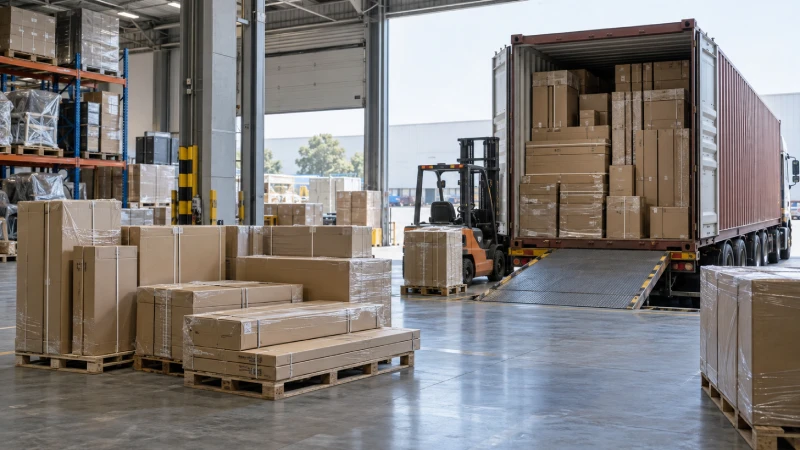
When Does LCL Become Less Attractive Than FCL?
There is no universal CBM number where LCL suddenly becomes more expensive than FCL.
A statement such as “anything under 15 CBM should ship LCL” is too simplistic.
The correct comparison is:
Total LCL landed logistics cost vs total FCL landed logistics cost
Typical LCL Cost Components
An LCL shipment may include:
- factory pickup in China
- export warehouse receiving
- CFS handling
- consolidation charges
- export documentation
- ocean freight charged by CBM
- destination deconsolidation
- destination CFS handling
- customs clearance
- warehouse release charges
- final delivery in Germany
Because many LCL charges increase with shipment volume, each additional cubic metre can materially change the total cost.
Typical FCL Cost Components
A full-container shipment may include:
- empty-container pickup
- factory loading
- China trucking
- origin terminal charges
- documentation
- ocean freight
- destination terminal charges
- customs clearance
- container trucking in Germany
- possible waiting, detention or demurrage exposure
Many of these costs are charged by container rather than directly by CBM.
This is why the cost curves eventually move closer together.
Practical CBM Decision Framework
A useful planning framework for ordinary furniture shipments is:
| Total Furniture Volume | What to Consider |
|---|---|
| Under ~5 CBM | LCL is normally the first option to price |
| ~5–10 CBM | LCL often remains practical |
| ~10–12 CBM | Start comparing LCL against FCL |
| ~12–15 CBM | Strong LCL/FCL comparison zone |
| ~15 CBM+ | FCL deserves serious consideration |
| Large-volume orders | Compare 20GP, 40GP and 40HC using a loading plan |
These are planning ranges, not fixed freight thresholds.
Actual economics depend on the current ocean rate, origin charges, German destination charges, delivery postcode, shipment density and how efficiently the furniture is packed.
Furniture also has an additional reason to move toward FCL earlier than some other products: handling risk.
LCL cargo normally passes through consolidation and deconsolidation warehouses and may be moved several times alongside cargo belonging to other importers.
A dedicated FCL container can remain sealed for a much larger part of the international journey, reducing unnecessary cargo handling.
Pro Tip: Once your furniture shipment reaches approximately 10–15 CBM, request both an LCL calculation and an FCL calculation using the same pickup point, Incoterm and German delivery address. Comparing only the ocean-freight line is not enough.
For a deeper comparison, see LCL Shipping from China to Germany and FCL Shipping from China to Germany.
Why 40HC Is Often Important for Furniture
A 40HC is particularly useful for furniture because it provides additional internal height and cubic capacity while maintaining roughly the same container footprint as a standard 40ft container.
A typical 40GP offers around 67.7 m³ of internal volume, while a 40HC offers approximately 76.3–76.4 m³.
That difference can be valuable when the cargo is bulky but relatively light.
Products commonly suited to 40HC loading include:
- sofas
- lounge chairs
- dining chairs
- wardrobes
- bedroom furniture
- flat-pack cabinets
- office desks
- hotel furniture
- shop furniture
- upholstered products
For example, if weight is not the limiting factor, the extra height of a 40HC may allow additional layers of cartons or better utilization of taller furniture packaging.
However, you should not choose a 40HC simply because it has the largest nominal capacity.
A 40HC May Not Be the Best Option When
- the purchase order does not contain enough cargo
- the cartons have low stacking strength
- product dimensions create large unusable gaps
- the German consignee cannot accept a 40ft container
- site access is restricted
- there is insufficient unloading space
- delivery must be made using smaller local vehicles
- the order needs to arrive in several stages rather than all at once
The correct decision should come from the carton-level loading plan, not from theoretical container CBM alone.
For more detail on container pricing and capacity, see 20ft & 40ft Container Shipping Cost from China to Germany.
Calculate Furniture CBM Before Booking Freight
A reliable freight calculation starts with a reliable packing list.
Ask the supplier to provide:
- SKU number
- product description
- unit quantity
- number of cartons
- cartons per product
- carton length
- carton width
- carton height
- gross weight per carton
- net weight
- total gross weight
- total CBM
- flat-pack or assembled status
- stackability
- palletized or loose-loaded status
- maximum recommended stacking height
- expected quantity per 20GP
- expected quantity per 40GP
- expected quantity per 40HC
Do not rely only on a supplier statement such as:
“1 × 40HC can load approximately 500 pieces.”
Ask how the number was calculated.
The factory should ideally produce a loading table showing the number of cartons by SKU and container.
This becomes even more important when you are combining several furniture products with very different carton dimensions.
Why a Loading Plan Matters
Imagine an order with a calculated total volume of 65 CBM.
On paper, it may appear to fit easily into a 40GP with nominal capacity of around 67.7 m³.
In practice, it may not.
If the cartons cannot be rotated efficiently, if some pieces cannot be stacked or if several cartons are unusually long, the real loadable volume may be substantially lower.
For high-CBM cargo, dimensional optimization is therefore part of freight optimization.
Pro Tip: Reducing each export carton by only a few centimetres can create meaningful savings across hundreds of furniture cartons. Discuss packaging dimensions with the factory before production is finalized, not after the cargo is ready.
Furniture Packaging for International Sea Freight
Furniture packaging should be designed for international transportation rather than merely for storage inside the factory.
Furniture can be vulnerable to:
- crushed corners
- scratched panels
- damaged laminate
- chipped paint
- torn upholstery
- broken glass
- bent fittings
- missing hardware
- moisture
- carton collapse
Different products require different protection systems.
Protect Corners and Edges
Cabinets, wardrobes, desks and flat furniture panels often fail first at corners and edges.
Depending on the product, packaging may include:
- reinforced corrugated cartons
- double-wall cartons
- corner guards
- edge protectors
- EPE foam
- foam sheets
- cardboard separators
- honeycomb board
- protective film
- individual component wrapping
Finished surfaces should not be allowed to rub directly against each other.
Secure Hardware and Small Parts
Screws, hinges, handles, bolts and assembly tools should be packed in labelled hardware bags and secured inside the carton.
Loose hardware can scratch panels and can also lead to installation problems if parts fall out during handling.
For large commercial furniture projects, hardware bags should be linked clearly to the relevant SKU or room package.
Protect Glass, Stone and Fragile Components Separately
Furniture containing mirrors, glass doors, ceramic surfaces or stone tops may require additional reinforcement or separate packing.
The outer carton alone should not be expected to absorb all impact.
Packaging Matters Even More for LCL
LCL shipments normally experience more physical handling than FCL shipments.
Furniture may be:
- collected from the factory
- unloaded at an export warehouse
- moved into a consolidation area
- loaded with other cargo
- unloaded after arrival
- deconsolidated
- moved again before final delivery
This increases the importance of carton strength and internal protection.
Pro Tip: Do not accept “standard export carton” as a complete packaging specification. A painted cabinet, upholstered chair, marble-top table and flat-pack MDF wardrobe all have different protection requirements.
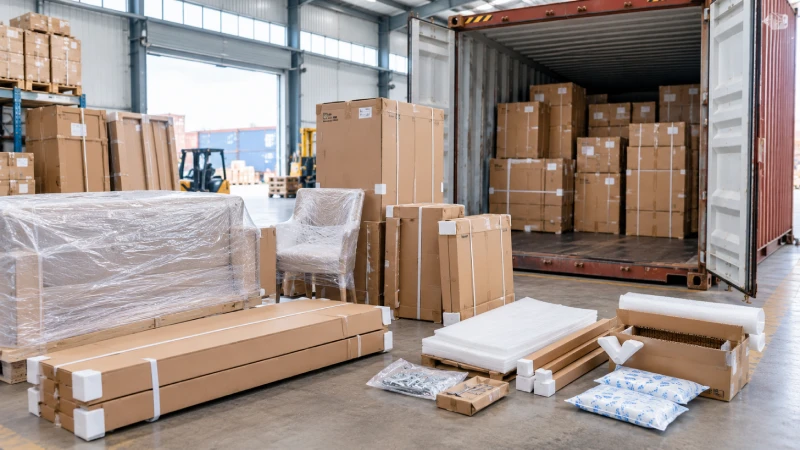
How to Protect Furniture From Moisture During Sea Freight
Furniture shipped by sea may spend several weeks inside a closed container while temperature and humidity change throughout the voyage.
This can create condensation inside the container, sometimes referred to as container rain.
Potential results include:
- mould on upholstery
- mould on unfinished wood
- swelling of MDF or particleboard
- staining
- warped wooden components
- corrosion of metal hardware
- damaged cartons
- unpleasant odours
Start With Dry Cargo
Moisture protection begins before the container doors close.
Furniture, timber components and cartons should be properly dry before loading.
Wrapping damp furniture in plastic does not solve the problem. It may simply trap moisture inside the package.
Inspect the Container Before Loading
Before furniture is loaded, check that the container is:
- dry
- clean
- free from strong odours
- free from visible water
- structurally sound
- free from obvious holes or roof damage
The floor should not be wet.
Photographs of the empty container can be useful as part of the loading record.
Use Appropriate Moisture-Control Measures
Depending on the furniture and shipping conditions, possible measures can include:
- container desiccants
- moisture absorbers
- protective inner wrapping
- moisture-resistant carton layers
- sealed protection for sensitive components
- avoiding loading during rain
- keeping finished cargo dry before stuffing
There is no single moisture-control method suitable for every furniture shipment.
The packaging system should reflect the material, moisture sensitivity, transit conditions and expected storage time.
Pro Tip: Plastic wrapping is not automatically moisture protection. If the furniture or packaging already contains moisture, completely sealing it can trap that moisture next to the product.
Wood Pallets, Crates and ISPM 15
Furniture importers frequently confuse wooden furniture with wooden packaging.
They are separate issues.
ISPM 15 concerns regulated wood packaging material used to support, protect or carry cargo, rather than simply applying to every product that contains wood.
For shipments entering the EU from non-EU countries, relevant wood packaging material must generally be appropriately treated, debarked and marked in accordance with ISPM 15 requirements. The EU specifically identifies items such as pallets, crates and dunnage.
Examples can include:
- solid-wood pallets
- timber crates
- wooden packing cases
- solid-wood blocking
- bracing
- dunnage
Processed Wood Packaging
The EU states that the ISPM 15 wood-packaging requirements do not apply in the same way to wood 6 mm thick or less or packaging made entirely from processed wood materials such as plywood, oriented strand board and veneer.
Pro Tip: A solid-wood dining table does not automatically require an ISPM 15 stamp simply because the product itself is wooden. Check the pallets, crates, blocking and dunnage separately from the furniture product.
Customs Classification for Furniture Imported Into Germany
There is no single customs code that covers every type of furniture.
Classification depends on factors such as:
- function
- material
- construction
- intended use
- whether the item is complete furniture or a part
- whether the product is a seat
For example, EU customs nomenclature distinguishes seats under heading 9401 from other furniture under heading 9403. Within heading 9403, wooden office, kitchen, bedroom and other wooden furniture are further separated.
Examples include categories for:
- seats
- upholstered seating
- wooden office furniture
- wooden kitchen furniture
- wooden bedroom furniture
- other wooden furniture
- metal furniture
- plastic furniture
- furniture of other materials
- furniture parts
This is particularly important when one container contains multiple furniture SKUs.
A container may include:
- sofas
- dining tables
- chairs
- wardrobes
- bedside tables
- cabinets
Those products should not automatically be declared under one classification simply because the commercial invoice describes all of them as “furniture.”
Prepare Customs Information Before Shipment
Typical import documentation can include:
- commercial invoice
- packing list
- bill of lading
- customs classification
- product descriptions
- declared value
- country of origin
- importer information
- EORI details
- material information where required
- supporting compliance documentation where applicable
Product descriptions should be sufficiently specific.
“Furniture” is normally less useful than:
“Wooden bedroom bedside cabinet”
or:
“Upholstered dining chair with metal frame.”
For broader customs guidance, see Germany Customs Clearance for Imports from China, Germany Import Duty & VAT from China, and EORI Number for Importing from China to Germany.
Product and Material Considerations
Import requirements depend not only on the word “furniture,” but also on what the furniture is made from and how it will be used.
Solid-Wood Furniture
For solid-wood furniture, importers should understand:
- wood species
- material origin
- coatings and finishes
- supply-chain documentation
- whether current timber-related rules apply
Do not confuse requirements for the furniture itself with ISPM 15 requirements for the shipping packaging.
MDF and Particleboard Furniture
For furniture containing MDF, particleboard or engineered wood, importers should understand the panel composition, surface finish, adhesives and relevant chemical or emissions requirements for the intended EU market.
Documentation should be agreed with the supplier before production rather than requested only when the shipment reaches customs.
Upholstered Furniture
Sofas, lounge chairs and padded seating may contain:
- fabric
- leather or synthetic leather
- foam
- adhesives
- dyes
- coatings
- wooden or metal frames
Material compliance can therefore involve more than the visible outer fabric.
Metal Furniture
For metal desks, shelving, tables and chairs, attention may be required for:
- coatings
- surface treatment
- material construction
- exposed edges
- weld quality
- corrosion resistance
- intended load and use
Furniture With Electrical Components
Height-adjustable desks, illuminated cabinets, motorized recliners or furniture containing sockets, chargers or electrical controls may create additional regulatory requirements.
Do not assume that the compliance requirements for ordinary non-electrical furniture automatically cover the electrical system.
REACH and Substances in Articles
Under REACH, furniture can be treated as an “article.” Depending on the substances present and the circumstances, EU producers and importers may have obligations connected with substances on the Candidate List.
For an importer, this means material declarations should be treated seriously rather than relying only on a generic supplier statement that the product is “EU compliant.”
Wooden Furniture and EUDR: Check the Current Scope Before Import
Wooden furniture deserves an additional compliance check because certain wooden furniture categories fall within the product scope associated with the EU Deforestation Regulation.
Relevant product listings include wooden office furniture, kitchen furniture, bedroom furniture and other wooden furniture under parts of heading 9403.
As of September 2026, the European Commission states that the EUDR will apply from 30 December 2026 for large and medium-sized operators, as well as certain micro and small operators previously covered by the EU Timber Regulation, and from 30 June 2027 for other micro and small operators.
Because the EUDR product scope and implementation framework have undergone recent updates, importers of wooden furniture should verify the current product code and applicable obligations before shipment rather than relying on an old compliance checklist.
Pro Tip: Determine the furniture’s material and customs classification early. If a wooden product may fall within EUDR scope, compliance preparation should begin with the supplier and timber supply chain, not after the container arrives in Germany.
Consolidating Furniture From Multiple Suppliers in China
Furniture buyers often source one project from several factories.
For example:
- sofas from Foshan
- dining chairs from Dongguan
- cabinets from Guangzhou
- hotel desks from another supplier
- decorative furniture from a fifth supplier
If each supplier ships independently, the importer may end up paying for several small LCL shipments.
An alternative is China-side consolidation.
How Furniture Consolidation Works
A typical process is:
- Collect goods from each factory.
- Receive them at a consolidation warehouse.
- Check carton quantities and external condition.
- Separate shipments by supplier or SKU.
- Repack damaged cartons if required.
- Calculate the final combined CBM.
- Build a consolidated loading plan.
- Ship the cargo together by LCL or FCL.
When Consolidation Can Reduce Costs
Imagine three suppliers produce:
- Supplier A: 5 CBM
- Supplier B: 6 CBM
- Supplier C: 4 CBM
Individually, all three appear to be LCL shipments.
Together, they produce 15 CBM.
At that point, an importer should compare the combined LCL cost with a 20ft FCL solution.
The benefit is not only freight cost. One consolidated shipment may also make project coordination and German delivery easier.
Risks of Consolidation
Consolidation still requires planning.
Potential problems include:
- one supplier delays the entire shipment
- warehouse storage charges
- damaged cartons during additional handling
- different carton labelling systems
- mixed customs classifications
- missing packing lists
- inefficient container loading
For project cargo, each factory should use a common SKU and carton-labelling system wherever possible.
Pro Tip: If multiple furniture suppliers together approach the LCL/FCL crossover range, compare the combined shipment before allowing each factory to arrange freight separately.
Loading Furniture Into the Container
Furniture container loading should balance three goals:
- maximize usable cube
- protect the cargo
- maintain safe loading and unloading
Loading decisions may include:
- carton orientation
- stacking height
- weight distribution
- fragile cartons
- void filling
- door-end protection
- securing and bracing
- unloading sequence
Stronger cartons should normally support weaker cartons where appropriate, but weight and product-specific restrictions must also be considered.
Avoid creating tall unstable stacks simply to improve theoretical container utilization.
Loose-Loaded Cartons
Furniture is often floor-loaded without pallets because loose cartons usually provide better cubic utilization.
Advantages include:
- less pallet volume
- more cartons per container
- more flexible carton arrangement
The disadvantage is that manual unloading or handling requirements may increase at destination.
Before choosing loose loading, confirm that the German warehouse can receive floor-loaded containers.
Palletized Furniture
Pallets can simplify:
- forklift handling
- warehouse movement
- receiving
- SKU control
However, pallets consume container volume.
For cube-sensitive furniture, the reduction in usable volume can be significant.
If solid-wood pallets are used for a shipment from China into the EU, ensure the relevant wood-packaging requirements are addressed.
Typical Sea Freight Route From China to Germany
Most commercial furniture moves from China to Germany by sea because air freight is rarely economical for large-volume furniture orders.
Common Chinese export gateways can include:
- Shanghai
- Ningbo
- Shenzhen/Yantian
- Qingdao
The practical departure port depends on the factory location, shipping line service and current schedule.
For Germany, major seaport gateways include:
- Hamburg
- Bremerhaven
From the port, furniture can move inland by truck or other suitable transport to warehouses and commercial destinations across Germany.
Common final markets include:
- Hamburg
- Berlin
- Düsseldorf
- Cologne
- Frankfurt
- Stuttgart
- Munich
The nearest seaport is not automatically the cheapest total solution.
The best route depends on:
- ocean freight
- sailing schedule
- available equipment
- port charges
- customs arrangements
- inland trucking
- final German postcode
For more route details, see Sea Freight from China to Germany, Shipping from China to Hamburg, Shipping from China to Bremerhaven, and How Long Does Shipping from China to Germany Take?.
German Warehouse Delivery: What Importers Need to Confirm
The international sea freight is only part of the furniture logistics plan.
Before the container leaves China, confirm what will happen when the cargo reaches the German delivery point.
For warehouse delivery, provide the freight forwarder with the exact postcode and confirm:
- receiving hours
- booking or delivery appointment requirements
- loading-dock availability
- forklift availability
- container access
- maximum truck length
- maximum vehicle height
- yard space
- floor-loaded cargo acceptance
- unloading responsibility
- expected unloading time
- pallet requirements
Can the Warehouse Accept a 40ft or 40HC Container?
Do not assume it can.
Some warehouses are located in industrial estates designed for container traffic. Others may have narrow entrances, limited turning space or restrictions on large vehicles.
A 40HC shipment may make perfect sense for ocean freight but create problems if the final delivery site cannot physically receive the equipment.
If the site cannot accept the container directly, the cargo may need to move through a warehouse and be transferred to smaller vehicles, adding cost and handling.
Live Unload vs Other Arrangements
With a live unload, the driver waits while the container is unloaded.
The importer should understand:
- how much unloading time is included
- what happens if unloading exceeds the free period
- whether sufficient labour is available
- whether a forklift is needed
- who is responsible for unloading cartons
Large floor-loaded furniture containers can take considerable time to unload manually.
Pro Tip: “Door delivery” does not automatically mean the driver or carrier unloads hundreds of furniture cartons into your warehouse. Confirm the unloading scope before booking transportation.
Home Delivery in Germany Is a Different Logistics Service
Furniture importers planning e-commerce or direct consumer sales should distinguish international freight delivery from specialist furniture home delivery.
A standard freight solution may deliver to:
- a logistics warehouse
- commercial loading dock
- depot
- curbside location
That does not automatically include taking a sofa into a customer’s living room.
Possible final-mile services are very different:
- curbside delivery
- residential delivery
- tail-lift delivery
- inside delivery
- room-of-choice delivery
- two-person delivery
- unpacking
- packaging removal
- furniture assembly
Before arranging residential deliveries, consider:
- apartment or house
- floor number
- lift availability
- lift dimensions
- stair width
- doorway dimensions
- parking restrictions
- pedestrian zones
- appointment windows
- customer availability
- oversized furniture dimensions
Large assembled sofas and cabinets can create last-mile problems even when international shipping has been completed perfectly.
Importers selling direct to consumers should therefore normally treat German home delivery as a separate fulfilment design problem.
Commercial Furniture Projects Need Different Delivery Planning
Furniture for hotels, offices, restaurants, apartments and retail stores often requires project-based logistics rather than a single warehouse delivery.
For example, a hotel project may contain:
- bedroom furniture
- desks
- chairs
- lobby furniture
- restaurant tables
- storage cabinets
The cargo may need to be delivered according to the construction or installation schedule.
Important considerations include:
- phased shipments
- temporary storage
- site delivery appointments
- floor access
- installation sequence
- SKU segregation
- carton identification
- delivery by room or zone
- unloading labour
- project deadlines
Carton labelling can save substantial labour.
Instead of labelling a carton only:
“Table – Model 208”
a project shipment may use:
“Building A – Floor 3 – Room 315 – Desk – Model 208”
This makes warehouse sorting and on-site distribution much easier.
Pro Tip: For hotel, apartment or office projects, define the final-room or final-zone carton labelling system before factories start packing the order.
Common Mistakes When Shipping Furniture From China to Germany
1. Looking Only at Cargo Weight
Furniture is often priced and planned primarily by volume.
Always calculate total CBM.
2. Using Product Dimensions Instead of Packed Dimensions
Protective packaging adds volume.
Use export-carton measurements.
3. Assuming Nominal Container Capacity Equals Usable Capacity
A 40HC may have more than 76 m³ of nominal internal volume, but that does not mean 76 m³ of irregular furniture cartons can always be loaded.
4. Staying With LCL Without Comparing FCL
When the shipment reaches the low-to-mid teens in CBM, compare both options.
5. Using Weak Cartons
Domestic packing designed for short truck journeys may not survive international LCL handling.
6. Ignoring Moisture
Furniture can spend weeks inside a container under changing temperature and humidity conditions.
7. Ignoring Wood Packaging Requirements
Solid-wood pallets, crates and dunnage entering the EU may need to meet ISPM 15 requirements.
8. Using One HS Code for Every Furniture SKU
Furniture classification varies by function, construction and material.
9. Booking a 40HC Without Checking the Delivery Site
A large container is useful only if the German delivery operation can handle it.
10. Assuming Door-to-Door Includes Inside Home Delivery
Commercial freight delivery and specialist furniture home delivery are different services.
Furniture Shipping Decision Checklist
Before asking a freight forwarder to compare shipping options, prepare the following information:
- Furniture type
- Main material
- Flat-pack or assembled
- Number of SKUs
- Number of units
- Number of cartons
- Carton dimensions
- Gross weight per carton
- Total shipment weight
- Total CBM
- Stackable or non-stackable
- Loose-loaded or palletized
- Factory pickup city in China
- Chinese export port if known
- German delivery postcode
- Commercial or residential delivery
- Warehouse loading-dock availability
- Forklift availability
- 40ft-container access
- Target delivery date
With this information, LCL, 20GP, 40GP and 40HC can be compared on the same basis.
Need Help Comparing LCL, 20GP and 40HC for Furniture?
Furniture freight should be planned around carton dimensions, total CBM, loading efficiency and the final delivery conditions in Germany.
Send us your supplier packing list, carton dimensions, total CBM, pickup location in China and German delivery postcode.
We can compare LCL, 20GP, 40GP and 40HC options and help you identify a practical shipping plan for your furniture order.
Compare Furniture Shipping Options
FAQ
What is the cheapest way to ship furniture from China to Germany?
For most commercial furniture orders, sea freight is the main option. Small-volume shipments are commonly sent by LCL, while larger high-CBM orders should be compared against FCL. The cheapest option depends on total CBM, current freight rates, destination charges and German delivery costs.
Is LCL suitable for furniture?
Yes. LCL is suitable for furniture samples, small wholesale orders and shipments that do not justify a full container. Packaging should be designed for additional warehouse handling because LCL cargo normally passes through consolidation and deconsolidation facilities.
At what CBM should I switch from LCL to FCL?
There is no fixed universal threshold. As a practical planning rule, start comparing LCL and FCL at around 10–12 CBM. The 12–15 CBM range is an important comparison zone, but current rates, destination charges and packing efficiency determine the real crossover.
Is a 40HC better than a 40GP for furniture?
A 40HC is often attractive for bulky, lightweight furniture because it offers more internal cubic capacity than a standard 40GP. However, the best option depends on carton dimensions, stacking limits, loading efficiency and delivery-site access.
How much furniture fits in a 40HC?
A 40HC has roughly 76 m³ of nominal internal volume, but practical loading is lower because furniture cartons cannot always use every cubic metre. Actual capacity depends on carton dimensions, orientation, stackability, packaging and the loading plan.
Is flat-pack furniture cheaper to ship?
Usually. Flat-pack furniture can reduce CBM and improve container utilization, which often lowers freight cost per unit. The packaging still needs to protect panels, edges, fittings and hardware.
Do wooden furniture shipments need ISPM 15?
Not simply because the furniture itself contains wood. ISPM 15 mainly concerns regulated solid-wood packaging materials such as pallets, crates and dunnage used for shipments entering the EU from non-EU countries.
How should furniture be protected from moisture during sea freight?
Furniture should be dry before loading and placed in a clean, dry container. Depending on the product, moisture-control measures may include desiccants, moisture-resistant packaging and protective wrapping. Avoid trapping existing moisture inside sealed packaging.
What HS code is used for furniture imported into Germany?
There is no single HS code for all furniture. Classification depends on product type, function, material and construction. Seats may fall under heading 9401, while many other furniture products fall under heading 9403, with further subdivisions.
Can I consolidate furniture from several factories in China?
Yes. Furniture from multiple suppliers can be collected at a China consolidation warehouse before export. This can simplify shipment management and may allow several small LCL orders to be combined into a more economical FCL shipment.
Can a 40HC container be delivered directly to a German warehouse?
Often yes, provided the warehouse and local road access can accommodate the vehicle and container. Confirm site access, turning space, loading-dock availability, unloading equipment, unloading time and appointment requirements before booking.
Does door-to-door furniture shipping include delivery inside a German home?
Not necessarily. International door-to-door freight and specialist residential furniture delivery are different services. Inside delivery, room-of-choice service, two-person handling, unpacking and assembly normally require separate arrangements.
