
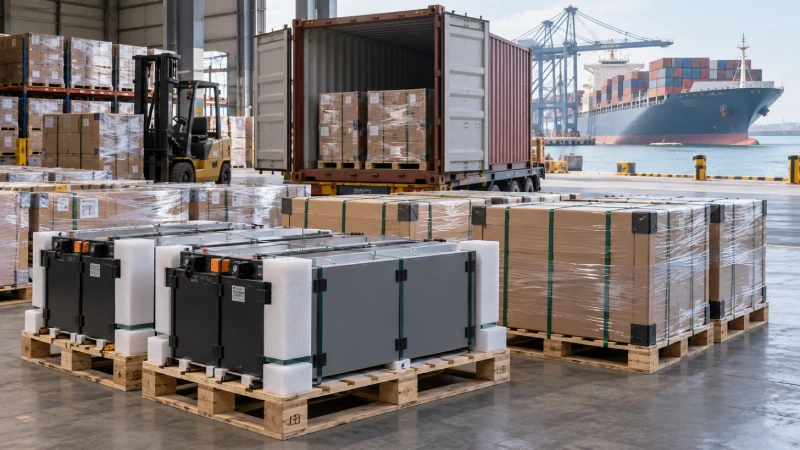
Shipping lithium batteries from China to Kenya is possible, but the booking process is different from ordinary general cargo.
Before choosing air freight, sea freight, LCL, FCL or express delivery, you first need to identify what battery you are shipping, how it is packed, which UN classification applies, whether the required test information is available, and whether the intended carrier accepts that shipment configuration.
For Kenya-bound cargo, there is another layer to check as well: transport compliance does not replace Kenya import requirements such as customs documentation, Certificate of Origin, KEBS conformity procedures where applicable, or the Advance Cargo Declaration for applicable containerized sea shipments.
For that reason, lithium-battery shipments should normally be reviewed before cargo is collected from the supplier in China.
Data Note: This guide was reviewed against publicly available 2026 IATA lithium-battery guidance, the current UN Manual of Tests and Criteria, IMDG Code Amendment 42-24, Kenya Revenue Authority notices, and current KEBS PVoC information. Dangerous-goods rules, operator variations and product-specific Kenya requirements can change, so the final shipment must still be checked before booking.
If you need the broader route, mode, customs, cost and destination overview first, see our complete guide to shipping from China to Kenya.
Quick Answer: How Do You Ship Lithium Batteries from China to Kenya?
Start with these six checks:
- Identify whether the battery is lithium-ion/lithium-polymer or lithium-metal.
- Determine whether the batteries are standalone, packed with equipment, or contained in equipment.
- Confirm the applicable UN classification, such as UN3480, UN3481, UN3090 or UN3091.
- Review the UN38.3 test summary, battery specifications and other supporting documents.
- Check the applicable air or sea dangerous-goods requirements and obtain carrier acceptance before booking.
- Separately confirm the Kenyan import requirements for the actual product, including KEBS/PVoC where applicable, customs documentation and any product-specific approvals.
Having an MSDS or a supplier saying that the battery is “safe for shipping” does not, by itself, establish that the shipment can be booked.
Carrier acceptance is shipment-specific and should be confirmed before the cargo is moved into the export logistics chain.
First Identify the Battery and Shipping Configuration
The most important question is not initially whether air freight or sea freight is cheaper.
It is:
What exactly is being shipped?
International dangerous-goods rules distinguish both the battery chemistry and the way the battery travels with—or without—equipment.
Lithium-Ion vs Lithium-Metal Batteries
Lithium-ion batteries are generally rechargeable. Lithium-polymer batteries are included within the lithium-ion category for dangerous-goods transport purposes.
Common examples include:
- rechargeable battery packs;
- laptop batteries;
- power-tool batteries;
- solar-storage batteries;
- e-bike batteries;
- power banks;
- batteries installed in electronic devices.
Lithium-metal batteries are generally primary, non-rechargeable batteries containing lithium metal or lithium compounds as the anode. They are commonly found in products such as watches, instruments, sensors and some specialist electronic devices.
IATA currently classifies lithium batteries as Class 9 miscellaneous dangerous goods under several UN entries. For the current air-transport framework, refer to the IATA Lithium Battery Guidance Document.
Standalone, Packed with Equipment or Contained in Equipment?
For shipping purposes, the same battery chemistry can have a different UN entry and packing instruction depending on how it is presented for transport.
| Shipment configuration | Lithium-ion | Lithium-metal |
|---|---|---|
| Batteries shipped by themselves | UN3480 / PI965 | UN3090 / PI968 |
| Batteries packed with equipment | UN3481 / PI966 | UN3091 / PI969 |
| Batteries contained in equipment | UN3481 / PI967 | UN3091 / PI970 |
A practical way to distinguish them is:
Standalone battery:
You are importing cartons, pallets or crates primarily containing battery cells or battery packs.
Battery packed with equipment:
The battery and the equipment it powers are shipped in the same package, but the battery is not installed in the equipment.
Battery contained in equipment:
The battery is installed inside the product during transport.
That distinction matters because the applicable packaging provisions, documentation, quantity restrictions and air-transport conditions can differ.
Power Banks Need Particular Attention
A power bank should not automatically be treated as “a battery contained in electronic equipment.”
IATA states that power banks and similar portable power packs designed primarily to provide power to another device are classified as batteries. Depending on the chemistry, they are assigned to UN3480 or UN3090 rather than being treated as batteries contained in equipment.
This is one reason importers should send the actual product description and battery specification rather than simply describing the cargo as “electronics.”
Why the UN Number Must Be Confirmed Before Booking
The UN number affects much more than the wording on a shipping document.
It can affect:
- whether passenger aircraft may be used;
- whether cargo-aircraft-only restrictions apply;
- state-of-charge requirements;
- packaging instructions;
- quantity limits;
- marks and labels;
- shipper documentation;
- airline or shipping-line acceptance;
- warehouse acceptance;
- LCL consolidation feasibility.
A freight rate obtained before this information is checked may therefore not be usable for the actual shipment.
Review My Cargo Before Shipping: Before arranging supplier pickup, prepare the battery model, chemistry, configuration, specifications and UN38.3 information for a DG feasibility review.
UN38.3, SDS/MSDS and DG Documents: What Each One Actually Does
One of the most common problems with battery shipments from China is document confusion.
A supplier may say:
“We have MSDS, so shipping is no problem.”
That is not the right way to evaluate a lithium-battery booking.
UN38.3, SDS/MSDS, transport declarations and Kenya conformity documents serve different purposes.
| Document | What it is used for | Important distinction |
|---|---|---|
| UN38.3 test summary | Shows relevant lithium cell/battery design type testing information | Core battery transport evidence |
| SDS / MSDS | Safety and product hazard information | Not a substitute for UN38.3 |
| Battery specification sheet | Shows model, voltage, capacity, Wh and technical data | Important for classification/review |
| DG declaration / Shipper’s Declaration | Shipment-level dangerous-goods declaration where required | Depends on classification and transport provision |
| Commercial invoice | Commercial/customs declaration | Not a DG compliance document |
| Packing list | Package, quantity, weight and dimension details | Used for logistics/customs |
| KEBS CoC | Evidence of product conformity where the PVoC regime applies | Kenya product compliance—not UN battery testing |
| Certificate of Origin | Establishes country of origin for Kenya import documentation | Customs/trade document |
| Export declaration | Export-side customs evidence | Current Kenya import record requirement |
| ACD reference | Pre-loading declaration reference for applicable containerized sea cargo | Kenya maritime import process |
What UN38.3 Proves
Lithium cells and batteries are subject to the testing framework in subsection 38.3 of the UN Manual of Tests and Criteria.
The current UNECE publication is the 8th revised edition together with Amendment 1, and the 2025 amendment includes changes relating to subsection 38.3. The official reference files are available from UNECE.
IATA’s 2026 guidance states that, except for specified cases involving button cells installed in equipment, manufacturers and subsequent distributors must make the applicable lithium-battery test summary available.
The test summary includes information such as:
- manufacturer details;
- test laboratory information;
- test-report identification;
- test date;
- battery or cell description;
- lithium-ion or lithium-metal identification;
- mass;
- Watt-hour rating or lithium content;
- model numbers;
- tests performed and pass/fail results.
For an importer, one of the most useful checks is whether the battery model shown on the test summary actually matches the product being shipped.
A generic UN38.3 document for another battery model is not useful evidence for the actual cargo.
Is an MSDS Enough?
No.
IATA specifically explains that an SDS is not itself a transport document, and the IATA DGR does not require an SDS simply because batteries are being offered for transport.
However, an SDS or MSDS is still commonly requested within commercial logistics chains because freight forwarders, warehouses, carriers or other parties may use it as supporting information.
The practical rule is:
Do not confuse “commonly requested” with “the document that proves the battery has passed UN38.3 testing.”
You may need both pieces of information operationally, but they have different functions.
When Is a Dangerous Goods Declaration Required?
Whether a shipper’s dangerous-goods declaration is required depends on the transport mode, battery classification, applicable packing instruction and the way the shipment has been prepared.
It should not be assumed that:
- every lithium-battery shipment requires exactly the same declaration; or
- a small battery shipment is automatically exempt from DG requirements.
The exact requirement should be established by trained dangerous-goods personnel against the current regulations.
Keep Battery Model Numbers Consistent
Before the supplier prepares export cargo, compare the model information across:
- battery data sheet;
- UN38.3 test summary;
- product specification;
- commercial invoice;
- packing list;
- dangerous-goods documentation;
- KEBS/PVoC documents where applicable.
A model mismatch discovered after cargo reaches an airport warehouse or CFS can create avoidable rework, storage or a rejected booking.
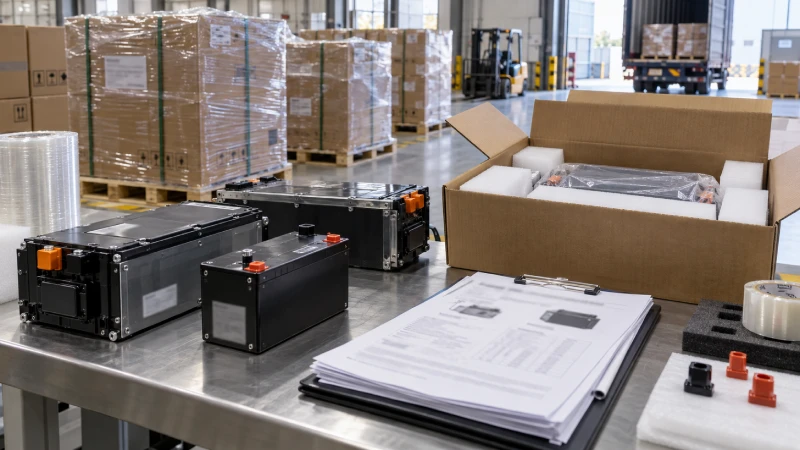
Shipping Lithium Batteries from China to Kenya by Air
Air freight can be useful when the shipment is urgent, relatively small or high-value, but battery cargo cannot be evaluated using normal air-freight criteria alone.
The first question is whether the exact battery configuration is acceptable for the intended air service.
For normal air-freight planning after DG feasibility has been established, see our air freight from China to Kenya guide.
Standalone Lithium-Ion Batteries: UN3480
Standalone lithium-ion batteries are classified as UN3480 and are handled under Packing Instruction 965.
Under IATA’s current guidance, lithium-ion batteries shipped by themselves must normally be offered at a state of charge not exceeding 30% of rated capacity, unless the required State approvals for a higher state of charge have been obtained. They also cannot normally be shipped as cargo on passenger aircraft without the applicable authority approvals.
In practical China-to-Kenya planning, that means you should not assume a standard passenger-air cargo routing to Nairobi is available for a pallet of standalone rechargeable batteries.
The freight forwarder must first identify an acceptable DG routing and carrier.
Standalone Lithium-Metal Batteries: UN3090
Standalone lithium-metal batteries are classified as UN3090 and handled under PI968.
IATA states that lithium-metal batteries shipped by themselves are forbidden as cargo on passenger aircraft under the normal provisions, with specified approval or exemption mechanisms applying only in particular circumstances.
Again, the practical conclusion is not simply “ship cargo aircraft.”
The intended airline still has to accept the cargo.
An operator is not required to accept a shipment merely because a regulatory pathway exists.
Lithium-Ion Batteries Packed with Equipment: UN3481
An important rule change applies in 2026 to lithium-ion batteries packed with equipment under PI966.
For Section I shipments, IATA’s 2026 guidance requires lithium-ion cells and batteries to be offered at no more than 30% state of charge, unless the relevant State of Origin and State of Operator approvals allow a higher state of charge.
For Section II batteries exceeding 2.7 Wh, the 30% state-of-charge requirement also applies, with a higher state of charge requiring the applicable approval route.
This matters for importers purchasing products where the battery is supplied in the same carton but is not installed.
Older supplier instructions may not reflect the 2026 change.
Lithium-Ion Batteries Contained in Equipment: UN3481
Batteries installed inside equipment fall under a different packing instruction—PI967 for lithium-ion batteries.
The 2026 IATA guidance recommends transporting such cells and batteries at no more than 30% state of charge, or at an indicated battery capacity not exceeding 25%.
However, IATA also states that this reduced state of charge is not mandatory under that PI967 provision; it is strongly recommended as a safety measure.
This distinction is important.
A rule for standalone batteries or batteries packed with equipment should not automatically be copied onto every product containing a battery.
Can Lithium Batteries Be Sent by Express Courier?
Sometimes, but courier service should not be treated as an easy way around dangerous-goods rules.
Courier and express operators may impose:
- commodity restrictions;
- shipper-account approval;
- origin-country restrictions;
- route restrictions;
- packaging requirements;
- quantity restrictions;
- documentation requirements.
Acceptance can also differ between standalone batteries and batteries installed in equipment.
The correct sequence is:
classify the shipment first, then check the actual courier product and route.
Do not dispatch cartons to a courier warehouse based only on a normal online express rate.
Air Freight Battery Planning at a Glance
| Cargo type | Main issue to confirm |
|---|---|
| Standalone lithium-ion batteries | UN3480, PI965, SoC, cargo-aircraft routing and operator acceptance |
| Standalone lithium-metal batteries | UN3090, PI968 and cargo-aircraft/operator restrictions |
| Batteries packed with equipment | UN3481/UN3091, packing instruction and applicable limits |
| Batteries contained in equipment | Correct classification, product configuration and operator variations |
| Power banks | Treat as batteries, not automatically as batteries contained in equipment |
| Damaged or safety-recalled batteries | Stop normal air-booking process and obtain specialist review |
If air freight is viable, the broader routing, chargeable-weight and Nairobi-arrival process can then be handled as part of the normal air freight from China to Kenya planning process.
Check Air-Freight Acceptance Before Pickup
For battery cargo, the order should be:
document review → classification → carrier check → booking confirmation → supplier pickup.
Not:
pickup → warehouse delivery → discover carrier will not accept the battery.
Shipping Lithium Batteries from China to Kenya by Sea
For larger battery shipments, heavy solar-storage batteries or commercial volumes, sea freight through Mombasa may be more practical than air freight.
But sea freight does not turn dangerous goods into general cargo.
International maritime dangerous-goods requirements still apply.
The IMO’s 2024 Edition of the IMDG Code incorporating Amendment 42-24 became mandatory from January 1, 2026. Current IMDG publications and amendment information are available from the International Maritime Organization.
For the broader ocean-routing, LCL/FCL and Mombasa process, see our sea freight from China to Kenya guide.
Can Lithium Batteries Ship LCL to Mombasa?
Depending on the battery and service, LCL may be possible.
However, the importer should not assume that any normal China-to-Mombasa consolidation warehouse will accept the cargo.
Before delivering the goods to the origin warehouse, check:
- battery classification;
- UN number;
- battery technical information;
- UN38.3 evidence;
- packaging;
- DG declaration requirements;
- origin CFS acceptance;
- consolidator acceptance;
- intended shipping-line routing;
- destination handling requirements.
An LCL operator may accept one type of battery shipment while refusing another.
Acceptance may also change according to the sailing or transshipment arrangement.
When FCL May Be More Practical
For larger commercial shipments, a dedicated container can give the shipper more control over cargo handling and loading than LCL consolidation.
Possible examples include:
- large quantities of solar-storage batteries;
- battery packs on pallets;
- mixed commercial equipment containing batteries;
- shipments approaching practical LCL volume or DG-handling limits.
But FCL is not a regulatory shortcut.
A dedicated container still requires correct:
- DG classification;
- documentation;
- packaging;
- marks and labels;
- declarations;
- carrier approval;
- container loading procedures.
Whether FCL is operationally preferable must be assessed shipment by shipment.
LCL vs FCL for Lithium Batteries
| Shipment situation | LCL consideration | FCL consideration |
|---|---|---|
| Small commercial volume | May reduce unused container space | Often uneconomical at low volume |
| DG acceptance | Must confirm consolidator and route | Must confirm shipping-line DG acceptance |
| Cargo control | Shared consolidation environment | Greater control over dedicated load |
| Documentation | DG data required before warehouse acceptance | DG approval required before container loading |
| Large battery volume | May become difficult or inefficient | Often worth evaluating |
| Kenya arrival | Normally Mombasa/CFS handling | Mombasa container handling |
Kenya’s Advance Cargo Declaration for Containerized Sea Freight
Kenya added an important pre-loading requirement in 2026.
KRA launched its Advance Cargo Declaration platform for containerized cargo destined for Kenyan ports on August 3, 2026.
KRA says the shipper or exporter must obtain an ACD reference at the port of loading. The required documents include:
- draft Bill of Lading;
- commercial invoice;
- freight invoice;
- export declaration.
The ACD reference is then endorsed on the Bill of Lading before the shipment proceeds to Kenya. See the KRA Advance Cargo Declaration notice.
This is not specifically a lithium-battery regulation.
It is a broader Kenya import requirement for applicable containerized cargo, but it is particularly important for battery shipments because documentation should already be organized early in the booking process.
If your shipment uses an LCL/NVOCC structure, confirm how the ACD is being handled by the parties involved in the actual booking.
For destination-side planning after arrival, see our guide to Mombasa destination and port charges.
Kenya Import Requirements for Lithium Batteries
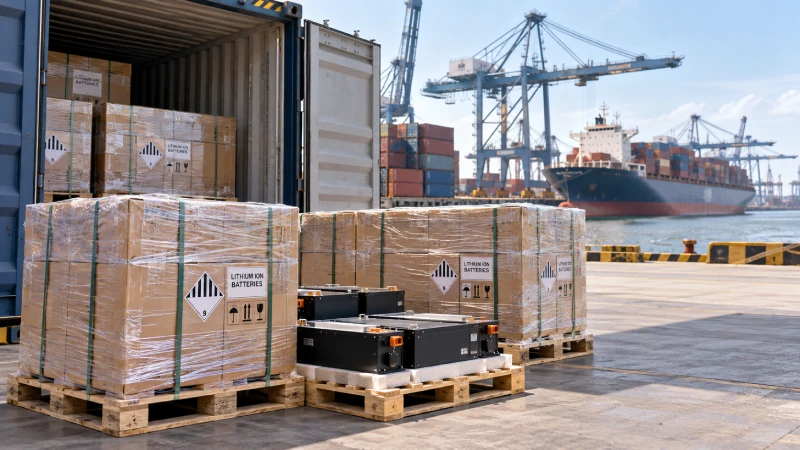
A battery can be compliant with international dangerous-goods transport rules and still have unresolved Kenya import requirements.
These are separate compliance layers.
The safest approach is to divide the review into:
Transport compliance
and
Kenya import/product compliance.
For the broader declaration and clearance workflow, see our Kenya customs clearance process.
Certificate of Origin
KRA requires imported consignments to be accompanied by a Certificate of Origin issued by a competent authority in the country of export, subject to the exceptions and provisional arrangements set out by KRA.
Full enforcement took effect from October 1, 2025 following the transition period. See the KRA Certificate of Origin notice.
For a shipment originating in China, coordinate this document with the exporter before departure.
Do not treat the Certificate of Origin as a battery dangerous-goods document. It serves a different customs and trade purpose.
Export Declaration or Equivalent Export Document
Another important change became effective in 2026.
KRA states that from September 1, 2026, importers must obtain and retain an export declaration, export entry, customs export certificate or equivalent document from the country of export.
KRA says the document should support details including the exporter, importer, goods description, quantity, value, tariff classification and country of export, and that records should be retained for at least five years. See the KRA Finance Act 2026 guidance.
For China-to-Kenya shipments, this means the Kenyan importer should not wait until cargo reaches Mombasa or Nairobi to ask the supplier for export-side documentation.
KEBS PVoC and Certificate of Conformity
Kenya’s Pre-Export Verification of Conformity program must be reviewed separately from dangerous-goods rules.
Current KEBS information places China, Hong Kong, Taiwan and Mongolia in PVoC Zone 1 and lists approved contractors responsible for that zone. KEBS currently publishes PVoC Manual Version 15, dated February 19, 2026. See the KEBS PVoC information.
For regulated products, KRA also lists the Certificate of Conformity from the PVoC agent among the documentation used for import clearance.
However:
UN38.3 does not give you a KEBS CoC.
They answer different questions.
- UN38.3: Has the lithium-cell/battery design type undergone the applicable transport tests?
- KEBS/PVoC: Does the imported product comply with the applicable Kenya product standards and conformity regime?
The actual standard and PVoC pathway should be confirmed for the specific product being imported.
For example, a standalone industrial battery may not have exactly the same Kenya conformity requirements as a complete consumer electronic product containing a battery.
Solar Storage Batteries May Need Additional Review
Lithium batteries are increasingly imported into Kenya for:
- solar-storage systems;
- home energy storage;
- commercial backup systems;
- off-grid projects.
These products may involve additional sector-specific requirements.
Kenya’s solar-PV regulations provide for licensing of solar PV manufacturers/importers and identify a V2 licence covering manufacture or import of solar PV systems or components. The regulations are available from EPRA.
That does not mean every lithium battery automatically requires the same EPRA approval.
For batteries being imported as solar-PV components, the Kenyan importer should confirm the current licensing and product requirements for the actual business activity and product configuration with EPRA or another appropriate local compliance professional.
HS Classification and Import Taxes
The HS code should be established from the actual goods.
Do not use a generic lithium-battery code without checking:
- whether the battery is imported alone;
- whether it is part of another machine or product;
- its chemistry and function;
- the relevant tariff wording.
The final classification matters because it can affect:
- customs duty;
- VAT;
- levies;
- regulatory requirements;
- import declaration details.
KRA advises importers to use a licensed customs clearing agent for the clearance of imported goods and lists documents such as the commercial invoice, B/L or AWB, packing list, COO, CoC for regulated products and relevant permits among the supporting documents.
For this reason, confirm the HS classification and current tax treatment with the Kenyan importer or licensed clearing agent before the cargo is shipped.
Kenya Compliance Checklist
| Check | When relevant | Who should confirm it |
|---|---|---|
| Certificate of Origin | Normal Kenya import documentation | Exporter / importer / clearing agent |
| Export declaration | Imports under current 2026 documentation rules | China exporter / importer |
| KEBS PVoC / CoC | Regulated products | KEBS / approved PVoC contractor |
| Solar-sector requirements | Applicable solar-PV components/businesses | EPRA / Kenyan importer |
| ACD | Applicable containerized sea cargo | Shipper / carrier / KRA process |
| HS classification | All customs declarations | Kenyan clearing agent |
| Product-specific permit | Restricted/regulated products where applicable | Relevant Kenyan authority |
Check My Kenya Import Requirements: A battery shipment should not be released from China until the importer has checked both transport requirements and the Kenya-side documentation applicable to the actual product.
Prepare the Supplier and Packaging Before Pickup in China
Many battery-shipping problems are easier to solve while the goods are still inside the supplier’s factory.
Once the cargo has been collected, palletized, delivered into a warehouse or entered into an export consolidation process, changes become more expensive.
Information Your Chinese Supplier Should Provide
Before pickup, ask for:
- exact product name;
- battery manufacturer;
- battery model number;
- battery chemistry;
- whether the battery is standalone, packed with equipment or installed;
- nominal voltage;
- rated capacity;
- Watt-hour rating for lithium-ion batteries where applicable;
- lithium content where applicable;
- battery net weight;
- number of cells or batteries;
- UN38.3 test summary;
- battery data sheet;
- SDS/MSDS if available or requested for the logistics review;
- final carton or pallet quantity;
- package dimensions;
- gross weight;
- packaging photos;
- battery/product photos;
- state-of-charge information where relevant;
- confirmation whether goods are new, used, defective, damaged or recalled;
- China pickup address;
- cargo-ready date.
If the supplier cannot tell you the battery model or provide appropriate technical documentation, resolve that issue before asking the forwarder for a firm booking.
Packaging Review Before Warehouse Delivery
Battery packaging should be designed to reduce risks including short circuit, movement, physical damage and unintended operation.
Depending on the applicable provision, preparation may involve requirements relating to:
- protection of exposed terminals;
- separation from conductive materials;
- preventing movement inside the package;
- protecting equipment from accidental activation;
- sufficiently strong outer packaging;
- applicable UN-specification packaging;
- dangerous-goods marks and labels;
- overpack requirements.
IATA identifies short circuit caused by battery terminals contacting batteries, metal objects or conductive surfaces as one of the important transport risks.
The exact packing instruction should be determined by qualified DG personnel from the current regulations.
An importer should not ask a supplier to improvise battery packaging from an online diagram or use different packaging simply to avoid the correct DG classification.
Pro Tip: Make dangerous-goods review a pre-pickup gate. Confirm the documents and intended carrier route before sending the cargo into an ordinary export warehouse.
How Lithium Battery Shipping from China to Kenya Works
A well-managed battery shipment follows a different sequence from a simple general-cargo booking.
01 — Send Battery and Cargo Details
Start with the actual product rather than just the freight volume.
Provide:
- model;
- chemistry;
- specifications;
- quantity;
- packing;
- battery configuration;
- UN38.3 information;
- China pickup location;
- Kenya destination.
02 — Confirm the Battery Classification
Determine whether the cargo is:
- UN3480;
- UN3481;
- UN3090;
- UN3091;
and identify whether it is standalone, packed with equipment or contained in equipment.
Do this before choosing a routing.
03 — Review UN38.3 and Supporting Documents
Check whether the UN38.3 test summary matches the battery or product model.
Review the technical specification and supporting documents for consistency.
A document package for a different model should be resolved with the supplier.
04 — Check Kenya-Side Requirements
The Kenyan importer and clearing agent should check:
- intended HS classification;
- Certificate of Origin;
- export documentation;
- KEBS/PVoC requirements;
- product-specific licences or permits;
- any solar-PV requirements where applicable.
This prevents a situation where the freight is transportable but the importer is not ready for clearance.
05 — Confirm Carrier Acceptance
Only after the cargo is sufficiently identified should the forwarder check the intended:
- airline;
- shipping line;
- courier;
- LCL consolidator;
- transshipment routing.
Carrier acceptance is not automatic.
IATA itself notes that even where a regulatory State approval is available, an operator is not obligated to carry the shipment.
That principle is worth remembering for all battery bookings:
Regulations may permit a transport pathway, but the operator still decides whether it will accept the shipment.
06 — Prepare the Cargo for Transport
Once the route has been confirmed, qualified parties can ensure the shipment meets the applicable requirements for:
- packaging;
- marks;
- labels;
- documentation;
- quantity;
- handling.
Do not finalize cargo preparation around an unconfirmed route.
07 — Complete Export and Pre-Loading Documentation
Depending on the shipment, this may include:
- commercial invoice;
- packing list;
- export declaration;
- Certificate of Origin;
- dangerous-goods transport documentation;
- Bill of Lading or Air Waybill data;
- ACD application for applicable containerized sea freight;
- conformity documentation where relevant.
08 — International Transport to Kenya
For accepted air shipments, the cargo may move into the Nairobi air-freight network.
Sea shipments normally enter Kenya through Mombasa before customs clearance and inland movement.
The exact transit route should be checked at booking because dangerous-goods routing can differ from standard general-cargo options.
09 — Kenya Customs and Regulatory Clearance
The Kenyan clearing agent coordinates the customs declaration and any applicable regulatory documentation.
Do not assume that successful airline or shipping-line acceptance guarantees customs release.
For a more detailed overview of the destination process, see our Kenya customs clearance process.
10 — Nairobi or Final Inland Delivery
After customs and regulatory release, cargo can proceed to the consignee in Nairobi or another inland destination.
For battery cargo, also verify whether any local handling or delivery restriction applies to the specific shipment.
What Determines the Cost of Shipping Lithium Batteries to Kenya?
Battery freight should generally be quoted after classification and initial carrier-acceptance review, not from cargo weight alone.
Two shipments weighing 500 kg may have very different freight options if one is ordinary machinery and the other contains standalone lithium batteries.
Main Battery Freight Cost Drivers
The quote can be affected by:
- UN number;
- lithium-ion vs lithium-metal;
- standalone vs packed vs contained configuration;
- battery capacity/specification;
- state of charge where relevant;
- air or sea freight;
- airline or shipping-line routing;
- DG handling;
- packaging;
- repacking if necessary;
- documentation;
- inspection;
- origin city in China;
- supplier pickup;
- number of suppliers;
- air chargeable weight;
- LCL chargeable volume/weight;
- FCL container requirement;
- PVoC inspection where applicable;
- Mombasa destination handling;
- Nairobi/inland delivery;
- Incoterm;
- duty and taxes;
- DAP/DDP scope.
This is why generic online claims such as:
“Lithium battery shipping from China to Kenya costs $X per kg”
should be treated cautiously.
A rate has little value unless it corresponds to the actual battery configuration and an available carrier.
For normal cargo cost components after the battery shipment has been classified, see our China-to-Kenya shipping cost guide.
What Is Needed for an Accurate Quote?
At minimum, provide:
- battery type;
- model;
- UN38.3 test summary;
- battery specification;
- quantity;
- package dimensions;
- gross weight;
- battery net weight;
- pickup city;
- Kenya destination;
- preferred shipping mode.
If the shipment includes equipment, provide photos showing whether the battery is installed or separately packed.
Send Cargo Details: The more complete the technical information is at the beginning, the easier it is to determine which shipping options are actually available rather than providing a general-cargo rate that later has to be withdrawn.
Batteries That Need Special Review Before Any Booking
Some shipments should not enter the normal battery-quotation workflow at all until their status is clarified.
Damaged, Defective or Safety-Recalled Batteries
If a battery has been damaged, recalled for safety reasons or identified as having the potential to produce dangerous heat, fire or short circuit, disclose that information immediately.
IATA states that lithium batteries identified by the manufacturer as defective for safety reasons, or damaged batteries capable of dangerous heat, fire or short circuit, are forbidden for transport by air. This can also apply where the affected battery is installed inside equipment.
Do not try to book such cargo as normal UN3480/UN3481 freight.
Used Batteries, Waste Batteries and Recycling Cargo
Used commercial equipment containing functioning batteries is not necessarily the same category as batteries being shipped as waste for recycling or disposal.
The intended use and condition must be disclosed.
IATA identifies waste/recycling batteries among situations that may involve specific State approval provisions for air transport.
For these shipments, specialist review is required before a freight plan is made.
Prototype or Low-Production Batteries
Pre-production prototypes and low-production battery designs that have not completed the normal UN38.3 testing pathway are not ordinary commercial battery shipments.
IATA identifies a special approval mechanism under Special Provision A88 for qualifying prototypes and low-production runs, subject to the applicable authority approvals and packing provisions.
Do not apply normal production-battery booking assumptions to prototype cargo.
Very Large Battery Modules and Energy Storage Systems
Large battery modules or battery energy-storage systems can create additional challenges involving:
- battery mass;
- packaging;
- lifting;
- container loading;
- DG segregation;
- carrier acceptance;
- project delivery.
IATA separately identifies State approval provisions for certain batteries exceeding specified mass thresholds in air transport.
For large BESS shipments, sea freight and project-cargo planning normally need to be evaluated based on the actual system design rather than using a standard small-battery freight process.
Electric Vehicles and Battery-Powered Vehicles
Do not automatically classify a complete electric vehicle as “UN3481 because it contains a lithium battery.”
Battery-powered vehicles have their own transport classification framework.
A vehicle shipment should therefore be handled through the appropriate vehicle/EV shipping review rather than the standard battery workflow. See our guide to shipping vehicles from China to Kenya.
Batteries Packed with Other Dangerous Goods
If the shipment also contains chemicals, aerosols, flammable liquids or other dangerous goods, disclose all hazardous components.
Compatibility and segregation requirements may affect whether items can share the same package, pallet, overpack or transport unit.
This needs to be reviewed by qualified DG personnel.
Operational Warning: Never change the cargo description, remove battery information from documents or declare battery cargo as ordinary electronics in an attempt to obtain a cheaper or easier booking.
What to Send for a Lithium-Battery Shipping Feasibility Check
If you are sourcing lithium batteries or battery-powered products from China for Kenya, prepare the following before asking for a shipping plan.
Battery Information
- Product name
- Battery manufacturer
- Battery model
- Lithium-ion or lithium-metal
- UN number, if already confirmed
- Standalone / packed with equipment / contained in equipment
- Voltage
- Capacity
- Watt-hour rating where applicable
- Lithium content where applicable
- Battery net weight
- Number of batteries/cells
Compliance Information
- UN38.3 test summary
- Battery data sheet
- SDS/MSDS if available
- Existing DG declaration information, if any
- KEBS/PVoC status
- Product licences or permits where applicable
Cargo Information
- Number of cartons/pallets
- Package dimensions
- Gross weight
- Cargo photos
- Packaging photos
- Supplier city
- Pickup address
- Cargo-ready date
Shipment Information
- Air or sea preference
- Kenya destination
- Mombasa, Nairobi or other inland destination
- Incoterm
- Desired port/airport, DAP or door-delivery scope
- Kenyan importer details
- Clearing-agent details where available
Cargo Condition
Confirm whether the batteries are:
- new;
- used;
- returned;
- damaged;
- defective;
- recalled;
- prototypes;
- intended for recycling or disposal.
Do not leave this information until after booking.
FAQ
Can I ship standalone lithium batteries from China to Kenya by air?
Potentially, but standalone batteries are subject to stricter air-transport rules than many products containing installed batteries. Standalone lithium-ion batteries are normally UN3480 under PI965, while standalone lithium-metal batteries are UN3090 under PI968. Passenger-aircraft restrictions, state-of-charge rules where applicable, routing and carrier acceptance must be checked before booking.
What is the difference between UN3480 and UN3481?
UN3480 applies to lithium-ion batteries shipped by themselves. UN3481 applies to lithium-ion batteries either packed with equipment or contained in equipment. The distinction matters because different packing instructions and transport provisions apply.
Is an MSDS enough to ship lithium batteries from China to Kenya?
No. An SDS/MSDS can be useful supporting information, but it is not a substitute for the applicable UN38.3 test information, correct classification and shipment-specific dangerous-goods requirements.
Do lithium batteries need UN38.3 if they ship by sea?
UN38.3 is part of the international lithium-battery transport testing framework and should not be treated as an air-freight-only issue. Sea freight still requires the applicable current IMDG requirements and carrier acceptance to be checked.
Does Kenya require KEBS PVoC and a CoC for lithium batteries?
The applicable conformity route depends on the actual battery or battery-powered product. China is currently within the KEBS PVoC framework, but the exact standard, conformity route and any exemption should be confirmed for the specific product before shipment. UN38.3 does not automatically satisfy KEBS requirements.
Can I ship power banks to Kenya as ordinary electronics?
Do not classify them that way automatically. IATA treats power banks designed primarily to provide power to another device as batteries, so their battery classification and transport requirements must be checked before booking.
Can damaged, defective or used lithium batteries be shipped from China to Kenya?
The condition and intended use must first be established. Damaged, safety-defective or recalled batteries can be prohibited from normal air transport, while used, waste or recycling batteries may require a different regulatory process and specialist review.
Plan Your Lithium Battery Shipment Before the Cargo Leaves the Supplier
The safest and most efficient way to ship lithium batteries from China to Kenya is to resolve the difficult questions before pickup.
First establish:
What battery is it?
How is it packed?
Which UN classification applies?
Does the UN38.3 information match the actual model?
What air or sea rules apply?
Will the intended carrier accept it?
Are Kenya customs and conformity requirements ready?
Only then should the shipment move into the normal booking and pickup process.
For China-to-Kenya battery cargo, send the product details, battery specifications, UN38.3 test summary, package information, China pickup location and Kenya destination before arranging collection. Winsail Logistics can review the available shipment information, determine which transport options need to be checked and coordinate the next steps for cargo that falls within the services available for the specific booking.
Carrier acceptance must always be confirmed before booking.
Regulatory Note
Dangerous-goods regulations, carrier/operator variations and Kenyan product requirements can change. The applicable classification, packing instruction, packaging, marks, labels, documentation, carrier acceptance, customs treatment and product-specific regulatory requirements should be confirmed for the actual shipment before cargo is released for transport.
