
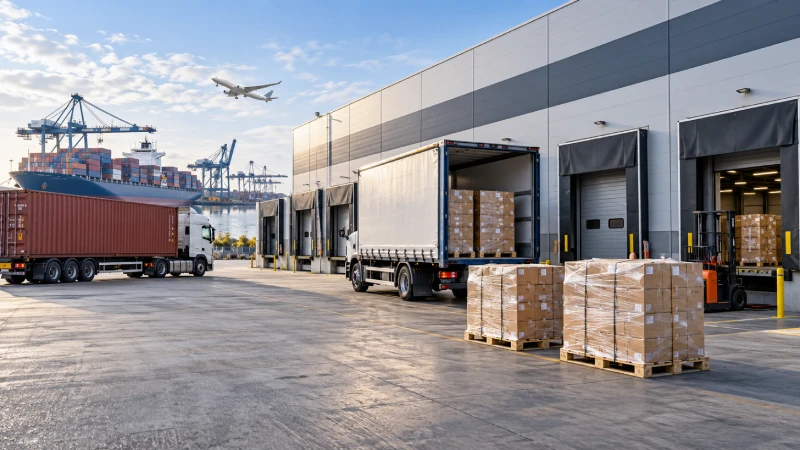
Shipping goods from China to a warehouse or 3PL in Germany involves more than booking sea, air or rail freight. The international shipment may arrive successfully in Germany, but the final delivery can still fail if the warehouse requires an appointment, specific pallet dimensions, an ASN, a delivery reference, a tail-lift truck or another receiving condition that was never communicated to the freight forwarder.
For importers, distributors, e-commerce sellers and companies using German fulfilment warehouses, the most important part of the shipment is often the handoff between international freight and warehouse receiving.
A typical shipment may involve supplier pickup in China, consolidation, export handling, international transport, German customs clearance, terminal release, inland trucking, a warehouse delivery appointment, unloading and proof of delivery.
The key is to plan these steps as one shipment rather than treating the German warehouse as simply an address on the transport document.
Quick Answer: How Do You Ship from China to a German Warehouse?
Shipping from China directly to a German warehouse or 3PL usually involves the following steps:
- Collect the cargo from the Chinese supplier.
- Consolidate cargo if purchasing from multiple suppliers.
- Prepare cartons, pallets and warehouse labels.
- Ship by sea, air or rail to Germany.
- Complete import customs clearance or the required customs procedure.
- Release the cargo from the port, airport, CFS or rail terminal.
- Arrange inland freight using the exact German warehouse postcode.
- Book a warehouse receiving appointment if required.
- Deliver using the correct truck and unloading arrangement.
- Obtain proof of delivery and confirm the warehouse received the expected quantity.
The most important operational rule is simple:
Get the warehouse receiving instructions before booking the international shipment whenever possible.
Waiting until the cargo reaches Hamburg, Frankfurt or Duisburg to discover that the warehouse requires palletisation, a delivery slot or a tail-lift vehicle can create unnecessary delays and additional costs.
For a broader overview of the complete route, transport modes and delivery options, see Shipping from China to Germany.
Shipping to a Warehouse Is Different from Shipping to Germany
A freight quotation can show Germany as the destination while still ending operationally at a port, airport or rail terminal.
For example, international freight might terminate at:
- Hamburg
- Bremerhaven
- Frankfurt Airport
- Munich Airport
- Duisburg rail terminal
- another German or European logistics terminal
But your actual commercial destination may be a:
- third-party logistics warehouse
- e-commerce fulfilment centre
- distributor warehouse
- retailer distribution centre
- marketplace preparation warehouse
- company-owned warehouse
That creates four separate operational stages.
| Stage | What Happens |
|---|---|
| International freight | Cargo moves from China to the German or EU gateway |
| Customs | Import declaration, taxes/duties and release are handled |
| Inland freight | Cargo moves from the gateway to the warehouse postcode |
| Warehouse receiving | Appointment, unloading, document checks and cargo acceptance take place |
The handoff between these stages matters.
A freight forwarder may have successfully delivered a container to the warehouse gate, but if the receiving team has no unloading equipment or the truck has no appointment number, the shipment may still be rejected.
Port-to-Door Does Not Always Mean Warehouse-Ready Delivery
“Door delivery” normally describes the transport destination. It does not automatically answer operational questions such as:
- Does the warehouse accept loose cartons?
- Does it require pallets?
- Who books the receiving appointment?
- Does the driver need a delivery reference?
- Is there a loading dock?
- Is a forklift available?
- Is a tail lift required?
- Who physically unloads the goods?
These questions should be answered before final-mile transport is dispatched.
Information to Get from Your German Warehouse Before Shipping
Before arranging transport from China, ask the warehouse or 3PL for its inbound receiving instructions or warehouse SOP.
A complete warehouse address alone is not enough.
Full Warehouse Address and Postcode
Provide the freight forwarder with:
- warehouse company name
- full street address
- German postcode
- city
- unit or building number where applicable
- receiving entrance if different from the main address
- receiving contact
- telephone number
- receiving email
The postcode is particularly important because inland trucking is normally priced according to the actual delivery location rather than simply “Germany.”
A warehouse near Hamburg will have a very different final-mile transport requirement from one near Munich, Leipzig, Stuttgart or Nuremberg.
Receiving Days and Hours
Confirm when the warehouse accepts inbound freight.
Check:
- receiving days
- opening hours
- latest check-in time
- public holiday closures
- seasonal closures
- whether Friday receiving hours are shorter
- whether weekend delivery is possible
- whether drivers arriving early are allowed to wait onsite
Do not assume that a warehouse operating five or seven days per week also receives freight throughout those hours.
Is a Delivery Appointment Required?
Many 3PL and distribution warehouses use scheduled receiving.
Ask:
- Is an appointment mandatory?
- How far in advance must it be booked?
- Who should book it?
- Is booking made by email, phone or online portal?
- What information is required to request a slot?
- Can the appointment be changed?
- What happens if the truck arrives late?
- Is there a grace period?
- Is an appointment number required at check-in?
The freight forwarder should know this before dispatching the German truck.
Does the Warehouse Require an ASN or Inbound Reference?
A modern fulfilment operation may need both physical cargo and electronic receiving information.
The warehouse could request:
- ASN — Advanced Shipping Notice
- purchase order number
- inbound shipment number
- delivery reference
- customer account number
- SKU list
- carton quantity
- pallet quantity
- packing list
- delivery note
- barcode information
Without the correct reference, warehouse staff may not know which customer account or inbound order the goods belong to, even if the physical shipment has reached the correct address.
Pro Tip: Ask the warehouse for its complete inbound receiving SOP and send it to your freight forwarder before the cargo leaves China.
Step-by-Step: From a China Supplier to a German Warehouse
A well-planned warehouse shipment connects the China origin operation directly to the German receiving requirements.
Step 1: Supplier Pickup in China
The process normally starts with cargo collection from the Chinese supplier.
The freight forwarder needs:
- supplier name
- pickup address
- factory contact
- telephone number
- cargo-ready date
- commodity
- number of cartons or packages
- package dimensions
- gross weight
- total CBM
- pallet information
- battery or dangerous goods information where relevant
For an EXW shipment, the forwarder may coordinate factory pickup, transport to the export warehouse or terminal and export-related logistics.
For cargo purchased under another Incoterm, the exact handoff point between supplier and forwarder should still be clear.
Incorrect dimensions or weight provided at this stage can affect both international freight and final-mile delivery.
For example, a shipment initially declared as 10 loose cartons may later arrive as two oversized pallets. That can change:
- air freight chargeable weight
- LCL volume
- inland trucking category
- tail-lift feasibility
- warehouse receiving requirements
Cargo data should therefore be verified before the final transport booking.
Step 2: Consolidation and Cargo Preparation
If you purchase goods from several Chinese suppliers, they can often be collected and consolidated before export.
A typical consolidation process may include:
- collecting cargo from each supplier
- receiving goods at a China warehouse
- counting packages
- checking visible package condition
- measuring dimensions and weight
- combining shipments
- palletising when required
- applying shipping or warehouse labels
- preparing the final packing list
- dispatching the combined shipment
Consolidation is especially useful when the German 3PL wants one organised inbound shipment rather than several unrelated deliveries.
It is also the best time to correct packaging problems.
Prepare Warehouse Labels in China Where Possible
If your German 3PL requires:
- pallet labels
- carton labels
- barcodes
- SKU labels
- inbound references
consider applying them during the China consolidation stage.
Relabelling goods after they arrive in Germany usually requires additional handling, warehouse space and labour.
Pro Tip: If the destination warehouse has a specific labelling template, send it to the China warehouse before consolidation begins.
Choosing Sea, Air or Rail Freight for a German Warehouse
The correct mode depends on cargo volume, urgency, value and inventory planning.
| Method | Suitable For | Typical German Gateway | Final Warehouse Handoff |
|---|---|---|---|
| Sea FCL | Larger shipments | Hamburg / Bremerhaven | Container delivery or devanning + truck |
| Sea LCL | Smaller shipments | Port/CFS | Deconsolidation + local truck |
| Air Freight | Urgent or higher-value cargo | FRA / MUC / CGN / LEJ | Airport release + truck |
| Rail Freight | Medium-priority cargo | Duisburg / other rail terminals | Terminal release + truck |
The international mode changes the first part of the route, but every option eventually needs a final-mile delivery plan.
For a wider comparison of freight costs and the factors affecting final delivery pricing, see Shipping Cost from China to Germany and How Long Does Shipping from China to Germany Take?.
Sea Freight from China to a German Warehouse
Sea freight is usually the preferred option for large-volume or less time-sensitive shipments.
For a more detailed explanation of routes, schedules and shipping procedures, see Sea Freight from China to Germany.
FCL Delivery to a Warehouse
A typical FCL shipment may follow this route:
China factory → export port → vessel → Hamburg/Bremerhaven → customs → container truck → German warehouse
There are two very different warehouse scenarios.
Scenario 1: The Warehouse Can Unload a Container
The container may be delivered directly to the warehouse.
Before dispatch, confirm:
- the warehouse accepts container deliveries
- suitable truck access is available
- an unloading dock or unloading area exists
- labour or equipment is available
- how long unloading is expected to take
- whether the empty container can leave immediately
The truck and container cannot necessarily remain at the warehouse indefinitely.
Slow unloading can increase waiting costs and may contribute to equipment-related charges depending on the transport arrangement.
Scenario 2: The Warehouse Cannot Accept a Container
The container may instead need to be delivered to another facility for:
- devanning
- sorting
- palletisation
- stretch wrapping
- labelling
The cargo can then be transferred onto a normal domestic truck for final delivery.
This can be particularly useful for fulfilment warehouses that accept palletised inbound freight but do not have facilities to unload an ocean container.
For more detail on full-container operations, see FCL Shipping from China to Germany.
LCL Shipping to a German Warehouse
LCL is commonly used when the shipment does not justify a full container.
A typical flow is:
supplier → China consolidation warehouse → export port → vessel → destination CFS → deconsolidation → customs/release → local truck → warehouse
Unlike FCL, the final warehouse delivery normally takes place after the consolidated container has been unpacked.
Your cargo may leave the destination CFS as:
- individual cartons
- crates
- one or more pallets
The warehouse receiving requirement should therefore be checked before final delivery.
If the warehouse does not accept loose cartons, the cargo may need destination palletisation before trucking.
Possible destination services can include:
- palletisation
- rewrapping
- relabelling
- sorting
- temporary storage
- dedicated final-mile delivery
These services should not be assumed to be part of the basic LCL rate.
See LCL Shipping from China to Germany for more information about CFS handling, CBM charging and destination costs.
Air Freight from China to a German Warehouse
Air freight is often used for:
- urgent stock replenishment
- e-commerce inventory
- higher-value goods
- electronics
- spare parts
- samples
- time-sensitive components
A common route is:
China supplier → Chinese airport → German airport → airline terminal → customs → cargo release → local truck → warehouse
Frankfurt is Germany’s major air cargo gateway, while Munich, Cologne/Bonn, Leipzig/Halle and other airports can also be relevant depending on routing and cargo type.
The key operational point is that airport arrival is not warehouse delivery.
After arrival, cargo can still require:
- airline/terminal handling
- import documentation
- customs clearance
- release
- pickup scheduling
- road transportation
- warehouse appointment
Delays in customs or document preparation can also lead to additional airport storage.
For detailed mode planning, see Air Freight from China to Germany and Shipping from China to Frankfurt.
Rail Freight from China to a German Warehouse
Rail can provide a middle option between sea and air for some shipments.
The route may look like:
China supplier → rail terminal → China-Europe rail service → European/German terminal → customs/transit handling → truck → warehouse
Duisburg is a major inland logistics and rail node, although actual rail routings vary.
For a warehouse customer, the important point is that the rail terminal is usually an intermediate logistics point rather than the final delivery destination.
Once the cargo becomes available, a truck still needs to be arranged to the warehouse postcode.
See Rail Freight from China to Germany and Shipping from China to Duisburg for a deeper explanation of this transport mode.
Customs Clearance Before Warehouse Delivery
International freight and warehouse receiving are connected by customs.
Goods arriving from China cannot simply be collected from the international terminal and delivered as normal EU goods unless the required customs procedure has been completed or the goods are moving under an appropriate customs arrangement.
Common import documentation includes:
- commercial invoice
- packing list
- transport document
- commodity description
- HS/TARIC classification
- customs value information
- country of origin information
- importer details
- EORI
- licences or certificates where applicable
The European Commission states that an EORI number is mandatory for customs operations such as import, export and transit where the relevant economic operator is required to be identified.
For the full customs process, see Germany Customs Clearance for Imports from China.
Do Not Book Final Delivery Based Only on the Vessel or Flight Arrival Date
International arrival does not mean the cargo is ready for collection.
There may still be:
- terminal processing
- deconsolidation
- customs review
- document corrections
- inspection
- duty or tax settlement
- cargo release procedures
The warehouse appointment should therefore be coordinated with realistic cargo availability, not only the estimated arrival time of the vessel, aircraft or train.
Who Should Be the Importer?
One of the most common misunderstandings when shipping to a 3PL is assuming that the destination warehouse automatically becomes the importer.
It does not.
A warehouse may simply provide:
- receiving
- storage
- order fulfilment
- picking and packing
- returns processing
That does not automatically mean it will:
- act as importer of record
- provide its EORI
- become responsible for customs declarations
- pay import duty
- pay import VAT
- take legal responsibility for the imported goods
The actual importing structure could involve a:
- German buyer
- EU buyer
- German or EU subsidiary
- distributor
- seller with an appropriate EU import structure
- another agreed economic operator
Which structure is appropriate depends on the transaction and legal/tax setup.
Pro Tip: Confirm the importer before the cargo leaves China. Do not wait until the shipment is already held at a German port, airport or rail terminal.
For a detailed explanation, see EORI Number for Importing from China to Germany.
German Import Duty and Import VAT
Customs duty and import VAT should also be considered before final warehouse delivery.
The applicable duty can depend on factors including:
- TARIC/HS classification
- product type
- customs value
- country of origin
- applicable tariff measures
- preferential treatment where legally available
Germany’s standard VAT rate is 19%, while a reduced 7% rate applies to specified categories of goods and transactions. The correct rate depends on the actual product and tax treatment rather than simply the country of import.
For import VAT, the taxable amount is not necessarily just the supplier’s invoice value. Under EU rules it generally starts with customs value and can also include duties, other charges and relevant incidental expenses such as transport and insurance where applicable.
For calculations and examples, see Germany Import Duty & VAT from China.
DAP vs DDP for Delivery to a German Warehouse
DAP and DDP are commonly requested for warehouse deliveries, but they should not be confused with warehouse receiving services.
Under Incoterms® 2020, both rules can involve delivery to a named warehouse or another destination, but the import-clearance responsibility differs significantly.
| Responsibility | DAP Warehouse | DDP Warehouse |
|---|---|---|
| China-side export handling | Seller | Seller |
| Main transportation | Seller | Seller |
| Transport to named destination | Seller | Seller |
| Import customs clearance | Buyer | Seller |
| Import duties/taxes | Buyer | Seller |
| Cargo ready for unloading at destination | Yes | Yes |
| Unloading automatically seller’s responsibility | No | No |
| Warehouse appointment automatically included | No | No |
| Tail lift automatically included | No | No |
DAP to a German Warehouse
Under DAP, the seller arranges transportation to the agreed destination, but the buyer is responsible for import clearance and the associated import formalities.
The cargo is delivered at the agreed location on the arriving means of transport, ready for unloading.
For warehouse shipments, DAP works most smoothly when the buyer already has:
- an importer setup
- EORI where required
- customs broker arrangements
- duty/VAT process
- warehouse receiving procedure
The final transport should be coordinated so that customs clearance is completed before the carrier proceeds to the warehouse.
DDP to a German Warehouse
Under DDP, the seller assumes responsibility for import clearance and applicable import formalities in addition to transportation to the named destination.
That does not mean every DDP proposal is automatically suitable for every China-to-Germany transaction.
Before using DDP, confirm:
- who will legally act in the import process
- whose EORI will be used where required
- how the customs declaration will be made
- how import duty will be handled
- how import VAT will be handled
- whether the tax structure is appropriate for the parties
- which customs broker will be used
- whether final inland delivery is included
DDP Does Not Automatically Include Warehouse Unloading
This distinction is critical.
Even with DDP delivery, you still need to check:
- warehouse appointment
- tail lift
- forklift
- loading dock
- palletisation
- driver unloading
- warehouse labels
- delivery reference
- waiting-time policy
Under DDP, the seller’s Incoterms® delivery obligation is generally fulfilled when the cleared goods are placed at the buyer’s disposal at the named destination on the arriving means of transport, ready for unloading. Unloading is normally the buyer’s responsibility unless the parties or transport contract provide otherwise.
In other words:
Customs responsibility and warehouse unloading responsibility are two different questions.
From the German Port, Airport or Rail Terminal to the Warehouse
Once customs and terminal processes are complete, the shipment moves into its final inland stage.
Hamburg or Bremerhaven to the Warehouse
For sea freight, the flow may be:
terminal/CFS → customs release → truck collection → warehouse appointment → delivery
For FCL cargo, this might involve direct container trucking.
For LCL cargo, it generally involves domestic groupage or dedicated road freight after deconsolidation.
See Shipping from China to Hamburg and Shipping from China to Bremerhaven.
Frankfurt Airport to the Warehouse
For air freight:
airline terminal → customs → release → airport pickup → German truck → warehouse
Airport storage can become relevant when documentation or customs clearance is delayed, making early document preparation particularly important.
See Shipping from China to Frankfurt.
Duisburg Rail Terminal to the Warehouse
For rail freight:
rail terminal → terminal handling → customs/transit procedure → release → truck → warehouse
The warehouse delivery still requires its own transport planning even if the international rail service terminates relatively close to the destination.
See Shipping from China to Duisburg.
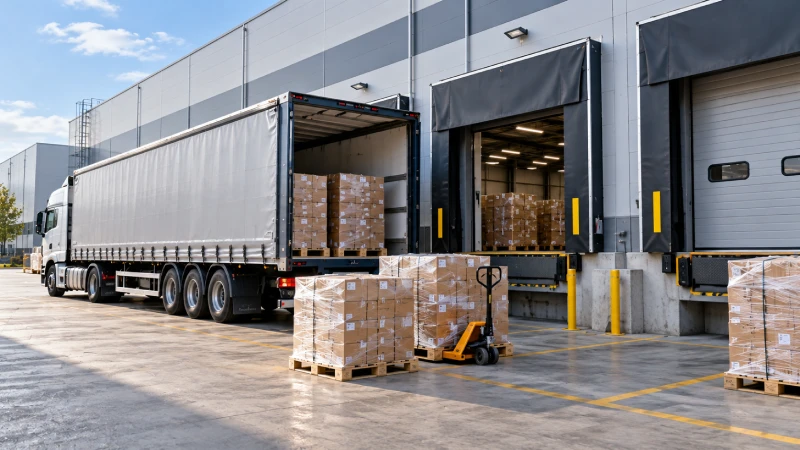
Why the German Warehouse Postcode Matters
A request such as:
“Please quote delivery to Germany.”
is not enough for an accurate door-delivery calculation.
The freight forwarder should receive the actual warehouse postcode.
Consider the difference between:
Hamburg port → warehouse near Hamburg
and:
Hamburg port → warehouse near Munich
Both are deliveries “in Germany,” but the inland distance, route, truck capacity and cost are very different.
Inland pricing may depend on:
- warehouse postcode
- origin terminal
- distance
- number of pallets
- pallet dimensions
- gross weight
- loading metres
- stackability
- hazardous cargo status
- dedicated or groupage service
- appointment requirements
- tail-lift requirements
- waiting time
- access restrictions
Pro Tip: Provide the exact German warehouse postcode when requesting the initial international freight quotation. Do not add it only after the shipment reaches Europe.
For southern German destinations, the optimal route may also differ from one used for a warehouse in northern Germany. See Shipping from China to Munich for an example of destination-based routing decisions.
Pallets vs Cartons: What Will the Warehouse Accept?
Packaging that is suitable for international transportation is not automatically suitable for warehouse receiving.
Confirm whether the destination accepts:
- loose cartons
- pallets
- crates
- full containers
| Delivery Format | Typical Use | Main Question |
|---|---|---|
| Loose cartons | Small LCL/air shipments | Will the warehouse accept manual carton receiving? |
| Palletised cartons | B2B and 3PL deliveries | What pallet specification is required? |
| Full container | Larger FCL shipments | Can the warehouse unload a container? |
| Dedicated truck | Larger pallet shipments | What truck and dock arrangement is needed? |
Loose Cartons
For loose cartons, confirm:
- maximum carton weight
- dimensions
- total quantity
- label requirements
- barcode requirements
- whether loose unloading is permitted
- whether cartons must arrive sorted by SKU
A warehouse designed around pallet handling may refuse a truck containing hundreds of loose cartons unless prior arrangements have been made.
Palletised Cargo
If pallets are required, confirm:
- acceptable pallet dimensions
- pallet material
- maximum height
- maximum gross weight
- whether cargo may overhang
- whether pallets must be stackable
- wrapping requirements
- label position
- barcode requirements
The 1,200 × 800 mm Euro pallet format is widely used in European logistics, but that does not mean every German warehouse requires exactly the same pallet specification.
The warehouse’s own receiving SOP takes priority.
If the correct specification is known before export, cargo can often be palletised at origin.
Tail-Lift, Forklift and Unloading Requirements
Unloading is one of the most overlooked parts of door-to-door freight.
A delivery address tells the carrier where to go. It does not tell the carrier how the goods will come off the truck.
Warehouse with a Loading Dock
A conventional dock-height truck may be suitable.
The warehouse can normally transfer palletised freight using its own handling equipment.
Still confirm:
- truck size restrictions
- dock availability
- appointment requirement
- who performs unloading
Warehouse with a Forklift but No Dock
The unloading method depends on how the warehouse accesses the cargo.
Depending on the site, it may require:
- rear unloading
- side unloading
- forklift access
- another specific vehicle arrangement
This should be confirmed directly with the warehouse and carrier.
Warehouse Without a Loading Dock or Forklift
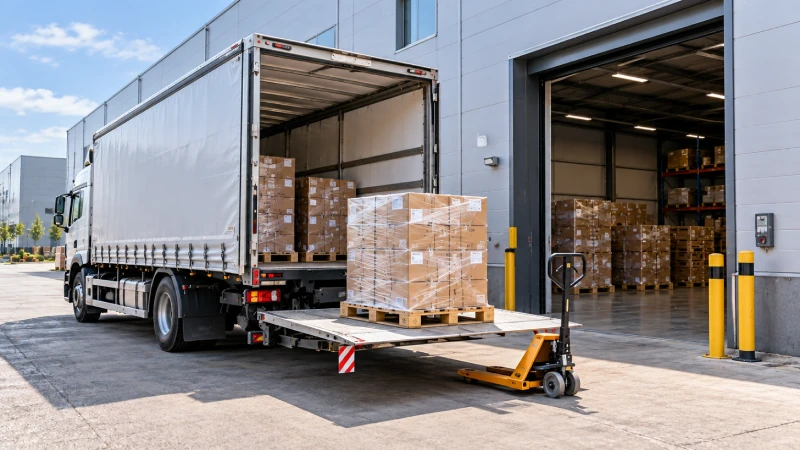
A tail-lift truck may be necessary for palletised cargo.
Depending on pallet weight and site conditions, a pallet truck or other equipment may also be required to move cargo from the vehicle.
Before dispatch, ask:
- Is there a loading dock?
- Is a forklift available?
- Can the warehouse unload pallets?
- Is a tail lift required?
- Is a pallet truck required?
- Is manual unloading permitted?
- Is there a maximum pallet weight for tail-lift delivery?
Pro Tip: Never assume that “door-to-door” means “unloaded and placed inside the warehouse.”
Warehouse Receiving Rules to Confirm
A simple receiving checklist can prevent many final-mile problems.
Address and Contact
Confirm:
- warehouse name
- full address
- postcode
- receiving entrance
- warehouse contact
- telephone number
Receiving Schedule
Confirm:
- receiving days
- receiving hours
- latest arrival
- appointment lead time
- late-arrival policy
References and Documentation
Confirm whether the warehouse requires:
- ASN
- PO number
- inbound reference
- delivery note
- packing list
- SKU information
- booking number
Packaging
Confirm:
- cartons accepted?
- pallets required?
- permitted pallet size
- maximum pallet height
- maximum pallet weight
- stretch wrap requirement
- carton/pallet labels
- barcode format
Vehicle and Unloading
Confirm:
- loading dock
- forklift
- tail lift
- vehicle size limit
- rear/side unloading
- driver unloading
- pallet exchange requirements if any
The freight forwarder does not need to control every warehouse procedure, but it needs enough information to arrange a delivery the warehouse can actually receive.
Delivery Appointments: When Should You Book Them?
Warehouse appointments create a timing challenge.
Book too early and the cargo may not be available because of:
- vessel delay
- airline delay
- rail delay
- customs inspection
- documentation problems
- LCL deconsolidation
- terminal congestion
Book too late and the cargo may remain at the terminal while you wait for the next available warehouse slot.
A practical workflow is:
- Obtain the warehouse receiving SOP before shipping.
- Understand appointment lead time.
- Track international arrival.
- Prepare customs documents before arrival.
- Confirm customs and terminal status.
- Request the warehouse slot when cargo availability is sufficiently reliable.
- Confirm the final-mile vehicle.
- Send the appointment/reference details to the carrier.
- Dispatch the truck.
For warehouses with heavily controlled inbound schedules, appointment availability can become part of the transport planning decision itself.
Pro Tip: If the warehouse requires several days’ notice for inbound deliveries, tell the freight forwarder before the international routing is finalised.
What Information Is Needed for a Germany Warehouse Delivery Quote?
A good warehouse-delivery quotation requires more than weight and CBM.
China Origin
Provide:
- supplier city
- full pickup address
- cargo-ready date
- number of suppliers if consolidating
Cargo Details
Provide:
- commodity
- number of cartons
- dimensions
- gross weight
- CBM
- pallet count
- pallet dimensions
- stackability
- battery/DG status
German Destination
Provide:
- warehouse name
- full address
- postcode
- receiving contact
- receiving hours
Delivery Conditions
Confirm:
- appointment required?
- ASN required?
- warehouse reference required?
- pallets required?
- loose cartons accepted?
- loading dock available?
- forklift available?
- tail lift required?
- driver expected to unload?
- vehicle access restrictions?
Customs Setup
Provide:
- shipment Incoterm
- importer information
- EORI where applicable
- DAP or DDP requirement
- known product compliance requirements
The more information available before booking, the more accurately the entire transport chain can be planned.
Common Reasons Warehouse Deliveries Fail
Warehouse delivery failures usually occur because one operational detail was not communicated between the importer, warehouse, freight forwarder and final-mile carrier.
| Problem | Possible Result |
|---|---|
| No delivery appointment | Warehouse refuses truck |
| Wrong appointment date | Waiting or redelivery |
| Driver arrives late | Slot lost |
| Missing ASN | Cargo cannot be matched to inbound order |
| Missing PO/reference | Receiving delayed |
| Loose cartons not accepted | Palletisation required |
| Incorrect pallet format | Rework or refusal |
| No tail lift | Cargo cannot be unloaded |
| No forklift or loading dock | Truck cannot discharge pallets |
| Wrong postcode | Incorrect trucking plan or quote |
| Customs not released | Carrier cannot collect cargo |
| Incorrect importer details | Customs delay |
| Warehouse closed | Waiting/redelivery |
| Damaged pallets | Receiving exception |
| Quantity mismatch | Inventory discrepancy |
The cheapest international freight option is therefore not always the lowest-cost complete shipment.
Saving a small amount on the ocean or rail leg can become irrelevant if the final 50 kilometres produce storage, waiting and redelivery charges.
Costs That Can Result from a Failed Warehouse Delivery
Possible additional costs include:
- truck waiting time
- redelivery
- appointment rebooking
- terminal storage
- CFS storage
- airport storage
- additional warehouse handling
- palletisation
- relabelling
- sorting
- dedicated truck upgrade
- tail-lift surcharge
- labour for unloading
- container detention
- demurrage where applicable
- return transport
These charges are not necessarily caused by the distance travelled.
Many arise because the shipment reaches the correct location in the wrong condition, with the wrong vehicle or at the wrong time.
That is why warehouse-delivery planning should begin in China rather than after arrival in Germany.
What Happens After the Truck Reaches the Warehouse?
Delivery is not complete from an operational-control perspective until the shipment has been received and documented.
Obtain Proof of Delivery
The carrier should obtain appropriate proof that the warehouse received the shipment.
Depending on the operation, the POD may indicate:
- delivery date
- receiving party
- number of pallets
- number of packages
- delivery reference
- visible damage or exceptions
Keep this document with the shipment records.
Reconcile the Warehouse Receiving Quantity
Compare three quantities:
- the China packing list
- the quantity handed to the final-mile carrier
- the quantity recorded by the warehouse
For example:
China packing list: 12 pallets
Carrier POD: 12 pallets delivered
3PL inventory: 11 pallets received into stock
This immediately shows that the issue may be within the warehouse receiving/reconciliation stage rather than the international transportation stage.
Record Damage or Shortage Quickly
If visible cargo damage is found, good practice may include:
- documenting the condition at delivery
- noting exceptions on delivery records where appropriate
- taking photographs
- notifying the carrier or forwarder promptly
- keeping relevant packaging
- comparing the damage with loading/origin photographs
The exact claim procedure depends on the transport contract and insurance arrangement.
Example: Shipping from a China Factory to a German 3PL
Consider an importer purchasing general consumer goods in Shenzhen.
Shipment
- Origin: Shenzhen, China
- Cargo: general consumer goods
- Quantity: 8 pallets
- Gross weight: 3,200 kg
- Destination: fulfilment warehouse near Leipzig
- Importer: buyer’s German company
- Delivery: warehouse appointment required
A properly coordinated shipment could work as follows.
1. Supplier Pickup
The forwarder collects the cargo from the Shenzhen supplier.
2. Origin Warehouse Check
The cargo is measured and pallet quantities are confirmed.
The German 3PL has already provided its required pallet labels and inbound reference, so these are checked before export.
3. International Freight
The shipment is booked by sea to Hamburg.
4. Pre-Arrival Customs Preparation
The commercial invoice, packing list, importer details, EORI and product classification information are prepared before vessel arrival.
5. Germany Arrival
The cargo arrives and completes the relevant terminal and customs procedures.
6. Inland Freight Planning
The forwarder calculates transport from Hamburg to the Leipzig warehouse using the actual delivery postcode and eight-pallet shipment details.
7. Appointment
The 3PL is sent an ASN and a receiving slot is confirmed.
8. Vehicle Confirmation
The warehouse confirms that it has a loading dock and can unload palletised freight, so no tail-lift service is required.
9. Delivery
The truck collects the released cargo and arrives during the booked window.
10. POD
The warehouse signs for eight pallets.
11. Reconciliation
The importer confirms that the warehouse inventory receipt matches the shipping documentation.
The important part of this example is not the specific Hamburg-to-Leipzig routing.
It is that the warehouse requirements were known before final-mile dispatch and, ideally, before the shipment left China.
China-to-Germany Warehouse Delivery Checklist
Use this checklist before sending cargo to a German fulfilment warehouse or 3PL.
Before Pickup in China
- Supplier pickup address confirmed
- Supplier contact confirmed
- Cargo-ready date confirmed
- Commodity confirmed
- Carton/package count confirmed
- Dimensions confirmed
- Gross weight confirmed
- CBM confirmed
- Battery/DG status checked
- Commercial invoice prepared
- Packing list prepared
Before International Freight Booking
- Full German warehouse address received
- Postcode confirmed
- Warehouse receiving SOP obtained
- Loose carton acceptance confirmed
- Pallet requirements confirmed
- Label requirements confirmed
- ASN/reference requirements confirmed
- Receiving hours confirmed
- Appointment process confirmed
- Loading dock confirmed
- Forklift availability confirmed
- Tail-lift requirement confirmed
Customs Preparation
- Importer confirmed
- EORI confirmed where applicable
- HS/TARIC classification checked
- Commercial invoice checked
- Packing list checked
- Product-specific import documents checked
- DAP/DDP responsibility confirmed
- Duty/import VAT arrangement confirmed
Before German Final-Mile Delivery
- Customs status confirmed
- Cargo physically available
- Warehouse appointment confirmed
- ASN/inbound reference submitted
- Correct delivery vehicle booked
- Tail lift/forklift arrangement confirmed
- Pallet/carton quantity reconfirmed
- Warehouse contact given to carrier
- Delivery reference given to driver
After Delivery
- POD obtained
- Delivered quantity checked
- Warehouse received quantity checked
- Damage checked
- Shortage checked
- Exceptions followed up
Pro Tips for Shipping to a German 3PL
Pro Tip 1: Get the Warehouse SOP Before Booking Freight
Receiving requirements can affect packaging, labelling, palletisation and the final delivery vehicle. Getting them early allows problems to be corrected in China.
Pro Tip 2: Use the Exact Postcode
“Germany” is not a sufficient destination for an accurate final-mile quotation.
Pro Tip 3: Confirm the Importer Before Export
Do not assume the 3PL will act as the importer simply because its address appears as the delivery destination.
Pro Tip 4: Separate DDP from Warehouse Receiving Services
DDP deals with the allocation of transport and import responsibilities under the agreed trade term. It does not automatically include warehouse appointments, palletisation, tail lifts or unloading.
Pro Tip 5: Label Cargo in China
If the German warehouse’s requirements are already known, applying labels before export is usually easier than relabelling after arrival.
Pro Tip 6: Ask Whether Loose Cartons Are Accepted
This is particularly important for small air and LCL shipments.
Pro Tip 7: Confirm the Delivery Slot Before Dispatching the Truck
Sending a truck to a warehouse without a valid appointment can quickly turn a straightforward delivery into waiting and redelivery costs.
Pro Tip 8: Keep the POD
The POD provides an important bridge between transportation records and warehouse inventory records if a shortage or receiving discrepancy appears later.
How Winsail Coordinates China-to-Germany Warehouse Shipments
Winsail Logistics handles shipments originating from China and can coordinate the transport chain from Chinese suppliers to German business destinations.
Depending on the shipment, the process can include:
- supplier pickup in China
- multi-supplier consolidation
- export handling
- sea freight
- air freight
- rail freight
- FCL and LCL
- customs-document coordination
- German port/airport/rail-terminal handoff
- inland trucking
- warehouse delivery planning
- appointment coordination
- pallet and unloading requirement checks
- DAP/DDP routing review
For warehouse shipments, provide both the cargo information and the destination warehouse SOP at the beginning of the planning process.
That allows the international route and final receiving conditions to be reviewed together rather than treating the warehouse delivery as an afterthought.
Shipping Directly to a Germany Warehouse or 3PL?
Send us your China supplier location, cargo details, German warehouse postcode and receiving instructions.
We can review the international route, customs handoff and final-mile delivery requirements before the shipment leaves China.
CTA Button: Plan My Germany Warehouse Delivery
FAQ
Can I ship directly from a Chinese supplier to a German 3PL warehouse?
Yes. Cargo can be collected from a supplier in China and transported through international freight, customs and German inland delivery to a 3PL warehouse. The warehouseu0026#x27;s appointment, packaging, labelling and unloading requirements should be confirmed in advance.
Does a German 3PL warehouse act as the importer of record?
Not automatically. A 3PL may only provide warehousing and fulfilment services. The importer, EORI, customs declaration, duty and import VAT responsibilities should be established separately.
Do I need an EORI number to import goods into a German warehouse?
An EORI number is required for economic operators carrying out customs activities for which EORI identification is mandatory in the EU. The correct EORI and importing party depend on the actual customs structure of the shipment.
Should I use DAP or DDP for delivery to a German warehouse?
DAP can suit buyers that already have their own importer and customs arrangements because the buyer handles import clearance. Under DDP, the seller assumes import-clearance responsibility. DDP should only be used when the importing and tax arrangements have been properly confirmed.
Is customs clearance included in warehouse delivery?
Not automatically. Customs clearance and physical inland delivery are separate parts of the logistics process unless the agreed freight service explicitly includes both.
Does door-to-door shipping include unloading?
Not necessarily. Under common door-delivery arrangements, the cargo may be delivered on the arriving vehicle ready for unloading. Whether the driver, carrier or warehouse unloads should be confirmed separately.
Does DDP include unloading at the warehouse?
Not automatically. Under Incoterms® 2020 DDP, delivery generally occurs when the import-cleared goods are placed at the buyeru0026#x27;s disposal on the arriving means of transport, ready for unloading. The buyer normally handles unloading unless otherwise agreed or included in the transport contract.
Can LCL cargo be delivered as loose cartons to a German 3PL?
It can be if the warehouse accepts loose cartons. Some warehouses require palletised deliveries, so the receiving rules should be checked before the cargo leaves China. Destination palletisation may be arranged if required.
Why does the freight forwarder need the German warehouse postcode?
The postcode is used to determine the actual inland transport route and cost from the port, airport or rail terminal. A warehouse in Hamburg and one in Munich can have very different final-mile requirements.
Do German warehouses require delivery appointments?
Many 3PLs, fulfilment centres and distribution warehouses use scheduled inbound receiving, but requirements vary by facility. Always check the destination warehouseu0026#x27;s own receiving procedure.
What happens if a truck arrives without an appointment?
The warehouse may refuse the truck, require it to wait or ask the carrier to return on another date. This can create waiting-time and redelivery charges.
Should I palletise the cargo in China or Germany?
If the warehouse requires pallets and its specification is known, palletising in China can avoid additional destination handling. However, the pallet dimensions, height, weight and labelling requirements should be confirmed first.
Can the same freight forwarder manage international freight and German warehouse delivery?
Yes. A forwarder can coordinate multiple stages of the shipment, including China pickup, international transport and German inland delivery. However, warehouse receiving conditions should still be provided clearly because they are specific to the destination facility.
What information should I send for a China-to-Germany warehouse shipping plan?
Provide the China supplier address, cargo-ready date, commodity, carton or pallet quantity, dimensions, gross weight, CBM, German warehouse address and postcode, Incoterm, importer arrangement and all known receiving, appointment and unloading requirements.
Shipping successfully from China to a German warehouse is not just about moving freight across continents. It is about making sure that each logistics stage can hand the cargo to the next one without creating a gap.
The international vessel, aircraft or train may complete the longest part of the journey, but the shipment only achieves its commercial purpose when the correct goods are customs-released, delivered during the correct receiving window, unloaded under the correct conditions and accepted into the warehouse system.
For importers and e-commerce sellers using German 3PLs, planning that final handoff before the cargo leaves China is one of the simplest ways to reduce delays, failed deliveries and avoidable destination costs.
